
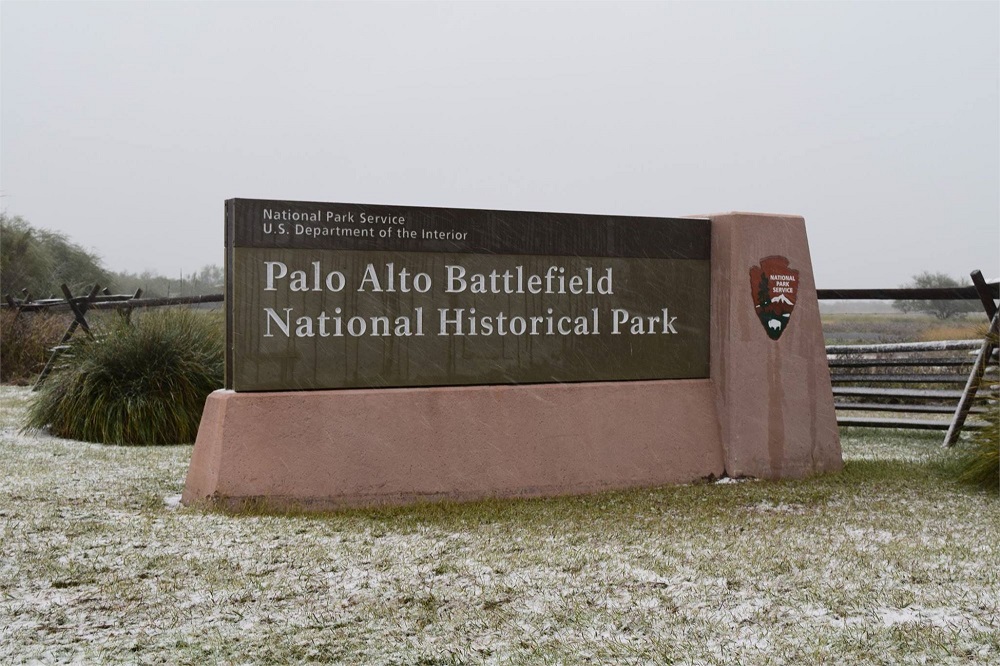
As a history enthusiast, I enjoy visiting historical sites and learning all I can about them. Unknown to some residents, this area has an extensive amount of history, historical markers, and parks. One example is the Palo Alto Battlefield National Historical Park. On May 8, 1846, U.S. and Mexican troops clashed on the prairie of Palo Alto. Palo Alto Battlefield National Historical Park preserves the site of this battle and examines the causes, events, and consequences of the U.S./Mexican War. (Palo Alto Battlefield National Historical Park, 2021)
This park is hosting a Summer Speaker Series to educate and inform the public about the Battle of Palo Alto and related topics. I have attended the previous two lectures and sincerely appreciate the effort put through by the volunteers and speakers to bring us these events. These presentations are very interesting and appeal to local history buffs. They are held in the visitor center at 10a.m. and seating is limited to 25. Below is a brief synopsis of each.
Saturday June 19 Riverboat Trade
Joe Matthews, a valley native, presented the discussion about riverboats of the Mexican-American War, including the history of riverboats and the people involved. As a visual aid, Aurelio Romo brought in his 7ft. replica of Bessie, a shallow-draft boat, which he put together during the COVID quarantine. Riverboats like these were first used mostly by ranchers and small businesses to move supplies. During the Mexican-American War, they were used to move troops up and down the Rio Grande River. Back then, the river was so much wider and ferries were commonly used. Some of the earlier traders included Charles Stillman, who came from Europe at the age of 18 and was instrumental in setting up the riverboats. After the war, the riverboats were used mostly for trade and during the Civil War, they helped smuggle cotton into the South by “Confederate sympathizers” who most likely were only interested in making money.
Highlight: General Zachary Taylor developed a reputation as an outstanding man, known for upholding treaties with the native people and often stated “we’re at war with the Mexican army, not the people.”
Saturday June 26 – Texas Rangers, Scouts, Spies of the U.S. Mexican War
Wade Marcum, a teacher, presented the discussion about the early Texas Rangers in three parts: ranger history, ranger descriptions, and a show and tell/Q&A. Visual aids included several pistols, rifles, and revolvers as well as two different horse saddles.
Most of the early Texas Rangers were volunteers, which was Stephen F. Austin’s idea. Their reputation was that they “ride like a Mexican, trail like an Indian, shoot like a Tennessean, and fight like the devil.” They took the best from each culture that they came across. In 1846 with the Mexican/American War looming, these volunteers operated under the Law of Retaliation because they had scores and grudges to settle with the Mexican people.
The introduction of horses in the area made a difference in how Indians did battle and a revolution in firepower came with the invention of the Colt 5 shot revolvers by Samuel Colt. Captain Jack Hays bought them for this troops in the Texas Navy but when it disbanded, Colt was out of luck. He later met with Samuel Walker up east and designed the 6 shot .44 caliber revolver.
Coming up next: Saturday July 3 Grenadiers in the Mexican Army
Palo Alto Battlefield National Historical Park
7200 Paredes Line Road
Brownsville, TX 78526
(956) 541-2785

Palo Alto Battlefield visitor center 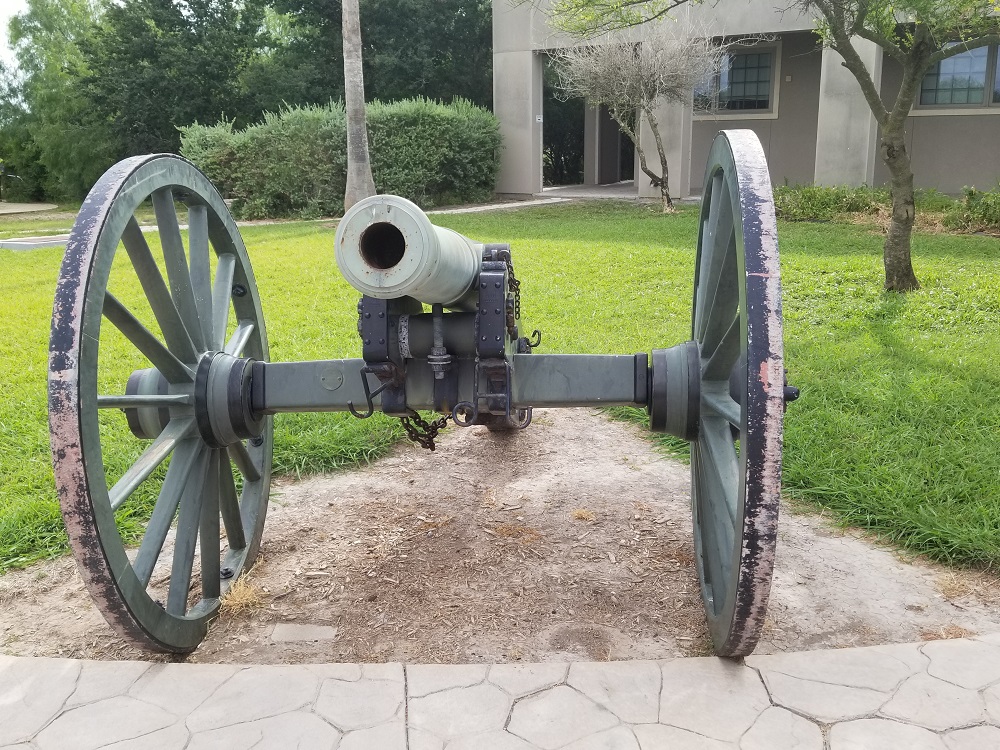
canon 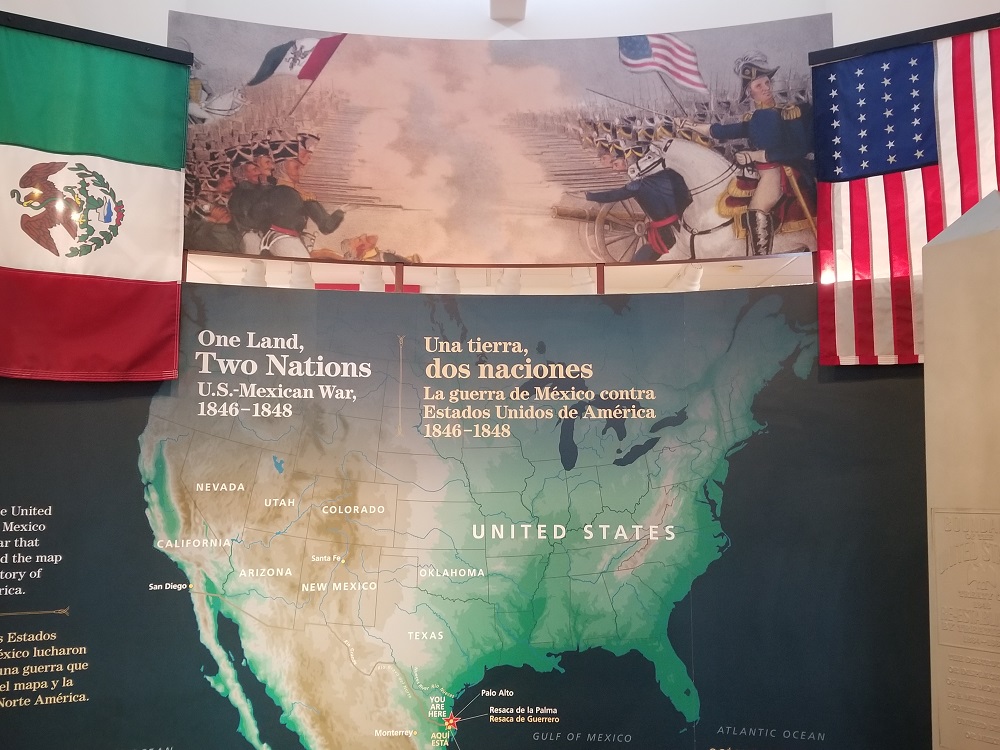
An overview of the war 
Bessie 
visual aids 
close up of firearms
 SA Examiner