‘Bootstrapped Startup Funding Playbook’: How to Build a Tech Company Without VC

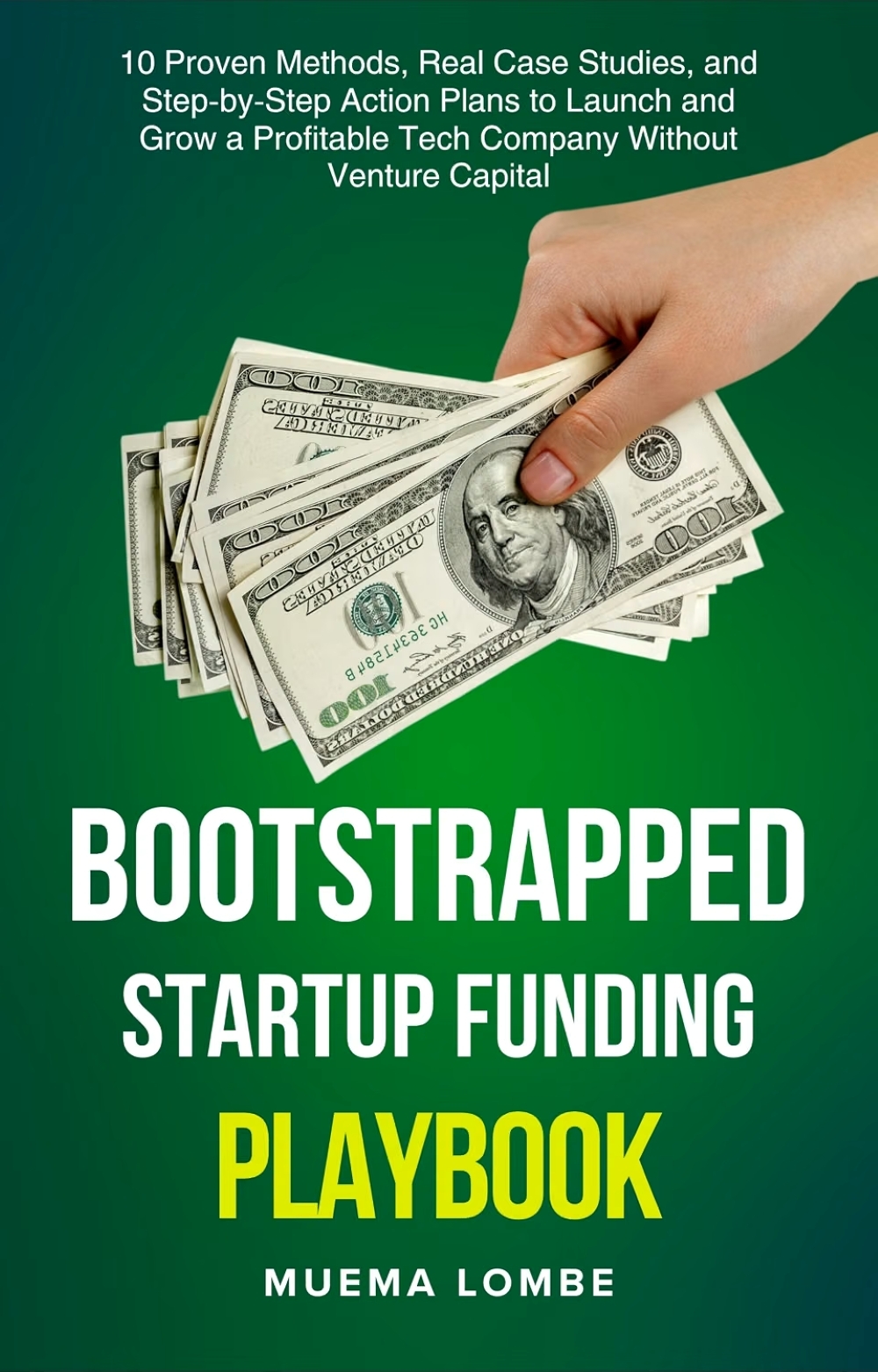
‘Bootstrapped Startup Funding Playbook’ is the new book by Muema Lombe. Photo: Amazon

Book Spotlight: Bootstrapped Startup Funding Playbook 10+ Proven Methods, Real Case Studies, and Step-by-Step Action Plans to Launch and Grow a Profitable Tech Company Without Venture Capital By Muema Lombe

What if you could build a serious tech company, generating millions in revenue and life-changing outcomes, without begging investors, burning out, or gambling your future on a single funding round?

Bootstrapped Startup Funding Playbook is a practical, founder-friendly guide to building and scaling a tech startup without relying on venture capital. Instead of theory, it gives you real methods, real examples, and a step-by-step roadmap drawn from how iconic companies actually did it. (Amazon, 2026)

10 Concrete Bootstrapping Methods Inside

Each chapter is built around real companies and decisions, not vague platitudes, so you see exactly how founders used these methods in the wild, what worked, what nearly killed them, and what you can copy (or avoid):

  • Customer-Funded Growth: Reinvesting revenue to scale organically.
  • Consulting-Funded Product: Using service work to bankroll product development.
  • Freemium & Product-Led Growth: Driving acquisition directly through the product.
  • Friends & Family Capital (Done Right): Raising early funds without destroying relationships.
  • Customer Prepayments & Annual Contracts: Securing upfront cash flow before building.
  • Personal Credit & Small Loans: Managing calculated debt responsibly.
  • Side Jobs & Part-Time Entrepreneurship: Derisking the launch phase while keeping a paycheck.
  • Startup Grants: Accessing non-dilutive capital like NSF/SBIR.
  • Lean Operations & Extreme Cost Discipline: Maximizing runway with minimal burn.
  • Crowdfunding & Pre-Order Campaigns: Validating demand before production.

No hype. No “just work harder” nonsense. Just honest trade-offs, battle-tested strategies, and an operating manual you can implement while holding down a job, supporting a family, or running an existing business.

What You’ll Learn

  • 10 Major Bootstrapping Strategies: Clear frameworks on when each approach actually makes sense.
  • Layered Funding Models: How to combine methods, like side jobs, consulting, customer prepayments, and lean ops, into a coherent, low-risk plan.
  • Origin Case Studies: How iconic companies quietly bootstrapped their earliest, riskiest phases before raising rounds or exiting for billions.
  • Risk Mitigation: Practical ways to manage personal risk, protect relationships, and avoid common financial traps.
  • The 30/60/90-Day Execution Plan: A step-by-step roadmap to get from zero to paying users and your first taste of customer-funded growth.

Who Should Read This Book?

  • SaaS & Dev-Tools Founders: Build software on your own terms without VC dependency.
  • Solo Founders & Indie Hackers: Follow a structured, serious path to profitability.
  • Agency Owners & Consultants: Productize your service and spin out scalable software.
  • Deep-Tech & Hardware Founders: Secure non-dilutive, customer-driven funding routes.
  • Undecided Entrepreneurs: Get a clear, nuanced answer when weighing “bootstrap vs. raise.”

About the Author

Muema Lombe is a tech founder and bootstrapping expert who has helped multiple startups launch and scale without traditional venture capital. Through real-world experience and in-depth research, Muema created this practical playbook so other founders can build serious companies on their own terms.


‘Valet’ by J.P. Lacrampe: The Whimsical Robot Novel You Didn’t Know You Needed

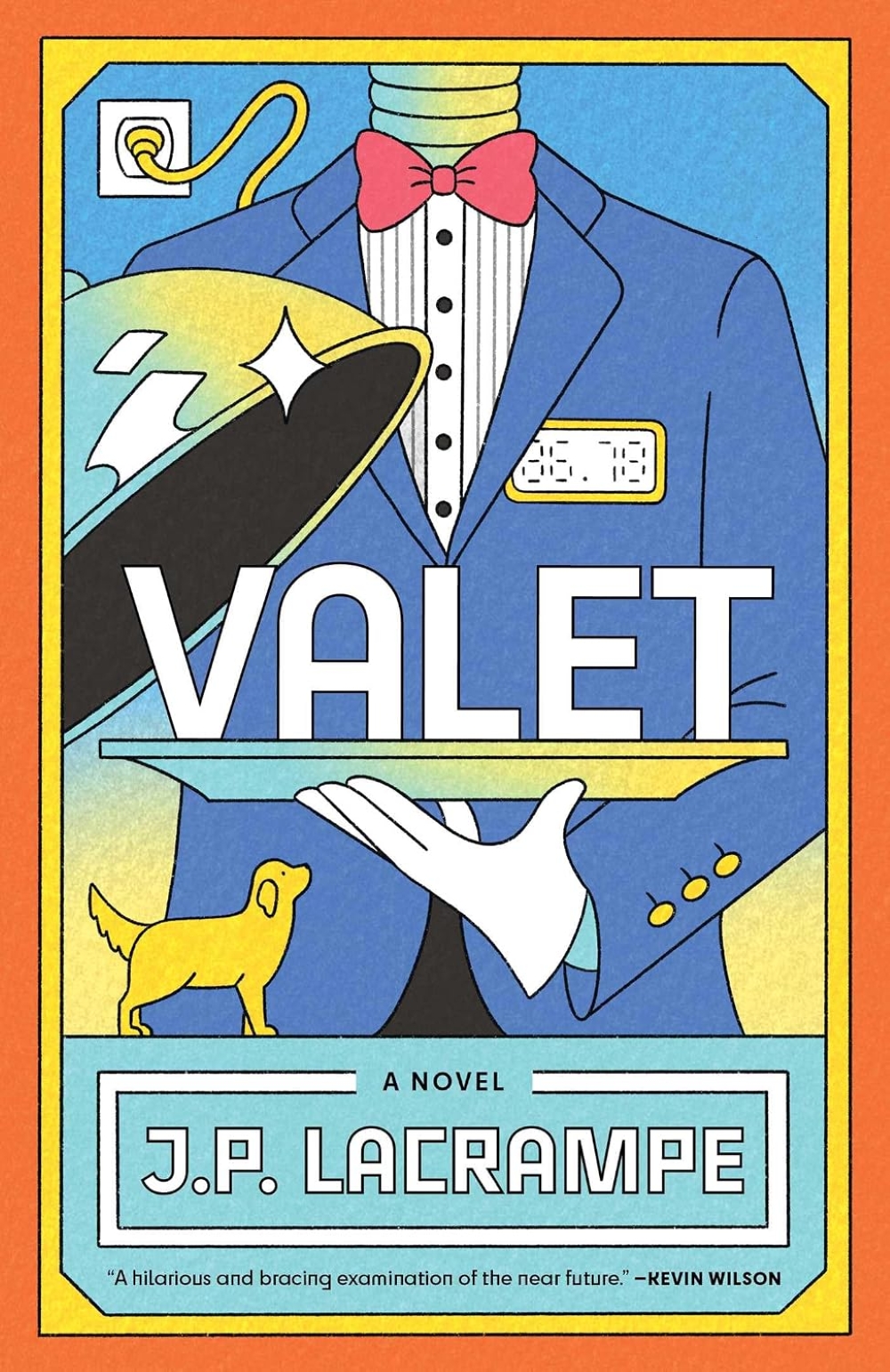
‘Valet’ is the new novel by J.P. Lacrampe. Photo: Simon & Schuster

Book Spotlight: Valet: A Novel

By J.P. Lacrampe

Synopsis

Cy wants nothing more than to be useful, raise his utility score, and receive the next update for his operating system. But that’s easier said than done when he’s tasked with helping his owner’s thirty-five-year-old son “get out of his funk.” (Simon & Schuster, 2026)

Grayson is nothing like his go-getter, CEO sister Charlotte. He didn’t inherit the family robotics company when their dad passed last year, he doesn’t have a master’s degree, and he just can’t seem to figure out the San Francisco dating scene. He’d rather eat synthesized mozzarella sticks and make pottery at his studio, Kilning Time.

When Grayson learns of Charlotte’s plan to sell the company to a tech conglomerate, he panics. It’s not just the family business at stake, it’s all the technology—like Cy—their dad invented over the years. So he does what anyone would do: he steals the flash drive with his father’s most important work stored on it and plans a corporate takeover. If only he knew what that meant.

To make matters worse:

  • A fellow VALET deserts his owner and asks Cy to help him hightail it out of town.
  • Grayson’s first real date—and her dog—keep showing up at inopportune times.
  • The behemoth tech company wants this deal closed yesterday.

Grayson, Cy, and their trusty golden retriever, Sasha III, must go on the lam until they figure out exactly what to do, and whom to trust.

A hilarious, madcap adventure that is as tender as it is insightful, Valet asks not just what it means to be human, but what it means to be family.

Read This If You Love:

  • Vibe: A whimsically speculative ode to Wodehouse’s Jeeves and Wooster.
  • For Fans Of: Kevin Wilson (Nothing to See Here) and Andrew Sean Greer (Less).
  • Core Tropes: A helper robot, his thirty-five-year-old ward, and a madcap adventure to save the fate of a family empire.

“Valet is a hilarious and bracing examination of the near future, where Cy, a techbot servant, must navigate the complexities of humans to maintain his utility score. What makes this such a winning and openhearted novel is that J.P. Lacrampe goes beyond the initial premise by looking at the universal anxiety of family, of being tied to people with whom you will rise and fall, either toward a new update or into obsolescence.” — Kevin Wilson, New York Times bestselling author of Nothing to See Here and Run for the Hills

About the Author

J.P. Lacrampe received his MFA in creative writing from Saint Mary’s College. His short fiction has been published by Glimmer Train, McSweeney’s, Instant City, and in Howl: A Collection of the Best Contemporary Dog Wit. He is a teaching professor at Santa Clara University, where he teaches courses in composition, fiction, and screenwriting.

Why Modern Economic Policy Failed: James K. Galbraith’s ‘The Power to Destroy’

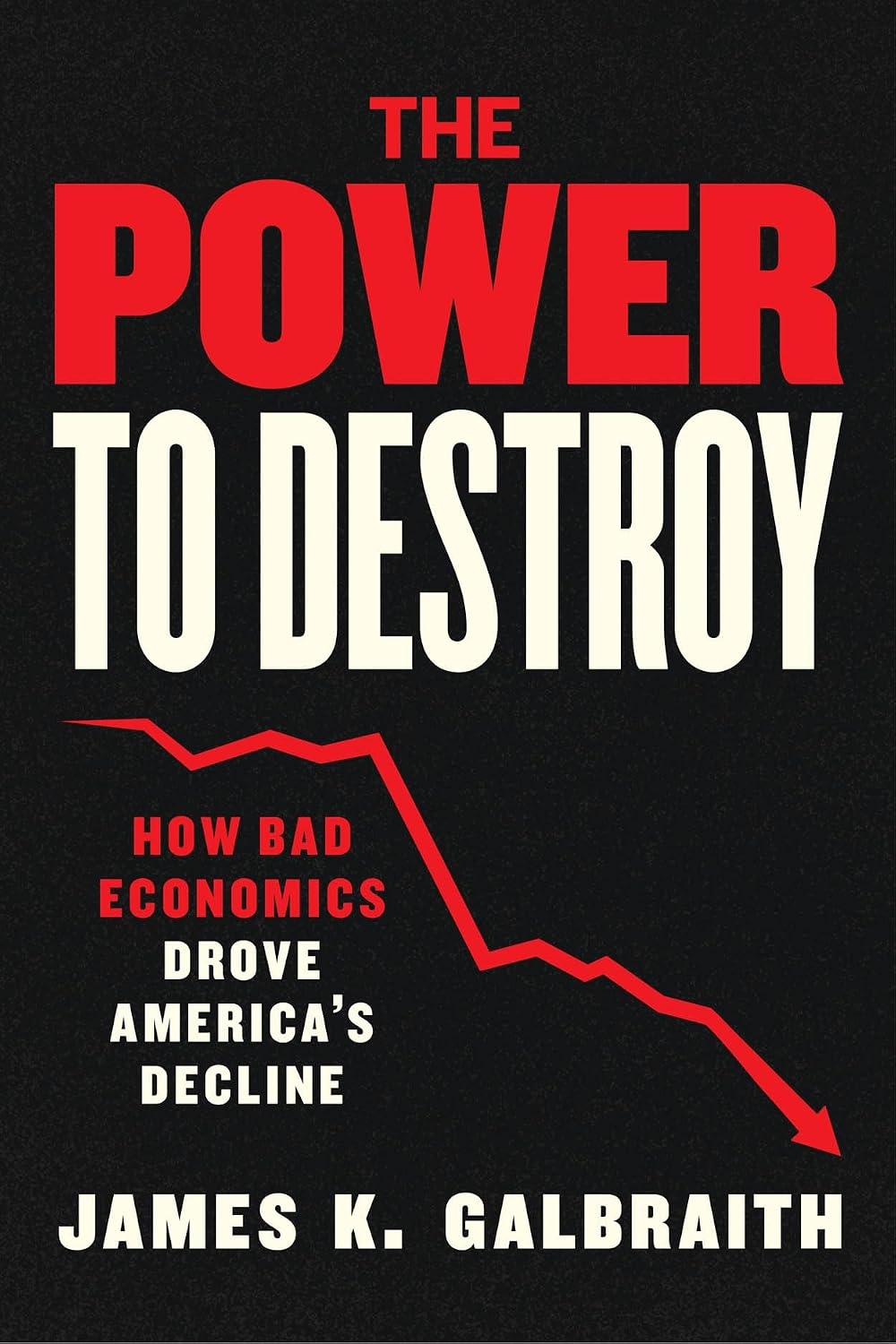
‘In The Power to Destroy,’ James K. Galbraith explains how yesterday’s economic tools don’t work today. Photo: University of Chicago Press

📚 Book Spotlight: The Power to Destroy: How Bad Economics Drove America’s Decline

Author: James K. Galbraith

Release Date: September 23, 2026 (Available for pre-order)

The Dissonance of Modern Economics

Acclaimed economist James K. Galbraith sounds an urgent alarm on how conventional economic ideas and policies have failed to adapt to the most daunting challenges of our geopolitical moment. (University of Chicago Press, 2026)

Amid a mounting sense of American decline, everyday citizens live with a strange contradiction: traditional economists keep announcing that everything is fundamentally fine. They point to steady growth, low unemployment, relatively stable prices, and high stock markets, asking: what’s there to worry about?

Synopsis

The Power to Destroy shows that this dissonance reflects a failure of the discipline to evolve. Galbraith’s incisive history of 21st-century economic policy centers on a fundamental flaw: today’s experts are still deploying tools from yesterday’s wars.

Relying on obsolete ideas, outdated measures, and crude indicators like standard output and price indexes—many honed a century ago for a vastly different social landscape—offers little hope in the face of today’s existential threats.

Galbraith argues that these conventional policies are accelerating the decline of the US economy. Key policy shortcomings include:

  • Mismanaged Inflation: Weak responses to the post-pandemic inflation of 2021–2022.
  • Geopolitical Miscalculations: Flawed strategies regarding the sanctions war against Russia and the economic rise of China.
  • Stagnant Revival: Half-hearted and ineffective attempts at domestic industrial policy.
  • Unaddressed Crises: Inadequate preparation for climate change and the impending demographic crisis.

All of these failures root back to a flawed body of economic thought sustained for ideological rather than practical reasons. As Galbraith makes plain, while market systems have their virtues, government policies are what make functioning markets possible in the first place. Sticking with outdated theories brings the power to destroy, making new, realistic ideas an urgent necessity for survival in an emerging multipolar world.


About the Author

James K. Galbraith holds the Lloyd M. Bentsen, Jr. Chair in Government/Business Relations at the LBJ School of Public Affairs, The University of Texas at Austin.

His previous books include:

  • Entropy Economics: The Living Basis of Value and Production (with Jing Chen)
  • Inequality: What Everyone Needs to Know
  • Welcome to the Poisoned Chalice: The Destruction of Greece and the Future of Europe

1790173434

  days

  hours  minutes  seconds

until

‘The Power to Destroy’ release date

The Neuroscience of Leadership: How Emotional Intelligence Transforms Adversity

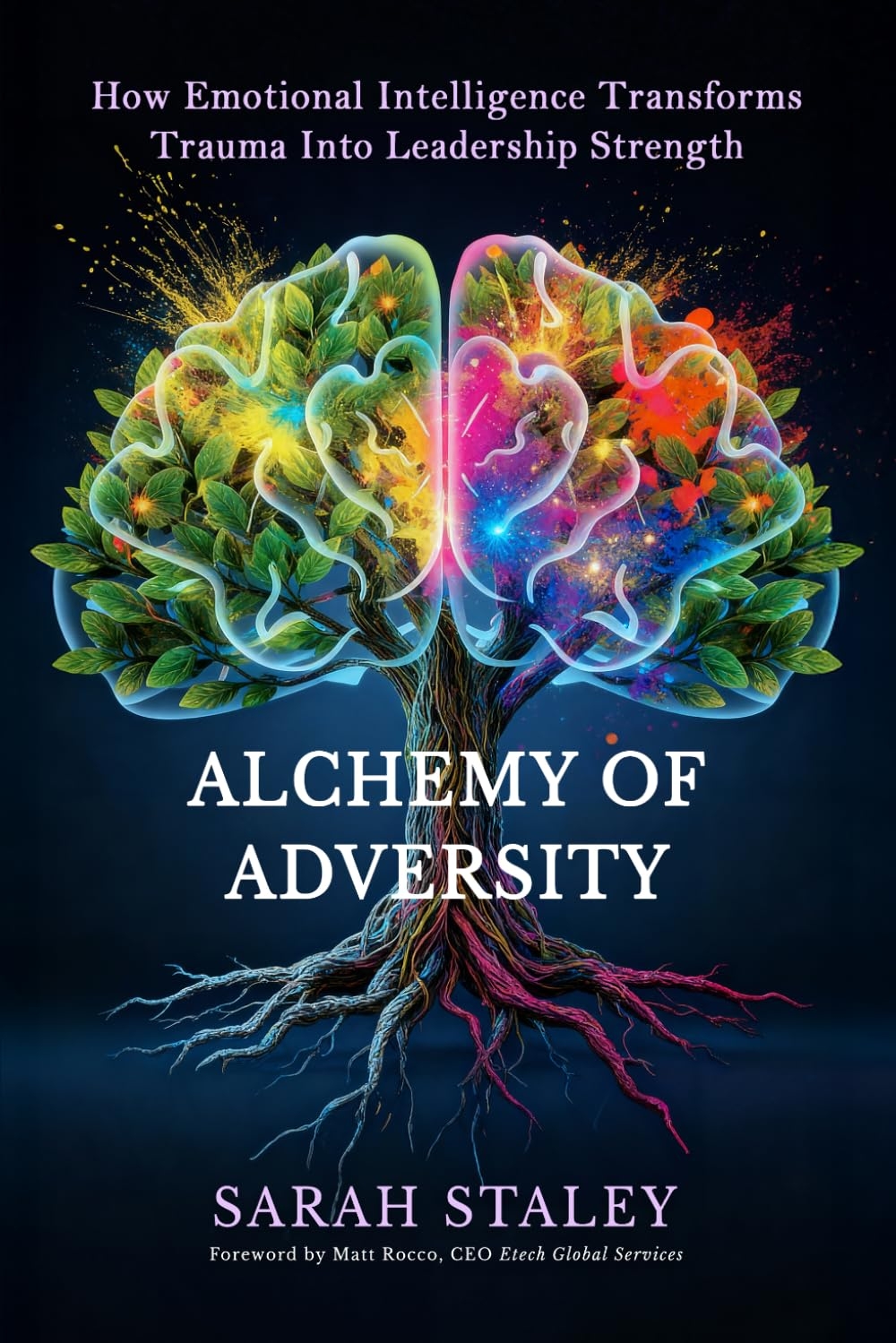
‘Alchemy of Adversity’ is the new leadership book by Sarah Staley. Photo: Amazon

Book Spotlight: Alchemy of Adversity: How Emotional Intelligence Transforms Trauma into Leadership Strength

By Sarah Staley

At some point, every leader will face adversity. It may arrive as personal loss, professional disruption, organizational crisis, burnout, or collective uncertainty. However it appears, adversity reshapes identity, alters decision-making, and tests the stability of those responsible for guiding others. (Amazon, 2026)

The question is not whether hardship will intersect with your leadership—it is whether you will be prepared for what it exposes.

Synopsis

In Alchemy of Adversity, Sarah Staley explores how trauma and high stress affect the brain, fragment internal stability, and quietly influence how leaders show up under pressure. Drawing from neuroscience, emotional intelligence research, and lived leadership experience, she reveals why resilience is often misunderstood.

True strength is not about pushing through. It is about integration, the disciplined process of turning toward disruption, regulating under stress, and rebuilding from clarity rather than reactivity.

This book offers practical frameworks to help leaders:

  • Recognize hidden fragmentation before it impacts performance
  • Strengthen emotional regulation under extreme pressure
  • Rebuild trust across teams following a crisis
  • Guide organizations through adversity without burning out in the process

In a world marked by volatility, burnout, and collective strain, leadership can no longer rely on endurance alone. It requires self-awareness, steadiness, and the capacity to transform hardship into strategic strength.

If you lead people, this is not optional work. It is foundational.

Adversity is inevitable. Whether it weakens your leadership or refines it is not.


About the Author

Sarah Staley is a human resources and organizational development leader, executive coach, and leadership development practitioner whose work sits at the intersection of individual behavior and organizational systems. Her perspective on leadership is shaped by years of working closely with leaders at all levels, supporting personal growth while navigating the realities of performance, culture, and change inside complex organizations.

Sarah’s experience spans both the human and structural sides of leadership. She has partnered with leaders and teams through organizational change, cultural shifts, leadership development initiatives, and moments of uncertainty where trust, clarity, and emotional steadiness matter most. Her work reflects a deep understanding of how leadership decisions ripple through people, teams, and systems over time.

Through her work in HR, organizational development, and executive coaching, Sarah continues to support leaders who want to lead the whole person while building cultures where accountability, performance, and wellbeing coexist.


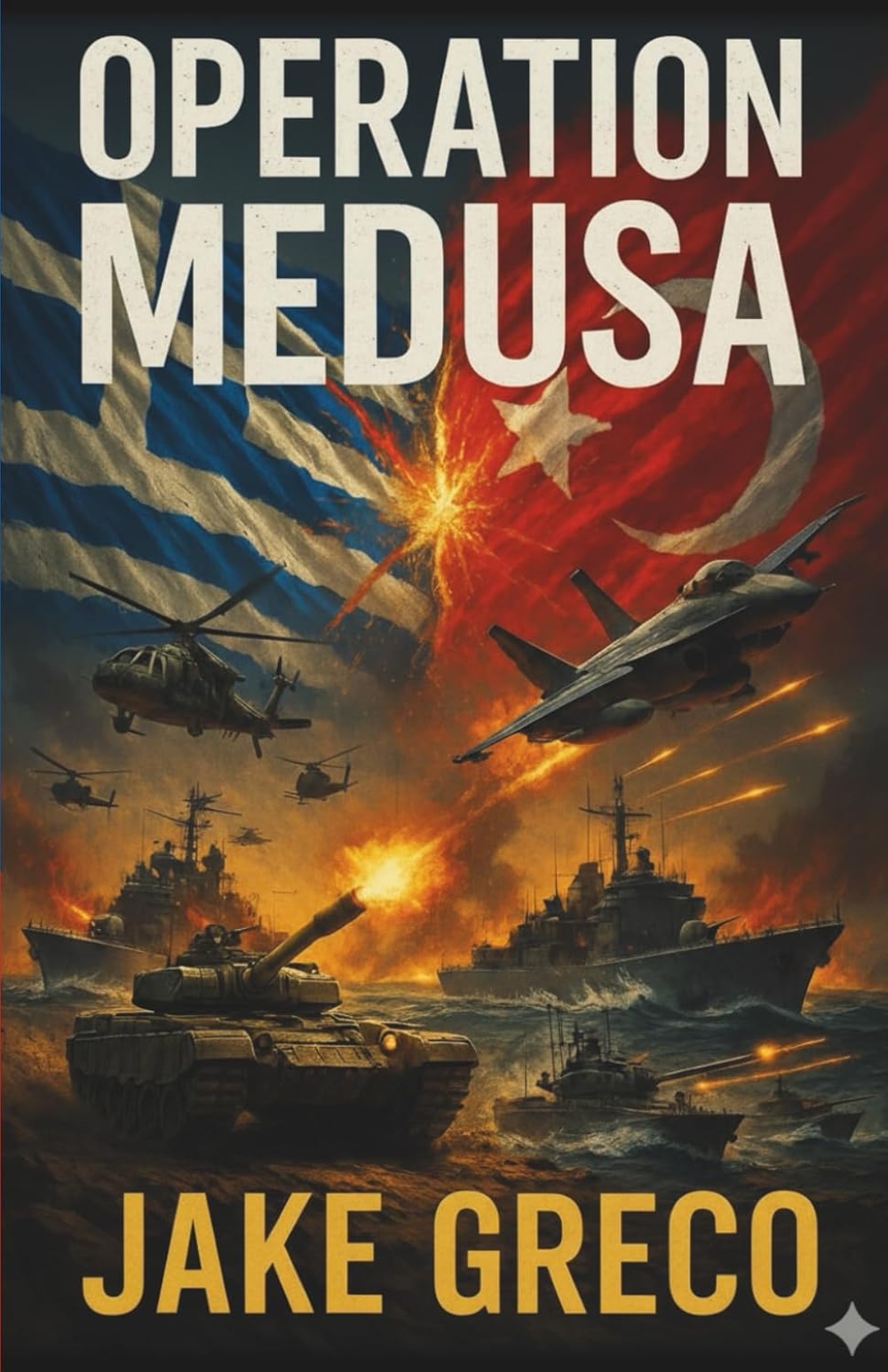
Book Spotlight: ‘Operation Medusa’ by Jake Greco

Operation Medusa – a high stakes geopolitical suspense novel by Jake Greco. Photo: Amazon

Book Spotlight: Operation Medusa (Book 1)

By Jake Greco

Synopsis

History’s wounds never fully heal — and in the wrong hands, they can start a war.

From the creator of the Specters of Athena universe comes a gripping new military thriller saga that blends real-world history, relentless action, and the razor’s edge of modern geopolitics. (Amazon, 2026)

When Greece and Turkey collide in a dangerous dance of brinkmanship, the conflict is fought not only in contested waters and borderlands, but also in intelligence rooms, diplomatic corridors, and the shadows where truth is the first casualty.

At the heart of the series is Nikolas “Strix” Andros — a battle-tested Greek operative whose past in black operations and NATO counterterrorism leaves him uniquely suited for the high-stakes games being played in the Aegean. Alongside Command Sergeant Major Yakovos Rousso, Strix faces provocations by air, land, and sea, each one threatening to ignite a wider war neither side can fully control.

Told through multiple perspectives — Greek, Turkish, and NATO — Operation Medusa combines the adrenaline of modern special operations with the deep resonance of generational history. Inspired in part by the author’s own Greek heritage and the stories of family members who lived through siege, hunger, and occupation, the series honors the resilience of a people while delivering page-turning suspense.

If you crave military thrillers with authentic action, layered political stakes, and characters forged in the crucible of history, Operation Medusa will keep you reading deep into the night.

Other Books in the Series


About the Author

Jake Greco grew up in Arizona and is a desert rat at heart. His father, a WWII veteran, taught him to shoot at a young age and fueled his lifelong passion for firearms and adventure. These early life experiences have molded him into a versatile storyteller whose works span the full spectrum of thriller and suspense genres.

A lifelong admirer of the Southwest’s rugged beauty, Jake weaves the stark landscapes and complex characters of the region into his novels. His stories often feature heroes and antiheroes grappling with morality, loyalty, and the unpredictable twists of fate. From shadowy desert hideouts to the tense corridors of power, his tales explore the human condition under extraordinary pressure, reflecting both the fragility and resilience of the human spirit.

Book Review: ‘Natural Intelligence & the Logic of Consciousness’ by Antonio Damasio

Antonio Damasio explores consciousness and interoception in his new book ‘Natural Intelligence & the Logic of Consciousness.’ Photo: Penguin Random House

Book Review: ‘Natural Intelligence & the Logic of Consciousness’

By Antonio Damasio

Synopsis

Throughout his illustrious, decades-long career, Antonio Damasio has been at the leading edge of science’s enduring quest to unravel the mysteries of the human mind. Now, drawing on a lifetime of groundbreaking research as well as the newest findings of neurobiology, Damasio seeks to move the debate about the origins of consciousness from the world of high-level cognition and abstract reasoning into the wondrous realm of interoception—the human body’s own internal monitoring system.

A probing synthesis of neurobiology, evolutionary science, and philosophy from one of the most notable leaders in his field, Natural Intelligence & the Logic of Consciousness offers readers a scientifically rigorous and profound re-examination of what it means to be alive and aware. (Penguin Random House, 2026)

It will be released on September 15 and is available for pre-order.

Book Contents

  • Beginnings
  • Part I: The Problem of Generating Consciousness and a Sketch of Possible Solutions
  • Part II: Deeper Into the Solution
  • Part III: Now That We Know
  • Part IV: Afterthought

Review

Antonio Damasio’s Natural Intelligence & the Logic of Consciousness is a fascinating exploration of one of humanity’s oldest questions: What gives rise to consciousness? Building on decades of pioneering research in neuroscience, Damasio challenges conventional theories by arguing that consciousness begins not with complex thought or language, but with the body’s internal regulation system, known as interoception.

The book’s central insight is that homeostatic feelings—such as hunger, thirst, pain, comfort, and well-being—form the biological foundation of subjective experience. Rather than treating consciousness as an abstract cognitive achievement, Damasio presents it as an evolutionary solution that helps living organisms survive and thrive. This perspective offers a compelling bridge between neurobiology, philosophy, and evolutionary science.

Beyond explaining the origins of consciousness, Damasio broadens the discussion to examine whether simpler life forms, such as plants and bacteria, exhibit primitive forms of sentience. He also explores how homeostasis influences human culture, politics, religion, and commerce, while thoughtfully considering the promises and limitations of artificial intelligence.

“…there is no guarantee that AI tools will remain as docile servants in the hands of their human owners. The possibility of their gaining independence, even if only momentarily, is certainly a reason for worry.”

His analysis raises important questions about whether machines can truly replicate conscious experience or merely imitate its outward appearance.

Key Chapter Highlights

  • Chapter 9: Examines how feelings developed before words and numbers, and how consciousness developed early to help guide evolution. Even though most homeostatic regulation occurs nonconsciously, some of it remains under our conscious control.
  • Chapter 11: Breaks down the core science behind consciousness—specifically interoception, or the ability to sense, interpret, and integrate signals from inside your body.
  • Chapter 18: Explores the science behind pain and nausea. Damasio explains how nausea serves as another vital bodily alert system designed to prevent damage from ingesting toxic molecules.
  • Chapter 22: Outlines his theories regarding artificial intelligence. Damasio posits that AI is fundamentally neutral to good because it stems from human innovation, but cautions that if the humans behind its creation have malicious intent, the technology will reflect those motives.

Final Verdict

Although the scientific concepts occasionally demand careful reading, Damasio’s arguments remain engaging, logical, and thought-provoking. Readers interested in neuroscience, cognitive science, philosophy of mind, or the future of AI will find this book both intellectually stimulating and deeply rewarding.

Natural Intelligence & the Logic of Consciousness is a profound, accessible examination of the relationship between body, brain, and awareness that challenges readers to rethink the very nature of intelligence. Damasio delivers a compelling argument that feeling is the logic of consciousness. For anyone seeking to understand the deep biological origins of human experience, this is a definite must-read.

“Poets understood, long before neurobiologists ever could, that the glories of passionate love and the sufferings of love gone astray could be legitimately described in physiological terms, even though the physiological details are not exactly the same.”

Rating: 4 out of 5.

About The Author

Antonio Damasio is University Professor, David Dornsife Professor of Neuroscience, Psychology, and Philosophy, and director of the Brain and Creativity Institute at the University of Southern California, Los Angeles. Damasio is a member of the National Academy of Medicine and a fellow of the American Academy of Arts and Sciences as well as the author of Descartes’ Error, The Feeling of What Happens, Looking for Spinoza, Self Comes to Mind, The Strange Order of Things, and Feeling & Knowing, all of which have been published in translation and are taught in universities throughout the world.


** Thanks to Michael Goldsmith and Penguin Random House for the gifted ARC for review consideration. I haven’t been compensated for this review and all views and opinions expressed are my own.

Essential Reading for New Clinicians: ‘The Pediatric PT Playbook’ Book Spotlight

‘The Pediatric PT Playbook’ is the ultimate pediatric pt survival guide. Photo: Amazon

Book Spotlight: The Pediatric PT Playbook

A Practical Guide to Clinical Reasoning for Students and New Clinicians

By Kyan Sahba, PT, DPT, PhD

Your peds clinical is coming, and you don’t feel ready. That’s exactly why this book exists.

Physical therapy school teaches you the science. It doesn’t teach you what to actually do when a two-year-old won’t cooperate, a parent is watching your every move, and your clinical instructor (CI) is waiting for you to take the lead. (Amazon, 2026)

The Pediatric PT Playbook was written for that exact moment.

This isn’t another dense textbook, it’s the clinical companion you wish you had before day one of your pediatric rotation. It’s built around how real pediatric PT actually works, not just how it’s described in a lecture hall.

What’s Inside

  • Structured Frameworks: Master clinical reasoning across every pediatric setting—outpatient, school-based, NICU, acute care, and home health.
  • CI Expectations: Learn exactly what your clinical instructor expects to see from you and how to deliver it with confidence.
  • Smart Goal Writing: Write goals that actually make sense in a pediatric context, including educationally relevant goals.
  • Family Communication: Discover real-world communication strategies that don’t make you sound like a reading textbook.
  • Clinical Red Flags: Fast-track your assessment skills with clear breakdowns of movement quality, symmetry analysis, and red flags.
  • Documentation Made Easy: Master SOAP notes and documentation tailored specifically for pediatric settings.

Who Is This Book For?

Written by a pediatric PT, educator, and researcher who has trained students across real clinical settings, this guide targets the exact gap between classroom theory and clinic reality.

This playbook is essential reading for:

  • Doctor of Physical Therapy (DPT) Students preparing for or currently in a pediatric rotation.
  • New Grad PTs stepping into their first pediatric role.
  • Experienced Clinicians transitioning into pediatric practice.

Whether you’re two weeks out from your first peds rotation or already in the thick of it, this book will help you feel more confident, prepared, and effective from day one.


About the Author

Kyan Sahba, PT, DPT, PhD is a pediatric physical therapist, researcher, and educator with experience spanning home health, school-based practice, outpatient pediatrics, and pediatric oncology. She earned her PhD in Physical Therapy and is dedicated to bridging evidence-based research with real-world clinical practice.

Beyond her research and clinical work, she founded the Barry Blue Foundation in honor of her parents. The foundation supports families facing financial hardships due to cancer through a series of children’s books that teach kindness, courage, and emotional resilience.

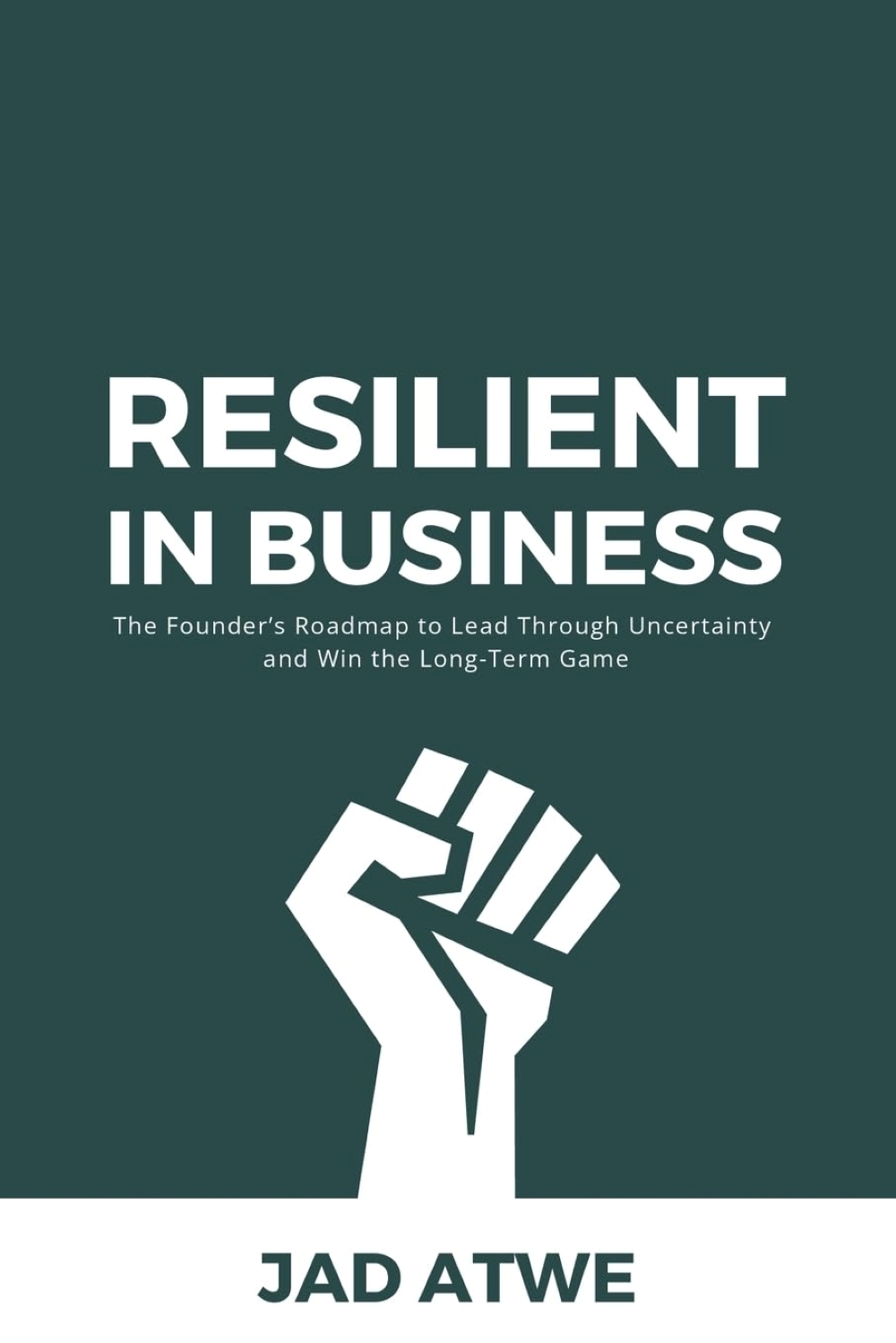
Book Spotlight: ‘Resilient in Business’ by Jad Atwe – The Ultimate Founder’s Guide

‘Resilient in Business’ by Jad Atwe. Photo: Barnes & Noble

📚Book Spotlight: Resilient in Business: The Founder’s Roadmap to Lead Through Uncertainty and Win the Long-Term Game

By Jad Atwe

In today’s economy, founders are under relentless pressure. The stakes are high, the path forward isn’t always obvious, uncertainty is debilitating, and outcomes are unpredictable. All of this takes a huge toll on the single quality that will actually see a founder through to success: resilience. (Amazon, 2026)

In this timely and practical book, entrepreneur and business coach Jad Atwe delivers a decisive framework for building the capacity to navigate competing demands and boost your entrepreneurial resilience.

Based on his proprietary Resilient in Business Operating System™, the book guides you through a transformative process to position your business for the success you know is possible—all by developing the capacity to:

  • Rise above the chaos
  • Move beyond survival mode
  • Step into sustainable business leadership

If you’re a founder carrying too much, feeling the cracks forming beneath your feet, and refusing to let pressure dictate your future, this book is for you. It’s time to discover the edge that will help you win the long game.


Ready to Read?

Resilient in Business is available now. If you’re looking to transform how you lead under pressure, grab your copy today and start building your roadmap to long-term success.


About the Author

Jad Atwe was once on the verge of losing everything. After leaping into a general contracting business that leveraged his engineering background, sudden policy and economic shifts forced him into uncertainty, nearly turning his aspirations to dust.

Determined to deconstruct what it truly takes to navigate volatility and “make it” in entrepreneurship, Jad spent years studying founder psychology, operational excellence, and the patterns that differentiate those who merely endure from those who thrive.

Having walked through storms that break most founders, he emerged with a clear understanding of entrepreneurial resilience—the inner operating system that allows leaders to build, lead, and scale under uncertainty.

Today, Jad speaks on entrepreneurial resilience and guides founders to lead through uncertainty, build reliable operations, and scale their companies without losing themselves in the process. He is the originator of the Resilient in Business Operating System™, designed to help founders move past what’s holding them back and break free from survival mode.


The Ultimate Leadership Field Manual for Uncertain Times: ‘Citizen Servant Leader’

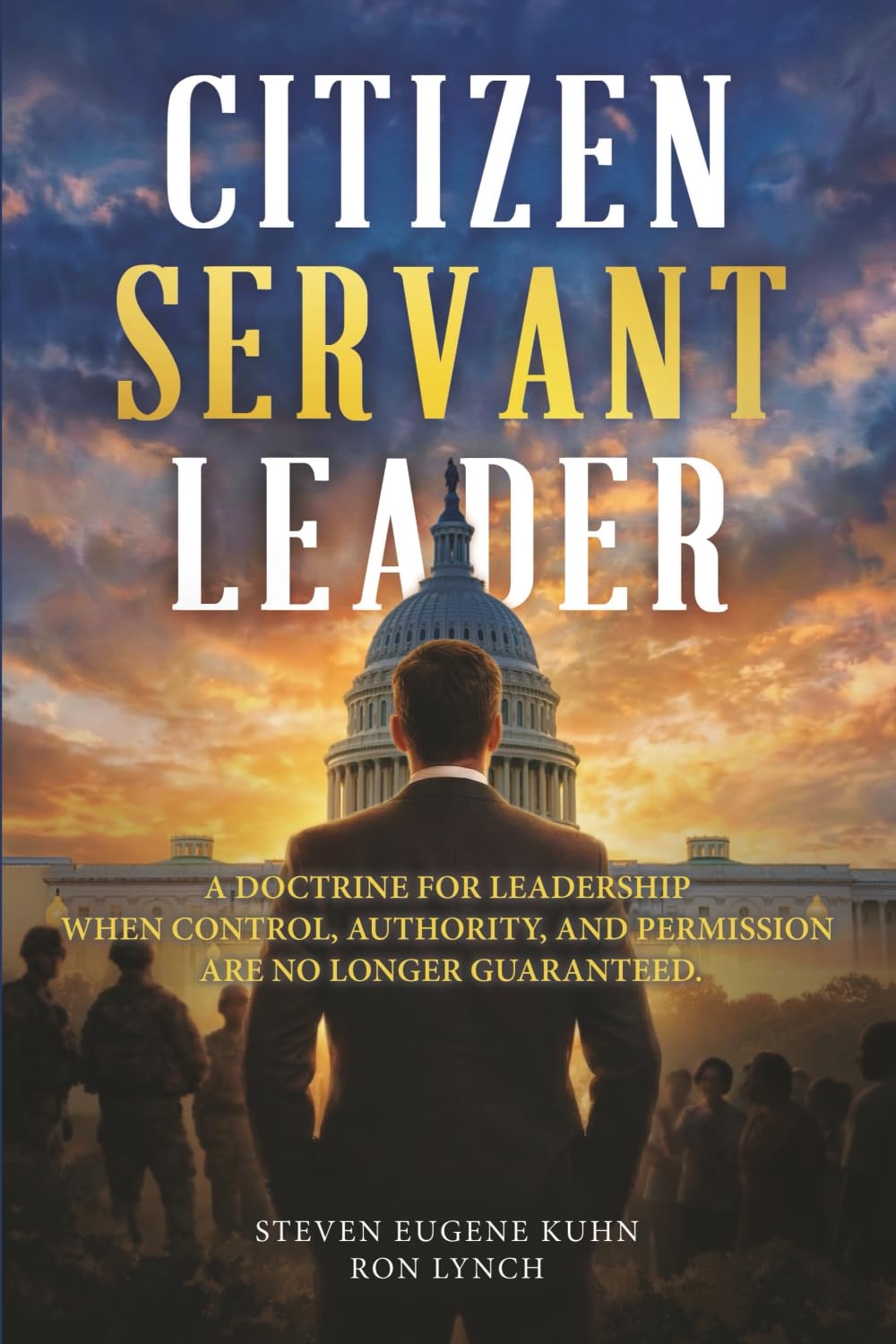
‘Citizen Servant Leader: A Doctrine for Leadership When Control, Authority, and Permission Are No Longer Guaranteed’ by Steven Kuhn Photo: Amazon

📖Book Spotlight: Citizen Servant Leader

A Doctrine For Leadership When Control, Authority, and Permission Are No Longer Guaranteed

By Steven Kuhn/Ron Lynch

The Synopsis

Citizen Servant Leader is a doctrine-based field manual for leadership when authority, control, and permission are no longer guaranteed. (Amazon, 2026)

Rather than teaching influence, motivation, or personal branding, this book focuses entirely on the behaviors that stabilize systems under pressure. It is built on one uncompromising principle: responsibility always comes before authority.

Responsibility Precedes Credibility.
Credibility Precedes Authority.

Drawing from combat experience, high-stakes international business, and decades of organizational leadership across ten countries, the authors show how leadership forms naturally when individuals are willing to carry burden early, speak truth when it costs something, and create space when control is gone.

What’s Inside?

Each chapter combines real-world stories with clear standards, recognizable failure patterns, and practical field applications designed to be practiced, not admired. The book examines:

  • How silence and passivity quietly erode trust.
  • Why truth functions as a structural requirement rather than a moral preference.
  • How small, disciplined actions prevent collapse at personal, organizational, and civic levels.

This is not a motivational book. It is a practical guide for becoming reliable when others hesitate, and for leading with clarity, restraint, and integrity when systems fail.

Who is this book for?

It is written for people who already feel the weight of responsibility: leaders without titles, citizens navigating uncertainty, business operators, veterans, parents, and community builders who are done waiting for permission to act.

Exploring the Citizen Servant Leader Series

This book is the foundation of the Citizen Servant Leader series, a values-first leadership doctrine designed for individuals who choose responsibility before authority.

VolumeTitleFocus
1Citizen Servant LeaderThe foundation. Who you are, what you owe, and what it means to lead with integrity.
2Financial FreedomBuild wealth, break dependence, and use resources to serve.
3Health, Wellness and ResilienceThe physical infrastructure the mission requires.
4Information WarfareThe defensive manual.
5IncorruptibleThe capstone. The standard every Citizen Servant Leader is building toward.

About the Author: Steven Kuhn

Steven Kuhn is a decorated U.S. Military combat veteran who has been hand-picked to consult with some of the most influential people in the world (including rock stars, actors, business leaders, and politicians) on how to expand their brand, build loyalty, and develop strategies for increasing beneficial relationships.

Steven served in the U.S. Army in combat and was awarded the Bronze Star. After his military service, he spent over 30 years living and working internationally, advising business leaders, organizations, and public-sector decision-makers across Europe and the Middle East.

His grassroots movement, Take America Back, grew from these experiences after observing similar patterns across multiple countries: centralized power, declining accountability, and citizens disengaged from responsibility.


‘Voyagers’ Book Review: Emotional Sci-Fi Meets Childhood Trauma

‘Voyagers’ is Meg Charlton’s debut novel. Photo: Barnes & Noble

Book Review: Voyagers by Meg Charlton

The Story

Years ago, when Alex and Ana were six years old, they vanished for thirty-six hours during a sleepover while on vacation near Palm Springs. When they returned, dazed but unharmed, their account had all the traits of an alien abduction. The media frenzy that followed made them famous, and the long months of child stardom—of talk shows and sitcom cameos—created a seemingly unbreakable bond between them, until the mystery behind their disappearance began to tear them apart.

In the present, “the Signal,” a mysterious transmission pulsing from the edge of the solar system, arrives, changing the world overnight. Planes are grounded, satellites fail, and speculation abounds. While humanity holds its breath for first contact, the Signal feels deeply personal to Alex, now a thirtysomething lawyer who has spent years distancing himself from the unexplainable. It is the opening of an old wound.

With the world on edge and the Signal growing stronger, Alex is drawn back to the one person who might have answers. Ana, now a professional advocate for experiencers of extraterrestrial contact, is leading a retreat near Palm Springs, close to the site of their childhood disappearance. As the former best friends tentatively reunite, what starts as a quest to confront the reality of their original experience becomes a larger reckoning with friendship, faith, family, and truth itself.


Review

Voyagers by Meg Charlton reframes a popular sci-fi premise—a world-altering cosmic transmission—into a profoundly intimate character study. While humanity holds its breath over potential first contact, Alex is forced to confront a childhood trauma he spent decades burying.

Charlton beautifully balances global intrigue with deep character development. The mystery surrounding Alex and Ana’s disappearance keeps the pages turning, while their complicated reunion adds emotional weight to the unfolding narrative. As the tension of the global phenomenon grows, it perfectly mirrors the internal reckoning between the two protagonists. Rather than relying solely on extraterrestrial speculation, the novel uses the themes of memory, belief, and the stories people construct to make sense of their lives.

The pacing is steady, with suspense building naturally as the Signal grows stronger and long-buried questions demand answers. The writing is thoughtful and atmospheric, creating a sense of wonder without sacrificing emotional authenticity. Written in a non-linear narrative, the story unfolds beautifully through Alex’s first-person perspective:

“I saw all my younger selves stretched out like skeins of geese across the sky, crisscrossing in the air, the six-year-old Alex still flying away from California, the adult flying back toward it.”

Key Themes & Concepts

  • Most Intriguing Concept: Is Allen just Alex and Ana’s imaginary friend, or is he a real memory?
  • Core Themes: Family, Friendship, and Identity.
  • Genre: Blend of literary fiction and science fiction.

Final Thoughts

Voyagers is thought-provoking and beautifully written. A suspenseful exploration of friendship and family dynamics, it’s rich with science fiction, mystery, and emotional drama. It uses an extraterrestrial backdrop to dissect the fragility of human memory and poses the question: is discovering the truth always worth the cost? Most importantly, it explores the psychological aftermath of early stardom, public scrutiny, and shared childhood trauma.

Highly recommended for readers who enjoy intelligent speculative fiction with strong, character-driven arcs.

“It is very painful to be called out for believing something that isn’t so. The instinct is not to cut one’s losses and confess to being wrong but to double down, to stay committed to your foolishness for so long that it takes on a kind of power.”

Rating: 4.5 out of 5.

Get your copy today!


About the Author

Meg Charlton was born and raised in New York City. She holds an MFA in fiction from Brooklyn College, and Voyagers is her brilliant debut novel.


** Thank you to Sarah Jean Grimm and Broadside PR for the Advanced Reader Copy (ARC) for review consideration. I haven’t been compensated for this review and all views and opinions expressed are my own.