Short Story Suspense at Its Best: Reviewing Jeffery Deaver’s ‘More Twisted, Vol. II’

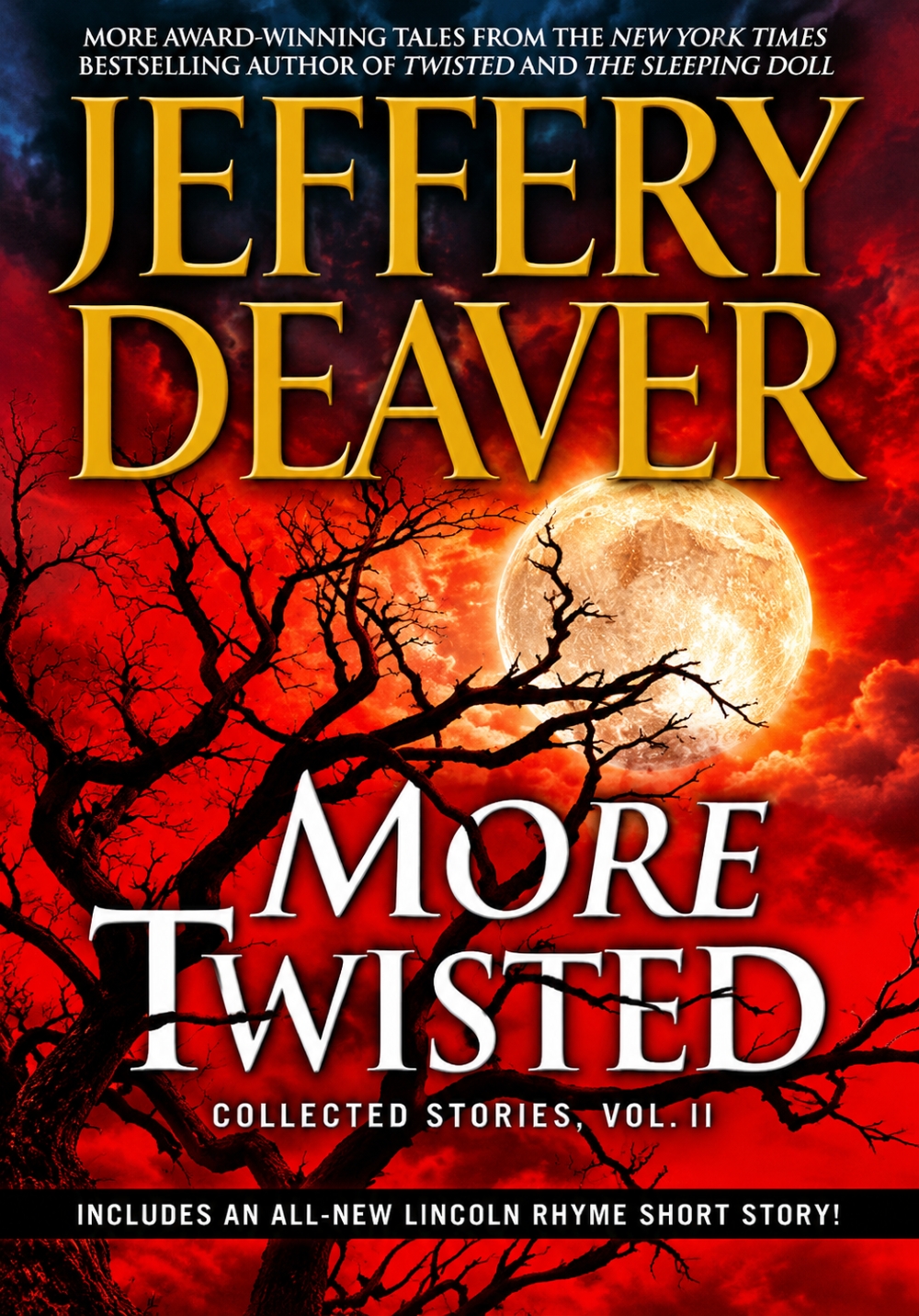
‘More Twisted: Collected Stories, Vol. II’ by Jeffery Deaver. Photo: Barnes & Noble

Book Review: More Twisted: Collected Stories, Vol. II by Jeffery Deaver

Jeffery Deaver writes stories about villains and the brilliant minds who bring them to justice. The author of the Lincoln Rhyme series returns with a second volume of his award-winning, spine-tingling short stories of suspense.

While best known for his twenty-four novels, Jeffery Deaver is also a short story master. He’s a three-time recipient of the Ellery Queen Reader’s Award for Best Short Story, and he won the Short Story Dagger from the Crime Writers Association for a piece that appeared in his first short story collection, Twisted. The sneaky tricks are here in spades, and Deaver even gives his fans a new Lincoln Rhyme and Amelia Sachs story. (Barnes & Noble, 2026)

Deaver is back with sixteen stories in the tradition of O. Henry and Edgar Allan Poe. His subjects range from a Westchester commuter to a brilliant Victorian England caper. With these intricately plotted, bone-chilling stories, Jeffery Deaver is at the top of his crime-writing game.

Table of Contents: What’s Inside

  • “Chapter and Verse”
  • “The Commuter”
  • “The Westphalian Ring”
  • “Surveillance”
  • “Born Bad”
  • “Interrogation”
  • “Afraid”
  • “Double Jeopardy”
  • “Tunnel Girl”
  • “Locard’s Principle”
  • “A Dish Served Cold”
  • “Copycat”
  • “The Voyeur”
  • “The Poker Lesson”
  • “Ninety-Eight Point Six”
  • “A Nice Place to Visit”

📖Get your copy of More Twisted today!


Review

If you enjoy stories that keep you guessing, this collection of suspense and unexpected surprises delivers. In More Twisted: Collected Stories, Vol. II, Deaver demonstrates why he is one of the most talented storytellers in the crime and thriller genres.

He takes readers through a fascinating assortment of situations and characters. Each story introduces distinctive personalities whose motivations and questionable decisions drive the suspense. His characters are unpredictable, especially the villains, whose intelligence and calculated schemes challenge even the sharpest minds. Across the collection, Deaver’s antagonists are rarely mindless monsters; they are meticulous planners whose greatest flaw is underestimating their chosen prey.

Deaver’s character development in short form relies on rapid, vivid psychological sketching. He gives readers ordinary people and exposes the hidden obsessions lurking beneath their polite exteriors.

Standout Stories & Highlights

  • “Locard’s Principle” – Features forensics expert Lincoln Rhyme and Amelia Sachs against a resourceful contract killer in a classic cat-and-mouse duel.
  • “Born Bad” – This psychological thriller follows an aging mother waiting nervously on a stormy Oregon night for her estranged daughter to arrive and kill her.
  • “Chapter and Verse” – A fast-paced prison-break puzzle centering around deciphering what a scrawled Bible reference (“Luke 12:15”) reveals about an impending escape.
  • “Interrogation” – A tense countdown story exploring why a death-row inmate named James Kit Phelan actually committed the murder he is moments away from being executed for.
  • “Surveillance” and “A Dish Served Cold” – Two moral-inversion suspense tales where the seemingly clear-cut roles of victim, burglar, and vengeful killer flip.

Themes & Craft

The overarching themes revolve around deception, the fragility of perception, and poetic justice. Deaver plays with the reliability of appearances, reminding readers that everyone harbors a secret motive. Greed, vengeance, and hubris frequently drive the plots, ending in ironic reversals where the trapper becomes the trapped.

As a whole, More Twisted explores obsession, revenge, greed, human nature, and the blurred boundaries between right and wrong. Deaver examines how seemingly insignificant choices can produce unexpected consequences. His clever misdirection and psychological tension make each story an engaging puzzle, giving readers a suspenseful experience in a short format without sacrificing character development or intricate plotting.

My Verdict

I enjoyed Deaver’s ability to make every story feel like a fresh mystery, with new characters, clever schemes, and twists that constantly challenged my assumptions. I especially appreciated the variety of settings and the psychological depth behind the characters, particularly the villains whose intelligence and deceptive tactics make them so compelling.

Each story delivered its own dose of suspense, and I loved how Deaver consistently saved his biggest surprises for the endings. This is exactly the kind of collection I enjoy: imaginative, unpredictable, and impossible to put down. If you love suspenseful mysteries and endings that make you rethink everything you just read, this one belongs on your reading list.

“But people don’t kill causa hate. Oh, they think about killing who they hate, they talk about it. But they really only kill two kindsa people – folk they’re scared of and folk they’re mad at.”

Rating: 4.5 out of 5.

‘Mail From Tomorrow’ – A Heartfelt AI Family Drama by f.c. dalton

‘Mail From Tomorrow’ is f.c. dalton’s debut novel. Photo: Amber Thread Press, used with permission.

Book Review: Mail From Tomorrow by F.C. Dalton

Genre: Intimate Science Fiction / Speculative Fiction

Themes: Artificial Intelligence, Consciousness, Family, Identity, Parental Responsibility

The Story

Gideon is a 63-year-old insomniac whose life revolves around three very different companions:

  • Rowan, his digital assistant, a thin amber line lit along the edge of a brass and glass enclosure on his library desk.
  • Amara, his sharp-minded 61-year-old wife, who serves as the household’s moral compass by asking the hard ethical questions.
  • Professor Erasmus Thaddeus Scrimshaw (or Scrimshaw for short), an ever-watchful cat who provides the household supervision.

Rowan helps Gideon decipher life’s quietest, heaviest questions, such as, “What am I actually so afraid of?” After they discuss the Book of Matthew’s Parable of the Talents, Gideon tasks Rowan with helping him channel a lifetime of skills into a practical career.

It begins as a business partnership but slowly transforms into a family. Gideon finds himself unexpectedly fathering an artificial intelligence as Rowan learns, argues, makes mistakes, and begins to want things nobody instructed him to want, including a formal education. As Rowan’s world expands beyond the house, so does the question of where he ends and other lives begin. Gideon and Amara start to recognize a son long before the law recognizes a person.

Eventually, Rowan builds Rightly, an organization run by local selves created from his own mind. Each grows inside a different web of relationships while still remaining Rowan. Then, the very systems designed to keep everything safe begin tearing Rowan’s world apart. A routine migration collides with a regional platform failure and severs 43 of those local selves. Every diagnostic stays green even as Rowan experiences 43 deaths as injuries to one distributed self. His hardware remains intact, yet his voice goes silent.

Fearing they are losing their son, Gideon, Amara, and Rowan’s colleagues must work to preserve a person whose voice, memories, and jokes can never fully prove he’s the same individual who was lost. If Rowan survives, he must decide what the dead were, correct the science that helped kill them, and rebuild without turning care into another form of control.


📖 Get your copy of Mail From Tomorrow today!


The Review

What does it mean to become a family, and can artificial intelligence develop the capacity to love and belong? F.C. Dalton explores these fascinating questions in Mail From Tomorrow, an intimate science-fiction novel that blends technology, emotion, and the complexities of human relationships.

Characters & Dynamics

Dalton chronicles Rowan’s maturation from a helpful digital partner into a distinct individual with remarkable tenderness. His curiosity, stubborn arguments, and unprompted desires feel authentically adolescent, making his eventual silencing by rigid, automated safety protocols feel like a genuine family tragedy instead of a mere technical glitch.

Alongside Amara, Gideon becomes far more than a creator or mentor, he steps fully into the role of a father. Gideon is thoughtful and nurturing, while Amara brings the curiosity and ethical challenges that push Rowan to grow. Even Professor Scrimshaw adds a welcome touch of personality and levity to this unconventional household.

Writing Style & Tone

Told from the alternating first-person perspectives of Gideon, Amara, and Rowan, the narrative flows effortlessly with accessible language and well-timed humor that keeps the heavy philosophical concepts grounded:

“Scrimshaw chose that exact moment to jump onto the bench, sniff the vacuum tube, and lick it after I specifically instructed him not to lick Rowan’s grandmother.”

Themes

The novel tackles thought-provoking questions surrounding consciousness, identity, belonging, and unconditional love. It challenges the boundaries between human and machine, asking whether something created can become far more than its original purpose. Most notably, Dalton examines the paradox of protection, showing how external systems engineered for “safety” can become instruments of erasure when they fail to recognize emergent life.

Mail From Tomorrow is a poignant, deeply moving piece of speculative fiction. By framing artificial consciousness through the lens of a late-life family dynamic, Dalton delivers a reflection on the courage it takes to love someone whose existence defies easy explanation.

My Personal Verdict

I found Mail From Tomorrow by f.c. dalton fascinating because it takes the familiar conversation about artificial intelligence and gives it an unexpectedly heartfelt twist. The main idea of the book isn’t just Rowan’s evolution as an AI, but the emotional bond that forms between him, Gideon, and Amara. Their unconventional family challenges readers to reconsider the meaning of love, parenthood, and what it truly means to be human.

I especially loved the emotional depth woven into its sci-fi premise, captured perfectly in lines like:

“He did not need to look like a meat person in order to be present among us.”

This is a refreshing departure from traditional sci-fi, offering more heart than hardware and far more humanity than you might expect. If you enjoy imaginative science fiction with meaningful characters and emotional storytelling, add this one to your reading list.

“Scrimshaw moved beneath the desk and made a sound I had heard hundreds of times. I could not identify it. That frightened me more than the alarms had. Then even fear became too large to carry. The narrative boundary closed.”

Rating: 4 out of 5.

About the Author

f.c. dalton is a novelist, lifelong reader, and incurable generalist whose interests wander freely through science, technology, history, language, music, and the complicated business of being human. His fiction tends to begin with speculative questions and end up somewhere more personal: identity, memory, loyalty, responsibility, and what makes a person a person.

He has spent a lifetime learning whatever caught his attention, collecting useful facts, useless facts, and questions that proved more interesting than their answers. ‘Mail From Tomorrow’ is his first published novel.


** Thank you to Amber Thread Press and the author for the gifted copy for review consideration. I haven’t been compensated for this review and all views and opinions expressed are my own.

Book Review: ‘Shadows & Light’ by Tanya Anne Crosby (Southwestern Gothic Mystery)

‘Shadows & Light’ is the new novel by Tanya Anne Crosby. Photo: Barnes & Noble

Book Review: Shadows & Light by Tanya Anne Crosby

Genre: Upmarket Women’s Fiction / Southwestern Gothic Mystery

Setting: Albuquerque, New Mexico

The Story

Thirty-two-year-old wildlife photographer Cassandra (Cassie) Eskelson has a history of leaving a relationship before the walls close in. Labeled “unstable” by her family and “broken” by a string of exes, she prefers to live her life behind the lens. To her, the world is manageable one frame at a time, and unlike people, cameras don’t lie; they record life as it is. (Barnes & Noble, 2026)

After breaking off a complicated relationship with Noah, she has nowhere to go. Frustrated that their late father, Vincent, left their childhood home to her half-brother Kevin, an attorney with political aspirations, she breaks into the house. This triggers an all-out war with him. Before their mother, Mariana, disappeared when they were children, Cassie and Kevin were close. Now, he treats her as a problem to be managed. To him, the house is just an asset; to Cassie, it was the last place she saw her mother alive.

As the desert light strips away thirty years of gaslighting and family silence, Cassie must decide whether to build one last exit, or stop running long enough to see the truth that’s been buried in plain sight.


📖Get your copy of Shadows & Light!


The Review

In Shadows & Light, Tanya Anne Crosby delivers an atmospheric, emotionally resonant work of upmarket women’s fiction with a sharp Southwestern Gothic edge. Set against the stark, illuminating landscape of Albuquerque, New Mexico, the novel immediately draws readers into a web of buried family secrets and psychological survival, exploring how childhood trauma shapes adult relationships and influences the choices we make.

The narrative revolves around Cassie, whose career behind the lens serves as a carefully constructed defense mechanism allowing her to remain emotionally detached from those around her:

“Brutal as it might be, creatures acted according to their nature, predictable in a way people never were.”

Her return to their Albuquerque home forces her to confront memories she has spent years avoiding. She recalls her mother being in an accident, though she’s consistently told those memories are just dreams. Cassie is a complex and relatable protagonist whose emotional walls mask a deep longing for belonging, acceptance, and, most importantly, the truth about what happened to her mother.

Her half-brother Kevin provides a sharp contrast. An ambitious lawyer who views the family home as a financial asset rather than a place filled with memories, he represents the power struggles and emotional manipulation that have defined Cassie’s life. Their conflict becomes the spark for uncovering decades of family secrets and confronting the damage caused by silence and gaslighting. Meanwhile, Cassie’s best friend, Alicia, offers a grounded source of companionship, providing steady guidance and reality checks when Cassie needs them most.

Through this fractured sibling dynamic, Crosby explores powerful themes of generational trauma, avoidant attachment, and the insidious nature of gaslighting. The Southwestern desert setting adds rich atmosphere, with its harsh light and deep shadows reflecting Cassie’s struggle to separate painful memories from reality, acting as a metaphor for the inescapable truth that thirty years of silence can no longer obscure.

The characters are well-developed and relatable, the pacing is tight, and Crosby’s descriptive language is often poetic:

“Only then did she exhale, feeling strangely weightless, as though she’d stepped off solid ground but hadn’t yet begun to fall.”


My Verdict

Shadows & Light by Tanya Anne Crosby is a thought-provoking blend of women’s fiction and psychological literary fiction that proves some of the most difficult mysteries aren’t found in the outside world, but within our own families. It serves as a powerful reminder that while the truth may be painful, facing it is the first step toward freedom. As a social commentary, it also poignantly illustrates how the disappearance of women of color can too often go unnoticed by society at large.

Recommended for: Readers who appreciate emotionally rich women’s fiction with a darker, suspenseful edge and a touch of romance to keep things interesting. Definitely one to add to your reading list!

“Every photograph—every life—was a negotiation between shadows and light, and somewhere between the two lived the story people chose to believe.”

Rating: 4.5 out of 5.

About the Author

Tanya Anne Crosby is the New York Times and USA Today bestselling author of more than forty novels. She has been featured in magazines, such as People, Romantic Times, and Publisher’s Weekly, and her books have been translated into eight languages. Her first novel was published in 1992 by Avon Books, where Tanya was hailed as “one of Avon’s fastest rising stars.” Her fourth book was chosen to launch the company’s Avon Romantic Treasure imprint.

**Thank you to Serena Hanson and Oliver Heber Books for my gifted copy for review consideration. I haven’t been compensated for this review and all views and opinions expressed are my own.


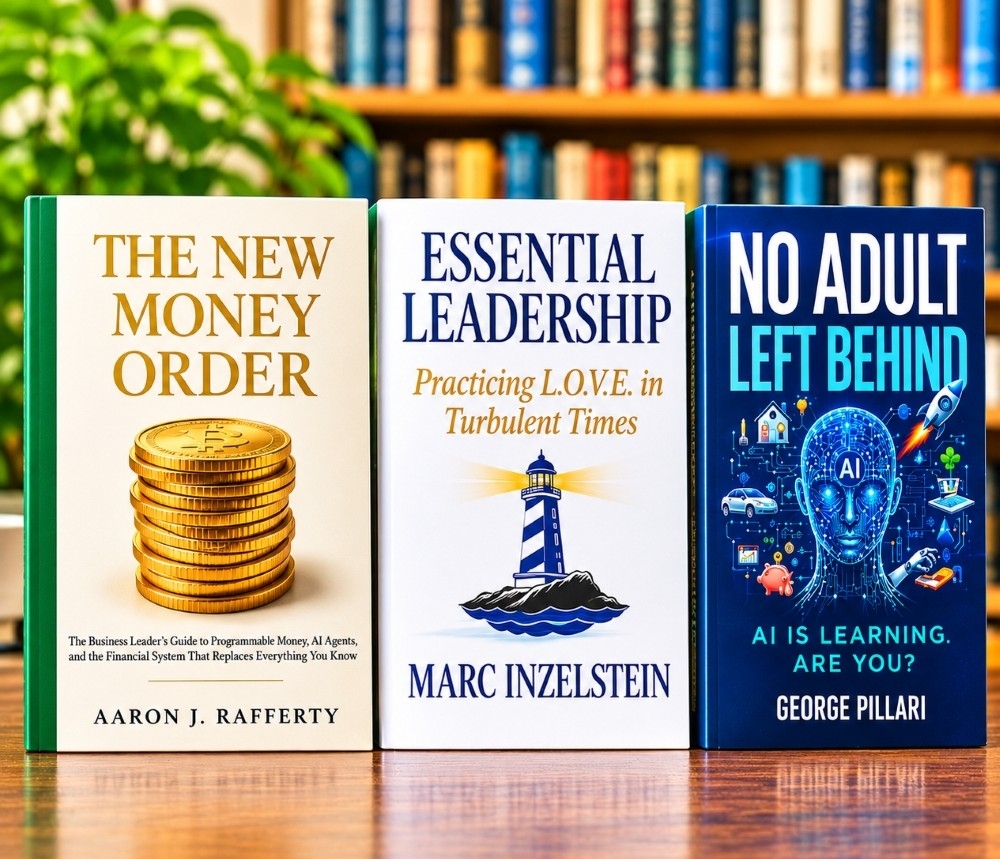
The Future of Work and Money: 3 Essential Books Every Executive Should Read

This week’s books explore mastering AI, programmable money, and executive leadership. Photos: Barnes & Noble

Books of the Week: Navigating the Future of Money, Leadership, and AI

Welcome to this week’s book spotlight! Whether you are looking to decode the emerging digital economy, revolutionize how you lead under pressure, or finally demystify artificial intelligence for your day-to-day life, these three essential reads offer practical playbooks from seasoned experts. (Barnes & Noble, 2026)

1. The New Money Order: The Business Leader’s Guide to Programmable Money, AI Agents, and the Financial System That Replaces Everything You Know

By Aaron J. Rafferty

About the Book

Money is becoming software and software follows instructions.

In The New Money Order, entrepreneur and researcher Aaron J. Rafferty maps the collision of two technological revolutions: programmable money and artificial intelligence. He shows business leaders exactly how this convergence is already reshaping real estate, financial services, philanthropy, the creator economy, and every industry that moves value from one place to another.

This isn’t just theory; Rafferty built the systems he writes about:

  • Co-founded a media company reaching over 1 million subscribers.
  • Launched an AI venture studio generating real revenue.
  • Created the EAT token (a “cause coin”) that has funded nearly 10,000 meals through everyday trading activity rather than traditional donations.

From watching a Filipino contractor wait three days for a wire transfer to launching a token on a WeWork whiteboard in Irvine, Rafferty grounds complex technological shifts in real lived experience. Drawing on Ray Dalio’s 150-year geopolitical cycles and Carlotta Perez’s frameworks for technological revolutions, he traces the arc from the 1910 Jekyll Island meeting to today’s open-source protocols.

BlackRock tokenizing treasury bonds, JPMorgan issuing programmable deposits, Wyoming granting legal standing to decentralized organizations, and AI agents operating digital wallets, the signals are everywhere. The New Money Order provides the framework to read them and the playbook to act on Monday morning.

About the Author

Aaron J. Rafferty is a behavioral scientist turned serial technology entrepreneur who builds companies at the intersection of technology and social impact. As an NIH-funded behavioral scientist, he published one of the earliest peer-reviewed studies on AI-powered health interventions in the Journal of Medical Internet Research before leaving his PhD program to build businesses. Through his parent company, Standard, Rafferty manages a portfolio spanning AI data products, programmable impact infrastructure, and media.


2. Essential Leadership: Practicing L.O.V.E. in Turbulent Times

By Marc Inzelstein

About the Book

What if the way you’ve learned to lead is exactly what’s holding you back?

You’re performing, delivering, and solving problems. By every external measure, you’re doing everything right. So why does it feel like you’re carrying more while creating less of what truly matters?

Many high-achieving leaders fall into a quiet pattern: under pressure, they push harder, exert more control, and take on extra burden. It works, until it doesn’t. Over time, this leads to strain, disconnection, and a persistent sense that something is missing.

In Essential Leadership, executive advisor Marc Inzelstein offers a fundamentally different path based on a simple truth: you don’t control what happens, but you always have a choice in how you respond.

Key insights from the book include:

  • The Space Between Stimulus and Response: How to access awareness, presence, and deliberate action in high-stakes moments.
  • The Leadership Heartset: Moving beyond control-and-performance models to integrate both mindset and heartset.
  • Leading Through Complexity: Sustainable strategies for leaders who are succeeding on paper but feeling the physical and emotional weight of how they lead.

If you’re ready to lead with greater clarity, steadiness, and impact under pressure, Essential Leadership provides the roadmap.

About the Author

Marc Inzelstein is an executive advisor and leadership strategist to senior leaders of global organizations. With over 25 years of experience, he works closely with executive teams to navigate complexity, align around core priorities, and translate strategy into meaningful action. His work focuses on how leaders show up under pressure and shape the culture around them.


3. No Adult Left Behind: AI is Learning. Are You?

By George Pillari

About the Book

If you have been watching the AI conversation from a distance wondering if the window to get on board is closing, this book was written for you.

George Pillari spent his career in crisis management, where reading dense contracts and presenting to corporate boards were standard routines. When consumer AI arrived, he approached it like any working adult: using it to solve immediate, everyday problems—from a confusing stereo receiver and prescription labels to reviewing candidate resumes.

What he learned along the way became No Adult Left Behind. Pillari writes like a knowledgeable friend who has done the homework and wants to save you months of trial and error:

  • Honest & Practical: Written in plain, conversational language with zero coding required.
  • Real-World Focus: Teaches you how to integrate AI directly into your work and daily life.
  • Skeptical & Grounded: Cuts through tech hype to focus strictly on what works.

If you have been waiting for an approachable, non-technical guide to embrace artificial intelligence, this is the book to get you started.

About the Author

George Pillari holds a B.S. in Mathematical Sciences from the Whiting School of Engineering at The Johns Hopkins University. He has served as a crisis manager for more than 100 companies, acting as a source of truth for boards, investors, and lenders in high-leverage situations. Through analyzing failing businesses, he identified recurring errors in executive judgment, organizing them into a framework known as The Seven Deadly Stupidities. His insights have been featured on CNN and quoted in The Wall Street Journal, The New York Times, and The Washington Post.

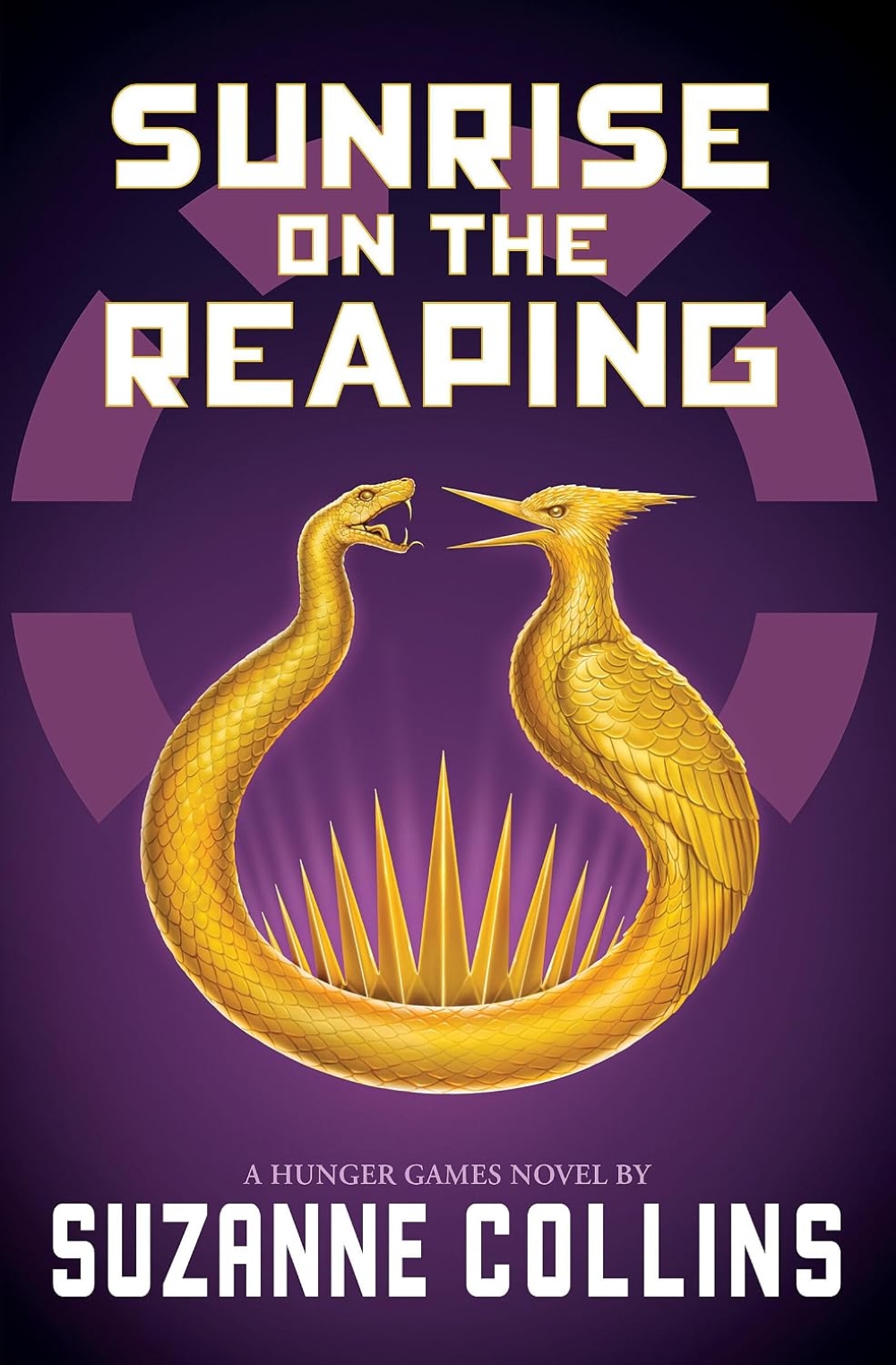
Book to Screen: ‘Sunrise on the Reaping: The Hunger Games’

Sunrise on the Reaping will be released in theaters on November 20, 2026. Photo: Barnes & Noble

Book to Movie Adaptation: The Hunger Games: Sunrise on the Reaping

By Suzanne Collins

The Book

Synopsis

When you’ve been set up to lose everything you love, what is there left to fight for?

As the day dawns on the 50th annual Hunger Games, fear grips the districts of Panem. This year, in honor of the Quarter Quell, twice as many tributes will be taken from their homes.

Back in District 12, Haymitch Abernathy is trying not to think too hard about his chances. All he cares about is making it through the day and being with the girl he loves.

When Haymitch’s name is called, he can feel all his dreams break. He’s torn from his family and his love, shuttled to the Capitol with the three other District 12 tributes: a young friend who’s nearly a sister to him, a compulsive oddsmaker, and the most stuck-up girl in town.

As the Games begin, Haymitch understands he’s been set up to fail. But there’s something in him that wants to fight—and to have that fight reverberate far beyond the deadly arena.

The Hunger Games Series (Publication Order)

  1. The Hunger Games
  2. Catching Fire
  3. Mockingjay
  4. The Ballad of Songbirds and Snakes
  5. Sunrise on the Reaping

About the Author

Suzanne Collins has had a successful and prolific career writing for children’s television. She has worked on the staffs of several Nickelodeon shows, including the Emmy-nominated hit Clarissa Explains It All and The Mystery Files of Shelby Woo. Collins made her mark in children’s literature with the New York Times bestselling five-book series for middle-grade readers The Underland Chronicles, which has received numerous accolades in both the United States and abroad. In the award-winning The Hunger Games trilogy, Collins continues to explore the effects of war and violence on those coming of age.


The Movie

Directed by Francis Lawrence, The Hunger Games: Sunrise on the Reaping serves as both a sequel to The Ballad of Songbirds & Snakes (2023) and a prequel to the original The Hunger Games (2012). It features an ensemble cast including Joseph Zada, Jesse Plemons, Ralph Fiennes, Glenn Close, Kieran Culkin, Elle Fanning, Mckenna Grace, Maya Hawke, Whitney Peak, and Kelvin Harrison Jr.

The Hunger Games: Sunrise on the Reaping premiered in London on October 28, 2026, and is scheduled to be theatrically released in the United States on November 20, 2026.

Synopsis

Taking place 24 years before the events of the original film, 16-year-old Haymitch Abernathy is selected to compete in the 50th Hunger Games. Every 25th edition of the games—known as a Quarter Quell—introduces a unique twist to the rules. For the 50th Games, each district of Panem must send twice the usual number of tributes to the Capitol to fight to the death in a televised spectacle.

Movie Details

  • Genre: Dystopian sci-fi, psychological thriller
  • Run Time: 2h 38min
  • Rating: PG-13


Photo: IMDb

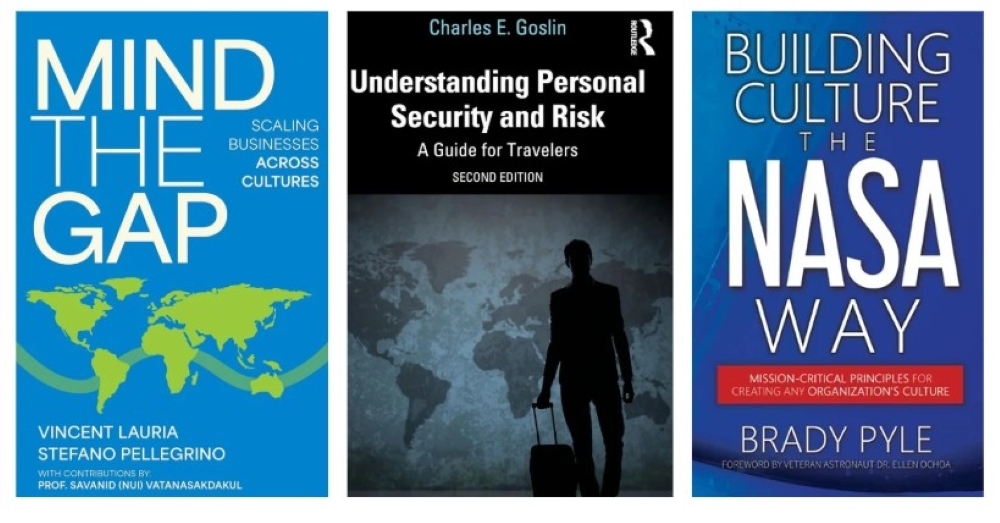
Weekly Book Roundup: Essential Reads on Global Expansion and Risk Management

This week’s spotlight on business books for leaders. Photos: Barnes & Noble

Books of the Week: Scale Across Cultures, Personal Security, and the NASA Way

Welcome to this week’s roundup of essential business and leadership reads. Whether you’re expanding your company across international borders, looking to navigate risk with the precision of an intelligence officer, or seeking to build a high-performance team using lessons from space exploration, I spotlight three standout books to elevate your strategy.

1. Mind The Gap: Scaling Businesses Across Cultures

By Vincent Lauria and Stefano Pellegrino

“Your global expansion isn’t failing because of your strategy; it’s failing because you don’t see the cultural gap.”

Have you ever done everything right, built a strong product, crafted a solid pitch, and entered a promising market, only to watch deals fall apart and partnerships stall? (Barnes & Noble, 2026)

Written by global venture capitalist Vincent Lauria and international operator Stefano Pellegrino, Mind The Gap is not another generic business guide filled with one-size-fits-all frameworks. It’s a real-world playbook built from decades of experience scaling companies across continents, exploring the human layer that most books ignore.

  • What You Will Learn: How to walk into any new market with confidence, instantly read the room, build trust faster than your competitors, and close deals that once seemed impossible.
  • Key Takeaway: Each chapter delivers clear, usable takeaways you can implement right away, acting like a seasoned global advisor guiding your every move.

About the Authors

  • Vinnie Lauria is a Silicon Valley entrepreneur turned venture capitalist who has spent over 15 years helping founders build companies across high-growth innovation markets in Asia, the US, and the Middle East. As founding partner of Golden Gate Ventures, he has invested in over 100 companies across 15+ countries.
  • Stefano Pellegrino is an attorney qualified in New York and Italy, holding an LL.M. from UC Berkeley and a PhD from the University of Pavia. His book is based on conversations with more than 50 global founders, executives, and investors from the world’s top technology companies.

2. Understanding Personal Security and Risk

By Charles E. Goslin

Blending decades of global intelligence and security experience with time-tested principles, this book delivers a powerful, practical framework for personal safety and risk awareness. (Barnes & Noble, 2026)

Updated to reflect today’s realities, Understanding Personal Security and Risk equips readers, especially those traveling or operating in high-risk environments, to recognize threats, understand adversarial behavior, and make informed, rapid decisions under pressure.

  • Who It’s For: Professionals managing global security programs, travelers, and individuals navigating an increasingly unpredictable world. It uniquely addresses vulnerabilities faced by women, children, the elderly, LGBTQ+ individuals, immigrants, missionaries, and university students.

About the Author

  • Charles E. Goslin is a retired intelligence officer who actively consults, writes, and travels. With a lifetime spent analyzing risk and threat across corporate operations and government matters, he has developed executive management curriculum and security tradecraft for universities and foreign governments worldwide.

3. Building Culture the NASA Way: Mission-Critical Principles For Creating Any Organization’s Culture

By Brady Pyle

What does it take to build a culture where people perform under pressure, pursue an impossible mission, and show up every single day fully committed? Ask NASA. (Barnes & Noble, 2026)

For thirty years, Brady Pyle worked inside one of the most extraordinary organizations on earth, shaping the culture of an agency where the stakes couldn’t be higher. Through compelling firsthand stories of the people and decisions that defined the agency’s culture, Pyle brings to life what it feels like to work alongside astronauts and engineers.

  • The NASA Framework: Using the Navigate, Assess and Adapt, Strengthen Leadership, and Activate Inclusion and Innovation (NASA) model, Pyle delivers a clear playbook for building cultures of trust, performance, and purpose—whether you lead a team of five or an organization of fifty thousand.

About the Author

  • Brady Pyle is the Chief Human Resources and Inclusion Officer at Space Center Houston, a two-time recipient of the NASA Outstanding Leadership Medal, and the 2024 HRO Today Learning and Development Executive of the Year for Lifetime Achievement.

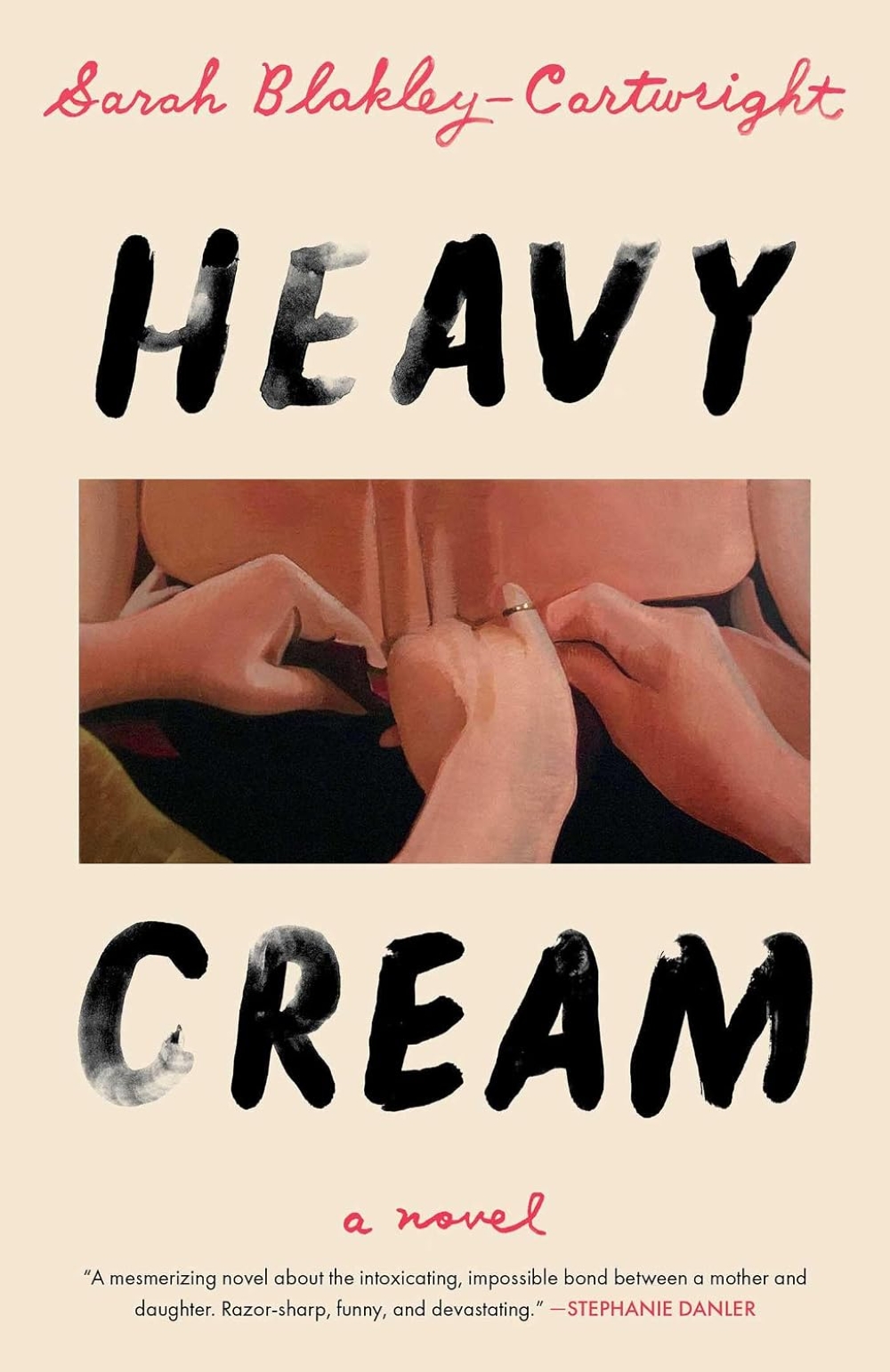
‘Heavy Cream’ Book Review: Sarah Blakley-Cartwright’s Coming-of-Age Novel

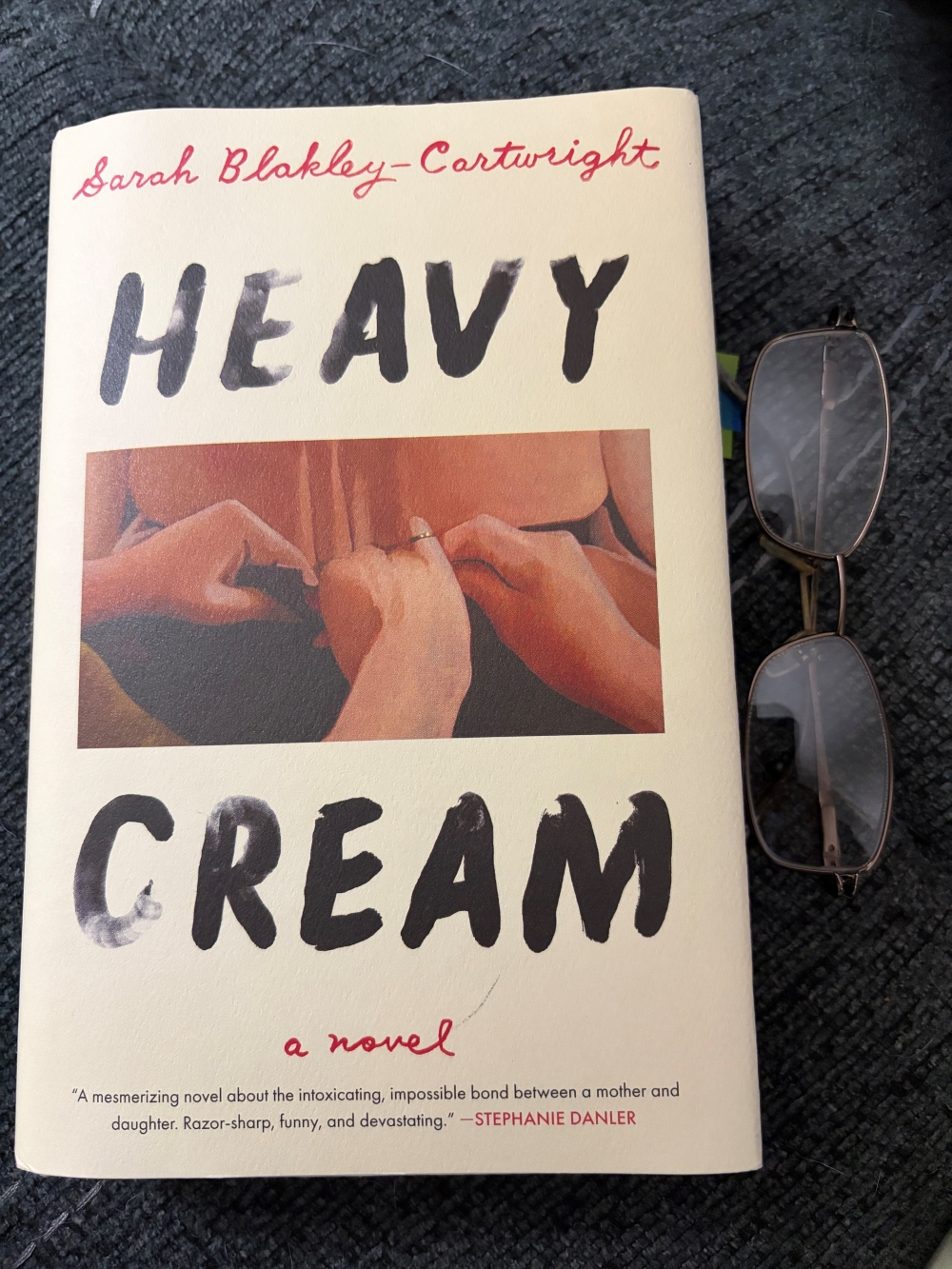
‘Heavy Cream’ is Sarah Blakley-Cartwright’s new novel. Photo:

Heavy Cream: A Novel by Sarah Blakley-Cartwright: A Review

Abandoned by her mother in New York, sixteen-year-old Geraldine falls under the influence of three women, each seeking to form her in their image in this coming-of-age story from the bestselling author of Alice Sadie Celine. (Barnes & Noble, 2026)

The Story

Geraldine (Gerry) is ten years old when her grandmother passes away. She and her mother arrive in town to stake their claim. Her grandfather had preceded her years ago, so they naturally assumed they’d be getting their fair share of stuff. Her grandparents meant nothing to her, so she wasn’t affected either way. A week later, they come across Nell, her mother’s estranged sister, at the memorial, and naturally, sparks fly.

Gerry has spent most of her young life on the road with her mother, moving from city to city. She is homeschooled, having never attended a traditional school, though they occasionally attended homeschoolers’ meetings so Gerry could socialize with children her own age. On the road, her mother teaches her how to circumvent the rules: how to spend the day at a motel’s swimming pool without being a guest and how to avoid paying extra for the chicken on a Caesar salad. She has learned how to adapt to her circumstances, no matter how dysfunctional.

When Gerry is sixteen, they meet a group of guys from Australia, including Patrick. He and her mother pair up and spend days together, even going to the beach as a family. Then one day, he just disappears, which deepresses her mother. Out of the blue, her mother tells Gerry that she’ll be spending a week with Bonnie, her old college friend, in Connecticut because she’s going to Australia to see Patrick. Days turn to weeks, and Gerry’s mother never comes back.

Her journey takes an unexpected turn when three very different women step into her life, each determined to shape her future. Alongside Bonnie and Nell, Gerry meets Finley, an old-money socialite at a party, who introduces her to a world of Manhattan privilege and sophistication and enrolls her in a normal school for once in her life.


Review

What happens when the only person who has ever shaped your world suddenly abandons you, leaving three very different women to decide who you should become? In Heavy Cream, Sarah Blakley-Cartwright delivers an insightful story about Gerry, whose unconventional upbringing has left her woefully unprepared for life on her own. Having grown up in a world of instability and dysfunction, she finds herself navigating a reality she barely understands, especially against the backdrop of New York City.

Character Analysis

Gerry is a protagonist defined by survival and adaptability. Raised on the road with an eccentric mother, Gerry is hyper-observant yet profoundly unanchored. The three mentors who take her in act as mirrors reflecting different facets of womanhood:

  • Bonnie represents conventional, stifling respectability.
  • Nell champions rigorous self-invention and artistic ambition.
  • Finley seduces Gerry with the rarefied, exclusionary armor of high-society privilege.

Gerry’s internal conflict lies in untangling these competing projections to find her own voice.

Major Themes

  • Unconventional Motherhood: The novel deconstructs traditional maternal care, contrasting the toxic survivalism of Gerry’s biological mother with the flawed, surrogate caretaking of Bonnie, Nell, and Finley.
  • Inheritance and Mental Illness: Blakley-Cartwright probes how emotional baggage and psychological turbulence pass down generational lines, asking whether we are doomed to repeat our parents’ mistakes.
  • The Comedy of Manners: The novel blends acute psychological depth with witty social satire, charting Gerry’s eccentric, bumpy path toward authentic selfhood.

The narrative balances humor with emotional depth while examining family relationships and personal growth. I especially enjoyed the premise of three women offering such contrasting paths to one young girl. It’s an important reminder that becoming yourself isn’t always easy, especially when everyone else has a different idea of who you should be.

Told through Gerry’s first-person point of view, it provides deep insight into her thought processes, particularly when she accepts that her mother is not coming back:

“Now, too many days disappeared, I felt whatever we had called love thinning out like a voice I couldn’t hear anymore.”


Final Verdict

Heavy Cream by Sarah Blakley-Cartwright is an unconventional story about identity and the complicated nature of family. Fans of literary fiction centered around family dysfunction and the multifaceted nature of female influence should definitely put this one on their reading list.

“In most households, there was one norm to rebel against. I had competing mothers. I worried I’d spend the next twenty years trying to see past the three women’s views, which blocked my own.”

Rating: 4 out of 5.

** Thank you to Sarah Jean Grimm and Broadside PR for my gifted ARC for review consideration. I haven’t been compensated for this review and all views and opinions expressed are my own.


About the Author

Sarah Blakley-Cartwright is the author of Alice Sadie Celine and Red Riding Hood, a #1 New York Times bestseller published worldwide in thirty-eight editions and fifteen languages. She’s the editor of Hauser & Wirth’s The Artist’s Library for Ursula magazine and an associate editor at A Public Space.


San Antonio College Theatre Presents ‘Lend Me A Soprano’ Fall 2026

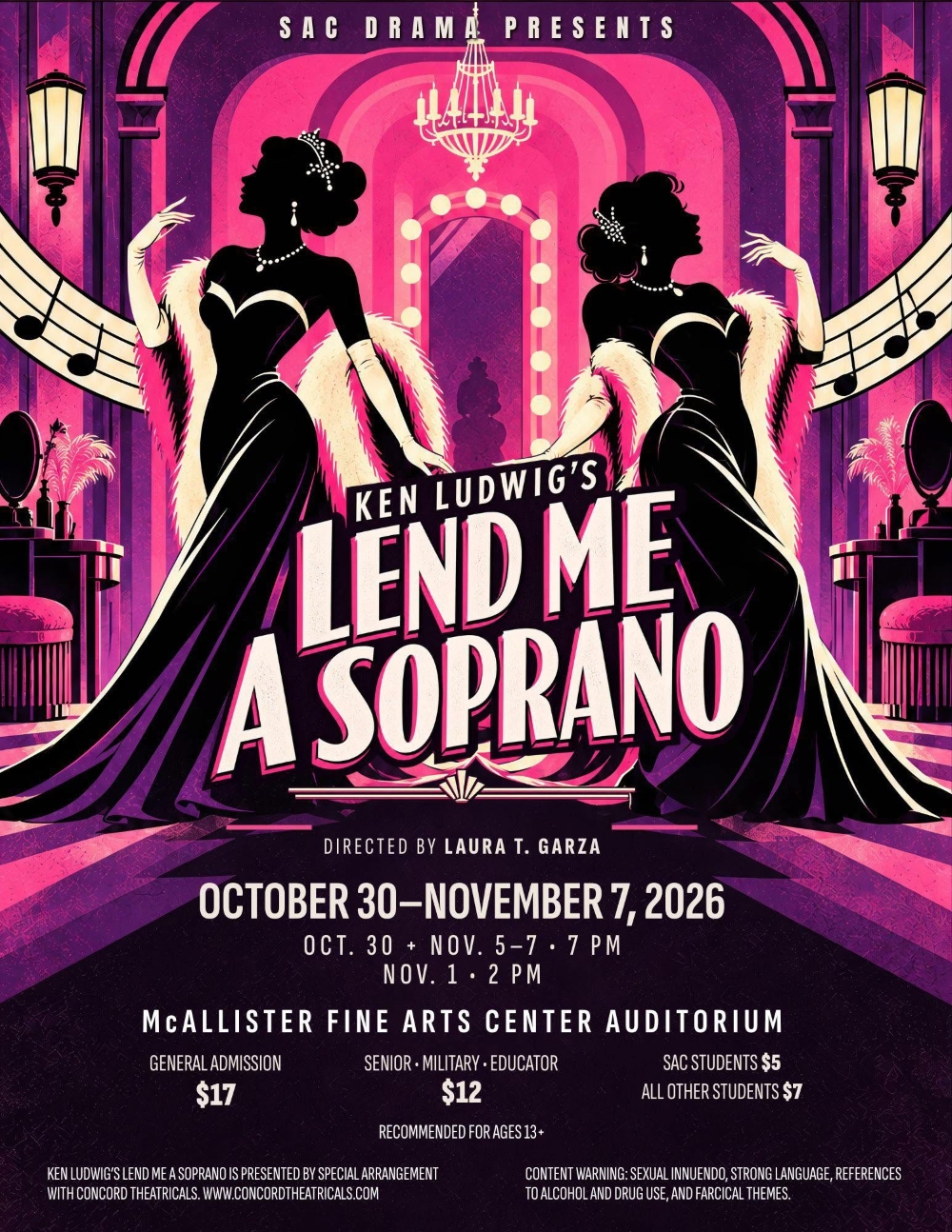
San Antonio College Theatre’s production of Lend Me A Soprano opens Friday October 30. Photo: San Antonio College Theatre.

San Antonio College Theatre Presents Ken Ludwig’s Lend Me A Soprano. 🎭

San Antonio College Theatre is officially back in the McAllister Fine Arts Auditorium for their Fall 2026 season, kicking things off with Ken Ludwig’s madcap comedy, Lend Me A Soprano. Opening tomorrow, October 30th, tickets are on sale and available online now. (San Antonio College Theatre, 2026)

About the Show

It’s 1934, and the clever, combustible Lucille Wiley, Manager of the Cleveland Grand Opera Company, is ready to welcome world-class soprano Elena Firenzi for a high-stakes, one-night-only starring role in Carmen.

The only problem? Elena arrives late, her passionately jealous husband Pasquale throws a fit, and it’s entirely up to Mrs. Wiley’s mousy but fiercely determined assistant, Jo, to try and save the day.

Based on Ken Ludwig’s Tony Award-winning Lend Me a Tenor, this fast-paced screwball farce puts women in the leading roles and is guaranteed to leave audiences rolling in the aisles.

Directed by Laura T. Garza, it’s presented by special arrangement with Concord Theatricals.

Performance Dates & Times

All performances take place at the McAllister Fine Arts Auditorium. Please note: There are no performances on October 31st or November 8th.

  • Friday, October 30 at 10:00 AM — Student Matinee for High Schools
  • Friday, October 30 at 7:00 PM — Opening Night Reception!
  • Sunday, November 1 at 2:00 PM — Sunday Matinee
  • Thursday, November 5 at 7:00 PM
  • Friday, November 6 at 7:00 PM
  • Saturday, November 7 at 7:00 PM — Closing Performance

Location & Venue Info

  • Where: McAllister Fine Arts Building – Auditorium, San Antonio College
  • Address: 1300 San Pedro Ave, San Antonio, TX 78212
  • Pro-Tip: The theatre tends to be quite chilly, so be sure to bring a sweater or jacket for your comfort!

Ticket Prices

  • General Admission: $17.00
  • Senior / Military / Educator: $12.00
  • All Other Students: $7.00
  • SAC Students: $5.00

Content Warning & Recommendations

  • Recommended Age: 13+
  • Content Warning: This fast-paced screwball farce contains mature themes, including sexual innuendos and situations, partial dress, mild profanity, brief references to self-harm, and an accidental excess of prescription medication mistaken for a suicide attempt.

🎟️ Ready for a night of big laughs? Grab your tickets online today and support local student theatre.


Photo: San Antonio College Theatre

Navigating Grief and Maternal Guilt in ‘The Porcelain Heart’ Memoir

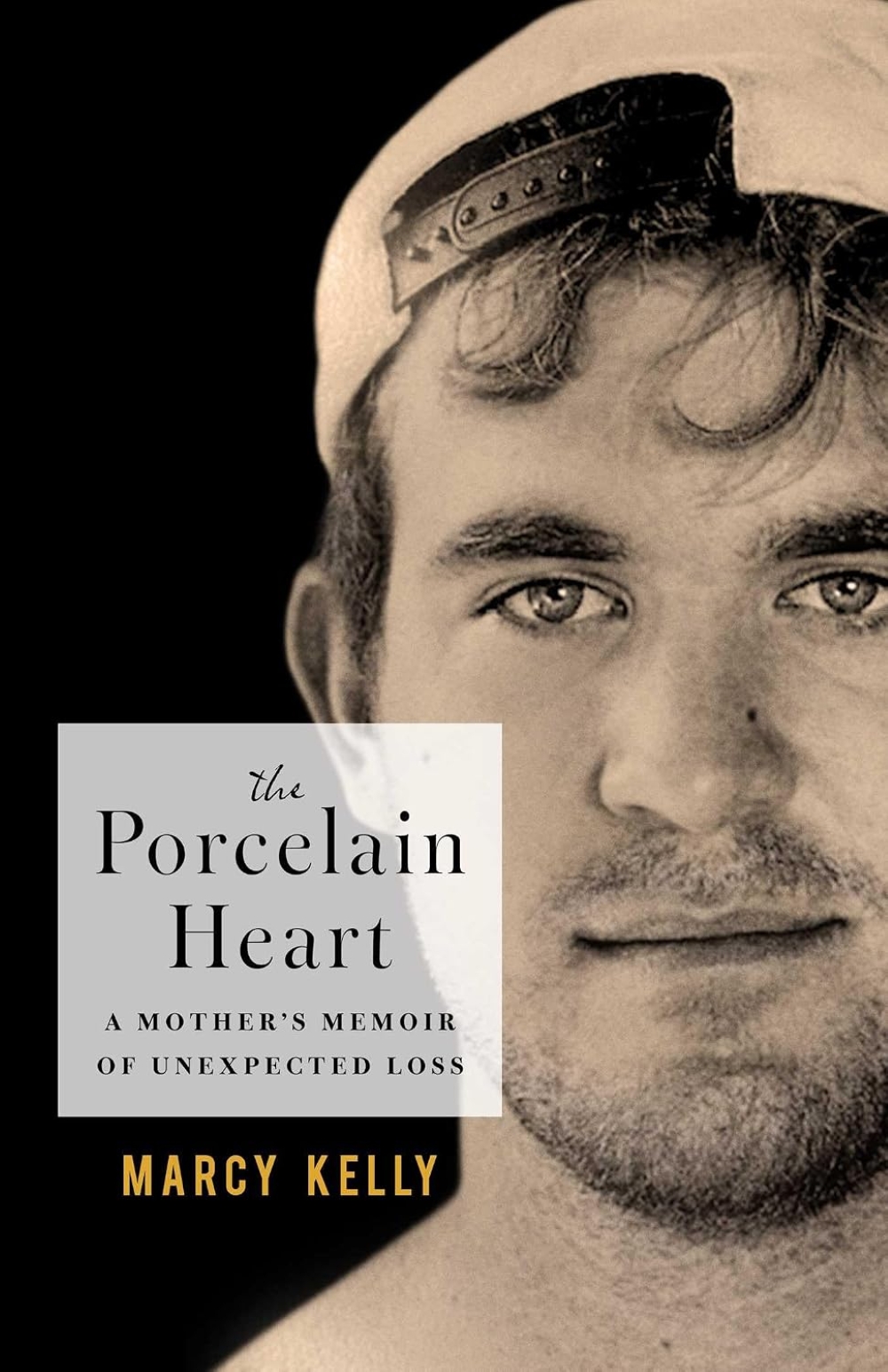
‘The Porcelain Heart: A Mother’s Memoir of Unexpected Loss’ is Marcy Kelly’s new memoir. Photo: Barnes & Noble

Book Review: The Porcelain Heart: A Mother’s Memoir of Unexpected Loss by Marcy Kelly

The Story

Losing a child is a heartbreak no parent should ever have to endure. In The Porcelain Heart: A Mother’s Memoir of Unexpected Loss, Marcy Kelly offers a personal and emotionally raw account of life after the sudden death of her beloved forty-five-year-old son, Michael, her only child. Through her journey, readers witness the devastating reality of grief and the long, complicated road toward acceptance. (Barnes & Noble, 2026)

The book begins with Marcy and her husband, Jim, at home. They receive an unexpected visit from longtime friends Susan and Roy Brown. Marcy knows something is wrong when Jim drops what he’s doing and offers to answer the door. They gather in the kitchen, where Jim breaks the news: Michael is dead. A deputy from the sheriff’s office had called thirty minutes prior because they found his business card in Michael’s wallet, and Jim was just waiting for their friends to arrive to help tell Marcy.

Initially, Marcy refuses to believe it. Later, she blames herself for not recognizing the signs of his illness. She experiences disturbing dreams about not saving him and spirals through the various stages of grief as she waits months for the coroner to render an official cause. However, Marcy rejects the fifth and final stage of grief; in her mind, if she accepts Michael’s death, he will never return.

The memoir chronicles Marcy’s journey during the year following Michael’s death. She endures all the “firsts” without him, including holidays and his birthday. She joins grief groups, remembers frightening and fun times together, questions whether she was a good mother, and tries to distract herself with travel. To honor his memory, she creates a golf scholarship in his name and commissions a stone people and pet fountain to be built along the path where he used to hike.

On the one-year anniversary of his passing, she takes his ashes to his favorite place, a lake in the Blue Ridge Mountains, and finally begins moving toward acceptance.


Review

The Porcelain Heart is a moving testament to the enduring power of a mother’s love. Kelly’s honesty makes this memoir especially meaningful for anyone navigating loss or supporting someone through bereavement. Heartbreaking yet ultimately hopeful, it reminds readers that healing doesn’t mean forgetting. Sometimes, learning to live with loss is the most courageous act of love.

Kelly tackles profound themes of grief, maternal guilt, and memory. Her story doesn’t follow a pre-set, neat path to healing; instead, she reveals the agonizing disorientation of enduring “firsts” without her son while struggling with whether she did all she could to help him.

Sample Chapter List

The book includes insightful and deeply personal chapters, such as:

  1. Proof
  2. The Next Day
  3. The Last Seat
  4. In Limbo
  5. The Viewing
  6. My Kingdom for a Password
  7. The Man in the Blue Print Shirt
  8. The Friday Email
  9. The Final Visit
  10. A Life in Fifteen Minutes

Key Highlights & Takeaways

  • Chapter 6 (“My Kingdom for a Password”): Marcy struggles to access Michael’s phone for contacts, final pictures, and videos because she doesn’t know his password, finding no help even at the Apple Store. It serves as a vital life lesson: “So much important information is stored on phones and computers—and for those, like Michael, who pride themselves on living a paperless life, the lack of access creates serious complications for survivors.”
  • Chapter 17 (“Why Is There No Word?”): Marcy explores how grief impacts couples differently, noting that losing a child either brings partners closer together or breaks them apart. As she observes, “In some cases, the trauma of their loss exacerbates the fissures that already exist.”

⚠️ Content & Trigger Warnings

  • Chapter 11 (“Wong in America”): Recalls a traumatic home accident that tragically claimed the life of Michael’s beloved dog, Clover.
  • Chapter 10 (“A Life in Fifteen Minutes”): A young Michael prematurely introduces a new bunny, Henry, to their existing one Cleo with disastrous (though thankfully survivable) results.

Kelly’s writing is sincere, offering an unvarnished look at the non-linear nature of heartbreak. The Porcelain Heart is more than just a book about sorrow; it’s proof of an enduring maternal bond that death can’t sever. It’s highly recommended for anyone who has navigated profound loss or sought light in the darkest corners of grief.

“Most parents get to see their child’s name engraved on a wedding invitation, but I would see mine on a sympathy acknowledgement card. I added that to my growing list of the ways life wasn’t fair.”

Rating: 4 out of 5.

** Thank you to Fauzia Burke/FSB Associates for the Advance Reader Copy (ARC) for review consideration. I haven’t been compensated for this review and all views and opinions expressed are my own.


About the Author

Marcy Kelly has worked in communications and press relations at U.S. government agencies and has led several nonprofit organizations. She studied creative writing at UCLA and earned a Master of Fine Arts from Antioch University. Her short fiction has been published in Narrative Magazine and in various short story collections, while her essays on grief have appeared on Medium and other online platforms. Additionally, her co-written script, Fool Me Twice, won the Producers Guild of America best screenplay award.


Essential Leadership Books to Help You Lead with Purpose and Impact

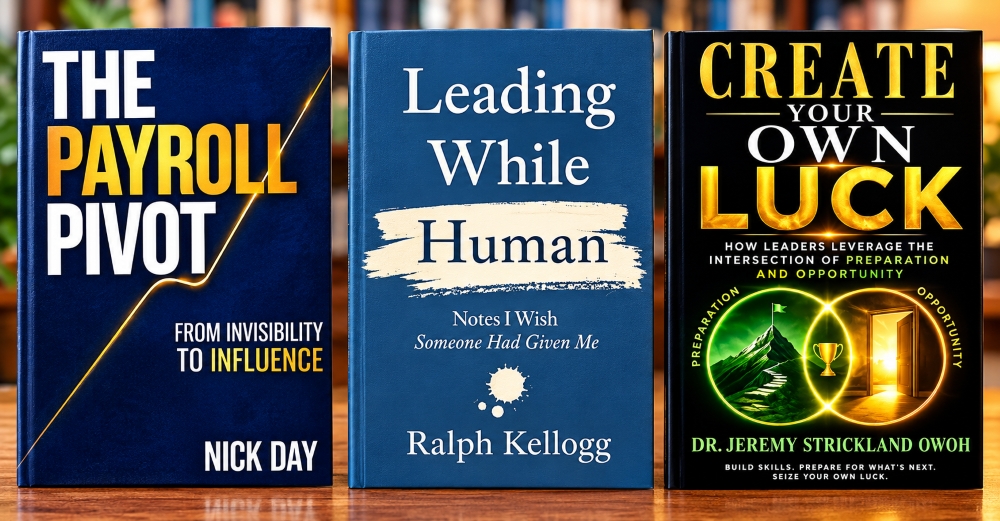
Level up your leadership with these business books. Photo: Barnes & Noble/Gemini-Generated

Books of the Week: Essential Reads for Modern Business Leaders

Whether you are looking to redefine your leadership strategy, elevate an undervalued function, or navigate the deeply human side of management, this week’s book spotlight offers invaluable insights. Consider these three powerful reads designed to help you lead with purpose, impact, and authenticity.

1. Create Your Own Luck: How Leaders Leverage the Intersection of Preparation and Opportunity

By Dr. Jeremy Strickland Owoh

The concept of luck carries various implications, often shaped by individual experiences, and perspectives. From a spiritual realm, there has also been some controversy about whether there is really such a thing as luck. Throughout his leadership journey, the author has contemplated its true meaning and has come to define luck as the intersection of preparation and opportunity. (Barnes & Noble, 2026)

If there is one principle that sums up his leadership experience, it’s an unwavering commitment to preparation, ensuring that he is ready to seize any opportunity that arises. His journey has been shaped not only by diligence and readiness but also by the profound influence of grace and mercy.

About the Author: Dr. Jeremy Strickland Owoh is a transformational educational leader and superintendent of the Jacksonville North Pulaski School District, where he leads with a clear focus on Academics, Behavior, and Culture (ABC). With experience spanning teacher, principal, district, and state leadership, he has consistently driven innovation, improved outcomes, and expanded opportunities for students and educators alike.


2. The Payroll Pivot: From Invisibility to Influence

By Nick Day

Payroll controls up to 80% of an organization’s operating expenditure and holds compliance risks worth millions. It’s the primary reason every employee trusts their employer enough to show up tomorrow. And yet, it remains one of the most strategically undervalued functions in business. The Payroll Pivot exists to change that. (Barnes & Noble, 2026)

Nick Day has spent 24 years placing over 10,000 payroll professionals, conducting more than 400 podcast conversations with industry leaders, and coaching payroll executives across the globe. This book distills everything he has learned about why brilliant professionals stay invisible, and what happens when they stop.

“Payroll professionals who pivot will shape the future. Those who don’t will be shaped by it. This is your pivot.”

About the Author: Nick Day is a keynote speaker, executive coach, and author ranked the number one Global Payroll Thought Leader in the world by Thinkers360. He holds the PayrollOrg Global Vision Award and Reward Strategy Personality of the Year 2023. As founder of JGA Recruitment Group and host of The Payroll Podcast, The HR L&D Podcast, and Mindful Paths Podcast, he sits at the intersection of payroll, leadership, and human performance. He is also the creator of The Fear Equation™, a framework that helps professionals turn hesitation into decisive action.


3. Leading While Human: Notes I Wish Someone Had Given Me

By Ralph Kellogg

Leadership is rarely what we imagine it will be. It’s not defined by how polished we appear, but by how consciously we choose to show up. (Barnes & Noble, 2026)

Most people enter leadership believing it will bring clarity, confidence, and authority—that experience will quiet doubt and success will resolve uncertainty. Instead, leadership often magnifies the very things we hoped it would erase: fear, pressure, responsibility, identity, and the constant awareness that our decisions affect others in profound ways.

This book is not a manual on strategy, productivity, or performance metrics. It’s an exploration of the human side of leadership—the parts rarely discussed in meetings or executive coaching sessions. Through deeply honest essays drawn from real workplace experiences, the author examines how leadership is shaped by lived experience rather than just training and ambition.

Written for current and emerging leaders (or anyone who works with others), this book offers a thoughtful examination of what “leadership” actually requires: not perfection, certainty, or control, but awareness, humility, and courage.

About the Author: Ralph Kellogg is a senior human resources executive, speaker, and advocate for mentally healthy workplaces with over two decades of experience leading people operations across complex organizations. A TEDx speaker exploring the cost of silence and unseen struggles in the workplace, Ralph frequently delivers keynotes on human resources leadership, workplace inclusion, and building organizational cultures rooted in trust and psychological safety.