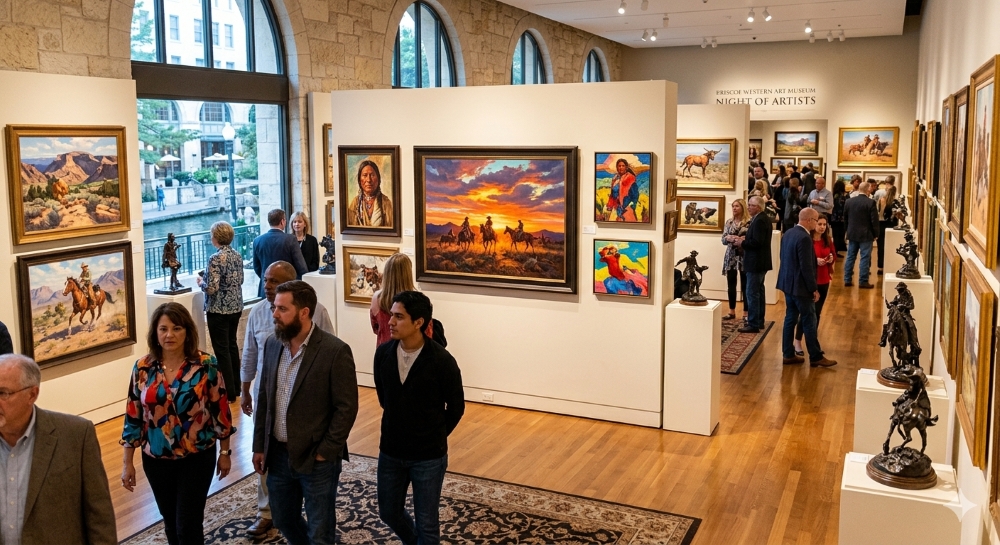
Night of Artists celebrates 25 Years of defining the future of western art. Photo: Briscoe Western Art Museum, used with permission.
A Quarter-Century of the West: The 25th Anniversary of ‘Night of Artists’
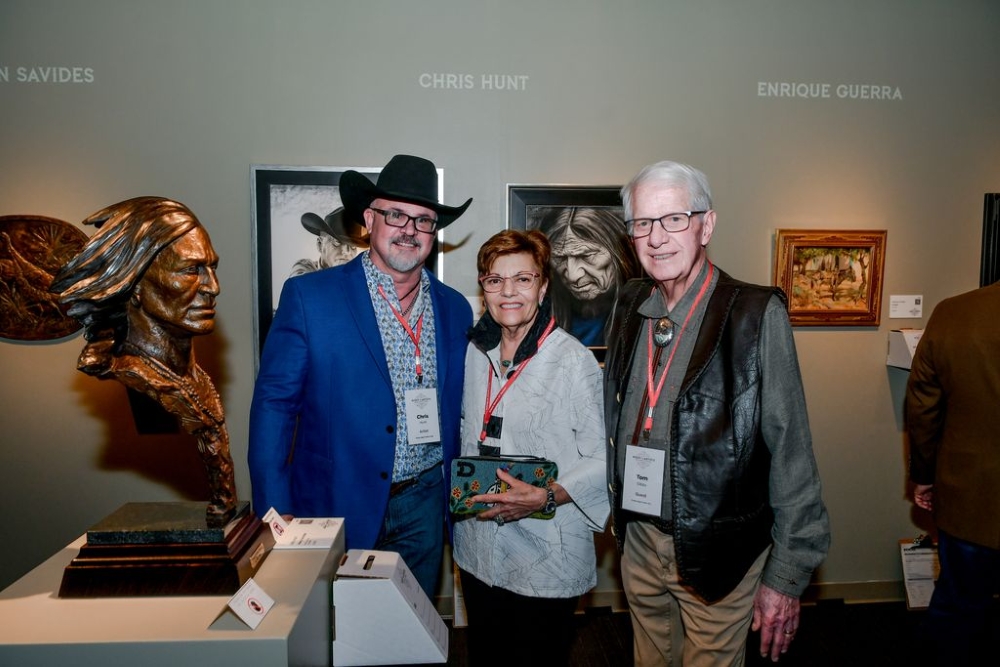
For 25 years, San Antonio has served as the heartbeat of the Western art world. It began as a single evening event in 2001 and has blossomed into the Briscoe Western Art Museum’sNight of Artists Exhibition and Art Sale, one of the premier Western art events on the planet. (Briscoe Western Art Museum, 2026)
While the exclusive opening weekend is a legendary sold-out celebration, the beauty of this collection belongs to everyone. From March 29 through May 10, the public is invited to experience (and even purchase!) works from this landmark 25th-anniversary show.
Why This Year is Special
The 2026 exhibition is a powerhouse of contemporary talent, featuring over 300 new works. It reinforces San Antonio’s reputation as a top-tier destination for the genre, showcasing:
Renowned Icons: Legends like Thomas Blackshear II, Greg Beecham, G. Russell Case, and Sean Michael Chavez.
New Voices: Exciting artists who are currently redefining what “Western Art” means today.
Diverse Media: A stunning array of paintings, sculptures, and mixed media.
The Briscoe Purchase Award: Every year, the museum selects one piece to acquire for its permanent collection, ensuring the best of today’s Western art is preserved for future generations.
Go Behind the Canvas: Artist Events
Want to see how the magic happens? The Briscoe is hosting two exclusive opportunities to learn directly from the masters:
The Experience: Join West Texas native Mary Ross Buchholz for an intimate look at her graphite and charcoal process. All materials and lunch are included! Space is limited—register early.
🖌️ Artist Demonstration with Teal Blake
When: Thursday, May 7 | 6 – 8 p.m.
Cost: Included with museum admission
The Experience: Watch Teal Blake lead a live watercolor demonstration. It’s a casual setting where you can ask questions about his authentic portrayals of cowboy life and his creative journey.
Plan Your Visit: Dates & Special Offers
The six-week public exhibition is the only time this specific collection will be available for viewing in one place.
Public Exhibition & Sale: March 29 – May 10
Locals Day (May 3): Free admission for San Antonio and Bexar County residents.
Mother’s Day (May 10): Free admission for all moms—the perfect final day to catch the show.
Visiting the Briscoe
Located on the south end of the River Walk, the Briscoe is an “oasis of Western beauty.” Beyond the Night of Artists gallery, you can explore the McNutt Sculpture Garden and 14 galleries of history and art.
Hours: Thursday – Monday, 10 a.m. – 5 p.m. (Open until 8 p.m. on Thursdays)
Admission: Always FREE for children 12 & under and active-duty military.
Briscoe Western Art Museum 210 W. Market St San Antonio, TX 78205 (210) 299-4499
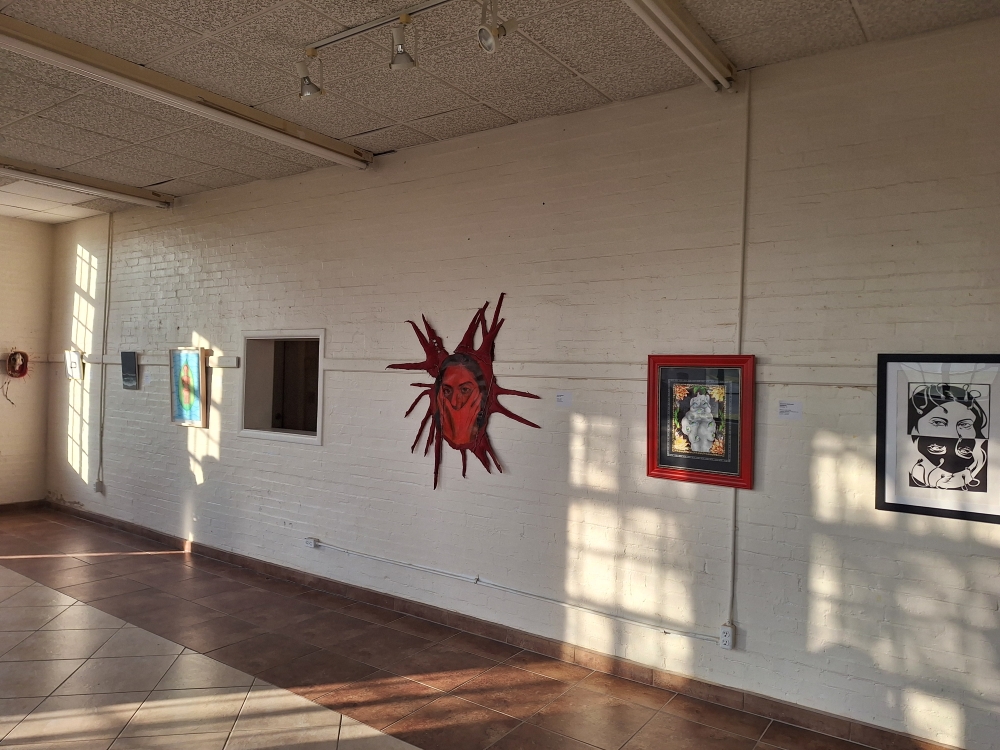
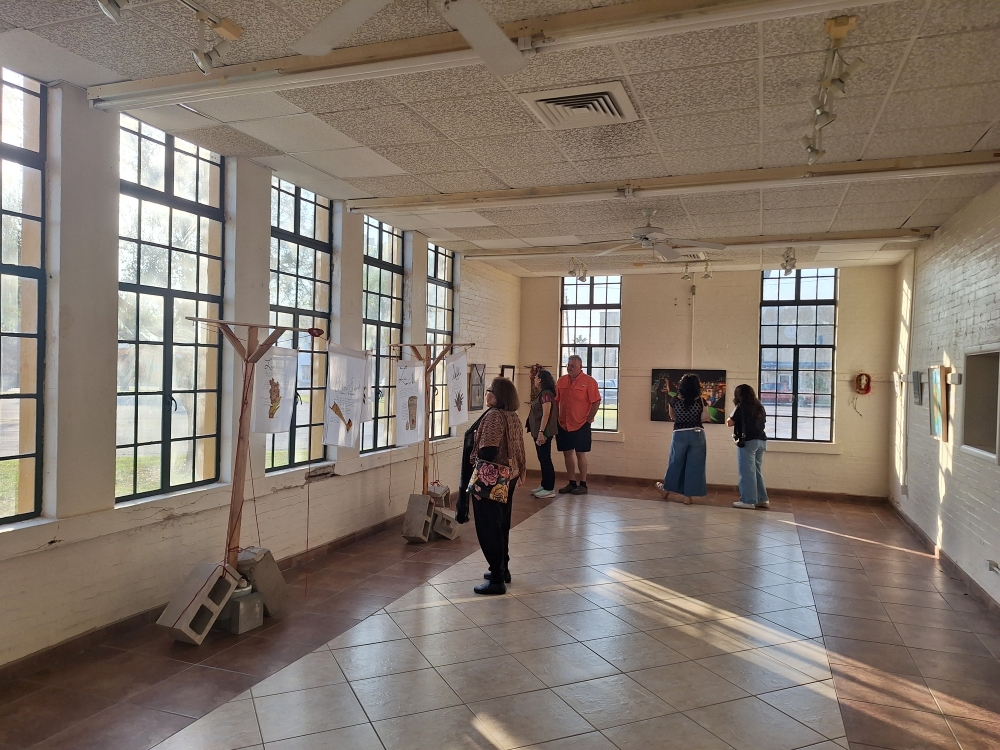
Mujer-Eres: Raíces is currently on view at the San Benito Cultural Center until June 7. Photo: Sandra Cruz
Art plays a vital role in fostering community, especially when created by women artists who bring diverse perspectives and unique storytelling to the canvas. Their work highlights social issues, cultural heritage, and personal narratives that resonate deeply with audiences. For art lovers, these creations offer not only beauty but also a meaningful connection to different experiences and viewpoints.
Public art, galleries, and community exhibitions provide spaces for dialogue, inspiration, and empowerment. By supporting women artists, communities enrich their cultural landscape, encourage creative expression, and promote inclusivity, ensuring that art continues to be a powerful force for unity and change.
The current exhibition at the San Benito Cultural Center, Mujer-Eres: Raíces, features women artists and their diverse experiences, both personal and societal. It runs until June 7 and admission is included with your visit to the San Benito Cultural Heritage Museum. Exhibits include mixed media, ceramics, and paintings. If you’re an art lover, make plans to see this exceptional exhibition that will no doubt resonate with you, especially if you’re a woman. Congratulations to everyone involved in bringing this exhibition to San Benito.
Mujer-Eres: Raíces is a contemporary art group exhibition that showcases the diverse talent of women artists and is currently on view at the San Benito Cultural Center. The exhibition was coordinated by RGV artists Sam Rawls and Ceci Sierra and curated by Aleida García and Joaquin Castillo. (San Benito Cultural Heritage Museum, 2025)
The well attended opening of Mujer Eres: Raíces was held on Saturday March 8 and coincided with the International Women’s Day celebration. The evening’s event brought together art lovers, family, friends, and community leaders to celebrate the diversity of women artists and their contributions to the art community. It consisted of special speakers, snacks, and best of all, live DJ music by Queen Killa Bee.
The exhibition is divided as such:
Exhibition Room 2: Fragments of Youth and its Discomforts – these works explores the concept of youth in all its intricacies.
Works: “Ice Cream Cone” “Learn from MeMe” “Tequila Sunrise (undone)” “Buried Under Conformity and Obligation” “Uneven Lines” “Dyed Hair”
Exhibition Room 1: Sacred Self, Self Aware, and Ritual Healing – an amplification of the societal demands of works in Room 2.
Works: “Sumision” “Prickly” “Whispers of the Unseen” “Pray With Me” “Recetas, Remedios y Raices” “Memory Weaving: Mi mama y yo y el arbol grande”
Exhibition Room 3: Snapshots in Approach of Resolution – explores the capacity to exist in and commit acts of softness and harshness.
Works: “Disquietude” “Untitled” “War” “Sunrise” “Abridged” “Impression: Sunrise at a Restaurant”
Museum Hours: Monday through Thursday 10a.m. to 4p.m. Fridays 10a.m. to 1p.m.
San Benito Cultural Heritage Museum 250 E. Heywood St San Benito, TX 78586
This popular demonstration of equity versus equality is featured in the “Uniquely Us” exhibit. Photo: The DoSeum, used with permission.
SAN ANTONIO – In a world where children’s innate curiosity often leads to challenging questions, The DoSeum is proud to reintroduce “Uniquely Us: Understanding Race and Building Unity,” a thoughtfully designed, hands-on exhibition for learners of all ages. Developed as a response to families seeking effective tools to discuss these important topics with their children, “Uniquely Us” empowers families, educators and caregivers to open up meaningful conversations about race and unity. (The DoSeum, 2025)
“This interactive exhibit uses play-based learning rooted in STEM, enabling children to safely and empathetically explore new ideas and perspectives,” says Meredith Doby, Chief Creative Officer at The DoSeum. “This is about understanding our unique identities and building unity. Understanding one another is essential for building a more united and inclusive community.”
Interactive Exhibits: Engage in play-based learning activities that enable children to safely and empathetically explore new ideas, perspectives, and social roles.
Caregiver Support: Empowering resources are available to guide the experience based on each family’s comfort level, ensuring meaningful conversations extend beyond the museum visit.
All-Ages Appeal: Designed for learners of all ages, “Uniquely Us” offers something for everyone, from young children to adults.
Newborn to 4 years old: Engage in imaginative play with diverse dolls in a large dollhouse, encouraging exploration beyond usual choices.
5 to 8 years old: Travel through a large-scale model of different hair textures, learning about hair science and self-affirmation.
9 to 11 years old: Explore empathy through interactive scenarios, literacy activities, and walking in others’ shoes while hearing diverse stories.
The DoSeum participated in the Smithsonian’s Museums Advancing Racial Justice and Reckoning with our Racial Past Initiatives during the Uniquely Us exhibition’s development. This collaboration led to the creation of race and unity-based professional development for teachers. The DoSeum also partnered with local organizations and schools throughout the exhibit’s development, including collaborations with Karla Broadus, former chair of the UTSA African American Studies program, and Dalia Contreras, CEO of City Education Partners.
The exhibit opened to the public on March 1, 2025 and remains open through April 20, 2025.
The DoSeum is San Antonio’s museum for children and a cornerstone of interactive learning. Celebrating its 10th anniversary, with roots dating back to 1995 when it first opened as the San Antonio Children’s Museum, The DoSeum has grown into one of the nation’s top children’s museums. It offers 68,000 square feet of exhibits and 55,000 square feet of outdoor space, providing hands-on experiences that empower families to explore, create, and discover together.
The DoSeum features interactive exhibits spanning science, math, art, and literacy, designed to spark curiosity and ignite imaginations. Committed to fostering hands-on learning and discovery, The DoSeum serves as a premier educational resource for educators, caregivers, and children in the San Antonio community.
The DoSeum 2800 Broadway San Antonio, TX 78209 (210) 212-4453
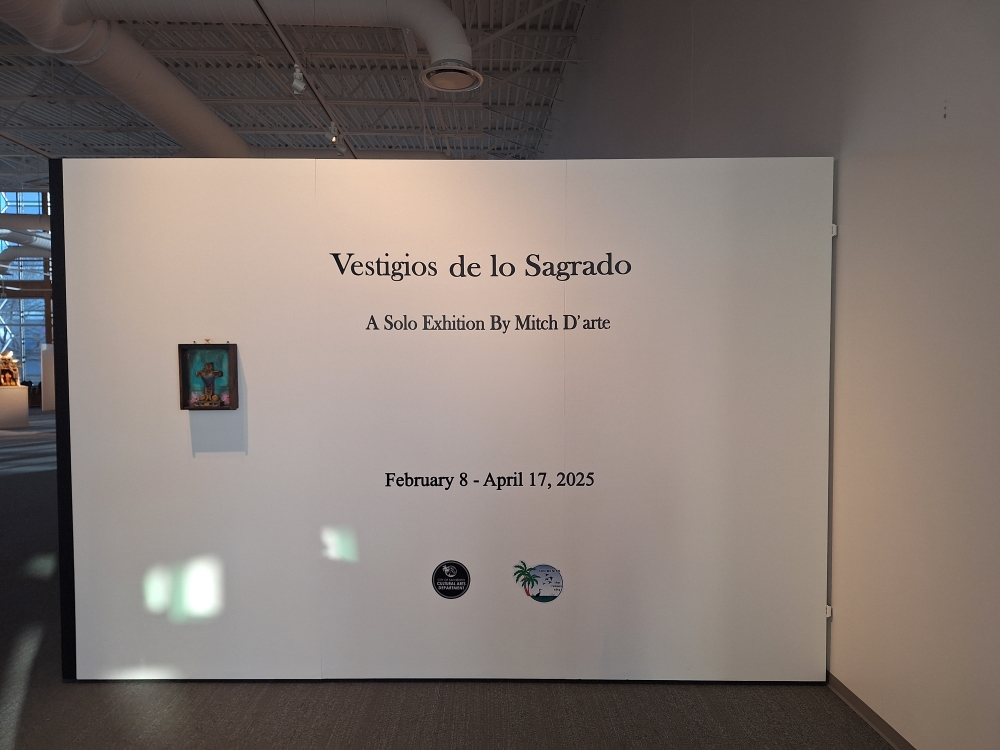
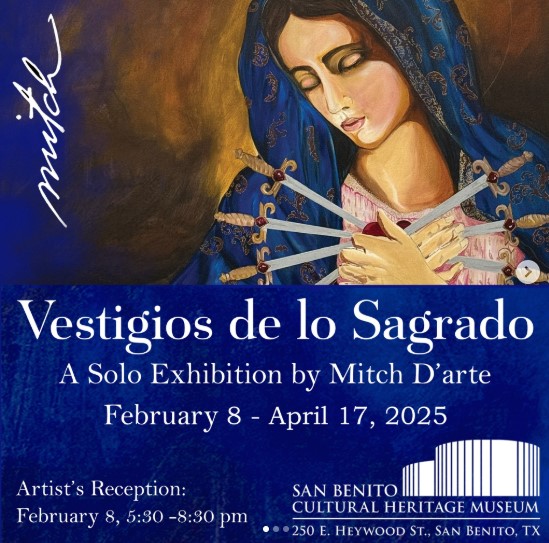
Vestigios de lo Sagrado: A Solo Exhibition By Mitch D’arte is currently on view at the San Benito Cultural Heritage Museum.
The San Benito Cultural Heritage Museum is delighted to introduce the decade-long collection of work by McAllen-based artist Mitch D’arte in her first solo exhibition of this scale in Cameron County. Vestigios de lo Sagrado: A Solo Exhibition by Mitch D’arte is on view from now until April 17, 2025.
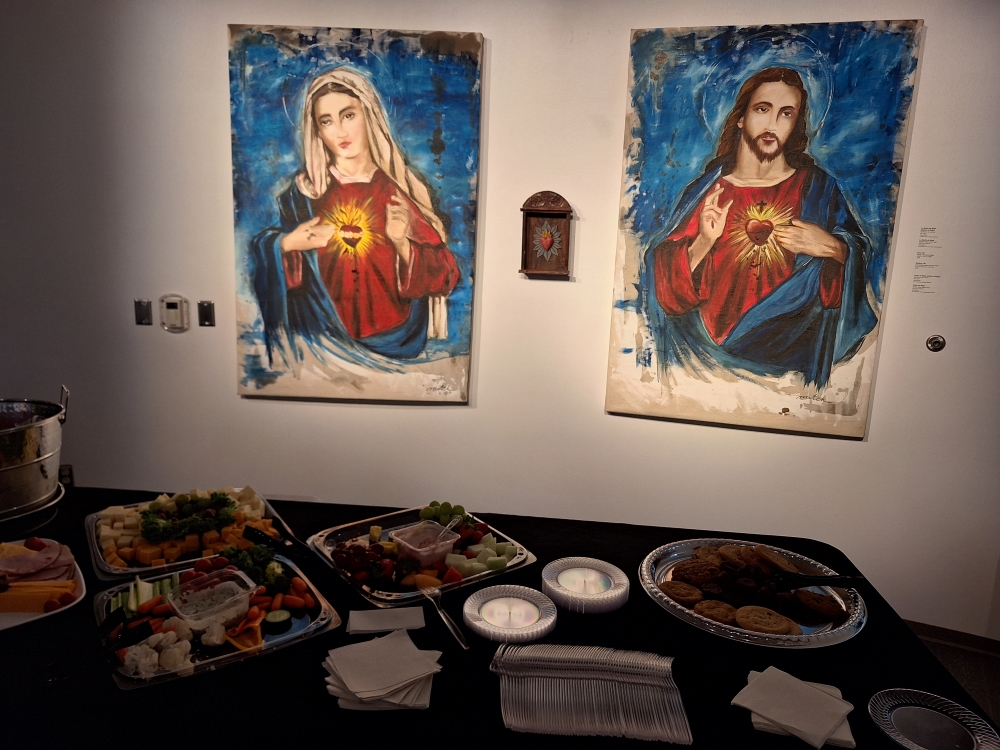
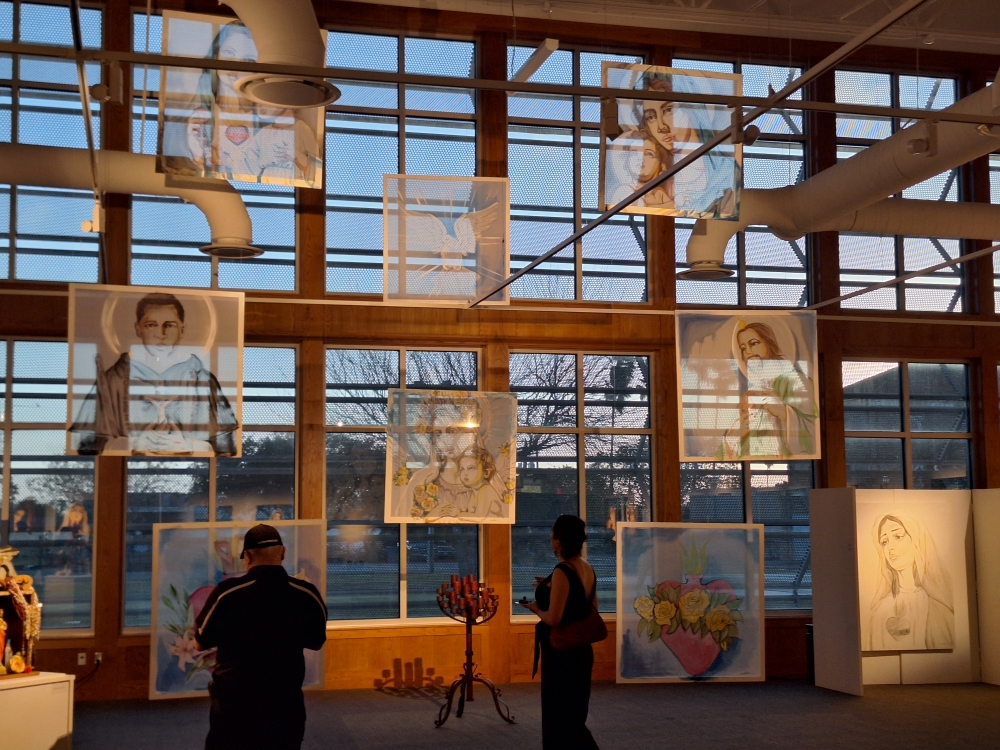
Vestigios de lo Sagrado features over 30 paintings and installations — created with collected, donated, and found artifacts. Each of these is a meditation on the role of religious iconography and the role of the individual in the crafting and veneration of them. Inspired by the artist’s relationship with her late mother, there are intentionally unfinished elements that bring some of the work to a halt and invite the viewer to complete the image or reflect on their own relationship to it. In doing so, D’arte is creating a space of not only retrospection but a peek into potential, personal futures. (San Benito Cultural Heritage Museum, 2025)
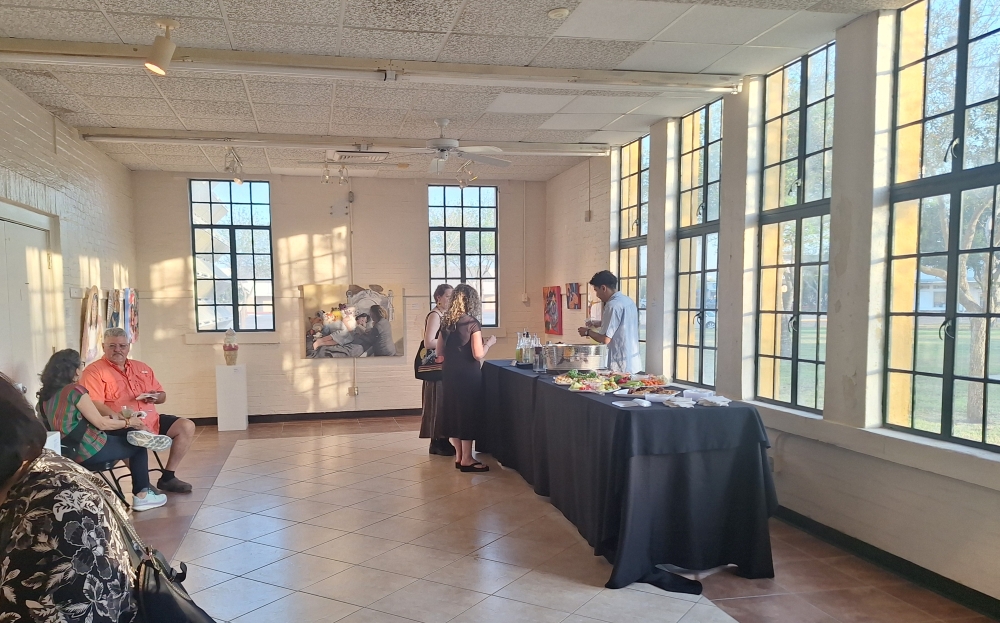
The opening reception took place on Saturday February 8 and began with a speech from Aleida Garcia, Director of the San Benito Cultural Arts Department (CAD) where she welcomed everyone to the exhibit and expressed her thanks to everyone who worked hard to make it happen. She introduced the artist, Mitch D’Arte, and encouraged guests to ask questions and enjoy the artwork.
Guests to the event were able to enjoy classical and guitar music by Jorge Mascorro, guitar teacher at the San Benito CISD as well as light snacks while mingling with fellow art lovers from the community.
The exhibition captivates with its various religious exhibits as the artist explores the complexities of faith and ritual. It blends traditional religious imagery with contemporary artistry and each piece invites reflection on the intersection of art, spirituality, and cultural identity. D’Arte’s techniques and bold interpretations offer a fresh, profound perspective on the power of sacred visual language. It includes works in mixed media, canvas, and exquisitely delicate veil, some in various stages of completion and vivid colors that bring religious icons to life.
Religious art has captivated art lovers for centuries due to its deep emotional and spiritual resonance. Often depicting divine figures, sacred events, and religious symbolism, it serves as a bridge between the material and the divine. The intricate artistry and vivid colors invoke a sense of reverence and awe and often embodies cultural traditions, offering a window into history, beliefs, and rituals. With its ability to induce profound contemplation, it connects people to universal themes of faith, salvation, and the mysteries of existence, making it deeply compelling for art lovers. Art lovers, this is one exhibition you won’t want to miss. Stop by the San Benito Cultural Heritage Museum to enjoy this exhibition by McAllen’s own Mitch D’arte.
Museum Hours: Monday-Thursday 10a.m. – 4p.m. Fridays 10a.m. – 1p.m.
Guided tours and in-person access are available throughout the exhibit dates, and virtual programs, such as video presentations, interviews, and virtual tours are available through the museum’s social medial platforms.
San Benito Cultural Heritage Museum 250 E. Heywood St. San Benito, TX 78586
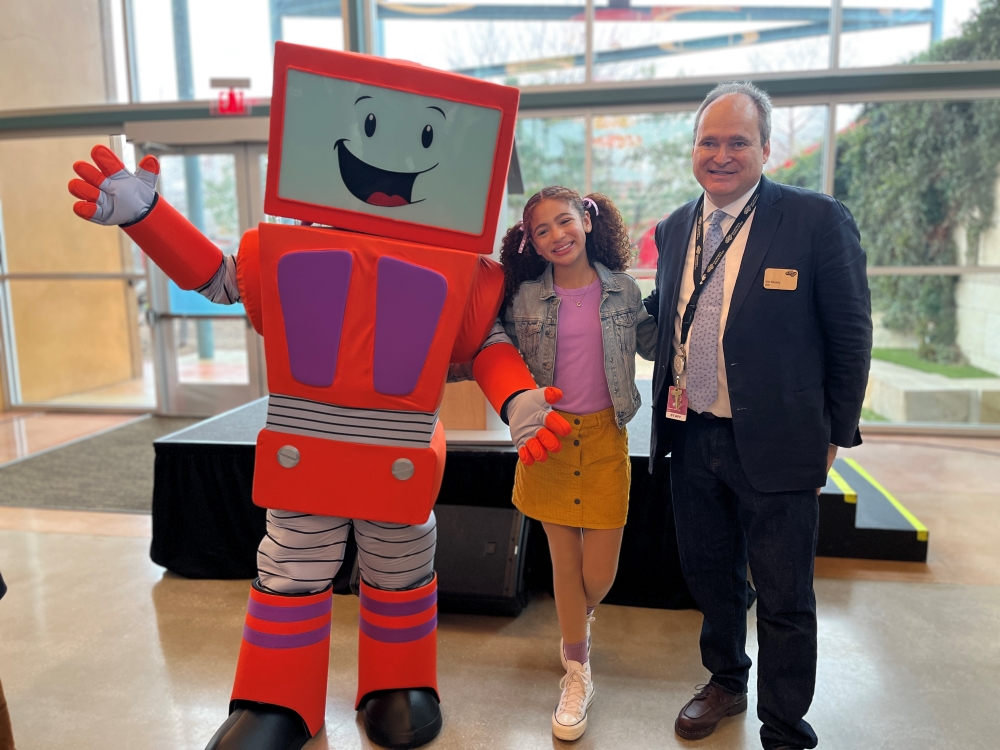
San Antonio actor Celestina Harris and The DoSeum CEO Dan Menelly debut Baxter. Photo: The DoSeum, used with permission.
SAN ANTONIO – For ten years, The DoSeum has invited San Antonio’s children to learn, explore, and create, shaping a generation of curious thinkers. San Antonio’s premier children’s museum kicked off its 10th anniversary year with its annual State of The DoSeum breakfast event on Tuesday January 28, 2025. This milestone celebration not only marks a decade of experiential learning but also showcases the museum’s impact and continued commitment to children and caregivers in the Alamo City. (The DoSeum, 2025)
During the annual State of The DoSeum breakfast, San Antonio actor Celestina Harris and The DoSeum CEO Dan Menelly unveiled The DoSeum’s new mascot: Baxter.
Meet Baxter The Robot
Wired for friendship and powered by pure joy, Baxter is The DoSeum’s beloved mascot. When he isn’t buzzing through exhibits, he’s lighting up the rooms with his infectious energy, and encouraging every visitor to embrace their curiosity. With a sweet smile, circuits of charm, and a heart full of cheer, Baxter’s mission is clear: to keep minds at play and remind everyone that learning can be joyful at any age.
Whether he’s offering a high-five, sharing a new discovery, or leading a fun-filled adventure, Baxter is always ready to spread happiness and spark new ideas. His battery is always full, and his circuits are always buzzing with excitement for the next adventure. No challenge is too big, no question too small—Baxter is here to brighten your day and make every visit to The DoSeum an unforgettable one.
The DoSeum’s Impact on San Antonio
Since opening its doors in 2015, The DoSeum has become a cornerstone of San Antonio’s educational and cultural landscape. With 68,000 square feet of interactive space featuring more than 250 exhibits, the museum has consistently provided enriching experiences in STEM, arts, and literacy for children aged 0 to 11.
The DoSeum has established itself as more than just a children’s museum. It serves as a valuable resource for San Antonio’s educational ecosystem, with long-standing research partnerships with area colleges and universities.
Since its opening, The DoSeum has demonstrated a commitment to dynamic, evolving experiences for its visitors. The DoSeum fortifies its membership through continual renewal of exhibition themes and educational events. The museum has renovated four permanent exhibit galleries and made updates to many individual exhibits, ensuring fresh experiences for repeat visitors. In addition to its permanent offerings, The DoSeum has hosted over 30 special exhibitions since 2015 over the past decade providing a unique environment for early learners to discover big ideas and foundational concepts through interactive and creative play.
The people powering The DoSeum’s Success
At the heart of The DoSeum’s success is its exceptional team of 80 staff members, including an Education team with unparalleled expertise in the museum industry. Featuring former classroom teachers and professionals with advanced degrees in Education and STEM-related fields, this talented group conducts innovative, TEKS-aligned programs, leads engaging holiday and summer camps, and provides inspired professional development for area educators. The DoSeum’s educational offerings, meticulously crafted and rooted in proven frameworks, incorporate elements of risky play to foster growth and development. This collective experience forms the foundation for San Antonio’s most innovative program portfolio, ensuring that every visit to The DoSeum is not just educational, but also engaging and fun for children of all ages.
Cruising into the Next Decade
The DoSeum is poised for an exciting future, having solidified a new strategic plan for the next 10 years. With support from a generous grant from The Meadows Foundation, the museum has invested in research and robust evaluation to strengthen its educational program design and outcomes. This research will inform The DoSeum’s focus on growth for sustainable placemaking, fully integrated experience design, exemplary informal STEM education, and engaging learners of all profiles.
The museum plans to introduce new, innovative themes to its camps, weekly workshops, and other programs. Among these additions is a focus on ceramics, providing children with hands-on experiences in this tactile art form. These new programs reflect The DoSeum’s commitment to continually evolving its curriculum to engage young learners in diverse and exciting ways. By blending retrospection with innovation, The DoSeum aims to build on its successful foundation while adapting to the changing interests and needs of San Antonio’s youth.
The DoSeum’s commitment to growth and innovation is evidenced in its plans for 2025 exhibits. On March 1, The DoSeum will unveil “Uniquely Us: Understanding Race and Building Unity,” its second internally developed traveling exhibition. This project, in development since 2020, has benefited from extensive community input and national support. Following this, “Emotions at Play,” a hands-on exhibition, based on Disney Pixar’s “Inside Out”, will focus on social-emotional learning and is set to open on May 24. The museum’s celebration continues into fall and winter with a special birthday edition of the Artist-in-Residence exhibition.
Finally, the community is invited to Save the Date for June 6th for The DoSeum Birthday Bash where admission will be free all day to the community.
The DoSeum is San Antonio’s museum for children and a cornerstone of interactive learning since 1995, offering 68,000 square feet of exhibits and 55,000 square feet of outdoor space. The Doseum offers hands-on experiences that empower families to explore, create and discover together. It offers interactive exhibits spanning science, math, art and literacy, designed to spark curiosity and ignite imaginations. Committed to fostering hands-on learning and discovery, The DoSeum serves as a premier educational resource for educators, caregivers, and children in the San Antonio community.
The Briscoe kicks off 2025 with stories, art, and nature. Photo: Briscoe Western Art Museum, used with permission.
San Antonio, TX – The Briscoe Western Art Museum invites everyone to start the new year on the right foot with art, storytelling, wildlife, and inspiration as it closes its acclaimed Storytellers: Narrative Art & the West exhibition. From a special conversation with celebrated artist Billy Schenck to the museum’s wildest day of the year, the Wild West Wildlife Festival, 2025 gets off to a great start at the Briscoe. (Briscoe Western Art Museum, 2025)
See the Stories of the Southwest through Narrative Art
Blending visual elements with symbolism, narrative art invites connection with stories on a deeper, more emotional level. On view now, Storytellers: Narrative Art and the West explores the many ways artists have told stories about the Southwest in their art, including religious, migratory, historical, and rural subjects. From Indigenous stories passed down through generations to the contemporary interpretations of Western life, Storytellers showcases how artists use visual narratives to capture the spirit, landscapes, and people of the West. It is on display now through January 19, 2025.
Guiding questions throughout the exhibition invite visitors to take a closer look at the works on display – and dive into the stories they tell – while stations throughout the exhibition ask visitors to share their own stories. Visitors can then hang their story on the exhibition’s community story wall, while a mini-drawing lab offers visitors the opportunity to practice the techniques of gesture drawing – a quick sketching technique that helps capture the essence of a subject’s pose, movement, or expression – to create their own narrative art.
Renowned artist Billy Schenck, a founding figure of the Western Pop Art movement, shares insights into his bold and iconic depictions of the American West. Known for his striking, cinematic style, Schenck’s work bridges the gap between Western tradition and contemporary artistry. Schenck will share how he weaves together the story of his artistic process from film stills to paintings and creating new narratives. His approach offers a critical perspective on classic and contemporary Western iconography. Learn about Schenck’s early career, artistic inspirations, and the influences that shape his work during this conversation with Tim Newton, Publisher Emeritus of “Western Art & Architecture” and the Briscoe’s Curator of Night of Artists and Special Exhibitions. Hear more about Schenck’s role in “Western Pop,” his Native pottery collection and his new book “Women Artists of the Ancient Southwest: A Tribute to Timeless Creators.”
Walk on the Wild Side: Wild West Wildlife Festival
January 25, 2025, 10a.m. – 4p.m., free admission
A celebration of the animals and natural beauty of the West, featuring crafts, animal encounters, and activities focused on the wildlife of the American West, one of the pillars of Western art. The Wild West Wildlife Festival celebrates the flora and fauna that define the West with a beastly day of animal fun, education and hands-on crafts and activities highlighting the truly wild side of the West. The festival features art, storytelling, and more to inspire everyone to explore the nature all around them.
Extended Hours & Programming Make 2025 a Great Time to Head West
The Briscoe is committed to engaging the community with a variety of family-friendly and educational programs for all ages – all included in museum admission. The museum offers extended hours on Thursday, 10a.m. – 8p.m. and is open 10a.m. – 5p.m. Friday – Monday.
Children 12 and under always receive free admission at the Briscoe, making these programs affordable family fun:
Highlights Tour – Enjoy a guided tour through the museum’s galleries through these 45-minute tours each Thursday at 2 p.m., with stops at some of the most significant and striking pieces in the Briscoe’s collection. With frequently rotating artworks on display, this tour is ideal for both first-time visitors and long-term friends of the museum.
Locals Day – Come say howdy and explore the West for free as a San Antonio local. San Antonio and Bexar County residents enjoy free admission on the first Sunday of each month. Upcoming dates: February 2, March 2.
Scout the Briscoe – Hunt and enjoy a fun interactive way to see more of the Briscoe’s collection in an educational scavenger hunt on the first Sunday of each month. Completing the hunt is a family affair and you’ll learn fun information about works throughout the museum. Upcoming dates: February 2, March 2.
Storytime Stampede – Enjoy a storytelling session designed for young children and families on the third Saturday of each month at 10:30a.m. Sing songs, engage in movement activities and create artwork together as you learn about the West. Even better: Adults bringing children to Storytime Stampede receive half-off general museum admission.
An oasis of Western beauty just off the River Walk, the Briscoe’s McNutt Sculpture Garden and the museum grounds feature 35 sculptures portraying various aspects of Western life. The museum’s beautifully restored historic home inside the former San Antonio Public Library building, includes 14 galleries, with special exhibitions, events and the Hendler Family Museum Store, providing art, culture, history and entertainment. Museum hours, parking and admission details are available online.
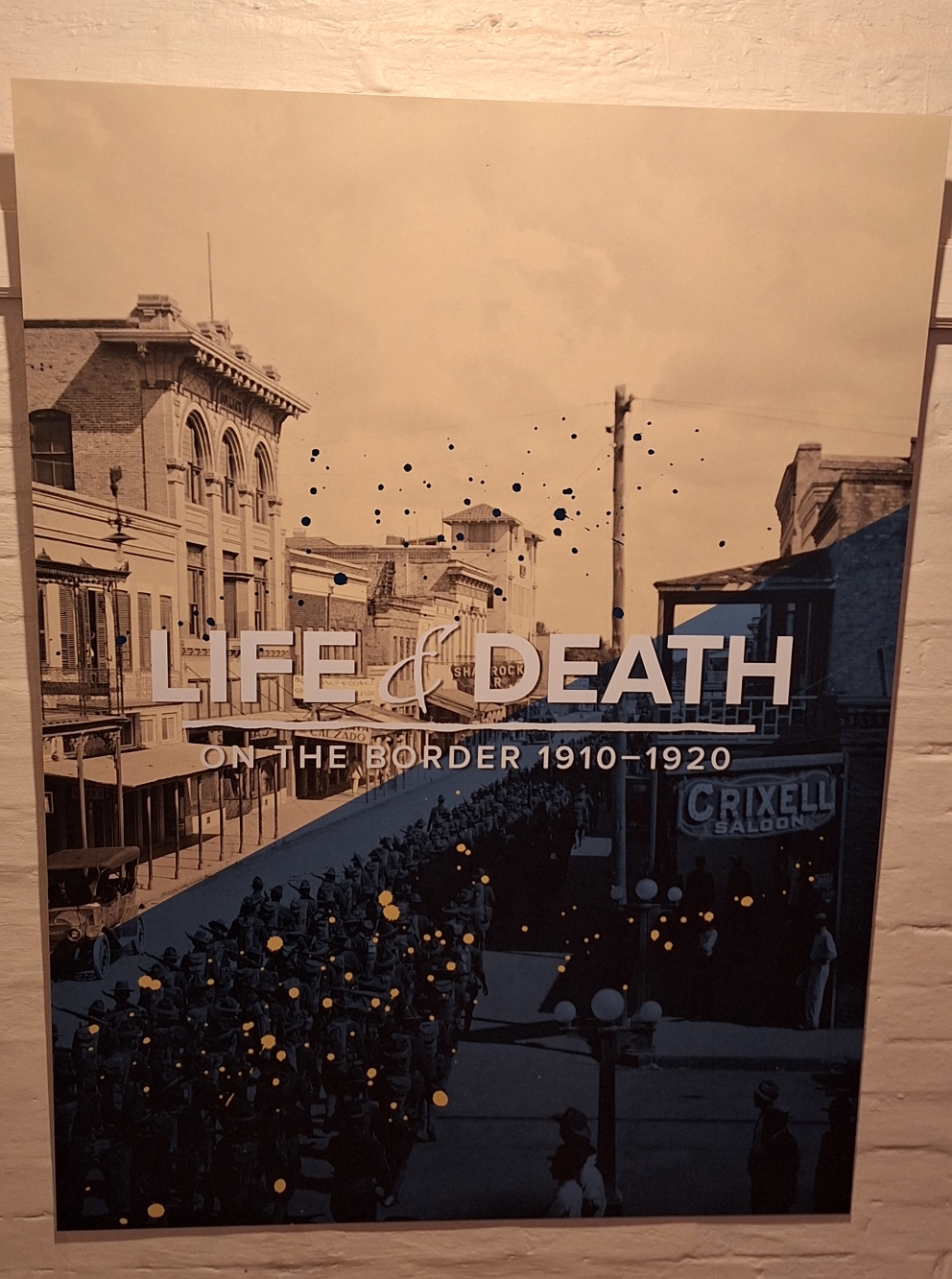
The exhibition ‘Life & Death on the Border 1910-1920’ will be on view until February 2025.
Remembering our historical past, both the good and bad, is essential for staying connected to our roots and understanding how we arrived at the present. Acknowledging past triumphs can inspire pride and unity, while reflecting on mistakes offers valuable lessons in avoiding repetition of errors. By examining history, we gain perspective on social, political, and cultural progress, helping us navigate contemporary challenges with wisdom. Moreover, remembering history fosters empathy, respect, and a deeper sense of identity, ensuring we honor those who came before and build a more informed, inclusive future. History guides us in shaping a better tomorrow.
Earlier this month, I attended the opening reception for the traveling exhibition Life & Death on the Border 1910-1920 at the San Benito Cultural Heritage Museum.
Speakers included Aleida Garcia, San Benito Cultural Arts Department Director, Ricardo Madrigal, and Rudy Garcia, local writer and poet who shared the story of the Jacinto Treviño. Jacinto Treviño is the subject of a well-known Border corrido, or ballad, in which the hero successfully escapes after a run-in with the Texas Rangers.
The exhibition itself is filled with local history and interesting historical facts including Border Renaissance-Literature, Prejudice and Racial Strife, and the history behind the formation of the League of United Latin American Citizens. One of the highlights is the tribute to the annual Día de los Muertos Caminata, which includes original artwork and an altar that features the names of known victims of border violence during those years, especially those who were denied due process and indiscriminately killed.
Overall, it’s an excellent reminder of the early history of the Rio Grande Valley. It is worth checking out, especially for those who are native to the area; you might just learn something new.
More information:
Life & Death on the Border 1910–1920 is a traveling exhibition created by the Refusing to Forget Project in partnership with the Bullock Museum. This powerful exhibition explores a turbulent period in Texas history, shedding light on the violence, resistance, and resilience that shaped the U.S.-Mexico borderlands during the early 20th century. (San Benito Cultural Arts Department, 2024)
Through a compelling collection of panels, on loan from The Mexican American Museum of Texas, depicting historical artifacts, photographs, and narratives, visitors will gain insight into the societal struggles and cultural transformations that defined this era. The exhibition serves as a platform for reflection and dialogue, honoring the voices and stories of communities profoundly impacted by these events.
As part of the exhibition, the San Benito Cultural Center is thrilled to acknowledge and pay tribute to the annual Dia de los Muertos Caminata, organized by Mr. Ricardo Madrigal. Now in its fifth year, the caminata is a 3-mile trek from San Benito’s Heavin Park to the State Historical Marker placed at the Southbound Exit 16 rest area memorializing the lives lost during this turbulent time in our history. Original artwork for four of the five years will be on display and paired with an altar in remembrance.
The exhibition is on view at the San Benito Cultural Center, located at 225 E. Stenger Street, San Benito, TX 78586, and will run through February 8, 2025. Admission for this exhibition is part of the general admission for the San Benito Cultural Heritage Museum, and the public is invited to explore this important chapter in border history.
San Benito Cultural Center 225 E Stenger St San Benito, TX 78586
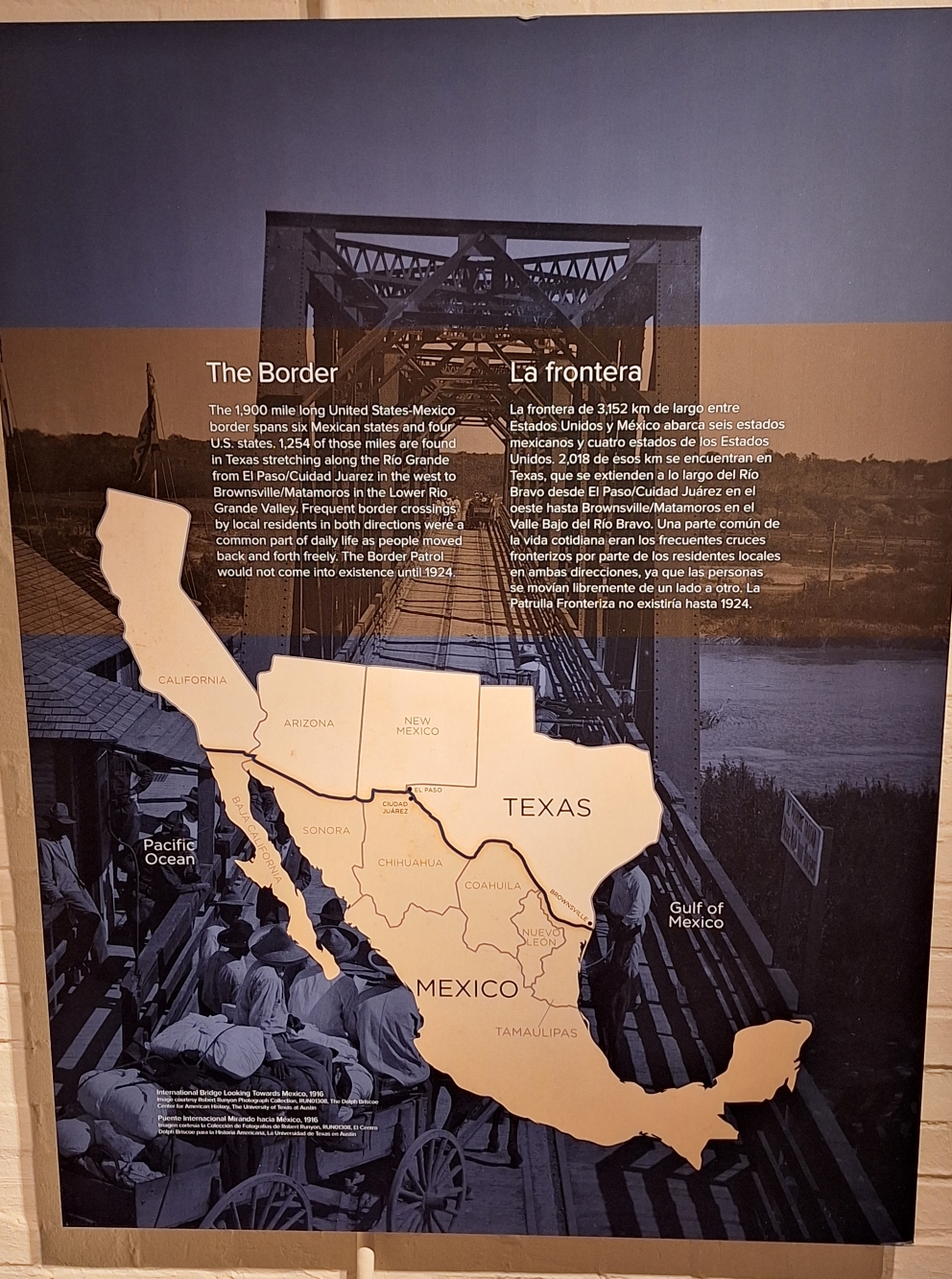
Map of the US/Mexico BorderTribute to the Dia De Los Muertos CaminataInformation is presented in posters by decade. The victims of the times. Life & Death on the Border
Art museums are vital for preserving and showcasing creative expressions that reflect human experience, history, and culture. They offer a space where visitors can experience the transformative power of art, sparking imagination, emotion, and intellectual curiosity. People are drawn to art museums for their ability to inspire, provoke thought, and connect individuals across time and place. Viewing masterpieces or contemporary works allows people to engage with different perspectives and cultivate a deeper appreciation for creativity. Art museums also provide a sense of tranquility and reflection, offering visitors a break from the fast pace of daily life while fostering cultural enrichment and understanding.
Recently I visited the Brownsville Museum of Fine Art to check out their latest exhibitions. They change frequently, so each visit is an opportunity to discover a new artist. Right now there are four exhibitions on view, each as unique as the experiences of the artist and all of them are a joy to experience.
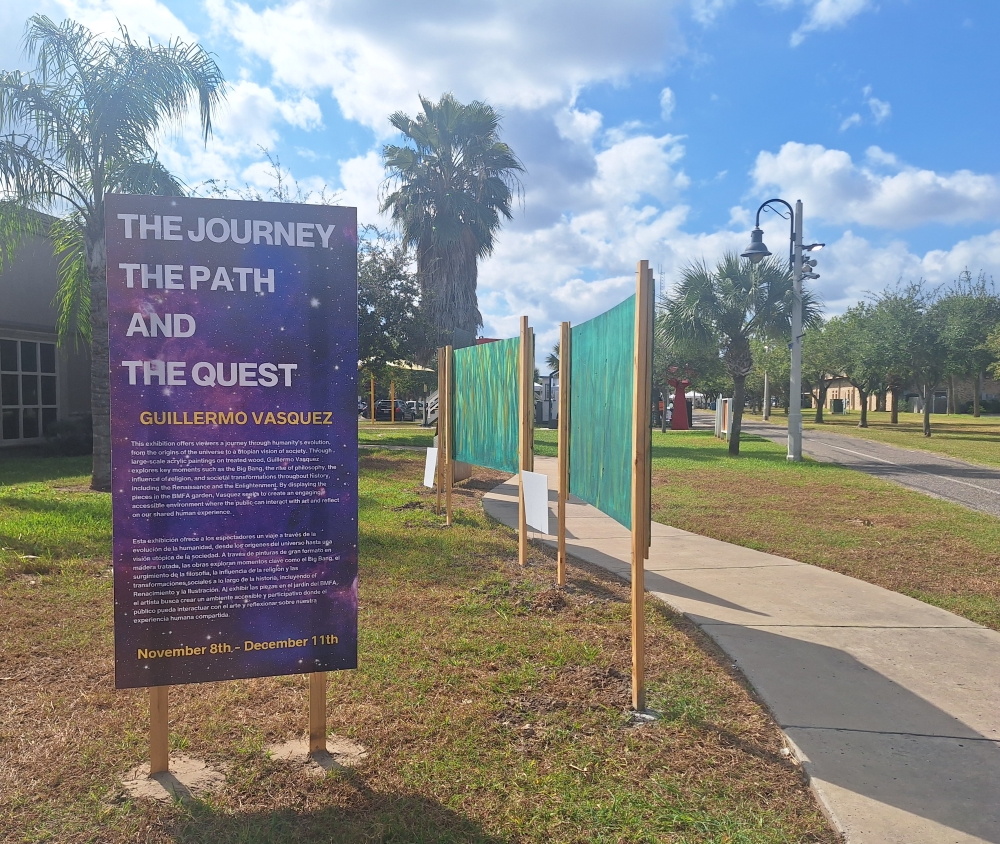
I enjoyed Guillermo Vasquez’ The Journey, The Path, And The Quest because the paintings are larger than life and the colors are so vibrant. A big plus is that it’s an outdoor exhibit, so that if you’re in the area, you can enjoy it without going inside the museum. I also like José Antonio Chaurand’s Idiosyncrasy of Luck because of the overall theme of ‘luck.’ Is what happens to us a matter of luck, or circumstances?
If you love art, do yourself a favor and plan your next museum adventure at the BMFA. There’s still time to check them out since they’re on view until December 11. Museum hours and ticket information is available online.
Current exhibitions are as follows: (Brownsville Museum of Fine Art, 2024)
The Journey, The Path, And The Quest Guillermo Vasquez Exhibition Dates: November 8 – December 11
Originally from Matamoros, Tamaulipas, Mexico, Vasquez graduated with a degree in Industrial Engineering from the Technological Institute of Matamoros. A self-taught painter, he began his artistic journey a decade ago, focusing on acrylic painting techniques. His skills were further refined through classes at BMFA with mentors Diana and Nerea Anzaldúa, who were instrumental in his development. As a committed member of the BMFA, he aims to create art that invites contemplation and intellectual engagement.
This exhibition offers viewers a journey through humanity’s evolution, from the origins of the universe to a utopian vision of society. Through large-scale acrylic paintings on treated wood, Guillermo Vasquez explores key moments such as the Big Bang, the rise of philosophy, the influence of religion, and societal transformations throughout history, including the Renaissance and the Enlightenment. By displaying the pieces in the BMFA garden, Vasquez seeks to create an engaging, accessible environment where the public can interact with art and reflect on our shared human experience.
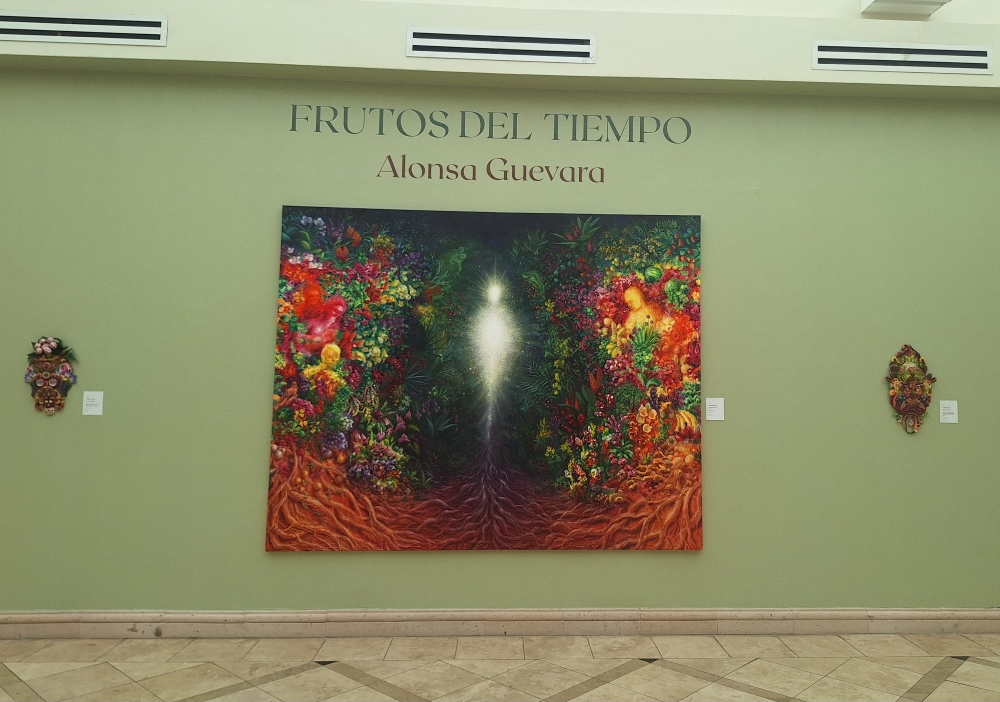
Frutos Del Tiempo Alonsa Guevara Exhibition Dates: November 2 – December 11
Alonsa Guevara (b. 1986, Rancagua, Chile) is a visual artist based in Los Angeles, California. Guevara holds an MFA in painting from the New York Academy of Art (2014), and a BFA from the Pontifical Catholic University of Chile (2009). Guevara works primarily with painting, and her multidisciplinary practice extends to sculptures, installations, sound pieces, and video performance. Her works blur the lines between fantasy and reality while celebrating the connection between humankind and nature. As a Latin-American woman whose life has unfolded across three distinct countries—Chile, Ecuador, and the USA—Guevara’s art serves as an exploration of questions surrounding identity, belonging, and womanhood, offering her personal understanding and appreciation of beauty.
“Frutos del Tiempo” presents a variety of artworks by Chilean-American artist Alonsa Guevara, exploring the artistic and spiritual “fruits” that have emerged from her journey over the years. Featuring paintings and sculptures made from 2018 to the present, this exhibition invites viewers into a celebration of the beauty and complexity of the natural world, examining the deep connections between nature, humanity, and spirituality. As a Latin-American woman whose life has unfolded across Chile, Ecuador, and the USA, Guevara uses her art to explore identity, belonging, and womanhood. Her works offer a personal understanding of beauty, blending reality with fantasy to create an immersive, multi-sensory experience. With a ceremonial and ritualistic ambiance, her pieces pay homage to fertility, spirituality, and life cycles, commemorating the enduring connection between humankind and nature—one that has evolved and adapted through time.
Idiosyncrasy of Luck José Antonio Chaurand Exhibition Dates: November 2 – December 11
José Antonio Chaurand (b. Mexico, 1974) also known as JACH, is a visual artist, publisher, and economist. He obtained a bachelor’s degree in economics (1998) and continued his education in art history, journalism, graphic design, drawing, and cultural management as self-taught while running La Tempestad, considered by experts the fundamental magazine and media outlet of international art in México. (1998-2017)
The idea that the individual can forge his/her own destiny has become predominant around the world. This notion began during the Industrial Revolution, but became popular after the end of World War II propelled mainly by American mass media, and continued growing throughout the twentieth century. During the new millennia, Social media has become the receptacle for ‘‘prophets of human autonomy,” people attempting to profit by convincing others that success, happiness, and abundance are a decision and not a circumstance. The message has now become embedded in mostly all of our contemporary narratives, even reaching the spheres of health and longevity. This project aims to de-dogmatize this notion, manifesting that luck is a variable that must be included in every equation of the human endeavor; once randomness is acknowledged it is easy to see the myth of autonomy. The way luck works can be seen at plain sight, its idiosyncrasy has been revealed, yet we have chosen not to see it.
Iman, Al Safa WAl Marwa: Faith in the Pilgrimage Ibtisam Tasnim Zaman Exhibition Dates: November 2 – December 11
Ibtisam Tasnim Zaman is a New York based Black Lesbian American, interdisciplinary, and conceptual artist. Originally from Tulsa, Oklahoma, Ibtisam moved at six years old to the UAE. This forced migration was shortly after 9/11, to escape the violence that Black Muslims, Muslims of color, and all immigrants are still facing today.
Ibtisam Tasnim Zaman’s solo exhibition, ‘Iman, Al Safa WAl Marwa: Faith in the Pilgrimage,’ is a feature of works that use figurative surrealism to narrate the layers of systemic structures. A constant state of revealing ‘manufactured nature’ through everyday life: in the mundane, journey to work, and overall culture of normalization. Zaman contrasts these dense realities, through depicting acts of intimacy, tenderness, paradox of motherhood, and love as acts of resistance in the midst of chaos.
Brownsville Museum of Fine Art 660 E Ringgold St Brownsville, TX 78520
San Antonio Museum of Art’s American Made: Paintings and Sculpture from the DeMell Jacobsen Collection will close on January 7, 2024. Photo: San Antonio Museum of Art
The San Antonio Museum of Art’s special exhibition American Made: Paintings and Sculpture from the DeMell Jacobsen Collection is set to close on January 7, 2024 after an acclaimed run. The exhibition features more than a hundred artworks depicting the American experience in striking landscapes, Colonial-era portraits, still lifes, impressionist paintings, abstractions, and bronze sculptures. Spanning over 250 years of American art, American Made features exemplary works by renowned artists, including Baby Charles Looking Over His Mother’s Shoulder (No.3) by Mary Cassatt, An American Landscape by Luigi Lucioni, Elsie Wagg by John Singer Sargent, Chow Choy by Robert Henri, Seated Woman by Elizabeth Catlett, and Paris le Soir by Loïs Mailou Jones. (San Antonio Museum of Art, 2023)
American Made demonstrates not only how American art has changed stylistically, but also how the face of American art has changed — literally and figuratively. Though many objects from the DeMell Jacobsen Collection have been on view at museums around the country, American Made is the first exhibition to bring together highlights of this extensive private collection.
American Made was organized by The Mint Museum in Charlotte, North Carolina, and the Dixon Gallery and Gardens in Memphis, Tennessee.
San Antonio Museum of Art 200 W. Jones Ave. San Antonio, TX 78215
The San Antonio Museum of Art serves as a forum to explore and connect with art that spans the world’s geographies, artistic periods, genres, and cultures. Its collection contains nearly 30,000 works representing 5,000 years of history. Housed in the historic former Lone Star Brewery on the Museum Reach of San Antonio’s River Walk, the San Antonio Museum of Art is committed to promoting the rich cultural heritage and life of the city. The Museum hosts hundreds of events and public programs each year, including concerts, performances, tours, lectures, symposia, and interactive experiences. As an active civic leader, the Museum is dedicated to enriching the cultural life of the city and the region, and to supporting its creative community.
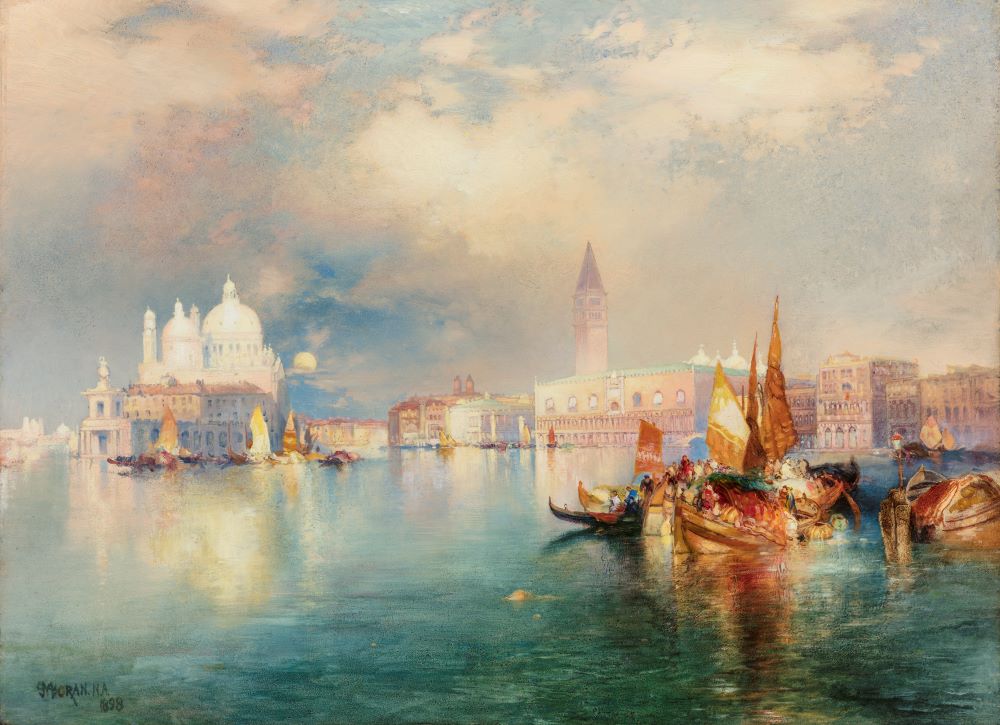
Thomas Moran (American,1837-1926), Moonlight in Venice,1898, Oil on wood board. Courtesy of the Thomas H. and Diane DeMell Jacobsen PhD Foundation. Courtesy photo, used with permission.
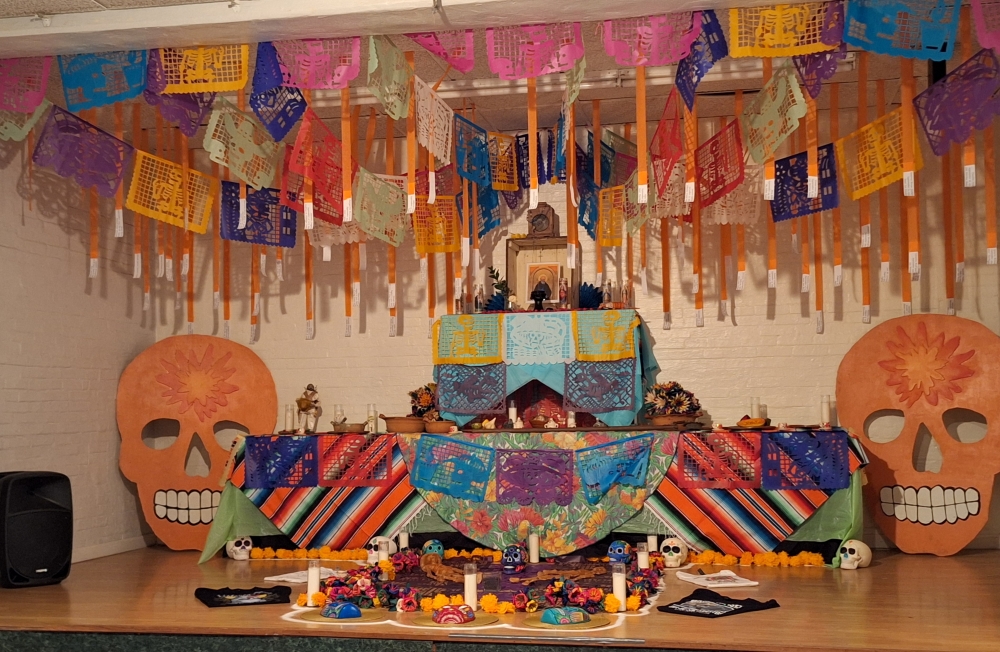
Ofrenda: Juan O’Gorman and a Legacy of Muralism will be on view through November 30, 2023. Photo: UNAM San Antonio.
In celebration of Día de los Muertos, the San Antonio Museum of Art (SAMA) is delighted to announce a special collaboration with the Universidad Nacional Autónoma de México San Antonio (UNAM San Antonio) to present Ofrenda: Juan O’Gorman and a Legacy of Muralism. The ofrenda, or altar, will pay homage to the remarkable Mexican artist and architect known for Confluence of Civilizations in the Americas, the iconic mosaic mural he created for Hemisfair ’68. (San Antonio Museum of Art, 2023)
The ofrenda will be on view in SAMA’s Great Hall from Thursday, October 26 to Thursday, November 30.
Five UNAM students—Jhosep Bonillas, Rodrigo Gael Martínez, Pabel Erubey Medina, Diana Valeria Nápoles, and Mariana Tovar de Alba—were part of the team that submitted the winning proposal to build an altar at the UNAM San Antonio campus in a competition at the School of Architecture at UNAM in Mexico City. SAMA then invited them to build a complementary altar at the Museum. The altar will be placed next to Carlos Rosales-Silva’s mural Pase Usted, as his practice is greatly influenced by Mexican Muralism and O’Gorman.
The students built the altar with assistance from the Museum’s staff using traditional flowers such as cempashúchil (marigolds) and incorporate beer bottles as a nod to SAMA’s history as the old Lone Star Brewery. They also created an elaborate tapete (tapestry) using traditional materials.
Juan O’Gorman’s artistic contributions have left an indelible mark on the world of muralism and architecture. In his mural work, O’Gorman depicted various pre-Hispanic and Mesoamerican cultures, as well as elements of popular culture and everyday life in Mexico. A masterpiece, Confluence of Civilizations in the Americas celebrated the historical and cultural ties between Mexico and the United States. Today, the 2,600 square foot mural adorns the façade of the Lila Cockrell Theatre at the Henry B. González Convention Center.
The UNAM San Antonio will host a series of programs to commemorate O’Gorman’s legacy, including the Altar de Muertos dedicado a la vida de Juan O’Gorman on view from October 26 to November 30 at UNAM San Antonio: 600 Hemisfair Park. San Antonio, TX 78205 (210) 222-8626.
The San Antonio Museum of Art serves as a forum to explore and connect with art that spans the world’s geographies, artistic periods, genres, and cultures. Its collection contains nearly 30,000 works representing 5,000 years of history. Housed in the historic Lone Star Brewery on the Museum Reach of San Antonio’s River Walk, the San Antonio Museum of Art is committed to promoting the rich cultural heritage and life of the city. The Museum hosts hundreds of events and public programs each year, including concerts, performances, tours, lectures, symposia, and interactive experiences. As an active civic leader, the Museum is dedicated to enriching the cultural life of the city and the region, and to supporting its creative community.












 SA Examiner