Breaking Down ‘Workhorse’: Isabel Pless’ Most Honest and Heartfelt Album Yet

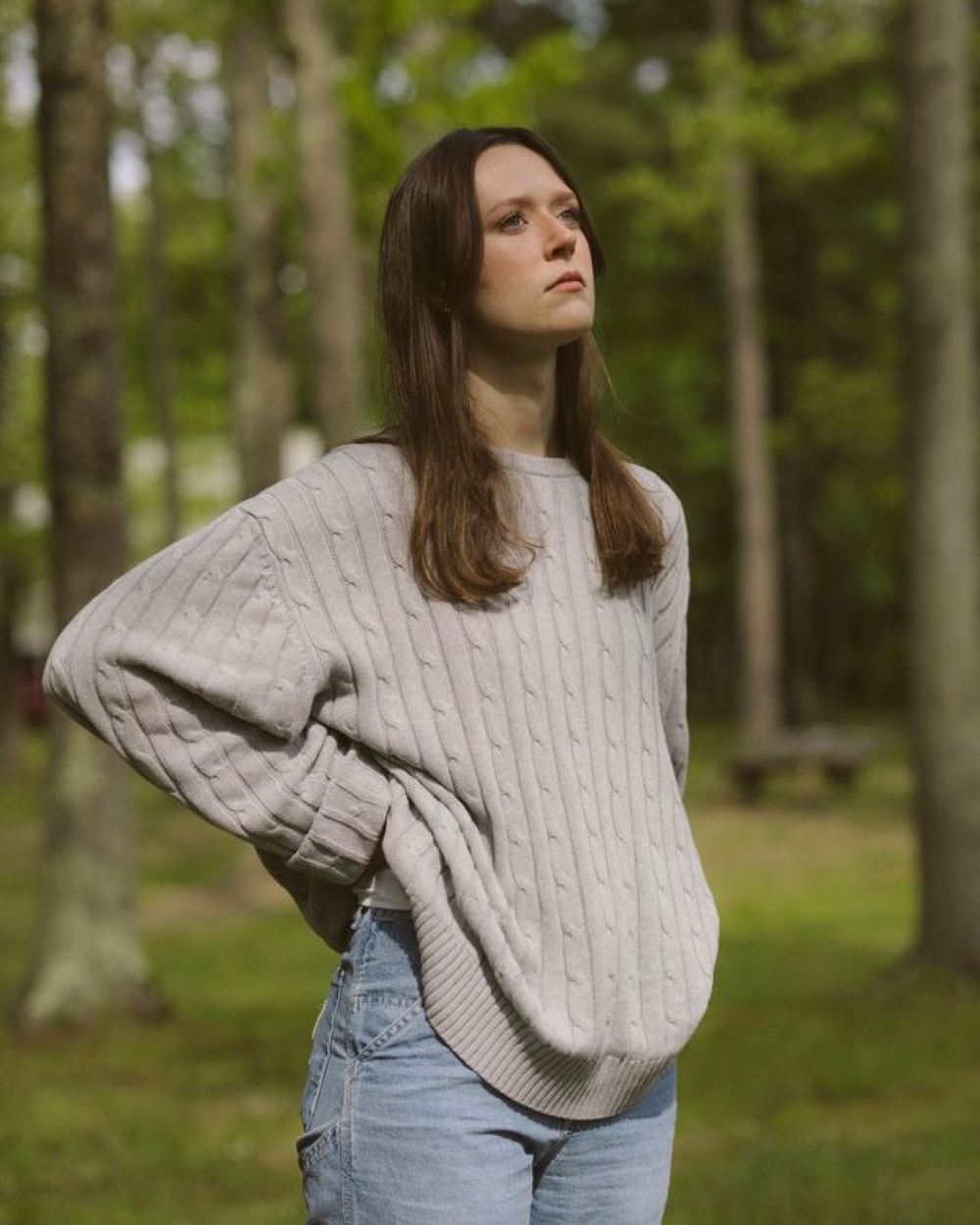
Isabel Pless makes the mundane feel massive on debut album Workhorse. Photo: Patrick McCormack, used with permission.

Nashville-based singer-songwriter Isabel Pless is a self-proclaimed “word girl.” Born and raised in Vermont, Isabel began writing songs at age 12 following in the footsteps of musical inspirations such as Joni Mitchell, The Chicks, and Alanis Morissette. Her songs are personal, playful and smart — she often calls into question the contradictions and challenges of what it means to be a young woman. (Big Hassle, 2025)

In 2020, she started posting clips of her original songs on TikTok and has since amassed an audience of 117k followers. Isabel’s 2023 EP Bad Luck Letting You Go has accumulated over 1.4 million streams across streaming platforms and featured on Spotify playlists such as New Music Friday and All New Indie, and Apple playlists like Acoustic Chill and New in Singer-Songwriter.

Over the past year, she’s recorded an Audiotree session, toured with Donovan Woods and Henry Jamison, and played headline shows across the US and in London. Armed with a bachelor’s degree in Linguistics and an ability to write relatable yet hyper-specific songs, Isabel is redefining what it means to be a singer-songwriter in the age of social media.

Isabel Pless makes everyday life feel monumental with the release of her debut album Workhorse. The ten-song project spans mellow folk to headbanging pop, but her writing consistently honors each tone and notion. Isabel is your older sister reminding you of your self-worth, she is your best friend crying in your passenger seat about a breakup, and she is you wondering when things will finally start going your way.

Produced and co-written by Ariza, each song offers a new sound and a different perspective from the last: Workhorse’s charm stems from its range. There are no right or wrong emotions, and Isabel feels them all with humor to spare. And she invites you to feel them all alongside her.

“‘Workhorse’ is the debut album I’ve been dreaming about since I started writing songs in middle school and that makes me feel incredibly fulfilled,” shares Pless. “Creating these songs helped give me perspective on my life. I feel simultaneously nervous and hopeful that now this album will make its way into other people’s lives.”

Opening with the self-titled track “Isabel,” this song arose out of a moment of need. Pless’ lyrics dictate an inner monologue that rails at people-pleasing and gives grace to imperfection. Winding our way to another standout track like “The Bite,” there’s more of a dark, spell-like energy. This essence mirrors a shift in lyrical and compositional tone from Pless’s previous works, making the song a sonic tug of war between anger and anxiety. 

By the time the listener reaches “Blonde,” Pless is her most witty and candid self. A raging, headbanging, pop-romp, Pless is backed by an entourage of electric guitars and a hefty choir of vocals, that allows the track to  maintain its drama right up until the final acoustic down-chorus. Reaching the capstone of the album’s honesty with its closing, title track, she is in a self-inflicted battle with complacency. Leaving the body of work open ended, the final line “I’m worried this is the best version of me” feels hollow but not defeated.

The official video for ‘I Joined a Cult’ examines the pattern of falling into toxic friendships and relationships, a balance of confusion and remorse. In the video Pless has a sense of childlike wonder as she tries to recruit more people into her circle, constantly seeking out connection.
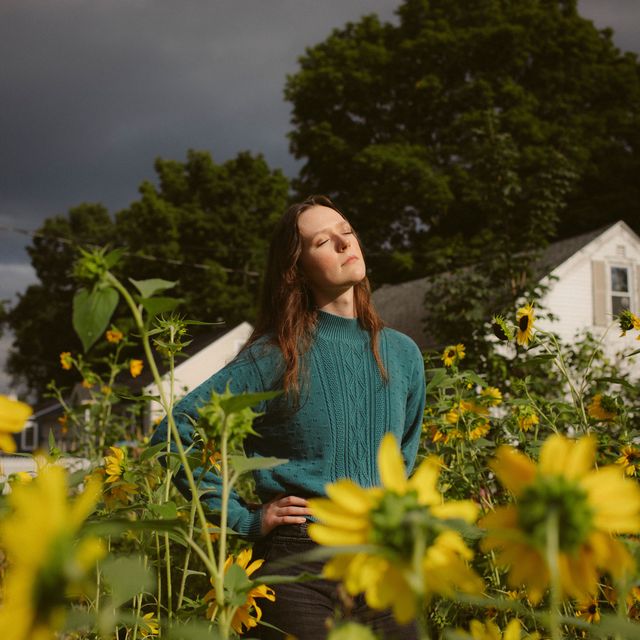
Workhorse tracklist
“Isabel”
“Nobody’s Funeral”
“The Bite”
“I Don’t Feel Pretty”
“I’ll See Him in Hell”
“Shirley Temples”
“Blonde”
“(Transition) Company”
“I Joined a Cult”
“Workhorse”

‘The Nail Beside The Door’: The Soulful New Single from E.W. Harris’ new album

Alt-folk singer/songwriter E.W. Harris unveils new single and announces new EP Machine Living in Relief. Courtesy photo, used with permission.

(New York, NY) With the release of the new single, “The Nail Beside The Door,” alt-folk singer/songwriter E.W. Harris announces the forthcoming EP, Machine Living in Relief, due out this year. An ambitious collection of songs born out of a last call challenge to make a completely acoustic record about robots and AIs, Machine Living in Relief is the latest in a five-album series set inside Harris’s self-styled “romantic dystopia” Rocket City. (One in a Million Media, 2024)

If one weren’t already familiar with Harris’s more traditionalist background, the chummy strum of his guitalele reaches out and shakes your hand by way of friendly introduction. He also incorporates a number of unusual instruments (cedar flute, a broken autoharp), outside-the-box toys (Speak-n-Spell, Mr. Robot, Magic Wand Reader), and MacGyvered percussion hacks (can full of rice, “suitcase that I hit with a roll of duct tape”) throughout these folkways-meets-the-spaceways tracks. Call it asteroid field recording.

In a strange bit of real-time lore that feels like it could only happen to Harris, one of his cousins walked up to him mid-set a few years back and handed him a banjo, offering only the briefest explanation – “Here man, I’m not gonna learn this and I thought you might use it” – before promptly leaving the gig. The result, some months later as Harris tinkered with the unfamiliar instrument under lockdown, was this album’s lead single, “The Nail Beside the Door.” “Written from the perspective of a prisoner who becomes emotionally dependent on an AI companion,” it effectively sets out to explore the ideas behind the album opener from the other side, with all the profound, maddening aloneness of COVID isolation bleeding through the character loud and clear.

Courtesy photo, used with permission.

Though perhaps best known for his event horizon synths, spaghettified guitar effects, and above all, his overwhelming, spacetime singularity of a voice, Harris’s career began, some 25 years ago, in a much more earthbound vein, with the train trestle roots-rock of Luminous and the cable knit jazz-folk of The Eric Harris Group.

Through subsequent releases and relentless touring Harris steadily populated his teeming retropolis with comet-hopping hobos and android vagabonds of every stripe, worldbuilding his future from the ground up until it finally skyscraped against the present, with Machine Living in Relief, and the fateful fortune of that half-remembered night at the bar.

If Machine Living in Relief is truly the result of some apocryphal gauntlet throw issued at last call, Harris has met it in spades. Both a natural outgrowth of what came before, and a tantalizing peek at what might be soon to come, it pushes all the right buttons – even when those buttons are connected to the characters themselves – and leaves you contemplating your place within our brave new world of hyperconnected loneliness and transhuman striving.

“If the heart pumps a turbine that generates power to the computer half of the cyborg brain, what is the value of the parts? Is addiction just a modality of being a divided whole? If time is not linear, in remembering our past mistakes do we actually return to those moments? It’s a damn good thing songs don’t need to answer questions.” – E. W. Harris