

Rashi Rohatgi is an Indian-American Pennsylvania native who lives in Arctic Norway. Her short fiction and poetry have appeared in A-Minor Magazine, The Misty Review, Anima, Allegro Poetry, Lunar Poetry and Boston Accent Lit. Her non-fiction and reviews have appeared in The Review Review, Wasafiri, World Literature Today, Africa in Words, The Aerogram and The Toast. She is a graduate of Bread Loaf Sicily and associate professor of English at Nord University. Her new book “Where the Sun Will Rise Tomorrow” was released this month and is the beautifully written story of a girl who has no plans to become anything more than what has been promised to her by history.
“Where the Sun Will Rise Tomorrow” is set in 1905 and begins as 16-year old Leela and her younger sister Maya are on a small rowboat in the middle of the Ganges River awaiting the sun rise. They have used the excuse of an early morning ‘prayer expedition’ to spend time on their own. Japan’s victory over the Russians in the Russo-Japanese War has shocked the British and their imperial subjects. In India, Leela and Maya, are spurred on to wear homespun as a sign of protest to show the British that the Indians will no longer be oppressed. But when Leela’s betrothed, Nash, asks her to circulate a petition among her classmates to desegregate the girls’ school in Chandrapur, she is wary. She needs to remind Maya that the old ways are not all bad, for soon Maya will have to join her own betrothed and his family in their quiet village. When she discovers that Maya has embarked on a forbidden romance, Leela’s response shocks her family, her town and her country firmly into the new century.
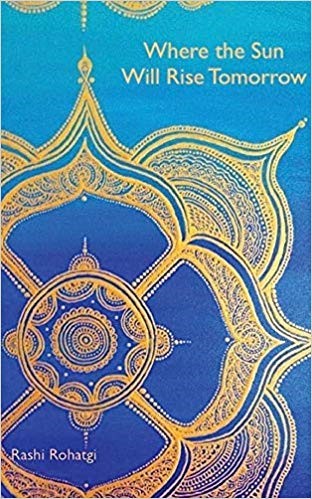
Part historical novel, part coming of age story, “Where the Sun Will Rise Tomorrow” offers a glimpse into a young girl’s world that is changing around her. Leela wants to adhere to family traditions but the lure of the possibilities is too strong to resist. Like most teens, she and Maya are rebellious in their own way “Now that we all have to wear the widow’s weeds, we can’t go around getting soaked through like the heroines in the romances we hide under our pillows.” The historical background helps the reader better understand what these girls, and others like them, are experiencing and will certainly appeal to history aficionados. With simple but poetic language, the author successfully combines the tumultuous times in India with the often confusing and difficult teenage years, “I stand at the edge of the flat roof and want to step off, certain that if my body were to act the way I feel I would fly,” to create an interesting first novel. The most unexpected part comes towards the end when Leela sets off a bomb at a speaking engagement, propelled by a feeling of power that comes from the sole knowledge that something big was about to happen. Overall, “Where the Sun Will Rise Tomorrow” is a fascinating look at India at the turn of the century as well as into one Indian girl’s family and traditions.
“Nash agreed with us, at first, with Gandhi: that maybe images of war can replace war, for who on earth could look at images of war and risk bringing it about?”
*The author received a copy of this book for an honest review. The views and opinions expressed here belong solely to her.
 SA Examiner