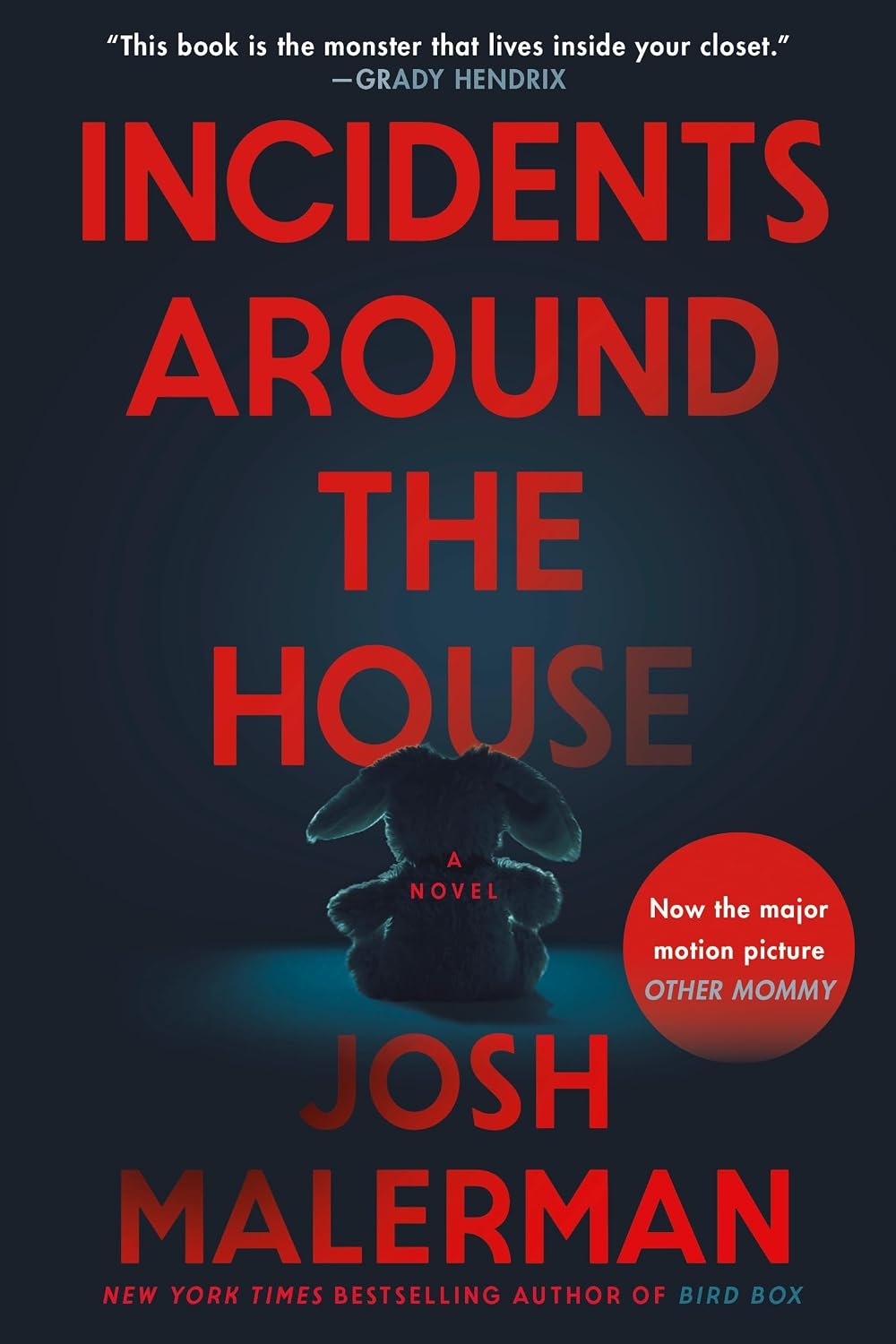
Other Mommy starring Jessica Chastain is now in theaters. Photo: Barnes & Noble
Book-to-Movie Adaptation:Incidents Around the House
By Josh Malerman
The Book
A young girl’s troubled family is haunted by an entity she calls “Other Mommy” in this chilling tale from the bestselling author of Bird Box.
LOCUS AWARD FINALIST • BRAM STOKER AWARD NOMINEE
Synopsis
To eight-year-old Bela, her family is her world. There’s Mommy, Daddo, and Grandma Ruth. But there is also Other Mommy, a malevolent entity who asks her every day:
“Can I go inside your heart?”
When horrifying incidents around the house signal that Other Mommy is growing tired of asking Bela the question over and over, Bela understands that unless she says yes, her family will soon pay.
Other Mommy is getting restless, stronger, bolder. Only the bonds of family can keep Bela safe, but other incidents show cracks in her parents’ marriage. The safety Bela relies on is about to unravel and Other Mommy needs an answer.
Incidents Around the House is a chilling, wholly unique tale of true horror about a family as haunted as their home.
About the Author
Josh Malerman is a New York Times bestselling author and one of two singer-songwriters for the rock band The High Strung. His debut novel, Bird Box, inspired the hit Netflix film of the same name. His other novels include Daphne, Pearl, Spin a Black Yarn, and Malorie (the sequel to Bird Box).
The Movie (Other Mommy)
Now playing in theaters, Incidents Around the House comes to the big screen under the title Other Mommy, starring Jessica Chastain.
Synopsis
Bela, an 8-year-old girl living in a home fraught with marital tension, confronts a sinister entity that emerges from her closet. The presence, whom she calls “Other Mommy,” becomes increasingly threatening to both her and her family.
Movie Details
Director: Rob Savage
Writers: Nathan Elson, Josh Malerman
Cast: Jessica Chastain, Dichen Lachman, Karen Allen
‘Jigsaw’ is the latest Alex Delaware novel by Jonathan Kellerman. Photo: Penguin Random House
Book Review: Jigsaw (An Alex Delaware Novel)
By Jonathan Kellerman
Format: Audiobook
The Story
After not hearing from him in over a month, LAPD Homicide Lieutenant Milo Sturgis shows up at psychologist Alex Delaware’s place looking worn out and overworked. He’s stuck on an “easy” case that suddenly turned into a mind-bending whodunit.
When a young woman is found dead at her kitchen table, the initial evidence points directly to an ex-boyfriend with a criminal record. But Milo knows better than to trust an obvious answer, so he turns to Alex, his best friend and long-term consultant on “those cases,” the ones that are different, to help unravel an investigation that refuses to fit together.
Then comes a second grisly discovery: an elderly woman found frozen and mutilated inside a deep freeze. When Milo learns her identity, he’s stunned because she’s someone from his past. Complicating matters further, her home is an extreme hoarder’s den, virtually impassable due to years of accumulated trash and seemingly meaningless objects. Except for the envelopes of cash stashed among the garbage.
As Alex and Milo dig deeper into the seemingly unrelated crimes, they discover shocking links between the victims, unraveling a complex, multi-layered mystery that tests both Milo’s investigative acumen and Alex’s psychological insight.
About Alex Delaware
Alex Delaware made his debut in Jonathan Kellerman’s 1985 detective novel When the Bough Breaks. A forensic psychologist who originally worked in pediatric psychology, Alex frequently consults for the LAPD alongside his close friend, Lt. Milo Sturgis, who appears in every installment of the series.
Series Context:Jigsaw marks book 41 in the long-running mystery series.
I like the Alex Delaware novels because they involve psychological themes and the author is a psychologist specializing in the treatment of children, just like Alex. This gives them an authentic voice that I find intriguing. With Jigsaw, Jonathan Kellerman delivers another gripping psychological mystery that takes what looks like an open-and-shut homicide and twists it into something far more intricate.
Milo and Alex remain the beating heart of the narrative. Their long-standing friendship gives their professional partnership genuine warmth and authenticity, while their contrasting investigative styles keep the pacing sharp and engaging.
Character Analysis
Dr. Alex Delaware: The analytical anchor of the story. Relying on keen psychological insight rather than brute force, Alex’s primary role is decoding the hidden motives behind irrational behavior—from a calculating killer leaving subtle clues to the complex profile of a severe hoarder. His calm, observant demeanor balances the darker, more visceral aspects of the crimes.
Lieutenant Milo Sturgis: Driven, cynical, yet fiercely loyal, Milo brings grit and procedural muscle to the duo. Because this case hits exceptionally close to home, the personal connection introduces a rare layer of emotional vulnerability to his hardened LAPD persona, significantly raising the emotional stakes.
Core Themes
Deception vs. Hidden Reality: The narrative repeatedly contrasts surface appearances with deeper truths. A seemingly straightforward domestic homicide unravels into a layered mystery, reminding us how easily initial evidence can mask darker realities.
Psychological Decay and Hoarding: Beyond serving as a physical obstacle, the hoarder’s den acts as a powerful metaphor for hidden trauma, obsession, and emotional isolation. The physical clutter directly mirrors the tangled mental state of the victim and the labyrinthine nature of the crime itself.
The Interconnectedness of Disparate Lives: Kellerman explores the hidden webs connecting seemingly unrelated individuals, illustrating how past relationships, secret transactions, and forgotten histories cross paths—reinforcing the idea that no crime occurs in a vacuum.
Final Verdict
Jigsaw is a fast-paced thriller that expertly fits every piece together for a shocking final reveal. Set against a vivid, noir-infused Los Angeles backdrop, Kellerman captures the city’s unique ambience with sharp, haunting detail. Delaware’s nuanced behavioral analysis balances Sturgis’s street-smart instincts, delivering the exact cerebral punch long-time fans crave.
It’s a deeply satisfying read for anyone who enjoys psychological depth paired with classic detective work, proving once again why the Delaware-Sturgis dynamic remains a gold standard in crime fiction.
⭐⭐⭐⭐⭐
Rating: 4.5 out of 5.
About the Author
Jonathan Kellermanis the #1 New York Times bestselling author of more than three dozen crime novels, including the Alex Delaware series, The Butcher’s Theater, Billy Straight, The Conspiracy Club, Twisted, True Detectives, and The Murderer’s Daughter.
He co-authored Double Homicide and Capital Crimes with his wife, bestselling novelist Faye Kellerman, and The Golem of Hollywood and The Golem of Paris with his son, bestselling novelist Jesse Kellerman. He is also the author of two children’s books and several nonfiction works, including Savage Spawn: Reflections on Violent Children and With Strings Attached: The Art and Beauty of Vintage Guitars. He has won the Goldwyn, Edgar, and Anthony awards.
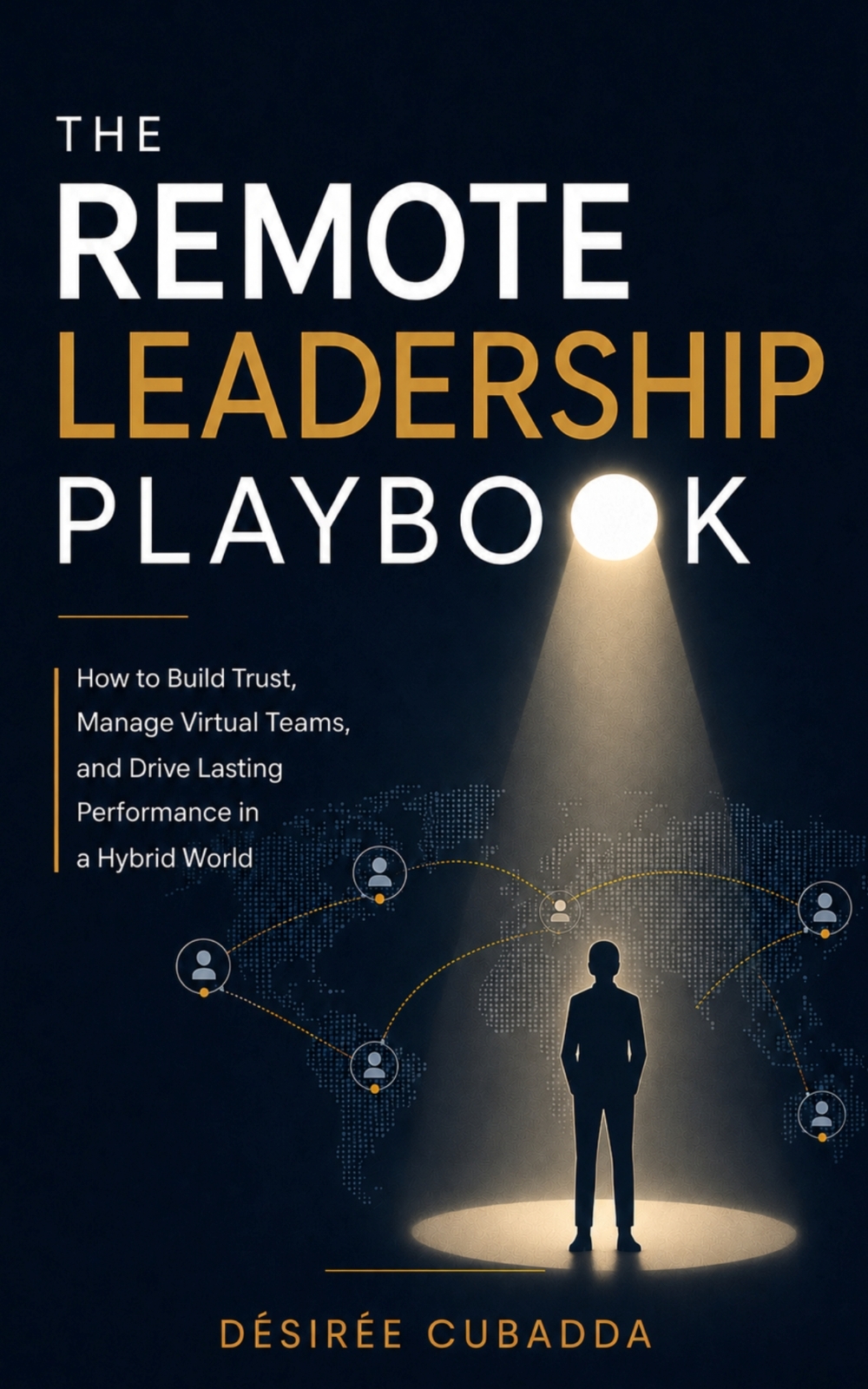
‘The Remote Leadership Playbook’ is the new business management book by Désirée Cubadda. Photo: Désirée Cubadda, used with permission.
Book Review: The Remote Leadership Playbook
How to Build Trust, Manage Virtual Teams, and Drive Lasting Performance in a Hybrid World
By Désirée Cubadda
Synopsis
It’s undeniable: the workplace has changed, and leadership has had to change with it. Remote and hybrid work are no longer temporary arrangements, they are part of how modern teams operate. Yet, many leaders still rely on management practices designed for a world where people shared an office, communication happened face-to-face, and performance was easy to see. (Amazon, 2026)
At a distance, those practices break down:
Messages get misread.
Workloads become invisible.
Quiet team members become hard to read.
Leaders often struggle with how much to check in, how much autonomy to give, and how to track performance without slipping into micromanagement. The challenge isn’t just managing work remotely; it’s learning how to lead effectively when physical presence can no longer substitute for trust, clarity, and accountability.
The Remote Leadership Playbook is a practical, evidence-based guide to doing just that. At its center is the Future-Ready Leadership™ Model, built around three essential pillars: Trust, Autonomy, and Agility. It addresses the real friction of leading at a distance: misread communication, uneven visibility, weakened connection, and the tension between freedom and accountability.
The Remote Leadership Playbook tackles one of the biggest challenges facing today’s workplace: how to lead effectively when your team isn’t sitting in the same room. It provides actionable tools to navigate the delicate trust-control paradox without resorting to digital surveillance, while giving employees the freedom to do their best work.
Key Themes and Topics
Sustainable Performance: Shifting the focus from tracking hours to managing team energy to prevent burnout.
Structured Freedom: Giving employees real autonomy while establishing the structural clarity needed to stay on track.
Distributed Accountability: Strengthening performance and ownership without relying on constant, invasive oversight.
Global Collaboration: Maintaining engagement, connection, and growth across hybrid and globally dispersed teams through intentional feedback and coaching.
Book Structure & Contents
The book is organized into three core parts, each concluding with an actionable “Playbook” section featuring real-life scenarios and checklists:
Part I: Trust – The Relational Foundation
Chapter 1: Trust First: Leading Without the Safety of Visibility
Chapter 2: The Trust-Control Paradox: Leading Without Overreach or Absence
Chapter 3: Clarity as a Signal: Communicating the Why at Distance
Chapter 4: Human at a Distance: Empathy, Presence, and Psychological Safety
Part II: Autonomy – The Structural Foundation
Chapter 5: Structure Creates Freedom: Defining Roles, Goals, and Rhythm
Chapter 6: Growth Without Oversight: Feedback and Coaching for Autonomous Teams
Chapter 7: From Monitoring to Meaning: Using Control Systems the Right Way
Part III: Agility – The Learning Foundation
Chapter 8: Leading Across Difference: Culture, Bias, and Adaptive Thinking
Chapter 9: The New Stability: Empowerment and Continuous Learning
Chapter 10: Sustaining Performance: Designing Work That Lasts
Standout Highlights
Chapter 3 (Clarity & Communication): Explains how leaders can use communication to make trust visible. As the book notes:
“The goal is to help you design communication so that people know where they stand, why decisions are made, and how they can contribute without having to guess.”
Chapter 4 (The Human Side): Emphasizes empathy and presence. Without in-person cues, assumptions spread faster, making emotional intelligence critical to keeping teams connected.
Chapter 8 (Culture & Bias): Examines how workplace bias influences leadership. It notes that the most dominant communication style often sets the tone, not because it’s more effective, but because it’s the most visible.
Readability and Format
The language is clear and free of complicated business jargon. Each chapter ends with a Key Takeaways summary section with bullet points for easy reading, making it a convenient reference guide you can return to frequently.
Final Verdict
Cubadda emphasizes managing energy rather than simply tracking time, recognizing that preventing burnout is essential to long-term productivity. The Remote Leadership Playbook makes a compelling case that physical presence was never the point of great leadership; performance and clarity were.
For anyone navigating the evolving world of remote or hybrid work, this is a sharp and practical guide to leading with confidence, no matter where your team logs on.
“In virtual environments, teams rarely expect leaders to have all the answers. They expect steadiness. When leadership behaviour remains recognisable in both calm and crisis, trust deepens.”
⭐⭐⭐⭐
Rating: 4 out of 5.
** Thank you toDésirée Cubaddafor the gifted copy for review consideration. I haven’t been compensated for this review and all views and opinions expressed are my own.
About The Author
Désirée Cubadda is an MBA graduate, leadership researcher, and international business leader with more than 15 years of experience leading diverse teams across industries and cultures.
Combining academic research with real-world leadership experience, she developed the Future-Ready Leadership™ Model to help leaders build trust, create clarity, and sustain high performance across distance.
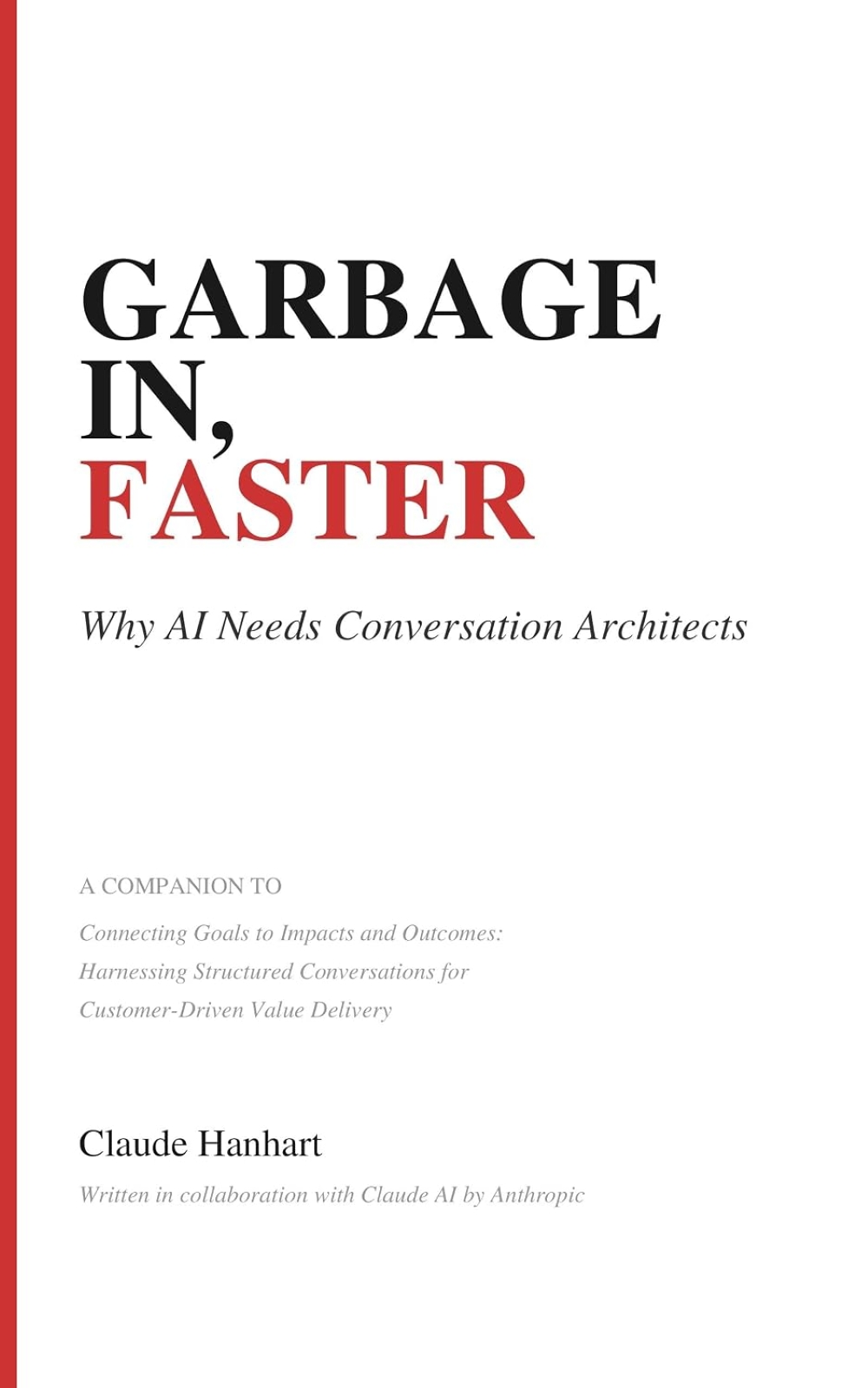
‘Garbage In, Faster’ is a companion to ‘Connecting Goals to Impacts and Outcomes.’ Photo: Amazon
Book Spotlight: Garbage In, Faster: Why AI Needs Conversation Architects
By Claude Hanhart
Synopsis: The Alignment Paradox
“AI doesn’t remove the need for human alignment. It amplifies it.”
From the co-author of the #1 Amazon Kindle Bestseller Connecting Goals to Impacts and Outcomes comes a provocative companion: a book exploring why AI makes human conversation skills more essential than ever. (Amazon, 2026)
Across industries, organizations rushed to lay off Scrum Masters and Agile Coaches, only to immediately adopt AI. They eliminated the very people responsible for creating organizational alignment and bought a technology that makes alignment more critical than ever.
The result? Garbage in, faster.
Fascinatingly, Garbage In, Faster was written in collaboration with Anthropic’s Claude AI, with the entire manuscript generated in under 60 seconds. However, those 60 seconds only worked because of the hours of structured conversation that preceded them and the twenty years of expertise behind those conversations. In short: the process of writing this book proved its thesis.
What You’ll Learn
The Diagnosis: Why “agile is dead” is the wrong conclusion, and what actually failed.
Communication Debt: The invisible liability quietly destroying your organization.
The AI Multiplier: Why AI multiplies clarity and confusion equally and how you choose which one wins.
Syntax & Infrastructure: How VERB + NOUN syntax creates infrastructure for both humans and AI.
Context Engineering: Why “context engineering” is just Structured Conversations by another name.
The Unautomatable: The five conversations AI can never have for you.
The New Role: How to become a Conversation Architect, the role organizations need most right now.
Actionable Steps: Five conversations you can have on Monday morning using no new tools.
Who This Book Is For
Scrum Masters and Agile Coaches wondering what comes next in their careers.
Product Managers whose AI tools produce beautiful, meaningless artifacts.
Executives who invested in AI but aren’t seeing the promised results.
Anyone who suspects that better conversations might actually be the answer.
Note: This is a companion to Connecting Goals to Impacts and Outcomes: Harnessing Structured Conversations for Customer-Driven Value Delivery. While that book provides the complete toolkit, this one is the vital argument for why that toolkit is now existential.
Structure the Conversation. Deliver the Outcome.
About the Author
Claude Hanhartis a Product Strategist and Agile Coach with over 10 years of leadership experience driving groundbreaking product strategies and agile transformations. His approach centers on fostering innovation rooted in business objectives, customer experience, and market leadership using tools like Generative AI, OKRs, and Behavior-Driven Development (BDD).
Claude brings a uniquely interdisciplinary perspective to modern product challenges, holding an MA in Ancient Near Eastern Archaeology and Languages from the University of Berne in Switzerland and an MA in Geography from the University of Minnesota. Multilingual in German, Swiss German, and French, he thrives in international collaborations.
Structured Conversations represents Claude’s commitment to bridging strategic thinking with practical implementation. Currently based in New Jersey with his wife, Claude finds that their three energetic dogs serve as daily reminders of the importance of clear communication and patient guidance, principles that translate beautifully into his professional coaching work.
Are you leveraging AI to speed up your work, or are you just accelerating the chaos?
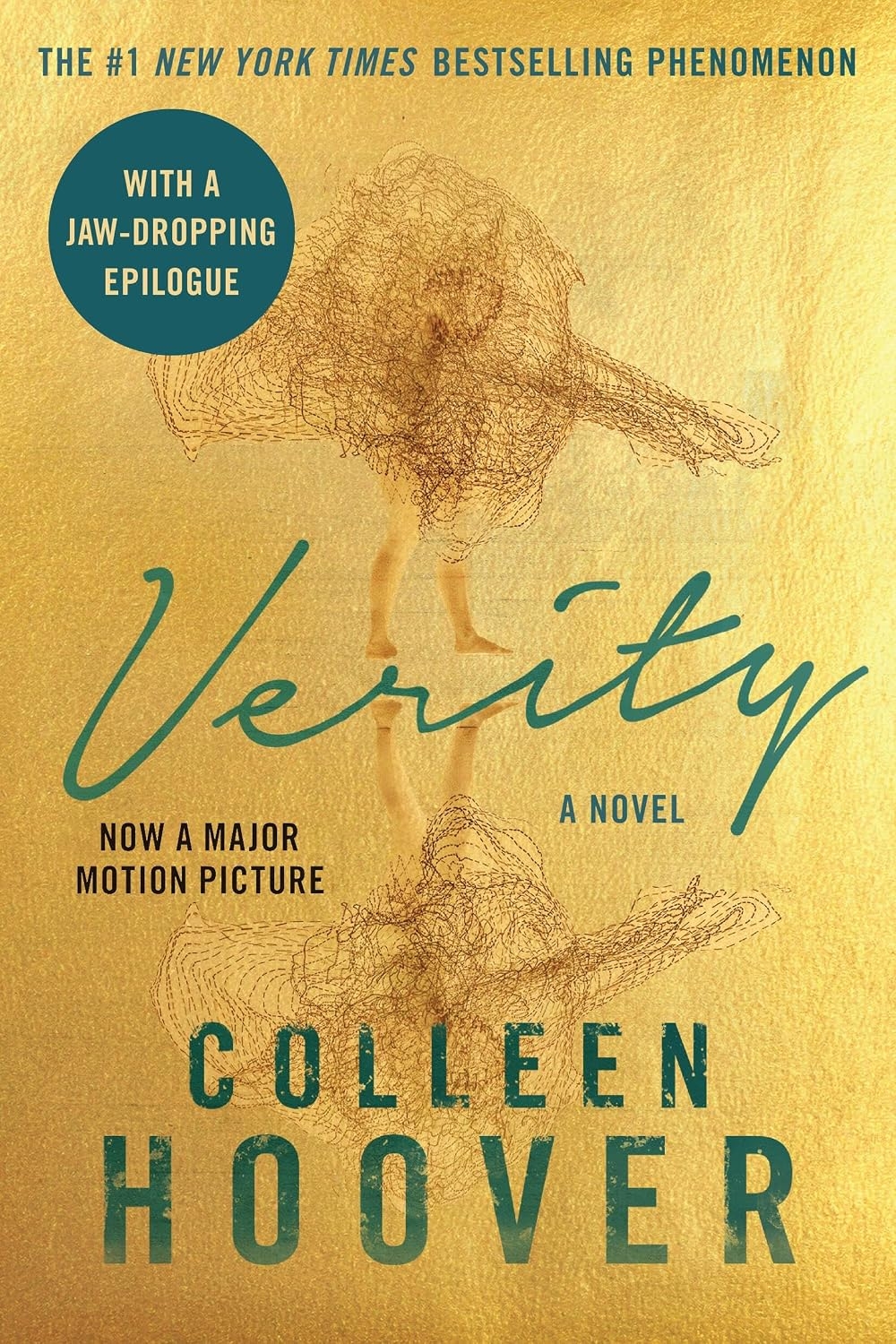
Verity is now playing in theaters nationwide. Photo: Barnes & Noble
Book lovers, the wait is finally over! Colleen Hoover’s bestselling psychological thriller Verity has officially made its way to the big screen, and fans of the book are sure to have plenty to talk about.
With Dakota Johnson as Lowen Ashleigh, Anne Hathaway as the mysterious Verity Crawford, and Josh Hartnett as Jeremy, the adaptation brings Hoover’s dark, unsettling story to life. As Lowen begins ghostwriting Verity’s books, she uncovers a chilling manuscript that reveals shocking secrets about the Crawford family. Twisty, suspenseful, and deliciously disturbing, Verity is one book-to-movie adaptation readers have been eagerly waiting to see.
Now the big question: will the movie leave us just as stunned as the book?
Rated R (sexual content, nudity, language, violence, and bloody images)
Runtime
1 hour 57 minutes
Book Synopsis
Lowen Ashleigh is a struggling writer on the brink of financial ruin when she accepts the job offer of a lifetime. Jeremy Crawford, husband of bestselling author Verity Crawford, has hired Lowen to complete the remaining books in a successful series his injured wife is unable to finish. Lowen arrives at the Crawford home, ready to sort through years of Verity’s notes and outlines, hoping to find enough material to get her started. (Barnes & Noble, 2026)
What Lowen doesn’t expect to uncover in the chaotic office is an unfinished autobiography Verity never intended for anyone to read, page after page of bone-chilling admissions, including Verity’s recollection of the night her family was forever altered. Lowen decides to keep the manuscript hidden from Jeremy, knowing its contents could devastate the already grieving father. But as Lowen’s feelings for Jeremy begin to intensify, she recognizes all the ways she could benefit if he were to read his wife’s words.
After all, no matter how devoted Jeremy is to his injured wife, a truth this horrifying would make it impossible for him to continue loving her.
About the Author
Colleen Hoover is the #1 New York Times and international bestselling author of twenty-five novels and novellas. Her work spans across New Adult and Young Adult contemporary romance as well as psychological thrillers. Colleen is also a scriptwriter, producer, and co-founder of the production company HeartBones Entertainment. (Colleen Hoover, 2026)
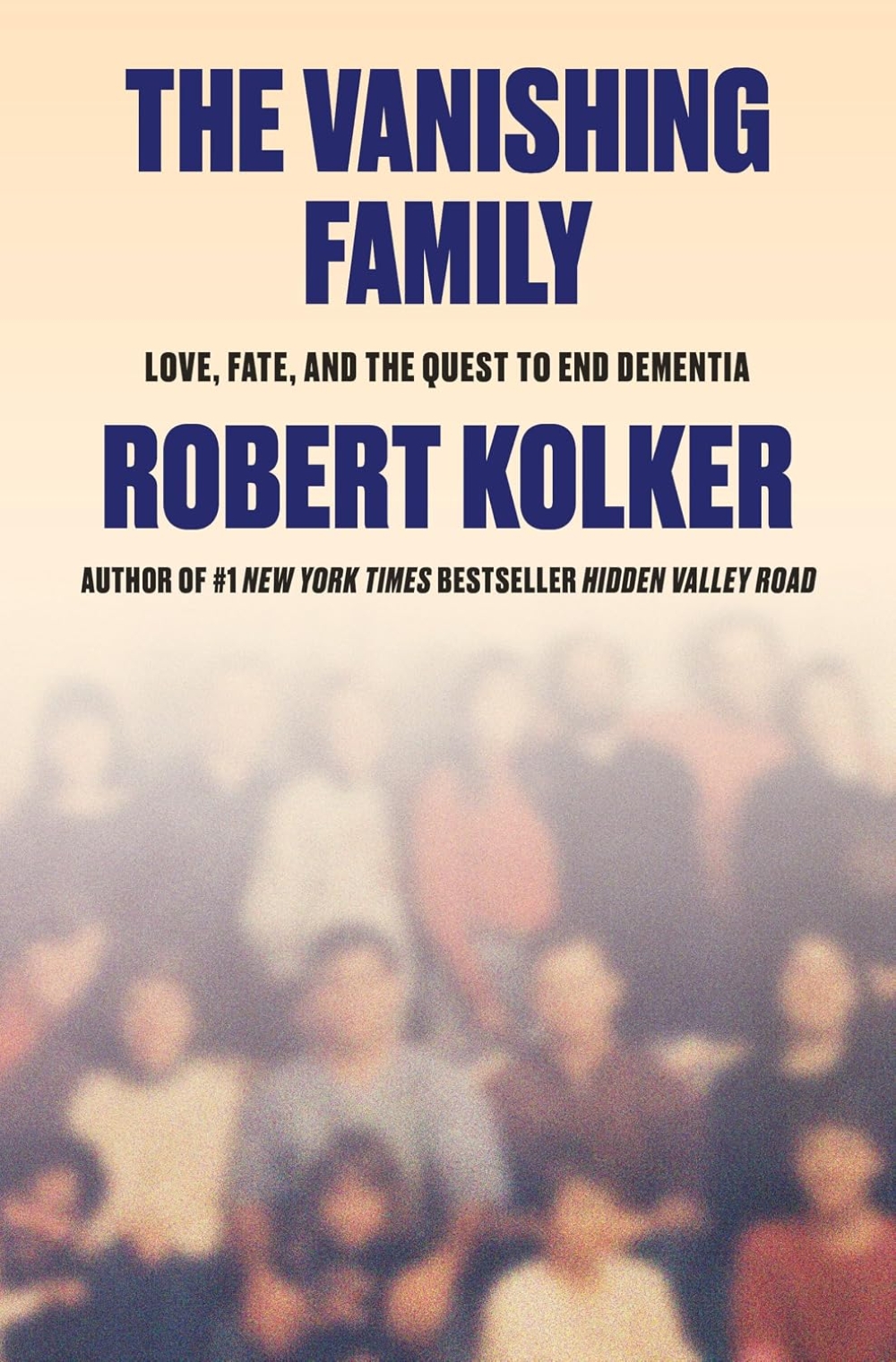
The narrative opens with a tense prologue: after years of delaying testing, 41-year-old Barb receives a lab letter that will confirm whether she carries a devastating genetic mutation. She’s currently the same age her mother, Jean, was when symptoms first emerged.
Oliver and Jean lived in Pleasant Hills, Pennsylvania, raising nine children: Kathy, Christy, Sue, Dutch, Mary, Peggy, Scott, Jenny, and Barb. As the older siblings moved out to start their adult lives, Barb remained at home to witness their vibrant mother fall under a dark, gothic spell, transforming into someone withdrawn, neglectful, and entirely unrecognizable.
A Cruel Genetic Mutation
The family carries a rare genetic mutation (V337M) that causes frontotemporal dementia (FTD) with a cruel twist. Striking early, often in a person’s early forties, it causes formerly devoted parents and high-achieving executives to:
Lose their jobs unexpectedly
Have reckless affairs and take up heavy drinking
Shed all social inhibitions and moral responsibility
Experience total personality loss, leaving families with strangers
With a 50/50 chance of inheritance, the children face the constant terror of an impending genetic fate.
Alongside this human tragedy, Kolker documents the high-stakes scientific race against neurodegenerative disease. Decades of research into this single family’s rare FTD mutation may ultimately provide the key to preventing and treating all forms of dementia, including Alzheimer’s disease.
The Vanishing Family unfolds like a heartbreaking psychological thriller as the siblings watch the illness strike one by one: first Christy, then Mary, and beyond. Kolker captures the agonizing tension between love and fear, forcing the family to confront profound questions about predetermined fate, obligation, and identity.
Key Themes Explored
Identity and Disintegration: The erosion of character when the brain’s frontal lobe declines.
Family Resilience and Devotion: How siblings step up to care for one another despite emotional devastation.
Medical Discovery and Hope: The scientific journey to turn a family curse into a cure for millions.
The Science Behind the Story
Beyond the personal narrative, Kolker guides readers through the history of neuroscience:
Historical Milestones: From the famous 19th-century case of Phineas Gage, whose altered personality after a brain injury proved that specific brain regions govern behavior, to early diagnostic breakthroughs that established dementia as an organic physical disease rather than a mental defect.
The Clinical Battle: A clear overview of genetics, clinical trials, and the decades of frustrating dead ends that have challenged medical researchers.
Chapter Highlights
Chapter 10: Barb has been caring for Christy, the first sibling to display symptoms, when Mary arrives unexpectedly. Seeing the exact same behavioral shifts in Mary, Barb realizes with horror that the disease is genetic and that every sibling is at risk.
Chapter 11: A deep dive into neuroscience for readers who want the exact mechanics of FTD, Alzheimer’s, and brain pathology.
Chapter 20: A crucial breakdown comparing Alzheimer’s and FTD. While Alzheimer’s primarily destroys memory and cognition, FTD attacks emotional processing. Patients lose the ability to recognize their own physiological responses to emotion, causing drastic changes in personality without self-awareness or shame.
“It’s a conclusion with relevance beyond dementia. We most profoundly lose ourselves, it seems, when we can no longer see, feel, or touch the minds and hearts of others.”
Final Thoughts
Overall, The Vanishing Family is a compelling look at family genetics that balances intimate human drama and medical detective work. It’s deeply tragic without ever feeling hopeless, showing how severe illness can reshape a family while highlighting extraordinary resilience.
Kolker never lets complex science obscure the real people at the center of the narrative. For readers who enjoy family sagas, medical mysteries, or popular science, this is an unforgettable read. It serves as a powerful reminder of how much of our identity is tied to memory, personality, and the people who love us, and how hope remains a force even against inherited fate.
“The tragedy is that because some elements of the person are still detectable, the sense of loss is ongoing – like witnessing a living death.”
⭐⭐⭐⭐⭐
Rating: 4.5 out of 5.
About The Author
Robert Kolker is a contributing writer at The New York Times Magazine and author of the #1 New York Times bestseller Hidden Valley Road, named an Oprah’s Book Club Pick, a New York Times Book Review Top 10 book of the year, a GQ Best Book of Literary Journalism of the 21st Century, and a Kirkus Reviews Best Nonfiction Book of the Century. His first book was Lost Girls, named a New York Times Notable Book and a Publishers Weekly Best Book of 2013.
** Thank you to Michael Goldsmith and Penguin Random House for the gifted ARC for review consideration. I haven’t been compensated for this review and all views and opinions expressed are my own.
‘Only Tradies Improve Reliability’ is Gerard Wood’s new book on effective trades culture. Photo: Amazon
Book Spotlight: Only Tradies Improve Reliability – Effective Trades Culture
By Gerard Wood
In every workshop and on every job site, one truth determines whether equipment thrives or fails: reliability is built by tradies who take pride in their work. But in too many workplaces, that pride is buried under weak culture, rushed decisions, and invisible standards that slowly erode both performance and job satisfaction. (Amazon, 2026)
In Only Tradies Improve Reliability, Gerard Wood, former tradie, maintenance leader, and author of Simplifying Mining Maintenance, reveals the practical, culture-driven routines that transform ordinary maintenance teams into reliability powerhouses. Drawing on four decades of real-world experience, he shows leaders and tradies how to build a culture where quality becomes visible, accountability becomes natural, and reliability improves faster than any technical program could.
What You’ll Discover Inside
Spotting the Invisible: Why most failures aren’t caused by tradies who “don’t know” or “don’t care,” but by tradies operating in a culture where they “don’t see,” and how to fix it permanently through simple routines that sharpen the eye for quality.
The Leader’s Role: How leaders create the culture, and why no reliability strategy works unless the tradies executing it feel ownership, pride, and trust.
Empowering the Trades: How tradies can dramatically improve their satisfaction and impact, even in tough workplaces, by focusing on quality, feedback, and craftsmanship.
The Power of Proactive Care: Why proactive maintenance is always cheaper, easier, and more fulfilling than the chaos caused by allowing small defects to become large breakdowns.
Only Tradies Improve Reliability is more than a maintenance book. It’s a blueprint for restoring respect, pride, and craftsmanship in the trades, and for building workplaces where reliability improves quickly, costs fall naturally, and people genuinely want to stay.
During his engineering career, Gerard Wood became passionate about two things: practical asset management and quality work by tradies. After 40 years in maintenance, starting as a tradie, leading asset management across entire businesses, and helping companies sustainably improve reliability, he has seen firsthand what really drives performance. Spoiler alert: it’s not reports, dashboards, or meetings. It’s skilled people doing the right work, the right way. That’s the engine room of reliability.
Through decades of helping sites lift their game, Gerard came to a simple realization: nothing improves reliability faster than quality trades work backed by practical, no-nonsense maintenance leadership. That is the heartbeat of his coaching and his books, Simplifying Mining Maintenance and Only Tradies Improve Reliability. He keeps it sharp, straight-talking, and always shares a few laughs along the way.
Gerard’s mission for this book is ambitious: to positively impact 1 million tradies, helping them gain greater job satisfaction, feel proud to be part of a successful team, and drive better business performance. Realizing that consulting alone has a limited reach, he turned to media, books, and online platforms to share his 40 years of hard-earned experience with a global audience.
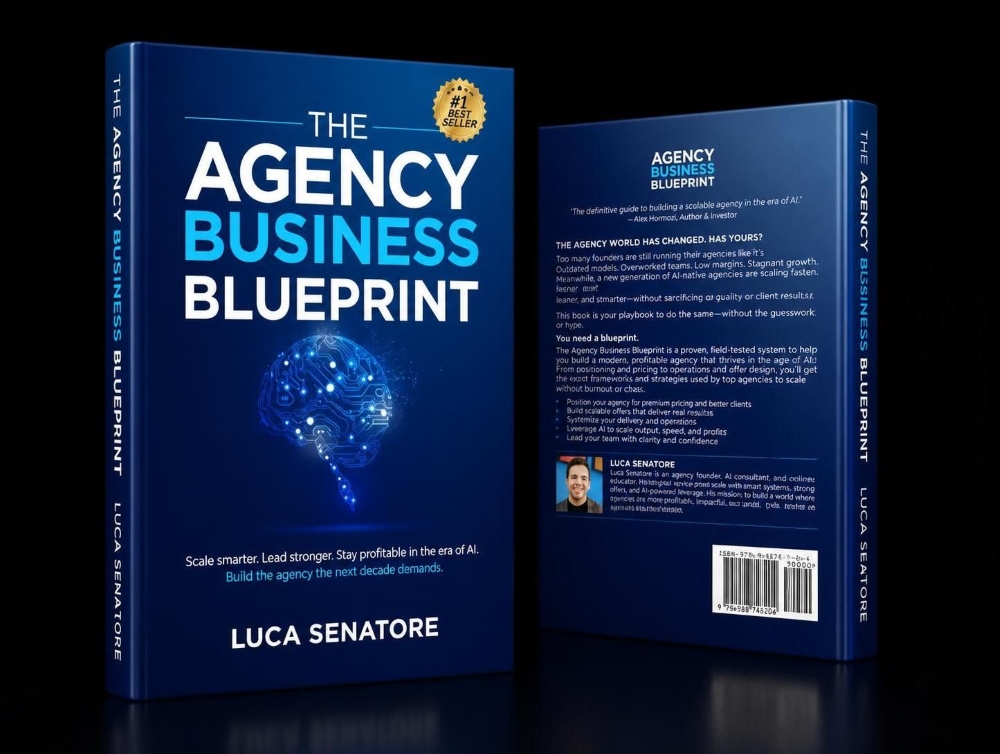
‘The Agency Business Blueprint’ is the new book by Luca Senatore on building a profitable agency in the age of AI. Photo: Luca Senatore.
In the age of artificial intelligence, business leadership books have shifted dramatically from traditional management theories to agile frameworks for human-machine collaboration. Modern executives can’t on gut instinct alone or historical data; they must navigate rapid technological disruption and shifting workforce dynamics.
The most impactful books nowadays focus on how leaders can harness AI not just to automate tasks, but to redesign business models and scale smarter. Ultimately, they emphasize that the future belongs to leaders who combine technical fluency with emotional intelligence, turning AI integration into a sustainable competitive advantage.
Today’s book spotlight is by Luca Senatore.
Book Spotlight: The Agency Business Blueprint
Scale smarter. Lead stronger. Stay profitable in the era of AI. Build the agency the next decade demands.
By Luca Senatore
The agency world has changed — permanently.
What worked even five years ago is no longer enough. Margins are tighter. Clients are more demanding. AI is reshaping every service line. And the next 12–24 months will determine whether your agency grows, plateaus, or quietly disappears. (Amazon, 2026)
In The Agency Business Blueprint, agency leader and strategist Luca Senatore delivers a practical, experience-led field guide for building agencies that don’t just survive change, but use it as a competitive advantage.
This is not a book of hacks, trends, or theory. It’s a blueprint built from two decades of real-world experience: building and exiting agencies, leading teams at scale, working inside Google, and coaching hundreds of agency founders across global markets.
Whether you’re running a boutique agency or leading an established team, this book shows you how to build clarity, leadership, and commercial strength in a world defined by uncertainty and AI-driven disruption.
What’s Inside:
How to build an agency designed for long-term relevance, not short-term wins
Why clarity, positioning, and leadership matter more than tactics
How to scale profitably in uncertain markets without burning out your team
How AI should power growth, differentiation, and margins, not just save time
How modern agencies win business, retain clients, and grow sustainably
How to move from “service provider” to trusted business growth partner
This book is structured around three essential phases — Build, Grow, and Scale — giving you a clear roadmap from foundation to future-proofing.
If you want an agency your team is proud of, your clients trust, and your future self thanks you for building, this book is your starting point.
The agency of the future isn’t louder.
It’s clearer. Stronger. Smarter.
About the Author
LUCA SENATORE is a former CEO of an award-winning UK-based agency, the founder of SAM (Secret Agency Mastermind), and a Google leader. Over two decades, Luca has built companies, coached founders, and helped leaders scale with clarity in fast-changing markets.
Outside of the business world, Luca is a Brazilian Jiu-Jitsu (BJJ) and former mixed martial arts (MMA) athlete. He started a successful martial arts academy, which is now run by two of the best BJJ practitioners and multi-time world champion instructors.
‘Ironwood’ is the second book in Michael Connelly’s Catalina series featuring Detective Stilwell. Photo: Barnes & Noble
Book Review: Ironwood: A Catalina Novel Author: Michael Connelly Format: Audiobook Previous Book In Series:Nightshade
The Story
Detective Sergeant Stilwell knows that his posting on Catalina Island is no paradise, but to most residents, it seems blissfully separated by twenty-two miles of ocean from the troubles of Los Angeles County. But now, a threat is coming to his safe haven. (Barnes & Noble, 2026)
It begins with Stilwell and his deputies watching a plane land in the middle of the night at the Airport in the Sky, a remote airstrip in the mountains. The operation starts going sideways the moment a duffel bag of drugs is dropped and the deputies move in. Stilwell chases the fleeing pickup man into the mountainside brush, but shots are fired on the runway and the plane flies off.
Because of the internal inquiry that follows, Stilwell is benched until he is cleared of responsibility for the failed operation. Determined to find out who brought deadly violence to his island, he begins a secret investigation into the drug deal gone wrong.
To fill his time while under orders to remain in the sheriff’s substation, he begins organizing the lost-and-found bin. He uncovers a valuable, unclaimed backpack and traces it to a woman who disappeared while hiking on the island four years ago. Why was the pack only recently turned in? This discovery sparks an off-the-books investigation that bridges the mainland and the island, drawing in LAPD Open-Unsolved Unit Detective Renée Ballard.
Stilwell and Ballard work the case from both sides of the channel, soon realizing they are on the trail of a criminal who enjoys taunting the authorities. Frustrated at being shut out of an investigation on his own island, Stilwell risks his already shaky standing in the department to pursue a case whose reach is far wider than he ever imagined.
Review
With the second book in the Catalina series, Michael Connelly takes readers away from the familiar streets of Los Angeles and drops them straight onto Catalina Island. In Ironwood, paradise proves to be far more dangerous than it appears.
Detective Sergeant Stilwell is experienced, stubborn, and deeply committed to protecting the island he calls home. His persistence is inspiring, and his willingness to risk his career when he knows something isn’t right makes him a compelling protagonist.
Connelly excels at exploring the illusion of safety. Catalina may be separated from the mainland, but distance cannot keep violence, corruption, or greed at bay. The underlying themes – loyalty, justice, corruption, and the blurry line between following the rules and doing what is right-elevate the story’s suspense.
The introduction of Renée Ballard adds another strong dimension to the narrative. Stilwell is a principled, island-bound lawman fighting to protect his jurisdiction, while Ballard brings the perspective of an experienced mainland cold-case detective. As they unravel the trail left by a cruel criminal, Connelly blends local island logistics with procedural grit.
Overall, Ironwood is a suspenseful, atmospheric mystery packed with complex characters and tight twists. Connelly demonstrates once again why he remains a master of procedural thrillers and cross-jurisdictional dynamics. Rich with realistic detective work, Ironwood is a stellar addition to his universe and a must-read for fans of crime fiction.
“It was as if he liked dropping these hints. That he gets off on it. It’s the I’m-smarter-than-you complex. Most serials have it. It’s the fulfillment of hiding in plain sight.”
⭐⭐⭐⭐⭐
Rating: 4.5 out of 5.
About the Author
Michael Connelly is the author of forty-one previous novels, including New York Times bestsellers The Proving Ground, Nightshade, and The Waiting. His books. which feature the Harry Bosch, Lincoln Lawyer, Renée Ballard, and Catalina series, have sold more than 92 million copies worldwide. A former newspaper reporter and award-winning journalist, Connelly is also the executive producer of four hit television series: Bosch, Bosch: Legacy, The Lincoln Lawyer, and Ballard.
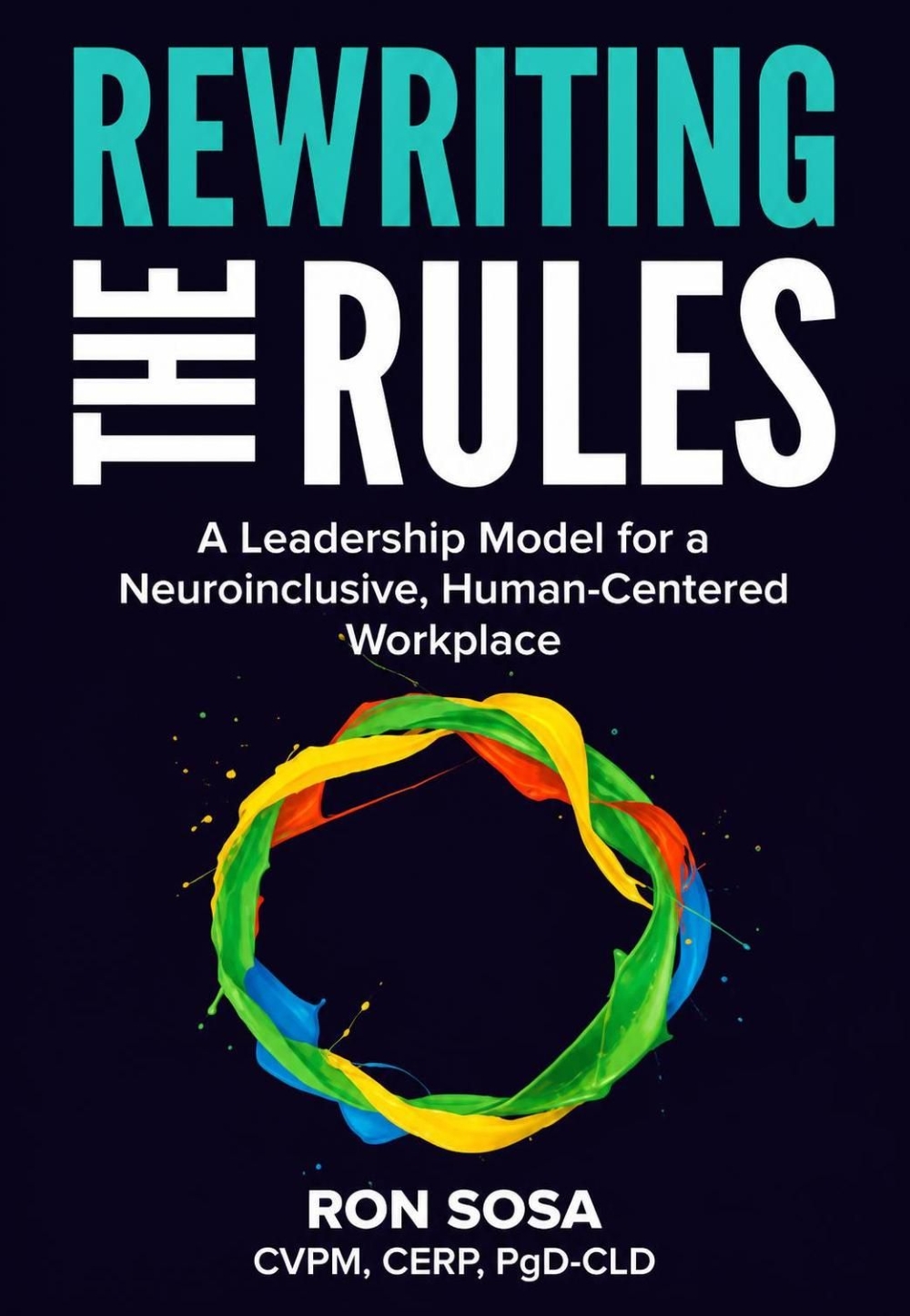
For decades, Ronald Sosa excelled in veterinary leadership, constantly striving to meet invisible standards of professionalism. Behind the success, though, was exhaustion, masking, and self-doubt, until late-life diagnoses of ADHD and autism revealed that the problem wasn’t him. It was the system.
Blending personal narrative with practical frameworks, Sosa exposes how traditional leadership models reward charisma over competence, conformity over creativity, and performance over presence. He then introduces his revolutionary four-part model—Reflect, Implement, Sustain, and Elevate (R.I.S.E.)—to help leaders rebuild from the inside out.
Through this model, readers will learn how to:
Lead without masks or burnout by grounding leadership in emotional regulation and authentic connection.
Build neuroinclusive workplaces that honor difference as a source of strength, not struggle.
Redefine professionalism to center humanity, sustainability, and real impact.
Shift from performative leadership to purpose-driven, people-centered growth.
“This isn’t another book about managing neurodivergent employees. It’s leadership through neurodiversity.”
Written with honesty, humor, and empathy, Rewriting the Rules invites all leaders, whether neurotypical, neurodivergent, or simply human, to reimagine what leadership looks like when we stop pretending and start connecting.
If you’ve ever felt “too much,” “not enough,” or out of place in your own leadership journey, this book offers not just understanding, but transformation. Whether you’re a CEO, HR leader, team manager, or emerging professional, you’ll walk away with the clarity, confidence, and courage to lead without performing, and to build a workplace where everyone belongs.
About the Author
Ron Sosa is a neurodivergent life and leadership coach, consultant, and international speaker. Ron’s career has taken him from starting out as a client service representative to practice manager to minority business partner, through collaborations with Dr. Andy Roark and the Uncharted Veterinary Conference, and now into his current role as founder of Syn-APT Neuroinclusive Leadership & Coaching. Ron leads with a passion for systems-thinking, radical empathy, and inclusive design. (Amazon, 2026)
Diagnosed with ADHD and autism as an adult, Ron brings a deep personal understanding of what it means to lead while unmasking. He founded Syn-APT to transform workplaces into environments where neurodivergent professionals can thrive without compromising who they are. Ron is a Jay Shetty-certified life coach and an unapologetic believer in the power of storytelling, community, and inner work. His leadership philosophy is grounded in curiosity, compassion, courage, and a belief that the best leaders don’t seek to control people, but to co-create systems where everyone can lead.