
Robert L. Dilenschneider has hired more than 3,000 successful professionals and advised thousands more. He is the founder of The Dilenschneider Group, a corporate strategic counseling and public relations firm based in New York City. Formerly president and CEO of Hill & Knowlton, he is the author of the bestselling books “A Briefing for Leaders,” “The Critical First Years of Your Professional Life,” “50 Plus! Critical Career Decisions for the Rest of Your Life,” “Decisions: Practical Advice from 23 Men and Women Who Shaped the World” and others. They all offer readers practical life and business advice for whatever stage in life they happen to be experiencing.
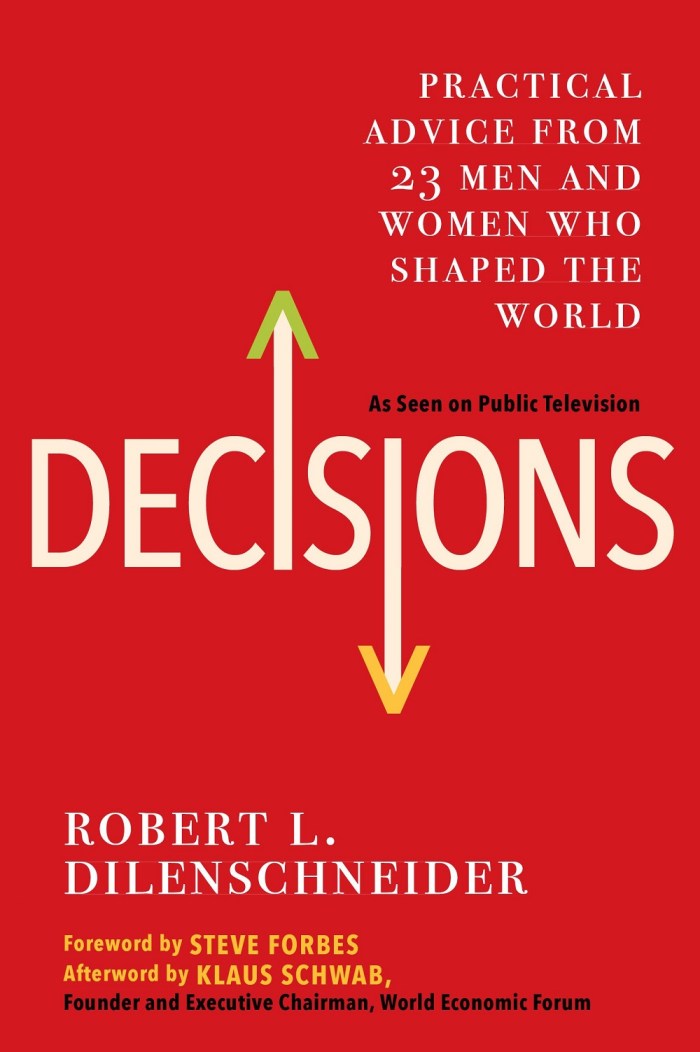
“Decisions: Practical Advice from 23 Men and Women Who Shaped the World” begins with a catchy sentence: ‘This book is intended to make your life better’ and it certainly delivers on its promise. Decisions are a part of everyday life for everyone, regardless of background. How people make decisions is critical to their future. This remarkable book focuses on twenty-three individual who made decisions that shaped the world and their stories stretch from 218 B.C to the present. It is divided into four parts which are in turn divided into individual chapters about a particular person and the most important decision he/she made. These are: Part One: War and Peace (Harry Truman, Elie Wiesel) Part Two: Commerce and Invention (Johann Gutenberg, Henry Ford) Part Three: Science (Marie Curie, Rachel Carson) and Part Four: Breaking Boundaries (Julius Caesar, Abraham Lincoln).
As a whole it analyzes not just the decision but provides background and history regarding the subject matter. The one major lesson to be learned is that many advances in civilization were made because most inventions, like the printing press, the automobile and general banking, were designed to reach everyone, not just the rich. This is turn made room for advances in society which is beneficial to growth. At the end of each chapter there is a decision section that summarizes the lessons readers can use in their own lives.
“The Critical First Years of Your Professional Life” is targeted to young people about to enter the real world of business and professional careers but the advice in these pages is invaluable to anyone, regardless of age or expertise. The Introduction gives a chapter by chapter synopsis to help readers focus on a specific topic. First off, it explains why the book is so important: because it is the paper or electronic version of a mentor in a world increasingly without any generous men and women who at one time would have helped young people entering the workforce. It also emphasizes the five goals in reading this helpful guide: 1)gaining self-knowledge 2)feeling empathy 3)presenting yourself well 4)retrieving information effectively and being informed and 5)solving problems. Standout chapters include: Networking, Making Allies of Your Elders and Image. The best part about this guide is that depending on what advice readers need, they can go back and re-read chapters on their own or if need be, read the whole book more than once because the information contained is ageless.
Lastly, “50 Plus! Critical Career Decisions for the Rest of Your Life” strives to help the more mature worker navigate the everchanging workforce rules. It emphasizes the importance of refreshing skillsets to meet the challenges of competing in today’s job market. The target audience “includes people who are highly accomplished and economically secure but intellectually bored or emotionally dissatisfied.” Some of the chapters include: The New Rules, Time to Change, On Your Own and Becoming a Consultant. Readers may be at a crossroads or unsure of how to proceed with the rest of their lives and this book gives helpful advise on finding a new career direction, growing within their current field, starting their own business or finally realizing a dream. Regardless of what they decide, the author ends by stating that retiring to just play golf or lay around the house is synonymous with giving up and that is never a good thing.
“Be ready to take criticism, and even ridicule and derision. Think about this as part of your decision process. Rather than turning away, be prepared to develop a thick hide.” – from “Decisions”
*The author received a copy of these books for an honest review. The views and opinions expressed here belong solely to her.
 SA Examiner