
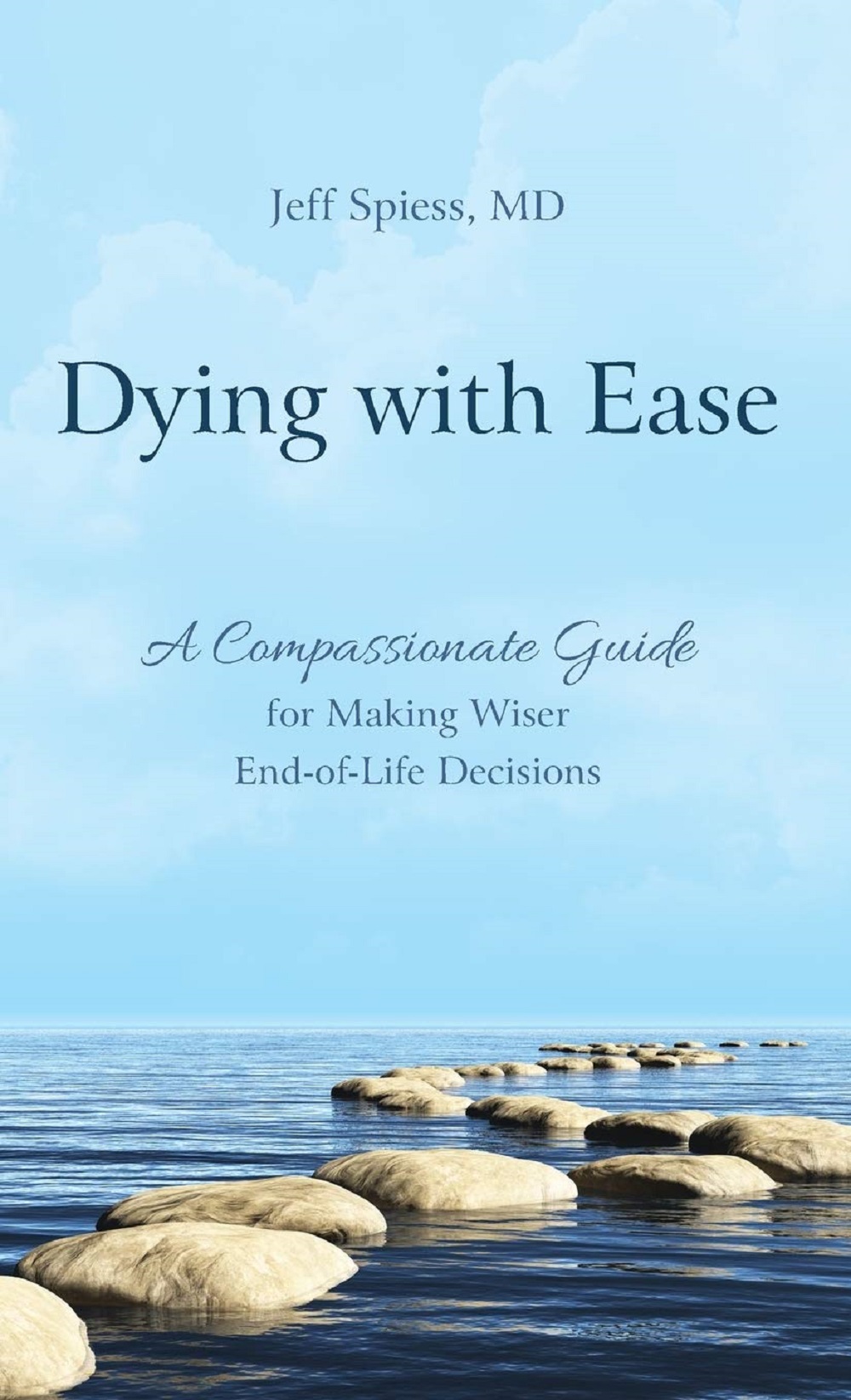
Jeff Spiess, M.D. has spent his medical career caring for those facing serious illness and death, first as an oncologist, then as a hospice physician. He is ‘mostly’ retired as associate medical director of Hospice of the Western Reserve and has been recognized as a leader in his field. Believing that death may be inevitable but fearing the end-of-life is avoidable, in his new book “Dying With Ease: A Compassionate Guide for Making Wiser End-of-Life Decisions,” he gives readers thorough information about advance care planning, hospice, palliative care, and ethical and legal issues surrounding dying in America to help them learn how to put their fear of their final days to rest.
“Dying With Ease” begins with an Introduction where Jeff Spiess recounts the life of Socrates and how in his “seventy years of his life, he had killed no one, betrayed no one, robbed no one, lied to no one, yet he faced capital punishment.” His crime? In short, corrupting the youth by failing to adhere to the religious norms of the day because he admitted that death is a mystery – that one one knows what it is all about. After years of caring for terminally ill patients, the biggest lesson the author learned is that just like his patients, he will also one day die. Most Americans fail to accept death because conversations and decisions about the end-of-life topic are “unknown territory.” He quotes surgeon Atul Gawande, who in his book “Being Mortal,” writes “Death may be the enemy, but it is also the natural order of things.” Spiess’ focus is to present death as a personal process that everyone will experience eventually. The book is divided into nine chapters, including, among others, Dying in America, Suffering, and Envisioning Your Own Death. At the end, there are Notes and a Bibliography as well as a Discussion Questions section, by chapter, to help readers reflect on what they just read. For the braver ones, Chapter 7 contains a guided exercise to help them get an idea of what it may feel like to die; it may be too emotional for some. His hope is for everyone “to become more informed and at peace regarding your own dying.”
While most people agree that death is an inevitable part of life, not everyone has seriously thought about it, much less planned for it. It is a scary thought, but in “Dying With Ease,” Jeff Spiess attempts to arm readers with what they need to know about death, dying, and how to adequately prepare to lessen the pain and grief for themselves and for those who will be left behind. He successfully does this by using language that is easy to understand, the exception being Chapter 3: Hospice, but the material it contains is invaluable. The book is not too long and can easily be read within a couple of days and is also useful as a future reference guide. Some of the details of the case studies presented (like the infamous Terri Schiavo case) are heartbreaking but overall, it is a balanced work that includes examples of people who experienced death as well information on how to choose a hospice, religious/spiritual/cultural views regarding death and dying and what documents to have in place to prepare for the inevitable. Highlights include the three basic anxieties surrounding death: fear of what dying will be like, fear of loss and fear of the unknown; and Chapter 2: I’m Going to Die? What Can I Do? – an eye-opening account of what to expect when your health declines and how to plan for it. Chapter 4: Suffering contains options for how to deal with unbearable suffering: increased treatment intensity, palliative sedation, and voluntary shortening life, which includes Medical Aid in Dying. This highly practical guide is recommended for readers who appreciate a perspective on death from someone who has seen his share and therefore has the resources and credibility to educate others on the subject.
“…for the highest likelihood of your wishes being carried out, you should not only execute advance directive documents but also communicate their presence, location, and content to your family and friends, and care providers. A living will form lying in a file drawer with your other estate documents might get noticed, but most likely only when you are dead, and then it is too late.”
*The author received a copy of this book for an honest review. The views and opinions expressed here belong solely to her.
 SA Examiner