
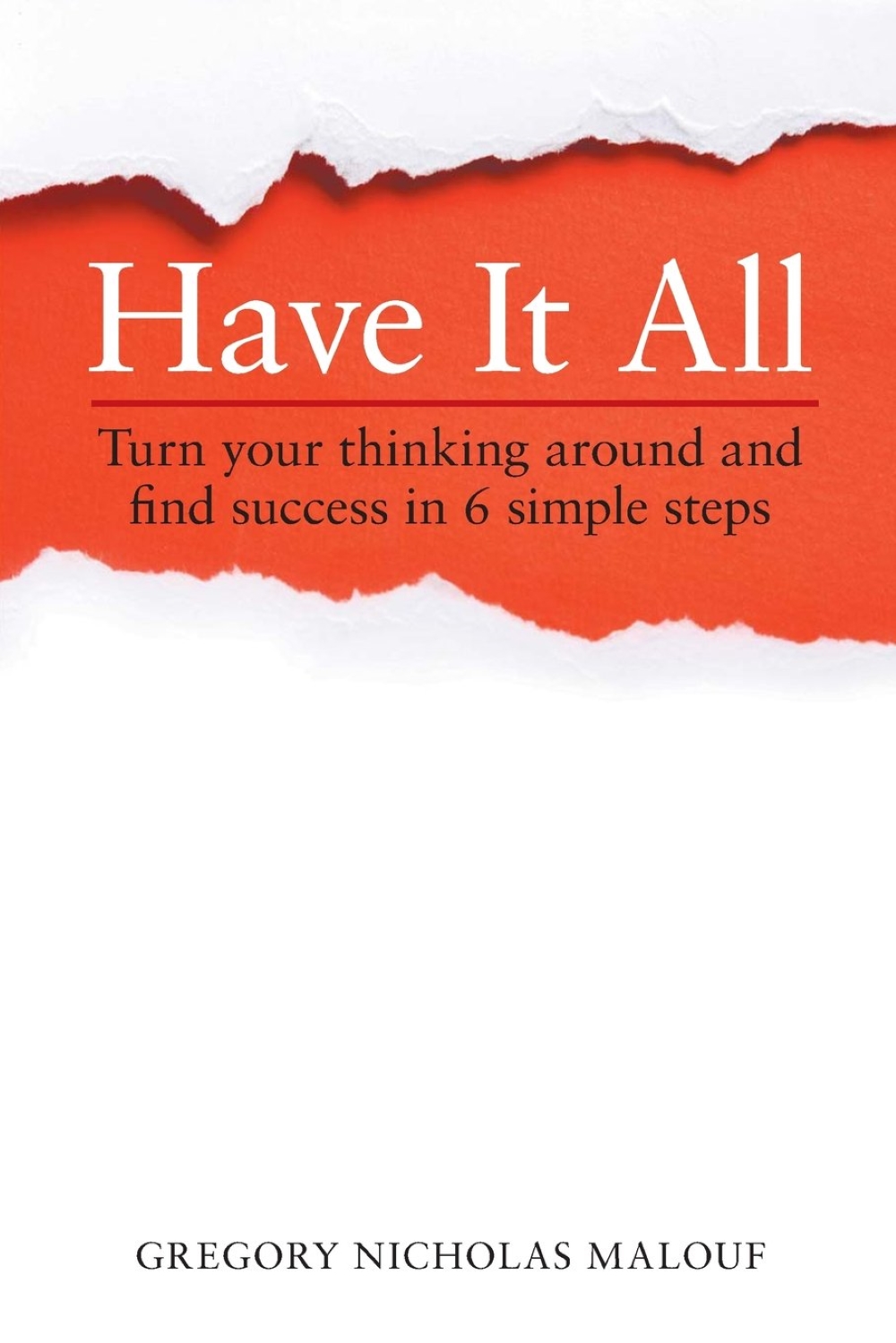
Because they offer insights, strategies, and practical advice for individuals looking to enhance their professional lives, business self-help books are a thriving genre. These books aim to empower readers with tools to navigate the complex world of business, improve leadership skills, foster innovation, and achieve success. Authors often draw from their own successes and failures, as well as from case studies and research, to provide readers with valuable lessons and strategies.
Such is the case with Gregory Malouf. In the early 1990s, he built one of Australia’s most successful independent residential estate agencies in Sydney’s prestigious Double Bay. As a successful entrepreneur, Greg could have had anything he wanted, and still his life fell apart. Despite his many successes, he would come to realize that his fortune was built on his drive to escape a traumatic past. Greg took time away from his businesses, accessed the courage to embrace change and find the answers to questions he’d long been asking, and transformed his life. In 2010, he established the Epsilon Healing Academy to share the many lessons he has learned, with the aim of helping others find their own life’s purpose and, in doing so, live their dreams. His book “Have It All! Turn Your Thinking Around and Find Success in 6 Simple Steps” provides time-tested and practical tools that can change your life. (Amazon, 2024)
“Have It All” can help you increase your wealth by improving your productivity, replace old beliefs that can hold you back and replace them with new and productive ones, access strategies to handle life’s challenges, gain work/life balance and improve your relationships at home and work, overcome criticism and doubt and take control of your life, and stay passionate and motivated for consistent results.
It is divided into seven chapters:
Chapter 1: My Story
Chapter 2: Moving From Outside-In To Inside-Out
Chapter 3: Out with the Old Thinking and In with the New
Chapter 4: Does Your Job Fit?
Chapter 5: Internal Stuff vs Internal Dialogue
Chapter 6: Changing Your Internal Dialogue
Chapter 7: The Remedy
The author begins in the Introduction by giving his purpose for writing this book: “…to offer you a proven road-tested guide to doing high performance business.” He uses anecdotes, motivational stories, and exercises to encourage readers to adopt a growth mindset and take proactive steps towards their professional development. By providing practical advice, insights, and inspiration, he empowers readers to realize their full potential and thrive in the competitive world of business. Highlights include Chapter 3 where he gives readers six steps to breaking productivity barriers, such as Take Your Primary Focus off Outcomes! and Value Relationships Much More, and Chapter 4 where he advises readers how to determine if your job is the right fit for them. He uses down to earth language, so the material is easy to understand, follow, and reference at any time. It may be a small book, but the information is invaluable for anyone looking to up their business game. The skills he shares are not based in theory, but in practice because they have worked for him. “Have It All” is recommended for readers who appreciate self-help books that provide advice from an expert in the field of business.
“This book will be a roadmap for changing internalized beliefs, making the path easier for you to observe and provide strategies for doing so based on certain keys and steps you will take away and apply to your own life.”
*The author received a copy of this book for an honest review. The views and opinions expressed here belong solely to her.

 SA Examiner