
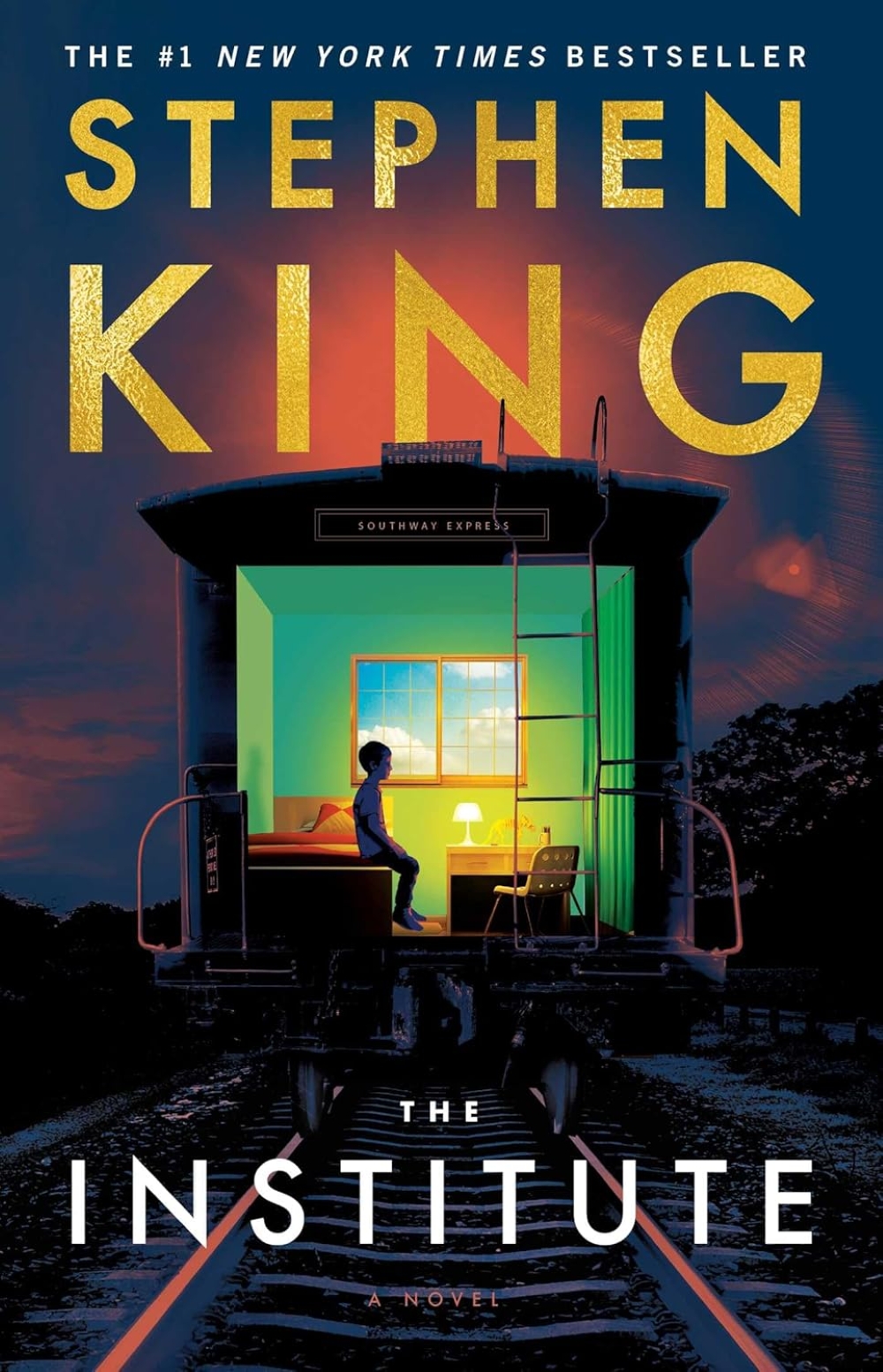
Review: The Institute by Stephen King
The Master of Horror trades monsters for institutionalized cruelty.
Overview: A Nightmare in Broad Daylight
In the middle of the night, in a house on a quiet street in suburban Minneapolis, intruders silently murder Luke Ellis’s parents and load him into a black SUV. The operation takes less than two minutes. (Barnes & Noble, 2026)
Luke wakes up at The Institute, in a room that looks just like his own, except there’s no window. Outside his door are other children with special talents like telekinesis and telepathy: Kalisha, Nick, George, Iris, and ten-year-old Avery Dixon. They are all in “Front Half.” Others, Luke learns, graduated to “Back Half.”
“Like the roach motel,” Kalisha says. “You check in, but you don’t check out.”
In this sinister facility, the director, Mrs. Sigsby, and her staff are ruthlessly dedicated to extracting the force of these children’s extranormal gifts. There are no scruples here. If you go along, you get tokens for the vending machines. If you don’t, the punishment is brutal. No one has ever escaped from The Institute, but Luke is getting desperate.
TV Note: The Institute has been adapted into an MGM+ series starring Ben Barnes and Mary-Louise Parker, with a second season already confirmed.
My Review: Human Monsters vs. The Supernatural
Stephen King has always been the undisputed master of making the mundane feel predatory. In The Institute, he swaps supernatural clowns and haunted hotels for a far more terrifying monster: institutionalized cruelty.
- A High-Stakes Thriller: The story kicks off with a precision that feels more like a thriller than a classic horror novel. King excels at grounding the “extranormal” in the visceral. The true horror isn’t just the experiments; it’s the cold, corporate indifference of the staff who treat children like disposable batteries.
- The Heart of the Story: Inside the facility, Luke finds comfort in Maureen, an employee, and his fellow captives. The camaraderie among the kids provides the heartbeat of the novel, contrasting sharply with the clinical soullessness of their captors.
- The Payoff: While the pacing in the middle stretches thin as Luke plots his escape, the conclusion is a propulsive collision between small-town heroism and shadowy conspiracies.
The Bottom Line: This is a suspenseful, emotionally engaging story. It isn’t just a horror novel; it’s a gripping exploration of friendship, resilience, and the “human monsters” who justify unthinkable means to reach their ends.
Expanded Reading: Entering the King Multiverse
If you enjoyed the psychic themes of The Institute, you’ve stepped into the interconnected world of the King Multiverse. King often refers to these abilities as “The Shine” or “The Touch.” If you want more, check out these four essentials:
- Doctor Sleep – The sequel to The Shining. It follows an adult Dan Torrance and Abra Stone, a girl with a “Shine” so powerful she is hunted by a predatory group called the True Knot.
- The Dead Zone – A grounded, melancholic thriller about Johnny Smith, who wakes from a coma with clairvoyant powers that force him into a high-stakes moral dilemma.
- Carrie – The one that started it all. This is a tragic look at the raw, destructive side of telekinesis when it is suppressed by abuse and fanaticism.
- Later – A recent “Hard Case Crime” novel following Jamie Conklin, a boy who can speak to the recently dead. It shares the “loss of innocence” vibe found in The Institute.
 SA Examiner