Texas artists and groups representing over 200 individual artists will showcase live music, large-scale art installations, film, dance, fine art, theatre, poetry, and fashion at San Antonio’s iconic nighttime celebration of the arts. Photo: Luminaria
On Saturday November 13, the opening ceremonies at 5:30p.m. will kick off the official 2021 Luminaria Contemporary Arts Festival, the most prominent arts festival in South Texas. The ceremony will begin with a blessing from the elders of Tap Pilam Coahuiltecan Nation, followed by remarks from Yadhira Lozano, Luminaria Executive Director, and Jesse Borrego, 2021 Honorary Curatorial Committee Chair. City of San Antonio Mayor Ron Nirenberg and Mayor Phil Hardberger, founder of Luminaria, will be onsite as honorary guests. (Luminaria, 2021)
The Luminaria Contemporary Arts Festival, a nighttime celebration of the arts, will be held from 6pm to midnight featuring more than 200 individual artists from across Texas, highlighting live music, fine arts, film, digital art, dance, theatre, fashion, poetry, and large-scale art installations.
Casa De Ojos founder and award-winning artist, Fabian Alejandro Diaz, will present a fashion show, “Metamorphosis.” Deanna Arriaga will offer “An Immersive Experience” light show. Justin Parr and Adam Smolensky will present a large, neon sculpture honoring San Antonio’s famed Rose Window. URBAN-15’s performance will feature lasers and a drumming show. Breathe Collective, a BIPOC San-Antonio-based artist collective, will offer creative experiences of reflection and healing through breathing. Austin-based dadaLab will install four lit towers to offer an immersive art, technology and science designing experience.
This festival is free and open to the public and it will be held at Hemisfair, Henry B. Gonzalez Convention Center, and the San Antonio Riverwalk with plenty of outdoor space to socially distance and enjoy the art. Full festival lineup is available online.
Hemisfair, Luminaria Main Stage 434 S Alamo St. San Antonio, TX 78205 (between Yanaguana Garden and the Mexican Cultural Institute)
Main Stage at Hemisfair 6p.m. IlaIla Minori 7p.m. Jeremy Kingg/Satara 8p.m. Heartless The Monster 9p.m. Bombasta 10p.m. Los Texmaniacs feat. Flaco Jimenez 11p.m. Pop Pistol
Film Stage at River Walk 6p.m. Film Loop 7p.m. Anna De Luna 7p.m. Film Loop 8:30p.m. URBAN-15 9p.m. Film Loop 9:30p.m. Casa De Ojos 10:30p.m. URBAN-15 11p.m. Film Loop 11:45p.m. End
Market Stage at Convention Center (Merida Plaza) 6p.m. Eddie Vega 6:45p.m. Paula Cortez 7:45p.m. DeAnna Brown 8:45p.m. Ballet Folklórico Sol de San Antonio 9:45p.m. Patricia Vonne
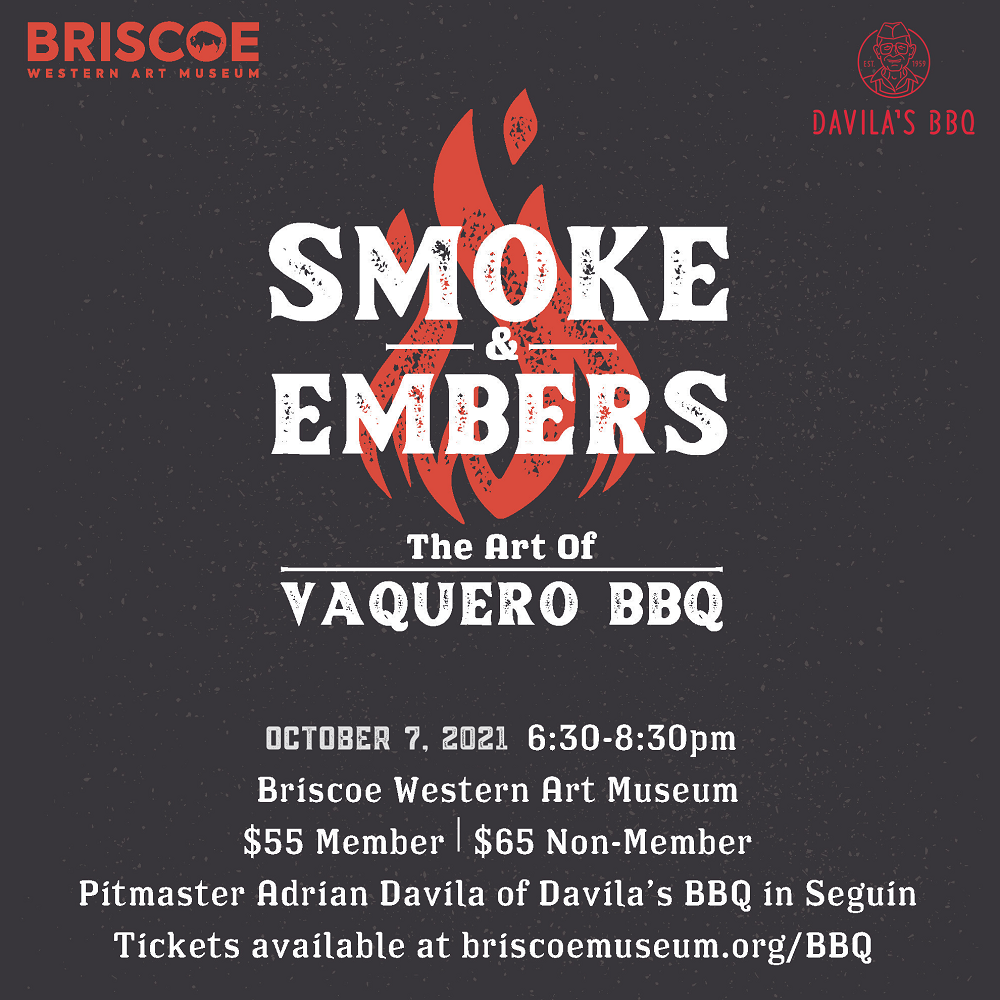
Smoke & Embers: The Art of Vaquero BBQ is this Thursday, October 7 at the Briscoe. Photo: Briscoe Western Art Museum, used with permission.
There is no doubt that good Texas barbecue is a masterpiece to be admired, but is your barbecue museum-worthy? Join the Briscoe Western Art Museum for “Smoke & Embers: The Art of Vaquero BBQ” as acclaimed pit master, author, and chef Adrian Davila leads an in-depth, hands-on demonstration of the history and techniques behind the cuisine that once kept vaqueros and cowboys fed. (Briscoe Western Art Museum, 2021)
“Smoke & Embers: The Art of Vaquero BBQ” is this Thursday, October 7, from 6:30p.m. – 8:30p.m. Third generation pit master Davila will guide guests through perfecting Texas barbecue on the pit in the Briscoe’s McNutt Sculpture Garden, discussing and exploring barbecue and traditional vaquero cooking methods on the range.
The evening is a perfect side to complement the Briscoe’s fall exhibition, Vaqueros de la Cruz del Diablo: Contemporary Photography of the Northern Mexican Cowboy. Making its United States debut at the Briscoe, Vaqueros de la Cruz del Diablo features celebrated photographer Werner Segarra inviting audiences to peer into the world of the Norteño Cowboys from Sonora, Mexico – not as a casual tourist, but as an intimate observer. With almost sixty images spanning more than twenty years of the lives of the vaqueros, Segarra’s images highlight the expansive landscape, their daily work, and the intimacy of their homes, not merely documenting the vaquero, but celebrating his subjects and their way of life. The exhibition opened to the public September 25, 2021 and will run through Monday January 24, 2022.
The Art of Vaquero BBQ is $55 for museum members and $65 for non-members. In addition to the barbecue presentation and hands-on pit demonstration, the evening includes a three-course tasting to enjoy with wine and beer, and Davila’s special Dry Rub to take home. Space is limited on a first-come, first-served basis and tickets must be purchased in advance.
A world-recognized barbecue pit master and author, Davila is a third-generation pit master, chef and restaurateur at his family’s acclaimed Davila’s BBQ in Seguin. Davila has been featured as a guest chef on Food Network’s “The Kitchen” and “Barbecue Beatdown,” and at restaurants La Fama Barbecue and The Ugly American, in Bogota, Colombia. His book, “Cowboy Barbecue: Fire & Smoke from the Original Texas Vaqueros,” celebrates traditions of Latin America and Texas, taking inspiration from the vaquero lifestyle and his own family history, goes beyond standard grilling and offering techniques for smoking, cooking directly on the embers, underground, on a spit, and more. The book will be available for purchase and Davila will be signing copies during the event.
Davila’s BBQ’s special dry rub is available in more than two hundred H-E-B stores across Texas after Davila was named a finalist in the grocery chain’s Quest for Texas Best competition. Invented by Davila’s grandfather, the dry rub is used on all of Davila’s BBQ’s meats, including lamb, pork, brisket, and chicken. In addition to taking home Davila’s BBQ’s rub, there will be a raffle during the event and the prizes will include a Davila’s Decadent Dinner for four at the restaurant that includes a behind-the-scenes pit tour, two bottles of Davila’s BBQ sauces and a $25 gift certificate for a return visit. The dinner is a complete meal for four hungry people, featuring a wide array of menu items and a few off-menu items for everyone to enjoy.
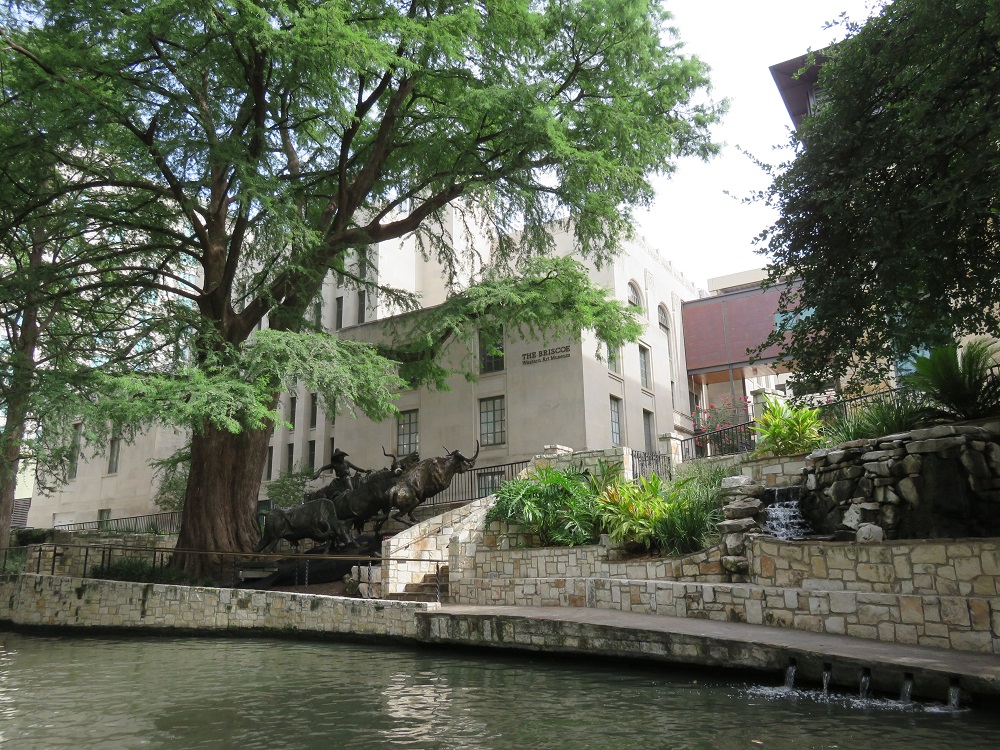
The Briscoe Western Art Museum: Preserving and presenting the art, history and culture of the American West through engaging exhibitions, educational programs and public events reflective of the region’s rich traditions and shared heritage, the Briscoe Western Art Museum is located on the San Antonio River Walk at 210 W. Market Street in the beautifully restored 1930s former San Antonio Public Library building. Named in honor of the late Texas Gov. Dolph Briscoe Jr. and his wife, Janey Slaughter Briscoe, the museum includes the three-story Jack Guenther Pavilion, used for event rentals and programs, and the outdoor McNutt Sculpture Garden.
Adrian Davila. Photo: Briscoe Western Art Museum, used with permission.Photo: Briscoe Western Art Museum, used with permission.
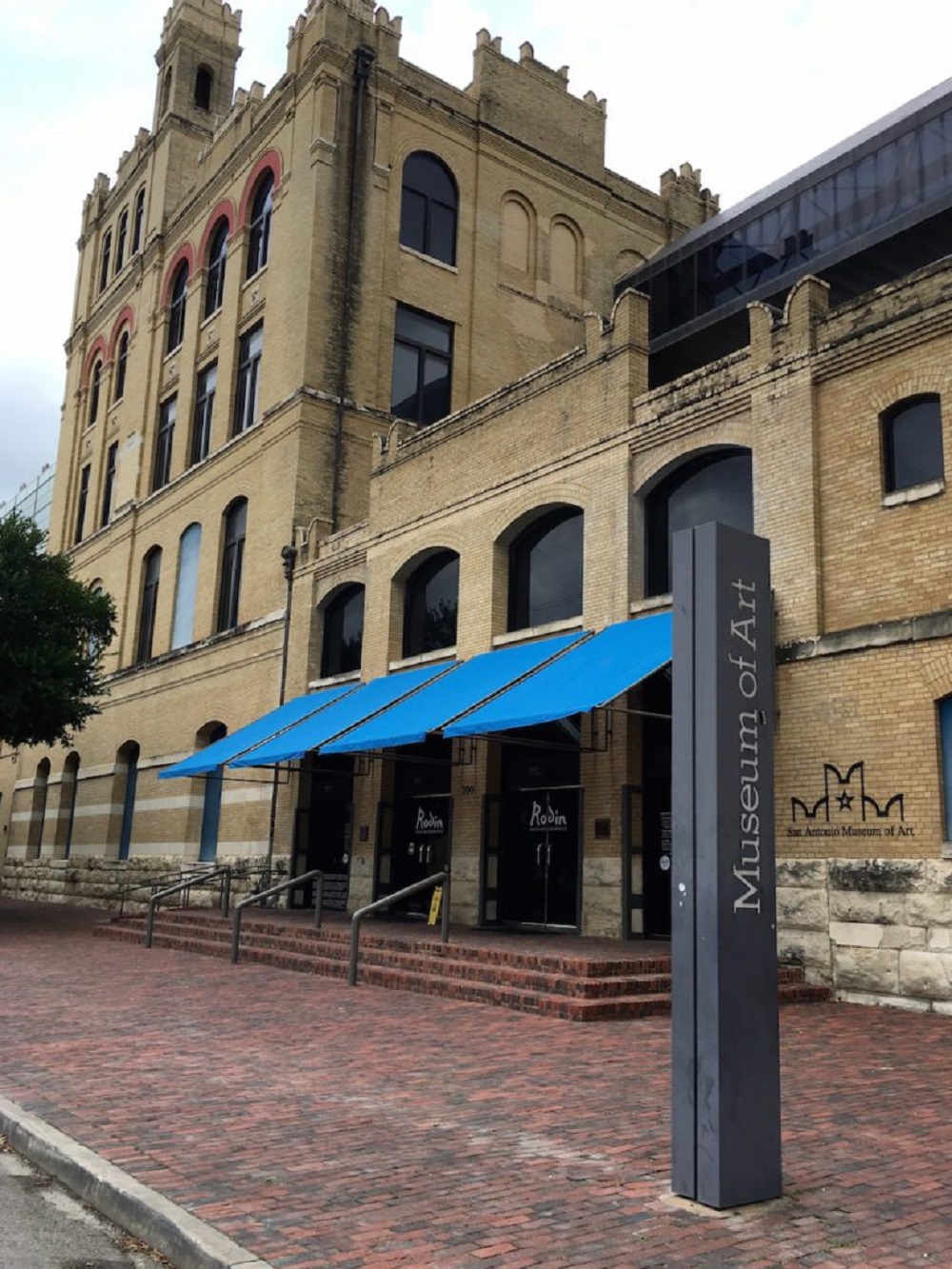
San Antonio Museum of Art celebrates the fall season with in-person and virtual events. Photo: San Antonio Museum of Art, used with permission.
In celebration of the season, the San Antonio Museum of Art (SAMA) is excited to announce their lineup of fall events, including online lectures, live performances, and trick-or-treating through the galleries. Starting on Saturday, September 28 from 6p.m. – 7p.m. one of the nation’s most acclaimed photographers, LaToya Ruby, will lead an online lecture “Using Photography for Social Change,” highlighting how art is a powerful tool for social transformation. Tickets are available online and are $5 for members and $10 for non-members. Check online to learn more about SAMA’s fall events. (San Antonio Museum of Art, 2021)
San Antonians can learn more about their city’s deep brewing history on Friday, October 8, from 6p.m. – 7p.m. during the online lecture “Brewing History is American History” with Theresa McCulla, PhD, Curator of the American Brewing History Initiative at the Smithsonian Institution’s National Museum of American History. This talk will explore the role of beer in histories of technological innovation, immigration, and culture in San Antonio. Tickets are on sale here for $5 for members and $10 for non-members.
On Tuesday, October 12, San Antonio-based artist Jose Villalobos will perform in SAMA’s West Courtyard from 6p.m. – 6:30p.m. as part of the 2021 Texas Biennial. Having exhibited and performed nationwide, Villalobos’ San Antonio display reconciles the identity challenges in his life. Admission to the in-person artist performance is free.
Families can also enjoy trick-or-treating throughout the museum on Sunday, October 31 from 10a.m. – 5p.m. Visitors are encouraged to come dressed in their Halloween costumes as they explore the museum’s galleries. Swords, scepters, weapons, wands, and full-face masks will not be permitted.
The San Antonio Museum of Art serves as a forum to explore and connect with art that spans the world’s geographies, artistic periods, genres, and cultures. Its collection contains nearly 30,000 works representing 5,000 years of history. Housed in the historic former Lone Star Brewery on the Museum Reach of San Antonio’s River Walk, the San Antonio Museum of Art is committed to promoting the rich cultural heritage and life of the city. The Museum hosts hundreds of events and public programs each year, including concerts, performances, tours, lectures, symposia, and interactive experiences. As an active civic leader, the Museum is dedicated to enriching the cultural life of the city and the region, and to supporting its creative community.
La sabanía del peñasco blanco, Huásabas, 2012 Digital photograph on photographic paper. Photo: Werner Segarra, used with permission. Part of Vaqueros de la Cruz del Diablo, fall exhibit at the Briscoe.
The Briscoe Western Art Museum will transport everyone to the birthplace of the modern cowboy during its fall exhibition, Vaqueros de la Cruz del Diablo: Contemporary Photography of the Northern Mexican Cowboy. Making its United States debut at the Briscoe, Vaqueros de la Cruz del Diablo features celebrated photographer Werner Segarra inviting audiences to peer into the world of the Norteño Cowboys from Sonora, Mexico – not as a casual tourist, but as an intimate observer. A series of opening events that includes a documentary, artist’s lecture, and tours spans September 23-26. Following a preview party on September 24, the exhibition opens to the public September 25,2021 – January 24, 2022. (Briscoe Western Art Museum, 2021)
With almost sixty images that span more than twenty years of the lives of the vaqueros, Segarra showcases the expansive landscape, their daily work, and the intimacy of their homes, not merely documenting the vaquero, but bringing forward through his images both meaning and a celebration of his subjects and their way of life. Vaqueros de la Cruz del Diablo takes you into the little-known culture of the cowboys of Sonora, Mexico, sharing aspects of their daily lives through the eyes and lens of Segarra. The photographs share the unique, passionate and strenuous life that these vaqueros lead. The exhibition is accompanied by Norteño music especially created by Leo Lopez. Video clips woven throughout the exhibition further illustrate the stories.
A professional photographer for more than thirty years, Segarra has participated in numerous group and individual exhibitions in various international galleries and museums. Vaqueros de la Cruz del Diablo showcases the lives and people Segarra has encountered by immersing himself in the Mexican cowboy world. Inspiration for Segarra’s work comes from personal experience after living in various countries around the world during his childhood and adolescence. Knowledge acquired throughout those years cultivated Segarra’s artistic sensitivity and respect for native cultures. The most significant encounter and inspiration for this exhibition was a student exchange that took him to northern Mexico. That experience captivated and motivated him to transmit his love and respect for this culture and share it with the rest of the world.
Exhibition opening events include:
“The Making Of” Vaqueros – Documentary Screening with Werner Segarra and Ellen Riojas Clark Thursday, September 23 from 6p.m to 8p.m. Instituto Cultural de Mexico.
Join the Briscoe at the Instituto Cultural de Mexico for a documentary screening and conversation with distinguished guest Ellen Riojas Clark, Ph. D., Professor Emerita in the Department of Bicultural Studies at University of Texas at San Antonio, and Werner Segarra, photographer of Vaqueros de la Cruz del Diablo: Contemporary Photography of the Northern Mexican Cowboy. A highly respected scholar, Dr. Clark’s received three National Endowment for the Humanities grants focused on Mexican American and Latino literature and culture research examines ethnic and cultural identity and cultural studies topics and is executive producer for the “Latino Artist Speaks: Exploring Who I Am” series. The event is free and open to the public.
Exclusive Preview Party: Vaqueros de la Cruz del Diablo Friday, September 24, from 6:30p.m. to 8:30p.m. The Jack Guenther Pavilion at the Briscoe Western Art Museum
Join photographer Werner Segarra and Briscoe CEO and President Michael Duchemin, Ph.D., for the first look at Vaqueros de la Cruz del Diablo: Contemporary Photography of the Northern Mexican Cowboy. The event includes complimentary valet, beer, wine, specialty cocktails, and light bites. Free for Briscoe members and $25 for future members, RSVP or purchase tickets by September 20. Tickets are also available by calling 210.299.4499.
Artist Lecture: Vaqueros de la Cruz del Diablo with Werner Segarra and John Philip Santos Briscoe Western Art Museum Saturday, September 25, from 1p.m. to 3p.m.
Listen in as Werner Segarra and guest moderator John Philip Santos take a closer look at how the videos and photographs of Vaqueros de la Cruz del Diablo were created and what inspired Segarra to pursue the subject. Following the lecture, Segarra will sign copies of his book, “Vaqueros de la Cruz del Diablo,” available at the Museum Store. The lecture and signing are free with museum admission.
A member of the board of directors of the Briscoe Western Art Museum, John Philip Santos serves as a University Distinguished Scholar in Mestizo Cultural Studies to the Honors College at the University of Texas at San Antonio. He is the author of the acclaimed book, “Places Left Unfinished at the Time of Creation,” as well as “The Farthest Home Is in an Empire of Fire.” Santos has created an international forum for exploring mestizo cultural identity, or mestizaje, at UTSA and As an Emmy-nominated television producer, he has produced more than forty broadcast documentaries and news programs on cultural themes in sixteen countries for CBS and PBS.
Vaqueros de la Cruz del Diablo Artist Tour with Werner Segarra Briscoe Western Art Museum Sunday, September 26, from 1p.m. to 3p.m.
Join photographer Werner Segarra for a guided tour through Vaqueros de la Cruz del Diablo. Peer into the world of the Northern Mexican vaquero as an intimate observer and discover how Segarra was able to capture the life of the vaquero and a way of life that is on the brink of disappearing. Free with museum admission.
Vaqueros de la Cruz del Diablo is supported in part by the Elizabeth Huth Coates Charitable Foundation of 1992, the Betty Stieren Kelso Foundation, and the Texas Commission on the Arts, with special consideration to the Wyatt Family Foundation.
Preserving and presenting the art, history and culture of the American West through engaging exhibitions, educational programs and public events reflective of the region’s rich traditions and shared heritage, the Briscoe Western Art Museum is located on the San Antonio River Walk at 210 W. Market Street in the beautifully restored 1930s former San Antonio Public Library building. Named in honor of the late Texas Gov. Dolph Briscoe Jr. and his wife, Janey Slaughter Briscoe, the museum includes the three-story Jack Guenther Pavilion, used for event rentals and programs, and the outdoor McNutt Sculpture Garden.
The DoSeum’s holiday exhibit is DoSeum Express: Tiny Trains and Trolleys. Photo: google
The DoSeum is proud to announce an exciting group of artists selected as part of its fifth annual Artist-in-Residence (AIR) program. For this year’s Artist-in-Residence exhibition, The DoSeum sought artists who traditionally work in miniature and who could bring an artistic touch to the holiday exhibit DoSeumExpress: Tiny Trains and Trolleys. “We are thrilled to work with these talented artists to launch a new holiday tradition for San Antonio Families” says Dan Menelly, DoSeum CEO, “The miniature worlds created by these artists for DoSeumExpress: Tiny Trains and Trolleys are imaginative, playful, and incredibly creative, we cannot wait to share them with our visitors.” (The DoSeum, 2021)
The 2021 DoSeum Artists-in-Residence are:
Daniel Rivera, who creates miniature worlds that provide the viewer with a sense of amusement and exploration while expressing complex subjects rendered in a miniature scale.
Kallie Cheves’ work involves photographic installations that hold deep roots in surrealism. Cheves also writes and illustrates children’s picture books using hand-cut paper miniature creatures. She enjoys weaving science with myth and lore to encourage social-emotional conversations between children and their caregivers.
Linda Vivenza began sharing small-scale dollhouse scenarios with running humorous and quotable narratives in 2013, primarily for the development of large-scale photos. Her life-like miniature displays capture interactions, which move people together to share common, funny moments in real life.
Randall Rudd was once an actual child himself and has fostered his interest in all things mechanical and miniature since inventing a working phonograph with Tinker Toys at age Aside from being a university professor, Rudd also delights in model railroading and creating automata (performing sculpture) for various museums.
Robert Wurzbach and Emily Kinder are a brother and sister team joining forces to create a special miniature world for The Kinder’s interest in miniatures began 10 years ago with the creation of Putz houses. She was intrigued by the concept of a tiny world of cardboard houses. From there a new creative world arose. Wurzbach’s interest in miniatures began as a child watching his mother and Grandmother make small decorations and desserts for every season. His favorite was the decorative peek-a-boo sugar Easter eggs.
This year’s artists-in-residence will apply their imagination, creativity, and out-of-the-box ideas to create distinct miniature sceneries children can view through pop-up bubbles and cameras. The exhibit is set to become a new holiday tradition for San Antonio families and will feature public workshops where AIR artists will share their art practice with children. DoSeumExpress: Tiny Trails and Trolleys opens on November 6, 2021, and on view through January 2, 2022.
“We are thrilled to work with these immensely talented artists to create a new holiday tradition for The DoSeum and San Antonio. We cannot wait to present these fantastical miniature sceneries in our gallery and offer a truly creative and unique new holiday experience.” – Meredith Doby, Vice President of Exhibits for The DoSeum
The DoSeum is much more than a children’s museum. It is a place where interactive fun and hands-on learning come together—a place where minds are always at play. The DoSeum offers exhibits, programs, camps, classes, and field trips designed for all learners, encouraging young minds to explore the joy of learning through connections to STEM, the arts, and literacy. Originally founded as San Antonio Children’s Museum, The DoSeum has grown over the past 25 years to become a premier leader in informal education, while still staying true to the mission of connecting families and transforming communities. The DoSeum is a 501 c3-non-profit organization.
Lady Arundel restoration. Photo: San Antonio Museum of Art, used with permission.
Over the course of its 40-year history, the San Antonio Museum of Art (SAMA) has developed an expansive 30,000-object collection that represents human creation and experience from across thousands of years and from cultures spread across six continents. In its upcoming exhibition, 40 Years, 40 Stories: Treasures and New Discoveries from SAMA’s Collection, SAMA will present works from the collection that are currently held in storage and that have been selected by members of the Museum’s curatorial team as works of particular personal interest, inspiration, and fascination. Many of the 40 objects chosen for the show have been off view for numerous years, while others are being presented for the first time. In other instances, artworks capture little-known or under-studied artistic and cultural narratives. Together, the works engage audiences anew with SAMA’s broad-ranging holdings and highlight the depth, range, and dynamism of the collection. 40 Years, 40 Stories will be on view from October 16, 2021–January 2, 2022. (San Antonio Museum of Art, 2021)
Among the highlights in the exhibition is the reinstallation of the monumental painting Mary, Lady Arundell of Wardour (1767) by the famed English painter Sir Joshua Reynolds. The full-length portrait was acquired by SAMA in 1981 and held a prominent position in its European decorative arts gallery for many years. In 2016, the painting was sent to the Museum of Fine Arts, Houston for a multi-year conservation project, which was completed this year. The newly conserved painting reveals a new depth of detail and color within Reynolds’ composition. The removal of old, discolored layers of retouching and varnish has given the portrait a fresher and more balanced look. Another work in the exhibition that is being presented following recent conservation is the late 17th- to early 18th-century Chinese handscroll, Peach Blossom Spring. The work depicts the tale of a fisherman who discovers a utopian community. The handscroll, which has been in storage for many years, was repaired and remounted, so that it can be safely unrolled for viewing.
40 Years, 40 Stories also presents for the first time several new acquisitions, including an exquisitely carved Islamic amulet that was acquired in 2013. The amulet is inscribed with 63 Names of God and a verse from the Qur’an, and was intended to invoke divine protection. The exhibition will also feature a recently acquired Petrosphere, a massive stone sphere that weighs more than 600 pounds and was produced by the ancient inhabitants of Costa Rica. Found in groups, these spheres demarcated features of the landscape for communities in the Diquís region, though their precise meaning is not yet understood. The exhibition will also be the first occasion to show Celia Eberle’s sculptural installation Moss Grotto (2016) at SAMA. Recently acquired in 2019, this monumental work invites contemplation of the inevitability of Nature and of human loss.
Other objects in the exhibition include embroidered textiles made by Salvadoran refugees who fled their country’s civil war in the 1980s that have never previously been shown; a mosaic depicting a Nereid that was thought to be an ancient Roman work but was later discovered to be a 20th-century copy after a floor in the Baths of the Seven Sages, Ostia; a richly carved Yoruba veranda post; and a painted portrait of Pola Negri, a femme fatale of 1920s and 30s Hollywood who retired to San Antonio and left her glamorous portrait to the Museum.
Works in 40 Years, 40 Stories will be organized loosely by subject, function, and aesthetic resonance, capturing the ways in which seemingly disparate objects relate to and connect in dialogue together. The exhibition is curated by Powers, with objects selected by members of SAMA’s curatorial, collections, and education teams.
40 Years, 40 Stories is generously supported by the Sue Denman Memorial Exhibition Fund, the Helen and Everett Jones Exhibition Fund, the Amy Shelton McNutt Exhibition Fund, and the Daniel Sullivan Exhibition Fund.
“All of the artworks featured in the exhibition have a story to tell about culture, community, and history. The exhibition provides an exciting range of creative and technical innovation through time and captures the ways in which material culture has always been and continues to be essential to both constructing and understanding the world in which we live. At the same time, re-examining our collection felt like the perfect way to celebrate the Museum’s 40th anniversary. It’s an opportunity to explore how the collection has evolved and is also instructive as we continue to bring works into our holdings that capture the diversity of artistic production across time, geography, and media.” – Jessica Powers, Interim Chief Curator and The Gilbert M. Denman, Jr. Curator of Art of the Ancient Mediterranean World.
The San Antonio Museum of Art serves as a forum to explore and connect with art that spans the world’s geographies, artistic periods, genres, and cultures. Its collection contains nearly 30,000 works representing 5,000 years of history. Housed in the historic Lone Star Brewery on the Museum Reach of San Antonio’s River Walk, the San Antonio Museum of Art is committed to promoting the rich cultural heritage and life of the city. The Museum hosts hundreds of events and public programs each year, including concerts, performances, tours, lectures, symposia, and interactive experiences. As an active civic leader, the Museum is dedicated to enriching the cultural life of the city and the region, and to supporting its creative community.
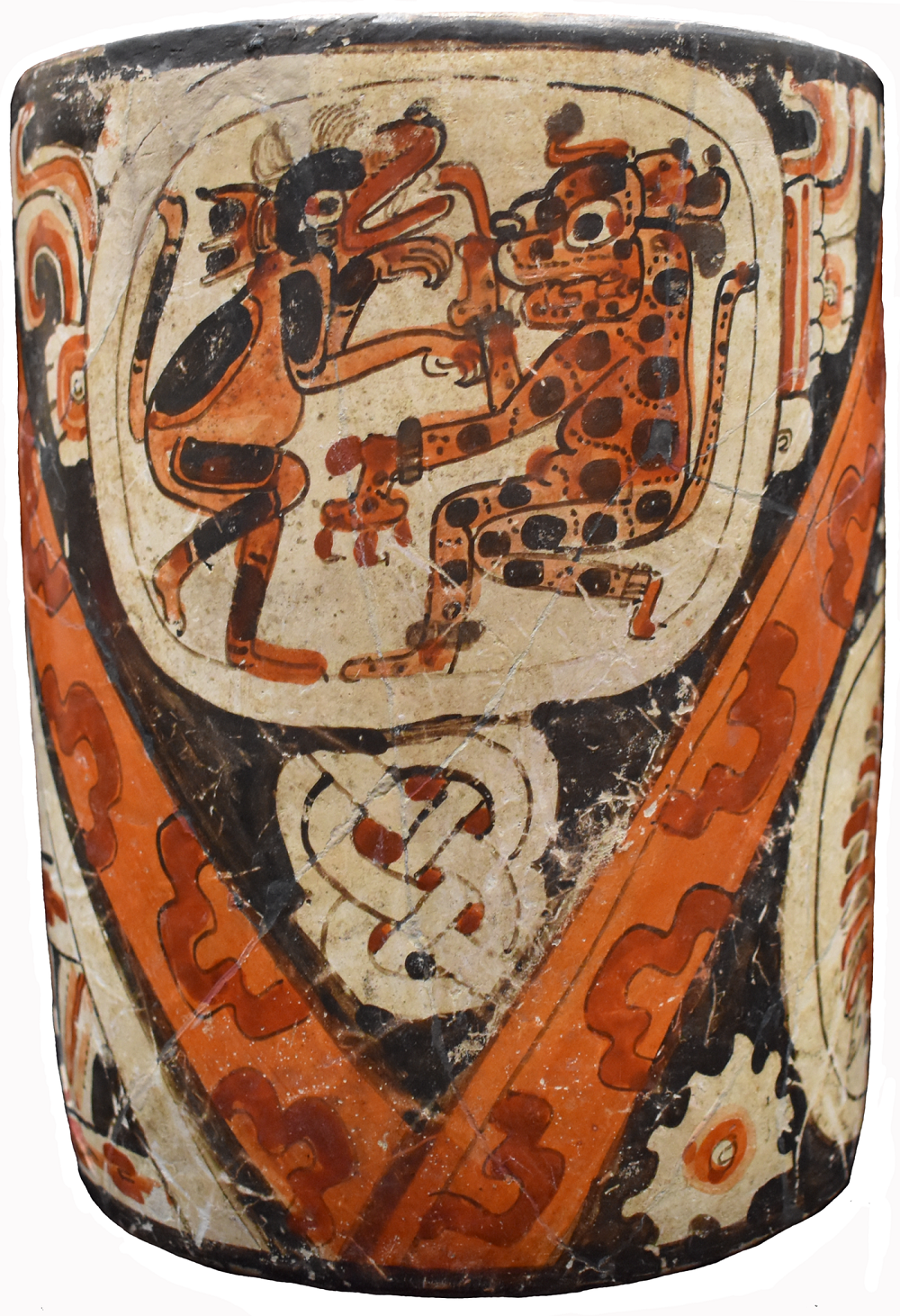
Detail of jaguar and coatimundi way on Cylinder Vase with Animal Figures, Belize, AD 650-750, earthenware and mineral paint. Photo: The Mopan Valley Archaeology Project, Bernadette Cap, used with permission.
Nature, Power, and Maya Royals, an exhibition of thirty-four artworks and objects discovered by the University of Texas at San Antonio (UTSA) researchers in two royal Maya burials at the ancient city of Buenavista del Cayo, Belize, is now on view at the San Antonio Museum of Art (SAMA). This exhibition is the first time the selection of works will appear for public viewing. This exhibition is an exciting collaboration between UTSA, SAMA, and the Belize Institute of Archaeology. (San Antonio Museum of Art, 2021)
Nature, Power, and Maya Royals: Recent Discoveries from the Site of Buenavista del Cayo,Belizewill be on view through February 27, 2022. It was organized by the San Antonio Museum of Art in collaboration with the Belize National Institute of Culture and History’s Institute of Archaeology and scholars in the University of Texas at San Antonio Department of Anthropology. It is supported by the Gloria Galt Endowment Fund, Andrew W. Mellon Foundation, and UTSA Maya Archaeology Excellence Endowment. The UTSA excavations that recovered the objects were conducted with the permission of the Belize Institute of Archaeology and funding from the Alphawood Foundation and Termini Endowment for Maya Archaeology.
In 2014 and 2019, a team of UTSA archaeologists led by Jason Yaeger, President’s Endowed Professor of Anthropology at UTSA and Senior Associate Dean of the College of Liberal and Fine Arts found finely painted ceramic vessels that display kings and symbols of authority as well as shell pendants, earrings, and bracelets worn by a king. “The objects in the exhibition are priceless to us and to the government of Belize for what they tell us about the ancient Maya. This show presents a wonderful opportunity to grow connections with institutions across San Antonio and Belize,” Yaeger said.
The discovery is particularly extraordinary because looters had previously trenched the building in which one of the royal burials was located, missing it by just a few inches. Finding the site and objects following the looters’ destructive actions is incredibly lucky and makes the discovery particularly special. “We are delighted to share these beautiful and precious artworks. Visitors will also be able to view images taken during our excavation in Belize. The recovery of the objects such as these from known, well documented locations provides essential information for interpreting similar Maya art held by museums,” said Bernadette Cap, Andrew W. Mellon Curatorial Postdoctoral Fellow at SAMA and curator of the exhibition.
The artworks date between AD 450 and 800, a period when Maya kings and queens reigned over large populations and lived in elaborately designed cities. The exhibition highlights how two Maya rulers commissioned artwork that featured commanding iconography to express and legitimate their power. For example, a common theme in rulers’ art was the portrayal of jaguar pelts worn as clothing and used as decorative elements of royal palaces. The Maya admired the jaguar for its strength and skills as an apex predator, and rulers retained exclusive rights over jaguar imagery and products.
One of the most outstanding pieces in the exhibition is a large, elaborately carved pendant made of marine shell. Incised Maya glyphs appear on it and have been deciphered to read, “This is the pendant of Naah Uti’ K’ab, king of Komkom.” The discovery of the pendant confirms that the buried individual is a king. Given the context of recovery, Komkom is likely the original name of the site we now call Buenavista del Cayo. Maya texts at nearby sites state that Komkom had been attacked and conquered in the AD 600s and 700s. The shell pendant dates to around AD 450, however, and thus provides the earliest reference to the site of Komkom.
The San Antonio Museum of Art serves as a forum to explore and connect with art that spans the world’s geographies, artistic periods, genres, and cultures. Its collection contains nearly 30,000 works representing 5,000 years of history. Housed in the historic Lone Star Brewery on the Museum Reach of San Antonio’s River Walk, the San Antonio Museum of Art is committed to promoting the rich cultural heritage and life of the city. The Museum hosts hundreds of events and public programs each year, including concerts, performances, tours, lectures, symposia, and interactive experiences. As an active civic leader, the Museum is dedicated to enriching the cultural life of the city and the region, and to supporting its creative community.
The University of Texas at San Antonio (UTSA) is a Hispanic Serving University specializing in cyber, health, fundamental futures, and social-economic development. With more than 34,000 students, it is the largest university in the San Antonio metropolitan region. UTSA advances knowledge through research and discovery, teaching and learning, community engagement and public service. The university embraces multicultural traditions and serves as a center for intellectual and creative resources as well as a catalyst for socioeconomic development and the commercialization of intellectual property—for Texas, the nation and the world.
Yesterday the San Antonio Museum of Art (SAMA) announced the acquisition of important historic Chinese artworks, including a gilt openwork crown and a gilt plaque decorated with a standing lion, both from the Liao dynasty (907–1125); a set of jade belt plaques from the Ming dynasty (1368–1644), and a set of gilt silver hairpins embellished with kingfisher feathers from the Qing dynasty (1644–1911). These new artworks expand SAMA’s stellar collection of Chinese art, which has particular strengths in ceramics from the dawn of Chinese civilization to modern time. The new acquisitions are part of an ongoing effort to enhance under-represented areas within the Museum’s wider Asian art collection such as metal work and jade. (San Antonio Museum of Art, 2021)
“The artworks announced today capture the incredible artistry and skill of Chinese craftsman from across history, while also illuminating the importance of these objects—and the imagery and material they hold—to Chinese culture and society,” said Shawn Yuan, Associate Curator of Asian Art. “We are delighted to enhance the Museum’s Chinese art holdings with these stunning works, which further our ability to share narratives and develop understanding of Chinese material culture through time.”
Crown China, Liao dynasty (907-1125) Gilt bronze H. 11 7/16” Purchased with funds provided by the Bessie Timon Endowment Fund 2021.1.1
The magnificent gilt crown is a mortuary item for a noblewoman of the semi-nomadic Khitan people, who lived in today’s northern China and Mongolia in the 11th to 12th century. The domed cap is covered with chased floral scrolls and surmounted by a lotus flower and a now-missing deity. On each of the attached standing “wings,” two glorious phoenixes, with wide spreading wings and long tails, are positioned among scudding clouds. This crown is an example of the luxurious lifestyle of the Khitan elite, who established the powerful Liao dynasty and controlled an enormous landmass bordering Korea to the east and central Asia to the west. Acquiring this crown helps the Museum to present a more complete image of the rich Liao dynasty material culture, along with the Museum’s expansive collection of Liao ceramics.
Plaque with a Standing Lion China, Liao dynasty (907-1125) Gilt bronze L. 8 3/8” W. 4 7/8” Purchased with funds provided by the Bessie Timon Endowment Fund 2021.1.2
The gilt bronze plaque decorated with a standing lion is an example of the impressive craftsmanship of the Liao dynasty. The energetic lion, hammered in low relief, stands on his left hind leg while thrusting the other forward. The lion’s broad chest rises, and his massive head turns backward as his flamboyant mane sweeps upward. Under the bushy eyebrows, the lion’s eyes focus intensely on a flaming pearl. The imagery has a Buddhist origin: the lion guards the Buddha’s teaching while the flaming pearl represents the Buddha’s wisdom. The images of a lion with protective power are rarely seen on other Liao works in the Museum’s collection.
Belt Plaques China, Ming dynasty (1368-1644) Jade Elongated tab: 3.5”x1.4”; rectangular: 3.1”x1.4”, 2.2”x1.4”, 1.4”x0.7”; tear-drop: 1.4”x1.3” Purchased with funds provided by the Bessie Timon Endowment Fund 2021.1.3.a-r
The set of eighteen jade plaques is the first important jade work to enter the Chinese collection. Jade has been China’s most valued gemstone since the dawn of its civilization. These plaques were once attached to belts worn by noblemen. The rectangular plaques are carved in high relief with lively scenes of male figures teasing frolicking lions with ribbons—an auspicious subject with a long history in Chinese art. The hardness of jade is second only to that of diamonds. The delicate carvings on these plaques present the impressive craftsmanship of the jade carver.
Hairpins China, Qing dynasty (1644-1911) Silver and kingfisher feather 5 ¾” to 5 ¼”x3 ¼” by 3 1/8” Purchased with funds provided by the Bessie Timon Endowment Fund 2021.1.4.a-c
The set of three gilt silver hair pins is an exciting addition to SAMA’s collection of Chinese dragon robes, embroidered brocade, shoes, and jewelry—all items from the wardrobes of upper-class families. All three hairpins are inlaid with kingfisher feathers, whose colors are as brilliant as azurite, lapis, cobalt, and turquoise. They were iridescent under the sunlight, creating a dazzling visual effect. Kingfisher feathers were a luxury material used on hair ornaments and crowns for thousands of years. The dominant image on each hairpin is a stylized bat with foliate wings outlined in thin silver. Bats are considered auspicious because the word bat is pronounced the same as luck and blessing.
The San Antonio Museum of Art serves as a forum to explore and connect with art that spans the world’s geographies, artistic periods, genres, and cultures. Its collection contains nearly 30,000 works representing 5,000 years of history. Housed in the historic Lone Star Brewery on the Museum Reach of San Antonio’s River Walk, the San Antonio Museum of Art is committed to promoting the rich cultural heritage and life of the city. The Museum hosts hundreds of events and public programs each year, including concerts, performances, tours, lectures, symposia, and interactive experiences. As an active civic leader, the Museum is dedicated to enriching the cultural life of the city and the region, and to supporting its creative community.
Plaque with a Standing Lion China, Liao dynasty (907-1125) Gilt Bronze L. 8 3/8″ W. 4 7/8″ Purchased with funds provided by the Bessie Timon Endowment Fund 2021.1.2 Courtesy photo, used with permission.
Blue Star Contemporary presents the work of Doerte Weber, Joanna Keane Lopez, and Terran Last Gun. Photo: google
Blue Star Contemporary (BSC), San Antonio’s first and longest-running contemporary art nonprofit, announces the opening of three new summer 2021 exhibitions, opening to the public on Thursday July 1, 2021. The solo exhibitions feature the work of Doerte Weber, Joanna Keane Lopez, and Terran Last Gun. (Blue Star Contemporary, 2021)
Doerte Weber presents Shed, a collection of weavings reflecting on COVID-19, everyday life during the pandemic, and climate issues. Joanna Keane Lopez is a multidisciplinary artist whose work blurs boundaries between contemporary sculpture and architecture through the medium of adobe mud. Her BSC presentation will include a newly commissioned sculptural work. Terran Last Gun presents an exhibition of ledger drawings, a form which rose to prominence among Native American artists in the mid-1800s and continues today.
In her work, Doerte Weber reflects on the emotions brought by the COVID-19 pandemic as she worked on more than 45 handwoven towels. As Weber worked on the loom, she experimented with patterns, colors, designs, and inscriptions. The resulting work is a direct reflection on the feelings of frustration, worry, and acceptance.
Joanna Keane Lopez is a multidisciplinary artist whose work blurs the boundaries between contemporary sculpture and architecture through the medium of adobe mud. By working with materials of adobe architecture, earthen plaster, and alíz (a clay slip paint) her work addresses sculpture’s relationship with land. Through the passing down of knowledge of the vernacular architecture techniques of the greater Southwest, Joanna creates work that seeks healing and reparation of fragmentation towards land, home, family, and community that is connected to her own multi-generational roots in New Mexico.
Terran LastGun creates a visual interpretation of nature, the cosmos, cultural narratives, and recollections in reduced geometric aesthetics and vibrant energetic color harmonies. Often referencing Piikani painted lodges and visual iconographic vocabulary, his work explores the varying relationships between color, shape, nature, and sky. Piikani or Blackfoot painted lodges are visual masterpieces of the Great Plains and are pre-European invasion classic art. Through various art making approaches, Terran Last Gun seeks to connect the ancient to the contemporary while creating visual color stimulation. His presentation at BSC, features ledger drawings which explore and visually dissect the three visual tiers of most Piikani painted lodges with a focus on the top and bottom zones, and the various narratives that accompany them and make connections to the land and sky.
For the first time at Blue Star contemporary, the exhibitions are accompanied by an interactive app featuring in-depth exploration through gallery texts, visitor prompts, and information aimed at giving visitors a broader context to engage with the works of art. The newly launched app is free to download and available at the Apple App Store and Google Play Store.
“Last month, we saw great energy and excitement in our galleries as people enjoy their new freedom and venture off to see art in person. This app has allowed our visitors to have an enhanced on-site experience, but it has also allowed them to spend more time with the exhibition content once they are back home and take time to reflect on the work they saw.”
Mary Heathcott, Executive Director
All BSC’s summer exhibitions will be on view through September 5, 2021. Terran Last Gun’s exhibition was made possible in part by First Peoples Fund. Blue Star Contemporary’s exhibitions are supported in part by the City of San Antonio Department of Arts and Culture, the Andy Warhol Foundation for the Visual Arts, the John L. Santikos Charitable Foundation Fund of the San Antonio Area Foundation, and the Texas Commission on the Arts.
Blue Star Contemporary (BSC) is the first and longest-running nonprofit space for contemporary art in San Antonio, Texas. Founded by artists and grown from a grassroots art exhibition in 1986, BSC arose from the need to provide a platform for the work and ideas of contemporary artists. As an artist-centric, educational, forward-thinking, inclusive institution that strives to exceed expectations, BSC welcomes 30,000 residents and cultural tourists each year to experience contemporary art through its exhibitions, public art projects, and education programs. In 2016, BSC became the first San Antonio arts organization to be W.A.G.E.-certified, solidifying its commitment to fair compensation of artists and creative professionals.
Jenelle Esparza, Continent. Photo: Jenelle Esparza, used with permission.
The San Antonio Museum of Art (SAMA) announced yesterday that it has acquired eight artworks by seven San Antonio-based artists, including Jennifer Ling Datchuk, Jenelle Esparza, Joe Harjo, Jon Lee, Ethel Shipton, Chris Sauter, and Liz Ward. The acquisitions are part of the Museum’s Initiative to Acquire Art by Contemporary San Antonio Artists, which was developed to enhance the Museum’s commitment to support the city’s visual artists by acquiring works for its collection. The artists were chosen with the support of an Advisory Committee comprised of San Antonio-based visual artists, professors, collectors, arts leaders, and Museum staff and Trustees, who have also made recommendations for additional artists whose work could be purchased in the future. The Committee was Co-Chaired by SAMA Trustees Katherine Moore McAllen, PhD, and Dacia Napier, MD. All of the artworks, which include textiles, painting, photography, prints, and sculpture, mark first entries by the artists to SAMA’s collection. The new acquisitions are scheduled to go on view at the Museum in late fall, with more details about the presentation to follow. (San Antonio Museum of Art, 2021)
Over the past several years, as part of its vision to diversify its collection and best represent its community, SAMA has placed a particular emphasis on acquiring works by artists from San Antonio as well as from across Texas. Recent acquisition announcements have included works by Texas-based artists Ana Fernandez, Kirk Hayes, Earlie Hudnall Jr., Michael Menchaca, Marcelyn McNeil, Daniel Rios Rodriguez, and Liz Trosper. In 2020, SAMA also presented Texas Women: A New History of Abstract Art, which focused on women artists from across the state that have and continue to contribute to the development of abstract art—a subject that previously had not been explored in depth. Artist Liz Ward, whose acquisition was announced today, was among the artists featured in the exhibition.
More details on each of the artist and artworks below:
Jennifer Ling Datchuk (American, born 1980) Enter the Dragon, 2020 Porcelain, ceramic decals from Jingdezhen, China, wood, gold mirrors 65 × 16 × 5 in. (165.1 × 40.6 × 12.7 cm) San Antonio Museum of Art, Purchased with The Brown Foundation Contemporary Art Acquisition Fund and funds provided by Dr. Katherine Moore McAllen, Dr. Dacia Napier, Edward E. (Sonny) Collins III, and The Sheerin Family, 2021.2
Trained as a ceramicist, Jennifer Ling Datchuk’s practice is grounded in explorations of identity, beauty, and femininity—drawing from her own experience as an Asian American woman. Utilizing found and handmade ceramics and porcelain motifs in her sculptures, installations, performances, and photographs, Datchuk calls attention to both historic and contemporary cultural appropriation, while also blurring the boundaries between craft and fine art. Datchuk was named 2021 Texas State Three-Dimensional Artist by the Texas State Legislature.
Jenelle Esparza (American, born 1985) Continent, 2017 72 × 100 in. (182.9 × 254 cm) Handmade quilt, recycled fabric and clothing, embroidered blocks, batting, cotton blends San Antonio Museum of Art, Gift of Zoe A. Diaz, 2021.8
Jenelle Esparza’s multidisciplinary practice examines the connections between agriculture, gender, race, and bodily experience. Through photography, textiles, and installations, Esparza uncovers the history of cotton farming in South Texas and its principally Mexican American labor force.
Joe Harjo (Muscogee Creek, born 1973) The Only Certain Way: Faith, 2019 24 Pendleton beach towels, 24 custom memorial flag cases 78 × 104 × 4 in. (198.1 × 264.2 × 10.2 cm) San Antonio Museum of Art, Purchased with The Brown Foundation Contemporary Art Acquisition Fund and funds provided by Dr. Katherine Moore McAllen, Dr. Dacia Napier, Edward E. (Sonny) Collins III, and The Sheerin Family, 2021.3
Joe Harjo is a multidisciplinary artist from the Muscogee Creek Nation of Oklahoma. His practice redresses the historic erasure of Native American art, culture, and people. Through photography, sculpture, performance, and installation, Harjo explores Native American identity, debunks stereotypes and myths surrounding Indigenous People, and asserts the vibrant, contemporary presence of Native communities.
Jon Lee (American, born South Korea, 1968) O1701, 2017 and O1702, 2017 Woodcut 17 × 12 in. (43.2 × 30.5 cm), each San Antonio Museum of Art, Purchased with The Brown Foundation Contemporary Art Acquisition Fund and funds provided by Dr. Katherine Moore McAllen, Dr. Dacia Napier, Edward E. (Sonny) Collins III, and The Sheerin Family, 2021.4.1-2
Jon Lee’s woodcuts explore the poetic subtleties of color and line, reinventing traditional printmaking processes and materials. Born in Seoul, he draws on his native Korea’s rich and long history of printmaking, which includes the implementation of moveable type predating Gutenberg’s fifteenth-century printing press. For over ten years, his practice has focused on a traditional Japanese woodcut technique called mokuhanga that he honed during residencies at the Mokuhanga Innovation Lab in Japan, where O1701 and O1702 were printed.
Chris Sauter (American, born 1971) Shape of the Universe, Kandariya Mahadeva, 2013 Cut acrylic mounted photography, Sintra 60 × 30 in. (152.4 × 76.2 cm) San Antonio Museum of Art, Purchased with The Brown Foundation Contemporary Art Acquisition Fund and funds provided by Dr. Katherine Moore McAllen, Dr. Dacia Napier, Edward E. (Sonny) Collins III, and The Sheerin Family, 2021.5
Chris Sauter is a multidisciplinary artist whose work explores connections between biology and culture, science and religion, the personal and the universal, and the past and the present. He often deconstructs materials in order to reconstruct them in new ways that challenge viewers’ perceptions.
Ethel Shipton (American, born 1963) The Valley – RGV, 2021 Archival digital prints on Hahnemühle German Etching Matte paper Series of 6 prints, Edition 1/8 24 × 36 in. (61 × 91.4 cm), each San Antonio Museum of Art, Purchased with The Brown Foundation Contemporary Art Acquisition Fund and funds provided by Dr. Katherine Moore McAllen, Dr. Dacia Napier, Edward E. (Sonny) Collins III, and The Sheerin Family, 2021.6.a-f
Ethel Shipton is a conceptual artist, who works across painting, installation, printmaking, photography, and text. She grew up in Laredo, TX, and her experience of a fluid US-Mexico border informs her practice, which focuses in particular on place, space, language, time, and movement. Her focus on signage observed along Texas roadways is an ongoing body of photo-based works on paper that began in 2014.
Liz Ward (American, born 1959) Ghosts of the Old Mississippi: Dismal Swamp/Northern Lights, 2015 Watercolor, gesso, silverpoint, pastel, and collage on paper 71 5/8 × 31 7/8 in. (181.9 × 81 cm) San Antonio Museum of Art, Purchased with The Brown Foundation Contemporary Art Acquisition Fund and funds provided by Dr. Katherine Moore McAllen, Dr. Dacia Napier, Edward E. (Sonny) Collins III, and The Sheerin Family, 2021.7
Liz Ward’s practice—which includes paintings, drawings, and prints—is informed by natural history and our current environmental crisis. Ghosts of the Old Mississippi, a series of fifteen large-scale drawings, is based on maps of the ancient courses of the Mississippi River and reflects on society’s relationship to the environment.
The San Antonio Museum of Art serves as a forum to explore and connect with art that spans the world’s geographies, artistic periods, genres, and cultures. Its collection contains nearly 30,000 works representing 5,000 years of history. Housed in the historic Lone Star Brewery on the Museum Reach of San Antonio’s River Walk, the San Antonio Museum of Art is committed to promoting the rich cultural heritage and life of the city. The Museum hosts hundreds of events and public programs each year, including concerts, performances, tours, lectures, symposia, and interactive experiences. As an active civic leader, the Museum is dedicated to enriching the cultural life of the city and the region, and to supporting its creative community.