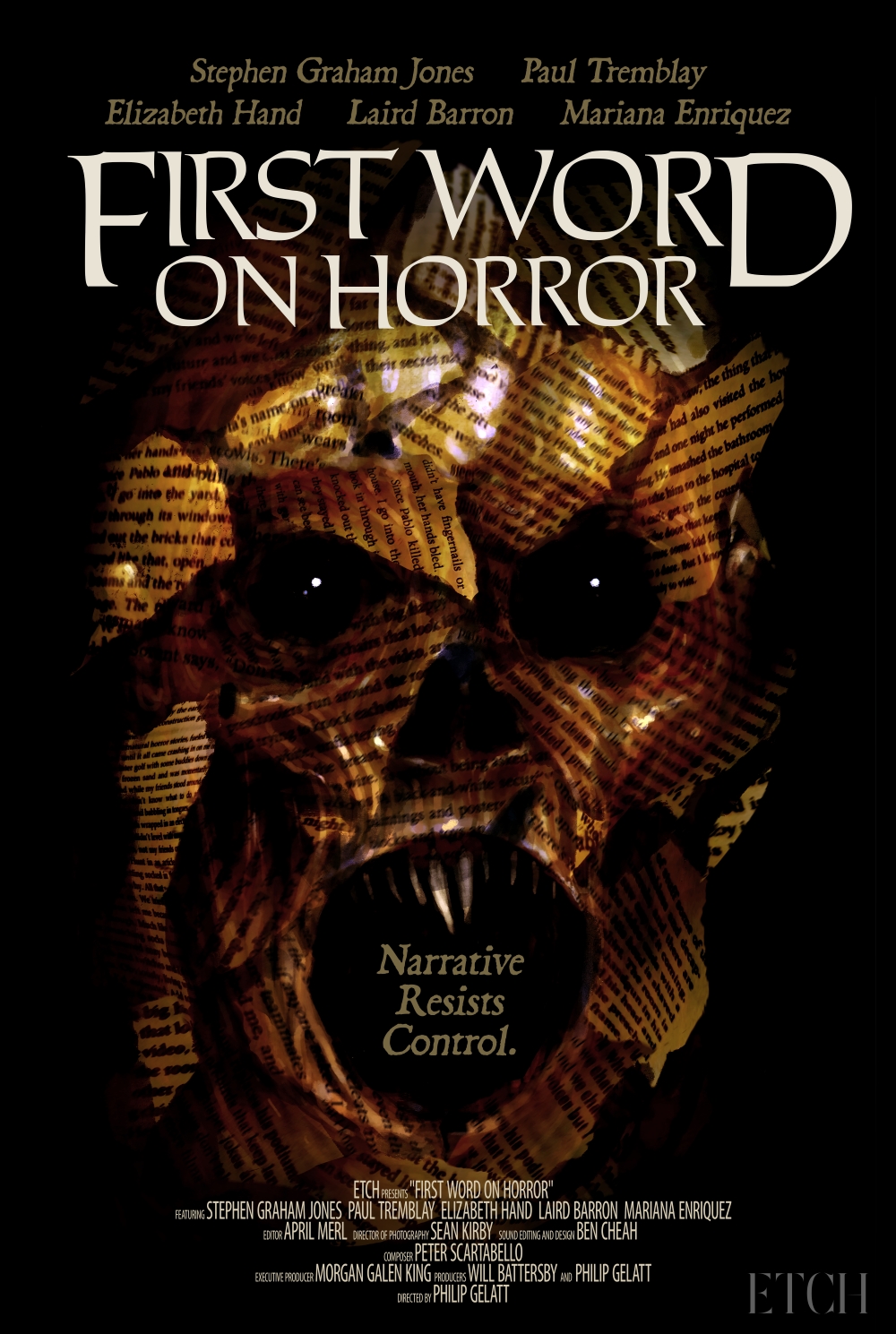
First Word on Horror: A Deep Look into the Minds of Today’s Finest Horror Writers

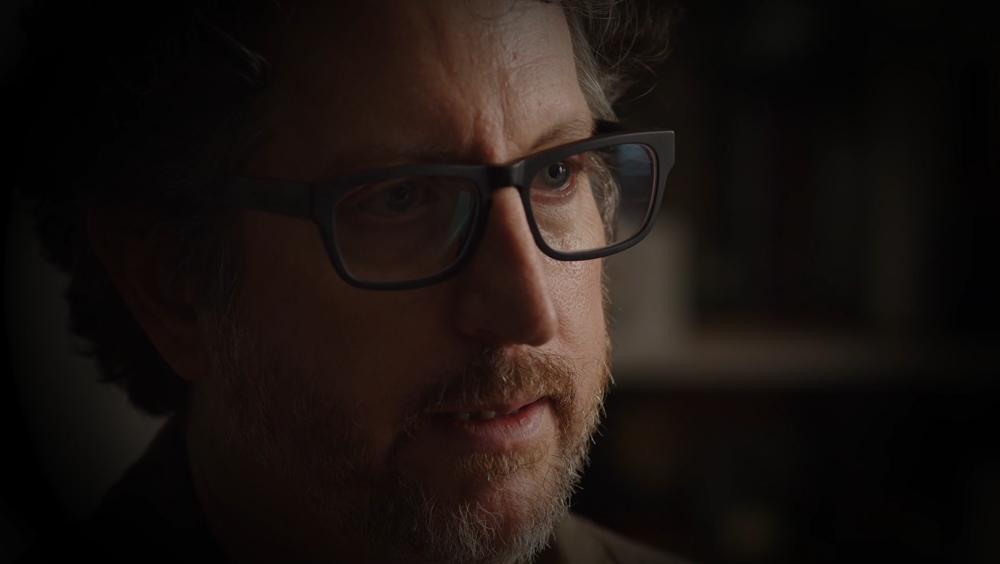
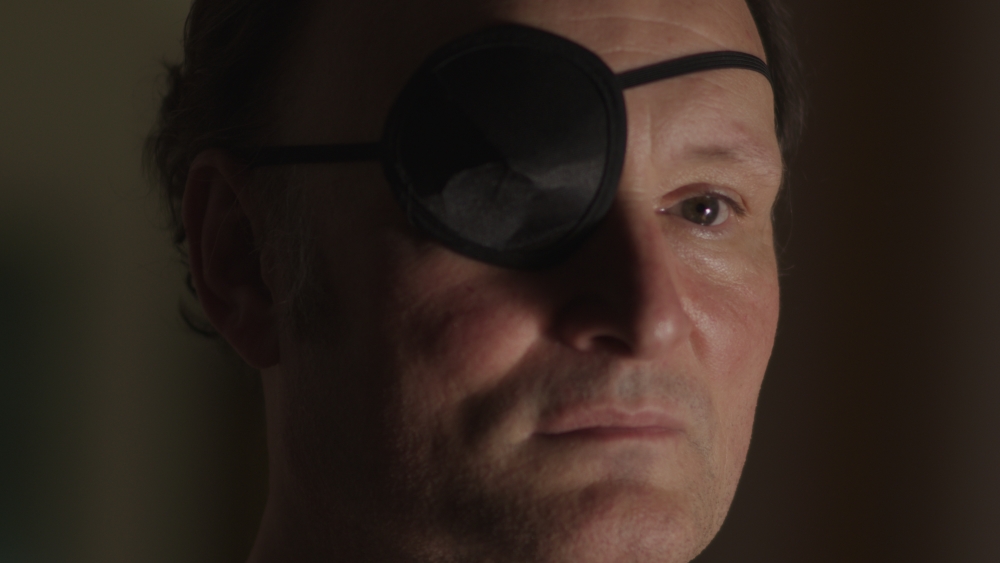
Etch Pictures announces Philip Gelatt’s First Word on Horror. Courtesy photo, used with permission.

New York – ETCH has announced the upcoming release of their documentary series First Word on Horror, which will be available exclusively via Substack on February 7, 2025. This will be the first project from the independent animation and production company run by the award-winning trio of Philip Gelatt, Will Battersby, and Morgan Galen King. (EG PR, 2025)

First Word on Horror is a fifteen-part documentary series that profiles five of the finest horror writers working today. 

Across multiple episodes, each author discusses their life, their inspirations, their philosophies, and their writing techniques while reading one of their short stories. As fact and fiction blend, secrets are revealed and the delicate alchemy that turns human experience into creative expression begins to emerge. 

The series is a love letter to writers of all ilk, to the primacy of the human experience, and to the simple act of reading a damned good story. 

The authors profiled are New York Times bestsellers, multi-award winners, and cult favorites. In this first season, they are Stephen Graham Jones, Paul Tremblay, Elizabeth Hand, Laird Barron, and Mariana Enriquez. 

Through the authors’ lives the series takes viewers from a harrowing Iditarod dogsled race in Alaska to the lurking terror of growing up under the Argentinian dictatorship; from the unbridled energy of the early DC punk scene to an ill-fated hunting expedition on the Blackfeet reservation in Montana. 

First Word on Horror is directed by Emmy and WGA winning writer and filmmaker Philip Gelatt, whose credits include: The Spine Of Night, Europa Report, They Remain, The Bleeding House, and Love Death + Robots. The project is produced by Will Battersby (The Spine Of Night, They Remain, Trumbo) and other key crew include Director of Photography Sean Kirby, Composer Peter Scartabello, Editor April Merl, and Sound Designer Ben Cheah.

ETCH Director Philip Gelatt commented on the upcoming series: “Before I loved film or video games or comics, I loved books and writers. In particular, Horror writers were seminal to how I viewed the world. I was raised on King and Rice, on Barker and Lovecraft. As with so many other people, their work made me. 

First Word on Horror is about getting lost in writing and we wanted to bring it directly to fans via Substack. Substack is such an exciting driver of culture and commentary. We want this series to live in and be a part of that conversation. 

The series is purposefully human-forward, designed to remind us of the humanity at the core of creativity. Especially now, in the current moment of technological advancement and uncertainty, with the future so unknown, it’s important to remember that it’s human beings who give us our dreams and our nightmares; that it’s as human to hope as it is to fear; and that it’s human to want to find someone there in the dark with you.” 


Etch is an independent animation and production company run by the award-winning trio of Philip Gelatt, Will Battersby, and Morgan Galen King. Specializing in the provocative, intelligent and innovative, as well as fantastical and horrific, Etch seeks to put the dark magic back into moving images. 

Etch has expertise in animation, documentary and feature production and a core philosophy of maintaining ownership and creative control through novel approaches to production and distribution. 

Courtesy photos, used with permission.
From Concept to Creation: A Conversation with Author Ashlee Vitz

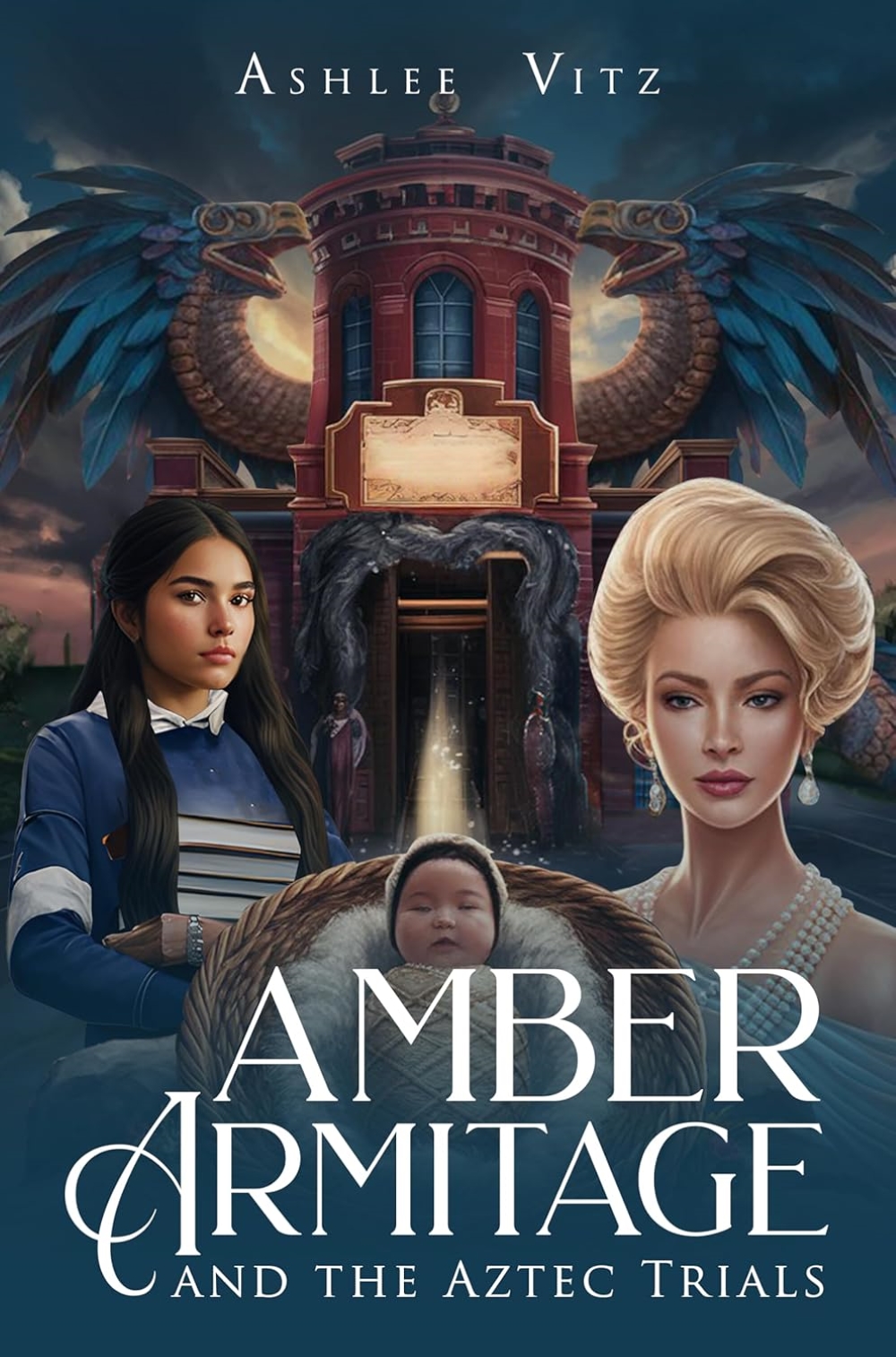
Ashlee Vitz is the autor of the new YA novel ‘Amber Armitage and The Aztec Trials.’ Photo: Barnes & Noble

Ashlee Vitz is a teacher, actor, and writer from Indiana who discovered her Aztec heritage years after being adopted as an infant. She enjoys life in the Midwest with her husband and daughter, performs with Crossroads Repertory Theatre in the summers, and cherishes teaching her students at Center Grove High School. Her debut novel “Amber Armitage and The Aztec Trials” is a young adult fantasy adventure that takes readers on a fast-paced journey through ancient Aztec myths, family secrets, and self-discovery.

Interviewing an author is always an exciting experience. It offers a unique opportunity to ask about their creative process, explore the themes in their work, and uncover personal insights that often aren’t found in the books themselves. I love asking about their inspiration, challenges, and the journey that led to the creation of their latest project. This allows readers to connect deeper with the author and their work. Whether it’s debut authors or seasoned writers, each interview brings fresh perspectives, making it a rewarding experience for the author and my readers.

Last week I had the chance to ask Ashlee a few questions about her debut novel “Amber Armitage and The Aztec Trials.”

Sandra: What inspired you to write “Amber Armitage and The Aztec Trials”?
Ashlee:
The common advice is to write what you know. Amber is an adopted girl from Indiana, and so am I. I met my maternal biological grandmother many years ago, but it was only a few years ago that she shared that I was the great-great-great-great-granddaughter of an Aztec chief. I knew nothing about Aztec society, and I thought writing this novel would be a great way to dive into research on that culture and finally make myself write a novel. Publishing my own fantasy work has been a dream of mine since childhood.

S: Can you share a little about the main character, Amber Armitage? What makes her unique?
A:
Amber takes us on a journey of discovering what family really means. There isn’t a lot of work out there that has a young adult character leading us through this aspect of the coming-of-age story.

S: What challenges did Amber face during her trials, and how do they reflect her character development?
A:
This is a hard question to answer without giving away any of the story! In general terms, much of what Amber has to endure requires her to take an extremely honest look at her life and herself. This is one of the hardest trials we all face. Amber is doing it in the heightened world of fantasy. Yet, just as we all grow in the real world when we understand ourselves better, that’s the kind of character development she undergoes as well.

S: Were there any specific themes or messages you wanted to convey through this book?
A: I want readers of this book to consider this question: What is family? I also want my readers to consider the complexities that come along with adoption for all parties involved.

S: How did your research process look when writing about the Aztec civilization?
A: That was a fascinating journey. I devoured several books and tried to find films on the topic. Film was much harder to find. I even came across a movie called Quetzalcoatl, but it ended up being a B-level horror film. It made me laugh a lot, but did not help me write the book! I did find several online history experts with interesting short videos, which were extremely helpful.

*Note: Quetzalcoatl is a highly revered god of the Aztecs. He plays an extremely important part in the novel.

S: What was the most surprising lesson you learned while writing this book?
A: Just like Amber, I met my biological mother during my first year of college. While writing this book and bringing each character to life, it was the first time I truly stepped into what it must’ve felt like for my mother when I met my biological mother. That was an excellent lesson in sympathy for me.

S: What role do supporting characters play in Amber’s journey and how do they influence her decisions?
A:
Amber’s roommate, Kess, is both comic relief and her guide through much of Aztec culture. I hope readers love her as much as I do! In addition to Kess, Amber’s mother and her biological mother present her with many choices and their own advice, leaving it up to Amber to decide whom she’s going to listen to.

S: Do you have any plans for a sequel or further adventures for Amber Armitage?
A:
Some of my favorite authors often say that their readers ask excellent questions that they hadn’t considered when beginning to write. So, if there are questions that I find intriguing, yes, I would love to address them in a sequel to this first story.

Thank you to Ashlee Vitz for taking the time to answer my questions. Fantasy novels centered around mythology and ancient civilizations are fascinating, especially when the protagonist is out to learn more about her family history. Such is the case in this book.

Read more about the Aztec culture: Aztec Civilization and History: Aztecs.

You can read my review of “Amber Armitage and The Aztec Trials” and get your own copy here.

What are your thoughts on ancient civilizations such as the Aztec? Have you used any DNA testing site as a tool to finding relatives?  Was it a positive or negative experience?

Author Q & A: Ryan Gutierrez, Part II

scarsintime
Photo: google

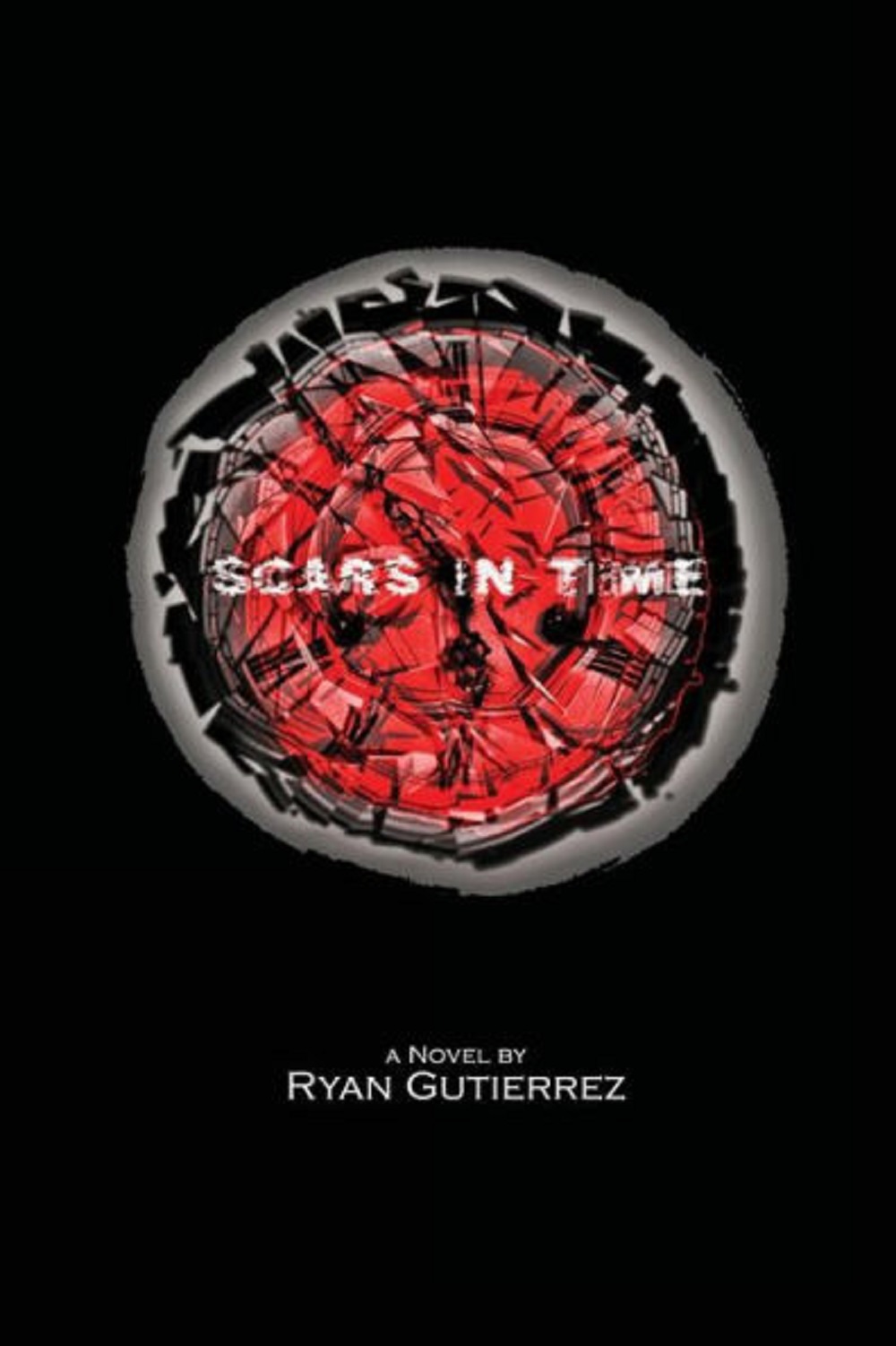
With the formalities out of the way, it is time to get into the deeper topics of Ryan Gutierrez’ “Scars in Time: A Novel (The Nowhen Stories).” Here is the second and final part of my Q & A with the author.

Sandra Cruz:  Have you ever considered going back in time for purely altruistic reasons?
Ryan Gutierrez: You know, if I could, I think I would have to. When you talk about time-travel, people often go to the baby Hitler conundrum. Would you kill baby Hitler to stop the Holocaust? Well, perhaps I’d just kidnap baby Hitler and help him find a nice adoptive family in our time, but I would have to do something. You can’t not try to stop the heinous murder of millions of innocents.

That’s why it was so important for me to limit the time travel in my story to a micro and personal level. I wanted Brennan to be limited to what he could do within his own lifetime only. I didn’t want him getting sidetracked stopping the holocaust.

SC:  Your book reminds me of the movie The Butterfly Effect. Did it inspire your story?
RG: I haven’t actually seen that movie. I think it came out during this weird time when I was on an anti-Kutcher kick for some reason. I actually admire the heck out of him now and all he’s done for victims of the sex trade. I did, however, draw inspiration from the Butterfly Effect that is a part of chaos theory. Basically, a small change to proceeding events could have massive repercussions on the resulting consequences.

SC:  Is this the first book in a series? I would love to read more of Brennan’s travels.
RG: Yes and no. It is the first book of the Nowhen Stories, but Brennan will be taking a backseat role to let others shine. I wanted Brennan’s focus to return to his family and living life well. However, Brennan’s travels through time opened the world to the effects of the Nowhen, the realm that functioned as a sort of way-station between times. The Nowhen is going to be for South Texas, what the Hellmouth was for Sunnydale, what the meteor shower was for Smallville, or the particle accelerator explosion was for Central City. A catalyst for supernatural and extraordinary.

The Nowhen Stories will tell those tales.

SC:  Were you concerned that some readers might not understand some of the Spanish you used?
RG: I was. I decided to do it anyway because I wanted the book to reflect and connect to the heavily Latino roots of the RGV and South Texas in general. I wanted to tell a story that felt universal, but also felt close to the heart of Latinos who may feel underrepresented in pop-culture.

SC: Considering that it contains religious themes/topics, it is geared towards a Christian audience?
RG: Not really. I would love for Christian people to enjoy the book, though I think some of my fellow Christians might frown upon some of the language and the level of violence. I really want the book to express hope for people in general, whether they are or aren’t Christian. It’s a crazy and entertaining story, if I may say so myself, but it’s ultimately a story of hope and restoration. I think that’s a message we all need. It just so happens that in my experience, hope and restoration tend to be intricately woven up with God.

Author Q & A: Ryan Gutierrez, Part I

scarsintime
Photo: google

Ryan Gutierrez’ debut novel, “Scars in Time: A Novel (The Nowhen Stories)” is about Brennan Ramirez, a man determined to change his wife’s traumatic past by going back in time.  As Brennan test drives The Machine, he begins to experience true power, true control, or so he thinks. With every trip, every choice, Brennan realizes that his newfound control may be an illusion. I found the book entertaining and enlightening so in an effort to get to know the author and his motivations for writing it, I recently asked him a series of questions.  Here is the first part of my author Q & A.

Sandra Cruz:  Was this a hard book to write or is this a story you have been thinking about for some time?
Ryan Gutierrez: “Scars in Time” was definitely a difficult story to write, but not necessarily in terms of creativity. The outline process took a few months and once that was complete, the first draft went quite smoothly. The most difficult part about writing “Scars” was the real life scars I was picking at, pun most definitely intended. There are real life events, real trauma, that I exaggerated and fictionalized for the story.

SC:  How much research did you have to do into the topic of time traveling?
RG: Honestly, not too much. I’m a huge sci-fi geek, so in a way I’ve been researching for this my whole life. I think my biggest time-travel related influence for this story is 11/22/63 by the great Stephen King. 11/22/63 starts as a bigger-than-life journey, stop the JFK assassination, but it becomes this personal story of love and growth. That aspect definitely influenced me.

SC:  Some authors base their characters on people they know, was this the case with Brennan? Is it in any way autobiographical?
RG: It definitely is. I’m not Brennan, but there are parts of Brennan that are definitely from me. The PTSD and feelings of powerlessness stemming from his time in CPS were a reflection of my own. The panic disorder symptoms in the book are basically a walkthrough of the panic attacks that I faced in my life. Brennan is the most like a real person, but there are elements of Deidre taken from my wife, elements of Abby taken from both my daughters, elements of James taken from my brother, and so forth.

SC:  Do you consider Brennan a hero/superhero?
RG: No, I don’t. The thing with Brennan is that HE thinks he’s the hero. He wants to be Batman or Superman, but the more power he gets, the closer he is to playing the role of tragic villain. I think that when Brennan realizes he’s not a superhero, he notices the heroic characteristics of those around him. Abby’s immutable joy and unique perspective, Deidre’s resilience and strength, or James’ ability to look to tomorrow. He has to learn from them in order to take his final heroic turn.

SC:  As someone who suffers from panic attacks, I sympathize with Brennan as he suffers through his. His experiences are hauntingly realistic. Is this your way of reaching out to those in similar situations?
RG: Yes, definitely. Brennan’s panic attacks are realistic because they’re based on the real attacks I suffered. I wanted people who have suffered with them to be able to relate to a character who is flawed and doesn’t overcome them by just having some feel good mantra or attitude. By the end, Brennan knows this may be a lifelong struggle, but he knows there is hope in that struggle. As for people who have never suffered from them, I wanted them to get a little peek into them, a way for them to better understand their loved ones who do have those struggles.