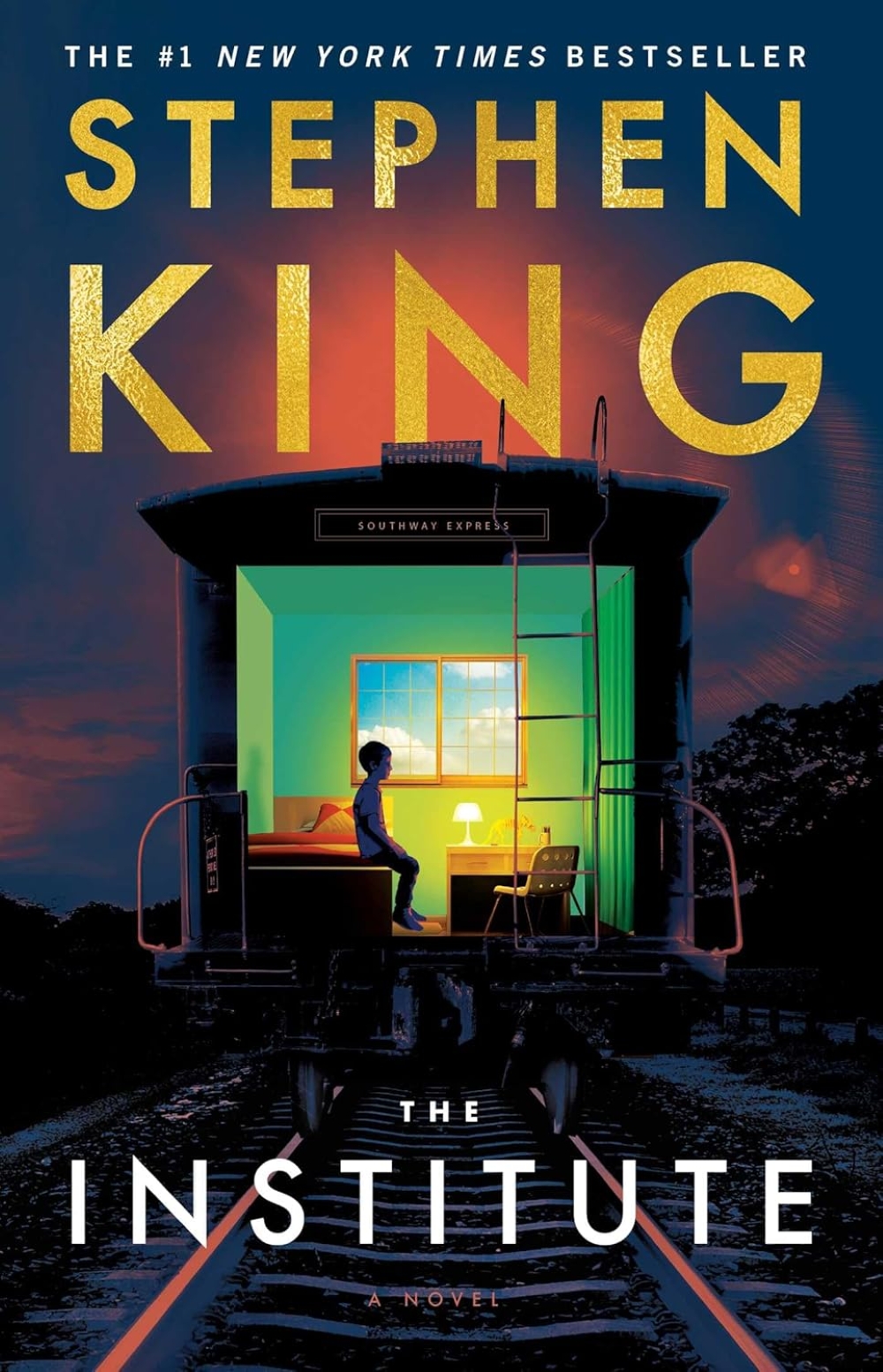
Stephen King’s ‘The Institute’ Review: A Gripping Look at Institutional Horror

‘The Institute’ by Stephen King. Photo: Barnes & Noble

Review: The Institute by Stephen King

The Master of Horror trades monsters for institutionalized cruelty.

Overview: A Nightmare in Broad Daylight

In the middle of the night, in a house on a quiet street in suburban Minneapolis, intruders silently murder Luke Ellis’s parents and load him into a black SUV. The operation takes less than two minutes. (Barnes & Noble, 2026)

Luke wakes up at The Institute, in a room that looks just like his own, except there’s no window. Outside his door are other children with special talents like telekinesis and telepathy: Kalisha, Nick, George, Iris, and ten-year-old Avery Dixon. They are all in “Front Half.” Others, Luke learns, graduated to “Back Half.”

“Like the roach motel,” Kalisha says. “You check in, but you don’t check out.”

In this sinister facility, the director, Mrs. Sigsby, and her staff are ruthlessly dedicated to extracting the force of these children’s extranormal gifts. There are no scruples here. If you go along, you get tokens for the vending machines. If you don’t, the punishment is brutal. No one has ever escaped from The Institute, but Luke is getting desperate.

TV Note: The Institute has been adapted into an MGM+ series starring Ben Barnes and Mary-Louise Parker, with a second season already confirmed.


My Review: Human Monsters vs. The Supernatural

Stephen King has always been the undisputed master of making the mundane feel predatory. In The Institute, he swaps supernatural clowns and haunted hotels for a far more terrifying monster: institutionalized cruelty.

  • A High-Stakes Thriller: The story kicks off with a precision that feels more like a thriller than a classic horror novel. King excels at grounding the “extranormal” in the visceral. The true horror isn’t just the experiments; it’s the cold, corporate indifference of the staff who treat children like disposable batteries.
  • The Heart of the Story: Inside the facility, Luke finds comfort in Maureen, an employee, and his fellow captives. The camaraderie among the kids provides the heartbeat of the novel, contrasting sharply with the clinical soullessness of their captors.
  • The Payoff: While the pacing in the middle stretches thin as Luke plots his escape, the conclusion is a propulsive collision between small-town heroism and shadowy conspiracies.

The Bottom Line: This is a suspenseful, emotionally engaging story. It isn’t just a horror novel; it’s a gripping exploration of friendship, resilience, and the “human monsters” who justify unthinkable means to reach their ends.

Rating: 4 out of 5.

Expanded Reading: Entering the King Multiverse

If you enjoyed the psychic themes of The Institute, you’ve stepped into the interconnected world of the King Multiverse. King often refers to these abilities as “The Shine” or “The Touch.” If you want more, check out these four essentials:

  1. Doctor Sleep – The sequel to The Shining. It follows an adult Dan Torrance and Abra Stone, a girl with a “Shine” so powerful she is hunted by a predatory group called the True Knot.
  2. The Dead Zone – A grounded, melancholic thriller about Johnny Smith, who wakes from a coma with clairvoyant powers that force him into a high-stakes moral dilemma.
  3. Carrie – The one that started it all. This is a tragic look at the raw, destructive side of telekinesis when it is suppressed by abuse and fanaticism.
  4. Later – A recent “Hard Case Crime” novel following Jamie Conklin, a boy who can speak to the recently dead. It shares the “loss of innocence” vibe found in The Institute.

Book review: ‘Revival’ by Stephen King

‘Revival’ by Stephen King. Photo: Amazon

Stephen King is the author of more than sixty books, all of them worldwide bestsellers. His recent work includes the short story collection “You Like It Darker,” “Holly,” “Fairy Tale,” “If It Bleeds,” “Sleeping Beauties” (cowritten with his son Owen King), and the Bill Hodges trilogy: “End of Watch,” “Finders Keepers,” and “Mr. Mercedes” (an Edgar Award winner for Best Novel and a television series streaming on Peacock). He is the recipient of the 2020 Audio Publishers Association Lifetime Achievement Award, the 2018 PEN America Literary Service Award, the 2014 National Medal of Arts, and the 2003 National Book Foundation Medal for Distinguished Contribution to American Letters. His 2015 book “Revival” is a dark and electrifying novel about addiction, fanaticism, and what might exist on the other side of life. (Amazon, 2024)

Synopsis:
“Revival” – In a small New England town, over half a century ago, a shadow falls over a small boy playing with his toy soldiers. Jamie Morton looks up to see a striking man, the new minister. Charles Jacobs, along with his beautiful wife, will transform the local church. The men and boys are all a bit in love with Mrs. Jacobs; the women and girls feel the same about Reverend Jacobs—including Jamie’s mother and beloved sister, Claire. With Jamie, the Reverend shares a deeper bond based on a secret obsession. When tragedy strikes the Jacobs family, this charismatic preacher curses God, mocks all religious belief, and is banished from the shocked town.

Jamie has demons of his own. He plays guitar in bands across the country, living the nomadic lifestyle of bar-band rock and roll while fleeing from his family’s horrific loss. In his mid-thirties—addicted to heroin, stranded, desperate—Jamie meets Charles Jacobs again, with profound consequences for both men. Their bond becomes a pact beyond even the Devil’s devising, and Jamie discovers that revival has many meanings.

Review:
Like all the best novels from Stephen King, this story develops over five decades and follows Jamie Morton’s life from child to adult. His life is linked to Charles Jacobs right from the beginning and Jamie is thus destined to witness his chilling journey from minister to a madman obsessed with electricity and the afterlife. King masterfully weaves together elements of horror and psychological suspense to create a narrative that is both gripping and thought-provoking.

His vivid characterization and immersive storytelling transport readers into a world where the line between science and the supernatural blurs. True to his creative use of creature imagery, he doesn’t disappoint: “Now from the dead woman’s gaping mouth came a black leg with a flexing claw at the end of it. The claw was alive; it was a face.” The character development in both lead characters is impressive, which makes them highly relatable. Jacobs’ obsession with electricity is reminiscent of Victor Frankenstein, especially towards the end: “‘No heartbeat,’ he said. ‘Yet she lives. She lives!’”

“Revival” by Stephen King is a haunting exploration of obsession, faith, and the dark corners of human nature and is proof of his ability to entertain and unsettle his audience. With its eerie atmosphere and profound themes of family, death, and the afterlife, this novel is sure to leave a lasting impression on anyone who dares to venture into its pages. It is the author at his best, and this novel is recommended for longtime King fans who appreciate horror stories with flawed but fascinating characters.

“This is how we bring about our own damnation, you know – by ignoring the voice that begs us to stop. To stop while there’s still time.”