Book review: ‘Let Go of Emotional Overeating’ by Arlene B. Englander

emotionalovereatingArlene B. Englander, LCSW, MBA is a Columbia University trained licensed psychotherapist who has created health promotion programs on stress management, emotional overeating and other subjects for hospitals, corporations and law firms. Currently in private practice in North Palm Beach, she specializes in helping emotional overeaters move past their emotional issues to lead happier and healthier lives. “Let Go of Emotional Overeating and Love Your Food: A Five-Point Plan for Success” is her psychologically centered program to help people learn to eat whatever they like and stop just at the point of satisfaction without overeating.

Emotional overeating is “eating neither for enjoyment nor for the satisfaction of hunger, but in a desperate attempt to distract oneself from painful thoughts and feelings.” As a former emotional overeater, the author offers psychologically sound techniques for recognizing the symptoms of overeating and methods for addressing it in effective and enjoyable ways.

“Let Go of Emotional Overeating” begins with an Introduction, where she lists the sobering statistics from a 1999 article in American Demographics that stated that 54% of Americans clean their plates even when they are full and that 19% continue to eat even when they are stuffed. Her main purpose in writing this book is to help readers cope with life’s stressors without using food as a crutch and instead get more enjoyment out of food and life. The book is divided into ten chapters: the first two deal with the difference between truly tasting and savoring food versus using it as a stress reliever and how destructive diets really are; the rest explain how to deal more effectively with stress, how to learn to love exercise and how to eat at parties, vacations and with friends and family.

The subject of overeating can be hard to navigate but it is helpful to have someone who has been there and understands the struggles involved. This gives Arlene Englander the credibility to write such an insightful book that gives readers hope that they too can successfully manage the issue. Mindfulness has become mainstream lately and that, along with self-awareness, is the breakthrough method of dealing with overeating. She effectively uses her own experiences, case illustrations and humor to relate to her readers. The language is plain and simple to understand without too much medical and psychological terminology. Highlights include Chapter 3, where she explains how readers can spot the symptoms of excessive stress and Chapter 5 which gives readers the RAFT technique she uses to enjoy a meal so that they too can determine when they are full so they can stop eating. Also helpful is Chapter 6, as it gives helpful tips on learning to eat healthier foods. “Let Go of Emotional Overeating” is an incredibly useful resource guide and is recommended for readers who wants to learn how to stop letting food control their lives.

“The beauty of learning to soothe ourselves-on our own, or with the help of others-is that it enables us to seize the power that food once held for us.”

*The author received a copy of this book for an honest review. The views and opinions expressed here belong solely to her.

Book review: ‘Say What You Mean’ by Oren Jay Sofer

saywhatyoumean
‘Say What You Mean’ is the intriguing new book by Oren Jay Sofer on improving communication skills. Courtesy photo, used with permission. 

Oren Jay Sofer is the founder and Guiding Teacher of Next Step Dharma, an innovative online course focused on bringing the tools of meditation to daily life, and co-founder of Mindful Healthcare. He holds a degree in comparative religion from Columbia University and is a Somatic Experiencing Practitioner, a Certified Trainer of Nonviolent Communication and leads mindful communication retreats and workshops throughout the United States. His new book “Say What You Mean: A Mindful Approach to Nonviolent Communication” is a practical guidebook for having more effective and satisfying conversations.

Communication is an important part of everyday life with speech being one of the most effective and widely used forms of communication. Words have the power to heal or destroy and it is up to the individual to determine what kind of vibe he or she wants to give out to the world. In the Introduction, Oren Jay Sofer writes that during his life’s journey, he has worked to integrate his understanding of Buddhist meditation and Nonviolent communication. The book as a whole is a collection of three distinct streams of practices: mindfulness, Nonviolent Communication and Somatic Experiencing (emphasizes the role of the nervous system regulation in resolving trauma). They are tools for deepening self-understanding and transforming habits of communication. The three steps of communication include: lead with presence, come from curiosity and care and focus on what matters. These steps form the basis of “Say What You Mean” and divide the book into four parts: The first step: lead with presence, The second step: ‘come from curiosity and understanding,’ The third step: ‘focus on what matters’ and ‘bringing it all together.’ Useful indices at the end include Notes by Chapter, Glossary, Resources and Index of Practices by Topic.

There is always room for improvement when it comes to communication. In “Say What You Mean,” Oren Jay Sofer offers the reader a practical and useful guide to improving this often overlooked but vital skill. In today’s volatile environment, it has become more important than ever to be able to communicate clearly and in a non-violent manner to ensure everyone is heard. The author has done an impressive job of laying out the elements of communication in simple and easy to understand terms. Highlights include ‘emotional agility’ in Part Three where it states that defining emotions is a critical part of communication and ‘the flow of dialogue’ in Part Four where the author summarizes the different components of dialogue: speak, listen and rest in presence. The chapters are peppered with practice exercises, Q and A from real people, principles and key points to summarize the material along the way. Especially helpful are the quick reference guides at the end: Summary of Principles and Useful Communication Phrases. “Say What You Mean” is recommended for readers who wish to improve their communications skills as well as their interpersonal skills while getting to know themselves.

“If you take nothing else from this whole book, I hope you will take with you the importance the intention to understand, to come from curiosity and care, has in your interactions.”

*The author received a copy of this book for an honest review. The views and opinions expressed here belong solely to her.

Book review: ‘The Golden Sequence’ by Jonni Pollard

goldensequence
‘The Golden Sequence: A Manual for Reclaiming Our Humanity’ is Jonni Pollard’s exciting new book on finding true purpose and responsibility. Courtesy photo, used with permission.

Jonni Pollard is best known for bringing meditation to the mainstream through his organization 1 Giant Mind and its Learn to Meditate smartphone apps which have taught hundreds of thousands of people worldwide how to meditate for free. He leads mass meditations at some of the world’s biggest lifestyle events and festivals like Wanderlust, Lightning in a Bottle and The Big Quiet and also teaches private meditation and personal development for entrepreneurs, CEOs, celebrities, political leaders and wellness experts across yoga and meditation. His first book ‘The Golden Sequence: A Manual for Reclaiming Our Humanity’ was released this month and in it, Jonni Pollard presents a powerful case that the current global crisis is rooted in people’s disconnection from their true purpose and responsibility to belong.

At one time, Jonni Pollard was struggling to make sense of the world and find true purpose until a master teacher in India introduced him to ancient Vedic practices. This changed his life forever because the anxiety he felt for years was replaced with a deep sense of purpose and fulfillment. As a meditation teacher, his mission is to share the knowledge and techniques he learned to help others reclaim their power to live a meaningful and fulfilling life. According to him, the best way to accomplish this is through what he calls ‘The Golden Sequence.’ “The Golden Sequence teaching, when practiced diligently, rapidly awakens the creative intelligence that flows from within us when we are connected to the sacredness of life.” This book begins with an Introduction where the author introduces himself, his background and how he got to his current state. Chapters include The Heart of Our Crisis, The Wisdom in Our Bodies, The Four Golden Insights, The Twelve Ways of Wisdom, The Greatest Threat to Fulfillment, The Golden Sequence Technique and How Can I Be of Service in This Moment.

‘The Golden Sequence’ is more than just a how-to book on meditation and new age concepts; it is a manual for these troubled times and gives much needed advice on being human, kind and benevolent. It expands on the basic definitions of pity, compassion and love, the most impactful being ‘love’ as “…carrying the loving intention to do no harm to others and to be of loving service whenever possible by supporting and encouraging each other.” Chapter 7: The Twelve Ways of Wisdom stands out because it touches on ideas like Devotion and Grace with a section for each and at the end has a practical exercise on how apply them. Chapter 11: How Can I Be of Service in This Moment is a practical reference guide for daily tips such as seeing failures as opportunities to grow and making a connection with at least one person every day. With easy to understand terms and language, ‘The Golden Sequence’ is recommended for readers interested in self-improvement and who are genuinely concerned with making a difference not only in themselves, but in others and the world around them.

“Where there is love, there is wisdom. Where there is wisdom there is the ability to find a light side of ourselves and every situation.”

*The author received a copy of this book for an honest review. The views and opinions expressed here belong solely to her.
Book review: ‘The Burn Zone: A Memoir’ by Renee Linnell

reneelinnell
‘The Burn Zone: A Memoir’ is the fascinating story about one woman’s experience with a cult. Photo: In Her Image Photography, used with permission. 

Aside from being a surf model and a professional Argentine Tango dancer, Renee Linnell is a serial entrepreneur who has founded or co-founded five companies and has an MBA from New York University. She is currently working on starting a publishing company to give people from diverse walks of life an opportunity to tell their stories. In her new book ‘The Burn Zone: A Memoir,’ she recounts how being smart and successful did little to prevent her from being severely brainwashed and lured into a cult and how people unknowingly give up their power in their desperate search for answers to life’s biggest questions.

‘The Burn Zone’ is the story of one woman’s search for Truth and the struggle to forgive and be free. It starts off with a Preface where Renee Linnell summarizes what she has learned along the way: that the only way to find real happiness is through embracing what makes each person unique. The Introduction sets up how her journey began with a meditation seminar in California in 2006 that changed her life, for better or worse. Her first experience with Lakshmi, the guru, in that seminar, was so intense that she knew without a doubt that it was exactly what she needed. The term ‘Burn Zone’ refers to the first few rows in a meditation session where the energy is the strongest. She was looking for answers; for guidance to help her navigate life’s unfortunate circumstances: death and a volatile homelife. The rest of the book is separated into six parts: Seeking, Tantra, Crucible, Alone, Into the Light and Whole. In Seeking, she describes her traumatic childhood and adolescence while Crucible is where her life starts to unravel and she wakes up to the realization that she was in a cult.

Cults are sometimes associated with poverty and living a sheltered life, but that is not always the case. Despite being educated and having travelled the world from an early age; she visited close to fifty countries by her early twenties, Renee Linnell’s search for deeper meaning left her vulnerable. She wanted to believe that her spiritual guides and gurus had her best interest at heart so she blindly followed their advice but it left her isolated and heartbroken. After seven years, she faced reality and after some deep soul searching, managed to finally find herself. This page turner of a memoir is part cautionary tale, part inspirational story that speaks volumes about what makes people human and their longing to belong. The language is down to earth and easy to understand without any complicated meditation terms to learn. She simply tells her story in the hopes of inspiring others to live their true self.  ‘The Burn Zone’ is recommended for readers who appreciate memoirs with spiritual and meditation themes.

“Embrace your skeletons in the closet. Pull them out and paint them pink. Celebrate them. Your skeletons are probably the most interesting part about you. Your difference is your destiny.”

*The author received a copy of this book for an honest review. The views and opinions expressed here belong solely to her.
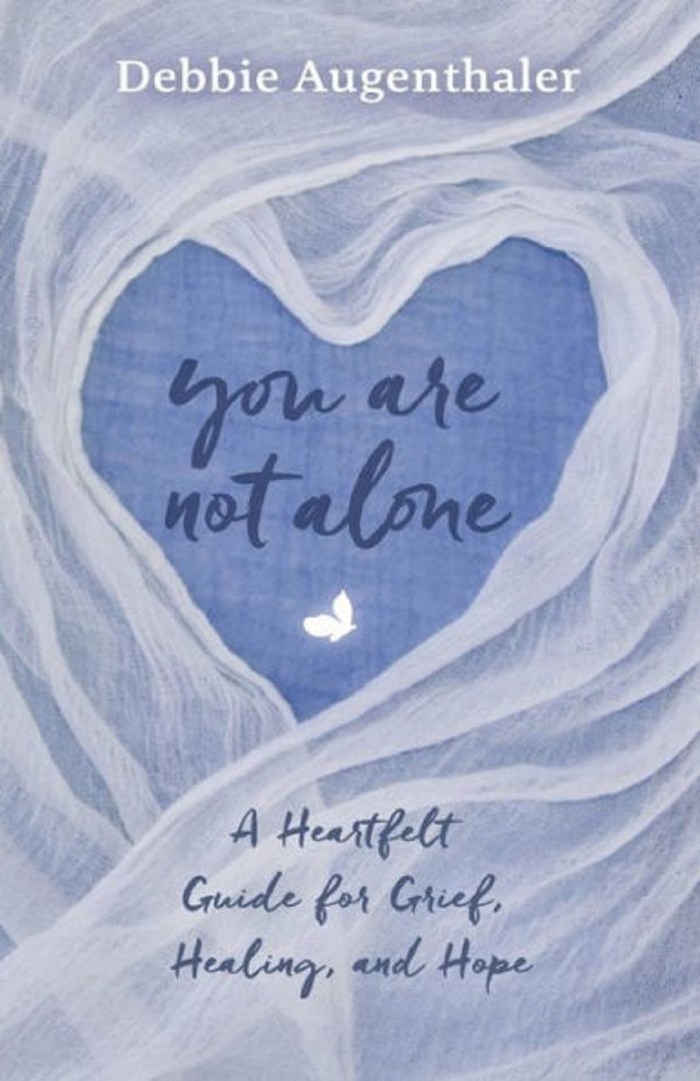
Book review: ‘You Are Not Alone’ by Debbie Augenthaler

youarenotaloneDebbie Augenthaler is a psychotherapist with a private practice in New York City where she has specialized in trauma, grief and loss. She uses eastern philosophy, energy healing and spiritual practices from cultures around the world as well the connection of a shared experience to help people through their grief. In her new book ‘You Are Not Alone: A Heartfelt Guide for Grief, Healing, and Hope’ she gives readers insights and suggestions for healing and hope.

There are several layers to ‘You Are Not Alone’ beginning with the Introduction where the author explains how this is the book she wishes she had after her husband Jim died. She was young and even though the experience shattered her life, she carried on, but longed to read about someone who understood what she was going through. Dry clinical books held no interest to her; all she wanted was “a book that could witness and validate” her experience. With that said, this thoughtful and informative book is a combination memoir and self-help guide through grief and recovery. It is divided into four parts: Shattered, Grieving and Coping, Emerging and Transition and Expanding Into the Mystery.

Grief is a universal emotion, so it makes a big difference if the advice comes from someone who has travelled the same painful path. This gives the author the credibility necessary to dispense advice, even though everyone’s experience is different. She is open and honest, but some of the details of her journey may be too difficult for readers with fresh losses. The information is presented in simple, clear, non-clinical terms, making it easy to read and understand. It also contains poems and inspirational quotes from the likes of William Blake and Paul Coelho and coping mechanisms that worked for her. The Appendix, ‘How to Help’ has sections such as ‘The Importance of Support’ and ‘Notes and Cards’ with suggestions on what to do “If You Are Grieving” and “If Someone You Know is Grieving.” ‘You Are Not Alone’ by Debbie Augenthaler is recommended for anyone who is looking for a helpful yet poignant guide through the transition from grief to recovery from someone who has been there. It will be twice as helpful if passed along to someone else who needs it.

“In helping others, even when in the midst of our own grief, we can help ourselves.”

*The reviewer received a copy of this book for an honest review. The views and opinions expressed here belong solely to her.

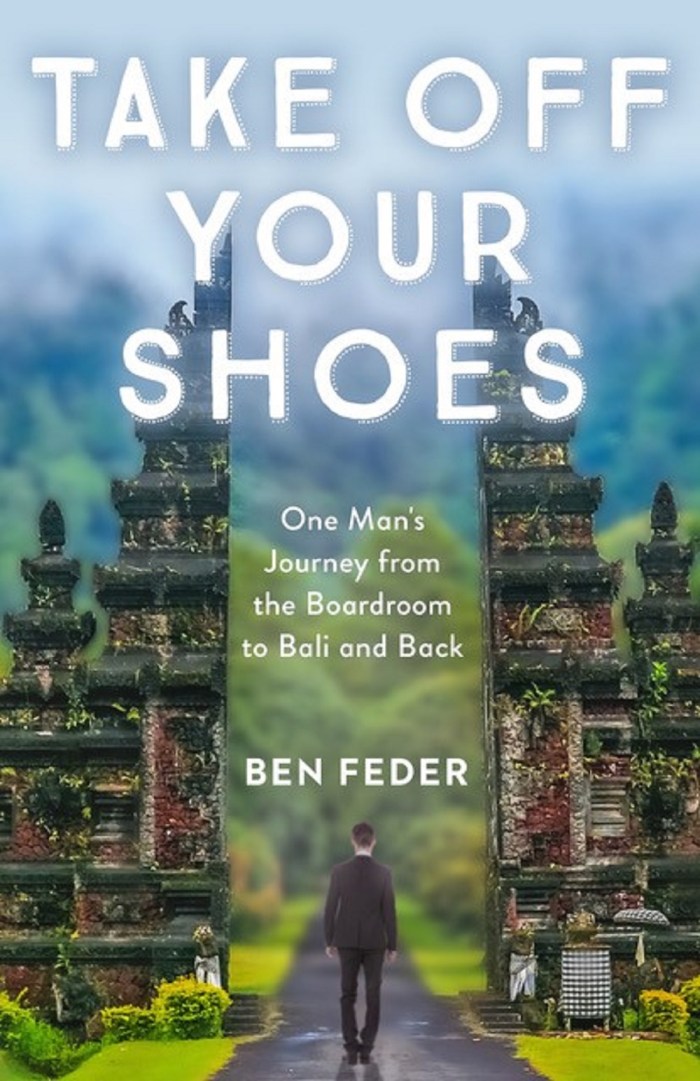
Book review: ‘Take Off Your Shoes’ by Ben Feder

takeoffyourshoespic
Ben Feder’s new memoir ‘Take Off Your Shoes’ is now available everywhere.  Courtesy photo, used with permission.

Ben Feder is President of International Partnerships for the U.S. at Tencent, the Chinese Internet titan and formerly CEO of Take Two interactive. He is also the publisher of the smash video game hits, Red Dead Redemption, Grand Theft Auto and NBA 2K.  With all his success, he also experienced the inevitable cost it took on his family and personal life. This led to a self-imposed sabbatical in Bali with his family and in his new memoir ‘Take Off Your Shoes: One Man’s Journey from the Boardroom to Bali and Back,’ he shares his experiences and what he learned from his journey of self-discovery.

‘Take Off Your Shoes’ begins with an introduction in which Ben Feder explains that he wrote this memoir mainly for his children. Not only did he want them to understand why he embarked on this journey, but he also wanted it to serve as a memento of the special time they shared as a family. One thing that led him to take a sabbatical was his curiosity about brain plasticity and how people can change their lives by changing their minds. It all started one evening when Ben came home late from work and his wife Victoria approached him with the idea. After weighting the pros and cons, which included sacrificing careers that they both worked hard to attain, they decided that any increased time together as a family was worth any downside.

Ben Feder did what most people caught up in the everyday rat race only wish they could do and took the time to share his experiences. His memoir reads like a journal because not only does he write about the journey, he writes about his personal development and struggles as well as his personal growth through it all. Like adults, children can also become overwhelmed with their busy lives, so it is admirable that the author and his wife chose to involve them in this life-changing experience. Seeing the poverty in other countries made them thankful for what they have and made them more conscientious citizens of the world. Along the way, Ben learns to appreciate how activities like meditation and art can help him handle stress and the family gets a different perspective on life. Not everyone can afford to pick up and travel the world with the family, but they can find ways to lead a more mindful life. All they must do is think outside the box and dare to step outside their comfort zone. Overall, ‘Take Off Your Shoes’ is easy to read with language that is easy to understand and will appeal to readers who are looking for ideas to enrichen their lives. It is insightful, personal and humorous with something for everyone.

*A copy of this book was given for an honest review. The opinions expressed here are solely the author’s.

Book review: ‘If I Understood You, Would I Have This Look on My Face?’ by Alan Alda

alanaldabook
‘If I Understood You, Would I Have This Look on My Face?’ is the best selling book by Alan Alda about the importance of communication.

Most people know Alan Alda from the classic television series M*A*S*H, but he is also a writer and director. He hosted the award-winning series Scientific American Frontiers for eleven years and founded the Alan Alda Center for Communicating Science at Stony Brook University. His previous books include “Never Have Your Dog Stuffed: And Other Things I’ve Learned” and “Things I Overheard While Talking To Myself.” “If I Understood You, Would I Have This Look on My Face?: My Adventures in the Art and Science of Relating and Communicating” is his most recent release. In it, he tells the story of his quest to learn to communicate better and to teach others to do the same and how to develop empathy.

The central theme in “If I Understood You, Would I Have This Look on My Face?” is communication and the author gives readers creative ways they can improve their skills. It is divided into two parts: 1. Relating Is Everything with chapters like The Mirror Exercise, Listening from the Boardroom to the Bedroom and Training Doctors to Have More Empathy and 2. Getting Better at Reading Others with chapters like Working Along on Building Empathy, Dark Empathy and Reading the Mind of the Reader. He uses examples from his own life to demonstrate the importance of being able to communicate with each other and what happens when wires get crossed. His aim is to teach people to develop their empathy skills because this is where cooperation and understanding is born. This can be done by looking for clues in another’s face and learning to read the other person.

In simple terms and easy to understand language, Alan Alda has written an excellent guide for anyone who wants to improve their interpersonal skills. His personal anecdotes are entertaining and informative. A standout chapter is Working Alone on Building Empathy where he discusses meditation and bonding to start improving oneself. Overall, it is an interesting take on the importance of communication skills that is as useful in today’s atmosphere as it ever was. It is a highly recommended read, especially for those on a journey of self-discovery and improvement.

*A copy of this book was given for an honest review. The opinions expressed in this article are solely the author’s.

Book review: Thoughtless series by Gregory Nicholas Malouf

emptyearth
‘Empty Earth’ is book 6 in the Thoughtless series by Gregory Nicholas Malouf. Photo: google

Gregory Nicholas Malouf is the founder of Epsilon Healing Academy and a successful businessman and entrepreneur. After a traumatic childhood he became a workaholic in order to run away from his past and achieve what he considered the perfect life. Despite his success he failed to achieve fulfillment and eventually changed his spiritually empty life into one filled with love, peace and abundance. He has written numerous self-help books but he is best known for his Thoughtless series. With this series he aims is to help people better themselves and find a peaceful more fulfilling life. He challenges readers to look within themselves and develop a deeper connection to their Self.

In his previous books he defined the Self. The Self by nature is authentic and needs no outside fulfillment. When the connection to the Self is lost that is when the sense of fulfillment is lost and shallow love begins. Shallow love is the attachment to someone or something that people develop in an effort to fill the void in their lives. The loss of connection with the Self can also cause the development of fears and phobias. Previous books in the series include “Shallow Love,” “Tunnel Vision,” “Self Fulfilled,” “Overzealous,” and “Victim State.”

“Empty Earth” is book 6 in the series and in it the author offers readers ways to presently start living the life they desire and deserve. This comes by connecting to the Self and appreciating who and what they currently have. In book 7,“Unmalice Curse” he writes about learning how to be aware, end old distorted beliefs and replace them with new ones to be able to live wholly in the present. Among the tips he gives is learning how to listen to and trust the inner voice. Judgement becomes the central theme in book 8: “Judging is a Trap.” He writes that once people overcome the opinions and behaviors of others it can free their mind to accept love, joy and peace into their lives.

All the books in the Thoughtless series are small and easy to read. They are recommended for anyone looking to make a change in their lives. Some of these methods may be hard to put into practice but he shares personal stories of how they worked for him. He practices what he preaches and that gives his work a sense of authority and authenticity.

“The purpose of life is to evolve……The purpose of everyone on earth is the same: to learn to forgive so we may live in complete peace and joy, and with sustainable love.” Book one – “Shallow Love”

*A copy of these books were given for an honest review. The opinions expressed in this article are solely the author’s.