New book release: ‘Hesed: Does the Tanakh Foreshadow Jesus?’ by Mark Stouffer

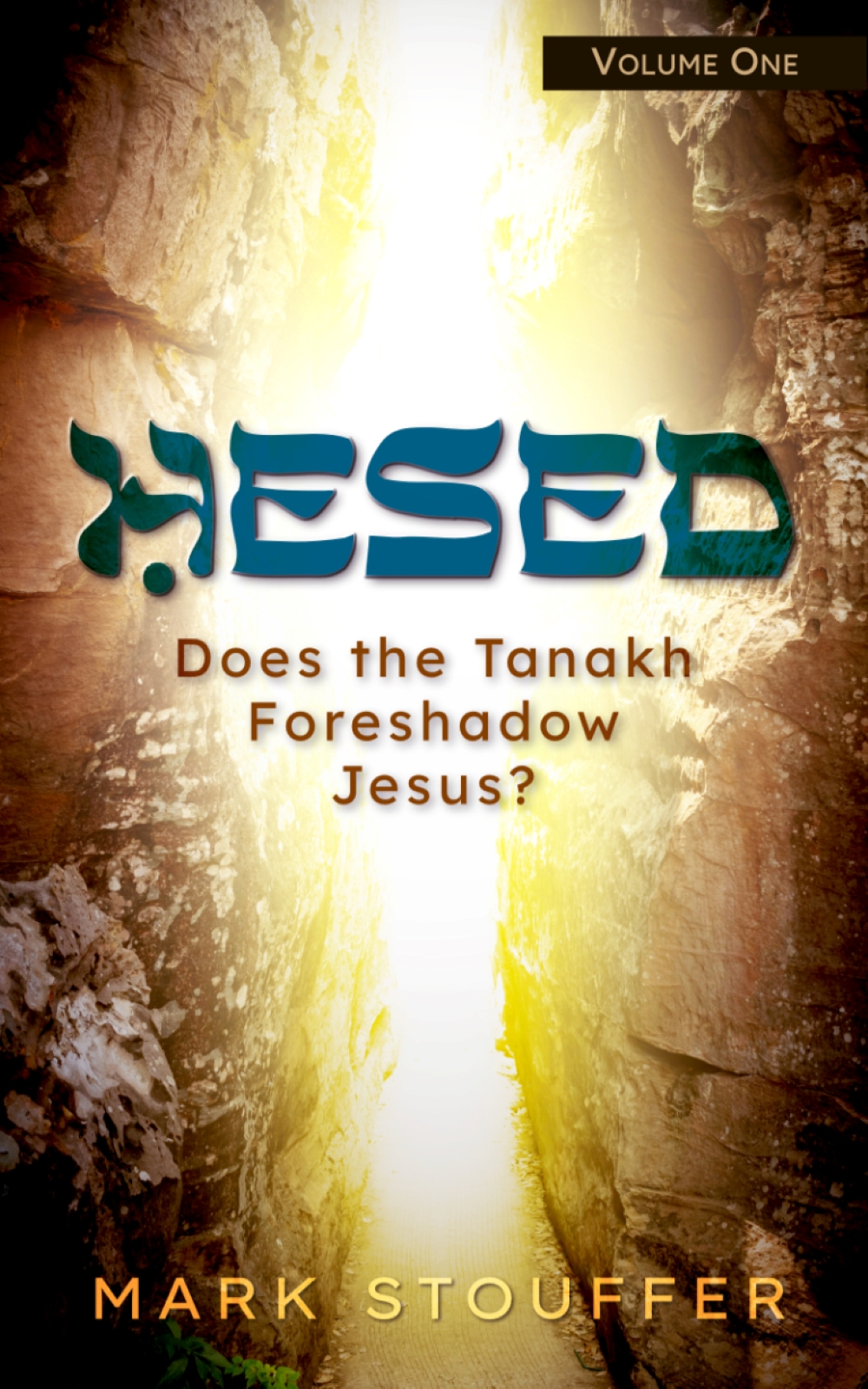
‘Hesed: Does the Tanakh Foreshadow Jesus?’ is volume one in the series by Mark Stouffer. Photo: Mark Stouffer, used with permission.

The Tanakh, the Hebrew Bible, is Judaism’s foundational text. If you ever wanted to delve into the teachings of this Hebrew text, then today’s new book release might be of interest to you. In “Hesed: Does the Tanakh Foreshadow Jesus?,” Mark Stouffer proposes that it foreshadows the Messiah that the Jewish people have been waiting for. Join the author as he leads readers on a quest to hear the message of the Tanakh, as opposed to what they want to hear. Whether Jewish or Christian, or even if you are just interested in biblical studies in general, this book promises a well researched examination of both faiths. It is available on Amazon.

Mark Stouffer is an engineer who lives with his family in Columbus, Ohio. Mark was born in 1960 and grew up loving sports. Mark has a passion for the Bible, which he has been studying and teaching for nearly 40 years. Mark has been to Israel and has great respect for the Jewish people. His new book, “Hesed: Does the Tanakh Foreshadow Jesus?,” is for Jewish people who want to know the truth about Jesus. It is also for Christians who want to learn about the Hebrew Bible. (Mark Stouffer, 2023)

“Hesed: Does the Tanakh Foreshadow Jesus?”
While arguing with the Jewish religious leaders, Jesus said, “You search the Scriptures, because you think that in them you have eternal life; and it is these that bear witness of Me; . . .” In this book, the author examines the Tanakh in order to see if Jesus’ claim has any merit.

“Hesed: Volume One” is the first book in a four volume series written for Jewish people who want to know the truth about Jesus. This book is also good for Christians who want to learn about the Tanakh, or Old Testament. The series examines five elements in the Tanakh that appear to foreshadow Jesus. Volume One covers the first two elements.

The five elements are:

1. Sacrificial atonement in the Torah
2. A series of Biblical heroes who had experiences that were similar to things that happened to Jesus
3. The messianic prophecy of the Tanakh
4. G-d’s plan for humanity
5. The incompleteness of the Tanakh in which the issue of our moral guilt is not decisively resolved

Volume One examines the subject of sacrificial atonement in the Torah to see if it foreshadows Jesus’ death on the cross. It also covers the lives of Isaac, Joseph, Moses, David, Daniel, and Cyrus. For they each went through experiences that Jesus also wound up going through many centuries later. The question is, were these moments from their lives placed in the Tanakh intentionally or coincidentally?

Sponsored Post
San Antonio Museum of Art announces acquisition of two major gifts of art

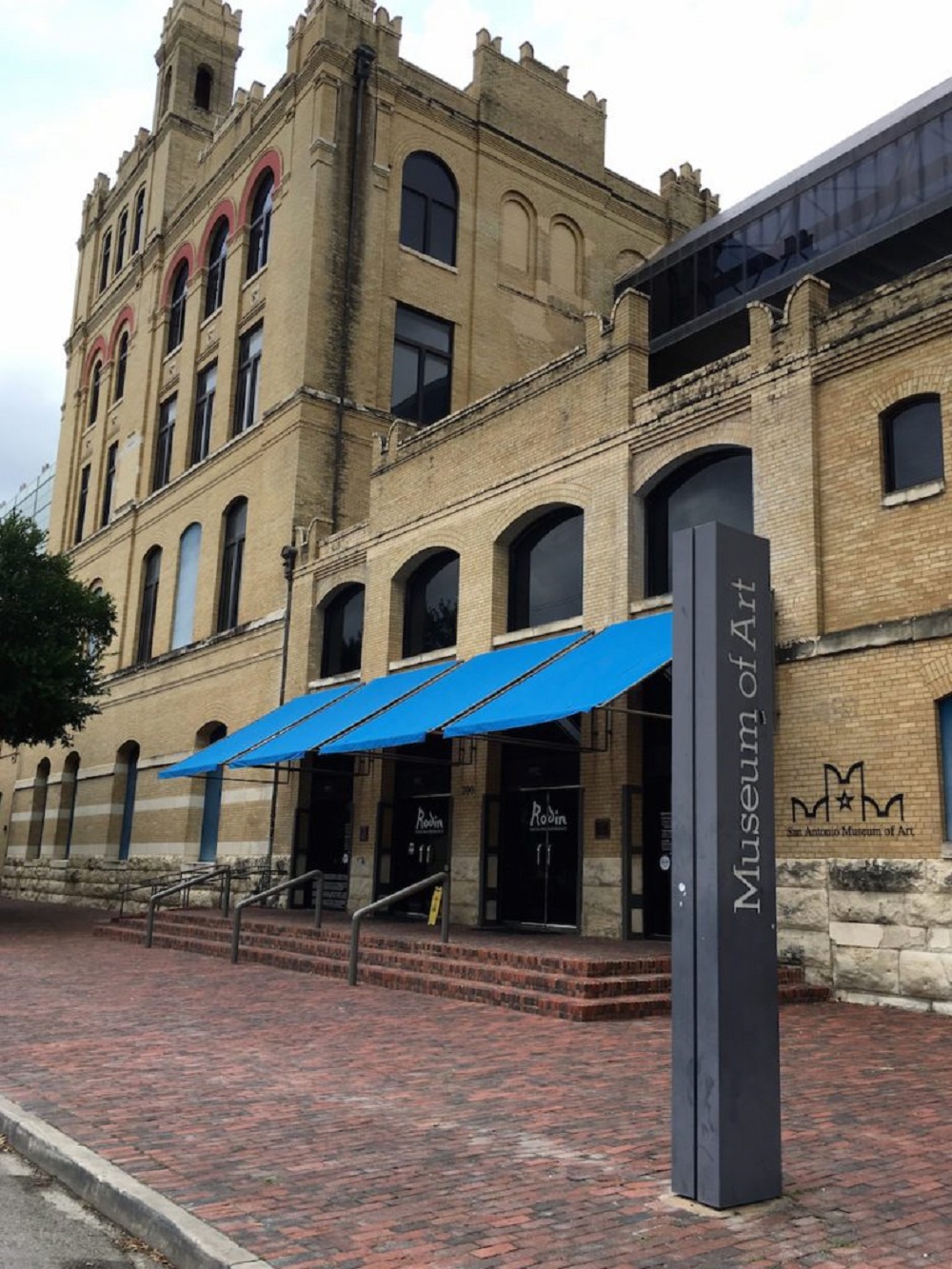
SAMA announces acquisition of two major gifts of ancient art from the Americas Museum as well as a selection of contemporary artworks. Photo: Google

The San Antonio Museum of Art (SAMA) recently announced the acquisition of two extensive collections focused on the art of the Americas before 1500. The first is a gift from collectors and longtime SAMA supporters John M. and Kathi Oppenheimer and features nearly two hundred objects, primarily ceramic and stone figures and vessels, which represent societies that thrived in West and Central Mexico and Central America, including the Aztec, Mixtec, Colima, Nayarit, and Jalisco, as well as objects made by the Maya, Zapotec, and Olmec cultures. The second collection comes from Lindsay and Lucy Duff and includes 110 objects, including ceramics and textiles and carved stone and wood objects, from early South American cultures, such as the Moche, Nasca, Wari, Chimu, and Inca and spanning from around 500 BC to AD 1500. Several of the works in the Duff Collection are currently on loan to SAMA, including a large gold beaker and a ceramic portrait vessel. (San Antonio Museum of Art, 2023)

As part of SAMA’s acquisitions, the Museum also acquired a range of objects across its Contemporary, American, Latin American, Asian, and Ancient Mediterranean collections. Some of the highlights include a photograph by Stuart Allen, titled Shadow No. 10, 9 Pixels (2005), which reflects the artist’s interest in examining abstract composition through digital photographic pixelation; two Transport Amphorae (Roman-Byzantine, 5th–7th century AD), which were likely used to ship commodities like wine across the Mediterranean; ten ceramic works by modern and contemporary Japanese artists, including Nakamura Takuo, Koie Ryoji, Takiguchi Kazuo, Ito Motohiko, and Seto Hiroshi; the oil on metal work Emma Tenayuca Retablo (1993) by Santa Barraza, a major figure in Chicana/o art and the Chicano Art Movement in South Texas; the mixed-media sculpture Space In Between: Nopal (Candelaria Cabrera) (2010) by Margarita Cabrera, which continues the artist’s ongoing explorations of cultural identity, migration, labor, violence, and empowerment through sculpture, craft, and social practice; and the large-scale portrait Yemayá, one of the three paintings in the Goddess Triptych, a set of paintings by San Antonio artist Ángel Rodríguez-Díaz that celebrates the beauty, confidence, and power of women of color. Rodríguez-Díaz’s three large-scale nude portraits will be featured in the focus exhibition Ángel Rodríguez-Díaz: The Goddess Triptych Reunited, which will be on view from January 27, 2024, through January 26, 2025.

The San Antonio Museum of Art serves as a forum to explore and connect with art that spans the world’s geographies, artistic periods, genres, and cultures. Its collection contains nearly thirty thousand works representing five thousand years of history and is particularly strong in arts of the Americas, ancient Egyptian, Greek and Roman art, Asian art, and modern and contemporary art.

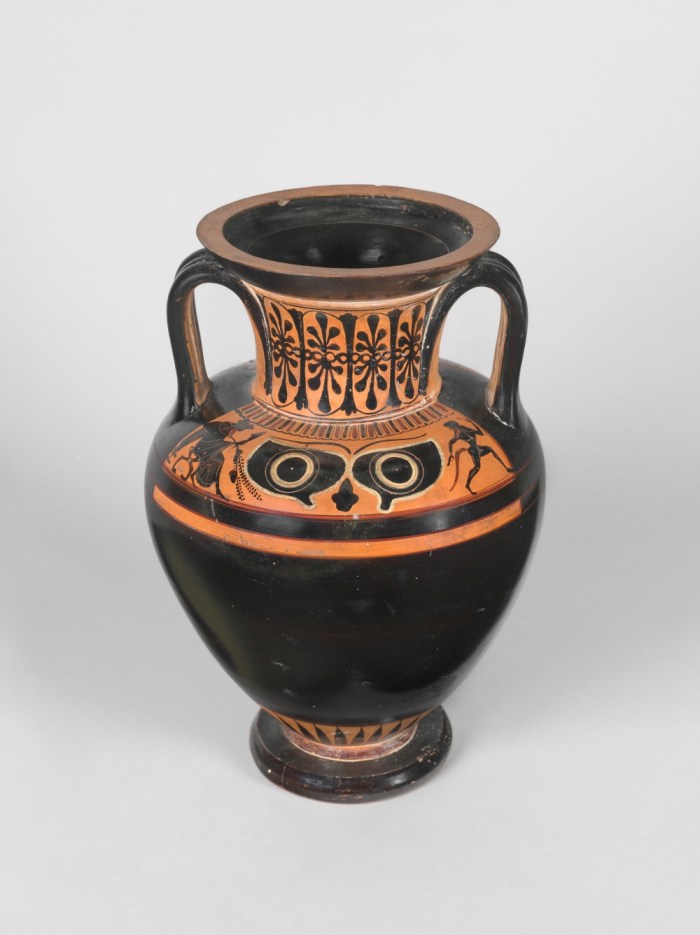
Amphora (jar) with Dionysos and satyrs, Greek (Attic), ca. 530–510B.C., Attributed to the circle of the Antimenes Painter, Terracotta, black-figure technique; h. 15 3/16 in., Purchased with the Grace Fortner Rider Fund, 2023.6 Photo: SAMA, used with permission.