
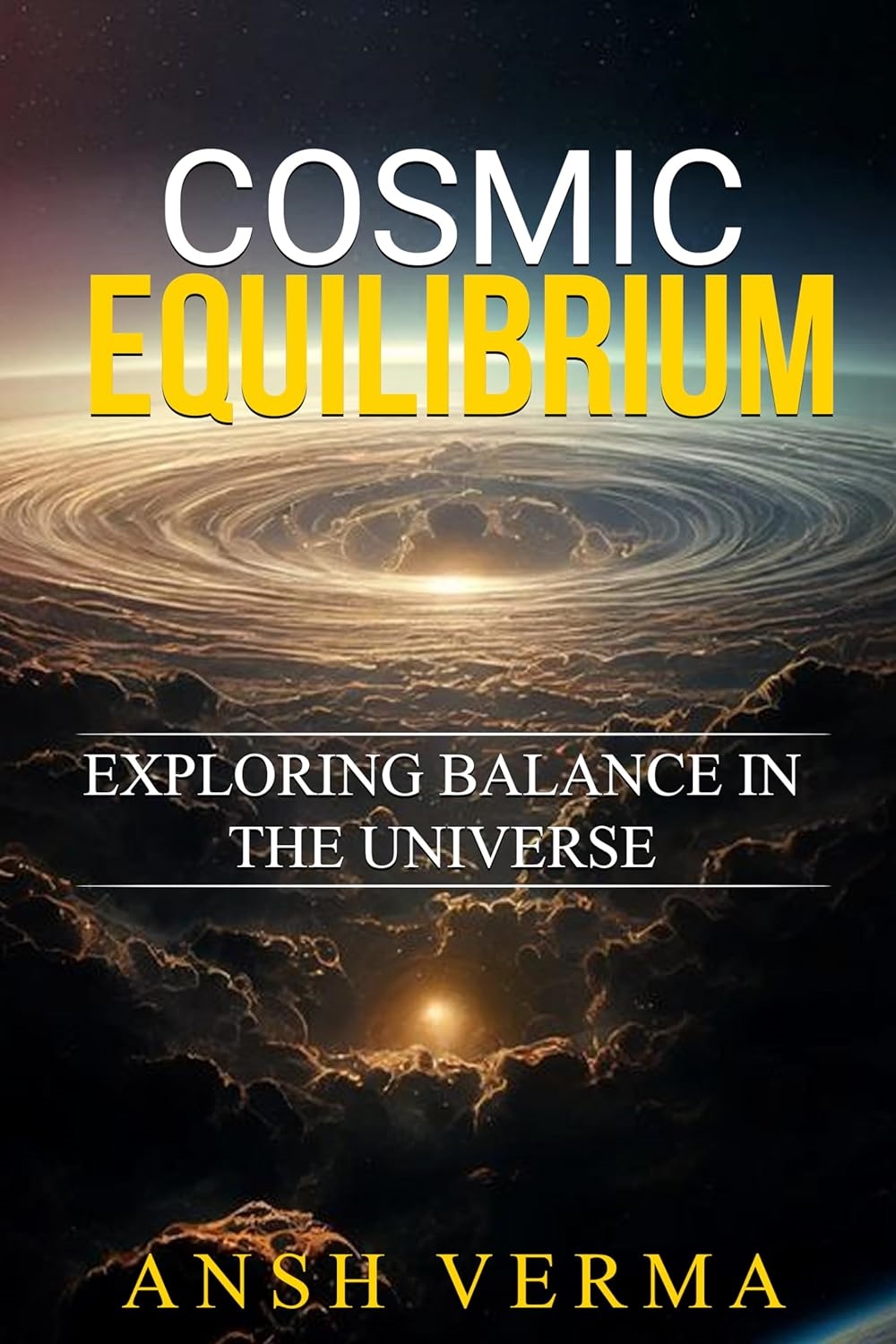
Ansh Verma is a researcher, author, and philosopher based in Dhanbad, Jharkhand (India). He researches almost everything that can be observed, felt and or read, including technology, politics, divine, war, behavioral, engineering, investments, military, finance, and mathematics. Post graduation, Verma has almost 20 years of experience in thinking and making sense of the world. His new book “Cosmic Equilibrium: Exploring Balance in the Universe” is a captivating exploration of the intricate harmony and balance that permeates the cosmos.
“Cosmic Equilibrium: Exploring Balance in the Universe” – This thought-provoking book takes readers on a journey through the fundamental principles governing the universe, from celestial harmony to the laws of nature that underpin the cosmos. It delves into the timeless concept of yin and yang, revealing how opposing forces complement and balance each other on both cosmic and human scales.
From the birth and death of stars to the cyclical rhythms of life on Earth, the book examines the interconnectedness of all existence and the profound role of balance in shaping our universe. It bridges the realms of science, philosophy, and culture, offering insights into the diverse ways different societies have revered and integrated the idea of cosmic balance into their beliefs, ethics, and rituals.
This book also tackles the pressing issue of ecological balance on our planet and its broader implications for the cosmic equilibrium. It invites readers to contemplate their place in the vast cosmic tapestry and to reflect on the significance of balance in their own lives. With a holistic approach that combines scientific discoveries, philosophical reflections, and practical applications, this book serves as an enlightening guide to understanding the delicate equilibrium that sustains our universe and inspires us to find balance within ourselves and the world around us.
Balance is the central theme of this book, primarily yin and yang, the concept that “invites us to explore the eternal interplay of opposites that lies at the core of our reality.” It examines balance and harmony in everything from nature to human life. Each chapter is dedicated to a specific type of balance, including Chapter 2: Celestial Harmony, Chapter 3: Balance in Nature, and Chapter 5: Ecological Balance. Especially interesting is Chapter 4: Cultural Perspectives, which emphasizes how all cultures respect this sense of balance within their respective lifestyles.
The author does so much more than just educate readers on how balance works in nature, he also gives practical advice on how they can achieve balance in their personal lives. This includes balancing work and life, balancing technology and nature, and finding balance in consumption. In his Call to Balance in Chapter 8: Conclusion, he encourages readers to be mindful of their place in the universe to create a more balanced and sustainable future for everyone. As we are all connected, we all benefit in the end. If you are interested in an in depth study of the cosmos and the importance of balance and harmony, this is the book for you.
*The author was contacted for an honest review of this book. The views and opinions expressed here belong solely to her.
 SA Examiner