
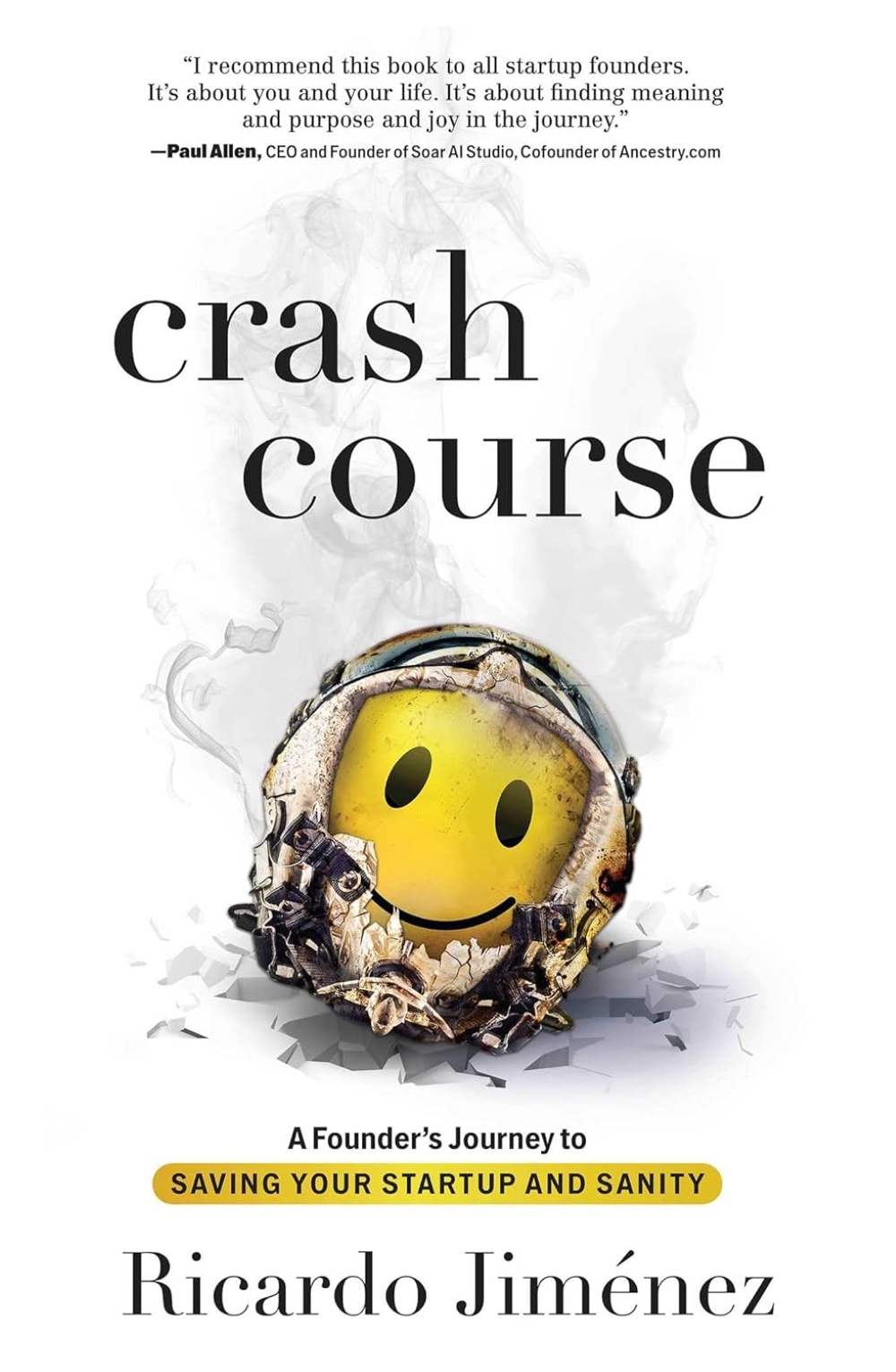
In “Crash Course: A Founder’s Journey to Saving Your Startup and Sanity,” Ricardo Jiménez offers an unfiltered and deeply personal account of his startup journey—one marked by ambition, struggle, and eventual failure. Unlike typical business books that focus solely on success strategies, Jiménez takes readers through the hard lessons learned when things don’t go as planned. His honest storytelling makes this book a refreshing and invaluable resource for entrepreneurs who want to avoid common pitfalls.
In the Introduction, he bluntly states “I was a startup founder, and I failed.” He is sharing his experiences because he believes we can all learn from someone else’s struggles. Failure is a way of life in business, it’s not you personally.
Jiménez doesn’t just recount his failures—he analyzes them, offering insights on leadership missteps, financial mismanagement, and the emotional toll of entrepreneurship. He highlights the dangers of burnout, poor decision-making, and ignoring red flags, making this book as much about mental resilience as it is about business strategy. The writing is engaging and candid, making complex business concepts accessible to new and experienced founders.
It is divided as follows:
Section 1: Beginning with an Ending
Section 2: Starting Up
Section 3: Market (Mis) Fit
Section 4: Fighting for Survival
Section 5: The End
Section 6: What I Learned, What I Felt, and What I Still Don’t Know
Section 7: Finding the Rewards Among the Risks
Highlights:
Section 4, Chapter 14, Breaking Down – the author shares the importance of self care and work/life balance when all you do revolves around starting your company. People only wanted to talk to him about Plushkies or their ideas for a business and that’s all he was to them. It began to wear him down. “Entrepreneurs are often judged more by their company and product, which is what the public gets to see, than they are by their character and personality.”
Section 4, Chapter 17, Bro Savior Turns Bro Bully – He was so desperate to succeed, he almost lost sight of his principles. He stresses the importance of taking the red flags seriously. “My desperation had caused me to ignore all the red flags flying around that guy and our interactions, almost from the beginning.”
Overall, “Crash Course” is a must-read for anyone navigating the unpredictable world of startups. Above all, Jiménez’ candidness makes him relatable. Rather than glorifying the “hustle culture,” he advocates for balance, self-awareness, and learning from failure. Aspiring entrepreneurs will find comfort in his experiences, realizing that setbacks are not the end—but rather opportunities to grow. It is recommended for readers interested in memoirs and business motivation and self improvement books.
“The hard truth about being an entrepreneur is that, whether it’s building or selling, if it’s your startup, you can’t just rely on other people to build your company.”
*The author received a copy of this book for an honest review. The views and opinions expressed here belong solely to her.
Related post: What Makes ‘Crash Course’ by Ricardo Jiménez a Must-Read for 2024
 SA Examiner