
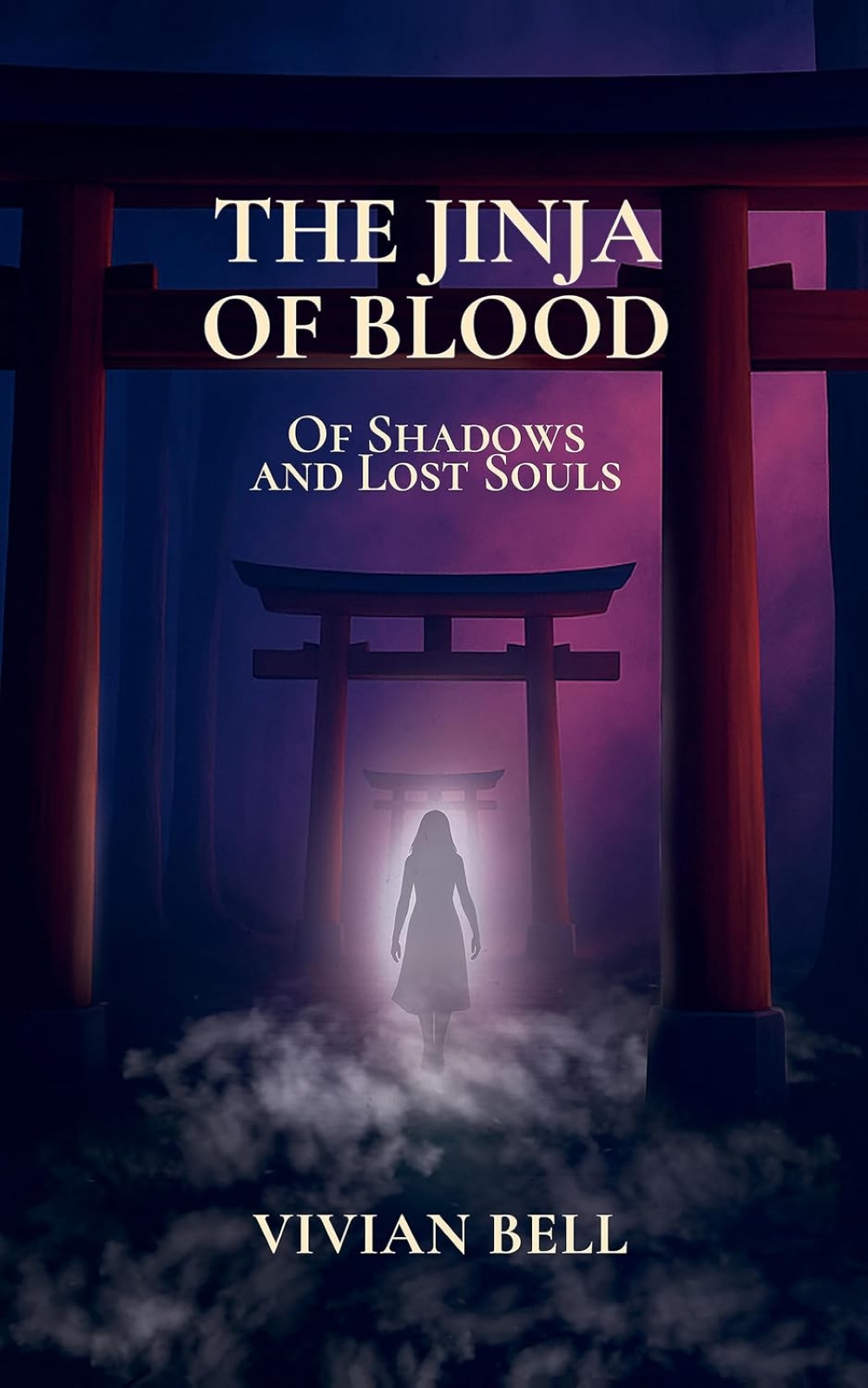
The Jinja of Blood: Of Shadows and Lost Souls (Book 1)
By Vivian Bell
An ancient jinja is home to the Wind and Ice clans, vampires who spend eternity fighting loneliness and boredom. In modern-day Japan, the New Bloodline must navigate everyday life, love, and increasingly ferocious yokai.
Shun Holynorth, a vampire, lives in the frost of eternity, while Haruki Akayama, a mortal, exists within the fragility of human time. Their meeting becomes the crack through which both light and darkness seep.
Story Overview
The novel opens with Shun admiring the sun’s final rays at sunset. Even after centuries, sunsets still mesmerize him, though they stir an ancient unrest within his soul. Shun belongs to the New Bloodline, children born of vampires and immortals. As the youngest, he’s seen as delicate, earning him the nickname the Cub. Adam and Ryuu are assigned to protect him as he begins university at Aizawa Academy, where vampires and humans study side by side.
Haruki Akayama and Yoshi Yamamoto are among the human students attending Aizawa Academy. Haruki is a 20-year-old billionaire with no immediate direction in life, aside from his determination to find his mother, who disappeared during his childhood. He’s dating Sam, unaware that Sam is a vampire.
As the group begins school, friendships form and secrets surface. Shared struggles and personal drama draw them closer together, revealing unexpected similarities. Beneath their everyday lives, however, a lurking danger emerges, only briefly introduced here, as this is the first book in the series.
Review
The Jinja of Blood: Of Shadows and Lost Souls blends ancient myth with modern unease. Set within an ancient shrine, it explores what happens when immortality collides with change. The New Bloodline must balance mundane university life with the growing threat of increasingly dangerous yokai, creating a compelling tension between the ordinary and the supernatural.
Shun and Haruki’s connection acts as a bridge, allowing light, darkness, longing, and fear to seep into each other’s worlds. Bell writes their relationship with emotional sensitivity, making it feel earned rather than merely symbolic.
As the opening volume of The Jinja of Blood, the novel sets the tone for a saga focused less on spectacle and more on belonging, friendship, and love in all its complexities. While the central romance between two young men places the book firmly within queer fantasy, the broader cast adds depth and diversity.
The vampires and immortals are portrayed as beings seeking normalcy rather than reveling in blood and gore. Their longing for ordinary lives makes them relatable, despite their centuries-long existence.
The narrative flows smoothly, supported by vivid, poetic language:
“The leaves, no longer resisting, surrendered to the wind’s invitation and danced over gardens and rooftops, skimming aerials and skyscrapers.”
Because the story is set in Japan, Japanese terms appear throughout. While this occasionally slows the pacing, the included glossary is helpful. The incorporation of Japanese folklore, such as the story of Hachiko, the faithful dog who waited for his long dead owner at Shibuya Station for ten years, adds cultural richness.
Final Thoughts
Overall, The Jinja of Blood: Of Shadows and Lost Souls is a strong and atmospheric beginning to a dark urban fantasy saga. It explores themes of friendship, identity, coming of age, and love. Though categorized as LGBTQ+ fiction due to its central romance, the story’s emotional core and diverse cast give it broad appeal.
Fans of fantasy, vampire lore, and Japanese culture will find this an engaging and promising start to what is sure to be an exciting series.
“Yoshi was the only anchor that allowed him to maintain a connection to reality. Without him, he would have capsized in the tidal waves of his own soul.”
About the Author
Vivian Bell is a shadow behind shrine doors, writing queer gothic tales of vampires, jinja, and cursed bloodlines. The Jinja of Blood is her debut dark fantasy, set between university corridors and yokai-haunted districts in modern-day Tokyo.
*Thank you to Vivian Bell for the gifted copy for review consideration. I haven’t been compensated for this review and all views and opinions expressed are my own.
 SA Examiner