Sci-Fi with Soul: Why ‘Echoes From A Distant Star’ Deserves a Spot on Your Shelf

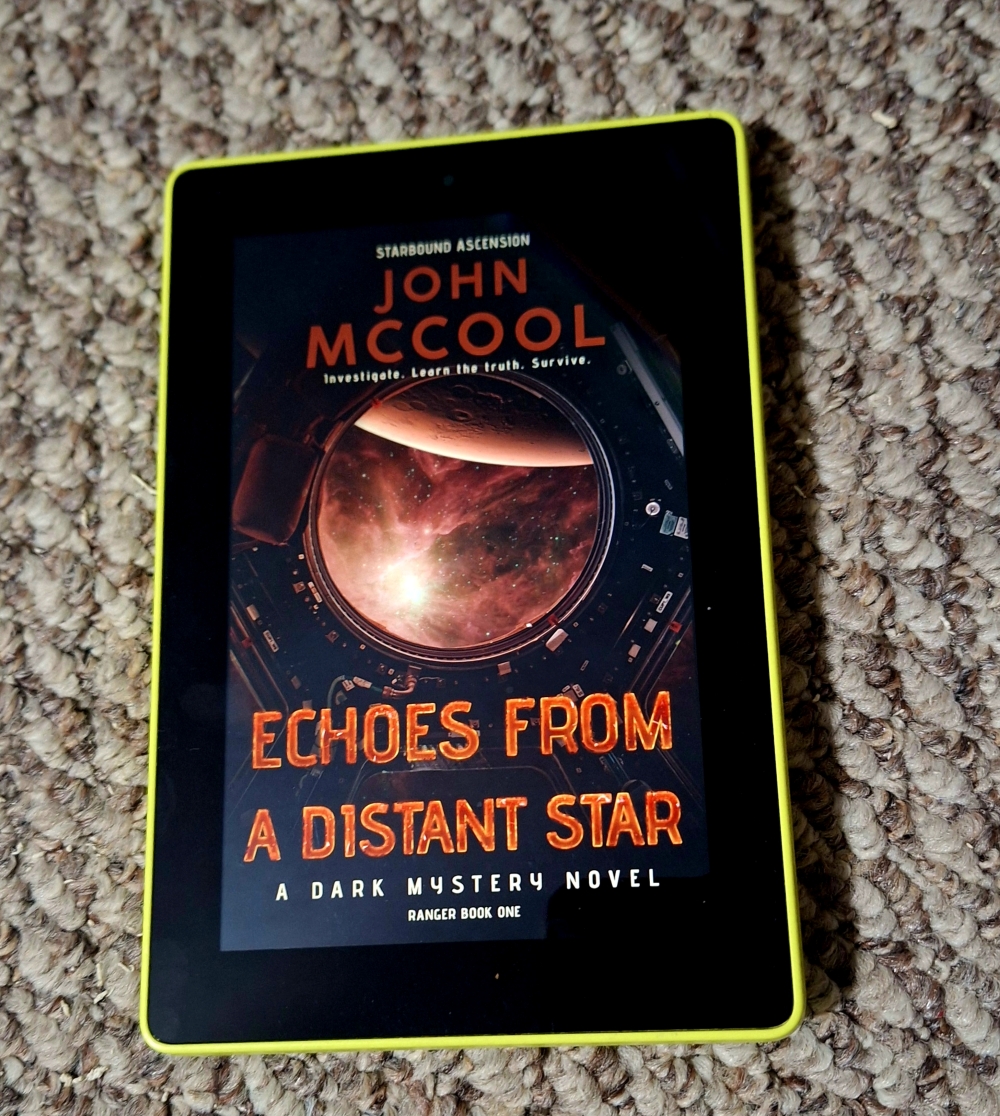
‘Echoes From A Distant Star’ by John McCool. Photo: Barnes & Noble

Book Review: “Echoes From A Distant Star: Ranger Book One”
A Chilling Sci-Fi Mystery Where Silence Speaks Louder Than Words

The Premise

In the depths of space, a long-abandoned vessel conceals the whispers of something tragic.

Locilette, a Ranger patrolling this sector of space, responds to an anonymous call of a potential derelict spotted drifting in the endless void. Thinking this is nothing more than another routine call would end up being one of the greatest mistakes of his career.

What horrors befell the Yanagi’s crew? Were they driven to madness, or did an unknown terror stalk the now dark corridors? Will the Ranger uncover the truth behind the crew’s disappearance, or will he succumb to the same horrors that claimed them? The darkness of the Yanagi awaits… (Barnes & Noble, 2025)

Suspense in the Silence

“Echoes From A Distant Star” launches readers into a hauntingly atmospheric space saga that’s as much about mystery and memory as it is about exploration. Set aboard the Theseus, a ship in the far reaches of space, Locilette, a Ranger of the Fifth Degree from the Kronos System has just crossed a large wormhole gate. Part of his job includes responding to missing ships, checking on the status of a communications buoy, or even pursuing a smuggler. Most of this is done in the vast darkness of space but he loves his job because of the adrenaline rush.

After hailing the Yanagi and with no response besides a bright flash of light inside he activates the ship’s Secura-Droid who he calls Brinks. They both board the Yanagi and begin an investigation filled with secrets and unspeakable fears that’ll haunt him for the rest of his life.

McCool masterfully builds suspense through minimalist prose and subtle world-building, letting the isolation of space and the Yanagi’s ghostly silence speak volumes: “He took a few steps down, the eerie feeling hanging over him like a predator in the night made his hand hover close to his holster. This kind of quiet was unnatural.” The vessel isn’t just a wreck; it’s a tomb echoing with unresolved trauma, the “whispers” of an unknown tragedy lingering in every corridor. As Locilette pieces together the fate of the crew, readers are drawn into a chilling narrative that blends hard science fiction with psychological thriller elements and plenty of plot twists to keep them guessing until the final shocking reveal.

With vivid language and employing the senses, he brings the settings to life: “The sound of Brink’s footsteps crunching on the glass grew closer and closer, its eyes like two bobbing blue orbs dancing in the darkness.” The pacing is deliberate, even meditative at times, inviting introspection on grief, loss, and the consequences of hubris in deep space.

More Than a Sci-Fi Thriller

Beneath the surface, this is a story about grief, memory, and the psychological toll of isolation. McCool invites readers to reflect on humanity’s vulnerability, especially when facing the unknown. By deeply developing Locilette’s character, he becomes relatable and readers get emotionally invested in his safety. The eerie quiet of the ship is palpable, and every creaking bulkhead and flickering light hints at a deeper, darker story. Plus, the tension comes not from action-packed battles, but from the slow unraveling of a haunting mystery.

Final Thoughts

Overall, “Echoes From A Distant Star” is a gripping and suspenseful series debut that sets a strong foundation for the Ranger series. It explores the themes of family, friendship, survival, heroism, and good versus evil. I recommend it for fans of science fiction space adventures similar to the Star Trek franchise. McCool’s blend of mystery and melancholy makes for a compelling read that lingers long after the final page.

“This place was getting to him much more than he realized. Although his extensive training and career experience shielded him from a great deal of the trauma he had witnessed to this point, everyone had their limit, and he was almost at his own.”

Rating: 5 out of 5.

About the author

John R. MCCool III hails from a small town in the great state of Mississippi. He fell in love with writing at a very young age, oftentimes writing stories during class rather than paying attention. He now resides in Rossville, Illinois where most of his time is spent attending to the day-to-day operations of a local coffee company, which is like a second home to him. When not writing or sipping coffee, John loves spending time with his wife and kids who give him the inspiration to pursue all of his dreams.

Debut Spotlight: Franziska Gänsler’s ‘Eternal Summer’ Explores Climate and Connection

‘Eternal Summer’ by Franziska Gänsler. Photo: Barnes & Noble

New Release: “Eternal Summer” by Franziska Gänsler

Available Tuesday, May 6, 2025 (Other Press)

This week brings an unsettling and mesmerizing work of climate fiction from debut author Franziska Gänsler. “Eternal Summer: A Novel” is set in a once-idyllic German spa town now devastated by climate change. Perfect for fans of Jenny Hval, Julia Armfield, and Olga Tokarczuk, this haunting novel explores themes of trust, abuse, and solidarity through the evolving relationship between two women.

When Iris inherits her grandfather’s hotel in Bad Heim, the town is still a bustling wellness retreat. But as climate change tightens its grip, summers stretch endlessly, scorching heat and forest fires fill the skies with ash and smoke, and guests become scarce. One day, a young mother and her small daughter arrive, seemingly out of nowhere. Iris senses something is off. Is the woman in need of help—or could she pose a threat?

Gänsler vividly conjures the suffocating atmosphere: the sting of ash on skin, the oppressive heat, and the ever-present scent of smoke. “Eternal Summer” is a powerful, immersive novel that captures the intersection of personal trauma and global catastrophe. It’s an intense and timely debut that lingers long after the last page.


About the Author

Franziska Gänsler was born in Augsburg, Germany in 1987. She studied art and English in Berlin, Vienna, and Augsburg. In 2020, she was shortlisted for the Blogbuster Prize and was a finalist at Berlin’s 28th Open Mike competition. Gänsler currently lives in Augsburg and Berlin. “Eternal Summer” is her first novel.

About the Translator

Imogen Taylor studied French and German at New College, Oxford, and the Humboldt University in Berlin. She has translated works by Sascha Arango, Dirk Kurbjuweit, and Melanie Raabe. In March 2016, she received the Goethe-Institut Award for New Translations.


Advance Praise for Franziska Gänsler (Eternal Summer):

“I loved this book. Exploring the unsettling tension between individual lives and the collective upheaval of the climate crisis, it questions what we owe one another. Its haunting is subtle, slow and flickering from page to page until it catches. The two women stayed with me for days afterward.”
—Sarah S. Grossman, author of “A Fire So Wild”

“Gänsler’s language is calm and unerring. Parallel to the fatal consequences of the climate crisis, she also narrates the story of women.”
—DER SPIEGEL

“A feminist climate-fiction novel that gets under the skin in many different ways.”
—BERLINER ZEITUNG

Leadership Lessons from a Military Commander: What Elyezer Shkedy’s Book Teaches Us About Success

‘Who the F*ck is Michael?!: An Israeli Air Force Chief’s Uncompromising Code for Achieving Greatness’ by Elyezer Shkedy. Photo: Barnes & Noble

The Power of Books on Personal and Business Success

Books on personal and business success offer more than just inspiration—they provide actionable insights, proven strategies, and lessons from top leaders across industries. These works condense decades of experience into digestible, practical advice that can help readers improve their mindset, boost productivity, enhance leadership skills, and sharpen decision-making.

Whether you’re launching a startup or pursuing personal growth, these books offer real-world relevance and motivation. Readers learn from the triumphs and setbacks of renowned entrepreneurs and executives, gaining perspectives that can accelerate their own journeys. Ultimately, these books act as mentors on the page, empowering individuals to achieve their goals with clarity and confidence.

Spotlight on Elyezer Shkedy and “Who the F*ck is Michael?!”

General (Ret.) Elyezer Shkedy served as the fifteenth commander of the Israeli Air Force, where he led numerous strategic operations—including the pivotal Operation Orchard airstrike on Syria’s nuclear reactor. After his military service, he became the CEO of El Al, Israel’s national airline, and currently leads over fifteen educational and social NGOs. As president of I Belong Israel, Shkedy is a prominent voice on leadership, tolerance, and personal values.

His bestselling debut book “Who the F*ck is Michael?!: An Israeli Air Force Chief’s Uncompromising Code for Achieving Greatness” has sold over 30,000 copies in its Hebrew edition and was the most-read book among Israeli military personnel in 2022. (CS Lewis Publicity, 2025)

A Leadership Book Like No Other

“Who the F*ck is Michael?!” is a compelling exploration of leadership, resilience, and personal excellence. Drawing from a career that spans elite military command and corporate leadership, Shkedy shares over 100 real-life stories and insights that stress the importance of hard work, accountability, and moral courage.

Originally published in Hebrew and now available in English, the book received the prestigious Golden Book Award. It stands as a powerful guide for anyone looking to lead with intention, discipline, and integrity.

What Psychoanalysis Really Feels Like: A Review of Joan Peters’ ‘Untangling’

‘Untangling: A Memoir of Psychoanalysis’ by Joan K. Peters. Courtesy photo, used with permission.

Book Review: ‘Untangling: A Memoir of Psychoanalysis’ by Joan Peters
What It’s Really Like to Be in Psychoanalysis—From the Patient’s Chair

If you’ve ever wondered what actually happens during psychoanalysis—or what it feels like to unravel years of emotional knots on a therapist’s couch—Joan Peters‘ “Untangling: A Memoir of Psychoanalysis” offers a rare, intimate glimpse into that world.

Unlike most writing on psychoanalysis, which often comes from the perspective of clinicians, “Untangling” is told from the inside out. Peters chronicles her decades-long analytic journey with striking vulnerability, courage, and clarity. This journey consisted of two different analysts: Lane when she was 28 and Kristi when she was 67. While Lane was helpful, she remained impersonal and impartial. Kristi actually got to know her because she used relational psychoanalysis, a psychoanalytic approach that emphasizes the importance of the relationship between the therapist and patient in the therapeutic process. Peters brings readers into the room with her, detailing the subtle shifts, long silences, and emotionally charged breakthroughs that define the therapeutic process.

Highlights:
Chapter 7 – Schizoid
– Peters admits to Lane that from ages 14 to 19, she had lived an alternate existence because when she was 14, she started hearing voices. These voices guided her every action.
Chapter 4 – Lane Explains Me to Me – Focuses on her family background, memories of her as a two year old seeing her mother preparing the morphine syringes for her dad who was dying of cancer. This explained her nightmares about syringes and being given injections with poisons. Two months after talking about this, her needle nightmares ended. That’s when Joan discovered the complicated issue of subconsciousness and how it affects our lives.

At its core, honesty is what makes this memoir so powerful. Peters doesn’t offer easy answers or dramatic resolutions—instead, she shows how transformation unfolds slowly, often painfully, through the act of being deeply seen and heard. It reveals how analysts’ methodology differ and how patients respond differently with age and life experience. Her writing is vivid and lyrical, making even the most abstract aspects of psychoanalysis feel grounded and human. “Sitting back in her chair, patient as a fisherman in a placid lake, she listened, questioned, interjected while I mostly avoided the story, as if its invisible tentacles might entangle (or strangle) me.”

Overall, “Untangling” is a courageous and necessary contribution to the literature on mental health. It demystifies a process often veiled in secrecy and offers an authentic voice to the patient experience. For readers curious about psychoanalysis—or the complexities of healing—this memoir is both enlightening and deeply moving.

“My question back in Vermont had loosened a scab; now the wound bled, unstoppable. She had offered me silence, and I had refused her gift. Now, at times, I felt I might drown in her words.”

*The author was contacted for an honest review of this book and received a copy. The views and opinions expressed here belong solely to her.

Rating: 4 out of 5.

Related post: Inside the Analyst’s Chair: Joan Peters’ Raw and Riveting Journey in ‘Untangling’

Jack and Laurie Return: Why ‘Night Shift’ Is a Must-Read for Medical Thriller Fans

‘Night Shift’ is the thrilling medical thriller by the master of the genre Robin Cook. Photo: Barnes & Noble.

Doctor and author Robin Cook is widely credited with introducing the word ‘medical’ to the thriller genre, and decades after the publication of his 1977 breakthrough novel, “Coma,” he continues to dominate the category he created. Cook has successfully combined medical fact with fiction to produce thirty-nine international bestsellers, including “Outbreak,” “Terminal,” “Contagion,” and “Chromosome 6.” “Night Shift” is the 13th book in the Jack Stapleton and Laurie Montgomery series. (Barnes & Noble, 2025)

“Night Shift” – In this exhilarating new medical thriller, fan favorites Jack and Laurie are lured into the dark underbelly of hospital dangers when an internist dies mysteriously.

Colleagues-turned-spouses Dr. Laurie Montgomery and Dr. Jack Stapleton already have their hands full due to demanding forensic pathology work and family pressures. The last thing they need is the sudden death of a colleague. When Laurie’s apparently vital and healthy longtime friend Dr. Sue Passero dies mysteriously in the hospital parking garage, an autopsy is required. It falls uncomfortably under Laurie’s purview as the chief medical examiner and when Laurie asks Jack to take special care with the case, he can hardly refuse.

With his curiosity sparked by an inconclusive autopsy, Jack is compelled to resolve the case at hand, and sets out to investigate on-site at Manhattan Memorial Hospital, even though it means defying the Office of Chief Medical Examiner’s rules. What started out as an inquiry into Sue’s tragic passing soon turns into a deadly and dangerous chess game between Jack and the clever and deranged killer, who might just administer another lethal blow if Jack isn’t careful.

Review:

Robin Cook’s “Night Shift” is a gripping return to the adrenaline-charged world of medical suspense, where danger is around every corner. In this latest installment, Cook reunites readers with beloved characters Dr. Jack Stapleton and Dr. Laurie Montgomery, a dynamic duo whose chemistry and sharp instincts have made them staples of the genre.

When Dr. Sue Passero dies of an apparent heart attack in her car after a late-night shift, Jack and Laurie are drawn into a murky investigation that reveals alarming vulnerabilities surrounding the the people entrusted to save lives. As Jack digs deeper, he uncovers a chilling conspiracy that blurs the lines between healthcare and crime.

Cook masterfully blends cutting-edge medical details with the fast-paced narrative of a crime thriller, delivering a story that feels urgent and unsettlingly plausible because these cases have occurred in real life. “Night Shift” pulses with tension, balancing scenes of clinical precision with emotional stakes that hit close to home. Longtime fans will appreciate the return of familiar characters, while new readers will find an accessible entry point into Cook’s world.

One way to get readers inside the killer’s mind is by revealing his/her identity halfway through the book. Some readers are put off by this, but I find it fascinating because we get a peek into the killer’s reasonings and plannings and in this case, when the killer goes after Jack, it adds layers to the suspense.For this book, I checked out the audiobook on the Libby app, so that made the action even more exciting.

Overall, “Night Shift” is a gripping page-turner and confirms Robin Cook’s place as a master of the medical thriller. It explores the themes of good vs evil, human nature, death, and justice. Recommended for fans of medical thrillers, it’s a compelling reminder that in medicine, not all dangers are biological.

Rating: 5 out of 5.

Healing Through Sound: Dr. Stephen Porges’ Revolutionary Safe and Sound Protocol

‘Safe and Sound: A Polyvagal Approach for Connection, Change, and Healing’ is the transformative new book by Dr. Stephen Porges. Photo: Barnes & Noble

Mental health awareness is crucial in today’s fast-paced world, where stress, anxiety, and depression are increasingly common. Recognizing the importance of mental well-being helps reduce stigma and encourages people to seek help. Various therapy methods are available, including cognitive-behavioral therapy (CBT), which focuses on changing negative thought patterns; dialectical behavior therapy (DBT), used for emotional regulation; and art therapy, which provides creative outlets for expression. Mindfulness-based therapies and medication management also play vital roles. Addressing mental health is essential now more than ever, as it promotes resilience, healthier relationships, and improved quality of life in an increasingly complex society.

In today’s book news, “Safe and Sound” is the new book by Dr. Stephen Porges where he addresses Safe and Sound Protocol as another means of therapy.

Safe and Sound Protocol is a groundbreaking therapy based on the Polyvagal Theory developed by Dr. Stephen Porges. Now, together with researcher Karen Onderko, they have written “Safe and Sound: A Polyvagal Approach for Connection, Change and Healing.” (Sounds True, 2025)

In this new book,Porges and Onderko offer a glimpse into this innovative approach, highlighting not only the origin of SSP and its best practices, but also real-life stories of transformation and healing. SSP is backed by neuroscience and this technique aids in stress reduction and mental wellness. It’s gaining traction for its effectiveness in treating various mental health conditions.

Stephen W. Porges, PhD, is author of “The Polyvagal Theory” and creator of the Safe and Sound Protocol. He’s a professor of psychiatry at the University of North Carolina and Distinguished University Scientist at Indiana University, where he’s founding director of the Traumatic Stress Research Consortium.

Karen Onderko, a cofounder of Polyvagal Institute, helped bring the Safe and Sound Protocol from the research lab to clinicians, who then enabled people to experience the benefits of improved nervous system regulation.

From Polyvagal Theory pioneer Dr. Stephen Porges comes a new resource sharing the origin and best practices of his groundbreaking new protocol, and highlighting real-life stories of transformation and healing.

“Safe and Sound” – We all want to live and share our truth, but when we don’t feel safe, it can be impossible to fully express or even know who we really are. The nervous system impacts daily well-being, to our benefit or detriment. Understanding how may be key to truly knowing yourself and better supporting the challenges holding you back.

The Safe and Sound Protocol (SSP) is a groundbreaking therapy based in Polyvagal Theory, which looks at the role the autonomic nervous system and vagus nerve play in regulating health and behavior. SSP involves listening to music that’s been filtered to prioritize frequencies of human speech, providing auditory input that enables the nervous system to reset to its homeostatic state.

Porges and Onderko offer a glimpse into this innovative approach, highlighting not only the origin of SSP and its best practices but also real-life stories of transformation. They showcase clinical evidence demonstrating SSP’s impact on emotional dysregulation, social interaction difficulty, and auditory sensitivity, providing a comprehensive understanding of its therapeutic potential.

Some features and conditions addressed include:

• Depression
• Perfectionism
• Addiction
• Suicidal ideation
• COVID recovery
• Navigating gender identity
• Living with Parkinson’s disease
• Hypermobility
• Autism
• ADHD
• Dyslexia

Whether patient, family member, friend, or clinician, you’ll find a deeper understanding of the nervous system and tools for a more resilient experience. Illustrating the incredible range of application and how autonomic regulation can lead to significant improvements—from stress and anxiety to grief and trauma—”Safe and Sound” demonstrates how SSP can promote a state of safety and calm, facilitating the foundation for long-awaited healing.

Inside the Analyst’s Chair: Joan Peters’ Raw and Riveting Journey in ‘Untangling’

‘Untangling: A Memoir of Psychoanalysis’ is the new book by Joan K. Peters. Courtesy photo, used with permission.

Psychoanalysis, a deep exploration of the unconscious mind, offers a powerful path toward mental health and self-awareness. Rooted in the belief that unspoken thoughts and early experiences shape our behaviors, it invites individuals to uncover, confront, and integrate hidden parts of themselves. In a time when mental health is gaining long-overdue attention, talking openly about therapy and inner struggles is vital. It reduces stigma, encourages others to seek help, and reminds us that healing often begins with honest conversation. Embracing psychoanalysis and mental wellness isn’t just personal—it’s a collective step toward a more compassionate, self-aware society.

The new memoir “Untangling: A Memoir of Psychoanalysis” dares to tell the patient’s side of psychoanalysis. It’s available now wherever books are sold.

Joan K. Peters was born in New York City and got her Ph. D in comparative literature from The University of Chicago. She’s published a novel and two books about women and work and is a professor emeritus of literature and writing at California State University at Channel Islands. She lives in Ojai with her husband, her dogs, and her chickens. In her much-anticipated new book “Untangling: A Memoir of Psychoanalysis,” she focuses on her experience in psychoanalysis at two different points in her life, comparing two different theoretical and technical analytic views, from the vantage point of her experience as a patient. (CS Lewis Publicity, 2025)

“Untangling: A Memoir of Psychoanalysis” – With the drama of a novel it tells the story of a turbulent and transformative psychoanalysis in this first ever in-depth patient’s account. Joan K. Peters’ story lays bare the inner workings of this complex treatment, which takes place behind closed doors, is rarely spoken about, and is largely unknown outside of professional circles.

A polished, poetic, and often funny writer, her willingness to expose her own demons brings psychoanalysis to life, from the intense strife to the fierce love that can develop between patient and analyst. Joan’s first analyst, Lane, helped Joan alleviate tormenting and recurring nightmares and to find herself by discovering her family’s secret past. Her second analyst, Kristi, guided her through the frightening depths of that past to a yearned-for freedom.

In another first, Kristi writes an afterword about the challenge of analyzing Peters. Unique in its reach, “Untangling”reveals the mysteries that lurk beneath the surface of our psyches.

Psychoanalysis is full of mysteries — it taps into the subconscious more than any other form of therapy and sets up a unique relationship between analyst and patient. No one really knows exactly how or why it works, just that it does. But one patient, in candidly revealing her own journey, invites readers into that very private patient experience as she grapples with hidden and haunting demons.

Whether due to taboo, fear, shame, or reluctance, very few patients have shared their journey of psychoanalysis with others, let alone written about the experience. Too many people are unaware of the transformative powers that this penetrating, multi-layered therapy has.

In her unique memoir, written in the narrative style of Mary Karr, the author recounts her two analyses — one when she is in her twenties and another in her sixties — that form one continuous story of immense discovery and healing. She dramatizes firsthand accounts of how she and her two very different analysts unlocked the traumas, losses and terrors of her past – enabling her to confront and understand them, and finally feel free to fully enjoy her life. 

Author Joan K. Peters. Courtesy photo, used with permission.

‘The Last Real Showgirl’: Diane Christiansen’s Ode to Showbiz Survival

‘The Last Real Showgirl’ by Diane Christiansen. Photo: Amazon

“The Last Real Showgirl” by Diane Christiansen is a dazzling, heartfelt memoir that takes readers behind the velvet curtain of old Vegas glamour and other such clubs around the world, including Paris, Montreal, The Bahamas, Puerto Rico, and New York. With charm, wit, and vulnerability, Christiansen recounts her journey from a small Illinois town girl to a star showgirl in the golden age of Las Vegas-like entertainment. Her voice is unapologetically authentic, brimming with the confidence of a woman who knows she lived a life few could imagine.

It begins in 1969 when Diane auditions, with butterflies in her stomach, for the Rockettes at Radio City Music hall as a 17 year old high school student. Her first professional job takes her to Montreal, where the training was so intense, she often wishes she could quit and go back home. The thought of returning to a turbulent home life was her incentive to tough it up and keep going. Her persistence pays off, as she is soon traveling the world from one exotic locale to another, all the while dating some of the men she meets along the way. All in all, she was a dancer, a showgirl, and an actress, and ultimately, the #1 acting coach in Hollywood.

The chapters are short and the first person narrative is immersive and engaging. With vivid language, her story unfolds as readers get glimpses of her struggles: “It had profoundly quenched my parched soul like an endless fountain of inspiration and had given me a glimpse of the reality to all my dreams of becoming a great dancer and actress.”

Highlights include Chapter 3: Meet My Mom & Dad where she gives her parent’s backstory and the home life she was fleeing and Chapter 12: Insomnia that describes her struggle with diet pills and the insomnia they caused her.

Christiansen manages to capture the sparkle and grit of showbiz. She doesn’t shy away from the sacrifices and pressures that came with the spotlight, nor does she downplay the camaraderie, artistry, and pride of being part of a now-vanishing world. Her stories are vivid and entertaining, painting a portrait not just of herself but of a bygone era where beauty, discipline, and performance reigned.

Overall, “The Last Real Showgirl” is a celebration of resilience and self-definition. Diane Christiansen’s story is a love letter to showgirls past and present—a reminder that strength can be found in sequins, and history can be told through high kicks and hard work. A captivating read, it’s recommended for readers intrigued by performance, identity, and the magic of old Las Vegas.

“With each storm, we grow a little more into the soul we are meant to become, like branches on a tree that have been struck by lightning. I could feel the accelerated growth inside me at this juncture.”

*The author was contacted for an honest review of this book and received a copy. The views and opinions expressed here belong solely to her.

Rating: 4 out of 5.

Related post: Sequins, Spotlight, and Stories: A Look at Diane Christiansen’s Dazzling Memoir

Phosphorus and the Pulse of the Planet: A Look at Jack Lohmann’s ‘White Light’

‘White Light’ by Jack Lohmann. Photo: Amazon

Phosphorus is a vital mineral that plays a crucial role in everyday life. It is essential for the formation of bones and teeth, working alongside calcium to keep them strong and healthy. Phosphorus also helps the body produce energy by aiding in the conversion of nutrients into ATP, the main energy source for cells. Additionally, it supports kidney function, muscle contractions, and nerve signaling. Found in foods like meat, dairy, nuts, and legumes, phosphorus is a key part of a balanced diet. Without it, many of the body’s essential systems would not function properly, highlighting its importance to overall health.

For readers interested in the subject, the new book “White Light” by Jack Lohmann might be of interest.

Jack Lohmann is a science writer and author of “White Light.” Lohmann has been awarded the John McPhee Award for Interdisciplinary Reporting. He received his undergraduate degree from Princeton University where he majored in English and Environmental Studies. He currently lives in Scotland. (Pantheon Books/Penguin Random House, 2025)

“White Light” A profound and lyrical reflection on the cyclical nature of life, what happens when we break that cycle, and how to repair it—told through the fate of phosphorus: in our bedrock, in our fertilizers, in our food, and in our cells.

“There would be no life without constant death.” So begins Jack Lohmann’s remarkable debut, “White Light,” a mesmerizing swirl of ecology, geology, chemistry, history, agricultural science, investigative reporting, and the poetry of the natural world. Wherever life has roamed, its record is left in the sediment; over centuries, that dead matter is compacted into rock; and in that rock is phosphate—one phosphorus atom bonded to four oxygen atoms—life preserved in death, with all its surging force.

In 1842, when the naturalist John Stevens Henslow, Darwin’s beloved botany professor, discovered the potential of that rock as a fertilizer, little did he know his countrymen would soon be grinding up the bones of dead soldiers and mummified Egyptian cats to exploit their phosphate content. Little did he know he’d spawn a global mining industry that would change our diets, our lifestyle, and the face of the planet.

Lohmann guides us from Henslow’s Suffolk, where the phosphate fertilizer industry took root, to Bone Valley in Central Florida, where it has boomed alongside big ag—leaving wreckage like the Piney Point disaster in its wake—to far-flung Nauru, an island stripped of its life force by the ravenous young industry. We sift through the Earth’s geological layers and eras, speak in depth with experts and locals, and explore our past relationship with cyclical farming—including in seventeenth century Japan, when one could pay their rent with their excrement—before we started wasting just as much phosphate as we mine. Sui generis, filled with passion and rigorous reporting, “White Light” invites us to renew our broken relationship not just with the Earth but with our own death—and the life it brings after us.

PRAISE FOR ‘WHITE LIGHT’
“A surprisingly riveting look at the role of death, in life, as illustrated via a single element.”
—Kirkus Reviews

“In this winding debut history, science writer Lohmann traces how phosphorus has shaped the natural world and human history. […] A stimulating study.”
—Publishers Weekly

“Via lyric, literary prose and journalistic storytelling, Lohmann lays bare a hidden ecological tragedy for scientifically curious readers.”
—Library Journal

“Lohmann robustly reports on the serious health hazards and environmental consequences of phosphate mining and processing.”
—Booklist

From Bellechester to London: A Heartfelt Tale of Purpose and Passing the Torch

‘The Doctor of Bellechester’ is Book 1 in the Dr. M.E. Senty series by Margaret A. Blenkush

Margaret A. Blenkush is a lifelong learner who earned an M.A. in Theology from St. John’s University, Collegeville, MN, and an M.L.I.S. from UW-Milwaukee. Suffering a life-changing illness in 2005, she received a medical retirement from her dream job. Always a Benedictine in her heart, she became an Oblate of St. Benedict’s Monastery, St. Joseph, MN in 2010. A Minnesota twin by birth, she enjoys retirement, gardening, volunteering, sudoku puzzles, hot fudge sundaes, and the changing seasons. She shares her childhood home with her nephew and two pet rabbits.

Her debut novel “The Doctor of Bellechester” is Book 1 of 2 in the Dr. M.E. Senty series.

“The Doctor of Bellechester” – Dr. Harold Merton, the kind and caring General Practitioner (GP) for the village of Bellechester, is worried because a near-fatal case of pneumonia last winter has made him think about the future. If something happened to him, who would take over his practice? Rarely leaving his beloved home in the Shropshire Hills, Harold courageously ventures into 1959 London to find a junior doctor to mentor and who will one day take his place. With the aid of his classmate, Dr. Basil Applegate, who is now Director of Junior Doctors, Harold hatches a plan to discover the most suitable candidate. What could possibly go wrong?

Upon his arrival in London, Harold meets a self-assured, young American woman, Emme. Her act of kindness sets off a chain of events that interweaves their lives in a way neither expected. Hidden identities and unexpected changes to plans lead to three memorable days for both Harold and Emme.

Review:
This is a women’s fiction story that captures the heart and soul of medicine in post-war Britain. Set in 1959, the story follows Dr. Harold Merton, a seasoned country physician from the fictional village of Bellechester, who journeys to bustling London’s Mother of Mercy Hospital in search of a junior doctor to mentor—someone who will carry forward his legacy of compassion, dedication, and community care.

It takes place in the span of three days and begins as Dr. arrives at the hospital on a hot summer day and is overwhelmed by the sights and sounds of the big city. Frozen with doubt, a young woman (who turns out to be Emme), approaches him offering help. They get to know each other and that fateful encounter will change both of their lives forever.

Dr. Merton is a character of deep integrity, and his mission is not just professional, but deeply personal. Through his search, readers are introduced to a range of young doctors, each reflecting the shifting ideals and ambitions of a new generation. Authoritative yet tender, the prose evokes a bygone era with authenticity, capturing the emotional weight of mentorship, the quiet dignity of service, and the timeless value of human connection in healthcare. It stresses the frustrating attitude towards women in medicine in the 1950s.

The narrative is dialogue driven and the action develops at a comfortable pace to allow Dr. Merton to get to know Emme. With vivid language, the settings comes to life: “He knew he should move, but the soles of his shoes seemed to have melted into the sidewalk and the hypnotic doors had put him in a daze.” The characters are well-developed and relatable while the different medical personalities reflect how varied their reasons are for entering the medical profession. It explores the themes of friendship, identity, compassion, and courage.

Overall, “The Doctor of Bellechester” is a tribute to country doctors and a reflection on legacy, vocation, and the healing power of mentorship. It’s a moving, memorable read and recommended for readers drawn to stories of purpose and humanity. Since it’s a quick and cozy read, it’s suitable for book clubs or classroom teaching and includes discussion questions at the end.

“As if she needed encouragement for what lay ahead, the cardinals and the robins voiced their support in song. Their messages of merriment and hopefulness were impossible to miss.”

Rating: 4 out of 5.