The Neuroscience of Leadership: How Emotional Intelligence Transforms Adversity

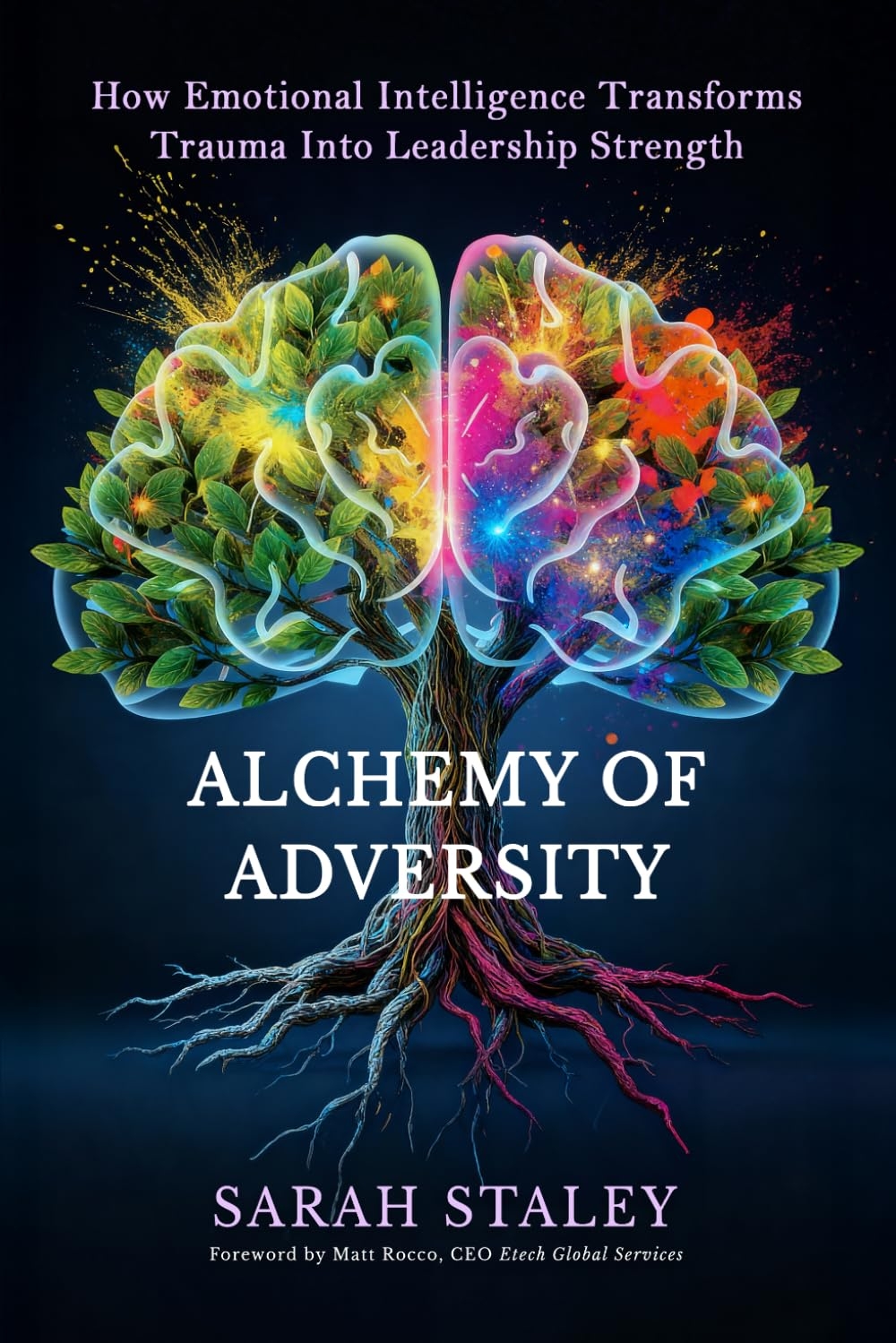
‘Alchemy of Adversity’ is the new leadership book by Sarah Staley. Photo: Amazon

Book Spotlight: Alchemy of Adversity: How Emotional Intelligence Transforms Trauma into Leadership Strength

By Sarah Staley

At some point, every leader will face adversity. It may arrive as personal loss, professional disruption, organizational crisis, burnout, or collective uncertainty. However it appears, adversity reshapes identity, alters decision-making, and tests the stability of those responsible for guiding others. (Amazon, 2026)

The question is not whether hardship will intersect with your leadership—it is whether you will be prepared for what it exposes.

Synopsis

In Alchemy of Adversity, Sarah Staley explores how trauma and high stress affect the brain, fragment internal stability, and quietly influence how leaders show up under pressure. Drawing from neuroscience, emotional intelligence research, and lived leadership experience, she reveals why resilience is often misunderstood.

True strength is not about pushing through. It is about integration, the disciplined process of turning toward disruption, regulating under stress, and rebuilding from clarity rather than reactivity.

This book offers practical frameworks to help leaders:

  • Recognize hidden fragmentation before it impacts performance
  • Strengthen emotional regulation under extreme pressure
  • Rebuild trust across teams following a crisis
  • Guide organizations through adversity without burning out in the process

In a world marked by volatility, burnout, and collective strain, leadership can no longer rely on endurance alone. It requires self-awareness, steadiness, and the capacity to transform hardship into strategic strength.

If you lead people, this is not optional work. It is foundational.

Adversity is inevitable. Whether it weakens your leadership or refines it is not.


About the Author

Sarah Staley is a human resources and organizational development leader, executive coach, and leadership development practitioner whose work sits at the intersection of individual behavior and organizational systems. Her perspective on leadership is shaped by years of working closely with leaders at all levels, supporting personal growth while navigating the realities of performance, culture, and change inside complex organizations.

Sarah’s experience spans both the human and structural sides of leadership. She has partnered with leaders and teams through organizational change, cultural shifts, leadership development initiatives, and moments of uncertainty where trust, clarity, and emotional steadiness matter most. Her work reflects a deep understanding of how leadership decisions ripple through people, teams, and systems over time.

Through her work in HR, organizational development, and executive coaching, Sarah continues to support leaders who want to lead the whole person while building cultures where accountability, performance, and wellbeing coexist.


Post-WWI Trauma Meets Classic Detective Noir: ‘No Saints Only Killers’ Review

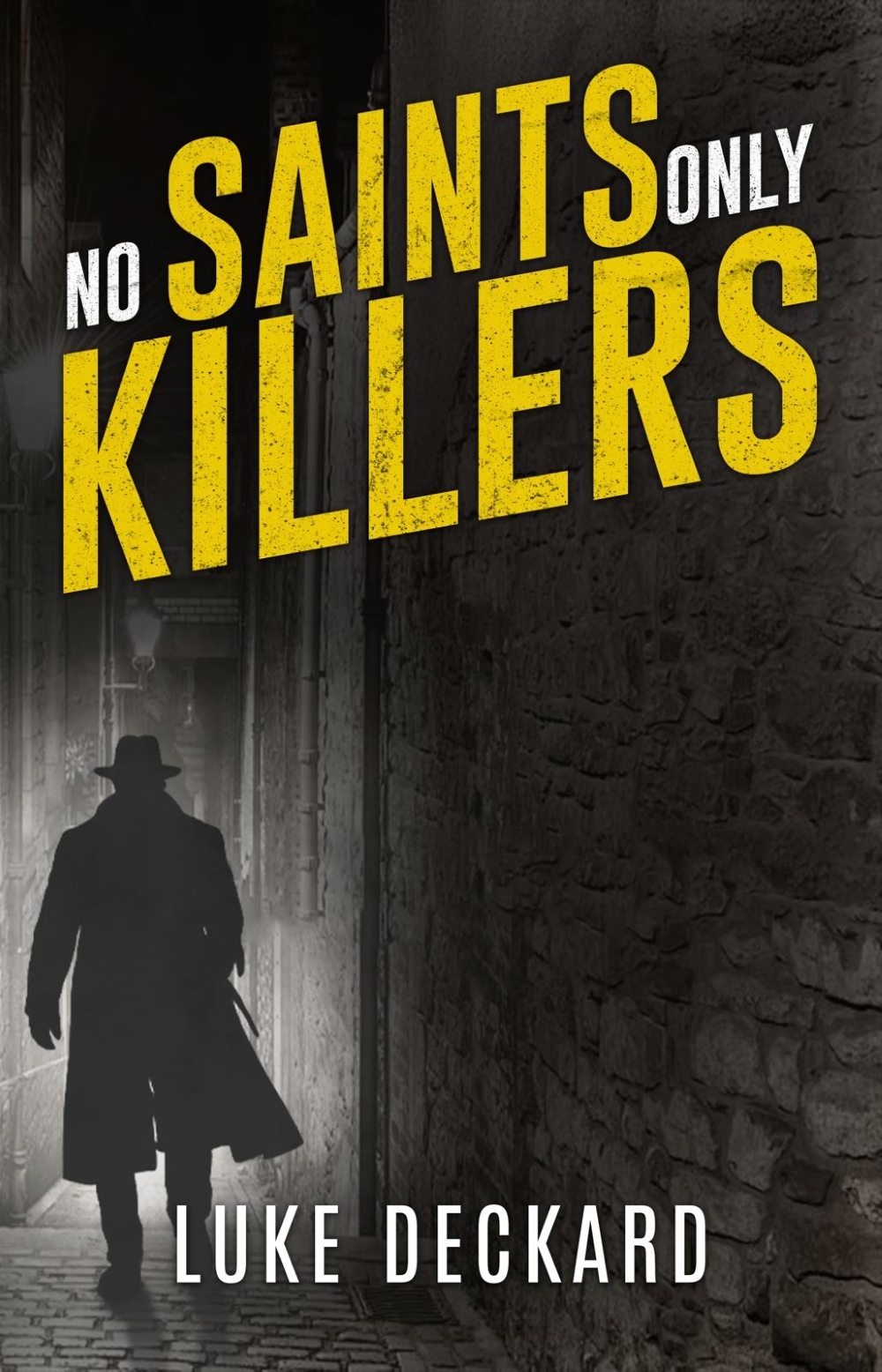
‘No Saints Only Killers’ by Luke Deckard is 1920s post-war nor at its finest. Photo: Paste Creative Book Tours, used with permission.

Book Review: No Saints Only Killers by Luke Deckard

Part of Paste Creative Book Tours

The Story

Logan Bishop is an American war-damaged private investigator living in London in 1922. On a cold Monday morning, he returns to his modest home to find a postcard in the mail from his estranged father, Reverend Daniel Bishop of Chicago. He’s in town and needs to meet up with Logan to talk about important matters.

Logan hasn’t heard from him in over a decade, and for good reason. Daniel was abusive to Logan throughout his childhood and Logan equates contacting him with being back at war. Reluctantly, he calls the hotel room. Daniel sounds desperate and paranoid, pleading for Logan’s help with an urgent matter. But before he can explain, the line goes dead after what sounds like a violent confrontation.

Before slipping into a coma, Daniel leaves Logan with a desperate plea: find Greta Matas, a woman tied to his past, before she’s killed.

Logan heads to Edinburgh in search of answers, but from the moment he arrives, nothing adds up:

  • Greta is missing.
  • Her son is wanted for murder and on the run.
  • Logan is being watched—by the police, by gangsters, and by men who will do anything to keep the truth buried.

As Logan encounters police officers, gangsters, and dangerous secrets, his investigation becomes both a hunt for the truth and a search for personal redemption… provided he doesn’t end up dead first.

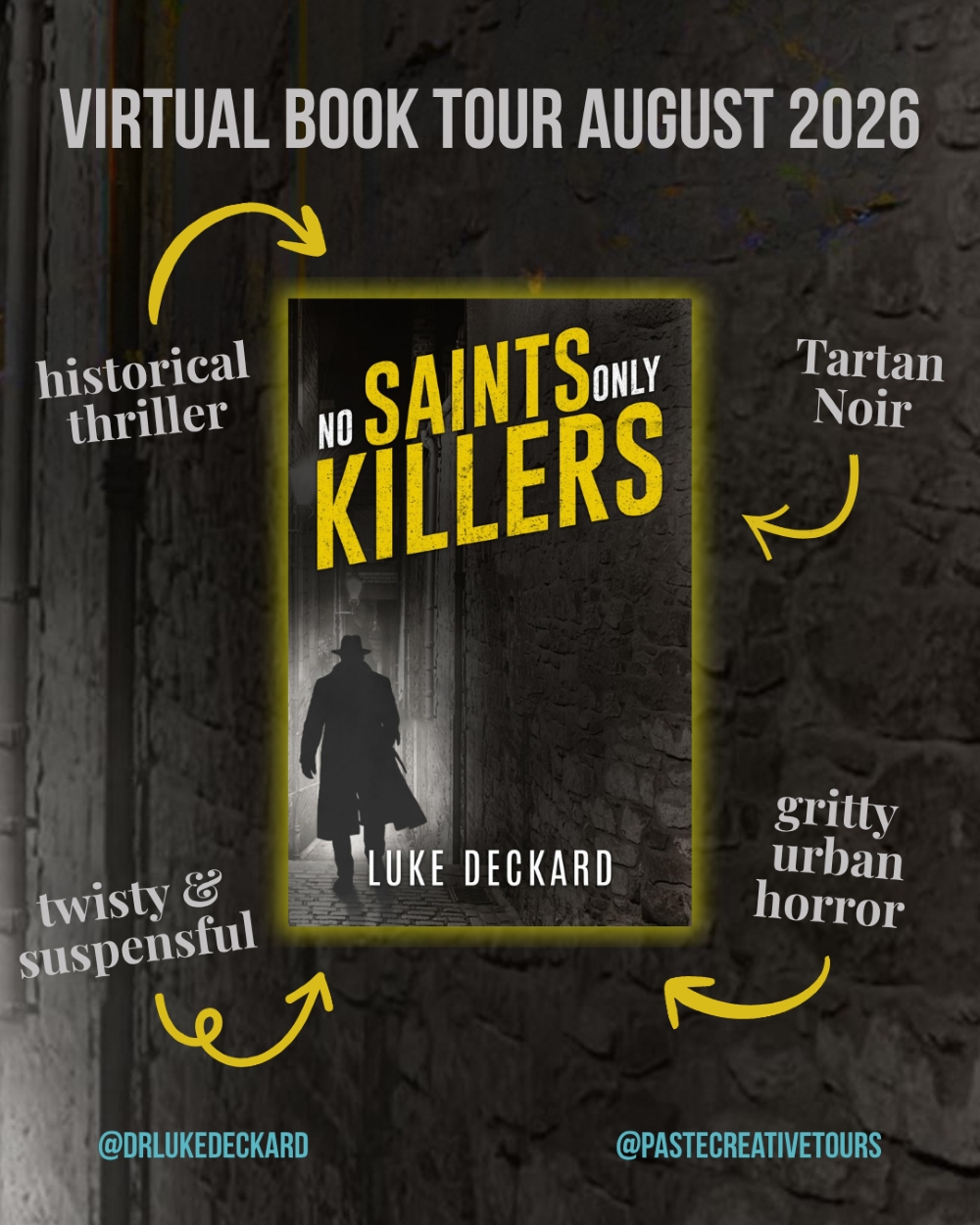
Photo: Paste Creative Book Tours

Get your copy of ‘No Saints Only Killers’ today!


Review

Set against the backdrop of 1922 London and Edinburgh, No Saints Only Killers delivers a sharp and atmospheric slice of post-World War I noir. The novel follows Logan Bishop as he is forced out of his isolated routines by the brutal attack on his estranged father, launching him into a deadly, fog-shrouded investigation to find a missing woman from his father’s past.

Character Analysis

Logan Bishop is a complex and deeply flawed protagonist who embodies classic hardboiled detective tropes while remaining grounded and human. As a former military sniper struggling with severe shell shock and a crippling morphine addiction, Logan’s willingness to pursue the mysterious Greta Matas reveals a stubborn sense of loyalty beneath his damaged exterior. His troubled relationship with his father gives the story personal stakes, driving Logan into dangerous territory despite his instincts to stay hidden.

Core Themes

  • Trauma and Disillusionment: The shadow of the Great War hangs over every chapter, illustrating the psychological scars left on a generation trying to numb their pain in the early years of the Jazz Age.
  • Systemic Corruption: The narrative explores the dark underbelly of 1920s Britain, exposing a world where institutions offer no salvation and power rests in the hands of ruthlessly corrupt forces.
  • Moral Ambiguity: True to its title, the novel demonstrates that in a broken society, absolute virtue is an illusion and everyone is navigating varying shades of grey.

“‘You want compassion?’ I wanted to laugh. ‘There are no saints in this world, only killers.’”

Style & Tone

In true noir fashion, the story is told entirely through Logan’s first-person perspective. It’s fast-paced, easy to read, and packed with plot twists around every corner. The prose balances gritty edge with vivid, poetic language:

“Two teardrops landed on the table and exploded. I crushed my eyes shut and inhaled as I pushed Tim and the hate I had for myself to the back of my mind.”

Final Verdict

Overall, No Saints Only Killers by Luke Deckard expertly combines historical mystery and postwar trauma, successfully transplanting gritty American noir into 1920s Britain. With its complex protagonist, high stakes, and dark atmosphere, readers who enjoy historical crime fiction and hard-boiled detectives will find this one hard to put down.

“Maybe I was a sucker for her pretty face. Maybe my motivation was shallow. I don’t know. I wanted to believe her. I also wanted to believe that maybe there was something between us, which possibly made me ignorant, or foolish.”

Rating: 5 out of 5.

About the Author

Luke Deckard is the author of No Saints Only Killers, which was shortlisted for the Amazon New Voices Awards and a finalist at Bloody Scotland’s Pitch Perfect. He is the co-host of the CINEMA SLEUTHS podcast, a reviewer for Get Your Comic On, and a creative writing mentor at the University of Westminster.

Photo: Paste Creative Book Tours

**Thank you to Stephanie Caruso, Paste Creative Book Tours, and Luke Deckard for the gifted copy for review consideration. I haven’t been compensated for this review and all views and opinions expressed are my own.

Book Spotlight: ‘Operation Medusa’ by Jake Greco

Operation Medusa – a high stakes geopolitical suspense novel by Jake Greco. Photo: Amazon

Book Spotlight: Operation Medusa (Book 1)

By Jake Greco

Synopsis

History’s wounds never fully heal — and in the wrong hands, they can start a war.

From the creator of the Specters of Athena universe comes a gripping new military thriller saga that blends real-world history, relentless action, and the razor’s edge of modern geopolitics. (Amazon, 2026)

When Greece and Turkey collide in a dangerous dance of brinkmanship, the conflict is fought not only in contested waters and borderlands, but also in intelligence rooms, diplomatic corridors, and the shadows where truth is the first casualty.

At the heart of the series is Nikolas “Strix” Andros — a battle-tested Greek operative whose past in black operations and NATO counterterrorism leaves him uniquely suited for the high-stakes games being played in the Aegean. Alongside Command Sergeant Major Yakovos Rousso, Strix faces provocations by air, land, and sea, each one threatening to ignite a wider war neither side can fully control.

Told through multiple perspectives — Greek, Turkish, and NATO — Operation Medusa combines the adrenaline of modern special operations with the deep resonance of generational history. Inspired in part by the author’s own Greek heritage and the stories of family members who lived through siege, hunger, and occupation, the series honors the resilience of a people while delivering page-turning suspense.

If you crave military thrillers with authentic action, layered political stakes, and characters forged in the crucible of history, Operation Medusa will keep you reading deep into the night.

Other Books in the Series


About the Author

Jake Greco grew up in Arizona and is a desert rat at heart. His father, a WWII veteran, taught him to shoot at a young age and fueled his lifelong passion for firearms and adventure. These early life experiences have molded him into a versatile storyteller whose works span the full spectrum of thriller and suspense genres.

A lifelong admirer of the Southwest’s rugged beauty, Jake weaves the stark landscapes and complex characters of the region into his novels. His stories often feature heroes and antiheroes grappling with morality, loyalty, and the unpredictable twists of fate. From shadowy desert hideouts to the tense corridors of power, his tales explore the human condition under extraordinary pressure, reflecting both the fragility and resilience of the human spirit.

Book Review: ‘Natural Intelligence & the Logic of Consciousness’ by Antonio Damasio

Antonio Damasio explores consciousness and interoception in his new book ‘Natural Intelligence & the Logic of Consciousness.’ Photo: Penguin Random House

Book Review: ‘Natural Intelligence & the Logic of Consciousness’

By Antonio Damasio

Synopsis

Throughout his illustrious, decades-long career, Antonio Damasio has been at the leading edge of science’s enduring quest to unravel the mysteries of the human mind. Now, drawing on a lifetime of groundbreaking research as well as the newest findings of neurobiology, Damasio seeks to move the debate about the origins of consciousness from the world of high-level cognition and abstract reasoning into the wondrous realm of interoception—the human body’s own internal monitoring system.

A probing synthesis of neurobiology, evolutionary science, and philosophy from one of the most notable leaders in his field, Natural Intelligence & the Logic of Consciousness offers readers a scientifically rigorous and profound re-examination of what it means to be alive and aware. (Penguin Random House, 2026)

It will be released on September 15 and is available for pre-order.

Book Contents

  • Beginnings
  • Part I: The Problem of Generating Consciousness and a Sketch of Possible Solutions
  • Part II: Deeper Into the Solution
  • Part III: Now That We Know
  • Part IV: Afterthought

Review

Antonio Damasio’s Natural Intelligence & the Logic of Consciousness is a fascinating exploration of one of humanity’s oldest questions: What gives rise to consciousness? Building on decades of pioneering research in neuroscience, Damasio challenges conventional theories by arguing that consciousness begins not with complex thought or language, but with the body’s internal regulation system, known as interoception.

The book’s central insight is that homeostatic feelings—such as hunger, thirst, pain, comfort, and well-being—form the biological foundation of subjective experience. Rather than treating consciousness as an abstract cognitive achievement, Damasio presents it as an evolutionary solution that helps living organisms survive and thrive. This perspective offers a compelling bridge between neurobiology, philosophy, and evolutionary science.

Beyond explaining the origins of consciousness, Damasio broadens the discussion to examine whether simpler life forms, such as plants and bacteria, exhibit primitive forms of sentience. He also explores how homeostasis influences human culture, politics, religion, and commerce, while thoughtfully considering the promises and limitations of artificial intelligence.

“…there is no guarantee that AI tools will remain as docile servants in the hands of their human owners. The possibility of their gaining independence, even if only momentarily, is certainly a reason for worry.”

His analysis raises important questions about whether machines can truly replicate conscious experience or merely imitate its outward appearance.

Key Chapter Highlights

  • Chapter 9: Examines how feelings developed before words and numbers, and how consciousness developed early to help guide evolution. Even though most homeostatic regulation occurs nonconsciously, some of it remains under our conscious control.
  • Chapter 11: Breaks down the core science behind consciousness—specifically interoception, or the ability to sense, interpret, and integrate signals from inside your body.
  • Chapter 18: Explores the science behind pain and nausea. Damasio explains how nausea serves as another vital bodily alert system designed to prevent damage from ingesting toxic molecules.
  • Chapter 22: Outlines his theories regarding artificial intelligence. Damasio posits that AI is fundamentally neutral to good because it stems from human innovation, but cautions that if the humans behind its creation have malicious intent, the technology will reflect those motives.

Final Verdict

Although the scientific concepts occasionally demand careful reading, Damasio’s arguments remain engaging, logical, and thought-provoking. Readers interested in neuroscience, cognitive science, philosophy of mind, or the future of AI will find this book both intellectually stimulating and deeply rewarding.

Natural Intelligence & the Logic of Consciousness is a profound, accessible examination of the relationship between body, brain, and awareness that challenges readers to rethink the very nature of intelligence. Damasio delivers a compelling argument that feeling is the logic of consciousness. For anyone seeking to understand the deep biological origins of human experience, this is a definite must-read.

“Poets understood, long before neurobiologists ever could, that the glories of passionate love and the sufferings of love gone astray could be legitimately described in physiological terms, even though the physiological details are not exactly the same.”

Rating: 4 out of 5.

About The Author

Antonio Damasio is University Professor, David Dornsife Professor of Neuroscience, Psychology, and Philosophy, and director of the Brain and Creativity Institute at the University of Southern California, Los Angeles. Damasio is a member of the National Academy of Medicine and a fellow of the American Academy of Arts and Sciences as well as the author of Descartes’ Error, The Feeling of What Happens, Looking for Spinoza, Self Comes to Mind, The Strange Order of Things, and Feeling & Knowing, all of which have been published in translation and are taught in universities throughout the world.


** Thanks to Michael Goldsmith and Penguin Random House for the gifted ARC for review consideration. I haven’t been compensated for this review and all views and opinions expressed are my own.

Looking for Your Next Dark Speculative Read? Try ‘Soul or Keep’

‘Soul or Keep’ is Chad Taylor’s debut novel. Photo: Amazon

Book Review: Soul or Keep by Chad Taylor

Genre: Dark Speculative Fiction / Occult Thriller

Publisher: Alien Buddha Press

Synopsis

Nathaniel “Nate” Simpson is a truck driver trapped between unexplained blackouts, sleepwalking episodes, and the lingering effects of a spell cast long ago during Hurricane Susan to pull him out of a coma. To manage his memory loss, Nate relies on meticulous note-taking, especially around his home life with his girlfriend, Rebecca, and her grandmother, Evelyn, who recently moved in. Routine tasks come easy, but any new, non-repetitive information slips through his fingers.

The slight memory loss soon spirals into something far darker, stranger, and deeply addictive.

Nate’s uneasy reality shatters completely when he receives a cryptic, threatening message from a woman named Tammie:

“Meet me at Doug’s Waffles 143 Maple Court. We have some catching up to do. Unless you want me to call your girlfriend’s business phone instead. Rebecca’s Wedding Planning isn’t it?”

Cornered, Nate has no choice but to meet her to find answers. He is thrust into a world of fog-dense streets, hypnotized employees, and power-hungry mystics seeking to ascend to warlock status. At the center of it all is a game called Soul or Keep that lingers like a curse in the bloodstream. As Nate struggles to separate truth from illusion, he must free himself from spiritual bondage to save Rebecca and their unborn child before their souls are claimed.

Get your copy of Soul or Keep today!


Review

If you’re searching for a supernatural thriller that seamlessly blends psychological horror, dark fantasy, and occult mystery, Chad Taylor’s debut novel Soul or Keep is a compelling read. Packed with eerie atmosphere and emotionally grounded stakes, it keeps readers questioning reality from start to finish.

Unreliable Narrators & Character Dynamics

Nate is a deeply sympathetic and well-developed protagonist. His fear, determination, and unwavering love for his family make him instantly relatable. However, his internal battle with memory loss creates a fascinating layer of psychological suspense—his untrustworthy perceptions make him an inherently unreliable narrator.

The supporting cast amplifies the novel’s mounting paranoia and supernatural danger:

  • Rebecca: A loving, supportive partner who carries trust issues from a troubled past, making Nate’s erratic behavior a constant strain on their relationship.
  • Donnie: Nate’s brother, whose desperate attempt to help with the sleepwalking—literally strapping Nate to his bed—fails when Nate mysteriously breaks free.

Vivid Prose & Central Themes

Taylor’s descriptive prose brings the uncanny world to life with precise, vivid imagery:

“He then popped out of the window with a look of concern while the yellow light blanketed his mocha colored skin which appeared almost like clay.”

At its core, Soul or Keep tackles heavy thematic ground:

  • Fate vs. Free Will & Destiny: The mysterious game Soul or Keep serves as both the central conflict and a dark metaphor for human agency, questioning whether destiny is preordained or something to be reclaimed.
  • Fractured Identity & Memory: Exploring how memory shapes who we are, and what happens when those foundations crumble.
  • Sacrifice & Love: Positioning love as the ultimate form of resistance against supernatural control.

Final Verdict

Soul or Keep is a haunting, moody debut that establishes Chad Taylor as an exciting new voice in dark speculative fiction. Fans of supernatural horror, atmospheric thrillers, and occult mysteries will be captivated by its memorable characters and lingering, haunting conclusion.

“In the game of life, every action has a ripple effect.”

Rating: 4 out of 5.

About the Author

Chad Taylor is a writer and artist based in Cincinnati, Ohio. He studied Writing Studies at Northern Kentucky University and has published indie comics such as The 5ivefooter and Drips under his Uni5icomics banner. Soul or Keep is his debut novel.


** Thank you to Chad Taylor for the gifted copy for review consideration. I haven’t been compensated for this review and all views and opinions expressed are my own.

The Real Cost of the American Dream: A Review of Craig Yorke’s ‘Steep’

‘Steep:’ is the inspiring memoir by Craig Yorke. Photo: Barnes & Noble

Related Post: Book Spotlight: ‘Steep: A Black Neurosurgeons’ Journey’ by Craig Yorke.


Book Review: Steep: A Black Neurosurgeon’s Journey by Craig Yorke

Steep: A Black Neurosurgeon’s Journey by Craig Yorke is an inspiring memoir that explores the sacrifices, resilience, and determination required to overcome adversity. Yorke chronicles his remarkable journey from a struggling Boston neighborhood to becoming a respected neurosurgeon in the American Midwest. What began as a personal letter to his sons unfolds as a candid life narrative: while Yorke has gained immense wisdom, he refrains from lecturing or preaching, and, above all, he refuses to see himself as a victim.

An Uncompromising Opening

The narrative opens with Dr. Yorke taking a middle-of-the-night emergency call for a severe motorcycle accident. Covering Topeka’s hospitals and the surrounding region every other night and weekend alongside his daytime practice, he rushes into the ER. As the nurse cuts away the patient’s t-shirt, a prominent WHITE POWER tattoo covering the man’s chest is revealed—setting the stage for a story deeply rooted in composure, duty, and professional detachment.

This intense opening flashes back to his childhood in Boston, when a young Yorke was rushed to the ER after accidentally eating poisoned bread left behind the refrigerator for rats. Known mostly through family lore, the incident left a lifelong mark, he still recoils at the mere memory of Ipecac.

As the only child of Dorothy and Craig Sr., he grew up sickly, struggling with asthma and a clubbed right foot. Throughout the book, Yorke explores how his parents’ backstories shaped their parenting style, leading into his school years, surgical career, eventual retirement, and the enduring lessons of his journey.

Table of Contents

  1. Stealth
  2. Crucible
  3. Educated
  4. The Better Angel
  5. Fledgling Pillars
  6. Peaks and Valleys
  7. Twilight of Enterprise
  8. New Eyes

Chapter Highlights

Chapter 6: Peaks and Valleys

Yorke detail the launch of his independent practice with a close friend, revisiting memorable cases, including a young neighbor who developed a life-threatening brain clot. Most insightful are his encounters with uninsured patients: while accustomed to delivering difficult medical news, he found himself unprepared for the devastating financial catastrophes his patients faced. Even when waiving his own professional fees, the external medical costs wreaked havoc on their lives.

Chapter 7: Twilight of Enterprise

Here, Yorke candidly recounts facing a legal malpractice suit after failing to diagnose a fractured larynx in a patient. Though the lawsuit ultimately failed, the emotional impact was severe. As Yorke reflects:

“The ordeal was a blow to a kid whose identity was yoked to his confidence.”

Core Themes & Takeaways

Yorke writes with exceptional honesty and humility, revealing moments of doubt and self-reflection that make his story deeply relatable. His path underscores the importance of discipline, education, and refusing to let circumstances dictate one’s future. The narrative thoughtfully balances professional achievement against personal fulfillment, demonstrating that compassion and empathy are just as vital in medicine as technical expertise.

While Yorke’s identity as a Black surgeon in a predominantly white field provides crucial context, Steep ultimately moves beyond a simple critique of systemic bias. Instead, it serves as a raw, honest exploration of the heavy cost of high achievement and the quiet sacrifice required by the American Dream.

At its core, the memoir delivers profound lessons on resilience, identity, and personal reckoning:

  • The Price of Ambition: Success often exacts a steep personal toll, demanding emotional compartmentalization, strain on relationships, and constant self-reliance.
  • Resilience Over Circumstance: Roots do not define limits; discipline and laser-focused perseverance can bridge the gap between systemic disadvantage and elite achievement.
  • Reconciling the Past: True fulfillment requires making peace with where you came from rather than attempting to outrun your origins.

Final Verdict

Overall, Steep is an engaging, introspective, and essential read for anyone navigating their own steep climb. It offers a poignant reminder that reaching the peak is only half the battle, retaining your humanity is the rest.

“We neurosurgeons are caricatured as filled with conceit, short on empathy. And there’s truth in that cartoon. But hubris is tough to maintain while completing and signing your patient’s death certificate.”

Rating: 4 out of 5.

** Thank you to Wes Seely and PR by the Book for my gifted ARC for review consideration. I haven’t been compensated for this review and all views and opinions expressed are my own.

Essential Reading for New Clinicians: ‘The Pediatric PT Playbook’ Book Spotlight

‘The Pediatric PT Playbook’ is the ultimate pediatric pt survival guide. Photo: Amazon

Book Spotlight: The Pediatric PT Playbook

A Practical Guide to Clinical Reasoning for Students and New Clinicians

By Kyan Sahba, PT, DPT, PhD

Your peds clinical is coming, and you don’t feel ready. That’s exactly why this book exists.

Physical therapy school teaches you the science. It doesn’t teach you what to actually do when a two-year-old won’t cooperate, a parent is watching your every move, and your clinical instructor (CI) is waiting for you to take the lead. (Amazon, 2026)

The Pediatric PT Playbook was written for that exact moment.

This isn’t another dense textbook, it’s the clinical companion you wish you had before day one of your pediatric rotation. It’s built around how real pediatric PT actually works, not just how it’s described in a lecture hall.

What’s Inside

  • Structured Frameworks: Master clinical reasoning across every pediatric setting—outpatient, school-based, NICU, acute care, and home health.
  • CI Expectations: Learn exactly what your clinical instructor expects to see from you and how to deliver it with confidence.
  • Smart Goal Writing: Write goals that actually make sense in a pediatric context, including educationally relevant goals.
  • Family Communication: Discover real-world communication strategies that don’t make you sound like a reading textbook.
  • Clinical Red Flags: Fast-track your assessment skills with clear breakdowns of movement quality, symmetry analysis, and red flags.
  • Documentation Made Easy: Master SOAP notes and documentation tailored specifically for pediatric settings.

Who Is This Book For?

Written by a pediatric PT, educator, and researcher who has trained students across real clinical settings, this guide targets the exact gap between classroom theory and clinic reality.

This playbook is essential reading for:

  • Doctor of Physical Therapy (DPT) Students preparing for or currently in a pediatric rotation.
  • New Grad PTs stepping into their first pediatric role.
  • Experienced Clinicians transitioning into pediatric practice.

Whether you’re two weeks out from your first peds rotation or already in the thick of it, this book will help you feel more confident, prepared, and effective from day one.


About the Author

Kyan Sahba, PT, DPT, PhD is a pediatric physical therapist, researcher, and educator with experience spanning home health, school-based practice, outpatient pediatrics, and pediatric oncology. She earned her PhD in Physical Therapy and is dedicated to bridging evidence-based research with real-world clinical practice.

Beyond her research and clinical work, she founded the Barry Blue Foundation in honor of her parents. The foundation supports families facing financial hardships due to cancer through a series of children’s books that teach kindness, courage, and emotional resilience.

Book Review: ‘Artemis’ by Andy Weir – Life on the Moon & High-Stakes Heists

‘Artemis’ by Andy Weir is a sci-fi crime story set on the Moon. Photo: Barnes & Noble

Book Review: Artemis by Andy Weir

Synopsis

Jasmine “Jazz” Bashara lives in humanity’s first lunar colony, Artemis. She never signed up to be a hero—she just wanted to get rich. Not crazy, eccentric-billionaire rich, like many of the visitors to Artemis, but rich enough to move out of her coffin-sized apartment and eat something better than flavored algae. Rich enough to pay off a debt she’s owed for a long time. (Barnes & Noble, 2026)

When a chance at a lucrative heist presents itself, Jazz can’t say no. But engineering the perfect crime is just the start of her problems, because that little heist is about to land her in the middle of a conspiracy that threatens the future of Artemis itself.

Trapped between competing forces, pursued by a killer and the law alike, she’ll have to hatch a truly spectacular scheme to have a chance at staying alive and saving her city. Jazz is no hero, but she is a very good criminal.

Review

Artemis begins with Jazz reeling from failing her EVA exam, which she needs to join the EVA Guild. Members of the guild lead groups of tourists across the lunar surface and earn a significantly better living. She tries to talk her way into passing, but Bob Lewis, former US Marine and head trainer, doesn’t budge. He tells her to try again and focus on the quality of her equipment.

The story centers around Jazz, a clever, sarcastic porter and small-time smuggler who dreams of escaping poverty. She’s an engaging protagonist whose intelligence, resilience, and moral ambiguity make her both flawed and relatable. Unlike the idealistic heroes often found in science fiction, she survives through quick thinking, technical expertise, and sheer determination. Her growth from a self-serving opportunist to someone willing to risk everything for others forms the emotional core of the story.

“How dare you call me lazy? I’d come up with a scathing retort but, meh, I’m just not motivated.”

Weir once again showcases his talent for making complex engineering and scientific concepts accessible without slowing down the narrative pace. Themes of survival, greed, class inequality, and redemption are woven throughout the novel, highlighting the real-world challenges of building a human society beyond Earth.

Weir’s signature worldbuilding shines brightest here:

  • Lunar Economics: The realistic financial friction between tourists, workers, and corporations.
  • Life-Support Mechanics: Detailed systems keeping the dome breathable and safe.
  • Industrial Realism: Meticulously researched aluminum-smelting processes that anchor the plot.

The fast-paced plot keeps the tension high as Jazz relies on her sharp technical instincts and criminal ingenuity to pull off a spectacular multi-stage scheme.

However, Jazz’s dialogue and internal monologue can feel somewhat forced and juvenile at times, occasionally undermining the tension. While it doesn’t quite match the sheer survivalist charm of Mark Watney’s journey in The Martian, Artemis still delivers a fun, fast-moving sci-fi crime caper.

The Bottom Line

Artemis by Andy Weir is a fast-paced science fiction thriller that blends suspense, humor, and real-world science into an entertaining lunar adventure. If you enjoy hard science paired with high-stakes action, it is well worth the trip to the moon.

“People will trust a reliable criminal more readily than a shady businessman.”

Rating: 4 out of 5.

Get your copy of Artemis today!


About the Author

Andy Weir built a career as a software engineer until the success of his first published novel, The Martian, allowed him to live out his dream of writing full-time. He is a lifelong space nerd and a devoted hobbyist of subjects such as relativistic physics, orbital mechanics, and the history of manned spaceflight.


Bonus

If you enjoyed the fast-paced survival, witty problem-solving, and high-stakes criminal plots of Andy Weir’s Artemis, these sci-fi heist and mystery novels offer a similar blend of technical intrigue and fast-paced schemes.

High-Stakes Sci-Fi Heists

The Quantum Thief by Hannu Rajaniemi features post-human master criminal Jean le Flambeur breaking out of prison to pull off an impossible heist across a high-tech moving city on Mars.
Chasm City by Alastair Reynolds follows a security operative hunting a ruthless killer through a bizarre, virus-corrupted sci-fi metropolis while navigating high-stakes crime networks.

Space-Bound Sci-Fi Mysteries

Six Wakes by Mur Lafferty combines a locked-room murder mystery with cloning technology as a spaceship crew wakes up to find their previous bodies murdered and their recent memories wiped.
Leviathan Wakes by S.A. Corey pairs a hard-boiled detective on an asteroid belt with an ice-miner captain as they unravel a system-wide conspiracy triggered by a missing girl.

Which Should You Pick?

For an intricate, mind-bending criminal heist set in a futuristic solar system, go with The Quantum Thief.
For a claustrophobic, locked-room whodunit packed with survival tension, start with Six Wakes.
For a grounded space-noir investigation with vast geopolitical stakes, choose Leviathan Wakes.

Book Spotlight: ‘Resilient in Business’ by Jad Atwe – The Ultimate Founder’s Guide

‘Resilient in Business’ by Jad Atwe. Photo: Barnes & Noble

📚Book Spotlight: Resilient in Business: The Founder’s Roadmap to Lead Through Uncertainty and Win the Long-Term Game

By Jad Atwe

In today’s economy, founders are under relentless pressure. The stakes are high, the path forward isn’t always obvious, uncertainty is debilitating, and outcomes are unpredictable. All of this takes a huge toll on the single quality that will actually see a founder through to success: resilience. (Amazon, 2026)

In this timely and practical book, entrepreneur and business coach Jad Atwe delivers a decisive framework for building the capacity to navigate competing demands and boost your entrepreneurial resilience.

Based on his proprietary Resilient in Business Operating System™, the book guides you through a transformative process to position your business for the success you know is possible—all by developing the capacity to:

  • Rise above the chaos
  • Move beyond survival mode
  • Step into sustainable business leadership

If you’re a founder carrying too much, feeling the cracks forming beneath your feet, and refusing to let pressure dictate your future, this book is for you. It’s time to discover the edge that will help you win the long game.


Ready to Read?

Resilient in Business is available now. If you’re looking to transform how you lead under pressure, grab your copy today and start building your roadmap to long-term success.


About the Author

Jad Atwe was once on the verge of losing everything. After leaping into a general contracting business that leveraged his engineering background, sudden policy and economic shifts forced him into uncertainty, nearly turning his aspirations to dust.

Determined to deconstruct what it truly takes to navigate volatility and “make it” in entrepreneurship, Jad spent years studying founder psychology, operational excellence, and the patterns that differentiate those who merely endure from those who thrive.

Having walked through storms that break most founders, he emerged with a clear understanding of entrepreneurial resilience—the inner operating system that allows leaders to build, lead, and scale under uncertainty.

Today, Jad speaks on entrepreneurial resilience and guides founders to lead through uncertainty, build reliable operations, and scale their companies without losing themselves in the process. He is the originator of the Resilient in Business Operating System™, designed to help founders move past what’s holding them back and break free from survival mode.


‘The Secret of Secrets’ Book Review: Dan Brown’s Most Ambitious Novel Yet

‘The Secret of Secrets’ by Dan Brown. Photo: Barnes & Noble

Related Post: Dan Brown’s ‘Origin’ Review: Where Science Meets Faith

📚 Book Review: The Secret of Secrets by Dan Brown

  • Author: Dan Brown
  • Genre: Thriller / Mystery / Speculative Fiction
  • Pacing: Fast & Cinematic
  • Audiobook Length: ~23 Hours (Hardcover: ~700 Pages)

📖 Synopsis

Robert Langdon, esteemed professor of symbology, travels to Prague to attend a groundbreaking lecture by Katherine Solomon, a prominent noetic scientist with whom he has recently begun a romantic relationship. She’s getting ready to publish a breakthrough book that contains explosive scientific discoveries about the nature of human consciousness, revelations that threaten to disrupt centuries of established belief. (Barnes & Noble, 2026)

When a brutal murder catapults the trip into chaos, Katherine suddenly goes missing and her manuscript disappears. Desperate to find the woman he loves, Langdon embarks on a thrilling race through the mystical landscape of Prague, ruthlessly hunted by a powerful organization and a chilling assailant sprung from the city’s ancient mythology.

As the action expands to London and New York, Langdon plunges into the dual worlds of futuristic science and historical lore, navigating a labyrinth of codes and symbols, and finally uncovering a shocking truth about a secret project that will forever change the way we think about the human mind.


📝 The Review

Dan Brown returns with another intellectually charged thriller in The Secret of Secrets, a breathless, high-stakes story that seamlessly combines ancient lore with cutting-edge science. Set against the atmospheric backdrops of Prague, London, and New York, it delivers the classic, fast-paced puzzle-solving fans expect while raising provocative questions about human potential.

🔍 Character Dynamics

The story centers around Harvard symbologist Robert Langdon, whose usual intellectual detachment is challenged by personal dangers. His romance with Katherine Solomon grounds the narrative, significantly raising the emotional tension. Langdon remains a compelling protagonist, balancing academic brilliance with humility and determination, and his personal tie to Katherine adds welcome depth to his character.

Katherine is equally engaging, portrayed as an intelligent and courageous scientist whose research into human consciousness challenges long-held religious and philosophical beliefs. She is far more than a simple damsel in distress; their partnership creates a refreshing dynamic, with both characters contributing equally to the unfolding mystery.

🧠 Core Themes

  • Science vs. Belief: The narrative continuously pits revolutionary neuroscience against rigid, established dogmas.
  • The Nature of Human Consciousness: Solomon’s findings explore whether the human mind holds untapped power capable of altering reality itself.
  • Mythology as Historical Truth: The story weaves Prague’s rich lore—including dark mythological guardians like the Golem—into modern technological secrets, suggesting that ancient myths often mask advanced truths.

“Brown has written a thought-provoking ride that will leave readers questioning the untapped boundaries of their own minds.”

As expected, Brown fills the narrative with cryptic symbols, historical references, and unexpected twists that keep readers hooked. While some plot developments stretch credibility, the intricate puzzles and cinematic pacing make them easy to forgive. With relentless momentum and a haunting antagonist, it’s a deeply compelling read.

🎧 Final Thoughts

Overall, The Secret of Secrets is an entertaining blend of history, philosophy, and speculative science that will satisfy longtime Dan Brown fans while offering newcomers an exciting introduction to Robert Langdon’s world.

At almost 700 pages (or nearly 23 hours on audiobook), it’s one of Brown’s longest books to date. The experience of reading the physical tome versus listening to the immersive narration will likely feel vastly different, but either way, it’s an adventure worth taking.

“Religions had learned long ago that a human mind facing the terrifying prospect of eternal nothingness would believe almost anything. Timor mortis est pater religionis, Langdon mused, recalling the ancient saying made famous by Upton Sinclair. Fear of death is the father of religion.”

Rating: 4 out of 5.

Get your copy of The Secret of Secrets today!


📚 The Robert Langdon Series (In Order)

  1. Angels & Demons
  2. The Da Vinci Code
  3. The Lost Symbol
  4. Inferno
  5. Origin
  6. The Secret of Secrets

✍️ About the Author

DAN BROWN is the author of several #1 bestselling novels, including The Da Vinci Code, one of the bestselling books of all time, as well as Origin, Inferno, The Lost Symbol, and Angels & Demons. His thrillers have captivated readers worldwide and sparked global intellectual debate. He is also the author of the bestselling children’s book Wild Symphony. Brown’s novels are published in 56 languages internationally, with over 250 million copies in print.