Book excerpt: ‘Act of Revenge: A Medical Thriller’ by John Bishop, M.D.

‘Act of Revenge’ is the third book in the Doc Brady Mystery series by John Bishop, M.D. It will be released on Thursday September 10, 2020. Courtesy photo: used with permission.

“Act of Revenge: A Medical Thriller”

By John Bishop, M.D.

Chapter 2
Excerpted from “Act of Revenge: A Doc Brady Mystery.” Copyright © 2020 by John Bishop M.D. All rights reserved. Published by Mantid Press.

Monday, February 10, 1997

“JIM BOB! Jim Bob? Can you hear me?”

I was stunned but not unconscious. My first concern was that I had sustained another head injury. I had been mugged a year and a half ago and had spent ten days in a coma after developing a subdural hematoma, a collection of blood between my brain and skull requiring surgery. The hair on my shaved head had taken seemingly forever to grow back out to a length and texture I could brush. I wasn’t prepared to go through all that again.

“I’m okay, I think,” I said to Mary Louise. She was kneeling down over me, skis off. “Thanks for not being in front of me. I might have hit you, too. Where’s the guy I ran into?”

“He’s up the hill. I’ll go check on him.” And with that, she headed back up the slope.

Since I had landed face down in the snow, I used my corduroy cap to clean off my goggles and face in an attempt to see what was going on. I was partially buried in the foot-high drift, but when I assessed that my extremities were intact and my vision was relatively normal, I managed to turn myself around.

I sat up and saw my wife kneeling down over the man I had run into twenty yards behind me. One ski was off, and the other was twisted about 45 degrees, half-buried in the snow. Unfortunately, his leg was still attached to it. My skis had come undone, and God only knew where they had landed. Probably in someone’s condo.

I had heard of a ski accident that occurred on the same slope wherein a crash between two skiers had resulted in a lost ski sailing down the hill and crashing through a picture window into the living room of a residence. No one was hurt, at least in the home, but I’m sure it gave them quite a start. And some decent kindling.

I abandoned my ski poles, which had still been attached to my wrists with their adjustable loops, and stepped up the hill to join Mary Louise and the unknown assailant. A thought crossed my mind that perhaps I was the unknown assailant. Whatever the situation, I hoped the man had experienced enough of a shock to render him an amnesiac but not unconscious or damaged.

“Are you okay?” Mary Louise was asking him repeatedly as I arrived on the scene. Several other skiers had gathered as well and had already placed their skis in the ground, tips up and crossed, the universal sign of an injury requiring the ski patrol’s attention.

The man was on his side. His eyes were open.

“Listen,” I said, “I’m a doctor. I need to check your pupils and your arms and legs. Don’t be frightened. Okay?”

He nodded.

His pupils reacted normally to light. I felt his neck.

“Any pain here?” I asked as I gently moved his cervical spine from side to side. “Any numbness? Arms or legs?”

He shook his head. “My leg . . . killing me.”

“I’m sure. I’ll get down there in a minute.”

The man’s arms, chest, head, spine, and right leg all seemed to be in working order. It was time to address the crucial issue.

“Listen,” I explained, “my name is Jim Brady. I’m an orthopedic surgeon from Houston. I need to check out this left leg and try to decide if you’ve got a fracture in your femur or tibia or if you’ve got a knee ligament injury. I may not be able to tell, but I’d like to try before the ski patrol arrives. Okay?”

“I don’t want you to move it. Hurts too bad.”

“Well, the medic will have to move it to get you onto the stretcher. Your leg’s kind of twisted out at an angle. If I can figure out what’s wrong, I may be able to make you more comfortable by moving it. Let me try.”

He nodded. I gently felt his femur, the thigh bone, with both hands. No pain. Same with the tibia and fibula, the two bones connecting the knee to the ankle. When I felt his knee, however, even through his bulky, waterproof ski pants, I could feel the enlarged joint. He winced.

“It’s your knee, probably a ligament tear. If I can get your ski off and straighten out the leg, you’ll feel a lot better. I want you to hang on for a minute.”

“Man, it’s killing me! Just leave it alone!”

I paused, then slid down toward his boot release, had Mary Louise support the ski to minimize the torque, and unsnapped his boot from the binding. He moaned for a second, but I quickly untwisted the leg, brought it parallel to the other, and laid it down.

“Damn it! I told you not to—huh. Feels better.”

“See,” I said, “you should have trusted me.”

“Sort of hard to trust a guy who runs you over, wouldn’t you say?”

I assumed amnesia wasn’t going to be a problem for him.

Two members of the ski patrol arrived on separate snowmobiles pulling stretchers. One of them had probably been intended for me. I was glad to decline it. I helped the medics get my victim onto the stretcher and bind him down to minimize the shock of the journey to Snowmass Ski Clinic. I felt obligated to accompany them.

“Are you by yourself? Is there anyone we can notify?” Mary Louise asked. “I’ll be glad to make a call. Whatever you need.”

“Guess you better call my wife, tell her I’m hurt. I hate to upset her, though.”

“Where are you staying?” she asked him.

“Wood Run Condos. Just down the hill. I was headed home.”

“So were we,” Mary Louise said. “Why don’t I just run by there. We’re at the Chamonix. You’re only a block or so away. How would that be?”

He nodded and sort of smiled. “That’d be real nice, ma’am. I’d appreciate

that.”

She looked at him for a minute, waiting. “I need your name and condo number,” she said patiently, like a schoolteacher waiting for a third grader to figure out the times tables.

“Oh, sure. Sorry. I’m Lou Edwards. Her name’s Mimi. We’re in 530 Wood Run. And thanks.”

“It’s the least I can do,” Mary Louise said, looking at me like she was very glad I was okay, but not happy that I had run over the poor man. I didn’t blame her.

John Bishop, M.D. has practiced orthopedic surgery in Houston, Texas, for 30 years. His Doc Brady medical thriller series is set in the changing environment of medicine in the 1990s. Drawing on his years of experience as a practicing surgeon, Bishop entertains readers using his unique insights into the medical world with all its challenges, intricacies, and complexities, while at the same time revealing the compassion and dedication of health care professionals.


Book review: ‘Act of Deception’ by John Bishop, M.D.

‘Act of Deception’ is the second novel in the Doc Brady mystery series by John Bishop, M.D. Courtesy photo, used with permission.

John Bishop M.D. is an orthopedic surgeon, keyboard musician and author of the beloved Doc Brady mystery series.  The series includes “Act of Murder,” “Act of Deception,” “Act of Revenge,” “Act of Negligence,” “Act of Fate” and “Act of Atonement.” Doc Brady is the protagonist and his fictional counterpart – an accomplished orthopedic surgeon with a talent for solving medical mysteries who moonlights as a blues musician. The series is set in the 1990s and features Houston and Galveston locales. In “Act of Deception,” Doc Brady, a Houston orthopedic surgeon, is being sued for medical malpractice because a mysterious infection caused a knee replacement to end up as an amputation.

In the second book in the Doc Brady mystery series, “Act of Deception,” the story takes place in 1995 and begins with Doc Brady waking up with the sweats again.  He is preoccupied with his impeding lawsuit even though it is not the first time he has been sued. Nothing in his notes or recollection of the event backs up the malpractice claim but he is determined not to settle even though everyone from his lawyer to his co-workers tell him it is the best thing to do. The case involves William Jones, a farmer whose treatment for severe arthritis in his right knee joint ended with an amputation.  Preparations for the trial begin to take a toll on him until he ends up in a coma after he is assaulted in a parking garage. There is also an ambulance chaser on the loose and no one knows where he is getting his information. As it turns out, Mr. Jones received treatment from a doctor covering for his usual doctor while he was out on vacation but the page that notated this in Mr. Jones’ medical record was missing, which is why no one was able to figure out what went wrong. In the end, after all the sleuthing and help from his family and friends, Doc Brady is exonerated and the hospital worker responsible for the medical records leak is fired.

This is another excellent medical novel from John Bishop M.D. and this time he combines legal drama and medical mystery. In this case, the mystery involves how one of his patients could have developed an infection that required an amputation. He almost gives away the ending when he mentions the missing medical records page, but not until the end does the reader find out why it was missing and who took it. The story is told in first person narrative which gives the reader an in-depth look into Doc Brady’s mind and the character development makes the characters real. With detailed explanations of the medical and legal issues, the balance between his personal and professional lives makes for fascinating storytelling. The final courtroom scene when Don Shaw, the plaintiff’s attorney, attempts to attack the witness when he realizes he is about to lose the case, is an exciting conclusion to the case:  “At the same time, Judge Barbara Woods deftly jumped out of her chair, hopped down to the witness stand, and got in front of the doctor. In the second or two it took for Shaw to reach the stand, she reached inside her robe and stood there, waiting for him, with the biggest handgun I had ever seen.” Even though it stands perfectly well on its own,  it would be best to read the first one in the series, “Act of Murder,” to get to know the characters better. As a big plus, there is a sneak peek at the third novel in the series: “Act of Revenge” at the end of this one.  “Act of Deception” is recommended for readers who appreciate an exciting mystery novel involving down to earth characters and intriguing plots.

*The author received a copy of this book for an honest review. The views and opinions expressed here belong solely to her.

Television adaptation: ‘Lovecraft Country’ by Matt Ruff

The television adaptation of Matt Ruff’s ‘Lovecraft Country’ is now on HBO. Photo: google

Matt Ruff is an American author of thriller, science fiction and comic novels, including “The Mirage,” “Bad Monkeys” “Fool on the Hill” “Set This House in Order” and “Lovecraft Country.” “Lovecraft Country” makes real the terrors of life in Jim Crow America and its lingering effects and combines historical fiction, pulp noir and Lovecraftian horror and fantasy.  It has been adapted into an HBO series by J.J. Abrams, Misha Green and Jordan Peele. Starring Jonathan Majors as Atticus, Jurnee Smollett as Letitia and Courtney B. Vance as George Freeman, it premiered on August 16 and follows Atticus as he joins up with his childhood friend Letitia and his Uncle George on a road trip across 1950s Jim Crow America in search of his missing father.

 “Lovecraft Country” is a dark fantasy novel that explores the topics of H.P. Lovecraft’s horror fiction and racism in the United States during the Jim Crow era as experienced by black science-fiction fan Atticus Turner and his family. Set in Chicago in 1954, when Atticus’ father goes missing, he sets off from Florida with Letitia and his Uncle George, publisher of “The Safe Negro Travel Guide,” to Chicago to try to locate him. On their journey, they encounter the terrors of white America and malevolent spirits that seem straight out of the strange tales that George loves to read. It is a blend of magic, power, hope and freedom that stretches across time and touches diverse members of two black families.

winterofthewolf
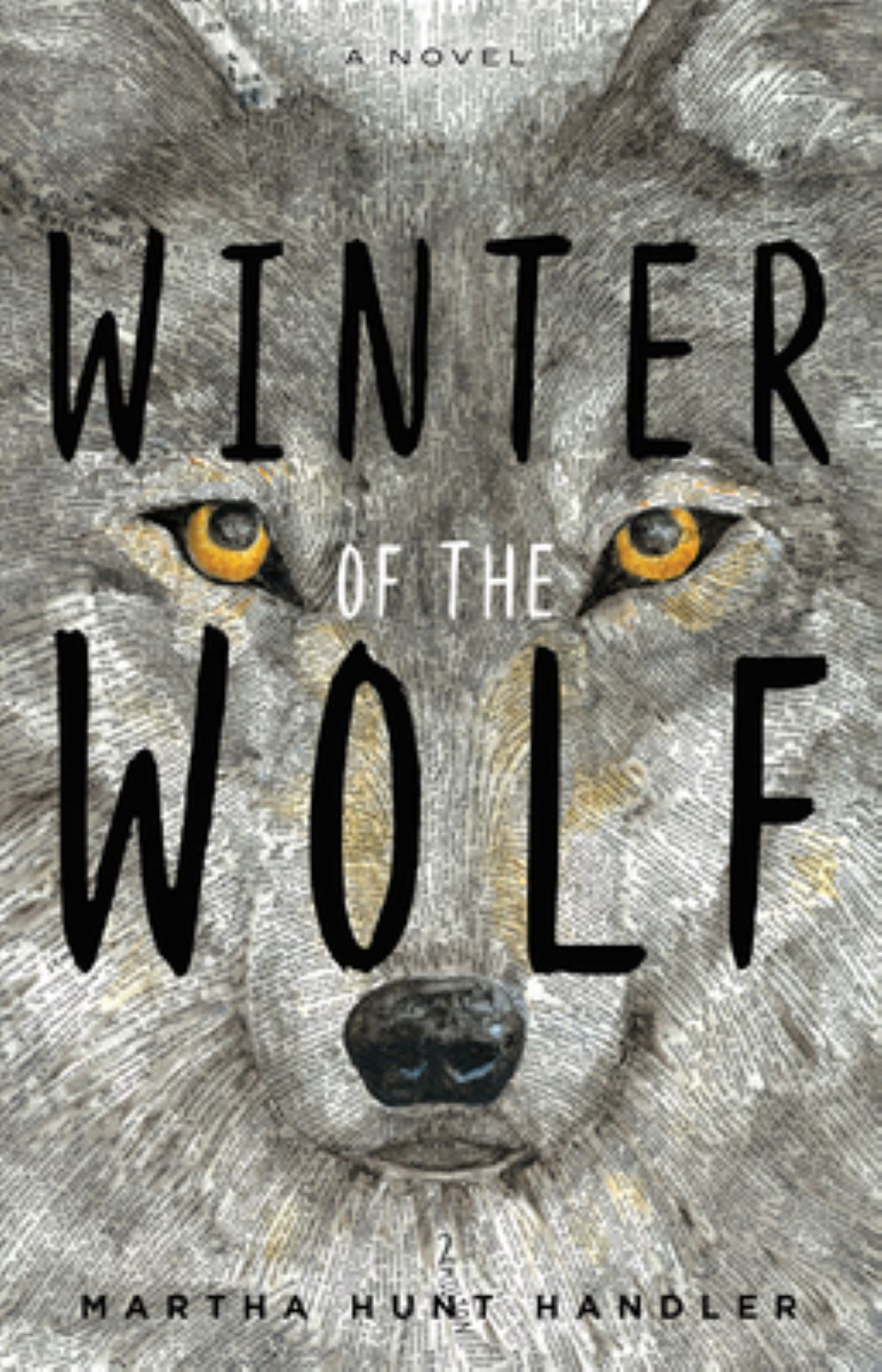
‘Winter of the Wolf’ by Martha Hunt Handler is the coming of age novel of a young girl coping with her brother’s suicide.

Martha Hunt Handler is an environmental consultant and author who grew up in Northern Illinois dreaming about wolves and understanding that her role is to tell stories and be a voice for nature.  After she and her family relocated from Los Angeles to South Salem, New York, she began to hear wolves in her backyard and for the next twenty plus years, she has been an advocate for wolves at the Wolf Conservation Center, where she currently serves as Board President. Her first novel, “Winter of the Wolf” is an exploration in grief, suicide, spiritualism and Inuit culture told through the perspective of Bean, a fifteen year old girl.  All books sales from this novel will go to the Wolf Conservation Center.

“Winter of the Wolf” begins as Bean wakes up feeling cold, stiff and covered with a sheet and her first instinct is to believe she is dead.  Instead, she is in her northern Minnesota room in the middle of winter with her bedroom window open. She is still recuperating from the trauma of the previous night, when she, her best friend Julie and older brother Sam were in an automobile accident. The night ended in tragedy with the discovery of Sam’s dead body in his room from an apparent suicide by hanging. With the entire family in shock, the household is in disarray and Bean makes it her mission to find out the truth surrounding Sam’s death, since they were extremely close and she knows in her heart that he would never commit suicide. He loved life and nature and admired the Innuit culture, who do not believe in suicide. With Julie’s help, they review Sam’s life, his last days alive and his deeply held beliefs and in the process, reconnect with their own spiritual beliefs to get to the truth, no matter how painful.  In the end, they discover that he was a victim of auto asphyxiation, also known as ‘the choking game,” but in knowing what really happened, the family is finally at peace and Bean experiences her own spiritual growth, which includes accepting that souls never really die, they just move on to other forms.

In a note after the last chapter, Martha Hunt Handler explains that she was inspired by the death of her best friend’s 12 year old son, of what at first appeared to be suicide, to write this book. She combines this experience with her work as an environmentalist, her love of wolves and spiritual beliefs to tell a young girl’s inspirational coming of age story.  Narrated in the first person point of view, it is classified as a Young Adult novel but the themes of grief and spiritualism appeal to any age group.  It tactfully approaches the topic of teen suicide without making it just another depressing teen angst novel. The positive spiritual angle is refreshing, including the thought that ‘we are energy, and as such, according to the first law of thermodynamics, we cannot be created or destroyed but can only be transferred or changed from one form to another’ –  death only means that a person’s time in a human body is over, but their soul lives on, becoming part of the world around us. The extensive character development creates relatable characters and because it is written in language that is easy to understand, the story flows easily from page to page, making it an exciting page-turner. There is an-author-recommended list of sources for further reading on spiritualism, life after death and the Innuit culture. “Winter of the Wolf” is a must-read and recommended for anyone dealing with grief and in need of comfort, spiritual guidance and one viewpoint surrounding the mystery of life after death.

*The author received a copy of this book for an honest review. The views and opinions expressed here belong solely to her.

Book review: ‘Touching the Jaguar’ by John Perkins

touchingjaguar
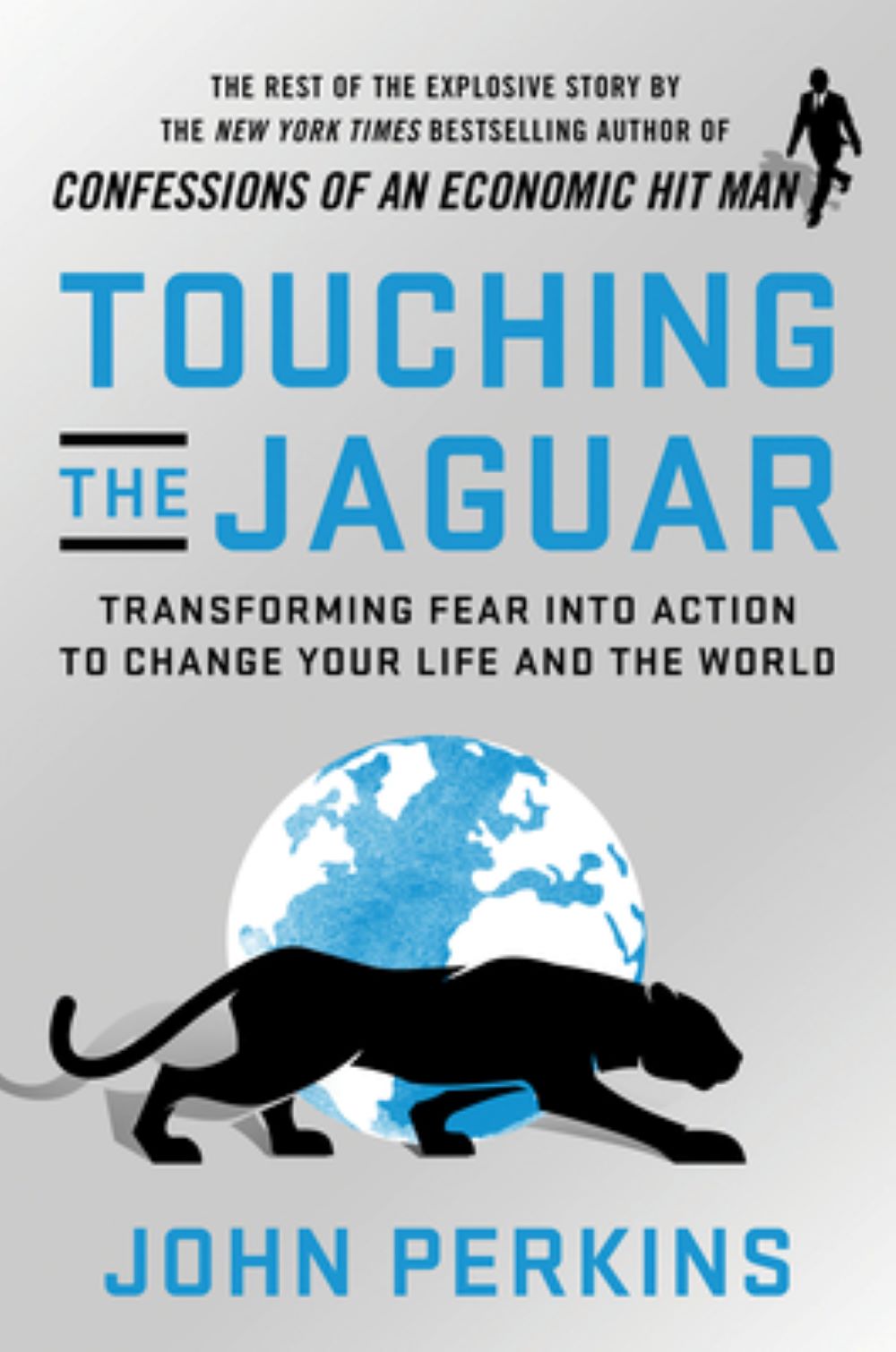
‘Touching the Jaguar’ is the new book by author and activist John Perkins. Photo: google

John Perkins is an author and activist who has written books on global intrigue, shamanism and transformation including “Shapeshifting” “Confessions of an Economic Hit Man” and “Touching the Jaguar.” His books have been on The New York Times’ bestseller list for more than 70 weeks, have sold over 2 million copies and are published in at least 35 languages. As chief economist at a major consulting firm, John advised the World Bank, United Nations, Fortune 500 corporations, US and other governments. He regularly speaks at universities, economic forums and shamanic gatherings around the world and is a founder and board member of the Pachamama Alliance and Dream Change, nonprofit organizations that partner with indigenous people to protect environments and that offer global programs to change the destructive ways of industrial societies. In his latest book “Touching the Jaguar: Transforming Fear into Action to Change Your Life and the World” Perkins details how his experiences in the Amazon converted him from an Economic Hit Man to a crusader for transforming our failing Death Economy that destroys its own resources and nature itself into a flourishing Life Economy that renews itself.

“Touching the Jaguar,” begins with an Introduction by the author that defines the phrase touching the jaguar – [it] ‘means that you can identify your fears and barriers, confront them, alter your perceptions about them, accept their energy, and take actions to change yourself and the world.’ His goal in writing this book was for it to serve as a connection between his previous books on Indigenous cultures and those on global economics. In the Prologue, he defines EHMs, or Economic Hit Men as ‘highly paid professionals who cheat countries around the globe out of trillions of dollars…Their tools include fraudulent financial reports, rigged elections, payoffs, extortion, sex, and murder.’ These terms are found throughout his story which starts in the summer of 1968 when he was a young Peace Corps volunteer and an Amazonian shaman saved  his life by teaching him to “touch the jaguar.” From there he went on to become an EHM and sincerely thought this was the best model for economic development but soon realized it was merely a new form of colonialism.  Eventually he takes his experiences in the Amazon and uses them to transform our Death Economy into a Life Economy.  In this book, he shares his strategies for transforming personal lives and defending the earth against destructive policies and systems. It is divided into eight parts that start with The Perception Trap 1968 -1970 and end with Decolonization 2017 – Present.

There is so much to learn from this incredibly eye-opening book: history, personal fulfillment and earth consciousness. It combines John Perkins’ experiences as an Economic Hit Man, expertise on indigenous cultures and shamanism and knowledge of ecology and economics. All of this is told in a down to earth tone with a narrative  that pulls the reader into the jungles of the Amazon, among other places. The chapters are short, the action flows easily from page to page and the language is easy to understand. Standout sections include ‘Chapter 2 Ayahuasca’ when he got sick while in the Amazon and the local shaman gave him ayahuasca, a plant used for healing, which resulted in his first vision of touching the jaguar; and the explanations on colonialism and how the United States has affected countries and economies worldwide. The Resources section at the end has ideas to help readers discover what they can do to change themselves and the world.  Every reader will get something out of it: in the least, become aware of the dangers of economic hit men and how truly harmful colonialism can be and at most, inspire them to get involved and become a better citizen of the world. “Touching the Jaguar” is not only a lesson in personal empowerment but a wake-up call about the true influence of American politics and economy. A definite must-read.

“It is time to end our fear of change and instead embrace the powers for change the jaguar offers, break through the mind-sets that have burdened us with failing systems, and apply the human and natural resources to create systems that will be successful for generations to come.”

*The author received a copy of this book for an honest review. The views and opinions expressed here belong solely to her.

Excerpt: ‘Gaijin’ by Sarah Z. Sleeper

gaijin2
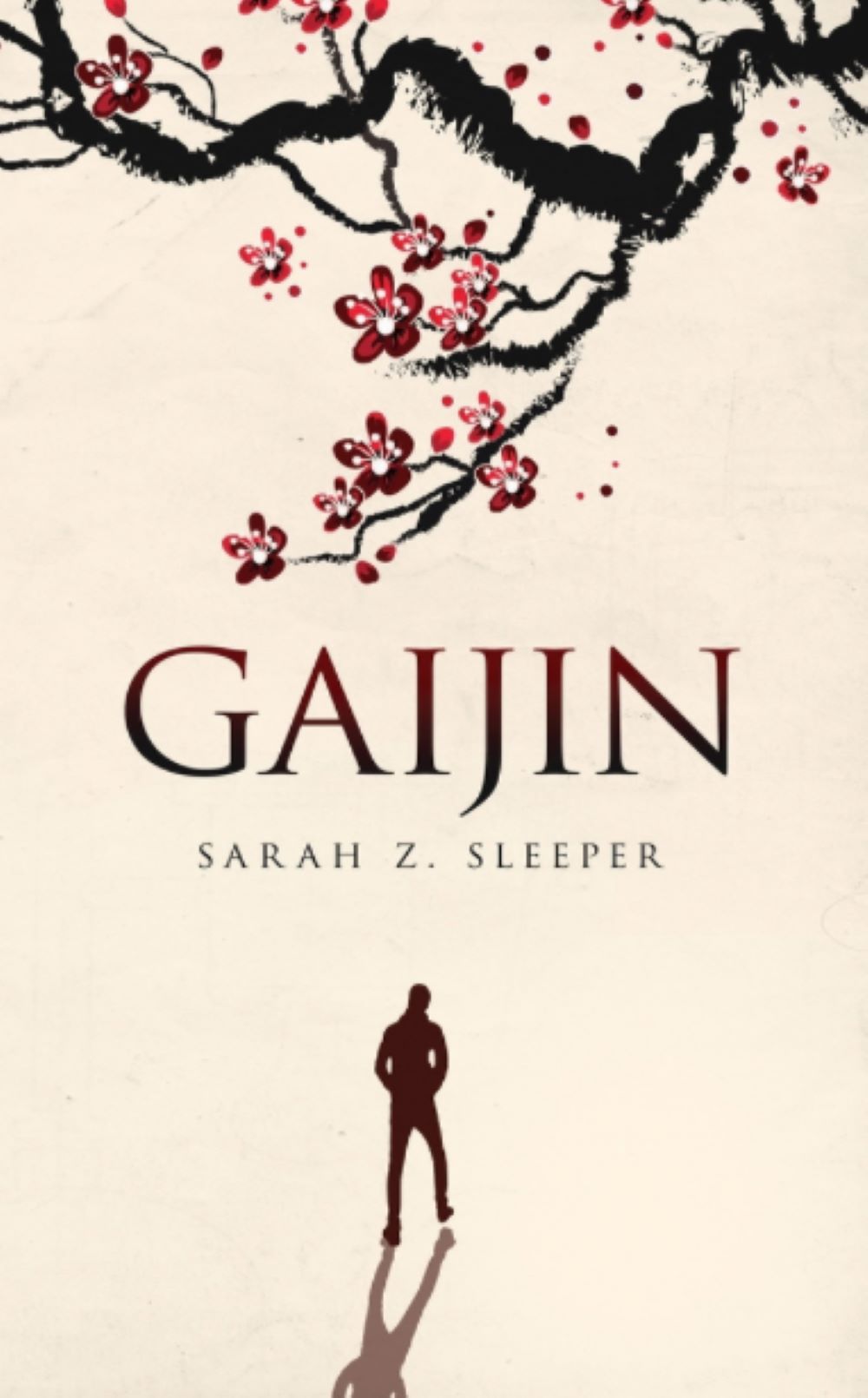
‘Gaijin’ by Sarah Z. Sleeper. Courtesy photo, used with permission.

Prologue from “Gaijin” by Sarah Z. Sleeper

Excerpted from “Gaijin.” Copyright © 2020 by Sarah Z. Sleeper. All rights reserved. Published by Running Wild Press.

Mono No Aware

Awareness of Impermanence
Love, tea and flowers.
Impermanent, transcendent.
Are you aware of beauty that flames up and out
before it can root itself in the earth of truth?
Memory is truth, like brown dirt
smeared on a cherry-blossom pink canvas

—Inspired by antique Japanese porcelain gilded with makie

A person or a memory can sit inside you and you might have no choice about it. You don’t have to think about a person for him to be part of you. That’s what my best friend Rose told me years ago, in a moment when she saw me more clearly than I saw myself, a moment when I was restless and heartsick and about to board a plane to Japan.

“I can’t believe it,” she said. “You’re going to hunt down Owen.”

I scoffed and lied, said I never thought of him.

Now years later, I know Rose was right, that you don’t get to decide what sticks and what doesn’t, who gets in and who gets blocked. You like to think you control your destiny and choose your path, but that’s not always the case. Sometimes you’re propelled forward in the most unexpected way when something or someone takes hold of you and doesn’t let go.

That’s how it happened to me. My college love, Owen Ota, burrowed his way into me one tantalizing moment at a time, over the course of a sweltering Indian summer at Northwestern University. He etched himself into the side of my neck and he took root in the pit of my stomach. He changed the trajectory of my life, set me in motion, and then he disappeared, like a puff of smoke or a phantom I’d hallucinated. He gave no feasible explanation, stopped all communication, and fled back to Tokyo in the same startling way he’d arrived. He was gone but I couldn’t let go. I needed to find Owen, and to experience the Japan he described. I clung to the notion that my dreams of the person and the place would match the reality.

Nothing, not Rose, not the application of common sense, could have dissuaded me from leaving Chicago on that overheated afternoon at O’Hare, when car horns, screeching voices and jet engines drowned out our goodbyes. A jumble of images jostled around in my brain, crowding out logical thoughts. Delicate pink cherry blossoms on porcelain teacups, a thin ivory book of haiku, a red silk blouse on polished glass skin, steaming spicy cuttlefish served on a black lacquer tray; a dazzling collage of the things Owen had shown me.

I was naïve and grief hollowed out my heart; I was determined to solve the mystery of his disappearance, as if finding him could erase the pain I’d felt when he abandoned me. I didn’t put it together then, the folly of searching for someone who didn’t want to be found, moving to a country I didn’t understand. And so, I went, flying into the unknown with a single suitcase of clothes, clutching my computer and cell phone as if they were life preservers.

On the plane I read the latest news from Japan. There were stories about the failed economic policies of the prime minister, the scandal of the royal princess who wanted to marry a commoner, the looming threat of North Korean missiles. Of course, I’d studied Japan in college, but looking back on that day, I knew nothing of the true character of the country.

The flight took an eternity and I immersed myself in a book of Japanese art filled with photos of ancient pottery and porcelain, chipped and faded, but glowing and glorious at the same time. I was striving to be a poet back then, a person who dealt in beauty and art, not only a journalist who worked with black ink and cold data. The art book held a luminous photo of a powder blue teacup swirled with feathery gold patterns, captioned, “Makie.” I Googled and learned that it meant “sprinkled picture.” Makie was an art object sprinkled with gold or silver powder, so that it gleamed with warmth. Inspired, I wrote a little poem on the plane, which I still have today. I titled it “Mono No Aware,” Awareness of Impermanence, a Japanese term I would come to understand deeply over time.

On my way to my new life in Japan, memories of my moments with Owen colored my mind with a makie haze. The landing of the plane brought the crash of reality. I was confronted by a gritty, dangerous nation, so unlike the exotic islands he’d described to me. A place where coworkers gave me gifts wrapped in gold foil while darting disdainful glances at me. I found few of the glamorous, mannered people I’d expected, and instead found an angry schizophrenic culture, alluring and hostile by turns, that kept me constantly at bay and confounded. And as I ventured further, in my quest to discover Owen’s fate, I realized I might not be able to find him before Japan chased me out, like the gaijin I was, a foreigner, unwelcomed by my adopted country.

Sarah Z. Sleeper is an ex-journalist with an MFA in creative writing. Gaijin is her first novel. Her short story, “A Few Innocuous Lines,” won an award from Writer’s Digest. Her non-fiction essay, “On Getting Vivian,” was published in The Shanghai Literary Review. Her poetry was published in A Year in Ink, San Diego Poetry Annual and Painters & Poets, and exhibited at the Bellarmine Museum. In the recent past she was an editor at New Rivers Press, and editor-in-chief of the literary journal Mason’s Road. She completed her MFA at Fairfield University in 2012. Prior to that she had a twenty-five-year career as a business writer and technology reporter and won three journalism awards and a fellowship at the National Press Foundation.

Book review: ‘Act of Murder’ by John Bishop, M.D.

actofmurder
‘Act of Murder’ by John Bishop, M.D. is the exciting first book in the Doc Brady mystery series. Courtesy photo, used with permission.

John Bishop M.D. is an orthopedic surgeon, keyboard musician and author of the beloved Doc Brady mystery series. The series includes “Act of Murder,” “Act of Deception,” “Act of Revenge,” “Act of Negligence,” “Act of Fate” and “Act of Atonement.” Doc Brady, the protagonist and his fictional counterpart, is an accomplished orthopedic surgeon with a talent for solving mysteries who moonlights as a blues musician. The series is set in the 1990s and features Houston and Galveston locales. In “Act of Murder,” Doc Brady witnesses his neighbor’s ten-year-old son killed by a hit-and-run driver and is prompted to investigate whether it was truly an accident or an act or murder.

“Act of Murder” begins in the spring of 1994 when Doc Brady hears the sounds of an accident in front of his house. At the scene, his neighbor Bobbie is kneeling down over a small blue lump that turns out to be her son Stevie. The distraught mother begs him to do something to help but by the looks of it, it is too late. When Detective Susan Beeson with the Houston Police Department starts investigating the case, details about Stevie surface, including that he had osteogenesis imperfecta, a genetic disorder that affects the bones. At first it looks like a random accident, until days later when another boy with a similar genetic disease and similar looks dies after surgery. Sensing that the two cases are more than just coincidence, Doc Brady starts digging for clues and together with his twenty-year old son J.J. and wife Mary Louise they uncover a sinister plot. The two boys were twins, one given up for adoption under the guise of helping out a family member but with the ultimate plan to gain money and power.

The most original authors are those who write from their own experiences and in this case, John Bishop M.D. successfully takes his real-life knowledge as an orthopedic surgeon to give his writing an authentic voice. The story is a combination hospital drama and murder mystery that draws the reader in right from the first sentence: “What I remember first about that day was the sound of a sickening thud.” It would be a mistake to call it a medical thriller because the case does not exactly involve any kind of medical issues but it centers around a doctor’s daily adventures. The language is easy to understand and does not include complicated medical jargon. Since it takes place in the 1990s, there are pop culture references like Seinfeld and Dave’s World that anyone who remembers those years can chuckle along with the author. Descriptions of his native Texas are spot one, especially Houston and Galveston and the character development makes them believable and relatable. It is a strong beginning for the series. A sure page-turner, “Act of Murder” is a must-read for fans of murder mysteries that center around the medical community and appreciate a behind the scenes look at hospitals and doctors.

*The author received a copy of this book for an honest review. The views and opinions expressed here belong solely to her.

Book review: ‘Gaijin’ by Sarah Z. Sleeper

gaijin
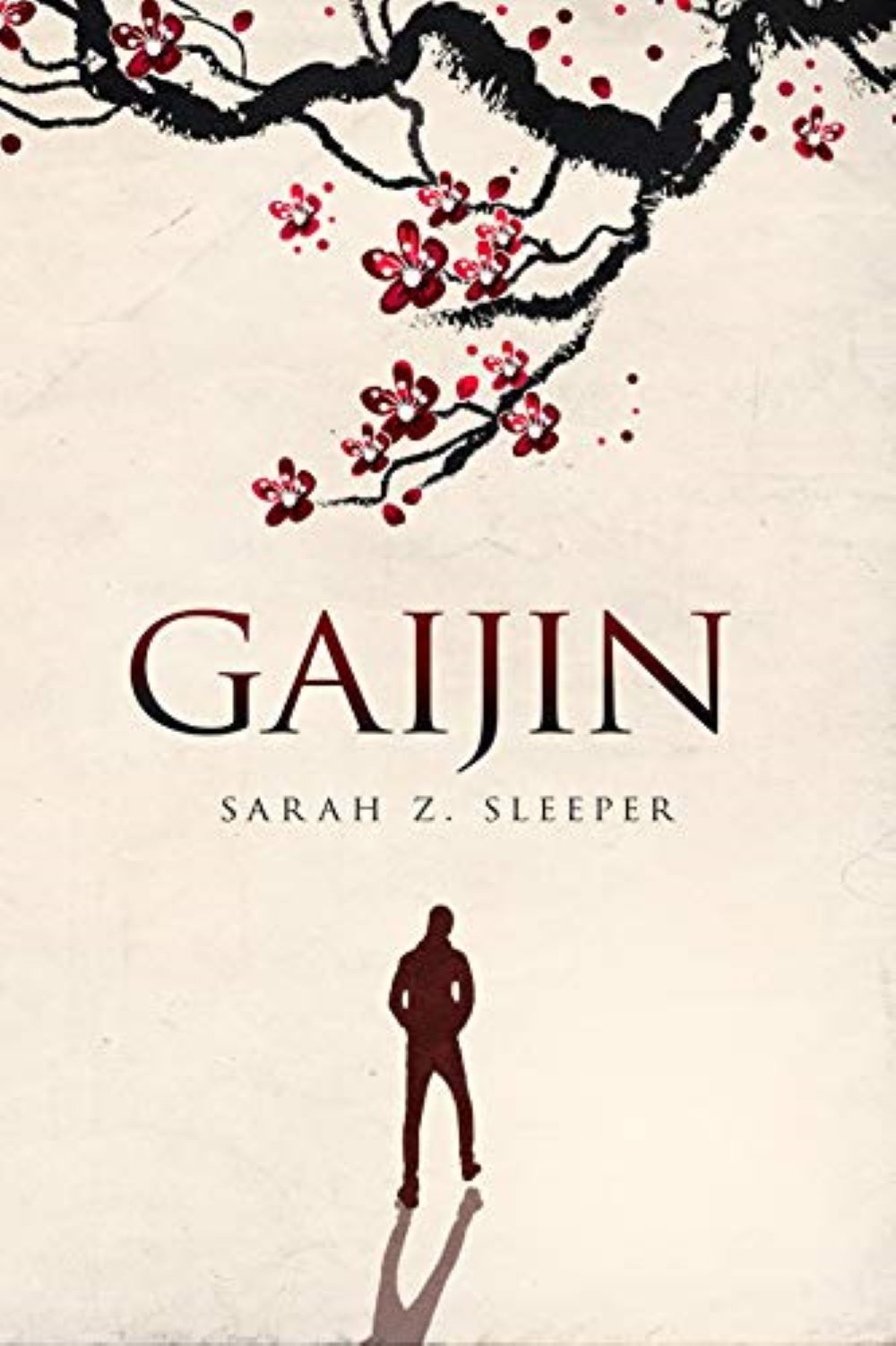
‘Gaijin’ is Sarah Z. Sleeper’s debut novel about a woman who moves to Okinawa looking for answers after her boyfriend disappears.  It is scheduled for release on Saturday, August 1, 2020. 

Sarah Z. Sleeper is a former journalist with an MFA in creative writing.  Previously, she was an editor at New Rivers Press and editor-in-chief of the literary journal Mason’s Road. She completed her MFA at Fairfield University in 2012. Prior to that she had a twenty-five-year career as a business writer and technology reporter and won three journalism awards and a fellowship at the National Press Foundation. Her short story, “A Few Innocuous Lines,” won an award from Writer’s Digest and her non-fiction essay, “On Getting Vivian,” was published in The Shanghai Literary Review. Her poetry was published in A Year in Ink, San Diego Poetry Annual and Painters & Poets and exhibited at the Bellarmine Museum. “Gaijin,” a coming of age novel about a budding journalist who sets off to Okinawa in search of answers when her college boyfriend mysteriously disappears, is her first novel and will be released on Saturday, August 1, 2020.

In Japanese, the word gaijin means ‘unwelcome foreigner’ and it is often used as a slur directed at non-Japanese people in Japan.  “Gaijin” centers around Lucy, a college student at Northwestern University who is obsessed with an exotic new student, Owen Ota, who becomes her lover and sensei.  When he disappears without explanation, she moves to Okinawa in hopes of tracking him down.  The story is told in the first person point of view and begins with a Prologue where Lucy recounts how she ends up in Japan and how her experience with Owen motivates her to seek answers in a foreign land. It all goes back to Japan in 2016 and begins as Lucy arrives at Okinawa’s Naha International Airport.  For the next three months, instead of the glamorous culture that Owen described, she is confronted with, among other surprises, anti-American protests fueled by the rape case involving an American military man and a young Japanese girl.  She also meets Hisashi, Owen’s  brother, who helps her come to terms with Owen’s tumultuous private life that culminates at the base of Mount Fuji and the infamous Suicide Forest. With the biggest mystery solved, Lucy is now content to stay in Japan and enjoy the country and culture she admired for so long.

Sometimes it is easy for foreigners to get wrapped up in the fantasy of an unfamiliar culture and once it hits home, reality can be disappointing. Such is the case with Lucy in “Gaijin,” Sarah Z Sleeper’s superb debut novel.  The author has penned a poetic and charming story filled similes and metaphors “His energy was warm, like a favorite oversize blanket” and peppered with poems and haikus. Despite being a small, easy to read book, the reader is immersed in Japanese culture, terms and traditions like tea ceremonies, all of which make the narrative come alive throughout the pages. Impressive character development and descriptions makes them relatable, “As the snow drifts piled shoulder-high on the edges of Northwestern’s campus, I dug myself into a cave of loneliness, busying myself while keeping social interactions at bay.” Of special interest is the background on Aokigahara, a forest on the northwestern flank of Japan’s Mount Fiji.  It has a historical reputation as a home to yūrei: ghosts of the dead in Japanese mythology. Also known as “the Suicide Forest”, one of the world’s most-used suicide sites; signs at the head of some trails urge suicidal visitors to think of their families and contact a suicide prevention association. History fans will appreciate the section on the conflict between Okinawa and Japan. “Gaijin” is the chronicle of one woman’s journey from idealistic college student in love with an image to an adult who learns to accept life’s disappointments and build a life on her own terms.

“A culture so beautiful that taking tea was a memorable occasion and yet so dark it contained a forest devoted to suicide.”

*The author received a copy of this book for an honest review. The views and opinions expressed here belong solely to her.

New release: ‘Red Zone’ by Luke Murphy

redzone
‘Red Zone’ is the newest novel in The Charlene Taylor Mysteries by Luke Murphy. Photo: google

Luke Murphy is the international bestselling author of two series: The Calvin Watters Mysteries: “Dead Man’s Hand” and “Wild Card” and The Charlene Taylor Mysteries: “Kiss & Tell” and “Rock-A-Bye Baby.” He is a teacher with a Bachelor of Science degree in Marketing and a Bachelor of Education (Magna Cum Laude). His newest novel, “Red Zone: A Calvin Watters & Charlene Taylor Mystery (A Calvin Watters Mystery) has Calvin Watters, a former running back at USC, and Detective Charlene Taylor, working together on a homicide case when a woman’s dead body is found on the Los Angeles Memorial Coliseum football field.

In “Red Zone,” Calvin has not returned to USC since he was stripped of his scholarship.  Detective Charlene Taylor knows the freshman cheerleader’s murder is complicated because the USC football team is a close knit family and getting inside the trusted circle as a cop is nearly impossible. When Calvin and Charlene meet, Charlene sees an opportunity to use Calvin to penetrate the circle. Little does she know that Calvin is now an outsider who is no longer welcome and who many would like to see fail. Together they must find a way to solve this case without letting their egos get in the way.

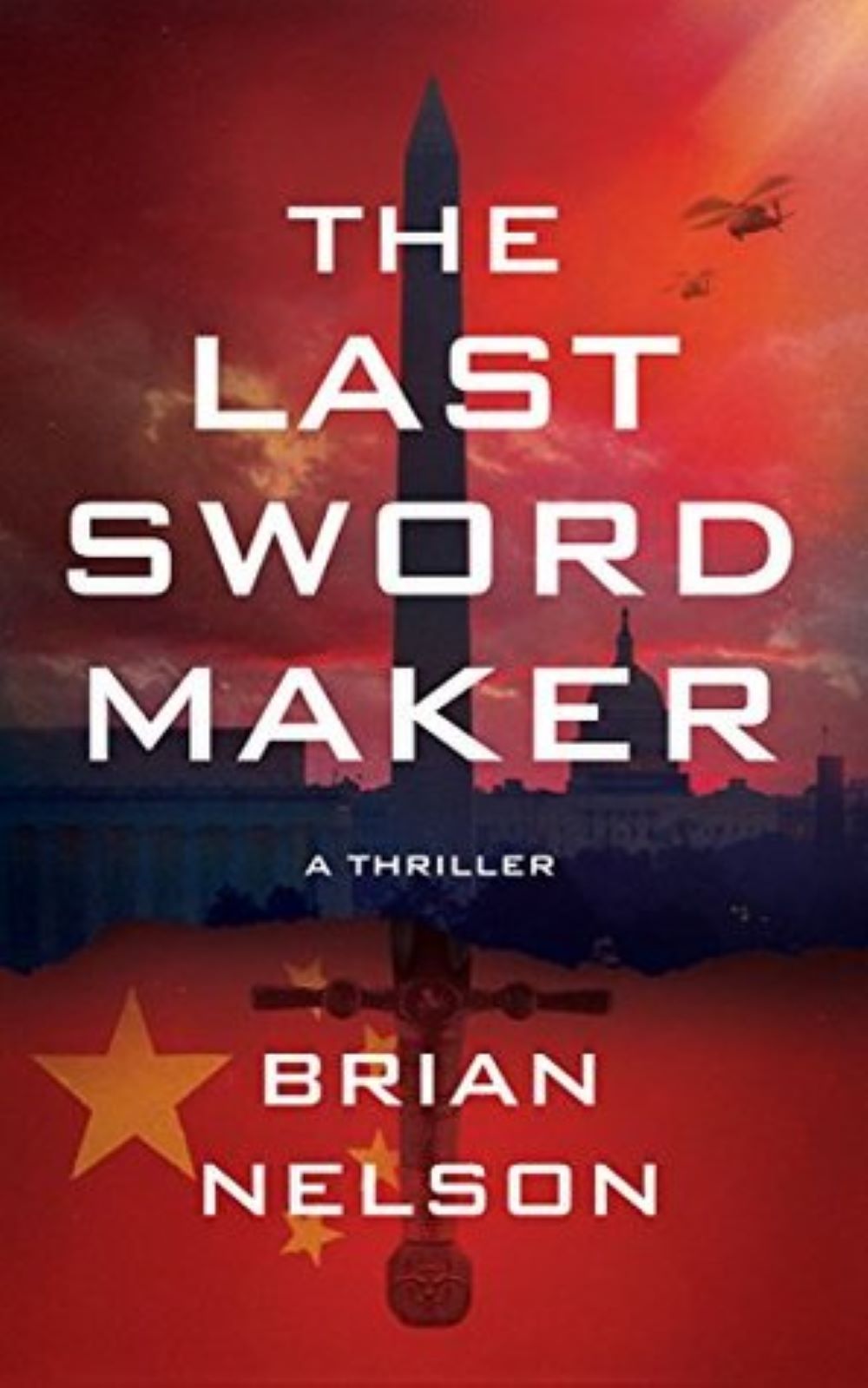
Book review: ‘The Last Sword Maker’ by Brian Nelson

lastswordmaker
‘The Last Sword Maker’ is Brian Nelson’s exciting novel about the future of warfare. Photo: google

Brian Nelson is a former Fulbright Scholar who holds degrees in international relations, economics and creative writing (fiction).  His first book “The Silence and the Scorpion: The Coup against Chávez and the Making of Modern Venezuela” was named one of the Best Books of 2009 by the Economist.  His work has appeared in the Virginia Quarterly Review, Christian Science Monitor and the Southern Humanities Review, among others. “The Last Sword Maker” is his second book and an action packed thriller about a high-tech arms race between the United States and China as they both strive to create the next-generation of weapons using a mixture of artificial intelligence, genetic engineering and nanotechnology.

“The Last Sword Maker” takes place in the not-too-distant future, between January 2025 and May 2026 as each chapter is given a time and place. The action begins with a prologue titled The Letter which informs of a letter written by Nobel laureate and biochemist Bill Eastman after he hosts a conference at the Millennium Institute in San Francisco in August 2018 for some of the greatest minds in science.  The letter is modeled after Albert Einstein’s 1939 letter warning President Roosevelt about the possibility of an atomic bomb, but this one warns the current president of the possible dangers from emerging technology and is signed by Eastman and twenty-seven other leading scientists. The novel is divided into three parts: Part One: The Ends of Peace, Part Two: The Race and Part Three: Red Dragon Rising. Part One begins seven years after that infamous letter and has Admiral James Curtiss being called to the Pentagon for an emergency meeting about a massive genocide taking place in the high mountains of Tibet.  This is not a disease, but a weapons test.  Chinese scientists have developed a way to kill based on a person’s genetic traits. The real danger will come if they achieve “Replication” – the breakthrough that will tip the global balance of power. To try and beat the Chinese, Admiral James Curtiss assembles the nation’s top scientists, which include a promising young graduate student named Eric Hill, who could provide the missing piece to the replication puzzle.  Sensing that the Americans have a leg up, the Chinese will stop at nothing, including kidnapping Eric, to force him to help them win this arms race.

Part techno-thriller, part political suspense novel, “The Last Sword Maker” is a thrill ride of a story. It starts off slow, but thankfully the action in the second half takes off and rewards readers for their persistence.  The history of the conflict between the Chinese and Tibetan people is eye-opening and serves as back story for Sonam Paljor, a member of the Tibetan resistance who is kidnapped, fed propaganda and converted into an elite solider for the Chinese. The language is descriptive “From here, they could see the top floors of other tech giants—silver-and-glass towers jutting above the trees like Mayan temples above the rain forest” and the deep character building is impressive which makes them relatable. Sometimes the torture scenes can get too graphic and violent but luckily there are not too many of them. Standout moments include ‘Chapter 17: Replication’ during the artificial intelligence final test and replication testing: “They worked silently, like peasant farmers tending to row after row of computer code” and when Eric, Bryan Ying and Mei finally escape the Chinese facility. The programming drama should appeal to programmers who understand the satisfaction of successful programming.  Hopefully, since it is advertised as the Course of Empire Series, Book 1, the Inventor, a cryptic ‘observer’ who seems to be a powerful and immortal being, comes back in subsequent books. There is something for everyone, from science, to politics, history and romance and that makes “The Last Sword Maker” a must-read page turner to rival the best from Tom Clancy and David Baldacci.

“You can’t know what it’s like until you’ve felt it. That was what he’d tell them. Bill, Jane, the admiral. When it was all over, he’d make them understand why he did it.  Why he had helped the enemy.”

*The author received a copy of this book for an honest review. The views and opinions expressed here belong solely to her.