The television adaptation of Wally Lamb’s bestselling novel “I Know This Much Is True” premieres on HBO on May 10. Photo: google
Wally Lamb is an American author of several novels including “I’ll Take You There,” “She’s Come Undone” and “I Know This Much Is True;” the last two were both selected for Oprah’s Book Club. He was the director of the Writing Center at Norwich Free Academy in Norwich and has taught Creative Writing in the English Department at the University of Connecticut. “I Know This Much Is True” is the bestselling novel about identical brothers Dominick Birdsey and Thomas Birdsey, who suffers from schizophrenia. Dominick struggles to take care of his twin brother while discovering the truth about his own family. It has been adapted into a limited television series that will air on HBO and premieres on Sunday May 10. Mark Ruffalo stars in the double role of Dominick and Thomas.
According to Amazon, in “I Know This Much Is True,” Dominick Birdsey, is a forty-year-old housepainter living in Three Rivers, Connecticut. He finds his subdued life suddenly disturbed when his identical twin brother Thomas, a paranoid schizophrenic, commits a shocking act of self-mutilation. Dominick is forced to care for his brother as well as confront dark secrets and pain he has buried deep within himself—a journey of the soul that takes him beyond his blue-collar New England town to Sicily’s Mount Etna, the birthplace of his grandfather and namesake. Coming to terms with his life and lineage, Dominick struggles to find forgiveness and finally rebuild himself beyond the haunted shadow of his troubled twin.
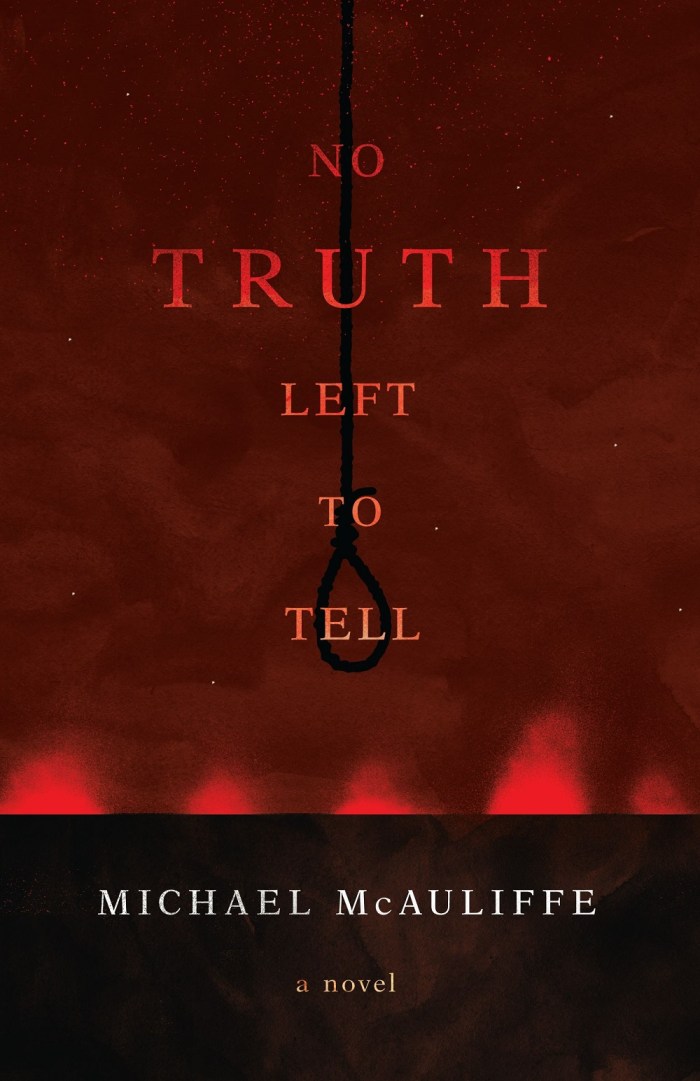
‘No Truth Left to Tell’ is the exciting debut novel by attorney Michael McAuliffe. Courtesy photo, used with permission.
Michael McAuliffe has practiced law for over 30 years, including as a federal prosecutor, a trial attorney for the civil rights division of the Department of Justice and an elected state attorney in Florida. In his debut novel, “No Truth Left to Tell,” federal civil rights prosecutor Adrien Rush travels to small town Lynwood Louisiana to investigate an incident of four flaming crosses by the Ku Klux Klan meant to terrorize the southern town and start a new race war. He joins forces with Lee Mercer, a seasoned local FBI special agent and their partnership is tested as they clash over how far to go to catch the racists before the violence escalates.
“No Truth Left to Tell” begins with a Prologue set in Lynwood, Louisiana in July 1920 where a young black girl, Nettie Wynn, witnesses the horror of a lynching. In present day Lynwood, 1994, the quiet little town is about to be shattered by the resurgence of the Ku Klux Klan. They want to start a new race war and proceed to carry out a series of cross burnings at the local NAACP office, the courthouse, a home in the black neighborhood of Mooretown, a synagogue and an Islamic center. An elderly Nettie Wynn is the unfortunate victim in Mooretown and as a lifelong resident, these hate crimes bring back dreadful memories of her youth and unfortunately she suffers a heart attack. Her granddaughter Nicole DuBose, a successful journalist in New York City, returns to Lynwood to take care of her grandmother. Federal prosecutor Adrien Rush and Lee Mercer, a local FBI agent lead the investigation into the cross burnings without much luck until a local detective, Jimmy Batiste, arrests the Klan’s new grand dragon Frank Daniels and coerces a confession out of him. Frank is convicted but years later the truth surfaces about how Batiste got the confession and now the town is faced with an ethical dilemma: seeking justice for victims of hate crimes versus who truly deserves a “fair” trial.
Some of the best legal thrillers revolve around ethical dilemmas that make an easy conviction hard to obtain. Such is the case with “No Truth Left to Tell,” Michael McAuliffe’s excellent debut novel about a civil rights case in the Deep South. The courtroom drama is interesting and written without any complicated legal terms so it is easy to follow. Being himself a climber, the author uses plenty of climbing metaphors throughout: “A climber who’s given an extra bottle of oxygen in the death zone on Everest gratefully makes use of it” and regular metaphors as well “The Klansman’s strained breaths dissipated through the car’s interior like the smoky remains of a cheap cigar” both of which make the story really come alive. Foreshadowing is rarely used in modern novels but here it successfully builds the climax “Gill and Mercer both laughed, oblivious to the land mine that awaited.” The characters are relatable and well developed, especially Adrien Rush. This is a fascinating page-turner recommended for John Grisham fans. Hopefully this will turn into a series of novels featuring federal civil rights prosecutor Adrien Rush; he is an intriguing character and readers deserve more of his stories.
“It can’t be some truth you’re selling; it has to be the only truth with nothing left to tell.”
*The author received a copy of this book for an honest review. The views and opinions expressed here belong solely to her.
What I remember first about that day was the sound of a sickening thud. It was blended almost imperceptibly with the screeching of tires, both before and after the thud. I had been in the backyard, watering our cherished potted plants and flowering shrubs. As soon as I heard the screech, I dropped the plastic watering bucket and tore down the driveway toward the front yard, thanking God that the electric wrought-iron gate was open, and praying that Mary Louise was not the source of the street sounds.
Although it wasn’t but 150 feet or so from the backyard to the street, it seemed that I was moving in slow motion through a much longer distance. Our neighbor to the right as we faced the street was kneeling down over a small blue lump. I remember initially thinking it was a neighborhood cat or dog with a sweater but as I neared the scene, I saw that the blue lump was Bobbie’s son, Stevie.
Bobbie was screaming, “OH, GOD! Oh, God! Jim Bob, is he all right? OH, GOD, JIM BOB, PLEASE LET HIM BE ALL RIGHT!”
Stevie was not all right. I felt his little ten-year-old wrist for a pulse. Nothing. I felt his left carotid artery. Nothing. I considered rolling him over on his back but was afraid that if he were in shock and not dead, I could paralyze him if his spine were fractured. Some of the other neighbors had arrived by then. I yelled for someone to call 911.
“Can’t you give him mouth-to-mouth or something?” Bobbie had yelled. “You’re a doctor, for God’s sake! DO something! Oh, please, do SOMETHING!” I felt helpless and wished I could do something. Anything. A mother was losing her child, and all my years of medical training were, at that particular moment, useless. I waited with her and tried to keep her from moving Stevie. But how can you keep a mother from trying to shelter, protect, hide, and heal her child? Mostly, I waited with her and Stevie, feeling for his carotid pulse repeatedly, though my touch would not restore it.
It seemed like an eternity before the Houston Fire Department arrived, although later my neighbors would tell me it was only four or five minutes. The paramedics were affected as much as I was by the slight, crushed bundle. Although there was, thankfully, little external bleeding, they must have sensed the lifelessness when they stabilized his neck before gently moving him onto the stretcher and into the ambulance. He seemed so tiny to me as the paramedics deftly intubated Stevie and started an IV running. It appeared they injected his heart, probably with epinephrine, before they electroshocked him. A heartbeat did not register on the monitor.
As I rode in the ambulance with Bobbie and the paramedics, I thanked God that Mary Louise was not the one being resuscitated. I vaguely remembered her running outside during the commotion. Knowing her and her composure and intelligence, she probably had called 911 before I had time to give those instructions. Her gentle hand had rested briefly on my shoulder as little Stevie was loaded into the ambulance. A great woman, my wife. I was glad our only son, J. J., was away at college. At least he couldn’t get run over in front of our house.
“You’re a doc?” asked the least-busy paramedic in the ambulance. I nodded. “Jim Bob Brady.”
All three continued to work on Stevie, attaching monitors, pushing IV drugs, and occasionally using the paddles to try to stimulate his heart into beating.
“What kind?” one of the other paramedics asked.
I thought that was a helluva time to be making small talk. Dead child, or presumably dead child. Mother, semi-hysterical, clinging to me. Ambulance speeding down Kirby, sirens blaring. Who cared what kind of doctor I was! Obviously, not a very good one. I had done nothing to help save that child. At that moment, I felt I should be anything but a doctor.
“Orthopedic surgeon, although this doesn’t seem the time to discuss my career,” I snapped. The comment ensured a silent journey the remaining five or six minutes to Children’s Hospital.
Poor guys. We all become too calloused in the medical and surgical business, seeing murder, mayhem, and tragedy the way we do. But this was my neighbor’s child, and I felt for her. And him. And me.
Fortunately, the traffic was light that Saturday afternoon. Normally, Fannin Street was stop-and-go in the several blocks known as the Texas Medical Center. As the ambulance pulled into the emergency center, people seemed to be everywhere. An injured child draws considerable attention—not that adults don’t, but the Children’s Hospital staff was impressively organized, showing efficiency, compassion, and skill. Within the next thirty minutes or so, they had examined little Stevie and pronounced him dead. Apparently, the trauma team was composed of not only medical personnel but of social workers, ministers, and counselors. Bobbie was shattered, requiring sedation. She was attended to, and I was left to give details of the accident. I fended questions regarding arrangements for the body and all the usual accompanying inquiries in such a situation.
I begged off from the full-frontal assault, explaining that I was a neighbor and had come along for the ride because I was a doctor, in case I could help. No, I didn’t know anything, but if I could make a few calls, I could find some people to answer their questions.
I left the holding area in the back of the emergency room and returned to the lobby through the electric double doors. I assumed the personnel on duty had allowed me to remain in the NO VISITORS area because they had heard from the paramedics that I was a physician. I was surprised, dressed as I was in baggy shorts and a not-so-clean T-shirt. I had been dressed for gardening, not doctoring and death.
The lobby was fairly empty except for a few sick children and their overwrought parents. Not wanting to search for a physician’s lounge and the privacy it would afford, and having left my cell phone at home in the rush, I used a pay phone to call home. I had to borrow a quarter from a phone neighbor.
“Hello?”
“It’s me.”
“How are you holding up?” Mary Louise asked.
“I’m all right, other than feeling useless. Stevie’s dead. Seems he was killed instantly. The chief pediatric surgeon thinks his chest was crushed. Ruptured heart. They’ll have to do an autopsy to know for sure. Bobbie collapsed. They have her on a gurney in one of the exam rooms, sedated. They’ve been incredibly kind and attentive.”
“I feel so sorry for her. Is anyone else there yet?”
“Well, that’s one reason I called. The hospital staff is asking all kinds of questions. The police will want to talk to witnesses. Someone needs to be here who knows more about their personal lives and preferences than I do. Do you know where Pete is?”
“He’s on his way from his office. He’s involved in some big trial that starts Monday. At least that’s what the Mullens told me. I called a few of the neighbors, and they called a few more people, and so on. You know how the network is around here. Bobbie’s sister should be there soon, and Pete, God help him, should be there any minute.” She paused. “Do you want me to come and get you?”
Great, Brady, I thought, you even forgot you have no car.
“No, that’s all right. I’m going to hang out here until I see Pete, or someone else I recognize, and see if I can help out with anything. I’ll see you as soon as I can. Oh, one more thing. I love you. For a long five seconds or so, I thought it might have been you out in the street.”
“I’m still here, sweetie. I love you, too.”
As Stevie’s dad Pete and the others arrived, I basically directed traffic and answered their questions as best I could. When I felt that I had done enough, I walked outside. The paramedics were still hanging around the emergency entrance. I apologized for my rudeness in the ambulance, but they seemed to understand. They kindly offered me a ride home.
On the way, two of the men sat in the back with me and made small talk about the medical world. I asked if either of them smoked. They looked at each other, laughed, then individually brought out their own packs of carcinogens. As we all lit up, I hoped that the oxygen had been turned off.
John Bishop MD is the author of “Act of Murder: A Doc Brady Mystery.” Dr. Bishop has practiced orthopedic surgery in Houston, Texas for 30 years. His Doc Brady medical thriller series is set in the changing environment of medicine in the 1990s. Drawing on his years of experience as a practicing surgeon, Bishop entertains readers using his unique insights into the medical world with all its challenges, intricacies, and complexities, while at the same time revealing the compassion and dedication of health care professionals.
‘Fly, Butterfly’ is Annicken R. Day’s debut novel. Photo: google
Annicken R. Day is the founder and CEO of Corporate Spring, co-author of the book “Creative Superpowers,” public speaker, executive advisor and a passionate maverick for new ways of thinking, working and leading in the new world of work. After fifteen years as a leader and executive in the IT industry, Annicken jumped off the corporate treadmill in 2012 to start her own company, Corporate Spring, with a mission to make the corporate world a happier place. Since then she and her team have helped and trained thousands of leaders around the world on how to build thriving corporate cultures, high performing teams and successful businesses. “Fly, Butterfly,” Annicken R. Day’s debut novel, is the personal and professional metamorphosis story about Maya Williams, an ambitious, stressed-out New York businesswoman who is stymied on her way up the corporate ladder by sexist executives.
“Fly, Butterfly” begins as New York businesswoman Maya Williams, Vice President of sales, is getting ready to board a plane to Honolulu to give her monthly presentation to Technoguard, Inc.’s executive team. Her team sells cybersecurity to several companies but when she gets intel that there is a bug in their system, she is forced to share the information with her boss. Instead of taking the information and trying to fix the bug before the big meeting, her boss insists she disregard the information. During the presentation, she does the unthinkable and admits to prospective investors that they should hold off until the bug is fixed. Confident that she has committed career suicide, she decides to stay on the island a while longer. During this time, she learns to chill and meets people who open her eyes to different ways of thinking, being, living and ultimately, working. When she goes back to New York as a transformed person, she decides to apply the lessons she learned to the company she leads. Her goal is to make it into a kind of utopia that is actually normal in other developed nations that have healthy, happy and productive citizens.
Annicken R. Day’s debut novel combines motivational and inspirational lessons with one woman’s journey from burnt out executive to enlightened leader who transforms her workplace culture. The author brings her message across in an easy to read manner that makes this a definite page-turner. In beautiful descriptive language: “Large, colorful bushes separated the intensely green lawn from the sand, and behind it was the crystal blue ocean for as far as I could see. It looked like diamonds were dancing in its waves” she successfully paints a picture of Hawaii’s magnificence. The characters are well developed but there is no real background information on the father, who pops up every now and then; this would help readers better understand his influence on Maya, just like her mother influenced her. One has to wonder why someone so supposedly put together and intelligent would be sloppy with her love life, i.e. not very confident, but luckily she gets her happily ever after. Among the many people she meets along her journey, the standout is Josh, the surfer dude she first meets after that disastrous meeting. “I glanced over at Josh. I couldn’t help thinking that he was one of the most beautiful men I had ever seen, like a blond Greek god. He looked very young, maybe twenty-seven. Yet something about him felt very old.” He is the first of many who teach her life lessons but at the end she finds out through the locals that he died the previous year in a surfing accident. It is rare for a book to elicit such an emotional response but considering the world’s current situation, it serves as a reminder to set priorities and strive for a well-balanced life. “Fly, Butterfly” is an inspirational story about how lives can be transformed when people learn to follow their passion and heart to enrichen their personal and professional lives.
*The author received a copy of this book for an honest review. The views and opinions expressed here belong solely to her.
The San Antonio Book Festival brings together readers and writers to celebrate the literary world. Photo: San Antonio Book Festival, used with permission.
The San Antonio Book Festival was supposed to take place this April 4 but was cancelled due to the COVID-19 health crisis. The festival would still like to encourage people to read while at home during this time of social distancing and quarantine. They have put together a list of recommended books for adults as well as options for parents to provide for their children while homeschooling. (San Antonio Book Festival, 2020)
If You Feel Like Confronting the Pandemic Head-On:
Fiction:
– “Cold Storage” by David Koepp
– “The Memory Police” by Yoko Ogawa
– “Severance” by Ling Ma
– “Station Eleven” by Emily St. John Mandel
– “The Dog Stars” by Peter Heller
Nonfiction:
– “Pale Rider: The Spanish Flu of 1918 and How It Changed the World” by Laura Spinney
If You’d Rather Be Distracted:
Fiction:
– “The Jetsetters” by Amanda Eyre Ward
– “A Good Neighborhood” by Therese Anne Fowler
– “Simon the Fiddler” by Paulette Jiles
Nonfiction:
– “The Hunt for History” by Nathan Raab
– “The Falcon Thief” by Joshua Hammer
– “The Rumi Prescription” by Melody Moezzi
For Kids/Teens Stuck at Home:
Kids:
– “Wayside School Beneath the Cloud of Doom” by Louis Sachar
– “Prairie Lotus” by Linda Sue Park
– “Amal Unbound” by Aisha Saeeed
Teens:
– “Tigers, Not Daughters” by Samantha Mabry
– “The Hand on the Wall” by Maureen Johnson
– “Bull” by David Elliott
The mission of the San Antonio Book Festival (SABF) is to unite readers and writers in a celebration of ideas, books, libraries, and literary culture. SABF was first presented in April 2013. Founding partners include the San Antonio Public Library, the Southwest School of Art, the San Antonio Public Library Foundation, and Texas Book Festival. This “Fiesta for the mind” is a gift to visitors and the citizens of San Antonio, free and open to all.
Sara Winokur’s ‘Double Blind: The Icelandic Manuscript Murders’ is the geneticist’s debut novel and will be available on Tuesday March 31. Photo: google
Sara Winokur is a Ph.D. molecular geneticist and the author of the Icelandic mystery, “Double Blind: The Icelandic Manuscript Murders.” In the past, she has worked on DNA analysis of human genetic diseases and she was part of the team that discovered the genes associated with Muscular Dystrophy, Huntington’s Disease, and Dwarfism. Dozens of her articles have been published in scientific journals. Her research has appeared in Human Molecular Genetics, Nature Genetics and Cell Stem Cell. Sara remains a well-respected figure in the scientific community. (Black Château, 2020)
Twenty years after a young boy disappears in the chill of North Iceland, a mysterious poem lands on the desk of his twin sister Brynja, a forensic geneticist, and rekindles her hopes that her brother might be alive. As Brynja unravels the clues, more poems arrive, each bearing dire consequences for those who receive them: the guard of the medieval manuscript of Icelandic sagas that possibly has the answer to her burning question, the prime minister’s secretary and the local pastor. Fighting the visual auras that have plagued her since childhood and now threaten everything she holds dear, Brynja must summon the strength to navigate the twisted labyrinth of the poet’s mind and confront the dark secret buried in her family’s past. Dubbed “a riveting mystery tale with a compelling lead character” by Kirkus Reviews, “Double Blind: The Icelandic Manuscript Murders” immerses the reader in the surreal landscapes and rich culture of Iceland. It is a wild ride from rural farmsteads to icy fjords to the high-tech world of DNA forensics lead by a strong female character.
“Because I’m so passionate about travel, culture, and landscapes, it can’t help but be a big part of my writing. When I wrote Double Blind, I tried to integrate the science of genetics and Icelandic culture with the story,” – Sara Winokur.
“Double Blind: The Icelandic Manuscript Murders” is available on pre-order in digital version on Amazon and will be officially released on March 31, 2020.
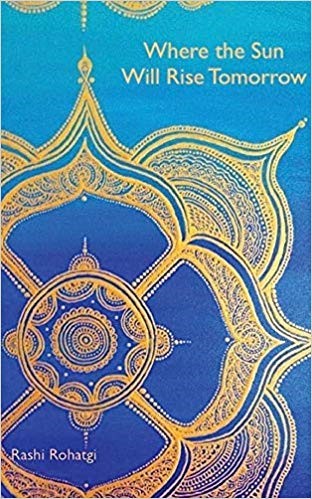
Rashi Rohatgi is the author of the new novel ‘Where the Sun Will Rise Tomorrow.’ Courtesy photo, used with permission.
Rashi Rohatgi is an Indian-American Pennsylvania native who lives in Arctic Norway. Her short fiction and poetry have appeared in A-Minor Magazine, The Misty Review, Anima, Allegro Poetry, Lunar Poetry and Boston Accent Lit. Her non-fiction and reviews have appeared in The Review Review, Wasafiri, World Literature Today, Africa in Words, The Aerogram and The Toast. She is a graduate of Bread Loaf Sicily and associate professor of English at Nord University. Her new book “Where the Sun Will Rise Tomorrow” was released this month and is the beautifully written story of a girl who has no plans to become anything more than what has been promised to her by history.
“Where the Sun Will Rise Tomorrow” is set in 1905 and begins as 16-year old Leela and her younger sister Maya are on a small rowboat in the middle of the Ganges River awaiting the sun rise. They have used the excuse of an early morning ‘prayer expedition’ to spend time on their own. Japan’s victory over the Russians in the Russo-Japanese War has shocked the British and their imperial subjects. In India, Leela and Maya, are spurred on to wear homespun as a sign of protest to show the British that the Indians will no longer be oppressed. But when Leela’s betrothed, Nash, asks her to circulate a petition among her classmates to desegregate the girls’ school in Chandrapur, she is wary. She needs to remind Maya that the old ways are not all bad, for soon Maya will have to join her own betrothed and his family in their quiet village. When she discovers that Maya has embarked on a forbidden romance, Leela’s response shocks her family, her town and her country firmly into the new century.
Part historical novel, part coming of age story, “Where the Sun Will Rise Tomorrow” offers a glimpse into a young girl’s world that is changing around her. Leela wants to adhere to family traditions but the lure of the possibilities is too strong to resist. Like most teens, she and Maya are rebellious in their own way “Now that we all have to wear the widow’s weeds, we can’t go around getting soaked through like the heroines in the romances we hide under our pillows.” The historical background helps the reader better understand what these girls, and others like them, are experiencing and will certainly appeal to history aficionados. With simple but poetic language, the author successfully combines the tumultuous times in India with the often confusing and difficult teenage years, “I stand at the edge of the flat roof and want to step off, certain that if my body were to act the way I feel I would fly,” to create an interesting first novel. The most unexpected part comes towards the end when Leela sets off a bomb at a speaking engagement, propelled by a feeling of power that comes from the sole knowledge that something big was about to happen. Overall, “Where the Sun Will Rise Tomorrow” is a fascinating look at India at the turn of the century as well as into one Indian girl’s family and traditions.
“Nash agreed with us, at first, with Gandhi: that maybe images of war can replace war, for who on earth could look at images of war and risk bringing it about?”
*The author received a copy of this book for an honest review. The views and opinions expressed here belong solely to her.
Nettie glided along the sidewalk in her best dress, her mother’s creation that would soon be too small. That Saturday, however, the colorful outfit still fit and perfectly complemented her wide smile and earnest stride. The dress was spring blue with flower patterns bursting open into full blossoms, quite like Nettie herself.
She stayed out of the way of the white pedestrians inspecting her with what appeared to be a mixture of curiosity and irritation. “What’s that one doin’ here?” one woman asked as she passed by. So Nettie hugged the buildings as she moved, trying to disappear against the facades. There was something big going on in the square, but Nettie couldn’t see over or through the gathering, since she was just seven years old.
She had pleaded with her parents to go with her father from their home in Mooretown, Lynwood’s section for blacks, to a nearby town while he delivered a meal to a close friend who was gravely ill. At the last minute, Nettie’s mother had wanted one more item added to the delivery from a store on Lynwood’s downtown square—an establishment that served them only from the back door off an alley. Nettie was supposed to wait in the car, but despite her father’s admonishments, the strange and festive noises drew her out into the nearby crowd where she was protected only by her look of youthful wonder.
Lynwood’s civic core was comprised of an expanse of lawn with a massive oak reigning over the surroundings. Four perpendicular streets framed the lawn, and they had been closed for several hours so people could mingle without regard to sputtering cars. The attendees had obliged the gesture by swarming the entire area by midmorning. The day’s activities appeared to originate across the street nearer the tree, allowing the spectators along the periphery to wander about with more freedom. From where Nettie was she could see the crown of the tree, and she moved in that direction as if pulled by some invisible force.
The day was hot and humid. High clouds had gathered through the morning and darkened the midday sky, but the music played on and people chatted in small groups as if they were at an annual parish fair.
After several minutes of distant rumbling a sprinkle started, and it soon developed into cascading water pouring from invisible pots in the sky. The drenching dispersed the crowd into stores and under awnings. Deserted chairs and soda bottles lay across the lawn.
The scattering of the masses created large openings around the square. What was an impenetrable wall of people became a flat, open field of vision. The oak, of course, remained right where it had begun decades before as a sapling.
Nettie couldn’t run into any of the stores like the others caught out in the street during the rainstorm. So, like the oak, she remained standing, although now she had a clear view of the square. Her dress—dripping and heavy with water—would have distracted her in any other setting, but unanswered curiosity kept her searching the square for clues about the day’s festivities.
The oak tree had long, thick branches, like the heavy arms of a giant. A braided rope was slung over one of these arms, out about ten feet from the trunk. The rope was wrapped once about the branch and secured to a large stake in the ground. The other end of the rope was fashioned into a noose, and suspended from it was the still body of a black man. The man’s neck was grotesquely angled, and the feet were bare. His hands were bound behind his back.
Nettie leaned forward like she was about to rush toward the oak. But she neither ran away nor went to it. She stared up at what had been until moments before a living, breathing person. She was frozen in place and time—alone in the moment when her world changed forever.
Her father came running from behind and snatched her up with such force that the dress ripped along a side seam. He covered her with his protective embrace and spirited her away to the car that waited in the alley. They headed straight home using back streets and little-known shortcuts, the car not speeding despite the urgency of the situation. The trip to deliver the meal basket was abandoned as her father kept swearing that he’d never go to the square again.
Nettie didn’t look outside the car. She kept her head down and stared at one of the dress’s printed blossoms, the flower part of the pattern ending at the hemline to reveal her trembling knees.
**************************************************************************** Michael McAuliffe is the author of ‘No Truth Left to Tell’ and has been a practicing lawyer for thirty years. He was a federal prosecutor serving both as a supervisory assistant US attorney in the Southern District of Florida and a trial attorney in the Criminal Section of the Civil Rights Division at the Department of Justice in Washington, DC. In 2008, Michael was elected and served as the state attorney for Palm Beach County, leading an office of approximately 125 prosecutors. He was known for leading the ethics reform movement in county that resulted in the creation of a permanent inspector general, an ethics commission and new ethics code. Michael and his wife Robin Rosenberg, a US district judge, have three children and live in Florida and Massachusetts.
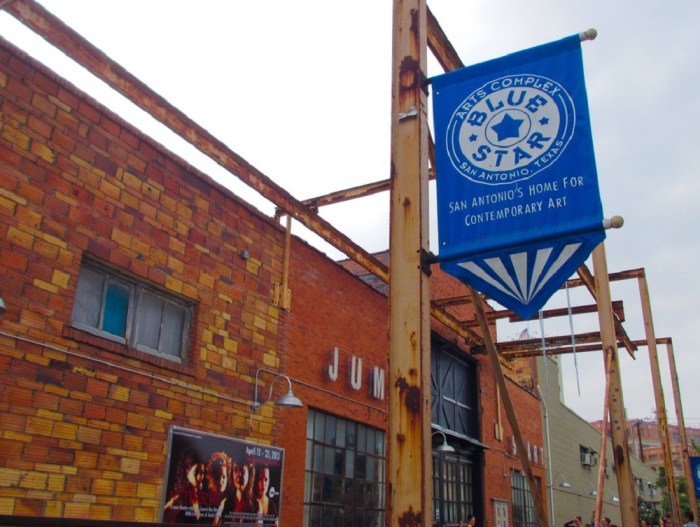
San Antonio’s first and longest running contemporary art non-profit, Blue Star Contemporary, located in the heart of the Blue Star Arts Complex, is pleased to present the Novel Ideas Art Book Fair which will take place on Friday March 6 from 5p.m. to 9p.m. and Saturday March 7 from 10a.m. to 6p.m. at SAYSi. The first and only art book fair in the region coincides with Blue Star Contemporary’s spring exhibitions featuring the work of Emilia Azcárate, Ann Clarke, Arturo Herrera, Candace Hicks, Rand Renfrow, Benedikt Terwiel, Hye-Ryoung Min and Sarah Welch. Also complementing the fair are Contemporary Art Month San Antonio and the Association of Writers and Writing Programs conference taking place in San Antonio, March 4 to 7, 2020. (Blue Star Contemporary, 2020)
Novel Ideas Art Book Fair is a two-day art book fair organized by Blue Star Contemporary. It will feature artists’ books, monographs, zines, printed ephemera and more. Conceived as a platform and community-building event for artists and producers operating primarily in the Southwestern US region and Mexico who are dedicated to books as medium and material, the Novel Ideas Art Book Fair includes a range of exhibitors, both publishers and artists. Novel Ideas includes programming such as talks, pop-up workshops, signings, an after party hosted by Paper Tiger and four complementary onsite exhibitions.
The fair presents noted artist and curator Julie Ault as the keynote speaker for the event on Saturday March 7 at 3p.m. Julie Ault is a curator, writer, editor, artist and designer who began her career establishing the temporary exhibition as art form.
Admission
$15 – Friday, March 6, 2020 opening night (CAM supporters receive $5 discount at the door with CAM sticker)
$20 – Saturday, March 7, 2020 all day
Door cover charge – closing concert at Paper Tiger on Saturday, March 7, 2020 7p.m. to 11p.m.
$40 – All access pass to all the above, advance purchase only, limited edition artist print by Rand Renfrow for the first 40 purchasers.
BSC members, TPR members and members of any of our museum month partner organizations receive a $5 discount on the all access pass.
Participating 2020 exhibitors include
Animal Facts Club (Wimberley)
Annie May Johnston (Austin)
Artpace (SA)
Bill’s Junk (Houston)
Cattywampus Press (SA)
Cortney Cassidy (Oakland)
Coyote Bones Press (San Antonio)
Feral Editions (SA)
Flowerpot Books (SA)
French & Michigan (SA)
Glasstire (TX)
Hare and Hound Press (SA)
Hellen Jo (LA)
M12 (Colorado)
Lawrence Markey (San Antonio)
Lorenzo Gomez (San Antonio)
Pey-Jing Li Mehrinfar (San Marcos)
Mixed Media Press (Mexico City)
Modernizm Zine (Houston)
MOSAIC Student Artist Program (San Antonio)
Mystic Multiples (Houston)
Rand Renfrow (Austin)
San Anto Zine Fest (SA)
Southwest School of Art (SA)
Spend Time Zine Mart (Austin)
Sybil Press (SA/Baltimore)
Texas State University Photography Program (San Marcos)
TPR/David Martin Davies (TX)
Trilce Ediciones (Mexico City)
UT Riso Room (Austin)
Yes, Ma’am Press & Xicana Vegan(SA)
Blue Star Contemporary (BSC) is the first and longest-running nonprofit venue for contemporary art in San Antonio. Its start 32 years ago created a pathway leading to city bond funding that supported the revamp of an old warehouse complex into an artist-centric, mixed-use development, sparking the total revitalization of Southtown as it is today. Their mission to inspire, nurture, innovate and support artists and nurturing the community’s relationships with them are the very fibers of Blue Star Contemporary’s rich cultural tapestry.
SAYSí
1518 S Alamo St.
San Antonio, TX 78204
(210) 212-8666
This year’s San Antonio Book Festival will be held on Saturday April 4. Photo: San Antonio Book Festival, used with permission.
The San Antonio Book Festival (SABF) is excited to announce its 2020 author lineup, which includes more than 120 local, regional and national authors who will appear at the 8th annual festival as well as a new event – Lit Crawl. This year’s lineup includes nationally renowned authors such as Saeed Jones, Attica Locke, Marie Arana, César Cuauhtémoc García Hernández and more. The amazing weekend of festivities will take place on Saturday, April 4, from 9a.m. to 5p.m. at the Central Library and Southwest School of Art. (The San Antonio Book Festival, 2020)
The book festival is a free, family-friendly event that draws more than 20,000 festival goers to downtown San Antonio for a full day of author presentations, panel discussions, book sales, signings, children and teen activities and food trucks. It showcases first-time novelists and established writers, and introduces attendees to new literary talents and connects them with their favorite authors. A listing of all festival writers as well as a detailed festival schedule will be available online in March.
This year, there will be an additional free event, Lit Crawl, a big block party for books and everyone who loves to read them. This is the first time Lit Crawl is held in San Antonio and the city is just the 15th one globally to produce Lit Crawl. The event will take place the evening of Friday, April 3, as part of First Friday in Southtown in the Blue Star Arts complex. Lit Crawl brings literature to the streets, offering a mini-festival within the larger Book Festival that features writers, poets and storytellers performing their work and inviting audience participation. Lit Crawl will feature several events, including Literary Death Match, where four writers will compete for “bookish” glory; at another event, writers will speak about writerly topics but will be unaware that the audience has been instructed to take a shot every time one of the writers utters specific words. Lit Crawl involves the local literary scene and captures San Antonio’s unique flavor—all while getting book lovers and revelers alike drunk on words. The inaugural Lit Crawl is produced with the help of Ricos Products and the Blue Star Arts Complex.
Internationally acclaimed writer Sandra Cisneros will debut a new festival event, Sandra Cisneros Presents, where she introduces four of her favorite writers to festival audiences. Cisneros’ long list of accolades includes NEA fellowships in both poetry and fiction, the Texas Medal of the Arts, a MacArthur Fellowship, several honorary doctorates and national and international book awards, including the National Medal of the Arts awarded to her by President Obama in 2016.
The San Antonio Book Festival is also excited to bring back the 4th Annual Book Appétit Literary Feast at the Witte Museum’s Mays Family Center on April 2 featuring novelist Amor Towles. SABF will also be hosting Book It! luncheons, three opportunities to have an intimate lunch with a festival author at Club Giraud on April 4.
The mission of the San Antonio Book Festival (SABF) is to unite readers and writers in a celebration of ideas, books, libraries, and literary culture. SABF was first presented in April 2013. Founding partners include the San Antonio Public Library, the Southwest School of Art, the San Antonio Public Library Foundation, and Texas Book Festival. This “Fiesta for the mind” is a gift to visitors and the citizens of San Antonio, free and open to all.





 SA Examiner