The US version of ‘The Commander’ by Kevin Groh releases on Tuesday, January 5, 2021. Photo: amazon
Kevin Groh is an author born and raised in Hesse, Germany who has been imagining stories and other worlds since early childhood. He visited the United States often and fell in love with the openness of Americans and the non-judgmental environment that accepted him for who he was — a gamer and a nerd. Passionate about the English language, Kevin mastered it by reading, watching movies, playing video games, and traveling. He holds a bachelor’s degree as an industrial engineer with a focus on electrical engineering but by his early 20s, became a sensation in the German sci-fi market with his highly imaginative stories. His Omni Legends book series includes the best-selling subseries, “The Commander,” “The Black Wanderer,” and “The Shadow Guard.” Kevin was an Amazon Kindle Select All-Star in sales every month from August to December in 2019. The young author is now ready to entertain a US readership looking for its next page-turner as the first book in the series, “The Commander” is releasing in the United States on January 5, 2021. It is young adult fiction for young men and sci-fi lovers filled with adventure, suspense, and action and now available for pre-order on Amazon. (Black Château, 2020)
“The Commander – Guardian of Utopia” is the first book in the US version of the epic New Adult military sci-fi fantasy Omni Legends series. Welcome to Utopia-humanity’s second home for over two centuries. It is a world controlled by the military and corporations, waging war with advanced alien races, but 18-year-old Carter Sanders is about to change the rules of the game. Freshly recruited into boot camp, he needs all his brains and ability to survive skirmishes and develop allies among his fellow-recruits who resent his privilege. Training exercises in weaponry, close-quarter combat, strategy and tactics, and missions test his bravery, while female recruits test his moral fiber in close situations. When bionic upgrades for soldiers become mandatory, Carter feels he needs to take a stand. Can he and his mismatched fellow-recruits get their message about preserving morale through to the top brass? Will they survive sadistic drill sergeant Banes before they are sent off to battle giant, scaled Lorgans on unknown worlds?
‘Act of Revenge’ is the third book in the Doc Brady series. Courtesy photo, used with permission.
John Bishop M.D. is an orthopedic surgeon, keyboard musician and author of the beloved Doc Brady mystery series. The series includes “Act of Murder,” “Act of Deception,” “Act of Revenge,” “Act of Negligence,” “Act of Fate” and “Act of Atonement.” Jim Bob Brady, the protagonist, is an accomplished orthopedic surgeon with a talent for solving medical mysteries who also moonlights as a blues musician. The series is set in the 1990s and features Houston and Galveston locales. In “Act of Revenge,” Jim Bob Brady is once again helping in an investigation, this time in regards to Lou Edwards, one of his colleagues, who is the prime suspect in the murder of Paul Thompson, the CEO of an insurance company.
In “Act of Revenge,” Doc Brady and his wife Mary Louise are in Colorado for a combined continuing education conference and ski getaway when he crashes into another skier. That skier turns out to be Lou Edwards, a plastic surgeon from Houston and a colleague of Jim Bob Brady. Once back in Texas, Lou has knee surgery and while he is in the hospital, Mary Louise spends time with Mimi, Lou’s wife. As it turns out, Mimi has lupus along with other health issues brought on by leakage of her breast implants, which were inserted by Lou. Lou is being sued multiple times for other faulty silicone breast implants and because of that, his medical malpractice insurance has been cancelled. Days later, he shows up at a protest downtown at the office of that insurance company and while being interviewed, he threatens Paul Thompson live on the air. Later that same day, Paul is found murdered in his luxury penthouse and Lou, being the main suspect, disappears. Since he has successfully helped before, Jim Bob is brought into the investigation and with the help of his son J.J., he follows the paper trail to uncover the real killer.
In “Act of Revenge,” John Bishop M.D. once again takes his real-life knowledge as an orthopedic surgeon to give his writing an authentic voice even though the medical aspect of the story is not the mystery. Jim Bob Brady is once more lured into an investigation that puts him in the crosshairs and this time he is trying to find out who killed Paul Thompson. He is almost run off the road: “As I slammed on the brake and ducked down into the seat, the sound of a sonic explosion, followed by shattering glass, deafened me” and towards the end, he is held captive at gunpoint. Descriptions of the author’s native Texas are spot on, especially Houston and the characters are familiar, believable, and relatable. Except for the sections explaining plastic surgery and medical insurance, it is an easy read and the story is entertaining and light-hearted. The language is poetic at times: “The evening was spectacular, an unusually clear, starlit night with a half-moon shining through the cloudless sky” and acts as a transition between the dialogue. The extensive backstory on Felicia Edwards (Lou Edwards’ daughter) and Annie Harrison makes it seem it seem like revenge was a motive in Paul’s murder so the plot twist at the end came as a surprise. Even though this is the third in the Doc Brady series, it stands perfectly fine on its own and should not dissuade readers who have not read the previous books. A definite page-turner, “Act of Revenge” is a must-read for fans of murder mysteries who appreciate the intricacies of the medical profession as background and want to learn more about the different types of plastic surgeries.
*The author received a copy of this book for an honest review. The views and opinions expressed here belong solely to her.
Winner in the Fiction category: ‘The Midnight Library’ by Matt Haig. Photo: amazon
These are the winners of the 12th Annual Goodreads Choice Awards, the only major book awards decided by readers. Congratulations to the best books of the year. Winners in other categories include: Nonfiction: ‘Stamped: Racism, Antiracism, and You’ by Jason Reynolds, Ibram X. Kendi, Memoir & Autobiography: ‘A Promised Land’ by Barack Obama and History & Biography: ‘Caste: The Origins of Our Discontents’ by Isabel Wilkerson. The complete list of winners is available online.
Highlights include:
Fiction: ‘The Midnight Library’ by Matt Haig– Somewhere out beyond the edge of the universe there is a library that contains an infinite number of books, each one the story of another reality. One tells the story of your life as it is, along with another book for the other life you could have lived if you had made a different choice at any point in your life. While we all wonder how our lives might have been, what if you had the chance to go to the library and see for yourself? Would any of these other lives truly be better?
Mystery & Thriller: ‘The Guest List’ by Lucy Foley– On an island off the coast of Ireland, guests gather to celebrate two people joining their lives together as one. The groom: handsome and charming, a rising television star. The bride: smart and ambitious, a magazine publisher. The cell phone service may be spotty and the waves may be rough, but every detail has been expertly planned and will be expertly executed. As the champagne is popped and the festivities begin, resentments and petty jealousies begin to mingle with the reminiscences and well wishes. The groomsmen begin the drinking game from their school days. The bridesmaid not-so-accidentally ruins her dress. The bride’s oldest (male) friend gives an uncomfortably caring toast. And then someone turns up dead.
Historical Fiction: ‘The Vanishing Half’ by Brit Bennett -The Vignes twin sisters will always be identical. But after growing up together in a small, southern black community and running away at age sixteen, it is not just the shape of their daily lives that is different as adults, it is everything: their families, their communities, their racial identities. Many years later, one sister lives with her black daughter in the same southern town she once tried to escape. The other secretly passes for white, and her white husband knows nothing of her past. Still, even separated by so many miles and just as many lies, the fates of the twins remain intertwined. What will happen to the next generation when their own daughters’ storylines intersect?
Fantasy: ‘House of Earth and Blood’ (Crescent City) by Sarah J. Maas – Bryce Quinlan had the perfect life―working hard all day and partying all night―until a demon murdered her closest friends, leaving her bereft, wounded, and alone. When the accused is behind bars but the crimes start up again, Bryce finds herself at the heart of the investigation. She will do whatever it takes to avenge their deaths.
Romance: ‘From Blood and Ash’ by Jennifer L Armentrout– Chosen from birth to usher in a new era, Poppy’s life has never been her own. The life of the Maiden is solitary. Never to be touched. Never to be looked upon. Never to be spoken to. Never to experience pleasure. Waiting for the day of her Ascension, she would rather be with the guards, fighting back the evil that took her family, than preparing to be found worthy by the gods. But the choice has never been hers.
Science Fiction: ‘To Sleep in a Sea of Stars’ by Christopher Paolini – During a routine survey mission on an uncolonized planet, Kira finds an alien relic. At first she is delighted, but elation turns to terror when the ancient dust around her begins to move. As war erupts among the stars, Kira is launched into a galaxy-spanning odyssey of discovery and transformation. First contact is not at all what she imagined, and events push her to the very limits of what it means to be human. While Kira faces her own horrors, Earth and its colonies stand upon the brink of annihilation.
Horror: ‘Mexican Gothic’ by Silvia Moreno-Garcia – After receiving a frantic letter from her newlywed cousin begging for someone to save her from a mysterious doom, Noemí Taboada heads to High Place, a distant house in the Mexican countryside. She is not sure what she will find; her cousin’s husband, a handsome Englishman, is a stranger, and Noemí knows little about the region. Mesmerized by the terrifying yet seductive world of High Place, Noemí may soon find it impossible to ever leave this enigmatic house behind.
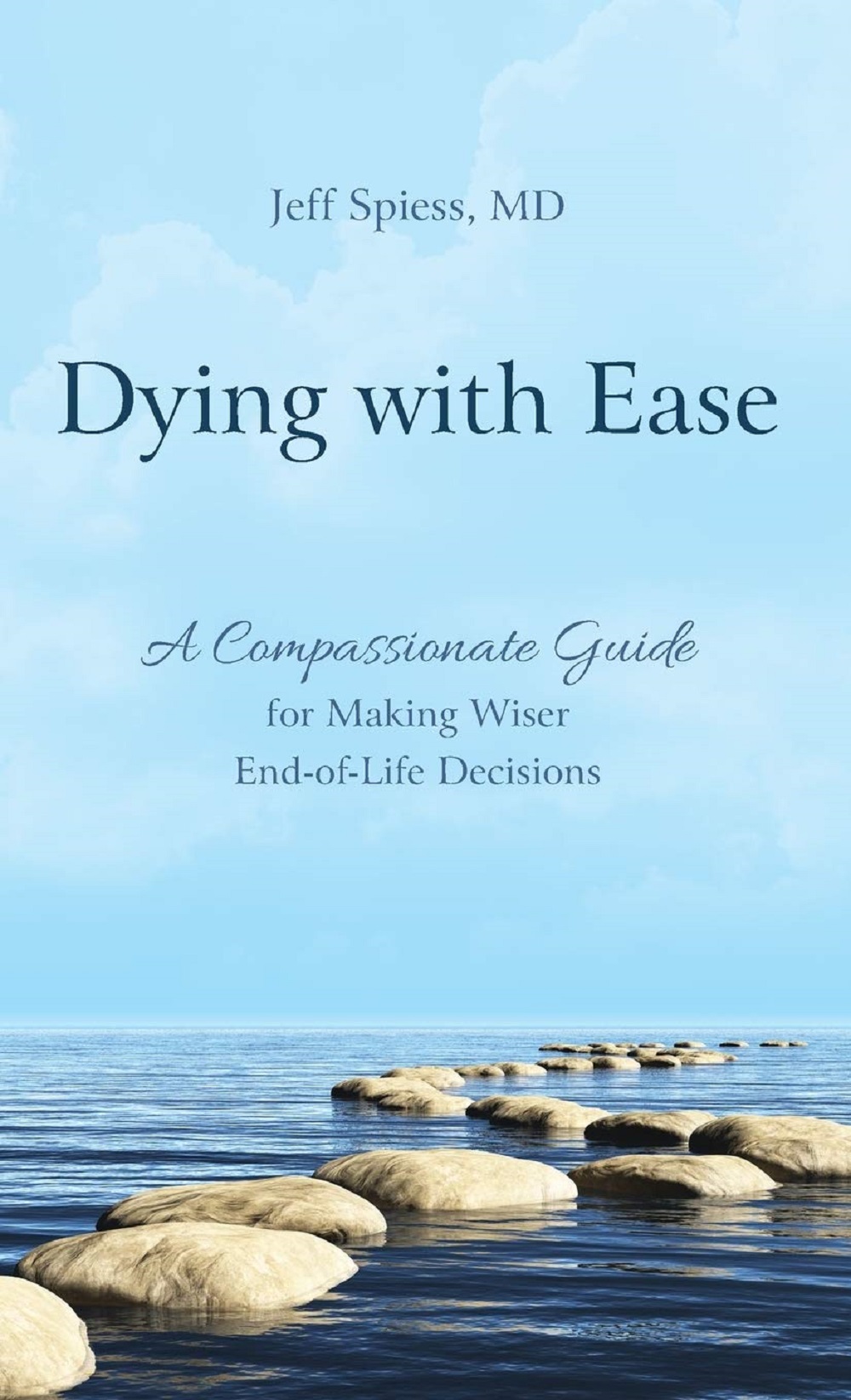
‘Dying With Ease’ by Jeff Spies, M.D. Photo: amazon
Jeff Spiess, M.D. has spent his medical career caring for those facing serious illness and death, first as an oncologist, then as a hospice physician. He is ‘mostly’ retired as associate medical director of Hospice of the Western Reserve and has been recognized as a leader in his field. Believing that death may be inevitable but fearing the end-of-life is avoidable, in his new book “Dying With Ease: A Compassionate Guide for Making Wiser End-of-Life Decisions,” he gives readers thorough information about advance care planning, hospice, palliative care, and ethical and legal issues surrounding dying in America to help them learn how to put their fear of their final days to rest.
“Dying With Ease” begins with an Introduction where Jeff Spiess recounts the life of Socrates and how in his “seventy years of his life, he had killed no one, betrayed no one, robbed no one, lied to no one, yet he faced capital punishment.” His crime? In short, corrupting the youth by failing to adhere to the religious norms of the day because he admitted that death is a mystery – that one one knows what it is all about. After years of caring for terminally ill patients, the biggest lesson the author learned is that just like his patients, he will also one day die. Most Americans fail to accept death because conversations and decisions about the end-of-life topic are “unknown territory.” He quotes surgeon Atul Gawande, who in his book “Being Mortal,” writes “Death may be the enemy, but it is also the natural order of things.” Spiess’ focus is to present death as a personal process that everyone will experience eventually. The book is divided into nine chapters, including, among others, Dying in America, Suffering, and Envisioning Your Own Death. At the end, there are Notes and a Bibliography as well as a Discussion Questions section, by chapter, to help readers reflect on what they just read. For the braver ones, Chapter 7 contains a guided exercise to help them get an idea of what it may feel like to die; it may be too emotional for some. His hope is for everyone “to become more informed and at peace regarding your own dying.”
While most people agree that death is an inevitable part of life, not everyone has seriously thought about it, much less planned for it. It is a scary thought, but in “Dying With Ease,” Jeff Spiess attempts to arm readers with what they need to know about death, dying, and how to adequately prepare to lessen the pain and grief for themselves and for those who will be left behind. He successfully does this by using language that is easy to understand, the exception being Chapter 3: Hospice, but the material it contains is invaluable. The book is not too long and can easily be read within a couple of days and is also useful as a future reference guide. Some of the details of the case studies presented (like the infamous Terri Schiavo case) are heartbreaking but overall, it is a balanced work that includes examples of people who experienced death as well information on how to choose a hospice, religious/spiritual/cultural views regarding death and dying and what documents to have in place to prepare for the inevitable. Highlights include the three basic anxieties surrounding death: fear of what dying will be like, fear of loss and fear of the unknown; and Chapter 2: I’m Going to Die? What Can I Do? – an eye-opening account of what to expect when your health declines and how to plan for it. Chapter 4: Suffering contains options for how to deal with unbearable suffering: increased treatment intensity, palliative sedation, and voluntary shortening life, which includes Medical Aid in Dying. This highly practical guide is recommended for readers who appreciate a perspective on death from someone who has seen his share and therefore has the resources and credibility to educate others on the subject.
“…for the highest likelihood of your wishes being carried out, you should not only execute advance directive documents but also communicate their presence, location, and content to your family and friends, and care providers. A living will form lying in a file drawer with your other estate documents might get noticed, but most likely only when you are dead, and then it is too late.”
*The author received a copy of this book for an honest review. The views and opinions expressed here belong solely to her.
‘Here She Is’ by Hilary Levey Friedman. Courtesy photo, used with permission.
Hilary Levey Friedman is a sociologist at Brown University, where she has taught a popular course titled ‘Beauty Pageants in American Society.’ She is an expert on beauty pageants, childhood and parenting, competitive afterschool activities and popular culture. As a leading researcher in pageantry, she merges her mother’s past experiences as Miss America 1970 with her interests as a glitz-and glamour-loving sometime pageant judge. Friedman serves as the president of the Rhode Island chapter of the National Organization for Women and was a mentor to Miss America 2018. Her first book, “Playing to Win: Raising Children in a Competitive Culture” focused on children’s competitive afterschool activities. “Here She Is: The Complicated Reign of the Beauty Pageant in America” is her newest book and it uses beauty pageants to trace the arc of American feminism from the 1840s to the present.
“Here She Is” begins with the author admitting that she “can’t remember ever not knowing what a beauty pageant was.” In the Preface, she explains that as the only child of a divorced beauty queen, her mother is Miss America 1970, Pamela Eldred, her childhood was immersed in the beauty pageant world. Her home was filled with memorabilia and from a young age she instinctively knew that to win a pageant, women had to be beautiful and thin, aside from also being a good public speaker and performer. With this much firsthand knowledge of the beauty pageant world and through thorough research, she explains the history of beauty pageants and how they became acceptable and mainstream. This was due in part to P.T. Barnum’s baby shows, which he popularized at a time when women could not appear in public, but in his shows, they could take the stage while carrying said babies. The book is divided into three parts: Part I: The birth of American Pageantry and the Feminist Movement, Part II: The (Second) wave of Bras and Beliefs, and Part III: Tabloids, Trump, and tits. Her notes appear at the end of the book, which shows the amount of research that went into writing this book.
This year, America’s most popular beauty pageant celebrates its 100th anniversary. Due to ever changing attitudes and codes of morality, many people thought beauty pageants would eventually go away. While admitting that beauty pageants objectify women because they were first invented in 1921 by male businessmen to use women’s bodies to entice a crowd to stay longer in Atlantic City so that businesses could make more money, the author brings up the argument that they have helped bring women into the public sphere, helped them become leaders in business and politics and given them a path to higher education. Besides giving a background on beauty pageants, Hilary Levey Friedman provides historical tidbits including how Barbie came out in the 1950s, not coincidentally at the height of beauty pageants and how Girl Scouts, and beauty pageants, use sashes influenced by early suffragettes. Highlights include the idea that there are different pageants for different groups and ethnicities because when people feel excluded from pageants, they will make their own: pageants exist for Blacks, Asians, Latinas, Natives, disabled, petites, full figured women, seniors, etc. and that for the most part, conservative femininity is the dominant trait of pageants – they insist on a purity trait. The language is down to earth, making this an easy to read and hard to put down insight into pageants. “Here She Is” is not a how-to guide for becoming a pageant queen, nor is it a salacious behind-the-scenes look at beauty pageants. It is an impressively in-depth look at the positive and negative aspects of beauty pageants and is recommended for readers who want to learn about the historical background of pageants, including its controversies and dark past.
“Overall, it is neither an indictment of beauty pageants nor a paean instead showing that beauty pageants have never been all bad or all good – for participants, for women, or for feminism.”
*The author received a copy of this book for an honest review. The views and opinions expressed here belong solely to her.
The new adaptation of Stephen King’s enormously popular ‘The Stand’ premieres on CBS All Access on December 17. Photo: google
Stephen King is an American author of horror, supernatural fiction, suspense, crime, science-fiction, and fantasy novels. His books have sold more than 350 million copies, and many have been adapted into films, television series, miniseries and comic books. One of his most popular works, “The Stand” is a post-apocalyptic dark fantasy novel that centers around a pandemic of a weaponized strain of influenza that k8lls most of the world’s population. It was adapted into a miniseries in 1994 and a now a new miniseries will be released on CBS All Access starting Thursday December 17 with new episodes releasing weekly. Cast includes Whoopi Goldberg as Mother Abigail, Alexander Skargård as Randall Flagg and James Marsden as Stu Redman. (Wikipedia, 2020)
In “The Stand,” the lethal strain of influenza is accidentally released when there is a security breach in a secret U.S. Department of Defense laboratory in northern California. A security guard, Charles Campion, manages to escape the facility before it is locked down and takes his family out of the state. His car crashes in Texas and bystanders and ambulance workers become infected. The army tries to contain the virus by isolating the town, but it eventually spreads across the country and the global pandemic nearly kills everyone in a month’s time. The few survivors, united in groups, establish a new social system to adapt but eventual confrontations emerge.
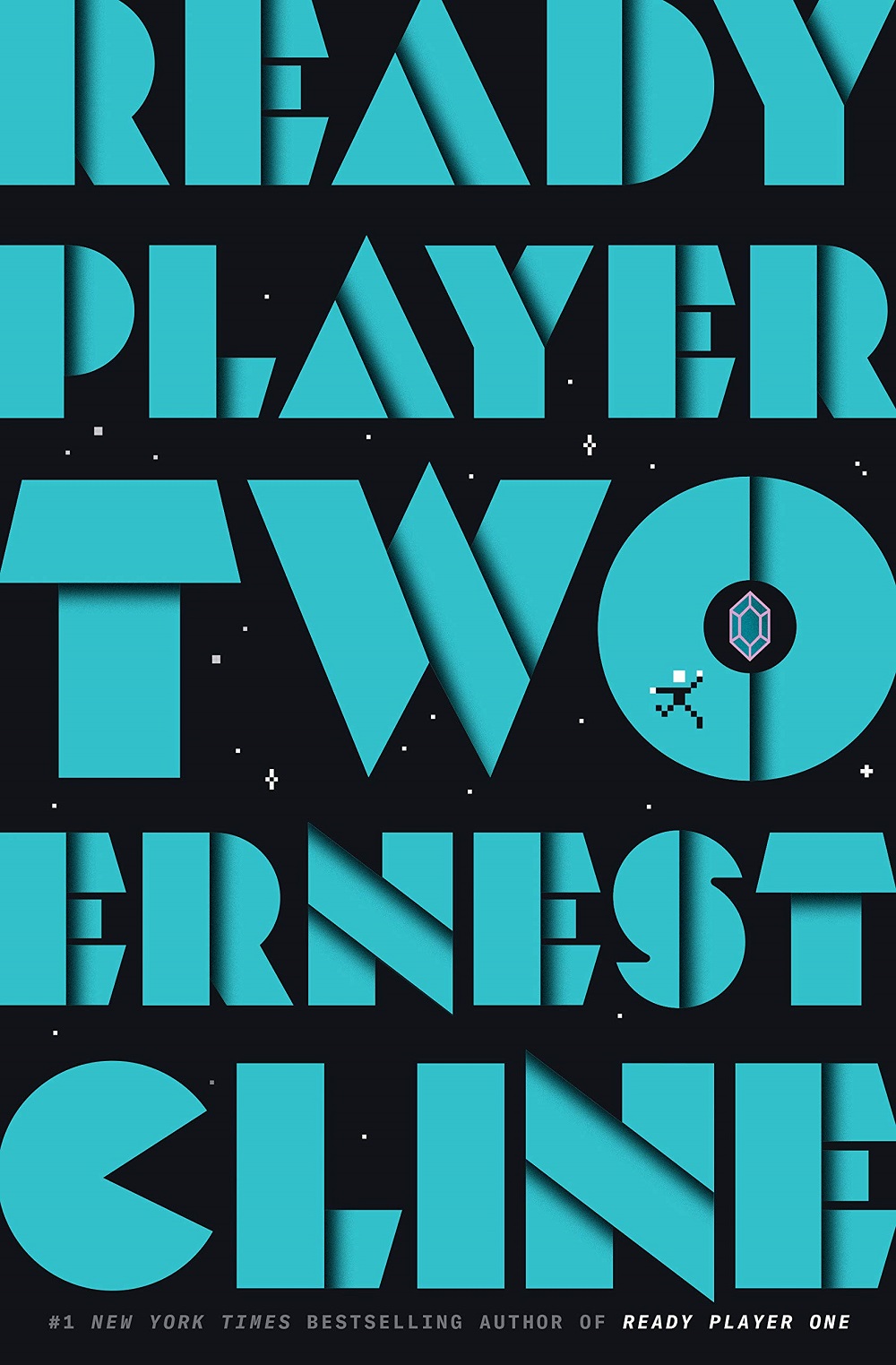
‘Ready Player Two’ by Ernest Cline is now available everywhere books are sold. Photo: amazon
Ernest Cline is an internationally best-selling science fiction novelist, screenwriter, and poet. He is the author of the novels “Ready Player One” and “Armada” and co-screenwriter of the film adaptation of “Ready Player One,” directed by Steven Spielberg. His books have been published in over fifty countries and have spent more than 100 weeks on The New York Times Best Sellers list. His new novel, “Ready Player Two,” the highly anticipated sequel to the worldwide bestseller “Ready Player One,” is out today, Tuesday, November 24, 2020. It takes readers on another imaginative, fun, action-packed adventure through Ernest Cline’s beloved virtual universe, and jolts them thrillingly into the future once again.
In “Ready Player Two,” days after winning OASIS founder James Halliday’s contest, Wade Watts makes a discovery that changes everything. Hidden within Halliday’s vaults, waiting for his heir to find, lies a technological advancement that will once again change the world and make the OASIS a thousand times more wondrous, and addictive, than even Wade dreamed possible. With it comes a new riddle, and a new quest—a last Easter egg from Halliday, hinting at a mysterious prize. And an unexpected, impossibly powerful, and dangerous new rival awaits, one who will kill millions to get what he wants. Wade’s life and the future of the OASIS are again at stake, but this time the fate of humanity also hangs in the balance.
‘Dark Tides’ is Philippa Gregory’s upcoming new historical novel. Photo: amazon
Philippa Gregory is the author of many The New York Times bestselling novels, including “The Other Boleyn Girl,” and is a recognized authority on women’s history. Many of her works have been adapted for the screen including “The Other Boleyn Girl.” She graduated from the University of Sussex and received a PhD from the University of Edinburgh, where she is a Regent. She holds honorary degrees from Teesside University and the University of Sussex. She is a fellow of the Universities of Sussex and Cardiff and was awarded the 2016 Harrogate Festival Award for Contribution to Historical Fiction. She is an honorary research fellow at Birkbeck, University of London. She founded Gardens for the Gambia, a charity to dig wells in poor rural schools in The Gambia and has provided nearly 200 wells. Her new book “Dark Tides: A Novel,” Book 2 of 2 of The Fairmile Series, will be released on Tuesday November 24, 2020. This historical drama tracks the rise of the Tidelands family in London, Venice, and New England. (Simon & Schuster, 2020)
In “Dark Tides,” two unexpected visitors arrive at a shabby warehouse on the south side of the River Thames. The first is a wealthy man named James Avery. He is hoping to find the lover he deserted twenty-one years before. He has everything to offer, including the approval of the newly restored King Charles II, and he believes that the warehouse’s poor owner Alinor has the one thing his money cannot buy—his son and heir. The second visitor is a beautiful widow from Venice who is in mourning. She claims Alinor as her mother-in-law and has come to tell Alinor that her son Rob has drowned in the dark tides of the Venice lagoon. Alinor writes to her brother Ned, who is newly arrived in faraway New England and trying to make a life between the worlds of the English newcomers and the American Indians as they move toward inevitable war. Alinor tells him that she knows, without a doubt, that her son is alive, and the widow is an imposter. This is a novel of greed and desire: for love, for wealth, for a child, and for home. It is set in the poverty and glamour of Restoration London – 1670, in the golden streets of Venice, and on the tensely contested frontier of early America.
‘You Were Not Born to Suffer’ by Blake D. Bauer. Photo: amazon
Blake D. Bauer is a wisdom teacher with an extensive background in psychology, alternative medicine, nutrition, traditional healing, and mindfulness meditation. Based on both his personal experience overcoming deep suffering, addiction and adversity, as well as his professional success with thousands of people worldwide, his work combines what he has found to be the most effective approaches to optimal mental, emotional and physical health. He is the author of the international bestselling book “You Were Not Born to Suffer: Overcome Fear, Insecurity and Depression and Love Yourself Back to Happiness, Confidence and Peace.” In this life-changing book, Blake Bauer explains why depression, addiction, physical illness, unfulfilling work and relationship problems are caused by years of hiding true emotions, denying a life purpose and living in fear.
First published in 2012, “You Were Not Born to Suffer” begins with an author Preface where he states that this updated edition contains insights that have helped thousands of people around the world improve their personal and professional lives. He faced his own battles with depression and now sees his purpose as sharing what he learned from his own suffering so that others can enjoy their lives as fully as possible. He acknowledges that life is short and people often take it for granted but assures readers that their happiness lies in their own hands and is “a daily choice we each need to make to overcome fear, negativity and guilt.” In the Introduction, he explains how the material in the book came from his search for freedom from his personal suffering, mental, emotional and physical, and a desire for the truth about life, himself and life’s purpose. The book is divided into thirty-three chapters ranging from Healing Guilt, Shame and Insecurity, Healthy Self-Esteem, Confidence and Trust in Life and Live Fully Before You Die. Each one begins with an inspirational quote and a reminder to take deep breaths and some end with “Practical Questions” and “Key Affirmations” to summarize key elements.
More than a self-help book, “You Were Not Born to Suffer” is a gentle reminder that even though our childhoods might have been difficult, it is time to move on and take charge of our lives. Blake D. Bauer has gone through these challenges and is more than eager to share what he learned: plainly put, you alone are responsible for your own happiness, stop blaming others and take control of your own destiny/purpose. To do that, it is important to heal the past to affect the present. He includes inspirational quotes, mindfulness and breathing exercises as well as personal exercises such as writing letters to your younger self. The language is simple and easy to understand and he does not come across as preachy or condescending. Some of the topics dealing with spirituality and how the universe works may not be for everyone, but the overall guidance and advice is universal. Regarding self-esteem “Anyone who judges or rejects us only does so because they are still judging and rejecting themselves, so their reaction to us actually has little to do with us.” Standout chapters: Chapter 24: Practical Nutrition and Lifestyle Guidance – contains nutrition advice (drinking plenty of water and avoiding highly processed foods) and lifestyle tips (mindfulness, meditation, journaling); and Chapter 15: Inhale Life Deeply and Slowly – focuses on the importance of slowing down and deep breathing. “You Were Not Born to Suffer” is a practical guide filled with positive messages on how to effectively handle financial worries, loneliness, guilt and self-doubt, among other issues. It is recommended for readers who appreciate advice on learning to take better care of themselves, heal old pain and live life to the fullest.
“Because the purpose of human life is to enjoy it fully, while learning what it means to love unconditionally, filing our days with the small things that make us feel great is vital to creating a fulfilling life.”
*The author received a copy of this book for an honest review. The views and opinions expressed here belong solely to her.
‘Code 7: Cracking the Code for an Epic Life’ by Bryan R. Johnson. Photo: google
Bryan R. Johnson is an American entrepreneur, venture capitalist and author. He is the founder and CEO of Kernel, a company that has developed devices that can monitor and record brain activity and OS Fund, a venture capital firm that invests in early-stage science and technology companies. His published works include “Code 7: Cracking the Code for an Epic Life” and “The Proto Project: A Sci-Fi Adventure of the Mind.” “Code 7” is the story of life at Flint Hill Elementary School, where life may seem normal, but seven friends find themselves on a path to crack the code for an epic life. It has received Wishing Shelf Book, Royal Dragonfly Book and Mom’s Choice Awards.
“Code 7” begins with an Introduction by the author, made to look handwritten, where he invites his readers to “crack the code” that will lead them to an epic life. It is divided into seven chapters, each a different child’s story where they each learn a life lesson: A World of Possibilities – Jefferson is given the job at school to paint a mural that represents the community; Smash Mouth Taffy – Sebastian opens a successful taffy business, but it is based on a lie; Handle With Care – Genevieve, an aspiring veterinarian, is given an egg to take care of for seven days; The Monster – Talmage helps his father in an epic effort to catch a “monster” fish that likes in a lake; Break a Leg – Samantha, a shy singer, who wants to try out for her school’s musical; Oh Rats! – Alec is a constant battle with his parents regarding cleaning his room and Code 7 – Kaitlyn, who wants to be a film maker and brings all six characters together for one final story.
These short stories all revolve around different students who each have their own life experience with a lesson learned: from lessons in caring, to having a strong work ethic and learning to work together as a group for a common goal. The chapters are short and the language is easy and simple enough for the youngest of readers to follow and enjoy. Even if sometimes the characters come across as bratty and the stories may be hard to believe, they serve the purpose of teaching a lesson and promoting discussions. At the end, there is a reference website that includes a discussion guide and insights into the Code 7 Challenges. It is a children’s book recommended for age level 6 and up and grade Level 1 and up.
*The author received a copy of this book for an honest review. The views and opinions expressed here belong solely to her.