The ‘Bit and Spur Makers of the Texas Tradition’ is this Friday February 7. Courtesy photo, used with permission.
This week, the Briscoe Western Art Museum is hosting a Lunch Lecture with bits and spurs specialist Kurt House on Friday February 7 from 12p.m. to 1:30p.m. He will be talking about the spur and how it evolved from a European symbol of wealth and power to an essential tool of the cowboy. Co-author of the book “Bit and Spur Makers of the Texas Tradition,” House will share stories about spur makers and how the Texas-made OK spur became one of the most sought-after pieces of cowboy equipment. House’s in-depth knowledge of spurs and bits will give everyone something to chew on during an open-lunch session where attendees can bring their lunch or grab a flavorful bite from Go’Shen Point BBQ food truck on the Briscoe’s campus. The lecture is included in museum admission. (Briscoe Western Art Museum, 2020)
Open daily, admission to The Briscoe Western Art Museum is free for children 12 and under, as well as active duty members of the military and up to four members of their family. Museum admission is $10 for adults, $8 for seniors and students, and $5 for retired military, first responders, educators, firemen and police officers. The museum offers extended hours and free admission every Tuesday from 4p.m. to 9p.m.
Briscoe Western Art Museum
210 W. Market Street
San Antonio, TX 78205
(210) 299-4499
But there was no decision to make. This was my calling. Some powerful force had come to dwell inside me, something bigger and stronger than me. —Malala Yousafzai
Malala Yousafzai, as the world knows, was shot in the head by the Taliban on October 9, 2012, as she rode home on the school bus in the Swat Valley, Pakistan. Malala was fifteen at the time. She survived the attack, recuperated in England, and has continued her education. She was awarded the Nobel Peace Prize in 2014 for her “struggle against the suppression of children and young people and for the right of all children to education.”
Can a child, an adolescent, a young person—make a world-changing decision? Is someone ever too young?
Let’s take a look at Malala’s story, because none of this came out of the blue. The “struggle” the Nobel Committee cited, was a decision that was so deeply embedded into her character that, at age fifteen, it had already become her way of life. And continues to be.
Seemingly from birth, Malala loved education. Her biographical material makes much of the fact that she sought to emulate her father, Ziauddin Yousafzai, who was so dedicated to education that he had founded his own school, the one she attended. Such “private” schools are not uncommon in Pakistan.
But Ziauddin’s school and his outspoken daughter became special targets of the Taliban. The fundamentalist group had issued an edict against educating girls and death threats against the entire family (mother Toor Pekai Yousafzai and two sons). The school was forced to close for a time and had re-opened shortly before Malala was shot.
You might say that the child was merely following the example—or the dictates—of the father (who was supported in all endeavors by the mother). That the child made no decisions on her own. That happens in families all the time. I can think of many examples in my own life—involving my parents and the decisions they made for me when I was young, and about how my wife and I did the same for our sons. None of these decisions involved defying the Taliban and bringing danger to our family. But, that may not be the right way to look at what Ziauddin did. Were his decisions part of doing what parents claim we always try to do—leading by example?
Do you ever think about the phrase “an accident of birth”? It means that none of us are responsible for the circumstances of our birth—who our parents are, our family, our nationality or state or town, our genetic make-up, economic status and so on.
Among the things that Malala was not responsible for: That she was a first-born daughter in a culture that values boys over girls; that she was born into a troubled country being over-run by violent extremists. But it was also an accident of birth that she had two parents who were, by all accounts, as dedicated to her welfare, education, and growth as they were to that of her two younger brothers. It seems to me that Malala took what she was given and decided to run with it.
By the time she was shot in 2012, Malala had shown by her own example that she recognized her “accident of birth.” Her dedication to education for girls was in fact her own decision based on parental example. Consider her words, written just a year later in her autobiography:
“I was very lucky to be born to a father who respected my freedom of thought and expression and made me part of his peace caravan and a mother who not only encouraged me but my father too in our campaign for peace and education.”
At an even younger age than fifteen, Malala was already an ardent activist. She blogged for the BBC on the oppressions of life under the Taliban and was the subject of a New York Times documentary. She made speeches often, including one entitled “How dare the Taliban take away my right to an education.” The year before she was shot, she won both the International Children’s Peace Prize and Pakistan’s first Youth Peace Prize. As the Taliban’s noose ever tightened around her country, her family, and her safety, Malala’s outspokenness and visibility grew. As she wrote in her autobiography, “I decided I wasn’t going to cower in fear of [the Taliban’s] wrath.”
In the years since she survived the Taliban assassination attempt, Malala has become a global symbol for the cause of education for girls specifically and for the welfare of all children. Not even a year after she was shot, she addressed the “Youth Takeover” at the United Nations. Two years almost to the day after she was shot, the Nobel Committee announced that she would share the 2014 Peace Prize with Kailash Satyarthi, who made his name with international peaceful protests on behalf of children. Even with constant visibility while traveling the world to event after event, she completed the studies necessary to be accepted in 2017 into Oxford University (which fact she announced on her new Twitter account). Also in 2017, Malala was designated a United Nations Messenger of Peace “to help raise awareness of the importance of girls’ education.”
Malala is still enveloped in the support of her family, which left Pakistan to settle in the UK. The Economist, noting that “Pakistani education has long been atrocious,” included the following in a detailed and dismal examination of the current status:
“From 2007 to 2015 there were 167 attacks by Islamic terrorists on education institutions . . . When it controlled the Swat River valley in the north of the country, the Pakistani Taliban closed hundreds of girls’ schools. When the army retook the area it occupied dozens of them itself.”
Malala has written two books. The first, “I Am Malala,” was published a year after her shooting and tells, with the help of writer Christina Lamb, of her early life in Pakistan and the event that put her onto a new trajectory. Published in 2017, the second book is for children, “Malala’s Magic Pencil.” In it, young Malala yearns for a special pencil that would let her do all sorts of special, interesting things, including drawing “a lock on my door, so my brothers couldn’t bother me.” I think every child wants a lock like that. Eventually, she describes what we adults will recognize as an intention, a determination, a decision: “I knew then that if I had a magic pencil, I would use it to draw a better world, a peaceful world.”
Time will tell us how Malala’s decisions as a girl, a teenager, a young adult, and into the future will all play out, how world-changing they will be. My hope is that the answer is— immensely.
Malala’s story offers all of us one overarching lesson about decision-making that will help us all lead better lives:
If you are a parent or other adult in a position to influence children and young people, remember how important your own example is. The decisions you make on behalf of others may turn out to be the template that helps form their lives.
If that’s all you glean, that’s enough. But there are many other lessons to take:
Have courage to do the right thing, whether it is large or small.
Understand you may be attacked and plan for that in advance. I mean physically attacked, as well as the more expected verbal criticisms.
Recognize you may be a symbol for others and prepare for that in ways they will embrace and admire. And behave that way.
Follow your decision. Give it a chance to shape your life.
Do not give up.
Depend on each other. Know whom you can trust, and be that trustworthy person to others to the best of your ability.
Seek education and take every other opportunity to broaden your knowledge of the world and its people.
Robert L. Dilenschneider is the founder of The Dilenschneider Group, a corporate strategic counseling and public relations firm based in New York City. Formerly president and CEO of Hill & Knowlton, he is the author of the bestselling books “Power and Influence, A Briefing for Leaders,” “On Power” and newly released “Decisions: Practical Advice from 23 Men and Women Who Shaped the World.”
Brandyn Cross, accomplished TV filmmaker, actor and writer and award-winning singer/songwriter, makes his debut as a novelist. “The Legacy Series: Book One,” the first novel in the epic book series, will be released February 18, 2020. Based on real events, writings, and correspondences, it tells the story of a terminally ill young boy who is also enduring a life of physical, emotional, and sexual abuse. It will be available in paperback and digital version on Amazon and all other major retailers and bookstores. (Black Château, 2020)
“The Legacy Series: Book One” offers a unique, unparalleled glimpse into the mind of abused children amid the hysteria surrounding the Satanic Ritual Abuse Panic of the early 1990s. It provides an unprecedented opportunity to experience a real world of childhood desperation and painful secrets, through first-hand, day-to-day accounts as they occur; it is a world known by millions of children, but never openly shared with adults. In the early days of the Internet, Brandyn (Brandy) Harris builds his private virtual world outside the knowledge of his strict and abusive parents. He finds solace in the messages he exchanges with a close group of virtual teen friends. Written in the message board format specific to the infant days of the Internet, “The Legacy Series: Book One” reveals the truths kids only tell their friends when they are away from adult supervision. It also proves that no matter how dreary the circumstances of our lives, we can always choose happiness, a philosophy by which Brandyn Cross himself lives.
Brandyn Cross was born a high functioning autistic with a love of music, books and film, but he did not begin exploring his creative gifts until a severe industrial accident left him a wheelchair-bound amputee. Determined to show the world that even severe obstacles can be overcome, he began studying and honing his craft, until ultimately turning his ambitions into a professional reality. He is a multi-media artist with credits ranging from accomplished writer to recording artist, songwriter, filmmaker and actor. As a singer/songwriter, Brandyn scored the international top 10 hits and won BEST SONG at the prestigious Utah Film Festival & Awards. As an actor and filmmaker, Brandyn has worked on numerous projects such as Unicorn City and The Wayshower and is presently in post-production on his feature directorial debut with the dark Emo drama, The Legacy.
Most feelings of discomfort in life have clear solutions. For a stuffy nose, decongestants do the trick. For a pounding headache, aspirin or Tylenol comes in handy. But what do you do about a relentlessly aching back? As most of us know, the answer is not nearly as clear-cut as we’d wish. And unlike infectious diseases that often have targeted remedies (think antibiotics for bacterial infections and vaccines for viruses), ailing backs are like misbehaving, obnoxious family members—we can’t easily get rid of them or “fix” them. They also have a tendency to stick around and bother us nonstop, lowering our quality of life considerably and indefinitely.
Perhaps nothing could be more frustrating than a sore or hurting back. It seems to throw off everything else in our body, and makes daily living downright miserable. With the lifetime prevalence approaching 100 percent, virtually all of us have been or will be affected by low back pain at some point. Luckily, most of us recover from a bout of back pain within a few weeks and don’t experience another episode. But for some of us, the back gives us chronic problems. As many as 40 percent of people have a recurrence of back pain within six months.
At any given time, an astounding 15 to 30 percent of adults are experiencing back pain, and up to 80 percent of sufferers eventually seek medical attention. Sedentary people between the ages of forty-five and sixty are affected most, although I should point out that for people younger than forty-five, lower back pain is the most common cause for limiting one’s activities. And here’s the most frustrating fact of all: A specific diagnosis is often elusive; in many cases it’s not possible to give a precise diagnosis, despite advanced imaging studies. In other words, we doctors cannot point to a specific place in your back’s anatomy and say something along the lines of, “That’s exactly where the problem is, and here’s how we’ll fix it.” This is why the field of back pain has shifted from one in which we look solely for biomechanical approaches to treatment to one where we have to consider patients’ attitudes and beliefs. We have to look at a dizzying array of factors, because back pain is best understood through multiple lenses, including biology, psychology, and even sociology.
The Challenge
So, why is back pain such a confounding problem? For one, it’s lumped into one giant category, even though it entails a constellation of potential culprits. You may have back pain stemming from a skiing accident, whereas your neighbor experiences back pain as the consequence of an osteoporotic fracture. Clearly, the two types of back pain are different, yet we call them “back pain” on both accounts, regardless. Back pain has an indeterminate range of possible causes, and therefore multiple solutions and treatment options. There is no one-size-fits-all answer to this malady. That is why diagnosing back pain, particularly persistent or recurrent pain, is so challenging for physicians.
Some people are able to describe the exact moment or series of moments when they incurred the damage to their back—a car accident, a slip and fall, a difficult pregnancy, a heavy-lifting job at work, a sports-related injury, a marathon, and so on. But for many, the moment isn’t so obvious, or what they think is causing them the back pain is far from accurate.
The Two Types of Back Pain
If you are going to experience back pain, you’d prefer to have the acute and temporary kind rather than the chronic and enigmatic kind. The former is typically caused by a musculoskeletal issue that resolves itself in due time. This would be like pulling a muscle in your back during a climb up a steep hill on your bicycle or sustaining an injury when you fall from the stepladder in the garage. You feel pain for a few weeks and then it’s silenced, hence the term self-limiting back pain. It strikes, you give it some time, it heals, and it’s gone.
The second type of back pain, though, is often worse, because it’s not easily attributed to a single event or accident. Often, either sufferers don’t know what precipitated the attack, or they remember some small thing as the cause, such as bending from the waist to lift an object instead of squatting down (i.e., lifting with the legs) or stepping off a curb too abruptly. It can start out of nowhere and nag you endlessly. It can build slowly over time but lack a clear beginning. Your doctor scratches his head, trying to diagnose the source of the problem, and as a result your treatment options aren’t always aligned with the root cause of the problem well enough to solve it forever. It should come as no surprise, then, that those with no definitive diagnosis reflect the most troubling cases for patients and doctors.
What Are the Chances?
Chances are good that you’ll experience back pain at some point in your life. Your lifetime risk is arguably close to 100 percent. And unfortunately, recurrence rates are appreciable. The chance of it recurring within one year of a first episode is estimated to be between 20 and 44 percent; within ten years, 80 percent of sufferers report back pain again. Lifetime recurrence is estimated to be 85 percent. Hence, the goal should be to alleviate symptoms and prevent future episodes.
Jack Stern, M.D., Ph.D., is the author of “Ending Back Pain: 5 Powerful Steps to Diagnose, Understand, and Treat Your Ailing Back.” He is a board-certified neurosurgeon specializing in spinal surgery, and cofounder of Spine Options, one of America’s first facilities committed to nonsurgical care of back and neck pain. Dr. Stern is on the clinical faculty at Weill Cornell Medical College and has published numerous peer- and non-peer– reviewed medical articles. He lives and practices in White Plains, New York.
The emergency call came in at breakfast. They could hear Wolfie’s shortwave radio belting out his call sign, repeatedly declaring, “Come in 5Z4WD, most urgent call for Pero Baltazar.” Pero got up and made his way to Wolfie’s office, asking Amal, their waiter, to get Wolfie. “Kwenda kupata bwana Wolfgang haraka, tafadhali, Amal.” (Go get boss Wolfgang quickly, please, Amal.)
Pero knew better than to touch Wolfgang’s sole means of communication with the outside world. Besides, Wolfgang had once allowed him to use the radio transmitter set, commonly called an RT set, to reach out to Pero’s old contacts at the CIA and State Department in Washington. Pero had been a runner for them, collecting papers and making note of fellow passengers at airports when asked, fortunately infrequently—nothing dangerous, nothing remotely exciting. Then two events had caused Pero to get deeper into the world of anti-terrorism than he ever wanted. Unable to cope alone those two times, he had involved his friends, including Heep, Mary, Susanna, and, of course, Mbuno, who were once again on location with him, this time along the shore of Lake Rudolf. Pero desperately hoped this emergency call had nothing to do with his old Washington contacts.
He had quit after the Berlin package incident, after he had nearly died, mainly because he had married for the second time in his life as soon as he had left the hospital and recovered. Susanna was a brilliant sound engineer, as devoted to Pero as he was to her. The name of Pero’s first wife, Addiena, who had died in the Lockerbie disaster, was tattooed on the underside of his right forearm. He used to sleep with it across his heart so he would not forget her after she perished. Her tragic death was the reason he had offered his minor services to the CIA in the first place, wanting to do something to thwart terrorism. It was heartwarming for Pero that his new wife, Susanna, now insisted she drift off to sleep lying to his right, making him put out his arm for her to use Addiena’s name as a pillow. “She loved you and you, her. It is how I can remember her, thank her, for teaching you how to love, you dummer Mann.”
Susanna’s native German expression of “dumb man” had been a scolding term for him originally deployed during the Berlin dangers, which was when she had revealed she cared for Pero deeply. Since then, it had become a term of endearment between them, their bond cemented by past events.
Adrenaline pumping because of the radio call, Pero weaved his way past tightly packed breakfast tables, careful not to allow his large, six-foot frame to disturb fellow guests. He heard Amal calling out to Wolfgang. By the time Pero got to the radio office, he could hear Wolfgang replying, “I am coming, I am coming.” The RT set was almost a living thing to Wolfgang, and Pero was used to hearing the man talk to it as a father would his child. Pero, waiting at the door, opened it for Wolfgang, who entered, sat, and flicked the on switch all in one practiced movement. He keyed the mike, gave his call sign 5Z4WD in answer, and said, “What is the message?”
The voice faded suddenly, coming in faintly, and Wolfgang gently turned the tuning dial. “Okay, Nairobi, I read you now, the sun’s up here so this may break up.” A woman’s voice came on the radio, asked if Baltazar was available, and Wolfie told her he was present and standing by.
“Message from Flamingo Tours, for Pero Baltazar, urgent, Mwana Wambuno, on safari, Moyowosi Game Reserve, missing for over ten hours. Safari clients being flown back to Nairobi. No trace of Ube. Over.” Ube was the nickname of Mbuno’s nephew, Mwana Wambuno. Pero immediately knew Mbuno would take the news of his favorite nephew hard.
Pero asked, “Wolfie, may I speak directly to her?” Wolfgang nodded and indicated the mike button. “Pero here, who’s that? Sheila Ndelle? Over.” Sheila, the backbone of Flamingo Tours, was also the sister of the UN security police chief and totally reliable.
“Ndiyo, over.” Yes, came the reply.
“Hi Sheila, give me all the details you have, and also, where’s Tone? Over.” Anthony Bowman was the owner of Flamingo Tours, known to everyone over the decades as simply Tone. An ex–white hunter, Tone ran the best safari outfitters anywhere—expedition tents, private toilets, dinner with white table linens, client’s wishes always fulfilled.
“Hi Pero, Mr. Anthony is down at the Tanzanian Embassy trying to find out more information, if there is any known terrorist or poaching problems in the area. There wasn’t any when we sent the clients there. All we know is that Ube took three clients out on a walking safari yesterday morning, camera clients”—by which she meant not hunters—“and they took leopard images in the tall grass, a kill of a bushbuck, treeing the carcass, you know the drill.” Pero did. Leopard was one of Africa’s big five—lion, leopard, rhino, elephant, and cape buffalo. Originally a hunting list, these animals still presented a challenge for the lens hunter. “On the plane’s HF radio, briefly, the clients have reported that suddenly as they were heading back to camp, Ube told our two bearers to make the clients crawl back to the Land Rover and fly back to Nairobi without stopping or talking to anyone. They said Ube told them to do this quietly if they valued their lives. They did as they were told. They have no idea what Ube did or where he went.” Sheila paused. “But, Pero, they said they heard a shot. Over.”
Pero’s producer instincts kicked in. “You say the clients are en route for Wilson Airport? Over.” Wilson Airport was on the western side of Nairobi and the jumping off small airport for most safaris and the Flying Doctor air services. Wolfgang glanced at Pero, clearly wondering why Pero should be interested in the clients since he knew Ube’s disappearance would be of paramount importance to Mbuno and, therefore, presumably to Pero.
Sheila’s tone also had an edge. “Yes, yes, they are inbound but had to wait for Tanzanian air traffic control for permission to depart. We had a plane waiting, in case, for medical reasons on the client’s instructions. They will be back in about two hours. But it is Ube we are worried about, and we need to tell Mbuno. Over.”
Pero nodded. “Agreed, I’ll take care of that. But Sheila, listen to me, please, I need you to go immediately to the airport, see Sheryl at Mara Airways, arrange for a Cessna 414 for us here immediately, plane and pilots—note, I said pilots—on loan, indefinite period. Over.” Sheila gave her confirmation. “Good, then call the Langata police station and ask for Sergeant Gibson Nabana. He’s the one I shot during that terrorist attack two years ago, remember? Over.” Sheila laughed and said she remembered it well. It had made the front page of the Daily Standard paper. At the time Pero had needed to gain control of a difficult confusion of authority at Wilson Airport and had only slightly wounded the sergeant. They subsequently became good allies and, since then, drinking buddies. “Okay, Sheila, tell Gibson to stop your clients and confiscate every piece of camera equipment they have. Tell him that I will be in Nairobi as soon as possible. Look, we need to review every shot to see if those camera-happy clients caught anything that can help us figure out what has happened to Ube. Once Mbuno and I see what is there, or not, we will reboard the Mara Cessna and proceed to . . . where was the landing strip? Remember that Sheryl at Mara Airways will need to have that information while you are at Wilson Airport, okay? Over.”
Sheila understood the flight would have to leave Kenya and land in Tanzania, an everyday occurrence as long as the paperwork was filled in properly with Customs and Excise on both sides of the border. “The Moyowosi Airport we used for the clients was actually at Mgwesi at the southwestern end of the Lake Nyagamoma, and then there is a three-hour slow drive into the game reserve. Should I lay on transport? Our drivers are still there, packing up the tents. I have not given them instruction to drive back to base. Over.”
“Yes, Sheila, hold your people in place, reestablish the camp, but move it at least a mile or more away. We’ll use it, and we’ll pay the fare. And one more thing, your clients will get back to Wilson before we do, so you have to make sure to tell them, before they land, that if Ube had reason to get your clients out secretly, whatever his reasons were, it is serious and if they value their lives they will not, I repeat, not talk with anyone. And keep them at the airport. Over.” Sheila said she understood and signed off.
Wolfgang looked over at Pero and simply said, “I guess you’ll be leaving then. The pool is full; I was thinking about draining it, but you might as well use it before you go while you wait for transport.” It was as friendly a gesture Pero had ever heard the owner of the Oasis make.
**************************************************
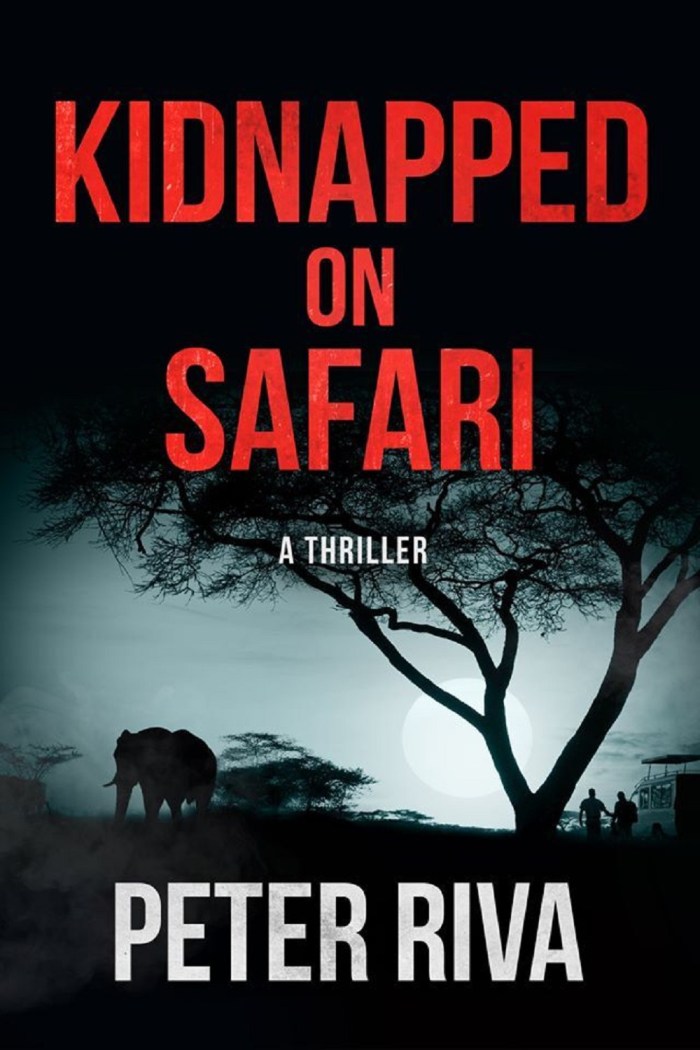
Peter Riva is the author of “Kidnapped on Safari.” He has spent many months over thirty years traveling throughout Africa and Europe. He created the 1995 series Wild Things for Paramount. Passing on the fables, true tales and insider knowledge of the last reserves of true wildlife is his passion. He has been working as a literary agent for the past forty years. In his spare time, Riva writes science fiction and African adventure books, including the Mbuno and Pero Adventures series, “Murder On Safari” and “The Berlin Package.” He lives in Gila, New Mexico.
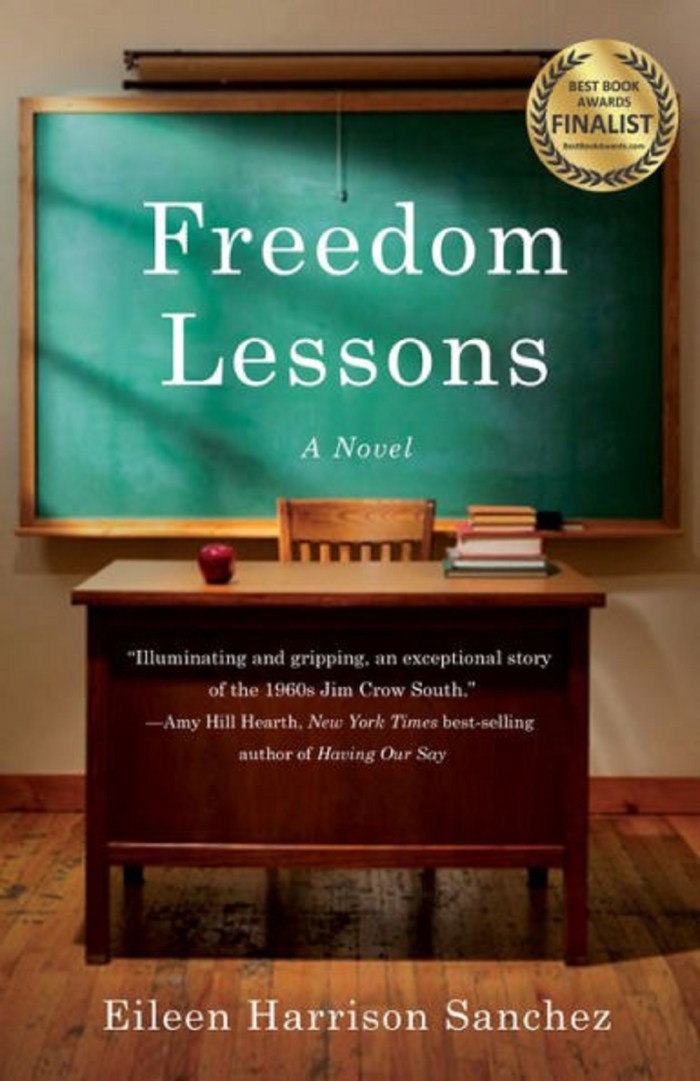
‘Freedom Lessons’ is the debut novel by Eileen Harrison Sanchez. Photo: Barnes & Noble
Eileen Harrison Sanchez is an author who retired from a forty-year career in education that started as a teacher and ended as a district administrator. Her debut novel is “Freedom Lessons: A Novel” on which she draws on her own remarkable experience as a young, white teacher in the Jim Crow South during desegregation to write her immersive work of fiction inspired by those events. It is the story of Colleen, a white northern teacher who enters into the unfamiliar culture of a small town and its unwritten rules as the town surrenders to mandated school integration.
“Freedom Lessons” is told alternately through three points of view: by Colleen, an idealistic young white teacher, Frank, a black high school football player and Evelyn, an experienced black teacher. This is the story of how the lives of three very different people intersect in a rural Louisiana town from July 1969 to November 1970. It begins as Colleen and Miguel, newlyweds, are driving to Fort Polk and their vehicle overheats. Miguel is Cuban and has been transferred to the Louisiana army base where he would serve as a drill sergeant for a year. Colleen later gets a job at the local black school until seemingly overnight, the school is ordered shut down and the neighboring white school is forcibly integrated. Frank is determined to protect his mother and siblings after his father’s suspicious death even if it means keeping evidence from the crime scene a secret from everyone around him. Being forced to attend the now integrated white school means he lost his position as a star football player and others lost positions of power, including the president of the student council. Evelyn does not want public schools to be integrated because she believes, as other like her do, that black teachers do a better job with black students and prefer to follow the Freedom of Choice plans, where everyone ‘chooses’ to be with their own.
As the years go by, the era of Brown v. Board of Education, Jim Crow laws and civil rights is in danger of becoming a distant memory. That is why it is vital that the topic gets revisited, especially by authors with first-hand knowledge, which gives their voice authenticity, as is the case with “Freedom Lessons.” Eileen Harrison Sanchez spent a year teaching in rural Louisiana and, as a teacher and an outsider, experienced the effects of segregation and forced integration and how it affected those around her. Far from being a white savior story, Colleen does not come in and “saves the day,” this is a well-researched and balanced novel that successfully gives three different viewpoints of one of America’s darkest periods. The language is easy to understand and simultaneously poetic: “The houses were set behind huge trees with Spanish moss dripping from the trees, like curtains shielding the lives of the tenants.” The characters are well developed and relatable and considering the topic, it is appropriate for all ages and should be required reading in schools. “Freedom Lessons” is a must-read for fans of historical fiction and a gentle reminder of how far we have come as a country and how much we still need to learn.
May 17, 1954: Brown v. Board of Education of Topeka was a landmark US Supreme Court case. The court unanimously declared that state laws establishing separate public schools for black and white students was unconstitutional. In 1955, the court ordered states to desegregate “with all deliberate speed.”
*The author received a copy of this book for an honest review. The views and opinions expressed here belong solely to her.
Stephen King is an American author of horror, supernatural fiction, suspense, science fiction and fantasy. His books have sold more than 350 million copies and many of them have been adapted into feature films, miniseries, television shows and comic books. He is best known for classic novels like “Carrie,” “It,” “The Green Mile” and the Dark Tower series and most recently “The Outsider,” “Sleeping Beauties,” co-written with his son Owen King, and the Bill Hodges trilogy: “Mr. Mercedes,” “Finders Keepers” and “End of Watch.” “The Outsider” follows a seemingly straightforward investigation into the gruesome murder of a young boy. But when an insidious supernatural force edges its way into the case, it leads a seasoned cop and an unorthodox investigator to question everything they believe in. It has been adapted into a 10 part limited series that will premiere on HBO on Sunday January 12 at 9p.m. Cast includes Ben Mendelsohn, Cynthia Erivo, Jason Bateman and Bill Camp.
According to Amazon, “The Outsider” the story centers around an eleven-year old boy’s murder. When his violated corpse is found in a town park, eyewitnesses and fingerprint evidence points to one of Flint City’s most popular citizens. His name is Terry Maitland, and he is a Little League coach, an English teacher, husband and father of two girls. Detective Ralph Anderson, whose son Maitland once coached, orders a very quick and public arrest even though he has an alibi. Anderson and the district attorney add DNA evidence to go with the fingerprints and eyewitnesses and assume they have an ironclad case. Typical of King, this is not the ending, for as the investigation expands and horrifying answers begin to emerge, the story kicks into high gear and brings along strong tension and unbearable suspense. Terry Maitland seems like a nice guy, but is he really?
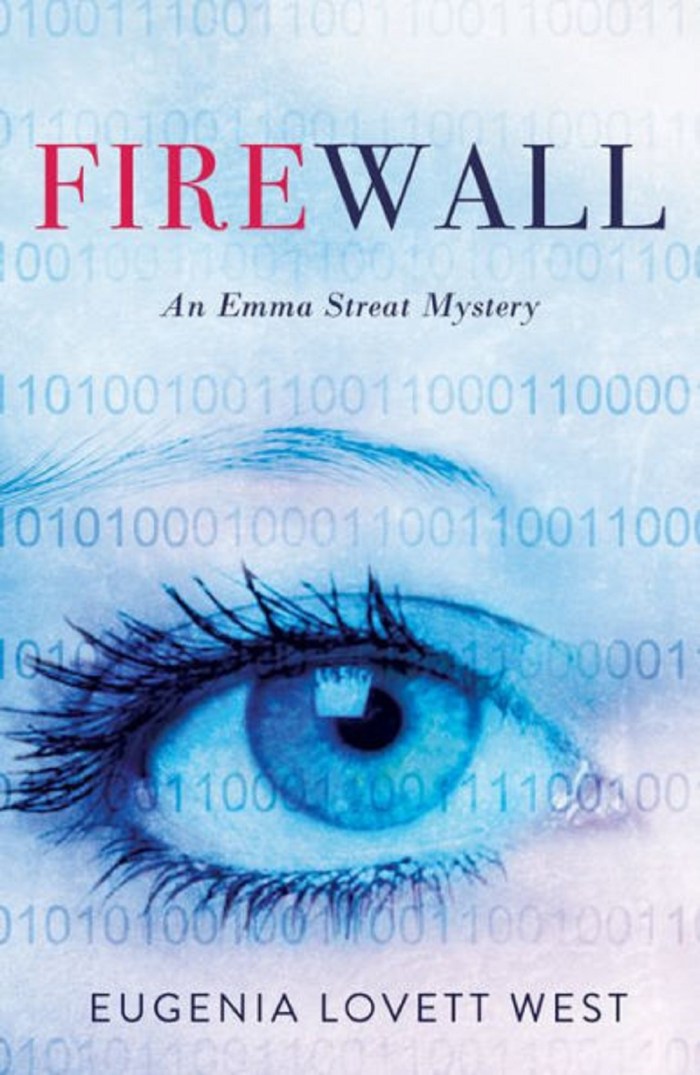
‘Firewall’ by Eugenia Lovett West. Photo: Barnes & Noble
Eugenia Lovett West is an American author who attended Sarah Lawrence College and worked for Harper’s Bazaar and the American Red Cross. Her first novel was “The Ancestors Cry Out” and was followed by two Emma Streat mysteries: “Without Warning” and “Overkill” and the historical novel “Sarah’s War.” Her latest novel, “Firewall: An Emma Streat Mystery” was released in November and has Emma involved in the dark world of cybercrime when her rich, feisty, socialite godmother is blackmailed and turns to Emma for help.
The Emma Streat Mysteries revolve around Emma, a former opera singer who survived the murder of her husband and the destruction of her beautiful old house. She is now a single mother struggling to move on and make a home for her two sons. Because of her detective skills and her connections, she has become a go-to-person when family and friends are in trouble. “Firewall” begins with Emma’s plans for a Caribbean getaway disrupted when her godmother Caroline calls her and demands she drop everything to help her find her ex-husband Pierre who she believes is behind a blackmail attempt. Caroline mentions that Pierre was last seen in Paris so Emma cancels her plans to go halfway around the world to find him despite the fact that Caroline already paid the ransom demand. This case takes Emma to exclusive European settings where she interacts with top people in the financial and art world . Along the way, she has to rely on a past lover for information, she gets caught up in a kidnapping and is herself kidnapped and nearly killed. It takes all her resilience and wits to get her through it all and bring a ruthless criminal to justice.
Emma Streat is back in top form for another thrill ride of mystery solving. Her character is well developed from past novels: she is smart with admirable detective skills but is easily swayed and does not seem to be in control of her own life. Her newest mystery is an enjoyable and easy read with a story that moves along at a brisk pace written in down to earth language. The first person narration draws the reader into Emma’s life and provides insight into her thought processes. The first part develops the blackmail story but part two has little to do with this storyline and does not circle back to Caroline and her situation. Hopefully it will be addressed in future novels. There are several sub-plots with characters that keep changing and then abruptly dropped and only one briefly deals with cybercrime, as promised by the title. Overall, “Firewall” is a combination of mystery, suspense and romance with enough thrills and plot twists to keep the reader guessing and is recommended for fans of mystery and suspense novels.
*The author received a copy of this book for an honest review. The views and opinions expressed here belong solely to her.
This year’s Texas Book Festival is set for November 7 and 8. Photo: Texas Book Festival, used with permission.
After a successful 2019 connecting authors, readers and book lovers, the Texas Book Festival is excited to announce that this year’s festival will be held on Saturday November 7 and Sunday November 8, 2020. The 25th year of the Texas Book Festival, one of the largest and most prestigious book festivals in the country, will once again be held throughout the grounds of the Texas State Capitol and along Congress Avenue in downtown Austin. (Texas Book Festival, 2019)
This year, everything fans know and love about the Festival will return. There will be acclaimed and emerging authors, book signings, cooking demonstrations, author panels, live music, a Saturday night Lit Crawl and more yet-to-be announced events and programming for the Festival’s 25th anniversary. Submissions to participate in the 2020 festival will be opening soon.
The Texas Book Festival connects authors and readers through experiences that celebrate the culture of literacy, ideas and imagination. Founded in 1995 by former First Lady Laura Bush, Mary Margaret Farabee and a group of volunteers, the nonprofit Texas Book Festival promotes the joys of reading and writing through its annual Festival Weekend, the Texas Teen Book Festival, the Reading Rock Stars Title I elementary school program, the Real Reads Title I middle and high school program, grants to Texas libraries and year-round literary programming. The Festival is held on the grounds of the Texas Capitol each fall and features more than 300 renowned authors, panels, book signings, cooking demonstrations and children’s activities.
‘Scars in Time: A Novel’ is the new novel by Ryan Gutierrez. Photo: Google
Ryan Gutierrez is an American author born and raised in Texas who currently resides in the small South Texas town of Los Fresnos. He graduated from The University of Texas – Brownsville with a bachelor’s degree in Criminal Justice and worked as a Child Abuse Investigator with the state of Texas for five years. His debut novel, “Scars in Time: A Novel” is about Brennan Ramirez, a man determined to change his wife’s traumatic past by going back in time. The true question is no longer “What if you could go back to the past?” but rather “What are you willing to sacrifice to change the past?”
According to Amazon, “Scars in Time: A Novel” revolves around family man Brennan Ramirez. What if you could go back and change your life, remove the pain from the past? For Brennan, that question is no longer rhetorical. Brennan wants a break. After quitting his job as a Child Abuse Investigator because of his anxiety and panic disorder, he is feeling useless. What he wants more than anything is to give his loving wife Deidre and his little girl a good life. Brennan is determined that the best and most definitive way to fix their life for the best is to go back and prevent the traumatic abuse his wife suffered as a child at the hands of her mother’s boyfriend. As Brennan test drives The Machine, he begins to experience true power, true control, or so he thinks. With every trip, every choice, Brennan realizes that his newfound control may be an illusion.





 SA Examiner