‘Tunnel 29’ is the new book by Helena Merriman. Photo: google
Helena Merriman is an award-winning journalist, author and documentary-maker. Helena wrote, produced and presented Tunnel 29 – the BBC podcast series about a group of students who dug a tunnel under the Berlin Wall in 1962. The podcast has had over 6m downloads and was listed by The New Yorker as one of their top five podcasts of 2019. It won the Foreign Press Association’s Podcast of the Year, Rose D’Or Best Audio Entertainment and Best Radio Podcast and Moment of the Year at the British Podcast Awards. Helena has worked as a reporter all over the world, with long stints in Jerusalem, Egypt and Washington DC. She has spent time with resistance fighters on the frontline in Libya, reported on the Egyptian uprising from Cairo, interviewed protesters in Yemen, investigated illegal fishing in Sierra Leone and covered Obama’s re-election campaign. Her new book “Tunnel 29: The True Story of an Extraordinary Escape Beneath the Berlin Wall” is the true story of the most remarkable Cold War rescue mission. (amazon, 2021)
“Tunnel 29” – He escaped from one of the world’s most brutal regimes. Then, he decided to tunnel back in. In the summer of 1962, a young student named Joachim Rudolph dug a tunnel under the Berlin Wall. Waiting on the other side in East Berlin were dozens of men, women, and children—all willing to risk everything to escape. Drawing on interviews with the survivors and Stasi files, Helena Merriman brilliantly reveals the stranger-than-fiction story of the ingenious group of student-diggers, the glamorous red-haired messenger, the Stasi spy who threatened the whole enterprise, and the love story that became its surprising epilogue. “Tunnel 29” was also the first made-for-TV event of its kind; it was funded by NBC, who wanted to film an escape in real time. Their documentary—which was nearly blocked from airing by the Kennedy administration, which wanted to control the media during the Cold War—revolutionized TV journalism. “Tunnel 29” is a success story about freedom: the valiant citizens risking everything to win it back, and the larger world rooting for them to triumph.
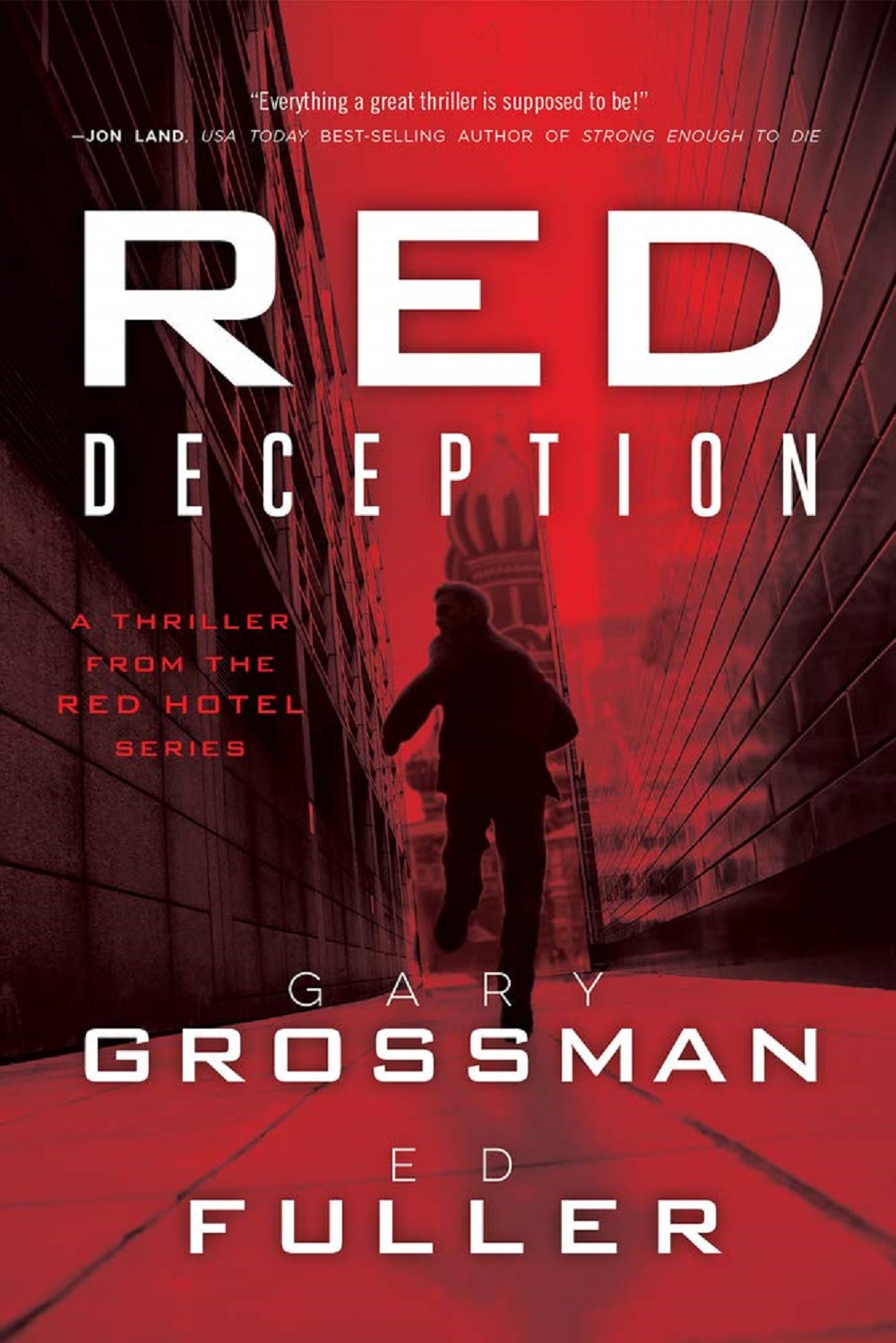
‘Red Deception’ by Gary Grossman and Ed Fuller is book two in the Red Hotel series. Photo: amazon
Gary Grossman’s first novel “Executive Actions” propelled him into the world of geopolitical thrillers. “Executive Treason,” “Executive Command,” and “Executive Force” further tapped Grossman’s experience as a journalist, newspaper columnist, documentary television producer, reporter, and media historian. In addition to the bestselling Executive series, Grossman wrote the international award-winning “Old Earth,” a geological thriller that spans all of time. With “Red Hotel” and “Red Deception,” his collaborations with Ed Fuller, Grossman entered a new realm of globe-hopping thriller writing. Ed Fuller is a hospitality industry leader, educator, and bestselling author. He is also director of the FBI National Academy Associates (FBINAA). The plots for “Red Hotel” and “Red Deception” draw heavily on his experience and exploits. “Red Deception” is the second book in The Red Hotel series and the newest novel by Gary Grossman and Ed Fuller – when terrorists bomb bridges across the country and threaten the Hoover Dam, the vulnerability of America’s infrastructure becomes a matter of national security.
“Red Deception” begins with real world news headlines such as North Korean spies, Russia looking to get its former nations back, and other news-worthy world events. The Prologue consists of three separate foreign insurgents slipping into the country, one through the US/Canadian border in Maine (an eyewitness eventually calls in to a radio show (page 125), one in the Los Angeles International Airport, and the other fifteen nautical miles East of Fort Lauderdale, Florida with more to come. The rest of the novel is divided into three parts, Part One: The Long Fuse, Part Two: Trip Wire, and Part Three: Shock Waves.
Dan Reilly is a former Army intelligence officer who is on a taxi on his way to a meeting when an explosion rocks the 14th Street Bridge in Washington, D.C. He survives only because his taxi was behind an armored car and he immediately goes into crisis mode and tries to help as many people as he can. Years earlier, he predicted similar attacks in a top secret State Department report. It is practically a virtual blueprint for disaster and now that the report has been leaked and in the hands of foreign operatives, the events taking place eerily mirror this report. With Washington and the nation distracted by domestic crises, (bridges and tunnels being bombed) Russian President Nicolai Gorshkov sends troops to the borders of Ukraine and Latvia, ready to reclaim what he feels is Russia’s rightful territory. Tensions in Europe threaten to boil over as the American president balances multiple crises that threaten to upend the geopolitical order. With the US at the mercy of an egomaniacal leader, who takes over after the president ends up in the hospital after an assassination attempt, and reporters and covert agents on his tail, Reilly may be the one man who can connect the dots before an even bigger catastrophe unfolds.
If current world events are not enough drama, “Red Deception” makes for an excellent read for fans of espionage thrillers. It is the second book in the Red Hotel series but stands well on its own. Ed Fuller has a background in the hospitality industry and that gives the writing an authentic voice when Reilly, who owns hotels around the world, has to deal with hotel business. This is especially true during the heart-pounding action that begins in Chapter 63 as guests in his Kiev hotel have to be evacuated as war is breaking out. The long list of principal characters in the beginning seems irrelevant at first but it serves its purpose when trying to keep up with the different plotlines. The action is mostly dialogue driven and flows effortlessly from page to page and it is hard not to finish reading it in one sitting. Some of the best books are those that teach readers something along the way and this time it is interesting to learn about North Korean spies, who have to obey every command or they will bring shame to their families or worse, their families will be killed. They are always under suicide orders if caught by the ‘enemy.’ The highlight has to be when a quick thinking housekeeper in a Virginia motel, who actually read the employee manual about what to watch out for, calls the FBI to report that she found a significant amount of battery packaging in the trash in one of the rooms. While it is true that there are multiple storylines, it serves to prove that everything that happens is interconnected, even if it is halfway around the world. Hopefully there will be more books in this exciting series. With relatable characters and intriguing, fast paced action, “Red Deception” is a must-read thriller. It is recommended for fans of spy thrillers similar to the Robert Ludlum novels and Lee Child’s Jack Reacher series.
“Now, as President of Kensington Royal Hotels’ international division and the force behind the creation of the company’s global threat assessment program known as Red Hotel, Reilly relied on instinct. He was, after all, Army-trained and State Department-tempered. Experience drove the dark-haired, six foot, 180-pound corporate executive in this new moment of crisis.”
*The author received a copy of this book for an honest review. The views and opinions expressed here belong solely to her.
‘Getaway’ is the new thriller by Zoje Stage. Photo: amazon
Zoje Stage’s debut novel, “Baby Teeth,” was a USA Today and international bestseller. It was nominated for a Bram Stoker Award for Superior Achievement in a First Novel, and was optioned for film by Village Roadshow/Valparaiso Pictures. Her second “mind-bending” (NY Times) novel, “Wonderland,” was one of Book Riot’s Best Horror Books of 2020, and one of Overdrive’s Best Audio Books of 2020. Her third novel, “Getaway,” described as “stunning” in a starred review from Booklist, was released this month. In “Getaway,” three friends set off on a hike into the Grand Canyon—only to discover it is not so easy to leave the world behind. A former filmmaker with a penchant for the dark and suspenseful, Zoje Stage lives in Pittsburgh. (amazon, 2021)
“Getaway” – It was supposed to be the perfect week away. Imogen and Beck, two sisters who could not be more different, have been friends with Tilda since high school. Once inseparable, over two decades the women have grown apart. But after Imogen survives a traumatic attack, Beck suggests they all reunite to hike deep into the Grand Canyon’s backcountry. A week away, secluded in nature. Surely it is just what they need. But as the terrain grows tougher, tensions from their shared past bubble up. And when supplies begin to disappear, it becomes clear secrets are not the only thing they are being stalked by. As friendship and survival collide with an unspeakable evil, Getaway becomes another riveting thriller from a growing master of suspense and a “literary horror writer on the rise.” (BookPage)
‘The Afghanistan Papers’ by Craig Whitlock will be released on Tuesday, August 31, 2021. Photo: amazon
Craig Whitlock is an investigative reporter for The Washington Post. He has covered the global war on terrorism for the Post since 2001 as a foreign correspondent, Pentagon reporter, and national security specialist. In 2019, his coverage of the war in Afghanistan won the George Polk Award for Military Reporting, the Scripps Howard Award for Investigative Reporting, the Investigative Reporters and Editors Freedom of Information Award, and the Robert F. Kennedy Journalism Award for international reporting. He has reported from more than sixty countries and is a three-time finalist for the Pulitzer Prize. His upcoming new book “The Afghanistan Papers: A Secret History of the War” is the groundbreaking investigative story of how three successive presidents and their military commanders deceived the public year after year about America’s longest war, foreshadowing the Taliban’s recapture of Afghanistan. It will be released on Tuesday, August 31, 2021. (amazon, 2021)
“The Afghanistan Papers” – Unlike the wars in Vietnam and Iraq, the US invasion of Afghanistan in 2001 had near-unanimous public support. At first, the goals were straightforward and clear: to defeat al-Qaeda and prevent a repeat of 9/11. Yet soon after the United States and its allies removed the Taliban from power, the mission veered off course and US officials lost sight of their original objectives. Distracted by the war in Iraq, the US military became mired in an unwinnable guerrilla conflict in a country it did not understand. But no president wanted to admit failure, especially in a war that began as a just cause. Instead, the Bush, Obama, and Trump administrations sent more and more troops to Afghanistan and repeatedly said they were making progress, even though they knew there was no realistic prospect for an outright victory.
Just as the Pentagon Papers changed the public’s understanding of Vietnam, The Afghanistan Papers contains startling revelation after revelation from people who played a direct role in the war, from leaders in the White House and the Pentagon to soldiers and aid workers on the front lines. In unvarnished language, they admit that the US government’s strategies were a mess, that the nation-building project was a colossal failure, and that drugs and corruption gained a stranglehold over their allies in the Afghan government. All told, the account is based on interviews with more than 1,000 people who knew that the US government was presenting a distorted, and sometimes entirely fabricated, version of the facts on the ground.
Documents unearthed by The Washington Post reveal that President Bush did not know the name of his Afghanistan war commander—and did not want to make time to meet with him. Secretary of Defense Donald Rumsfeld admitted he had “no visibility into who the bad guys are.” His successor, Robert Gates, said: “We didn’t know jack shit about al-Qaeda.” The Afghanistan Papers is a shocking account that will supercharge a long overdue reckoning over what went wrong and forever change the way the conflict is remembered.
Author Samantha Specks. Courtesy photo, used with permission.
Today’s guest post is from Samantha Specks, author of ‘Dovetails in Tall Grass,’ available everywhere starting today.
Inspired by the true story of the thirty-eight Dakota-Sioux men hanged in Minnesota in 1862―the largest mass execution in US history―Dovetails in Tall Grass is a tale of two young women connected by the fate of one man.
Writing Historical Fiction with debut novelist Samantha Specks
Though my novel is about events in 1862, for me the story started on Christmas 2005. A bitter wind blew snow over a country road. I was a high-schooler, cozy riding in my parents’ Suburban making the final turn to my grandparents’ home, when my blue eyes spotted something new. Headlights illuminated shapes moving across the darkening horizon. A group of men on horseback. Curious, I asked my parents why people were riding in the cold. My mother explained: “They’re Dakota who are marching to show they haven’t forgotten what happened here long ago.” And I’ve spent the last 15 years of my life learning what they haven’t forgotten.
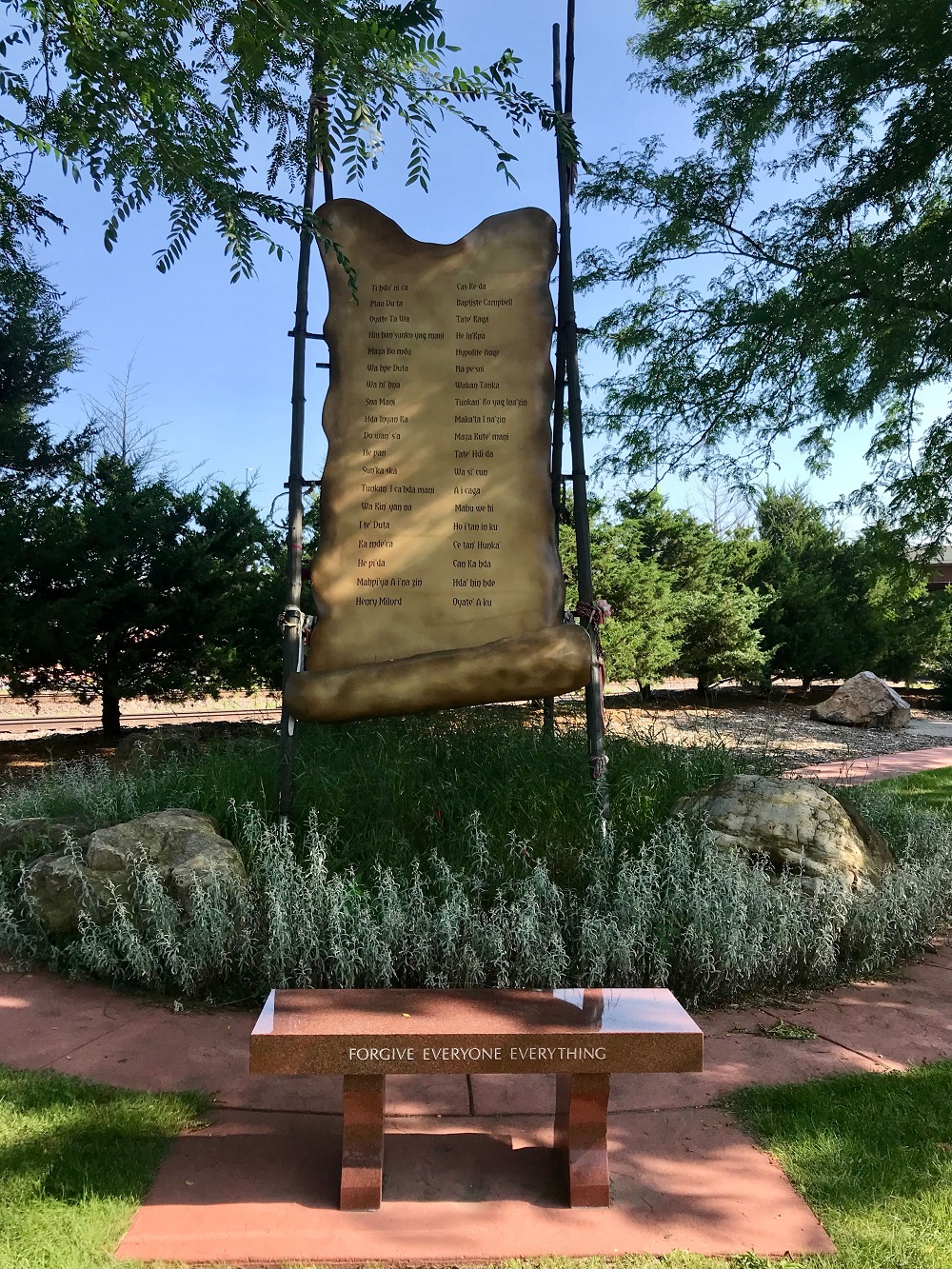
It was that cold night on the frozen Minnesota prairie when the first seeds of the Dovetails story were planted in my heart. The men who I crossed paths with were the Dakota 38+2 Riders. To commemorate the US-Dakota War anniversary and promote reconciliation, this group still rides every December from Lower Brule, South Dakota to the site of the mass hangings in Mankato, Minnesota. Their journey inspired the girl I was and the woman, and author, I am today.
Writing Dovetails in Tall Grass
Dovetails grew its way through the cracks in my life. In hindsight, I can see how there was space for that, as my career path was meandering; I previously worked in sports broadcast journalism and as a therapist. It was during my graduate studies in 2011 that I began diving deeper into my interest in the US-Dakota War; somewhere amidst the academic research and my personal interest, I began to interpret the history with a lens for story, through the perspective of two women. Still, years and a career passed by. It wasn’t until 2017, once my husband and I had moved from Minnesota to Texas that he encouraged me, “why don’t you finally write that book idea you always talk about?” Story had pushed its way through, grown too big to ignore. A nudge and a new beginning in the Lone Star State were what I needed to give it the time and space it deserved.
Once the moving boxes were unpacked, I had to figure out how to write a book. I didn’t even own a laptop, so a visit to the Apple store was a starting point. My mind was overflowing with ideas. A massive roll of artist’s paper seemed like a good purchase as well. Then I spent six months doing intensive research. There was no information about the US-Dakota War that was too big or too small. My brain wanted it all: scholarly articles, old texts from libraries that hadn’t been checked out for years, or page 7 of comments on Minnesota History message boards. It was time well spent. Once I really knew the history inside and out, I outlined. I unrolled that giant scroll of artists paper and made detailed historical timelines and abstract conceptual character boards. Hours upon hours, I sat on my hardwood floor surrounded by torn sheets of paper, stacks of texts, random pages flagged in open books, and my keyboard home row already worn from the constant clickety-clack of notetaking. After a few months, I sat back and looked at the chaos of a story around me. I let myself feel it. It wasn’t in the past; it overwhelmed my heart now. This war was complex. Ugly. Unresolved. This time in history mattered so much to me.
I knew it, I felt it, I had it. It was time to write.
I took a deep breath, let it out, and started typing. Most mornings, I’d head to a Starbucks with a singular goal of getting the fictional characters of 1862 living in my mind onto a Microsoft Word document. Some days I felt hopeful the writing was taking the shape of a story, but most days I felt like an imposter. I was a first timer, and it was excruciating. To me, my pages were rough, messy, and imperfect. After a morning of writing, I’d stop at Brazos Bookstore to look at the historical fiction section. Beautiful covers, stunning prose. How did writers do this? Mornings at the coffeeshop began to feel dreadful. When I opened my document, those first draft pages felt like I was catching a glimpse of myself midway through a dental procedure. Mouth open bizarrely wide, water and bits of whatnot spraying about, drills zinging and polishers whooshing too loudly in my ears. The world was already full of brilliant authors with dazzling work who smiled perfectly from the shelves. Real, flawless, writing like that was something my messy pages could never be. When I started working with an editor, my insecurity only worsened. I couldn’t look at myself. My stomach flipped with anxiety each time I saw my editor’s name pop up in my inbox. Despite her positivity and encouragement, the comments, deletions, and suggestions throughout my pages flagged my failure. A professional was making it clear that I didn’t have the writing chops. Who was I kidding?
One day, probably while I was avoiding writing and in some rabbit hole of research, I stumbled upon an image of JK Rowling’s edited Harry Potter pages. They were marked top to bottom, Xs over massive blocks of her writing. Wait… what? Rowling’s edits were messy?! My next visit to the bookstore, the shelves looked different to me. The titles were still awe-inspiring. But the authors’ names were superhuman in a new way… they didn’t get here because they wrote a perfect first draft. They got here because they pushed through every comment, suggestion, flag, cut paragraphs, deleted precious words time and time again. The process was ugly. Ugly and necessary.
My therapist brain flipped on. An editor’s feedback would be exposure therapy for me. Bit by bit, I’d face and feel the anxiety of looking at my words. And in that discomfort of exposure, bit by bit, I’d get stronger. I needed to get okay with the ‘ugly and necessary’. Shame dissolved in the light of that truth.
Before long, I was refreshing my inbox, hoping to see my editor’s name pop up. I craved feedback. I didn’t need my writing to be the Harry Potter; I needed it to be Rowling’s marked up pages. And with that shift in my thinking, the words poured out of me.
I got down to it and I wrote a book.
After a handful of years writing, I don’t think of myself as a “writer.” I think of myself as someone who is just lucky enough to tap into compelling ideas when I learn about significant times in history. After I’ve spent time in the trenches of research, the fictional story is something totally outside of myself that I just happen to be able to see. The more I study the fascinating dynamics of our past (cough cough *present*), the more fire lights within me and illuminates just what complexities would play out in a story arc. If I can get my fingers to type fast enough, the actual writing feels like grabbing the ideas/feelings/characters invisibly floating beyond my mind and sticking them onto the physical page. If I write well enough, at the end of my work the fire will spread to a reader turning the pages of a meaningful story playing out on our vibrant and vivid past.
Hopes for a Reader
After finishing Dovetails in Tall Grass, these are my hopes for a reader…
I hope a reader sets the book down and thinks, “Wow, I can’t believe I didn’t know about this time in history before…” and they instantly google “Chief Little Crow” or “Dakota 38+2 Riders” — and maybe even search for “Emma Heard” or “Oenikika” because these fictional characters feel so real, they must be part of the actual history.
I hope this is a novel that makes a reader look forward to her book club meeting – that it brings out lively, engaging, dynamic conversation in a group. And that she chooses to chime in a few more times than she usually does in that discussion.
And finally, at the end of the day, I hope a reader remembers Dovetails in Tall Grass a novel that made her think, feel, and question. When someone asks her, “Have you read any good books lately?” She recommends it; not just because she liked the story but because she wants others to know how much the US-Dakota War of 1862 mattered.
ABOUT THE AUTHOR: Samantha Specksis a licensed independent clinical social worker. She and her husband live in Houston with their baby (Pippa) and fur baby (Charlie). When not in Texas, they enjoy spending time on the lakes of Minnesota and in the mountains of the Roaring Fork Valley in Colorado. Dovetails in Tall Grass is Samantha’s debut novel. Currently, she is writing Dovetails of a River, which is set at the Battle of the Little Bighorn.
‘Dovetails in Tall Grass’ by Samantha Specks. Courtesy photo, used with permission.Memorial. Courtesy photo, used with permission.
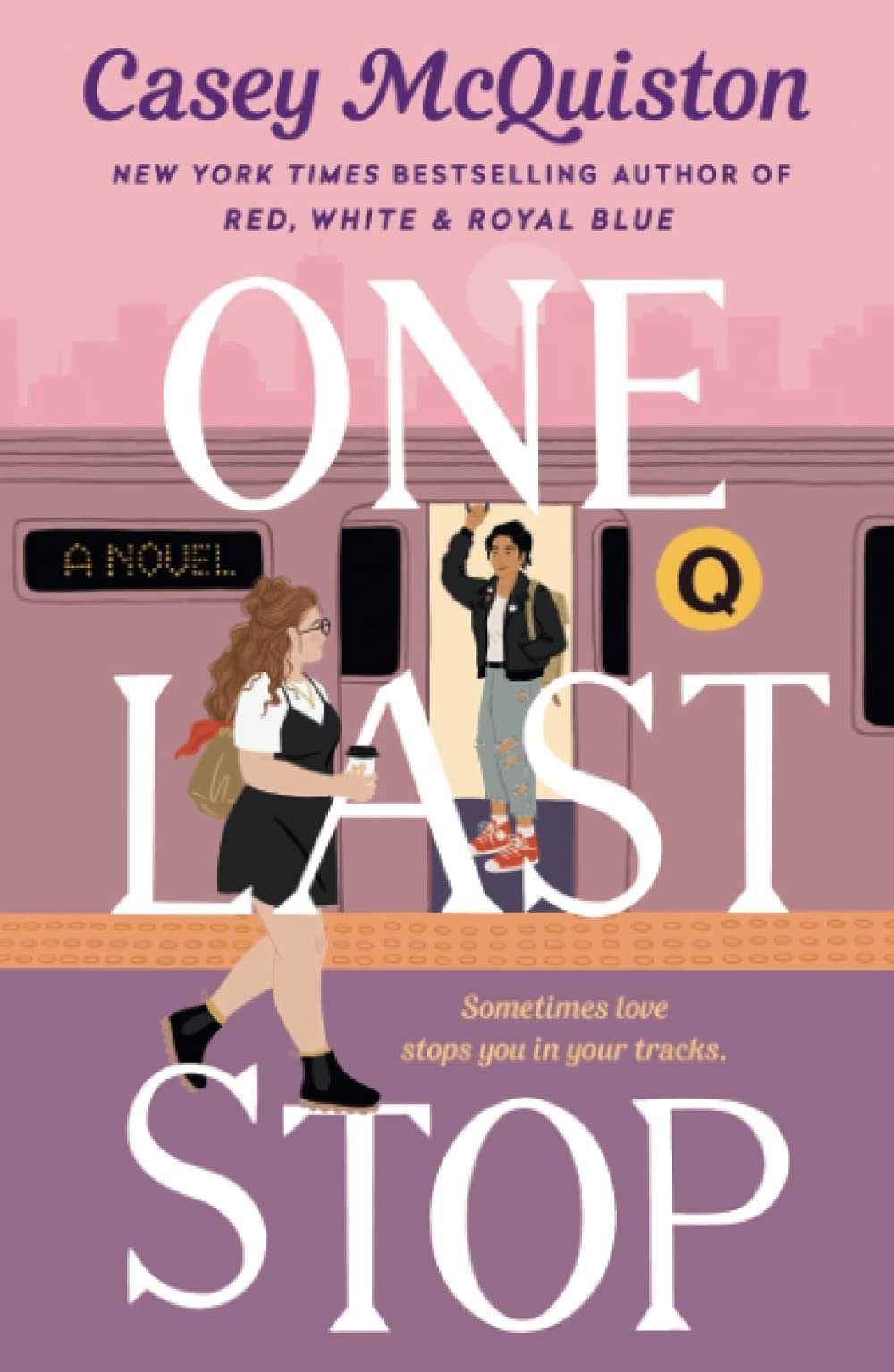
‘One Last Stop’ is the new novel by Casey McQuiston. Photo: amazon
Casey McQuiston is The New York Times bestselling author of “Red, White & Royal Blue,” as well as a pie enthusiast. She writes books about smart people with bad manners falling in love. Born and raised in southern Louisiana, she now lives in New York City with her poodle mix and personal assistant, Pepper. Her new book “One Last Stop” is a romantic comedy that will stop readers in their tracks. (amazon, 2021)
“One Last Stop” – For cynical twenty-three-year-old August, moving to New York City is supposed to prove her right: that things like magic and cinematic love stories do not exist, and the only smart way to go through life is alone. She cannot imagine how waiting tables at a 24-hour pancake diner and moving in with too many weird roommates could possibly change that. And there is certainly no chance of her subway commute being anything more than a daily trudge through boredom and electrical failures.
But then, there is this gorgeous girl on the train. Jane. Dazzling, charming, mysterious, impossible Jane. Jane with her rough edges and swoopy hair and soft smile, showing up in a leather jacket to save August’s day when she needed it most. August’s subway crush becomes the best part of her day, but pretty soon, she discovers there is one big problem: Jane does not just look like an old school punk rocker. She is literally displaced in time from the 1970s, and August is going to have to use everything she tried to leave in her own past to help her. Maybe it is time to start believing in some things, after all.
‘Our African Unconscious’ by Edward Bruce Bynum. Photo: amazon
Edward Bruce Bynum, Ph.D., ABPP, is a clinical psychologist and former director of the behavioral medicine program at the University of Massachusetts Health Services. The 2005 recipient of the Abraham H. Maslow Award from the American Psychological Association and the author of several books, including Dark Light Consciousness, he is currently in private practice in Hadley, Massachusetts. In his new book “Our African Unconscious: The Black Origins of Mysticism and Psychology,” he reveals how spirituality and the collective unconscious of all humanity originated in Africa. It will be released on Tuesday, September 14, 2021. (Black Château, 2021)
The fossil record confirms that humanity originated in Africa. Yet somehow, we have overlooked that Africa is also at the root of all that makes us human—our spirituality, civilization, arts, sciences, philosophy, and our conscious and unconscious minds.
In this extensive look at the unfolding of human history and culture, Edward Bruce Bynum reveals how our collective unconscious is African. Drawing on archaeology, DNA research, history, depth psychology, and the biological and spiritual roots of religion and science, he demonstrates how all modern human beings, regardless of ethnic or racial categorizations, share a common deeper identity, both psychically and genetically, connected with a primordial African unconscious.
Exploring the beginning of early religions, spirituality, and mysticism in Africa, along with philosophy, art, and science, the author looks at the Egyptian Nubian role in the rise of civilization and the emergence of Kemetic Egypt, revealing how and why ancient Egypt was separated from the rest of Africa in the Western mind—despite it being the most sophisticated expression of the Mother Continent. He examines the Oldawan, the Ancient Soul, and its correlation with what modern psychologists have defined as the collective unconscious. Revealing the spiritual and psychological ramifications of our shared African ancestry, the author examines its reflections in the present confrontation in the Americas, in the work of the Founding Fathers, and in modern Black spirituality, which arose from African diaspora religion and philosophy.
By recognizing our shared African unconscious, the matrix that forms the deepest luminous core of human identity, we can learn to see and feel that the differences between one person and another are merely superficial and ultimately there is no real separation between the material and the spiritual.
“Our African Unconscious” by Edward Bruce Bynum, Ph.D., ABPP is available on Amazon
ISBN: 9781644113967 Publisher: Inner Traditions Bear & Company September 2021 Paperback: $22.99 480 pages
Reader’s Digest’s ‘Great American Road Trips: Scenic Drives.’ Courtesy photo, used with permission.
Now that summer is here, most people will be taking vacations, including road trips. Reader’s Digest has put together a new book, the first in the Great American Road Trips series, that covers Scenic Drives. Hoping to inspire readers to travel and explore the wide-opens spaces and breathtaking views of our country, “Great American Road Trips – Scenic Drives: Discover Insider Tips, Must-See Stops, Nearby Attractions and More” is a complete guide to making road trips easier.
Growing up in Arizona, I loved the biodiversity of the state. Minutes from my home, I could hike the best trails in the Sonoran Desert, and after a few hours of driving, I could breathe fresh alpine air and marvel at fall foliage. And there’s one scenic drive in Arizona that has it all: Oak Creek Canyon.
This 15-mile state-designated scenic road along Route 89A begins in Sedona (if you’re coming from Phoenix) and winds its way north to Flagstaff. It curves up the Colorado Plateau from the high desert to a landscape of ponderosa pines.
Getting to the start of the drive is a treat for the senses. Route 89A rolls through Oak Creek Village, passing iconic red rocks that are named for their shapes. The landscape has an unearthly feel, and its singular beauty is unforgettable. Bell Rock, which is just off the road, is a popular spot to pull over for pictures or go on a hike along the lower, easier trail.
My family and I took this drive in the summer to escape the dry desert heat and in the fall to see the foliage, which begins to turn in November. After crossing the Midgley Bridge, our first stop was Slide Rock State Park, a 43-acre historic apple farm that was at one time the Pendley homestead. Growing apples in the high desert sounds far-fetched, but Frank Pendley mastered an innovative irrigation technique in 1912 that allowed his orchards to thrive. In fact, today park officials still use the same technique to water the remaining heirloom trees.
Though the apple orchard is amazing, the main attraction is the park’s namesake natural slide, which is a slippery chute of worn sandstone about 80 feet long and up to 4 feet wide. The waters of Oak Creek, which carved this canyon, are icy cold and refreshing. Children and adults alike squeal in delight as the water carries them down the slide into a pool.
Algae makes the rocks especially slippery, so it’s important to wear water shoes. It’s also important to look up and appreciate the canyon walls and cliffs that surround the park. I’ve never been disappointed by that view.
Back on the highway, you could easily stay in your car to take in the sights, but along the road, a few picnic sites, campgrounds and overlooks, such as Banjo Bill and Halfway, are well worth exploring.
The farther you drive, the higher you climb. The air cools, and by the time you reach the West Fork Trail, ponderosa pines appear alongside oaks and junipers. The trail, one of the most popular in the area, follows the west fork of Oak Creek.
In fall, the trees are ablaze with reds, oranges and yellows. The canyon walls soar, and the sound of the moving water soothes. You’ll step onto a paved trail that leads to a footbridge over the creek and Mayhew’s Lodge, the ruins of an old guesthouse that burned down in 1980. At that point, your West Fork Trail adventure begins. The in-and-out hike is about 6 miles round trip.
The thrilling part of the drive begins at Pumphouse Wash. For the following 2 miles, the road curves into a series of switchbacks, each steeper than the last.
If you’re lucky enough to be the passenger, you’ll see some gorgeous views of the canyon. (My mother always kept her head down during this part of the drive.) If you’re the driver, well, you’re probably looking at your knuckles and the road ahead.
Years ago, my husband-to-be and I went on this curvy drive. Though I knew where we were going, he insisted on using GPS. As the GPS attempted to chart the switchbacks, the fine pink line of the road turned into a blob.
It’s a slow drive to the top, but when you get there, be sure to stop at the Oak Creek Vista. Take a look back at where you’ve been, and marvel at the wonder of it all. The elevation changes and the diverse ecosystems of the drive are laid out before you. It’s a popular stop with visitors. The overlook is also home to a market offering Native American arts and crafts.
At this point, you’re on the Colorado Plateau’s southwestern edge. This is commonly referred to as the Mogollon Rim. The air up here is cooler and the forest is thick with pine trees.
The old lumber town of Flagstaff (home to the San Francisco Peaks, Northern Arizona University and Route 66) lies ahead. But that’s a scenic drive for another day.
POINTS OF INTEREST Length 15 miles
Fun Fact The dramatic reds and oranges in the rocks of Sedona come from iron oxide, left from a post-glacial ocean that filled the Verde Valley.
Words to the Wise A Red Rock Pass is required if you want to stop and park your car along the drive.
Side Trip Thousands of years before Hollywood discovered the red rocks of Sedona and the beauty of Oak Creek Canyon, the Sinagua called this place home. Though they moved on centuries ago, they left behind the Palatki and Honanki cliff dwellings. The sites are open to the public and overseen by Coconino National Forest staff. Call 928-282-3854 to reserve a tour spot.
Nearby Attractions Lowell Observatory, Flagstaff; Tlaquepaque district, Sedona; Fort Verde State Historic Park, Camp Verde; Sharlot Hall Museum, Prescott; Smoki Museum, Prescott
Slide Rock State Park’s natural slide is an oasis of fun. Photo: Pat Canova/Alamy Stock Photo
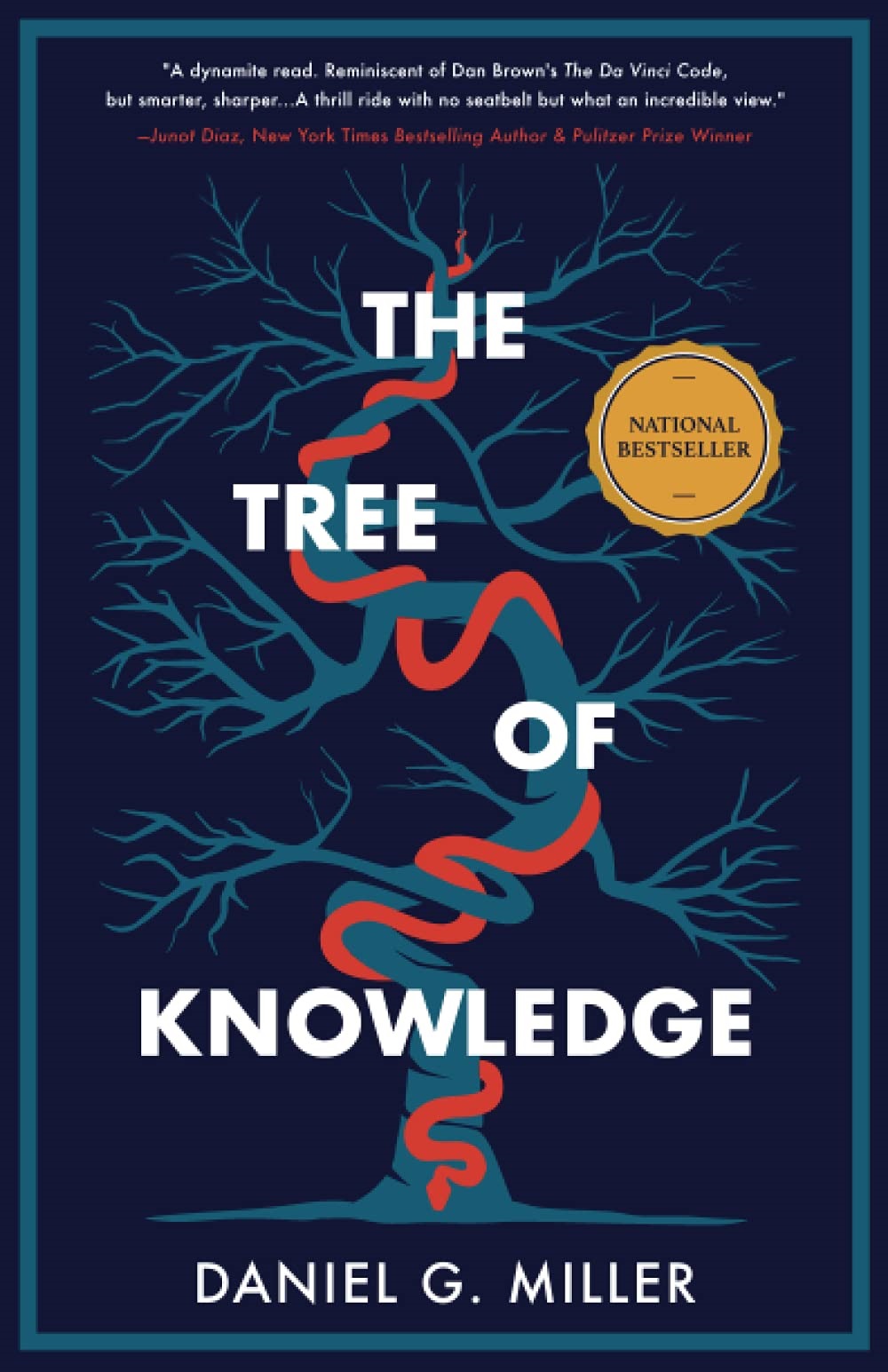
‘The Tree of Knowledge’ is book one in The Tree of Knowledge series. Photo: amazon
Daniel G Miller is a writer and entrepreneur. He currently lives in Dallas with his wife Lexi. “The Tree of Knowledge: A Mystery Thriller” is his debut novel, the first in The Tree of Knowledge series. The second is “Of Good and Evil: A Thriller.” (amazon, 2021)
“The Tree of Knowledge: A Mystery Thriller” – Albert can see the future, he just does not know it yet. It is said that the greatest chess masters can envision a match’s outcome ten moves before it occurs. Imagine a person who can visualize ten steps ahead, not simply in the game of chess, but in every human interaction. Imagine a person who could anticipate what you would say before you said it, who could see a punch before it was thrown. Imagine a person who could see the chess game of politics, economics, and power itself unfold long before it happens. Imagine a secret that could make all of this possible.
Mathematics professor Albert Puddles is such a person, and as he is thrust into a murder and burglary investigation on the Princeton campus, he finds that there is such a secret buried in an obscure cipher. The discovery leads Albert to team up with an aging mentor, a curious graduate assistant, and an unusual “book club” on a frantic chase across the country to recover the secret and clear his name. Through this adventure, Albert rediscovers a woman from his past and is forced to confront his own understanding of love, rationality, power, and the limits of the human mind.
Albert has seen the future…does he have the power to change it? An unstoppable force is sweeping the United States. Powered by a secret ability to predict and manipulate events, Christina Culebra and her Red Army relentlessly accumulate followers with one goal in mind: Absolute Power.
While Christina and her movement captivate the country, the one man who knows their next move– who knows their every move–Mathematics Professor Albert Puddles, hides, grief-stricken from the loss of his one and only mentor. Hoping that Albert holds the key to solving the secrets of the Red Army, his comrades in arms, known as the “Book Club,” recruit friends and foes alike to bring him back from exile. But they may be too late, for a new enemy has risen to challenge Christina and disrupt the Book Club’s plans, a mysterious terrorist known only as “The Cipher.” Faced with twin threats to everything he holds dear, Albert is forced to use his singular power to decode the riddles of a dead man while reckoning with the ghosts of his past.
‘Of Good and Evil: A Thriller’ is book two of The Tree of Knowledge series. Photo: amazon
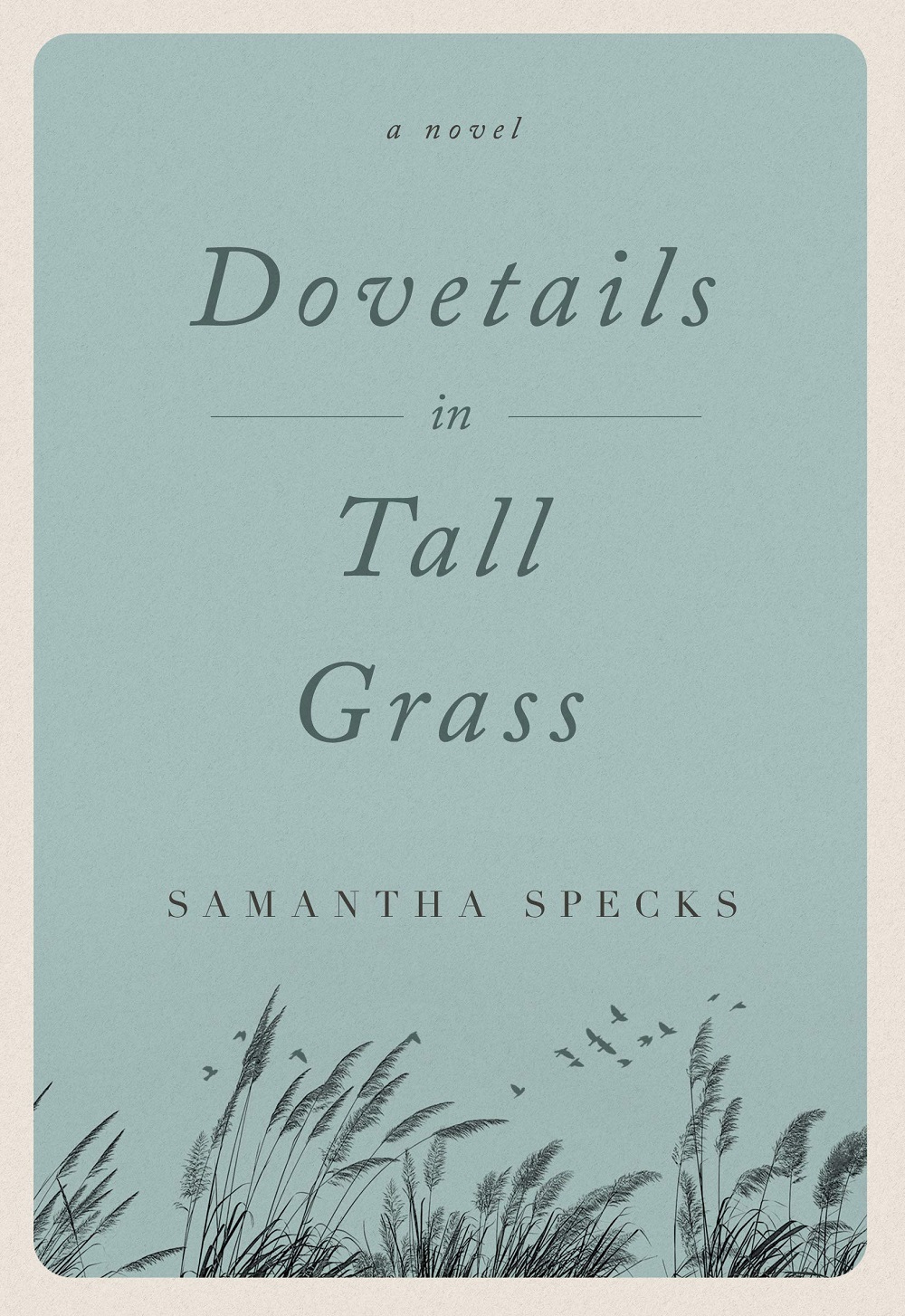
‘Dovetails in Tall Grass’ is a historical fiction novel by Samantha Specks. Photo: amazon
Samantha Specks is a clinical social worker who has worked on a child/adolescent psychiatric unit, as a Dialectical Behavioral group therapist with adults and adolescents, and as an outpatient psychotherapist. She currently lives in Texas, but her heart and mind resided in Minnesota, her home state, while working on “Dovetails in Tall Grass: A Novel,” which is her debut novel. It is inspired by the true story of the thirty-eight Dakota-Sioux men hanged in Minnesota in 1862 – the largest mass execution in US history. “Dovetails in Tall Grass” is a powerful tale of two young women connected by the fate of one man. It will be released Tuesday August 24, 2021.
This being a historical fiction novel, it begins with three notes from the author about the subject matter, one being that she authored this book “because I was seeking a greater understanding of a complex and difficult past.” She goes on to encourage readers to further educate themselves on the subject and how it influences our current system. The Prologue takes place on December 26, 1862, after Emma and Oeninika, both teenagers, live through the execution of the Dakota men and describes how they were each affected. The story then goes back to May 5, 1861, leading up to the mass execution; first Oeninika’s story, then Emma Heard’s story and from there the stories alternate. Oeninika is desperately trying to hold on to her calling as a healer and follow the orders of her father, Chief Little Crow. Her people’s way of life is changing because the government is forcing them to live as farmers instead of the hunter/gatherer lifestyle that comes natural to them. Emma Heard longs to become a teacher but her family needs her help around the farm. Even though she did not have a normal education, Emma goes to work for her father, who is a lawyer. Later, she becomes the court transcriber during the Dakota’s trials.
Fueled in part by anger at the U.S. government’s delay of the Dakota’s annuity cash payments, which is causing them to be near starvation, they attack the town and eventually the Heard farm. One of the Dakota assaults Ida, Emma’s sister, but Tashunke, Oeninika’s new husband, intervenes and saves her life. Emma witnesses this and when the law arrests the Dakota, including Tashunke, who did not participate in the raids, she testifies on his behalf, saving him from execution. In the end, Oeninika and Tashunke reunite and Emma Heard leaves the family farm to attend university.
It is not easy to write about war and conflicts, especially between the government and a specific group of people. Samantha Specks does a commendable job of presenting both sides of the U.S.-Dakota War in “Dovetails in Tall Grass,” as experienced by two young females already struggling with their own growing pains. It is a fusion of a historical and a coming-of-age novel told in the first-person point of view of Emma Heard, who comes from a settler family, and Oeninika, a Dakota. The narration is well-balanced as it describes the grief, pain, and heartbreak they each experienced during this challenging time in history. Emma feels conflicted: “They weren’t as purely evil as my recollection wanted me to believe. That warrior had protected us. My urge to destroy shifted to an angry confusion” and so does Oeninika “Little Rapids had abandoned her and the children, disappearing with Brown Wing and others to continue raiding. Pointless raiding that didn’t serve the war mission or their families.” The action flows effortlessly from page to page and the chapters are short and to the point. With poetic language, “the cup steamed in the damp chill of the morning rain. Puddles rippled as raindrops splashed down in a steady stream,” the author brings beauty into an environment that sometimes seems depressing and hopeless. The characters are well-developed so when the inevitable happens, readers can empathize with both. “Dovetails in Tall Grass” is a hauntingly beautiful historical novel that reminds us that there are always two sides to each story and that actions have consequences. It is recommended for fans of the genre who appreciate reading about the human side of war.
“I questioned if I could continue working in a law office, after seeing the truth of how powerful men manipulated the implementation of the law. It seemed to me the Dakota had been willing to abide by a treaty; it was our own government’s failure to honor the treaty that was the impetus for this disaster.” – Emma Heard
*The author received a copy of this book for an honest review. The views and opinions expressed here belong solely to her.