Dean Koontz is the author of fourteen number one The New York Times bestsellers, including “One Door Away from Heaven,” “From the Corner of His Eye,” “Midnight” and many more; making him one of only a dozen writers ever to have achieved that milestone. He has been hailed by Rolling Stone as “America’s most popular suspense novelist” and his books have been published in thirty-eight languages and have sold over five hundred million copies worldwide to date. In his new book “Elsewhere,” released this week, the fate of the world is in the hands of a father and daughter in an epic novel of wonder and terror.
“Elsewhere” is the story of Jeffy Coltrane, whose wife Michelle left seven years ago. Since then, he has worked to maintain a normal life for himself and his eleven-year-old daughter, Amity, in Suavidad Beach. It is a quiet life, until a local eccentric known as Spooky Ed shows up on their doorstep. Ed entrusts Jeffy with hiding a strange and dangerous object, something he calls “the key to everything,” and tells Jeffy that he must never use the device. But after a visit from a group of ominous men, Jeffy and Amity find themselves accidentally activating the key and discovering an extraordinary truth. The device allows them to jump between parallel planes both familiar and bizarre, wondrous and terrifying. Jeffy and Amity cannot help but wonder if Michelle could be just a click away. They are not the only ones interested in the device. A man with a dark purpose is in pursuit, determined to use its grand potential for profound evil. Unless Amity and Jeffy can outwit him, the place they call home may never be safe again.
Amylea Murphy’s debut novel ‘Fine’ will be available starting November 17, 2020. Photo: amazon
Author AmyLea Murphy has always been passionate about helping young people mature into successful, confident, and contributing members of society. Enthusiastic about empowering others to be their most authentic and best selves in spite of the challenges life presents , her compassion and grit shines through her storytelling. Her debut novel “Fine,” is set for release on Tuesday November 17, 2020. This YA novel is an intimate glimpse into the private world of two teenage girls struggling to be themselves in a demanding and unforgiving world. Inspired by the resiliency of the human spirit, AmyLea Murphy writes about life-changing moments in the hope of empowering her readers to embrace life in all of its messiness. (Black Château, 2020)
“Fine” is the story of Anna Williams, a straight-A student, cheerleader and all-around golden child who vanished six years ago. After all these years, no one knows what happened or why. Her younger sister, Katie, has drifted through life ever since, wracked with guilt, grief and anger over Anna’s unsolved disappearance. But when her future reaches a breaking point, Katie takes the investigation into her own hands. Searching for answers in her sister’s missing person’s file, she discovers that some questions aren’t so easy to answer. Through police memos, interrogations and excerpts from Anna’s diary, Katie peaks behind the carefully crafted façade Anna left behind and uncovers the dark truths of her life in the months before she disappeared. Unsettling and surprising, “Fine” is a mystery that will break your heart and put it back together again.
“Fine” blends the mystery of “Sadie” and “Vanishing Girls” with the poignancy of Sarah Dessen. Inspired by Gayle Forman and Jennifer Niven and written for all ages, “Fine” is a reminder of the resiliency of the human spirit and brings out the inner teenager in everyone. It is currently available for pre-order on Amazon.
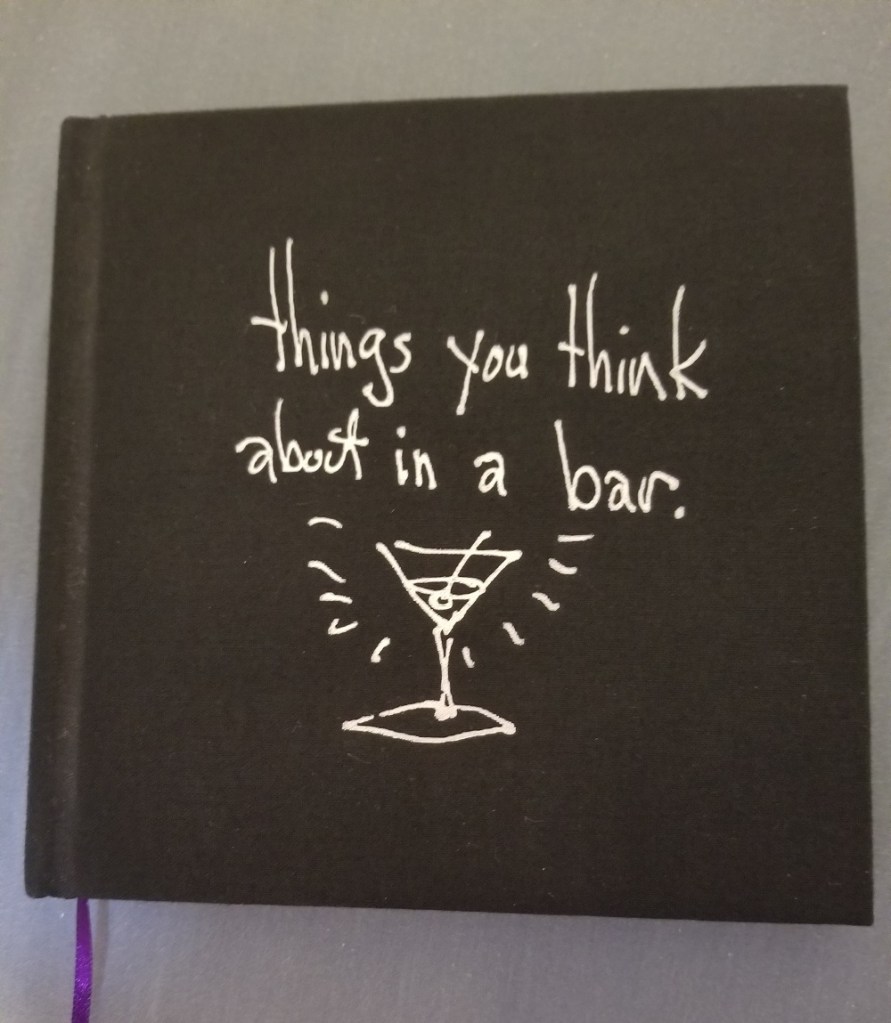
‘The Napkin Art of Tim Burton: Things You Think About in a Bar.’
Tim Burton is an American filmmaker, animator and artist who is best known for his gothic, fantasy and horror films such as Beetlejuice, Edward Scissorhands, The Nightmare Before Christmas and Sweeney Todd: The Barber of Fleet Street. He wrote and illustrated the poetry book “The Melancholy Death of Oyster Boy & Other Stories” in 1997 and “The Art of Tim Burton” in 2009, a compilation of his drawings, sketches and other artwork. He followed the latter with “The Napkin Art of Tim Burton: Things You Think About in a Bar” in 2015, which contains sketches he made on napkins at bars and restaurants he visited.
“The Napkin Art of Tim Burton” begins with a note by Tim Burton where he explains why he likes to draw on napkins. Simply put, he likes to draw on whatever surface happens to be available when he gets inspired. With all the traveling he does, he is usually in restaurants and bars and the easiest blank surfaces are napkins. He also wants to encourage others to create, “however, wherever possible” because art is mostly about the process of creating, not so much the result. Opposite that page, is a picture of a blank napkin, so the reader can draw on it if the mood strikes, along with any other surface of the book.
This being Halloween season, fans of Tim Burton might want to take notice of this art book. It is smaller than most books, about a 6 X 6 square and weighs 1.58 lbs. but for hardcore fans, it is a collectible. The artwork is typical Tim Burton, most are in black and white, but there are some colored ones. Notable napkins include those from Bar Vendôme and Hôtel Ritz and Paris and Caesars Palace in Las Vegas. Sometimes he even uses the logo as part of the drawing, which is highly inventive. One of his best drawings is that of a one-eyed green monster with a real cherry as the pupil. “The Napkin Art of Tim Burton” is a small but valuable book of art by the master of fantasy films and is recommended for genuine fans of his work.
*The author received a copy of this book for an honest review. The views and opinions expressed here belong solely to her.
Lan Cao is the author of the novels “Monkey Bridge” and “The Lotus and the Storm” and a professor of law at the Chapman University School of Law, specializing in international business and trade, international law and development. She has taught at Brooklyn Law School, Duke Law School, Michigan Law School and William & Mary Law School. Her latest book “Family in Six Tones: A Refugee Mother, an American Daughter” is the dual first-person memoir by the acclaimed Vietnamese-American novelist and her thoroughly American teenage daughter, Harlan Margaret Van Cao, who just graduated from high school in June 2020 and will be attending UCLA.
In the Introduction, Lan Cao views motherhood and being a refugee with equal trepidation because of how uncertain she still feels about both. Even after forty years of being in the United States and seventeen years of being a parent, she still feels inadequate in both. This is the central theme throughout this memoir as she explores being a refugee and being a mother with the help of Harlan, her teenage daughter, who is half Vietnamese. In short alternating chapters, they show how different and yet how similar they really are. Lan relates her immigrant experience including war, past traumas and tragedies and the struggles and discriminations she faced while getting an education, especially in law school, while Harlan deals with culture clashes, bullying and going through life coping with synesthesia – a condition in which people often see sounds, taste word or feel a sensation on their skin when they smell certain scents – she often relates about having a purple cat following her.
Being an immigrant is never easy and too often the Vietnamese viewpoint is left out of the conversation. This is what makes this memoir unique; not only is it told through the perspective of a mother/daughter relationship, but it is told through the Vietnamese point of view, not a solider or a politician, even though it touches on the sensitive topic of the war. Readers get to witness Lan’s transition from naïve immigrant to law student, especially the moment she decides to study law – when she was working in a video store and the police questioned her regarding missing money. The insight into Vietnamese culture is interesting, especially the system of ranking people, i.e. calling relatives Father Two, Sister Three. Her shared immigrant experiences of discrimination makes her relatable: “We may have Americanness officially documented in birth certificates, passports, or naturalization papers. But despite the seductive panache of the American Dream, the message that we can never really be American has curiously been passed down from generation to generation.” Harlan also has this conflict about being too American versus not being Vietnamese enough and her writing is more poetic: “This life isn’t meant to be a race. It is meant to be a long, slow dream of perfect confusion, loneliness, deep friendships, and ambition. I’m ready.” When she writes “You can be American outside, but not in the house” it speaks to what children of immigrants sometimes deal with at home. They are expected to be Americanized outside the house, but at home they are expected to speak the native language and adhere to that culture’s expectations, leading to an emotional tug of war. Overall, “Family in Six Tones” is an impressive and poignant exploration of the mother/daughter relationship which often has the same struggles and insecurities passed on from generation to generation. It is recommended for readers who appreciate a distinctive perspective on the struggles of refugees and familial bonds.
“ I wanted to bloom wherever I was planted, in this present tense where I had found myself, like a lotus flower that grows in mud and turns to face the sunlight.” – Lan Cao
*The author received a copy of this book for an honest review. The views and opinions expressed here belong solely to her.
‘The Resurrection of Fulgencio Ramirez’ is the new release from Rudy Ruiz. Photo: google
Rudy Ruiz is a writer, advocate and social entrepreneur. The award-winning author’s short fiction has received several awards, including four International Latino Book Awards for his short-story collection “Seven for the Revolution” and the 2017 Gulf Coast Prize in Fiction. His stories have been published in the Notre Dame Review, Ninth Letter, Gulf Coast and New Texas. A native of the US-Mexico border, he earned his bachelor’s and master’s degrees at Harvard, and now resides in San Antonio with his wife and children. Ruiz is also a regular special contributor to CNN and co-founder of Interlex, an advertising and marketing agency. His new book “The Resurrection of Fulgencio Ramirez” weaves together the past and present as Fulgencio strives to succeed in America, break a mystical family curse, and win back Carolina’s love after their doomed youthful romance. It was just released this week.
Set in the 1950, in “The Resurrection of Fulgencio Ramirez,” tensions remain high in the border town of La Frontera, Texas. Yet amidst the discord, young love blooms at first sight between Fulgencio Ramirez, the son of impoverished immigrants and Carolina Mendelssohn, the local pharmacist’s daughter. But their bonds will be undone by a force more powerful than they could have known. Thirty years after their first fateful encounter, Fulgencio Ramirez, RPh, is conducting his daily ritual of reading the local obituaries in his cramped pharmacy office. After nearly a quarter of a century of waiting, Fulgencio sees the news he has been hoping for: his nemesis, the husband of Carolina Mendelssohn, has died. “The Resurrection of Fulgencio Ramirez” offers a vision of how the past has divided us and how the future could unite us.
‘Total Power’ is the new novel in the Mitch Rapp series by Vince Flynn/Kyle Mills
Vince Flynn was an American author of political thriller novels best known for the Mitch Rapp series. He created one of contemporary fiction’s most popular heroes: CIA counterterrorist agent Mitch Rapp, featured in thirteen of Flynn’s acclaimed political thrillers. Rapp’s primary focus is stopping terrorist attacks on the United States and usually does so using less than acceptable measures. His frustration with procedures and red tape is a major theme throughout the entire series. All of Flynn’s novels are The New York Times bestsellers, including his stand-alone debut novel, “Term Limits.” He was a consultant for the fifth season of the television series 24. “Total Power” is the new novel in the Mitch Rapp series and it is a race against the clock when ISIS takes out the entire US power grid and throws the country into chaos.
Starting in 2015 with “The Survivor,” the Mitch Rapp series has been continued by Kyle Mills. Kyle Mills is the #1 bestselling author of nineteen political thrillers, including “Red War” for Vince Flynn and “The Patriot Attack” for Robert Ludlum. He initially found inspiration from his father, the former director of Interpol, and still draws on his contacts in the intelligence community to give his books such realism.
According to amazon, in “Total Power,” when Mitch Rapp captures ISIS’s top technology expert, he reveals that he was on his way to meet a man who claims to have the ability to bring down America’s power grid. Rapp is determined to eliminate this shadowy figure, but the CIA’s trap fails. The Agency is still trying to determine what went wrong when ISIS operatives help this cyber terrorist do what he said he could, plunge the country into darkness. With no concept of how this unprecedented act was accomplished, the task of getting the power back on could take time. Rapp and his team embark on a desperate search for the only people who know how to repair the damage, the ones responsible. With computers and communication networks down, fuel can no longer be pumped from gas stations, water and sanitation systems are on the brink of collapse and the supply of food is running out. Rapp needs to get the lights back on before America descends into chaos.
Zeke Mesirow left his apartment in Crestview Manor as soon as Big John Thomas on KUKU-FM announced—using his serious radio voice instead of his fake hillbilly twang—that they were bringing the bodies to the high school gymnasium.
The tornado had arrived from the north, surprising the so-called experts. It cut an equal opportunity path of destruction through Maple Springs, flattening the black Baptist church on the west side where Zeke’s very white ex-wife used to sing in the choir, and blowing away the sanctimonious Presbyterians on the east side. It pinballed down Main Street, chewing up the Tastee-Freeze, Hank Dabney’s Esso Station, Dr. Manickavel’s emergency care clinic, and the Main Street Diner, but sparing the useless bank, Crutchfield’s boarded up general store, and the VFW Lodge.
As it roared out of town, it destroyed the Chevy dealership where Zeke’s son had once worked and the fancy townhouse development project Ted Landis was building across the road from Crestview Manor.
Zeke wanted to call his son, but Wayne didn’t own a cellphone. The road into town was impassable. Uprooted trees, overturned vehicles, chunks of concrete, twisted rebar, and pickup-stick configurations of aluminum sliding, roof tiles, and wallboard were strewn across the highway. It didn’t matter—he couldn’t drive anyway. His truck had disappeared.
A soft mist hung in the air like a wet fog, and it was eerily quiet as he started walking down the highway to the high school. At the outskirts of town he saw a man, his dark business suit turned gray with grit, standing in his front lawn clutching an open briefcase and staring down the road like he was waiting for the bus. A few blocks farther on an old woman wrapped up in a ratty bathrobe swept brick fragments from her front stoop. The stoop was all that was left of her home. As Zeke turned on to Hill Street, a teenager on an ancient Huffy with a twisted front tire pedaled slowly by, weaving around the debris, his head swiveling like he was trying to figure out which pile of rubble was his home.
The high school at the end of the Summit Avenue looked untouched. A highway patrol car and Sheriff Patrick Quinlan’s cruiser flanked the driveway leading to the front of the school, and there was an ambulance and a fire truck in front of the entrance to the gymnasium. Two men were lifting someone off a stretcher into the ambulance.
Sheriff Quinlan leaned against the open door of his car like he needed it for support. Water dripped from the brim of his hat and his uniform was plastered to his skin. A mud-splattered Silverado rolled past Zeke and stopped at the driveway entrance. There were two body bags in the truck bed. Body bags just like they’d had in Nam. Quinlan waved the truck through.
As Zeke approached the sheriff, Quinlan held up his hand. “You have to go to City Hall, Zeke. The mayor’s handling the missing persons reports.”
Zeke Mesirow frowned. They had been friends once.
Len Joy is an award-winning author of the novels “American Past Time,” “Better Days” and “Everyone Dies Famous.” He is a nationally ranked triathlete and competes internationally representing the United States as part of TEAM USA.
‘Everyone Dies Famous’ is Len Joy’s new novel. Courtesy photo, used with permission.
Len Joy is a nationally ranked triathlete who competes internationally representing the United States as part of TEAM USA. He is also the author of “Letting Go: Stories,” “American Past Time: After the Cheering Stops” and “Better Days: In This World Heroes Don’t Get Parades.” His fourth novel “Everyone Dies Famous,” released last month, is the story of a stubborn old man, who, as a tornado threatens their town, teams up with a troubled young soldier to deliver a jukebox to the wealthy developer having an affair with the soldier’s wife.
In the Prologue set on July 18, 2003 at 7p.m. Zeke Mesirow, one of Maple Springs, Missouri residents, leaves his apartment after a tornado and surveys the devastation left behind. He eerily witnesses “….a man, his dark business suit turned gray with grit, standing in his front lawn clutching an open briefcase and staring down the road like he was waiting for the bus.” After the Prologue, the first chapter begins fourteen hours earlier and the last chapter, set at 6:40p.m. ends the tragic story. The chapters in between track the residents’ lives before the tornado hits and sets the stage for the damage left behind by the storm. The small town is going through a drought, so many of the residents are unprepared for the approaching storm. Dancer Stonemason, an aging and long-forgotten hometown hero, is still grieving the death of his oldest son Clayton. He is liquidating his late son’s jukebox business so he hires Wayne Mesirow, an Iraqi war veteran, to help him transport two jukeboxes. Wayne is also dealing with grief: one of his fellow soldiers, Sonny, killed himself and Wayne feels he should have done more to help. His wife’s infidelity is also weighing heavily on his mind. Together, Dancer and Wayne navigate through their own family drama while the storm brings its own disaster that will leave one of them dead.
For those familiar with Len Joy’s work, “Everyone Dies Famous” is the sequel to “American Past Time” where Dancer Stonemason’s story continues. Years later, his son Clayton is dead and Dancer is trying to move on. The aftermath of the tornado is set at the beginning, so there is no surprise ending. The fun is in trying to find out how the different characters end up after the storm. Due to the extensive character build up, by the time the storm hits, the reader has spent time getting to know them and is eagerly flipping pages to find out their fate. The tornado action is just as exciting as the family drama taking place within the small town. Throughout the story, the storm is lurking in the background until it comes roaring into the picture starting on Chapter 33. From there the action shifts as the residents have to rely on each other to survive. Len Joy has an excellent grasp on the human condition and uses it to create brilliant storytelling. “Everyone Dies Famous” is an easy read, with relatable characters that spotlight the heart of everyday American life. It is a definite must-read and is recommended for fans of character-driven small town dramas.
“This is a small town, Dancer. Everyone dies famous here.”
*The author received a copy of this book for an honest review. The views and opinions expressed here belong solely to her.
‘One by One’ is the new psychological crime thriller by Ruth Ware. Photo: google
Ruth Ware is a British author of psychological crime thrillers but has also written young adult fantasy novels published under her name Ruth Warburton. The writing style in her crime thrillers has often been compared to Agatha Christie’s in the sense that one of her plot devices consist of protagonists who are usually ordinary women who find themselves in dangerous situations involving a crime. These include “In a Dark, Dark Wood,” “The Woman in Cabin 10,” “The Lying Game,” “The Death of Mrs. Westaway,” “The Turn of the Key” and her new release “One by One.” The characters in “One by One” are snowed in at a luxurious, rustic chalet high in the French Alps; it was released on September 8.
According to Amazon, when the co-founder of Snoop, a trendy London-based tech startup, organizes a week-long trip for the team in the French Alps, it starts out as a corporate retreat like any other: PowerPoint presentations and strategy sessions broken up by mandatory bonding on the slopes. But as soon as one shareholder upends the agenda by pushing a lucrative but contentious buyout offer, tensions simmer and loyalties are tested. The storm brewing inside the chalet is no match for the one outside, however, and a devastating avalanche leaves the group cut off from all access to the outside world. Even worse, one Snooper has not made it back from the slopes by the time the avalanche hit. As each hour passes without any sign of rescue, panic mounts, the chalet grows colder, and the group dwindles further…one by one.
‘Act of Revenge’ is the third book in the Doc Brady Mystery series by John Bishop, M.D. It will be released on Thursday September 10, 2020. Courtesy photo: used with permission.
I was stunned but not unconscious. My first concern was that I had sustained another head injury. I had been mugged a year and a half ago and had spent ten days in a coma after developing a subdural hematoma, a collection of blood between my brain and skull requiring surgery. The hair on my shaved head had taken seemingly forever to grow back out to a length and texture I could brush. I wasn’t prepared to go through all that again.
“I’m okay, I think,” I said to Mary Louise. She was kneeling down over me, skis off. “Thanks for not being in front of me. I might have hit you, too. Where’s the guy I ran into?”
“He’s up the hill. I’ll go check on him.” And with that, she headed back up the slope.
Since I had landed face down in the snow, I used my corduroy cap to clean off my goggles and face in an attempt to see what was going on. I was partially buried in the foot-high drift, but when I assessed that my extremities were intact and my vision was relatively normal, I managed to turn myself around.
I sat up and saw my wife kneeling down over the man I had run into twenty yards behind me. One ski was off, and the other was twisted about 45 degrees, half-buried in the snow. Unfortunately, his leg was still attached to it. My skis had come undone, and God only knew where they had landed. Probably in someone’s condo.
I had heard of a ski accident that occurred on the same slope wherein a crash between two skiers had resulted in a lost ski sailing down the hill and crashing through a picture window into the living room of a residence. No one was hurt, at least in the home, but I’m sure it gave them quite a start. And some decent kindling.
I abandoned my ski poles, which had still been attached to my wrists with their adjustable loops, and stepped up the hill to join Mary Louise and the unknown assailant. A thought crossed my mind that perhaps I was the unknown assailant. Whatever the situation, I hoped the man had experienced enough of a shock to render him an amnesiac but not unconscious or damaged.
“Are you okay?” Mary Louise was asking him repeatedly as I arrived on the scene. Several other skiers had gathered as well and had already placed their skis in the ground, tips up and crossed, the universal sign of an injury requiring the ski patrol’s attention.
The man was on his side. His eyes were open.
“Listen,” I said, “I’m a doctor. I need to check your pupils and your arms and legs. Don’t be frightened. Okay?”
He nodded.
His pupils reacted normally to light. I felt his neck.
“Any pain here?” I asked as I gently moved his cervical spine from side to side. “Any numbness? Arms or legs?”
He shook his head. “My leg . . . killing me.”
“I’m sure. I’ll get down there in a minute.”
The man’s arms, chest, head, spine, and right leg all seemed to be in working order. It was time to address the crucial issue.
“Listen,” I explained, “my name is Jim Brady. I’m an orthopedic surgeon from Houston. I need to check out this left leg and try to decide if you’ve got a fracture in your femur or tibia or if you’ve got a knee ligament injury. I may not be able to tell, but I’d like to try before the ski patrol arrives. Okay?”
“I don’t want you to move it. Hurts too bad.”
“Well, the medic will have to move it to get you onto the stretcher. Your leg’s kind of twisted out at an angle. If I can figure out what’s wrong, I may be able to make you more comfortable by moving it. Let me try.”
He nodded. I gently felt his femur, the thigh bone, with both hands. No pain. Same with the tibia and fibula, the two bones connecting the knee to the ankle. When I felt his knee, however, even through his bulky, waterproof ski pants, I could feel the enlarged joint. He winced.
“It’s your knee, probably a ligament tear. If I can get your ski off and straighten out the leg, you’ll feel a lot better. I want you to hang on for a minute.”
“Man, it’s killing me! Just leave it alone!”
I paused, then slid down toward his boot release, had Mary Louise support the ski to minimize the torque, and unsnapped his boot from the binding. He moaned for a second, but I quickly untwisted the leg, brought it parallel to the other, and laid it down.
“Damn it! I told you not to—huh. Feels better.”
“See,” I said, “you should have trusted me.”
“Sort of hard to trust a guy who runs you over, wouldn’t you say?”
I assumed amnesia wasn’t going to be a problem for him.
Two members of the ski patrol arrived on separate snowmobiles pulling stretchers. One of them had probably been intended for me. I was glad to decline it. I helped the medics get my victim onto the stretcher and bind him down to minimize the shock of the journey to Snowmass Ski Clinic. I felt obligated to accompany them.
“Are you by yourself? Is there anyone we can notify?” Mary Louise asked. “I’ll be glad to make a call. Whatever you need.”
“Guess you better call my wife, tell her I’m hurt. I hate to upset her, though.”
“Where are you staying?” she asked him.
“Wood Run Condos. Just down the hill. I was headed home.”
“So were we,” Mary Louise said. “Why don’t I just run by there. We’re at the Chamonix. You’re only a block or so away. How would that be?”
He nodded and sort of smiled. “That’d be real nice, ma’am. I’d appreciate
that.”
She looked at him for a minute, waiting. “I need your name and condo number,” she said patiently, like a schoolteacher waiting for a third grader to figure out the times tables.
“Oh, sure. Sorry. I’m Lou Edwards. Her name’s Mimi. We’re in 530 Wood Run. And thanks.”
“It’s the least I can do,” Mary Louise said, looking at me like she was very glad I was okay, but not happy that I had run over the poor man. I didn’t blame her.
John Bishop, M.D. has practiced orthopedic surgery in Houston, Texas, for 30 years. His Doc Brady medical thriller series is set in the changing environment of medicine in the 1990s. Drawing on his years of experience as a practicing surgeon, Bishop entertains readers using his unique insights into the medical world with all its challenges, intricacies, and complexities, while at the same time revealing the compassion and dedication of health care professionals.