‘The Plot’ is Jean Hanff Korelitz’ exciting new novel. Photo: amazon
Jean Hanff Korelitz is the author of the novels “You Should Have Known Better” (adapted for HBO as “The Undoing” by David E. Kelley, and starring Nicole Kidman, Hugh Grant and Donald Sutherland), “Admission” (adapted as the 2013 film starring Tina Fey), “The Devil and Webster,” “The White Rose,” “The Sabbath River,” and “A Jury of Her Peers.” Korelitz is the founder of BOOKTHEWRITER, a New York City based service that “Pop-Up Book Groups” where readers can discuss books with their authors. Her new novel, “The Plot” is a propulsive read about a story too good not to steal, and the writer who steals it and was just released this week. (amazon, 2021)
In “The Plot,” Jacob Finch Bonner was once a promising young novelist with a respectably published first book. Today, he is teaching in a third-rate MFA program and struggling to maintain what is left of his self-respect; he has not written―let alone published―anything decent in years. When Evan Parker, his most arrogant student, announces he does not need Jake’s help because the plot of his book in progress is a sure thing, Jake is prepared to dismiss the boast as typical amateur narcissism. But then he hears the plot.
Jake returns to the downward trajectory of his own career and braces himself for the supernova publication of Evan Parker’s first novel: but it never comes. When he discovers that his former student has died, presumably without ever completing his book, Jake does what any self-respecting writer would do with a story like that―a story that absolutely needs to be told.
In a few short years, all of Evan Parker’s predictions have come true, but Jake is the author enjoying the wave. He is wealthy, famous, praised and read all over the world. But at the height of his glorious new life, an e-mail arrives, the first barrage in a terrifying, anonymous campaign: You are a thief, it says. As Jake struggles to understand his antagonist and hide the truth from his readers and his publishers, he begins to learn more about his late student, and what he discovers both amazes and terrifies him. Who was Evan Parker, and how did he get the idea for his “sure thing” of a novel? What is the real story behind the plot, and who stole it from whom?
‘From Ashes to Song’ by Hilary Hauck. Courtesy photo, used with permission.
Hilary Hauck is a writer and translator whose work has appeared in the Mindful Writers Retreat Series anthologies, the Ekphrastic Review, Balloons Lit. Journal, and the Telepoem Booth. She moved to Italy from her native UK as a young adult, where she mastered the language, learned how to cook food she can no longer eat, and won a karate championship. After meeting her husband, Hilary came to the US and drew inspiration from Pennsylvania coal history, which soon became the setting for her debut novel, “From Ashes to Song.” Inspired by true events, “From Ashes to Song” is a story of unconventional love, hope, and the extraordinary gifts brought to America by ordinary people in the great wave of immigration.
“From Ashes to Song” begins in the family vineyard in Piedmont, Italy in 1911. Pietro’s idyllic life revolves around music and vineyards. He plays the clarinet and he is practicing his first composition that he wants to play at the end of harvest celebration. His grandfather, who he calls Nonno, has taught him everything he knows about music and Pietro is nervous about playing it for him first. His perfect life starts to unravel when news of a deadly disease spreading through the countryside reaches their vineyard. The family has no choice but to burn it and brokenhearted, Pietro’s grandfather passes away. Now that he has lost the two most important things in his life, Pietro leaves for America to start a new life. Faced with the grueling life of a miner in Pennsylvania, Pietro puts music on the backburner but when he meets Assunta, a friend’s wife, she becomes his musical muse. Admiring her from a distance, he begins writing music again but the harsh realities of everyday life threaten to end his musical aspirations for good. The story ends in 1952 as the years have taken their toll on Pietro but not before he experiences music’s amazing power to heal the soul. He develops miner’s lung, which affects his ability to play his clarinet: “whistling and wheezing filled his ears, drowning out the music.” He passes away peacefully surrounded by family, which by this point includes Assunta as his wife.
“From Ashes to Song” is a beautifully written novel that perfectly captures the hardships of turn of the century immigrant life in Pennsylvania. Using charming and lyrical prose which includes music metaphors: “From the vantage point of the courtyard, the hills rolled like the rise and fall of a tempo…,” the reader is immersed in Pietro and Assunta’s daily struggles to create a better life. The story is written in third person point of view and alternates between Pietro and Assunta; two separate stories until they collide in Pennsylvania. Helped along by exquisite poetic language, the story flows effortlessly through the pages until its heartbreaking yet happily ever after ending. The in-depth character development creates characters that are relatable and by the end, it is hard not to get emotionally invested in their turbulent lives. Throughout the years, Pietro is distant and patient with Assunta but after going through so much loss in their lives, when he finally plays his clarinet for Assunta, their relationship begins to heal: “Doubts and sorrow erased like a message drawn in the sand on an incoming tide.” Since it is inspired by true events, this story of heart break, survival, and triumph of the human experience might resonate with anyone with Italian ancestors. “From Ashes to Song” by Hilary Hauck is a captivating novel that combines the beauty of the Italian countryside and the determination of immigrants to build a better life in a foreign land. It is recommended for fans of historical fiction who appreciate the importance that music can play in someone’s life.
“He just played, eyes closed, his heart aching yet healing at the same time. Him, his clarinet, love. If his music had ever had the power to heal, now was the time to wield it for this woman he loved, who tolerated him by her side.”
*The author received a copy of this book for an honest review. The views and opinions expressed here belong solely to her.
‘Fatal Intent’ is Tammy Euliano’s debut novel. Photo: amazon
Tammy Euliano, MD is a practicing anesthesiologist and tenured professor at the University of Florida. In addition to a prolific list of academic publications, YouTube teaching videos, and numerous teaching awards, she has also written award-winning short fiction. In her debut novel “Fatal Intent,” anesthesiologist Dr. Kate Downey must confront difficult situations when her elderly patients start dying at home days after minor surgery; is it end of life care, or assisted death.
“Fatal Intent” begins as anesthesiologist Dr. Kate Downey begrudgingly begins her Sunday by going to church with her great-aunt Irm. While there, Kate finds out that the VIP patient she was taking care of at the hospital has died days after being discharged, just like one of her neighbors who was also one of Kate’s patients. When she brings this information up to the surgeon who performed the surgeries, Dr. Charles Ricken, he ends up blaming her. Since she is currently on probation, her career is in jeopardy but she is determined to find out why patients are dying after they are sent home from the hospital. To make matters worse, her husband Greg is in a prolonged coma and his brother Adam is constantly urging her to pull the plug. Together with her Great Aunt Irm, a precocious medical student named Jenn, and Christian, the lawyer son of a victim, Kate launches her own unorthodox investigation of these unexpected deaths. As she comes closer to exposing the killer’s identity, she faces professional intimidation, threats to her life, a home invasion, and the suspicious death of someone close to her. The stakes escalate to the breaking point when Kate, under violent duress, is forced to choose which of her loved ones to save—and which must be sacrificed.
Some of the most authentic novels come from authors who write about what they know. Since the author is an anesthesiologist, this gives her outstanding debut novel the authenticity it needs to deliver an exciting medical mystery drama. It gives readers an intriguing look at the inner workings of hospitals, namely, after a patient dies, the staff holds a “root cause analysis” meeting where they analyze what happened. By using descriptive language “I ran down the hall, holding onto my bouncing lanyard,” readers can picture the drama unfolding in hospital hallways. When Kate gets overwhelmed and anxiety rolls in, “There was no air. I was suffocating. My heart pounded, faster and faster,” anyone who has been in such situations can relate. Written in the first person point of view, it contains likeable and relatable characters and the story flows easily from page to page. The action intensifies during Chapter Fifty when Kate is lured to the hospital basement and is forced to choose between saving her Aunt Irm, her friend Christopher, or her husband Greg. In the end, the killer turns out to be someone who was hired by relatives of ailing patients to “euthanize” them. Aside from being a medical suspense novel, “Fatal Intent” deals with difficult end-of-life issues. In the Author’s Note at the end, Tammy Euliano stresses that her hope is that it will start an open dialogue about such issues and prompt families to consider Living Wills and Health Care Surrogates and directs readers to where they can find more information. “Fatal Intent” is a must-read thrilling medical mystery novel and is recommended for fans of Robin Cook and Tess Gerritsen who appreciate medical thrillers. Hopefully, there will be more in the future.
“I broke down in his arms, overwhelmed by utter exhaustion and crippling guilt. But Aunt Irm and Christian had suffered too. Would my grief over Greg be construed as regret over the decision?”
*The author received a copy of this book for an honest review. The views and opinions expressed here belong solely to her.
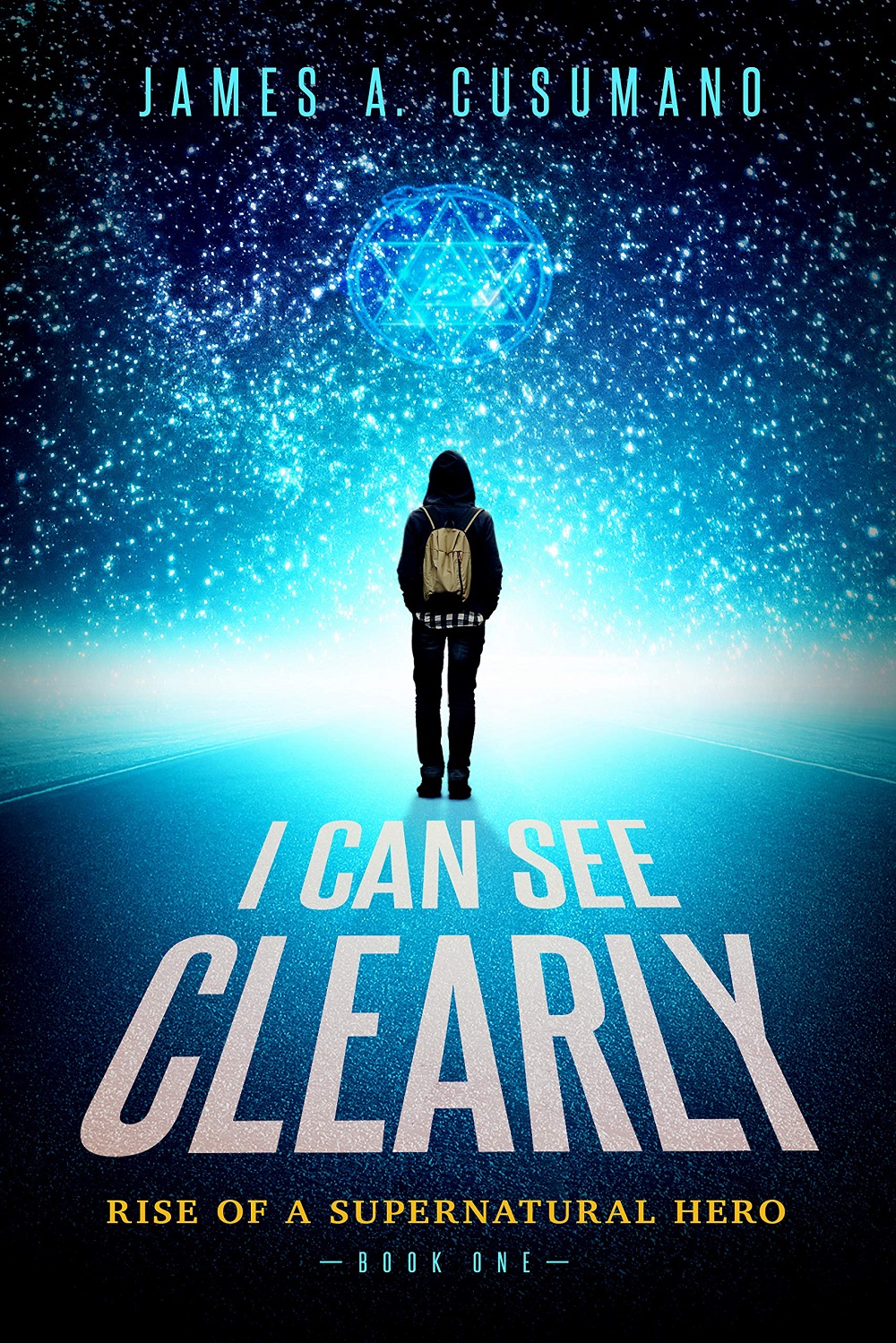
‘I Can See Clearly’ by James A. Cusumano is Book One in the Luc Ponti Series. Photo: google
James A. Cusumano is an accomplished leader with successful careers as an entertainer, scientist, corporate executive, and entrepreneur. An inspiring speaker and entertainer, he is the author of “Cosmic Consciousness: A Journey to Well-being, Happiness and Success,” “Balance: The Business-Life Connection,” “Life is Beautiful: 12 Universal Rules,” and co-author of “Freedom from Mid-East Oil.” His new book, “I Can See Clearly: Rise of a Supernatural Hero (Luc Ponti Series)” combines the journey of a metaphysical superhero with the excitement of a fast-paced spy thriller.
“I Can See Clearly” begins with an Author’s Note where James A. Cusumano explains his goal in writing this book: to provide “useful knowledge and a valuable perspective in addition to entertainment.” The Prologue takes place on December 24, 2017 in Lhasa, Tibet where a teenager named Ananda has a conversation with a wise spiritual guide name Dawa in the hopes of gaining insight to help him decide if he should proceed with his path to becoming a Buddhist Monk. Dawa assures him that the world is changing and inching towards Unity consciousness and that he, as a monk, will have an opportunity to contribute to this change. He also tells Ananda of an upcoming third Avatar, a spiritual-human entity, who will help in the evolution of the Unity Consciousness of the universe; that the first two have been Buddha and Jesus of Nazareth and that the third is about to rise in Palo Alto, California.
The Prologue sets up the story of Luc Ponti, a 16-year-od basketball player at Silicon Valley’s Palo Alto High School, whose future goal is to play for a top university and maybe even go pro. His plans are put on hold when he survives a near-death experience (NDE) which gives him the ability to travel through space and time, read minds, and retain enormous amounts of information. At first he is excited about his new abilities, but eventually they become too much to handle and they make him a target of those who want to exploit him. When he attracts the attention of the government, the CIA blackmails him into using his remote viewing ability to spy on the Chinese. Together with his friends Isabella and Eric, who also develop supernatural abilities after suffering medical emergencies; and Thay, a Buddhist monk who is also his spiritual adviser, Luc uses his abilities to guide him to an enlightened path that will change his life forever. Luc speaks Italian, especially when he curses, and there is a Glossary in the back that explains what each terms and phrases mean. The Supplements section provides more information about the concepts discussed throughout the novel and further explains the meaning and implications of each.
This is the first in the exciting new series about Luc Ponti, who has supernatural abilities, and contains fascinating insights from the fields of quantum and spiritual physics. It can be considered a follow-up to “Life is Beautiful: 12 Universal Rules” because not only does he expand on the subjects he covers on that book but he combines them with a story to reach a wider audience and it works perfectly. The language is easy to understand and he keeps the science to a minimum in the story but if readers want more information, it is available in the Supplement section. The character development makes them likeable and relatable but the only far out concept is that everyone who has a near death experience develops their own supernatural abilities. This does not take away from the genius of this series because there is something for everyone; the story of a young man trying to make his own way in this world appeals to young readers and the science/spiritual teachings appeal to a wider general audience. “I Can See Clearly” by James A Cusumano is an exciting must-read novel full of positive and encouraging messages that readers of all ages can enjoy. It is recommended for readers who appreciate science, Eastern philosophy, and coming of age stories. Hopefully, there will be more in the series.
“The Meaning of Life is to look inside and find those special gifts you came into this world. The Purpose of Life is to find a way to share those gifts with others in ways that makes this a better world….”
*The author received a copy of this book for an honest review. The views and opinions expressed here belong solely to her.
Since 2018, the marketplace has exploded with the sale of CBD products due to the passage of Farm Bills that changed the way hemp could be grown. Basically, they determined that cannabis can be labeled as hemp and not marijuana if it contains no more than 0.3% tetrahydrocannabinol (THC ), the chemical that produces the high in marijuana. Nowadays, people can buy CBD in coffee, deodorant, chocolate bars, and many other products. Reader’s Digest has partnered with Project CBD, a California-based nonprofit dedicated to promoting and publicizing research into the medical uses of cannabidiol (CBD) and other cannabis plant components. The result is this extensive guide into CBD that is divided into three parts: Part I contains the basics of what it is and how it works, Part II contains details about how it may help alleviate more than 30 common health conditions and Part III contains information about how to pick the type of product that works best for everyone. It also tackles common misconceptions about CBD, how to find high-quality products and even includes special sections on CBD for pets and recipes for making CBD products at home.
Due to CBD becoming so mainstream in the last few years, there exists the potential for misinformation and unsafe products. Thankfully, Reader’s Digest has stepped in and as a reliable and trusted source, together with Project CBD, have done an outstanding job of educating the public about CBD. Before getting into how it helps with specific ailments; Part I describes what CBD is with Chapter 2: How CBD Works in Your Body and gets into the science behind it including the inner workings of the endocannabinoid system, so it is science-heavy. Chapter 5 dispels commonly held myths about CBD by presenting the facts. One of the most important parts is Part II: CBD For Your Health because it has sections dedicated to specific conditions including Dementia and Alzheimer’s, Heart Disease, and Anxiety and not only does it explain how CBD helps, but also has an “I Tried It” testimonial part where real people tell their story about how it helped them. In the case of anxiety, “CBD directly activates a serotonin receptor known as 5-HTIA, which causes an antianxiety effect.” The recipes are for conditions such as inflammation and pain, sleep aids, and stress relievers and contain visual aids. There is plenty of science involved in the explanation of how CBD works, but besides that, the information is presented in easy to understand language, typical of any Reader’s Digest material. Hopefully, this will help readers who have chronic conditions but are hesitant about using CBD because of the stigma attached to it. “The Essential Guide to CBD” is a thorough guide about CBD, how it works, and its benefits and is recommended for anyone who is genuinely interested in learning more about the subject or just needs more information about how to relieve a specific illness. It is a definite must-read.
“….CBD isn’t just a “supplement” like a vitamin C or calcium pill. It is a molecule that actually mimics and helps support the innate health and wellness regulating system within your body: the endocannabinoid system (ECS).”
*The author received a copy of this book for an honest review. The views and opinions expressed here belong solely to her.
‘The Missing Element’ by Debra Silverman. Photo: amazon
Debra Silverman has a bachelor’s degree in Psychology & Dance from York University and a master’s degree in Clinical Psychology from Antioch University. Over the past 40 years of professional experience and private practice, she has specialized in helping thousands of individuals achieve emotional health and wisdom based on their unique personality and the four elements: water, air earth, and fire. Her work with families, individuals, and couples has her standing out in a sea of therapists and coaches. She has taught at the internationally renowned Esalen Institute, and her work has taken her around the globe, practicing and lecturing in places like New York, Los Angeles, London, Vancouver, Seattle and Boulder, Colorado, where she now lives. In her book “The Missing Element: Inspiring Compassion for the Human Condition,” Debra Silverman describes human nature in a compassionate and concise way.
“The Missing Element” begins with a Prologue where Debra Silverman explains that with all the problems going on in the world today, it may seem like an impossible task to try and create change for the better. The best way to do it? “….global change begins at home. We heal one person at a time, and we start with ourselves.” In her opinion, the best way to do this is to become familiar with the Four Elements as they pertain to us and to become an Observer and stand back and make changes by “altering the way you see and live your own story.” She writes that we are all made of four basic elements – Water, Air, Earth, and Fire and when we are in pain, it is because the elements are out of balance. Her goal in writing this book is teach readers about the different elements and how to reflect on their personality to be able to distinguish which parts are out of balance and use the Observer in themselves to experience life without judgement. Most importantly, the author wants everyone to use this knowledge to show more compassion towards other people and understand why they behave a certain way. Once she describes why the earth and humanity is in trouble and what makes up the Observer, the rest of the book is divided into the Four Elements: a description, how to work with each one, and the differences between men and women of each element.
By combining psychology and astrology, Debra Silverman provides readers with a deeper insight into personality traits based on the Four Elements. Her compassion for helping people shines through every page and her use of simple and easy to understand language keeps it all within reach. Even for readers who are not into astrology, her life advice is spot on; for example: her stance on how every time we experience pain, we have the option to either learn our lesson and change or repeat the story again and again. Her teachings come from the vantage point of “The Elders” and her attempts to help others accept themselves along the path of self-improvement. After she describes each element in terms of personality traits (in the first person point of view), she shows readers how to work with each to improve their lives and the lives of others. All this information is based on the Wisdom of the Elders who, based on different cultures, used the Four Directions, the Four Elements, the Four Noble Truths, and the Four Worlds to navigate life. It may not be for everyone, but “The Missing Element” by Debra Silverman is an inspiring guide to getting to know ourselves better and in turn reaching out to others and helping the planet. It is recommended for readers who appreciate self-help books with a strong foundation on astrology, metaphysics, and psychology.
“The elders of the American Indian and Chinese cultures looked seven generations ahead as they made their decisions. We have neglected such wisdom, living more from what will make us happy today, rather than what will bring peace to our great-great-grandchildren and their grandchildren.”
*The author received a copy of this book for an honest review. The views and opinions expressed here belong solely to her.
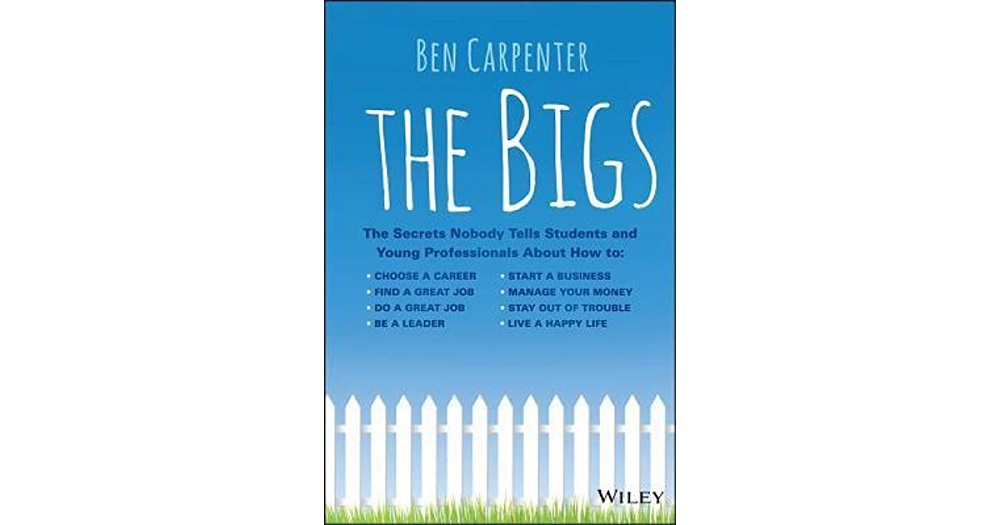
Ben Carpenter began his career as a Commercial Lending Officer at the Bankers Trust Company. Two years later he joined Bankers Trust’s Primary Dealer selling U.S. Treasury bonds. After a brief stop at Morgan Stanley, Ben joined Greenwich Capital which, during his 22 year career there, became one of the most respected and profitable firms on Wall Street. At Greenwich Capital Ben was a salesman, trader, sales manager, Co-Chief Operating Officer, and Co- CEO. Currently Ben is the Vice Chairman of CRT Capital Group, a 300 person institutional broker-dealer located in Stamford, CT. His book “The Bigs: The Secrets Nobody Tells Students and Young Professionals About How to Find a Great Job, Do a Great Job, Be a Leader, Start a Business, Stay Out of Trouble, and Live A Happy Life” is an invaluable guide for all college students, young professionals, and anyone seeking the hard-earned wisdom of a man who has won and lost many battles while winning the war of personal fulfillment.
“The Bigs” begins with a Preface by the author where he explains how this book came about. One day he received an email from his daughter Avery, who had just gotten a job, asking him if it was okay to send an email to her new boss asking if she could start “a week from Monday.” After the panic subsided, he responded with a list of items Avery should consider following at her new job, and afterwards, his friend suggested that he write a book on the topic. After a series of health scares, he seriously gave it more thought because he felt his daughters “could benefit from my experience, knowledge and mistakes even if I wasn’t there to tell them.” The final project turned out to be a combination of a memoir, a how-to book, and a collection of stories he lived through, all meant to dispense advice. It is divided into two parts: Part One, “How to Survive, Thrive, and Have Fun in the Big Leagues,” – teaches readers how to think about the kinds of issues that they will encounter in the real world; and Part Two, “How to Choose, Get, and Do a Great Job” – teaches readers specifically how to accomplish these critically important tasks. Ben Carpenter uses the baseball analogy to get his points across. In baseball, “the bigs” is slang for the big leagues. When you become responsible for yourself, and you are being paid to do a job, you are in “the big leagues.”
For the most part, life consists of lessons learned along the way that help pave the road to happiness and success. These lessons are as varied as humans are, and it is always advantageous to read about other people’s experiences in the hopes of learning something new. Such is the case in “The Bigs,” an American story of one man’s journey through his life and career. He recounts the people he met, the experiences he had, the mistakes he made, and what he learned along the way. Readers will encounter a colorful cast of real-life characters which include Big Hank, Hoops, Sweater Girl, The Zombies, Mr. Nuts, The Cheese, Deep Throat, and The RAT. Their tales stories are followed by a “lessons learned” section. The only downside is that it has too many sports analogies and that might be a turn off for readers who are not into sports. Since the language is easy to understand, it is suitable for all ages, but mostly for young people just starting out on life. One chapter that stands out because it has general advice for any age, is Chapter 5: Living a Happy Life. It contains stories and advice such as: The Secret- happiness is in your hands, Creating a Happy Life– you must create your own happiness but it takes maturity, self-awareness, hard work, and intelligence, and Money and Happiness- be happy with what you have. For example, on The Rude Waiter: he stresses that he is unwilling to ever allow poor service to spoil his dinner. He may not return, but he will not allow a rude waiter or bad service ruin his evening. While the real world can be fun, it is sometimes an uphill battle, and any type of advice should be embraced. “The Bigs” is full of practical advice, amusing stories, and lessons that anyone can use in their daily lives. It is recommended for readers who are sports fans and open to a different perspective on life.
“Most young entrepreneurs make the mistake of asking themselves ‘What product or service do I want to sell?’ More often, the better question is, ‘What product or service do I want to buy that I can’t easily find?’
*The author received a copy of this book for an honest review. The views and opinions expressed here belong solely to her.
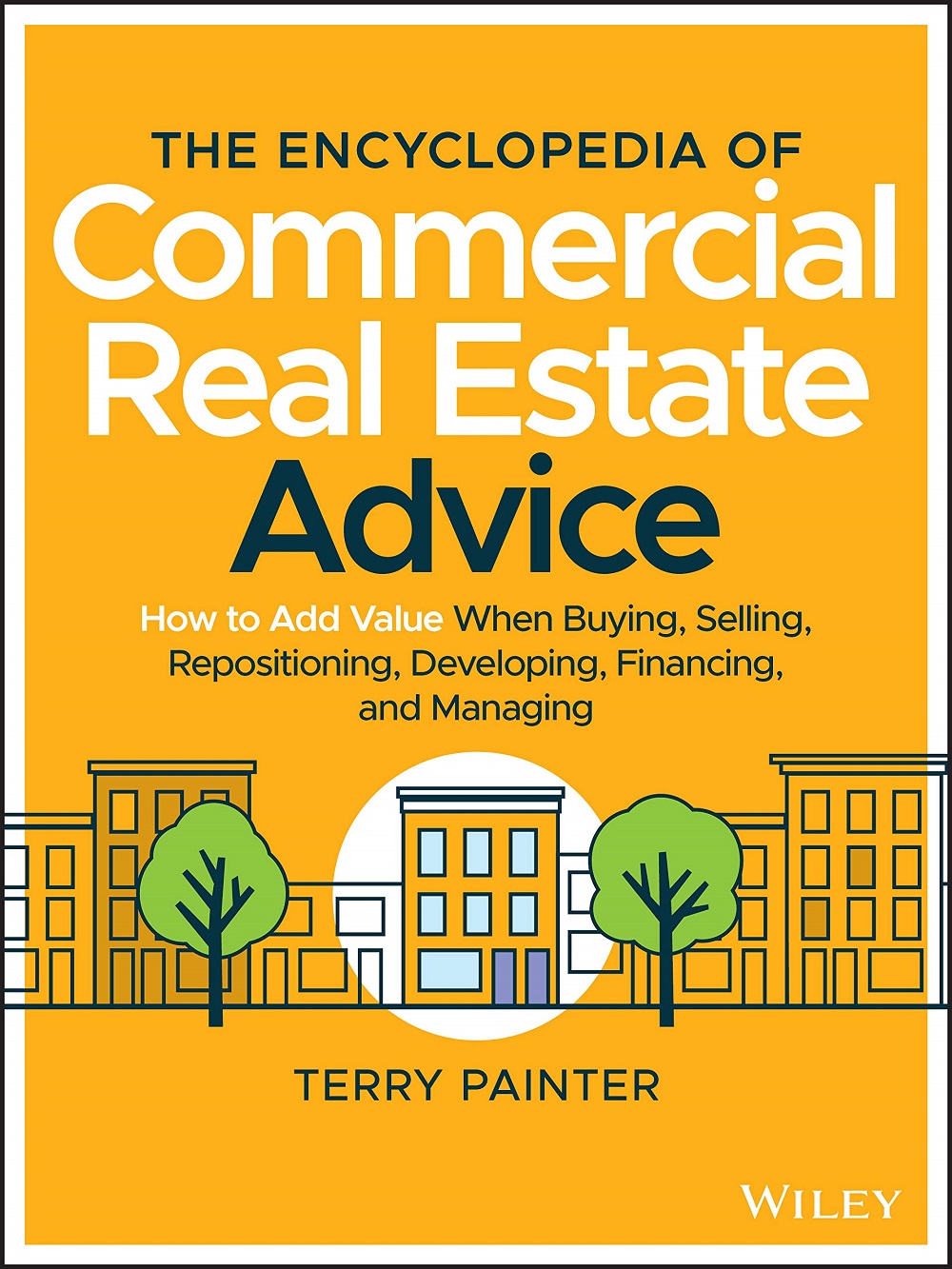
‘The Encyclopedia of Commercial Real Estate Advice’ by Terry Painter is the first encyclopedia of commercial real estate. Photo: amazon
Terry Painter is a member of the Forbes Real Estate Council and is a contributing writer for Forbes Online Magazine. He is the founder of Apartment Loan Store and Business Loan Store – commercial mortgage banking firms that have closed over four billion dollars in commercial loans since 1997. Terry has personally closed hundreds of commercial real estate loans representing just about every type of commercial real estate. As a top producer for Lasalle Bank and Lehman Brothers, he is known for his real estate investment consultations and tactics. For 18 years Terry has spoken nationally to commercial real estate investor groups, real estate brokers, and banks about commercial real estate investing and lending. His book “The Encyclopedia of Commercial Real Estate Advice: How to Add Value When Buying, Selling, Repositioning, Developing, Financing, and Managing” covers everything anyone would ever need to know on the subject from A to Z.
“The Encyclopedia of Commercial Real Estate Advice” begins with a Foreword from Peter Harris, who has worked with Terry Painter in the past and is the author of “Commercial Real Estate Investing For Dummies.” He explains that this book “is a serious, bottom-line book about making and modeling sound business decisions around buying and selling a commercial property.” In the Introduction, the author similarly states that it is full of advice on how to make the right decisions and avoid the setbacks that come with getting invested in commercial real estate, but mostly, it will save the reader time and money. It is divided into eight parts: Smart Strategies for Buying, Smart Strategies for Buyer Due Diligence, Smart Strategies for Raising Investors, Smart Strategies for Sellers, Smart Strategies for Repositioning, Smart Strategies for Developing, Smart Strategies for Financing, and Smart Strategies for Managing and Leasing. Each one starts with informative chapters and is followed by an encyclopedia that contains individual topics pertaining to the subject discussed. These encyclopedia topics serve as future refence material and commercial real estate terms that are in italics are included in this section. Throughout the chapters, there are 136 Time and Money Savings Tips and an Index at the end.
The world of commercial real estate investing can be complicated but Terry Painter does an excellent job of breaking down the subject into chapters and sections that anyone can understand. The result is exactly what the name implies: an encyclopedia of commercial real estate advice. It reads like a textbook and the chapters are divided by topic so that it also serves as a future refence guide. Overall, the language is down to earth, he uses the newly coined term “coronavirus recession” when discussing recessions, and he makes the subject matter easy to comprehend without sounding condescending or patronizing. At the beginning of each chapter, he describes the topics he will be covering and what the reader can expect. Highlights include Chapter 1: Who Are You When Buying a Commercial Property?, section: ‘The lowest-risk property types to choose’ where he lists the major commercial property types in the order of their level of risk during a recession which includes: mobile home parks, senior housing, and medical office buildings; and Chapter 12: Smart Strategies for Managing and Leasing which has important sections on ‘Eleven Ways Property Managers Can Rip You Off’ (and how to remedy each situation) and ‘Seven Essential Property Management Skills’ among those being customer service, problem solving, and negotiating. He makes it a point to stress that “nothing is truly recession-proof” but includes the 10 best recession proofing strategies on page 31. It is a gem among real estate business books. “The Encyclopedia of Commercial Real Estate Advice” is an impressive collection of commercial real estate advice and a must-read for investors of any level. It is recommended for readers who are genuinely interested in commercial real estate investing and need more information as well as those who do not know where to start or how the process works.
“The silver lining for commercial real estate buyers is that recessions turn seller’s markets into buyer’s markets and bring prices down…”
*The author received a copy of this book for an honest review. The views and opinions expressed here belong solely to her.
‘Life Is Beautiful’ by James A. Cusumano. Photo: amazon
James A. Cusumano is an accomplished leader with successful careers as an entertainer, scientist, corporate executive, and entrepreneur. An inspiring speaker and entertainer, he is the author of “Cosmic Consciousness: A Journey to Well-being, Happiness and Success,” “Balance: The Business-Life Connection,” and co-author of “Freedom from Mid-East Oil.” His book “Life is Beautiful: 12 Universal Rules” is a multi-faceted guide to life-long success and personal fulfillment.
In the Preface, James A. Cusumano explains that “Life is Beautiful” centers around the big question of ‘What is the meaning of life’ and the eventual ‘How can I live a happy life?’ His purpose in life is to share what he has learned in the hopes of making a “positive difference in the lives of others and show that Life is Beautiful.” He discovered the parallels between Eastern thought and modern physics but does now want to present his findings as dogma. Instead, he just wants readers to think of what ‘true’ reality means. The book is divided into two parts: The Reason for Your Existence: 12 Universal Rules of Life and Using The 12 Universal Rules to Create the Life You Dream. The first part contains chapters like Consciousness Is Everything, Consciousness And Reality, and The True Nature of Our Universe – they cover the surface of physics and the definition of the soul. He provides references in the bibliography in case the reader wants to pursue the details of the physics presented. The second part covers The Art and Science of Meditation, Creating Your Dreams, and Finding Lifelong Fulfillment – explanations on the arts of relaxation and meditation to be able to uncover a person’s Life Purpose to create personal and professional fulfillments. Appendix B contains The 12 Universal Rules of Life in one section to make it easier to read.
Admittedly, from the title itself, “Life Is Beautiful” at first seems like a self-help book to help readers improve their everyday lives but it is much more than that. James A Cusumano looks at the bigger picture of who and what we are in regards to the universe and he starts off with the definition of the soul, what he calls Cosmic Consciousness, “an energy field that functions by laws of a science that are well beyond our knowledge of quantum physics.” The first six chapters have heavy science content, specifically physics, but at an intermediate level so it is easy to follow. Chapter Seven: Balancing Masculine-Feminine Energies stands out because it addresses Rule #12 “Addressing complex social and cultural challenges requires an appropriate dynamic balance between masculine and feminine energies.” This basically states that for society to work, the masculine and feminine energies should be balanced and that organized religion has “played a key role in elevating masculine energies most often at the demise of feminine energies” in its never-ending quest for power and wealth, which is why the earth is currently hurting. The topics in Part Two are easier to understand because they include tips on how to relax and meditate to create our own reality. Since it is mostly about Eastern philosophy and physics, “Life is Beautiful” may not be for everyone but it opens the readers eyes to the concept of consciousness and the thought that we are all made of energy. It is recommended for readers who appreciate science and Eastern philosophy and are searching for ways to create a more fulfilling life with purpose.
“Time does not exist in the realm of consciousness. It is a man-made fabrication to manage our lives without chaos.”
*The author received a copy of this book for an honest review. The views and opinions expressed here belong solely to her.
‘The Entrepreneur’s Faces’ by Jonathan Littman and Susanna Camp. Photo: google
Jonathan Littman is the author of ten books, including “The Art of Innovation” and “The Ten Faces of Innovation.” His bestselling books have sold 750,000 copies worldwide and have been published in 20 languages. He is an adjunct professor at the University of San Francisco where he teaches ‘Innovation, Creativity, and Applied Design.’ Susanna Camp is an editor and journalist specializing in emerging technology and business trends. She is the Editor-in-Chief of SmartUp.life and a consultant for CEOs and others wanting to build their social media footprint. Susanna was an early team leader at Wired magazine, where she led the creation of one of the first online communities. In their new book “The Entrepreneur’s Faces: How Makers, Visionaries and Outsiders Succeed,” the authors take readers through the world of ten authentic entrepreneurs from around the world and show how each gets their edge and how they make their way in the business world in the hopes of inspiring the entrepreneurial spirit in them.
In the Introduction to “The Entrepreneur’s Faces,” Jonathan Littman and Susanna Camp explain their goal in writing this book is to “help you to identify the ten essential entrepreneurial types to propel your professional growth, and better gauge potential partners on the journey.” The ten entrepreneurs showcased throughout this book range from a concert pianist, to a physicist, a Stanford Law student and more. They are divided into ten types of workers: The Maker, The Outsider, The Conductor, The Accidental, The Collaborator, The Guardian, The Leader, The Visionary, The Evangelist, and The Athlete. Even though they all have their own individual journey to travel, they all pass through the same seven essential stages, which the authors call The Arc. These stages include: The Awakening, The Shift, The Place, The Launch, The Money, The Test, and The Scale. Each stage makes up a chapter where they describe how each entrepreneur handles the different stages. In the Epilogue, they stress that getting to identify the different entrepreneurial types is an excellent way to maximize a person’s potential but the types are in no way set in stone. People often exhibit more than one of these characteristics and it is usually necessary to adapt and change to maximize growth.
The world of entrepreneurship, like people, is constantly changing and challenging. Even though Littman and Camp focus on ten types of entrepreneurs, they emphasize that these states of mind are not always static. This book was written during COVID, when the business world is being challenged in ways no one thought possible – “The global pandemic is a huge Test for us all…Taking bold, new steps is never easy.” The stories presented, though inspiring, are merely a guide for entrepreneurs and innovators to help them through the 7 major phases of business growth. One chapter that stands out is ‘3: The Place’ because it brings up how the pandemic has made remote working necessary and “Those who quickly adopted these new skills at creating and collaborating online had an edge.” It brings modern reality into the mix. The chapters are short and the language is not too complicated in terms of business lingo and the authors speak directly to the reader: “At heart, you’ve got to make your own luck.” Business owners can also benefit in the sense that this valuable information can help them better understand themselves and their workers. By focusing on personality traits, this unique approach to business growth and management speaks to the heart of what makes individuals strive to succeed. “The Entrepreneur’s Faces” is an immensely useful business guide for both entrepreneurs and established organizations and is recommended for readers who appreciate business advice focusing on individual personalities and strengths.
“History proves that recessions, downturns, and yes, pandemics, demand that we respond to the threat with tremendous creativity and innovation.”
*The author received a copy of this book for an honest review. The views and opinions expressed here belong solely to her.






 SA Examiner