Brains, Humor, and Science: A Fun and Illustrated Journey with ‘Out of Your Mind’

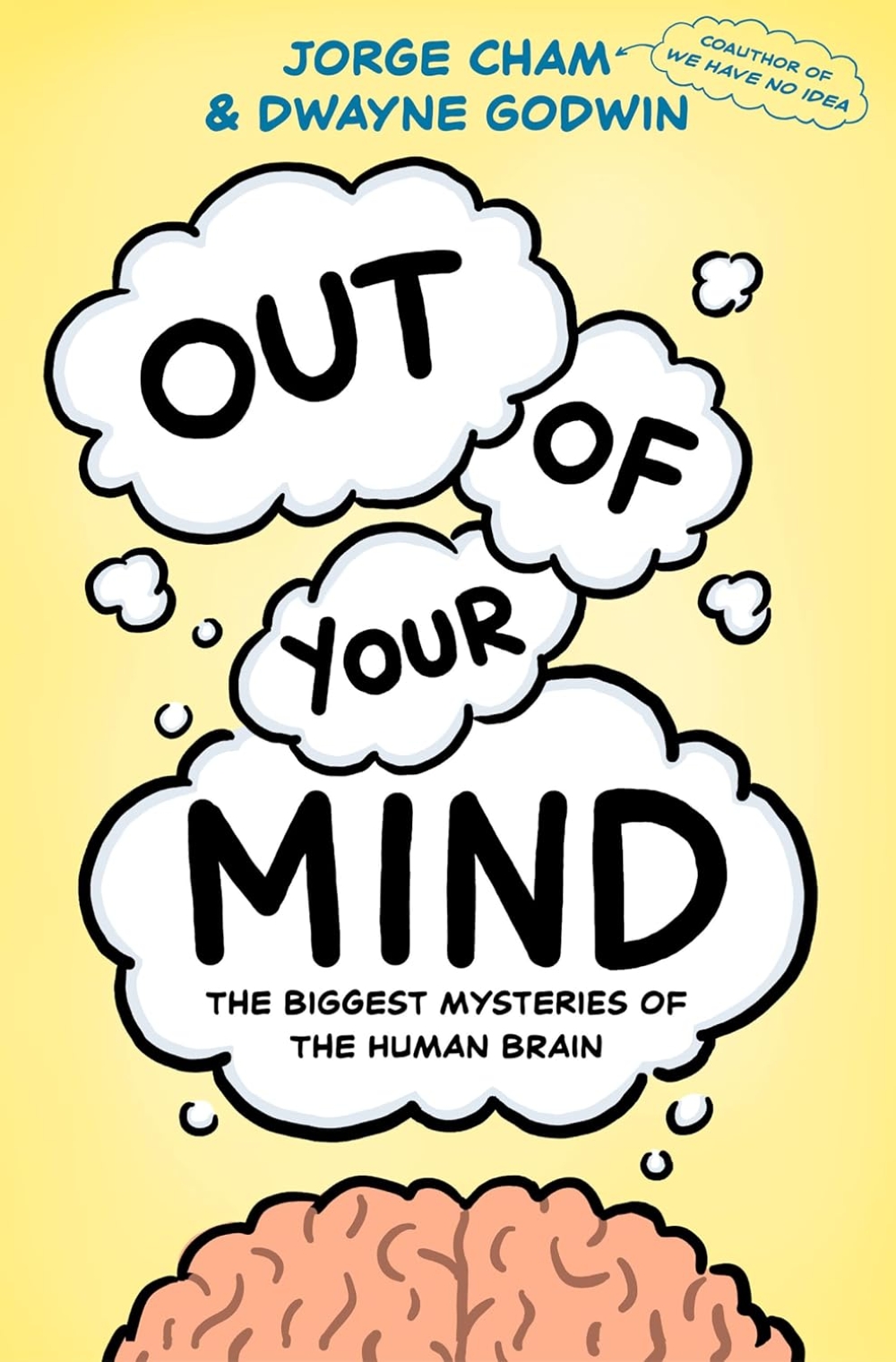
‘Out of Your Mind’ by Jorge Cham and Dwayne Godwin. Photo: Barnes & Noble

“Out of Your Mind” by Jorge Cham and Dwayne Godwin is an engaging and visually captivating exploration of the human brain. This illustrated book takes readers on a journey through the complexities of neuroscience by blending humor, vibrant artwork, and scientific insight to make an often-intimidating subject accessible and entertaining.

Cham, known for his Piled Higher and Deeper (PhD Comics) series, brings his signature wit and illustration style, while neuroscientist Dwayne Godwin provides expert knowledge in an engaging, digestible format. It begins by touching on the subject of identity and what makes who we are and covers a range of topics, including how neurons communicate, the mysteries of consciousness, and the quirks of human memory and perception. The illustrations and comic-style storytelling make complex scientific concepts understandable and fun to explore.

Chapters include:

  1. Where Is The Mind?
  2. Why Do We Love?
  3. Why Do We Hate?
  4. Will an AI Take My Job?
  5. What Are the Limits of Memory?
  6. What Is Addiction?
  7. What Is Consciousness?
  8. What Makes Us Happy?
  9. Do We Have Free Will?
  10. What Happens When We Die?
  11. What Makes Us Human?

Highlights:
3. Why Do We Hate? – explores ideas about where hate comes from and how to combat hate, including some self-reflection because some hatred can be projections of the things we hate in ourselves. “Not only do humans have the capacity to hate, we also use our intelligence to organize and find ways to spread it.”

4. Will an AI Take My Job? – it addresses questions such as whether or not AI can gain consciousness (maybe, but not one that we would recognize) and if AI will eventually take over the world (the jury is still out on that one).

Despite the advanced topic, it manages to balance education and entertainment by using language simple enough to make the material understandable. The humor and visual storytelling ensures that even complex topics remain engaging, making it an excellent read for students, educators, or anyone looking to better understand the brain in a fun and interactive way.

Overall, whether you’re a science enthusiast or just curious about how the brain works, “Out of Your Mind” offers an enjoyable and informative experience. By making neuroscience fun and more accessible for everyone, it reaches a wider range of readers. It is recommended for readers who enjoy science and comics and can appreciate the humor involved in learning something new.

“If your Mind is the sum total of every way you process information and interact with the world, then anything that affects any part of your brain will change you, even if only a little.”

*The author of this blog received a copy for an honest review. The views and opinions expressed here belong solely to her.

Rating: 4 out of 5.

Related post: Unlocking the Mysteries of the Brain: What ‘Out of Your Mind’ Reveals About the Human Brain.

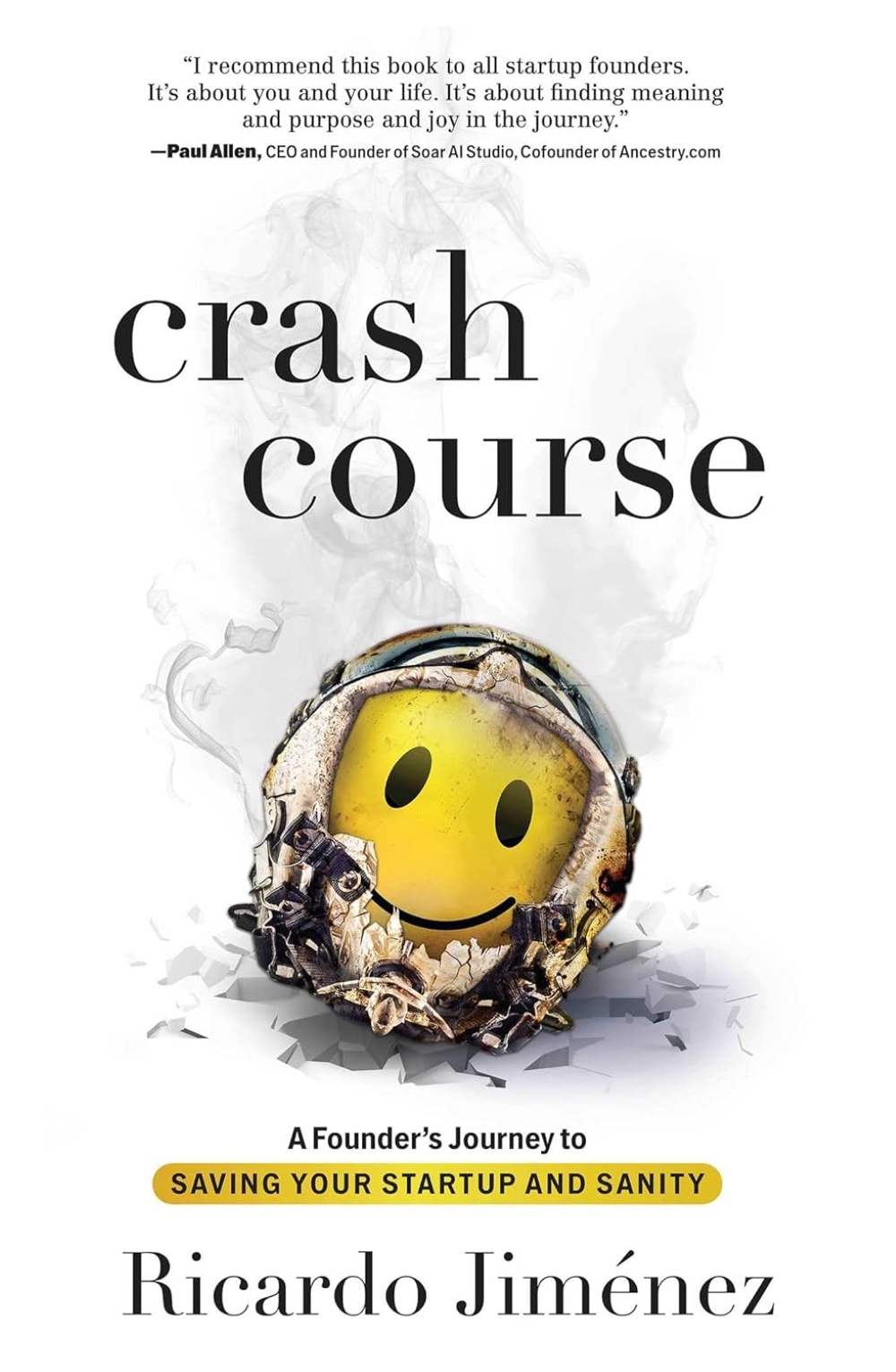
‘Crash Course’ by Ricardo Jiménez: A Raw and Honest Look at Startup Failure

‘Crash Course’ is an insightful look into the volatile world of startups. Photo: Amazon

In “Crash Course: A Founder’s Journey to Saving Your Startup and Sanity,” Ricardo Jiménez offers an unfiltered and deeply personal account of his startup journey—one marked by ambition, struggle, and eventual failure. Unlike typical business books that focus solely on success strategies, Jiménez takes readers through the hard lessons learned when things don’t go as planned. His honest storytelling makes this book a refreshing and invaluable resource for entrepreneurs who want to avoid common pitfalls.

In the Introduction, he bluntly states “I was a startup founder, and I failed.” He is sharing his experiences because he believes we can all learn from someone else’s struggles. Failure is a way of life in business, it’s not you personally.

Jiménez doesn’t just recount his failures—he analyzes them, offering insights on leadership missteps, financial mismanagement, and the emotional toll of entrepreneurship. He highlights the dangers of burnout, poor decision-making, and ignoring red flags, making this book as much about mental resilience as it is about business strategy. The writing is engaging and candid, making complex business concepts accessible to new and experienced founders.

It is divided as follows:

Section 1: Beginning with an Ending
Section 2: Starting Up
Section 3: Market (Mis) Fit
Section 4: Fighting for Survival
Section 5: The End
Section 6: What I Learned, What I Felt, and What I Still Don’t Know
Section 7: Finding the Rewards Among the Risks

Highlights:

Section 4, Chapter 14, Breaking Down – the author shares the importance of self care and work/life balance when all you do revolves around starting your company. People only wanted to talk to him about Plushkies or their ideas for a business and that’s all he was to them. It began to wear him down. “Entrepreneurs are often judged more by their company and product, which is what the public gets to see, than they are by their character and personality.”

Section 4, Chapter 17, Bro Savior Turns Bro Bully – He was so desperate to succeed, he almost lost sight of his principles. He stresses the importance of taking the red flags seriously. “My desperation had caused me to ignore all the red flags flying around that guy and our interactions, almost from the beginning.”

Overall, “Crash Course” is a must-read for anyone navigating the unpredictable world of startups. Above all, Jiménez’ candidness makes him relatable. Rather than glorifying the “hustle culture,” he advocates for balance, self-awareness, and learning from failure. Aspiring entrepreneurs will find comfort in his experiences, realizing that setbacks are not the end—but rather opportunities to grow. It is recommended for readers interested in memoirs and business motivation and self improvement books.

“The hard truth about being an entrepreneur is that, whether it’s building or selling, if it’s your startup, you can’t just rely on other people to build your company.”

Rating: 4 out of 5.

*The author received a copy of this book for an honest review. The views and opinions expressed here belong solely to her.

Related post: What Makes ‘Crash Course’ by Ricardo Jiménez a Must-Read for 2024

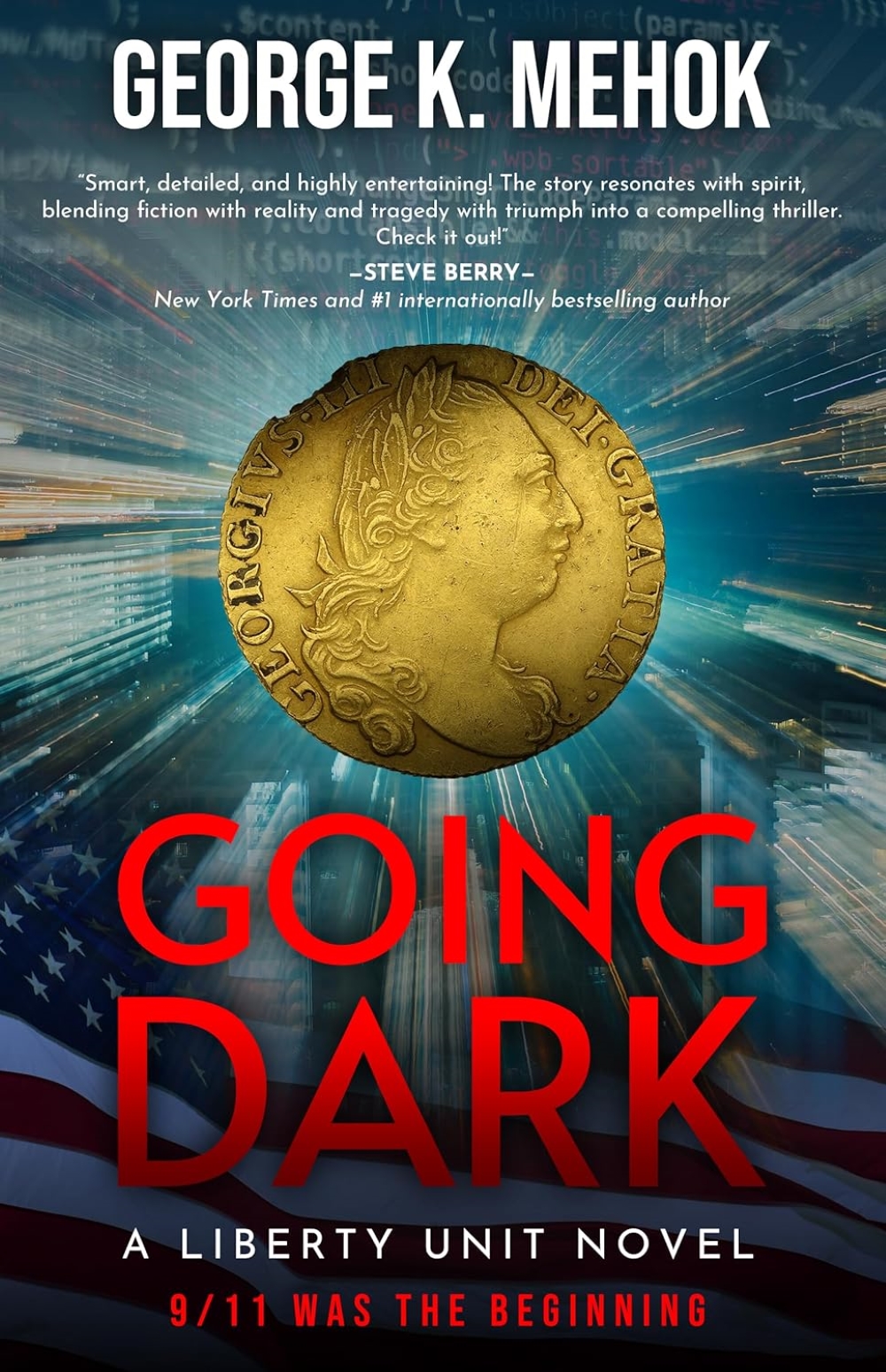
Illuminating ‘Going Dark’: Insights and Reflections on Mehok’s Latest Work

‘Going Dark’ is George K. Mehok’s latest techno thriller. Photo: Barnes & Noble

It is the sixth year of the American Revolution in 1781 and Captain John “Jack” Jouett is traveling through the Virginia forest with his horse Celer. The British have captured his father and as he reaches a stand point trying to avoid British troops, he sees ghostly riders walking along and they appear to be taking his father towards the sea, possibly towards a British prison ship. Jouett’s ultimate mission is to deliver a critical message from Thomas Jefferson to General Henry Knox.

In present day Illinois, Hassan and Yousef are brothers and getting ready to commit an act of terrorism. Yousef is only 25 years old and he’s excited for the mission but Hassan is hardened by his life experiences. Commander Khalid is their leader and they are trained to follow orders to the letter and without question, even if it involves family.

In Ohio, Paul Knox is having a hard time sleeping because the web’s usual chatter has gone quiet and he knows that’s not a good sign. It’s still early in the morning and he’s in bed with Sara and reminiscing about their life together. He is distracted; he needs to go back to the lab and go over the data because he has the nagging feeling that he has missed something. With his daughter Emma on his mind, he turns to say goodbye to Sara but she was only a hallucination.

These three narrative are connected and as the lines between past and present blur, Paul races against time to protect Emma and unravel past mysteries that could change history. He has spent his life tracking the “worst of the worst” on the dark web but this case is unlike any he has ever seen.

“Going Dark” is a gripping cyber-thriller that plunges readers into the high-stakes world of digital warfare and national security. The story follows Paul Knox, a seasoned cyber forensics expert and former Air Force officer, as he faces a relentless adversary determined to cripple critical infrastructure.

Mehok’s writing is sharp and immersive, blending technical cyber warfare details with heart-pounding action. It is descriptive and hooks you in from the very first sentence: “A pine branch reached out, raking Jack’s face, its needles stabbing his neck like a swarm of angry yellow jackets.” Paul is very observant and his descriptions of the TSA agents are vivid and spot-on: “His sunken, dark brown eyes radiated emotionless confidence, yet his stare carried a hint of weary tension.”

The action is fast-paced, keeping readers on edge as Knox unravels a conspiracy that extends beyond digital realms into real-world danger. The character development is strong—Knox is a compelling protagonist whose intelligence and resilience make him an engaging lead while the conflicts feel urgent and authentic. Since there are multiple story lines, the narrative is non-linear but easy to follow along. *Trigger warning: the action during the Thanksgiving Day terrorist attack may be too intense for some readers.

Overall, “Going Dark” by George K. Mehok is a suspenseful and thrilling novel with realistic portrayals of cyber threats and national security risks, making it a timely and thought-provoking read. Fans of techno-thrillers and military espionage similar to the works of Dan Brown and Brad Thor will find this book both thrilling and insightful.

“Revenge burns deep in your heart. Revenge can be a powerful elixir; beware, it must be consumed in small quantities.”

*The author received a copy of this book for an honest review. The views and opinions expressed here belong solely to her.

Rating: 4 out of 5.

Related post: Cyber Intrigue and Historical Drama: Mehok’s Debut Novel ‘Going Dark’

Mysticism for the Modern Seeker: A Review of ‘Embodied Kabbalah’ by Matthew Ponak

‘Embodied Kabbalah: Jewish Mysticism for All People’ by Matthew Ponak. Photo: Barnes & Noble

Matthew Ponak is a rabbi, a teacher of Jewish Mysticism, and a spiritual counselor. His book “Embodied Kabbalah: Jewish Mysticism for All” is a collection of 42 mystical texts with commentary that presents the essential teachings from Kabbalah and places them side-by-side with profound inspirations from our era and the world’s great wisdom traditions.

The never before translated texts shed light on unknown traditions of mystical enlightenment. Fascinating descriptions of the paradoxical nature of reality are placed next to cautionary guidance against travelling too quickly on the road to expanded consciousness. Spiritual practices for dealing with depression and sadness come along with illuminated poetry of what our world could look like if we all tried to be truly loving. Using the stunning visual layouts of traditional Torah commentary, Ponak opens the gateway for Judaism to add its much needed voice to the universal quest for meaning, inner knowing, and rooted transcendence. (Barnes & Noble, 2025)

Review:

This is a refreshing and accessible exploration of Jewish mysticism, blending ancient wisdom with modern sensibilities. The author’s goal is to give perspectives which emphasize the harmony between the physical and the spiritual.” Unlike many scholarly works on Kabbalah that focus on esoteric theory, Ponak brings a grounded, practical approach, emphasizing how these mystical teachings can be integrated into daily life.

The book is presented as a journey through key Kabbalistic concepts, combined with insights from meditation, embodied spirituality, and psychological well-being. Ponak’s background as a rabbi and spiritual teacher enriches the text, making it deeply rooted in tradition and adaptable for contemporary seekers, regardless of religious background. His writing is clear and inviting, avoiding overly complex jargon while still preserving the depth of the teachings.

By focusing on embodiment—rather than treating Kabbalah as an abstract intellectual pursuit, Ponak encourages readers to experience it through mindfulness, movement, and personal reflection. He does this by including sections on reflection and ways to put into practice the material in our personal lives. This makes it an excellent resource for those seeking a more holistic spiritual practice.

Overall, “Embodied Kabbalah” is a thoughtful and inspiring read, bridging the gap between mysticism and everyday life. It is a must-read for anyone interested in Jewish spirituality, personal growth, or embodied wisdom traditions.

“The practice of connecting with nature can be as simple as spending time outdoors, but preferably in a place that feels less urban. Try taking time each day, for one week, to be in nature: by trees, a body of water, a field, mountains, etc.”

Rating: 4 out of 5.

*The author received a copy of this book for an honest review. The views and opinions expressed here belong solely to her.

Navigating Career Change: A Review of ‘Career Coaching for Laid-Off Federal Workers’

‘Career Coaching for Laid-Off Federal Employees’ by Robert Moment. Photo: Amazon

“Career Coaching for Laid-Off Federal Employees’ by Robert Moment is a practical and empowering guide for federal workers navigating the challenges of job loss and career transition. With a step-by-step approach, it offers clear strategies to help readers shift from federal employment to the private sector, making it an invaluable resource for those seeking stability and new opportunities.

Moment provides expert advice on resume writing, networking, and interviewing—key areas where federal employees may need guidance when transitioning into corporate environments. The book also emphasizes mindset shifts, helping readers view job loss as an opportunity for growth and reinvention. He reassures them that even though it may seem like it at the moment, a layoff does not define them. His approach is both compassionate and action-oriented, ensuring that job seekers remain motivated and confident throughout their search.

Chapters include:
Chapter 1: Facing The Layoff With Confidence
Chapter 2: Understanding The Corporate Job Market
Chapter 3: Crafting A Winning Resume & Cover Letter
Chapter 4: Mastering LinkedIn For Job Search Success
Chapter 5: Building A Powerful Personal Brand
Chapter 6: Networking To Unlock Hidden Job Opportunities
Chapter 7: Acing The Corporate Job Interview
Chapter 8: Negotiating A Competitive Salary & Benefits
Chapter 9: Developing New Skills For Career Growth
Chapter 10: Thriving In The Corporate Work Environment

Highlights:
Chapter 10
– where he gives key strategies to help readers integrate into corporate culture, including a 90 Day Career Success Plan. It includes actions to take (Understand Company Culture and Expectations) and what they should have accomplished at the end of each milestone.

Chapter 12 Entrepreneurship As An Alternative Career Path – contains information on steps readers can take if they’re considering business ownership, such as the need to evaluate their entrepreneurial potential, the viability of their business ideas, and how to get started. “Entrepreneurship, consulting, or freelancing can not only offer financial stability but also a sense of fulfillment and independence.”

Most importantly, it is focused on federal employees, acknowledging the unique challenges they face. Moment’s insights help readers effectively translate government experience into private-sector language, increasing their chances of securing meaningful employment.

Overall, “Career Coaching for Laid-Off Federal Employees” is an invaluable reference for those seeking to rebuild their careers after federal job loss. It offers practical tools, encouragement, and a clear roadmap to success in the private sector and is highly recommended for any transitioning professional.

“While many view federal jobs as the pinnacle of security, the truth is that the most successful corporate professionals excel by continuously adapting.”

Rating: 4 out of 5.

*The author was contacted for an honest review of this book. The views and opinions expressed here belong solely to her.

Wisdom for the Future: A Review of ‘The Potentialist’ by Ben Lytle

‘The Potentialist: The Pursuit of Wisdom’ is Ben Lytle’s second book in The Potentialist series. Photo: Barnes & Noble

Ben Lytle’s “The Potentialist: The Pursuit of Wisdom” is a thought-provoking guide that explores how individuals can unlock their full potential by cultivating wisdom. The book serves as a practical roadmap, offering insights on self-awareness, lifelong learning, and personal growth. Lytle breaks down the often elusive concepts of wisdom and human potential, making them accessible to anyone willing to embrace change and self-improvement.

It begins with the goal of the book: “This book will show you how to achieve your potential, become wise, make better decisions, have deeper relationships, and live well with only a small investment in time.” After he defines wisdom, he goes into how we can cultivate consciousness and explains several natural laws, such as the Law of Cause and Effect and the Law of Polarity. Finally, he ends with a list of discussion questions for further personal examination for individuals or discussion/book clubs such as Why is life so hard and sometimes seemingly cruel? and Why do some people suffer more than others?

The book is divided as such:

Part 1 – Your Place in the World

  • Potential, Wisdom, and the Art of Living Well
  • Life’s Unavoidable Questions
  • Natural Law
  • The Inner World of Your Psychological Body

Part II – Advanced Skills

  • Cultivating Consciousness
  • Conscious Intention
  • Learning States
  • Intimacy

Part III – Approaching Potential

  • Reframing Fear
  • Getting Out of Your Way
  • Your Potential and Wisdom

Highlight:

Chapter 6 – Conscious Intention – where the author examines the Law of Cause and Effect in the modern age of electronic communications. It has increased the denial of cause and effect when it comes to people who run scams because they “see faceless victims as opportunities without consequences.” This also has to do with people who get angry on social media or in emails and take risks they wouldn’t normally do in person.

I appreciate how he combines philosophical wisdom with actionable advice. Lytle emphasizes the importance of curiosity, adaptability, and resilience in navigating an ever-evolving world. Readers are encouraged to adopt a mindset of continuous growth, shedding limiting beliefs, and embracing opportunities for self-improvement. His writing is engaging, insightful, and filled with real-world examples that make complex ideas easy to grasp.

Overall, “The Potentialist” highlights the importance of inner fulfillment. It challenges readers to look beyond traditional measures of achievement and focus on personal evolution. Whether you are an entrepreneur, professional, or someone on a journey of self-discovery, this book offers valuable insights on living a life of purpose and meaning. It is recommended for readers who are seeking to reach their highest potential.

“Greet every new positive or adverse development as a puzzle piece, increasing comprehension of the inner and outer worlds comprising your life. Instead of responding to change with “Now what?” welcome it with “What can this teach me?”

*The author received a copy of this book for an honest review. The views and opinions expressed here belong solely to her.

Rating: 4 out of 5.

The Power of Reflection: My Review of ‘Lost in Thought’ by Deborah Serra

‘Lost in Thought’ is the inspiring new novel by Deborah Serra. Courtesy photo, used with permission.

Deborah Serra is a recipient of the Hawthornden Literary Fellowship, a semifinalist for the Faulkner-Wisdom Creative Writing Award, and nominated for the O. Henry Prize. She has been published in literary magazines and is an editor with the ethics and short story magazine, After Dinner Conversation. Serra is the author of the thriller, “Primal,” and the humorous travel memoir, “2 Broads Abroad.” Her latest book is “Lost in Thought,” a novel about unconscious decision making and the illusion of free will.

“Lost in Thought” – Ilana works at Lyric Opera House and is in a committed relationship with Adam, a neuroscientist, for the last 3 years. They live in a cozy Greenwich Village apartment where they often share meals with friends as they engage in stimulating conversations. She’s adopted, and the questions inside of her are growing insistent including who would she be if she’d grown up in her birth home? Is she truly who she thinks she is? Has she ever freely chosen anything at all? Are these questions in part due to Adam’s research on how people make their decisions. It could also be suppressed grief from the death of her adoptive mother. Her inner dialogue is affecting her daily life: “Her thoughts were loud and they drowned out her words.”

When Ilana learns that her birth mother Fiona Shannon owns a pub in Albany, she figures what harm could there be in casually dropping by for a drink? To see, just to see. What begins as curiosity about her choices evolves into a traumatic shift in her world. She loses control of her life and then chaos breaks out.

Review:
The story begins as Ilana is taking the elevator to her office in the 12th floor. A germaphobe by nature, it intensified by Covid and it shows in every part of her life. She’s the production manager at the opera house and the job requires a sense of authority. To everyone around her, she seems calm and confident, but it’s only a front. She was raised to act confident regardless of her situation, and in her line of work, emotions are a sign of defeat and she refuses to show any weaknesses.

Her adoptive mother died of Covid months ago after being on a ventilator for months. She wasn’t allowed to visit her in person and she helplessly watched her die through her iPad. This experience still haunts her and is slowly chipping away at her confidence and total belief system. She desperately wants to know more about her birth family, if she has any of their traits, physical or otherwise. Her best friend and ex-boyfriend William tries to convince her that her personality is the sum of her experiences, which sets forth the nature vs nurture debate. That impulsive trip to see Fiona and her husband Shea O’Holleran will change her life in ways she never saw coming.

This combination of women’s literature and literary fiction is a compelling exploration of the subconscious mind and how unconscious processes shape our decisions, often without our awareness. The novel invites readers into the life of Ilana, who embarks on a journey of self-discovery after realizing that much of what she believed to be her free will was, in fact, influenced by external forces and internal biases. Serra cleverly examines the illusion of choice, presenting a narrative that challenges the notion that we are fully in control of our actions.

The writing is introspective and open, combining scientific concepts with philosophical musings in a way that’s thought-provoking yet not overly dense. The novel’s pacing keeps readers engaged, blending character-driven drama with intellectual inquiry. As Ilana confronts the complexities of the human mind, the book raises important questions about responsibility, autonomy, and the nature of free will. With highly descriptive language, the action flows easily through the pages: “The industrial breezes from cars and buses and subway vents blew hot into her face, grabbed her silk skirt, and whipped the loose strands of her hair.”

Overall, “Lost in Thought” is a stimulating read that challenges perceptions and invites reflection on the unseen forces that guide our choices. It explores the themes of family, identity, love, and friendship. By making abstract ideas concrete, it offers a relatable and human story while tackling deep philosophical themes. Readers are left questioning their own thought processes and the extent to which they truly have control over their lives. It is recommended for readers who enjoy intellectual literary fiction that features smart and relatable characters.

“Now, her mind was relentlessly chewing. It was thrilling but like a horror film. She asked herself why she was going down the dark basement stairs.”

*The author received an ARC in exchange for an honest review. The views and opinions expressed here belong solely to her.

Rating: 4 out of 5.

Ruthless Pursuits and Twists: What Makes ‘Neon Prey’ a Captivating Thriller

‘Neon Prey’ by John Sandford. Photo: Barnes & Noble.

John Sandford is the pseudonym of John Roswell Camp, an American author and journalist. Camp is the author of more than fifty-four published novels, all of which have appeared, in one format or another, on the New York Times best-seller lists, many debuting at #1. In addition to the Prey, Virgil Flowers, and Letty Davenport novels, all part of the Prey universe, he is also the co-author of three young-adult books in the Singular Menace series, written with Michele Cook, and co-author of the science-fiction thriller “Saturn Run” with Ctein.

“Neon Prey” is the 29th novel in the Prey series. Clayton Deese is a small-time criminal, muscle for hire when his loan shark boss needs to teach someone a lesson. Now, seven months after a job that went south landed him in jail, Deese has skipped out on bail, and the U.S. Marshals come looking for him. They don’t care about a low-level guy–it’s his boss they want–but Deese might be their best chance to bring down the whole operation.

When they track him to his rural Louisiana cabin, they find a jungle full of graves behind a dirt trail. Now Lucas Davenport is on the trail of a serial killer who has been operating for years without notice. The killer is ruthless, and–as Davenport will come to find–full of surprises. (Barnes & Noble, 2025)

Review:
“Neon Prey” is a gripping thriller that has Lucas Davenport, now a US Marshal, pursuing a cunning serial killer with a long history of eluding capture. The story begins with the discovery of a gruesome crime scene and quickly spirals into a tense, high-stakes hunt for a killer whose motives and methods remain elusive. Davenport, always a sharp and resourceful investigator, follows a trail that stretches across states, using his expertise and determination to connect dots that others have missed. Together with two of his most trusted agents, Rae Givens and Bob Matees, as well as the FBI Agent in charge Tremanty, they are hot on Deese’s trail, who is now part of a home invasion burglary ring.

Sandford’s writing is fast-paced and immersive, drawing readers into the intense atmosphere of the investigation. With highly descriptive language, the fights scenes come to life: “Paine rolled up on his side, not screaming but choking and in pain, and with Deese’s pant leg now up, Paine, with no other weapon, bit him on the calf, like a feral tomcat, wrenching his head from side to side as his teeth sank in.”

The detailed character development is impressive—especially of Davenport, who continues to evolve throughout the series. He’s a man of deep intellect, but also someone who struggles with personal demons and moral ambiguities, making him a complex and compelling protagonist. Deese, the antagonist, is equally well-written, with a chilling presence that makes every encounter feel high-stakes.

This suspenseful crime thriller is filled with twists and turns as the hunt for a sadistic killer takes Davenport to the neon lights of Las Vegas. It explores the themes of good vs evil, revenge, death, and friendship and while it does have its dark moments, the satisfactory conclusion is worth the ride.

Overall, with its intricate plot and twists and turns, as well as Sandford’s sharp, engaging prose, “Neon Prey” is a standout in the crime genre. Though it’s a stand alone novel, it continues Lucas Davenport’s journey as a US Marshal. It’s a thrilling, intelligent read that will satisfy both long-time fans of the series and newcomers alike.

“He slipped the tan ski mask out of his pocket, pulled it over his head, turned towards the door and knocked, raising the cane, ready to kick it open. Like many perfect plans, his didn’t go quite right.”

Rating: 4 out of 5.

A Murder Mystery with a Supernatural Twist: Reviewing Marty Roppelt’s ‘Last Words’

‘Last Words: A Supernatural Murder Mystery’ by Marty Roppelt. Photo: Amazon

“Last Words: A Supernatural Murder Mystery” is a murder mystery novel by Marty Roppelt. It follows Chicago police Detective Myles Hanson as he navigates a world of crime and unsettling revelations. After a nighttime raid on a drug lab ends in a deadly shootout that claims the life of an undercover detective, Myles transfers transfers out of the Organized Crime Unit.

On his first night in the Violet Crimes Unit, Maria Peski, a midwife with a normal quiet life is savagely murdered. Back at the station, while filling out the paperwork and listening to music on his headphones, he hears static and voice calling his name. From there, he begins to experience haunting visions and auditory hallucinations that include voices and static on the digital recorder that he uses to take notes.

When a second murder rocks the city with startling similarities, Myles is forced to accept what he fears most: some clues lie beyond the realm of the living. As the line between the supernatural and the real begins to blur, Myles realized that he is hearing the final words of the murder victims, fragments of their unfinished thoughts. Those voices give him clues to help him solve their murder. Together with his new partner Hank ‘The Tank’ Brewer, they race against time to catch the vicious killer before he strikes again.

Marty Roppelt’s new novella takes readers on an eerie journey into the world of the paranormal and crime-solving. As Hanson begins to have paranormal experiences, he must navigate the fine line between solving the crime and protecting his sanity.

Roppelt’s writing is atmospheric, creating a tense, thrilling narrative that keeps the reader hooked. The blending of the supernatural with a traditional murder mystery provides an intriguing twist, adding an extra layer of suspense to the already gripping storyline. Myles Hanson is a well-crafted protagonist, balancing the skepticism of a seasoned detective with the growing realization that the paranormal forces at play are very real. The suspenseful plot twists keep the reader guessing until the end.

The pacing of the novel is steady, allowing the mystery to unfold gradually, and Roppelt’s descriptive narrative of the killer’s viewpoint as he is getting rid of the evidence and then preparing to strike again is unsettling but gripping. The language while describing Myles’ hallucinations is vividly descriptive: “The woman – Maria Peski- stared back at him in the mirror. Dead eyes, frozen deep in their sockets, gazed through him.” The narrative is in the third person point of view that alternates between the characters and towards the end, it hints at an unreliable narrator when the police is interviewing a witness who crossed paths with the killer.

Overall, “Last Words: A Supernatural Murder Mystery” explores the themes of good vs evil, identity, and family. The unique premise of a haunted detective elevates this novel beyond the typical whodunit. Judging by the ending, this is only the beginning of Detective Myles Hanson’s paranormal experiences. It’s a captivating read for fans of both supernatural thrillers and crime mysteries by authors like James Patterson and John Sandford.

“Meandering through the growing crowd as carefully and slowly as he could, he positioned himself to within an arm’s length of his intended victim’s back. He stopped there. How easy it would be to simply stab her in the liver from here, and be done with her…”

Rating: 5 out of 5.

*The author received a copy of this book for an honest review. The views and opinions expressed here belong solely to her.

Heartfelt and Suspenseful: My Thoughts on ‘The Whole Time: Part 1’

‘The Whole Time: Part 1’ is the first book in the series by Maizy Ren.

“The Whole Time: Part 1′ by Maizy Ren

The story is set in Plainview, New Jersey, where Hunter Key is a member of the Pests, an underground criminal organization. They are just one of the gangs that control the city and their corruption runs deep. Hunter is an Informant and recently, he has sat in at the Inner Circle’s meeting and is hoping to someday be the leader. He sees them as family, and family means everything. Before that can happen, he is given a big job: kidnap Locklyn Elwell, the only child of the wealthy Elwell Enterprises, for ransom.

Locklyn Elwell doesn’t want to inherit the family business, but for now has to go along with what her distant parents dictate, even if it means taking a slap or two to the face. She has mad computer skills, which she uses to bypass the security cameras on the estate and has tried to run away several times. Her constant entourage of security guards include Dayton, who is more of a father figure than her own father. She has been homeschooled her whole life, but now her parents are sending her to Plainview Academy. At first she doesn’t have any friends, but eventually she gains the friendship and acceptance of a small group of outcasts.

Hunter tries to get close to Locklyn at school and waits for the perfect time to get her away but the more time they spend together, the less he wants to complete the job. Not to mention that his reality is shattered when he finds out what the Pests do when no one is looking and that there’s more to Locklyn than meets the eye.

This is Part 1 of The Whole Times series of books, four in total and a captivating and promising start to the series. The story revolves around a group of diverse characters navigating complex emotions and situations, with a particular focus on love, loss, and self-discovery. The writing is emotive, drawing readers into the world of the characters and making them feel every moment of the journey. “The blackness in his wandering eyes match the blackness of the night surrounding us.”

The characters of Hunter and Locklyn are relatable and multi-dimensional, struggling with inner conflicts that feel authentic and modern. The relationships in the book—whether romantic, familial, or friendships—are examined at length, highlighting the tenderness and the intensity of human connection.

The pacing is well-balanced, with moments of reflection and tension that keep the action moving. It is written in the 1st person point of view, including Hunter, Locklyn, Zachni, Dayton, and others, so we see the world through their eyes and hints at unreliable narrators. While the first part in the series leaves readers wanting more, it sets the stage for an exciting continuation of the story.

Overall, “The Whole Time: Part 1″ explores the themes of family, love, identity, and coming of age. Fans of contemporary romance, mystery, suspense, and character-driven narratives will find it a compelling read.

“I feel small under the weight of his stare. Weak. Like a tiny animal being hunted. His eyes study me as if calculating my every move.”

Rating: 5 out of 5.

*The author was contacted for an honest review of this book. The views and opinions expressed here belong solely to her.