Book review: ‘Exploring the Complexity of Human Intelligence’ by Ansh Verma

Ansh Verma is a researcher, author, and philosopher based in Dhanbad, Jharkhand (India). He researches almost everything that can be observed, felt and/or read, including technology, politics, divine, war, behavioral, engineering, investments, military, finance, and mathematics. Post graduation, Verma has almost 20 years of experience in thinking and making sense of the world. His new book “Exploring the Complexity of Human Intelligence” is a comprehensive exploration of prevalent misconceptions that cloud our understanding of intelligence.

“Exploring the Complexity of Human Intelligence” – the core topic of this enlightening book is intelligence and the myths surrounding it. Such myths include the misleading notion of left-brain/right-brain dominance and the widespread belief in using only a fraction of our brain’s capacity. Other topics include gender differences when it comes to intelligence, emotional intelligence, the aging mind and how to address cognitive decline, neuroplasticity, and the cultural biases in IQ testing that can affect people who have different types of cultural intelligence.

In the Introduction, the author writes that the purpose of this book is “to empower readers with accurate knowledge about human intelligence.” By doing so, he hopes readers will understand that intelligence is made up of different factors and then arms them with the information necessary to make appropriate life choices. Chapter 1: Defining Intelligence defines intelligence as more than just what a typical IQ test might measure and that it includes a wide variety of cognitive capacities and aptitudes. In Chapter 2: Nature vs. Nurture, he clarifies the connection between genetics and environment and how they shape cognitive aptitude. In Chapter 3: Brain Myths and Cognitive Abilities, readers can learn all about the various learning styles and the importance of evidence-based approaches to education.

The rest of the book consists of:

Chapter 4: Creativity and Problem Solving
Chapter 5: Learning Styles and Intelligence
Chapter 6: Gender and Intelligence
Chapter 7: Emotional Intelligence
Chapter 8: Memory and Forgetfulness
Chapter 9: Nature of Intelligence in Children
Chapter 10: The Aging Mind
Chapter 11: Neuroplasticity and Learning
Chapter 12: Intelligence and Success
Chapter 13: Intelligence in Different Cultures
Chapter 14: Genetics and Intelligence Revisited

Overall, this is an extremely insightful and deeply researched book on intelligence – how it is made up of different factors but it is continuously changing and adapting, especially when it comes to emotional intelligence and neuroplasticity. By using down to earth language and examples of real people when describing the different learning and intelligence types, the author makes the subject easy to understand. This is a must read for readers interested in a deep study of intelligence and the complexities of the human mind.

“Success is, therefore, a multifaceted concept, and one’s ability to excel in a particular field is influenced by a complex interplay of various attributes and factors.”

*The author was contacted for an honest review of this book. The views and opinions expressed here belong solely to her.

Rating: 5 out of 5.

Book review: ‘Journey Within’ by Ansh Verma

‘The Journey Within’ is an excellent guide for personal growth and development. Photo: Amazon

Ansh Verma is a researcher, author, and philosopher based in Dhanbad, Jharkhand (India). He researches almost everything that can be observed, felt and/or read, including technology, politics, divine, war, behavioral, engineering, investments, military, finance, and mathematics. Post graduation, Verma has almost 20 years of experience in thinking and making sense of the world. His book “Journey Within” is an eye opening guide that examines the profound significance of self-discovery and purpose in leading a fulfilling and prosperous life. 

‘Journey Within’ by Ansh Verma – Personal growth and development begins with getting to know yourself, your values, and your purpose in life. This is important not just for personal reasons since being a well rounded and fulfilled person affects those around us. In Chapter 1: Introduction, the author explains that individuals who are happy with themselves can inspire others and that “this ripple effect of positive impact contributes to creating a more harmonious and fulfilling society.”

Readers are guided in this transformative journey of self discovery beginning with Chapter 2: Understanding The Inner Self by learning to recognize just how important it is to truly get to know themselves. In Chapter 3: Embracing Mindfulness and Meditation the author explains that by practicing mindfulness and focusing on the present, they lessen the regrets about the past and the worries about the future. In Chapter 7: Embracing Change and Transformation readers learn about the importance of adopting a growth mindset because it makes them more resilient when faced with challenges and helps them view failures as opportunities to grow. Other notable chapters include Chapter 10: Embracing Gratitude and Abundance, Chapter 13: Living with Purpose and Intention, and Chapter 19: Empowering Others on Their Journey.

Since the chapters are short, it is easy to read through and reference back to specific topics. The most important lesson to be learned from “Journey Within” is that working on yourself can make a big impact in the world because “a healthy relationship with oneself is a foundation for healthy relationships with others.” This is an excellent book to read if you are working on self improvement because it emphasizes the importance of exploring who we are, fully understanding our values, passions, and strengths, and aligning our actions with our authentic selves.

*The author was contacted for an honest review of this book. The views and opinions expressed here belong solely to her.

Rating: 5 out of 5.

Book review: ’10 Habits of Highly Successful People’ by Ansh Verma

’10 Habits of Highly Successful People’ contains essential information for people interested in personal development. Photo: Amazon

Ansh Verma is a researcher, author, and philosopher based in Dhanbad, Jharkhand (India). He researches almost everything that can be observed, felt and/or read, including technology, politics, divine, war, behavioral, engineering, investments, military, finance, and mathematics. Post graduation, Verma has almost 20 years of experience in thinking and making sense of the world. His new book “10 Habits of Highly Successful People” is an essential guide that breaks down the main essential habits and characteristics of successful individuals.

“10 Habits of Highly Successful People”  – Sometimes life can get so hectic that we often forget that there are easier and better ways to cope with life’s struggles. While there are other books out there that address personal development, I like this one because the author uses language that is easy to read and understand and the tone is not condescending at all. Because it is a short read, he gets down to the point without fillers like background stories or endless examples of how people have successfully implemented these habits into their lives. Since each habit is a chapter, it makes it so convenient to go back and re-read at your own pace. He also gives tips and key points on how to implement these habits into your daily routine.

The chapters are as follows:

Goal Setting
Time Management
Continuous Learning
Positive Mindset
Networking
Consistency
Embracing Failure
Health and Wellness
Financial Responsibility
Gratitude and Empathy
Bonus: Wisdom from Japanese Traditions

Some of these habits are well known, like Networking, Time Management, and Goal Setting, but some of them are more personal, like Positive Mindset and Continuous Learning. My favorite ones are Embracing Failure and Gratitude and Empathy. Embracing Failure – it is not easy to accept and learn from failure but it is an important part of the growth process because it creates resilience. We should not let failure define our worth or potential. Gratitude and Empathy – “highly successful individuals embody gratitude and empathy in their interactions with others.” We can do this by reflecting on the things we are grateful for and putting ourselves in other’s shoes. I highly recommend this book if you are interested in self help books about personal growth and development, not just success in terms of money and status.

*The author was contacted for an honest review of this book. The views and opinions expressed here belong solely to her.

Rating: 5 out of 5.

Book review: ‘Digest on Genetics’ by Ansh Verma

‘Digest on Genetics’ is a deep study of genes and heredity. Photo: Amazon

Ansh Verma is a researcher, author, and philosopher based in Dhanbad, Jharkhand (India). He researches almost everything that can be observed, felt and/or read, including technology, politics, divine, war, behavior, engineering, investments, military, finance, and mathematics. Post graduation, Verma has almost 20 years of experience in thinking and making sense of the world. His new book “Digest on Genetics”  is an enlightening journey into the captivating realm of genetics and a deep study of genes, heredity, and the diversity within living organisms.

“Digest on Genetics” – Genetics is the study of genes and heredity and understanding how they replicate, recombine, and mutate. It provides insight into how organisms evolve and adapt to their environment. In turn, this information proves valuable in fields such as medicine, agriculture, and evolutionary biology.

To help readers understand genetics, the author begins with Introduction To Genetics where he discusses Gregor Mendel, the Austrian monk who is considered the patriarch of modern genetics, and his contributions. In DNA Structure and Replication, readers can learn all about DNA replication, cell division, and inheritance. The material starts to get more interesting but complicated in Genes and Chromosomes where he discusses genes and alleles but he manages to make it easy to follow and understand. The rest of the book consists of chapters like Genetic Variations and Mutations (the consequences of mutations on gene function), Genetic Disorders, and Genetic Engineering and Biotechnology, which brings up the “possibility of creating designer babies or enhancing human traits through genetic manipulation…” I found The Philosophy of Genetic Studies particularly interesting because it addresses the ethical dilemmas surrounding genetic engineering, such as genetic privacy.

Despite its small size, this book contains so much information about genes, genetics, and the pros and cons of genetic engineering in general. Whether you want information about the science of genetics or how it can be used to personalize a patient’s healthcare by targeting specific genes, the information is easy to process and understand. It is recommended for readers interested in all things related to genetics.

*The author was contacted for an honest review of this book. The views and opinions expressed here belong solely to her.

Rating: 5 out of 5.

Book review: ‘The Gravity Guide: Unveiling the Universe’s Hidden Force’ by Ansh Verma

‘The Gravity Guide: Unveiling the Universe’s Hidden Force’ is the new book by Ansh Verma. Photo: Amazon

Ansh Verma is a researcher + author + philosopher based in Dhanbad, Jharkhand (India). He researches almost everything that can be observed, felt and/or read, including technology, politics, divine, war, behavioral, engineering, investing, military, finance, and mathematics. Post graduation, Verma has almost 20 years of experience in thinking/making sense of the world. His new book “The Gravity Guide: Unveiling the Universe’s Hidden Force” is an exploration of gravity and the universe in general.

“The Gravity Guide: Unveiling the Universe’s Hidden Force” – In this excellent guide about all matters related to gravity, the author starts by asking readers if they have ever wondered about the role that gravity plays in nature and everyday life. By first defining how gravity works in “the gentle descent of a leaf” to simply helping us get out of bed in the morning, he creates excitement about the topic, leaving readers wanting to learn more. So he goes back to the beginning, for some interesting back history on how some of the greatest scientists, like Sir Isaac Newton, became involved in studying about gravity. He gradually moves on to explain the role of gravity in terms of the universe and how it affects the tides and how it keeps the universe together, leading to a discussion on black holes.

To wrap it all up, Chapter 7 has a Q&A section with questions such as: How does gravity hold the solar system together? and What’s the difference between weight and mass? No science book is complete without a few experiments, so Chapter 8 has practical experiments to help students not only see but feel the principles of gravity in action. Such experiments include The Pendulum Swing and Water Drops on a coin and make science come alive.

In layman terms, the author skillfully explains gravity and science so that everyone, even if they are not science experts, can understand. So if you if always wanted to know more about gravity but were afraid the topic would be too complicated, or don’t know where to start, give this book a try. You will never look at gravity the same way again.

*The author was contacted for an honest review of this book. The views and opinions expressed here belong solely to her.

Rating: 4 out of 5.

Book review: ‘A Digest on Cryptocurrency’ by Ansh Verma

‘A Digest on Cryptocurrency’ is the new book by Ansh Verma and an in-depth look at cryptocurrency. Photo: Amazon

Ansh Verma is a researcher + author + philosopher based in Dhanbad, Jharkhand (India). He researches almost everything that can be observed, felt and/or read, including but not limited to technology, politics, divine, war, behavioral, engineering, investing, military, finance and mathematics. Post graduation, Verma has almost 20 years of experience in thinking/making sense of the world. His new book “A Digest on Cryptocurrency” covers a wide range of topics – the history of cryptocurrency, the different types of cryptocurrencies, and cryptocurrency and the future of finance, that provide a comprehensive understanding of cryptocurrency.

“A Digest on Cryptocurrency” – This expanded digest gives readers a comprehensive and detailed exploration of the diverse aspects of cryptocurrency. Newcomers and seasoned enthusiasts will find it equally helpful, as it includes recent developments in the field. Ansh Verma defines cryptocurrency, covers the history behind it, describes the different types of cryptocurrencies, lists the challenges and concerns surrounding it, which include environmental concerns due to its significant energy consumption, and how it can be used in industries such as gaming and space exploration.

He begins in Introduction to Cryptocurrency by defining it “a revolutionary form of digital or virtual currency that operates on the principles of cryptography and blockchain technology.” He explains the concept, how blockchain technology makes it work, and its basic decentralized structure. In History of Cryptocurrency, he gets deep into the history of this digital currency, including the early beginnings of Bitcoin and the background of Satoshi Nakamoto, its creator. For anyone really interested in Blockchain Technology, this chapter goes heavily into how it works, its core features, and how it can be used to ensure security and transparency in cryptocurrency.

The rest of the book is divided as such:
Cryptocurrency Mining
Popular Cryptocurrencies
Cryptocurrency Exchanges
Crypto Wallets
Cryptocurrency Investment and Trading
Decentralized Finance (DeFi)
Cryptocurrency Regulations
Cryptocurrency and the Future of Finance
Cryptocurrency and Environmental Concerns
Cryptocurrency in Everyday Use
Challenges and Opportunities in Cryptocurrency
Cryptocurrency in the Media and Public Perception
NFTs (Non-Fungible Tokens)
Cryptocurrency and Space Exploration
Cryptocurrency and Gaming Economies
Quantum Computing and Cryptocurrency Security

Overall, “A Digest on Cryptocurrency” is an extremely helpful guide to all matters concerning cryptocurrency. From the history of this innovative digital currency, to the wide variety of uses in various industries – as well as its challenges and concerns, readers will no doubt find these topics informative. The chapters are short and structured to make it convenient to re-read those of particular interest at any given time. Ansh Verma has a way of making any topic easy to follow and understand and this one is no different. If you are looking for a book that fully explains all the concepts of cryptocurrency, then this one is a must-read.

*The author was contacted for an honest review of this book. The views and opinions expressed here belong solely to her.
Rating: 4 out of 5.

Book review: ‘Rethinking Transportation’ by Ansh Verma

‘Rethinking Transportation’ is Ansh Verma’s new book all about transportation. Photo: Amazon

Ansh Verma is a researcher + author + philosopher based in Dhanbad, Jharkhand (India). He researches almost everything that can be observed, felt and/or read, including technology, politics, divine, war, behavioral, engineering, investing, military, finance, and mathematics. Post graduation, Verma has almost 20 years of experience in thinking/making sense of the world. His new book “Rethinking Transportation” focuses on the topic of transportation, the problems in the current transportation system (congestion, pollution, and parking difficulties) and the need for innovative solutions.

“Rethinking Transportation” emphasizes the importance of reimagining transportation for a better future and discusses the potential for innovative solutions to address these problems. Ansh Verma introduces a personal patent in the automobile field and explains how this invention can revolutionize transportation, addressing many of the challenges previously highlighted. There is a detailed examination of the patent, explaining how it works and the potential impact it could have. He includes real-world case studies and success stories of innovative transportation solutions to demonstrate how these solutions have made a positive difference. The book maps out the steps required for the widespread adoption of this new mode of transport, including collaborations, regulations, and public perception. (Amazon, 2024)

The author begins with Introduction: Setting the stage where it is noted that population growth and urbanization have put a strain in the public transportation infrastructure. Chapter 1: The Problems with Traditional Transportation highlights the fact that the individual suffers the most due to longer commutes, limited access to reliable transportation, and the pollution that comes with increased vehicles on the road and therefore, “…traffic congestion perpetuates social inequity.” How can we address these problems? One solution is innovation. According to the author, in Chapter 2: The Call for Innovation, “Innovation in transportation plays a pivotal role in shaping a more sustainable and efficient future.”

The rest of the book is divided as such:

Chapter 3: A New Vision for Transportation
Chapter 4: Patent In Focus
Chapter 5: Benefits of the New Mode of Transport
Chapter 6: Overcoming Challenges and Resistance
Chapter 7: Case Studies and Success Stories
Chapter 8: The Path to Adoption
Chapter 9: Environmental and Societal Impact
Chapter 10: The Future of Transportation

Overall, not only does “Rethinking Transportation” presents an excellent examination of the problems with modern transportation, but it offers solutions. It is heavily researched and contains information that anyone interested in innovations in the transportation industry will find helpful. It is definitely a must read.

*The author was contacted for an honest review of this book. The views and opinions expressed here belong solely to her.

Rating: 4 out of 5.

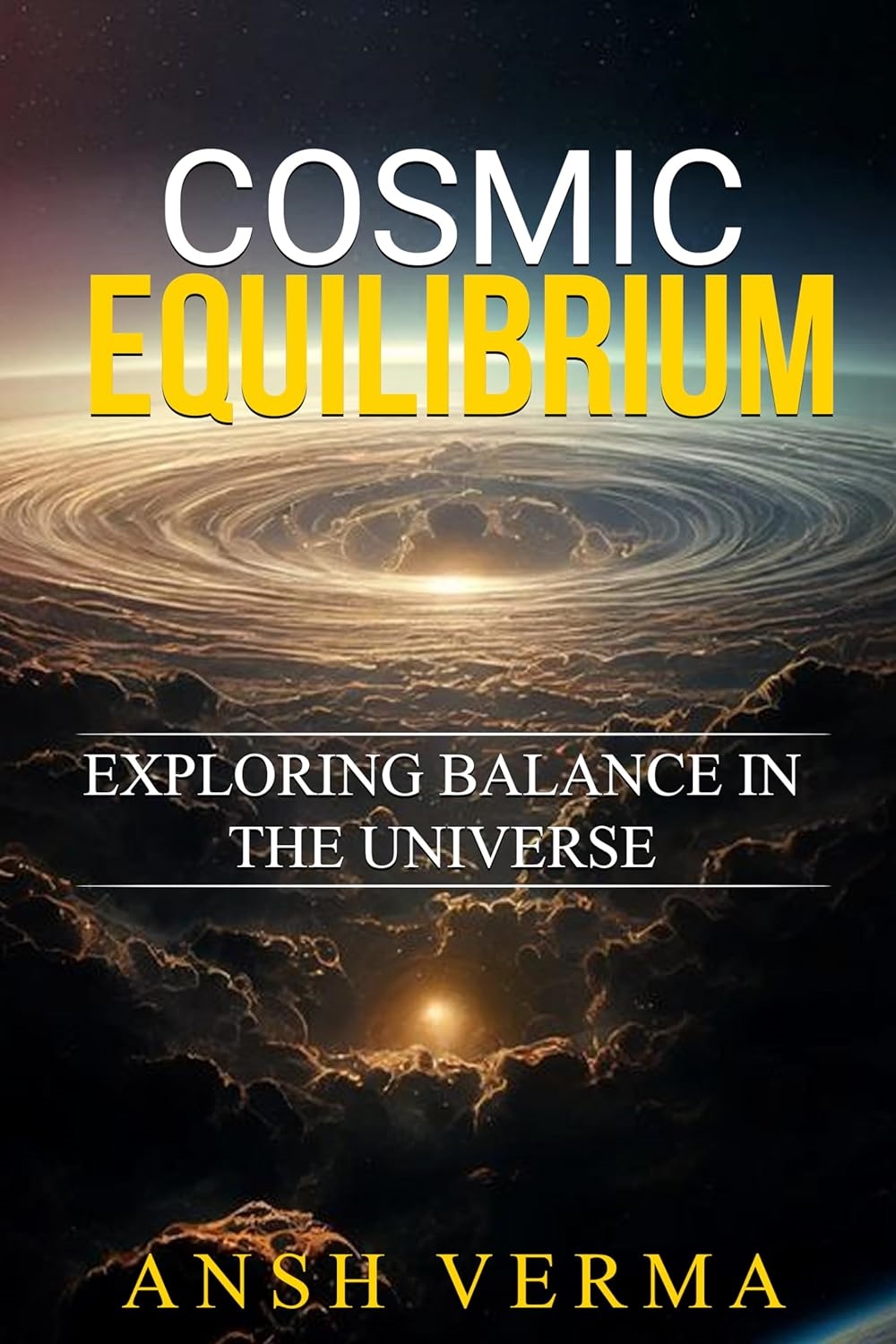
Book review: ‘Cosmic Equilibrium: Exploring Balance in the Universe’ by Ansh Verma

‘Cosmic Equilibrium: Exploring Balance in the Universe’ is the new book by Ansh Verma. Photo: Amazon

Ansh Verma is a researcher, author, and philosopher based in Dhanbad, Jharkhand (India). He researches almost everything that can be observed, felt and or read, including technology, politics, divine, war, behavioral, engineering, investments, military, finance, and mathematics. Post graduation, Verma has almost 20 years of experience in thinking and making sense of the world. His new book “Cosmic Equilibrium: Exploring Balance in the Universe” is a captivating exploration of the intricate harmony and balance that permeates the cosmos.

“Cosmic Equilibrium: Exploring Balance in the Universe” – This thought-provoking book takes readers on a journey through the fundamental principles governing the universe, from celestial harmony to the laws of nature that underpin the cosmos. It delves into the timeless concept of yin and yang, revealing how opposing forces complement and balance each other on both cosmic and human scales.

From the birth and death of stars to the cyclical rhythms of life on Earth, the book examines the interconnectedness of all existence and the profound role of balance in shaping our universe. It bridges the realms of science, philosophy, and culture, offering insights into the diverse ways different societies have revered and integrated the idea of cosmic balance into their beliefs, ethics, and rituals.

This book also tackles the pressing issue of ecological balance on our planet and its broader implications for the cosmic equilibrium. It invites readers to contemplate their place in the vast cosmic tapestry and to reflect on the significance of balance in their own lives. With a holistic approach that combines scientific discoveries, philosophical reflections, and practical applications, this book serves as an enlightening guide to understanding the delicate equilibrium that sustains our universe and inspires us to find balance within ourselves and the world around us.

Balance is the central theme of this book, primarily yin and yang, the concept that “invites us to explore the eternal interplay of opposites that lies at the core of our reality.” It examines balance and harmony in everything from nature to human life. Each chapter is dedicated to a specific type of balance, including Chapter 2: Celestial Harmony, Chapter 3: Balance in Nature, and Chapter 5: Ecological Balance. Especially interesting is Chapter 4: Cultural Perspectives, which emphasizes how all cultures respect this sense of balance within their respective lifestyles.

The author does so much more than just educate readers on how balance works in nature, he also gives practical advice on how they can achieve balance in their personal lives. This includes balancing work and life, balancing technology and nature, and finding balance in consumption. In his Call to Balance in Chapter 8: Conclusion, he encourages readers to be mindful of their place in the universe to create a more balanced and sustainable future for everyone. As we are all connected, we all benefit in the end. If you are interested in an in depth study of the cosmos and the importance of balance and harmony, this is the book for you.

*The author was contacted for an honest review of this book. The views and opinions expressed here belong solely to her.

Rating: 4 out of 5.

Book review: ‘The Science Behind Unbreakable Parent-Child Bonds’ by Ansh Verma

‘The Science Behind Unbreakable Parent-Child Bonds’ is the new book by Ansh Verma. Photo: Amazon

Ansh Verma is a researcher, author, and philosopher based in Dhanbad, Jharkhand (India). He researches on almost everything that can be observed, felt and/or read, including but not limited to technology, politics, divine, war, behavioral, engineering, investing, military, finance and mathematics. Post graduation, Verma has almost 20 years of experience in thinking/making sense of the world. His new book, “The Science Behind Unbreakable Parent-Child Bonds,” unravels the mysteries of why individuals, even those who appear stoic and detached, maintain an enduring connection with their parents.

“The Science Behind Unbreakable Parent-Child Bonds” – in this book, readers embark on a fascinating journey through the complex world of human relationships from a unique perspective – behavioral science and logic. Delving deep into the evolutionary, cognitive, and emotional aspects of parent-child bonds, it uncovers the hidden drivers behind this unbreakable link. From the psychological mechanisms that underlie parental recognition to the influence of socialization and culture on these connections, it presents a rich mosaic of insights backed by extensive research and real-world examples. It also challenges conventional notions of parent-child relationships, offering a fresh and scientifically grounded perspective that explains why these bonds persist and how they shape our lives. With clear, engaging prose, this book invites readers to discover the profound behavioral science behind what truly keeps us forever linked to our parents, shedding light on the enduring power of this fundamental connection. (Amazon, 2023)

There is no doubt that the bond between parent and child is one of the strongest relationships out there and the author explores these types of human relationships through the perspective of behavioral science and logic. Not only does psychology play a part of this bond, but so does society and culture. It is well researched and even though the subject may be scientifically presented, he explains it in a way that is easy to understand.

Some of the chapters include The Evolutionary Roots of Filial Attachment, Cognitive Mechanisms of Parental Recognition, and Psychological Resilience and Attachment. A couple of my favorites are 5. The Influence of Socialization and Culture where he explains the impact of societal norms on the parent-child bond and 6. Stoicism and Parent-Child Bonds – even if the parents do not display feelings or complaints, it still has an effect on a growing child. If you have ever wanted to know more about the parent-child bond, I highly recommend this book. Even if you don’t have children, it will help you understand how your parents’ upbringing influenced who you are.

“When we assist our relatives, we are, in essence, promoting the survival and propagation of a significant portion of our own genetic code. This act of altruism…..indirectly contributes to the preservation of our genetic lineage.”

*The author was contacted for an honest review of this book. The views and opinions expressed here belong solely to her.

Rating: 4 out of 5.