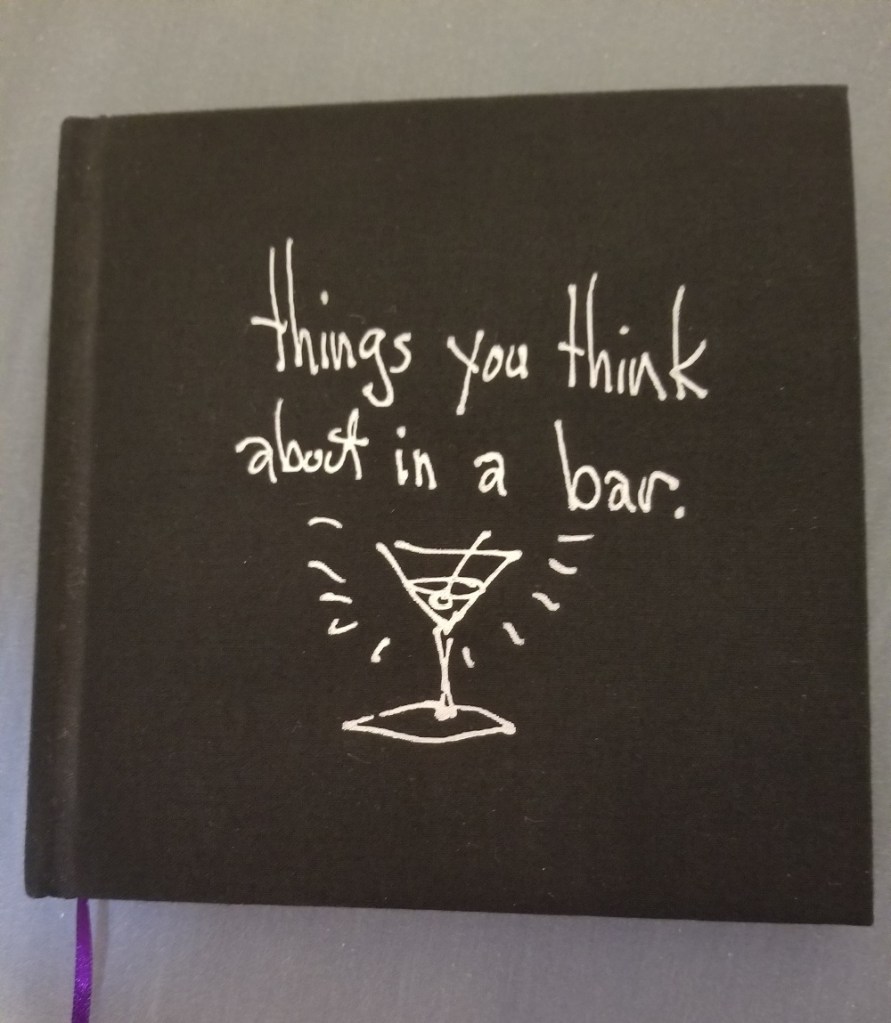
Book review: ‘The Napkin Art of Tim Burton’ by Tim Burton

‘The Napkin Art of Tim Burton: Things You Think About in a Bar.’

Tim Burton is an American filmmaker, animator and artist who is best known for his gothic, fantasy and horror films such as Beetlejuice, Edward Scissorhands, The Nightmare Before Christmas and Sweeney Todd: The Barber of Fleet Street. He wrote and illustrated the poetry book “The Melancholy Death of Oyster Boy & Other Stories” in 1997 and “The Art of Tim Burton” in 2009, a compilation of his drawings, sketches and other artwork.  He followed the latter with “The Napkin Art of Tim Burton: Things You Think About in a Bar” in 2015, which contains sketches he made on napkins at bars and restaurants he visited.

“The Napkin Art of Tim Burton” begins with a note by Tim Burton where he explains why he likes to draw on napkins.  Simply put, he likes to draw on whatever surface happens to be available when he gets inspired. With all the traveling he does, he is usually in restaurants and bars and the easiest blank surfaces are napkins. He also wants to encourage others to create, “however, wherever possible” because art is mostly about the process of creating, not so much the result. Opposite that page, is a picture of a blank napkin, so the reader can draw on it if the mood strikes, along with any other surface of the book.

This being Halloween season, fans of Tim Burton might want to take notice of this art book.  It is smaller than most books, about a 6 X 6 square and weighs 1.58 lbs. but for hardcore fans, it is a collectible.  The artwork is typical Tim Burton, most are in black and white, but there are some colored ones. Notable napkins include those from Bar Vendôme and Hôtel Ritz and Paris and Caesars Palace in Las Vegas.  Sometimes he even uses the logo as part of the drawing, which is highly inventive.  One of his best drawings is that of a one-eyed green monster with a real cherry as the pupil. “The Napkin Art of Tim Burton” is a small but valuable book of art by the master of fantasy films and is recommended for genuine fans of his work.

*The author received a copy of this book for an honest review. The views and opinions expressed here belong solely to her.
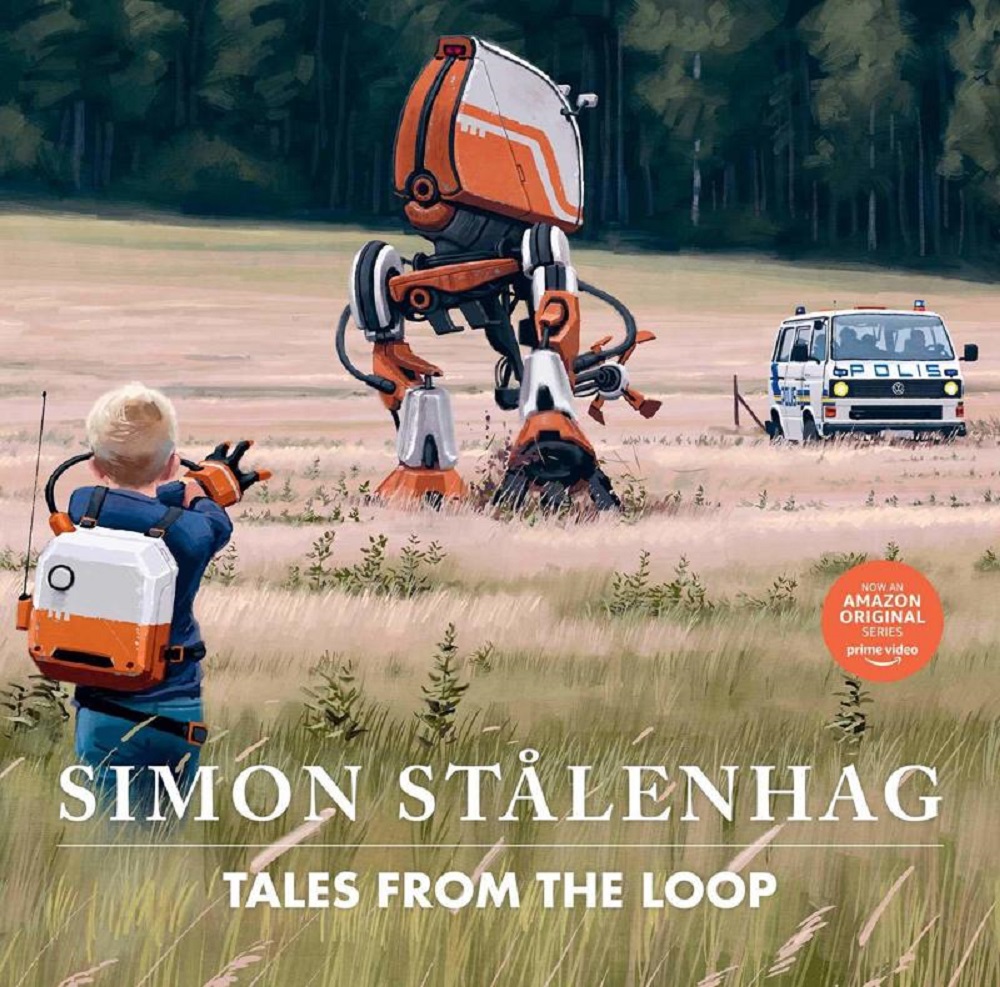
Television adaptation: ‘Tales From the Loop’ by Simon Stålenhag

talesfromtheloop
Tales From the Loop is available on Amazon Prime. Photo: google

Simon Stålenhag is a Swedish artist, musician and designer specializing in retro-futuristic digital images focused on nostalgic Swedish countryside alternate history environments. Most of Stålenhag’s artwork was initially only available online but was later released for sale as prints. Since then, it has been turned into two narrative art books, “Tales From the Loop” in 2014 and “Things From the Flood” in 2016. Both focus on the construction of a supermassive particle accelerator called the Loop. The settings of his artwork have formed the basis for the Amazon television drama series Tales From the Loop. All eight episodes of the first season were released simultaneously April 3 on Amazon Prime Video.

Tales From the Loop science fiction drama television series based on Simon Stålenhag’s art book. It explores the mind bending adventures of the people who live above the Loop, a machine built to unlock and explore the mysteries of the universe. The machine is now making possible what was once considered science fiction. It stars Rebecca Hall as Loretta, Tyler Barnhardt as Danny Jansson and Daniel Zohlgadri as Jakob.

I have not read the book, but after watching the first two episodes, it is understandable why Amazon calls it “perfect for fans of E.T. and Stranger Things.” The series is set in the 80s and has that nostalgic look and feel that has recently become popular. With science fiction themes like time traveling, body swapping and robots, it appeals to fans of The Twilight Zone who appreciate mind-bending stories.

According to Amazon, “Tales From the Loop” is the first narrative artbook from acclaimed author and artist Simon Stålenhag about a fictionalized suburban town in the 1980s inhabited by fantastic machines and strange, imaginative beasts. In 1954, the Swedish government ordered the construction of the world’s largest particle accelerator. The facility was complete in 1969, located deep below the pastoral countryside of Mälaröarna. The local population called this marvel of technology The Loop. These are its strange tales. From the same author who wrote the imaginative artbook The Electric State, this “haunting,” (The Verge) “sophisticated sci-fi” (The Nerdist) follows the bizarre stories from otherworldly creatures and is a page-turner readers will not be able to put down.