Book review: ‘Gaijin’ by Sarah Z. Sleeper

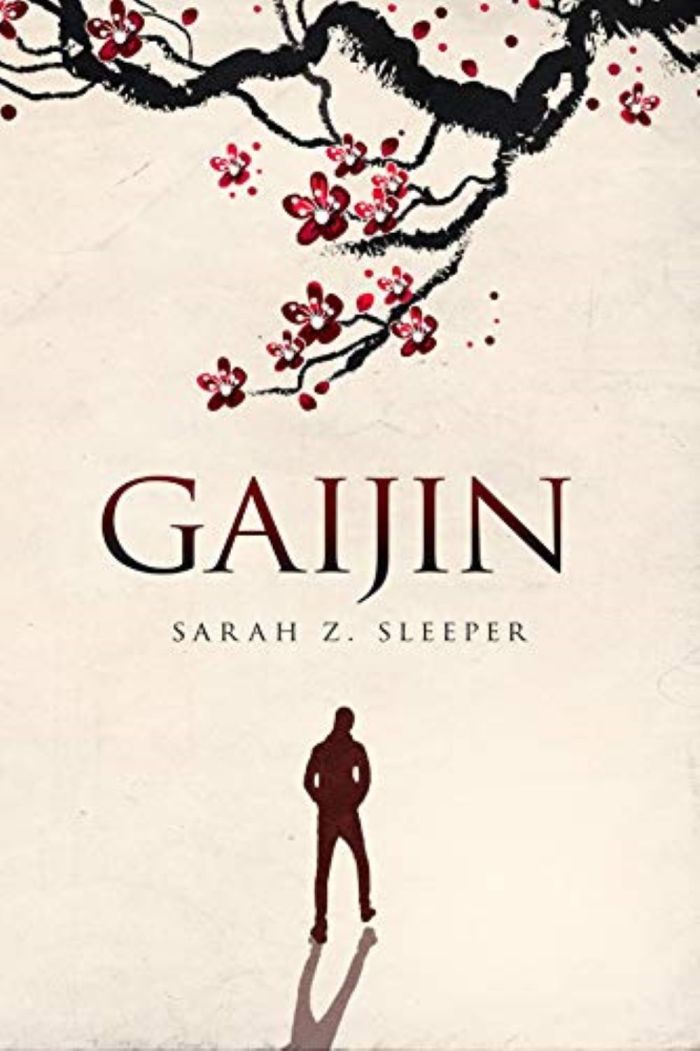
gaijin
‘Gaijin’ is Sarah Z. Sleeper’s debut novel about a woman who moves to Okinawa looking for answers after her boyfriend disappears.  It is scheduled for release on Saturday, August 1, 2020. 

Sarah Z. Sleeper is a former journalist with an MFA in creative writing.  Previously, she was an editor at New Rivers Press and editor-in-chief of the literary journal Mason’s Road. She completed her MFA at Fairfield University in 2012. Prior to that she had a twenty-five-year career as a business writer and technology reporter and won three journalism awards and a fellowship at the National Press Foundation. Her short story, “A Few Innocuous Lines,” won an award from Writer’s Digest and her non-fiction essay, “On Getting Vivian,” was published in The Shanghai Literary Review. Her poetry was published in A Year in Ink, San Diego Poetry Annual and Painters & Poets and exhibited at the Bellarmine Museum. “Gaijin,” a coming of age novel about a budding journalist who sets off to Okinawa in search of answers when her college boyfriend mysteriously disappears, is her first novel and will be released on Saturday, August 1, 2020.

In Japanese, the word gaijin means ‘unwelcome foreigner’ and it is often used as a slur directed at non-Japanese people in Japan.  “Gaijin” centers around Lucy, a college student at Northwestern University who is obsessed with an exotic new student, Owen Ota, who becomes her lover and sensei.  When he disappears without explanation, she moves to Okinawa in hopes of tracking him down.  The story is told in the first person point of view and begins with a Prologue where Lucy recounts how she ends up in Japan and how her experience with Owen motivates her to seek answers in a foreign land. It all goes back to Japan in 2016 and begins as Lucy arrives at Okinawa’s Naha International Airport.  For the next three months, instead of the glamorous culture that Owen described, she is confronted with, among other surprises, anti-American protests fueled by the rape case involving an American military man and a young Japanese girl.  She also meets Hisashi, Owen’s  brother, who helps her come to terms with Owen’s tumultuous private life that culminates at the base of Mount Fuji and the infamous Suicide Forest. With the biggest mystery solved, Lucy is now content to stay in Japan and enjoy the country and culture she admired for so long.

Sometimes it is easy for foreigners to get wrapped up in the fantasy of an unfamiliar culture and once it hits home, reality can be disappointing. Such is the case with Lucy in “Gaijin,” Sarah Z Sleeper’s superb debut novel.  The author has penned a poetic and charming story filled similes and metaphors “His energy was warm, like a favorite oversize blanket” and peppered with poems and haikus. Despite being a small, easy to read book, the reader is immersed in Japanese culture, terms and traditions like tea ceremonies, all of which make the narrative come alive throughout the pages. Impressive character development and descriptions makes them relatable, “As the snow drifts piled shoulder-high on the edges of Northwestern’s campus, I dug myself into a cave of loneliness, busying myself while keeping social interactions at bay.” Of special interest is the background on Aokigahara, a forest on the northwestern flank of Japan’s Mount Fiji.  It has a historical reputation as a home to yūrei: ghosts of the dead in Japanese mythology. Also known as “the Suicide Forest”, one of the world’s most-used suicide sites; signs at the head of some trails urge suicidal visitors to think of their families and contact a suicide prevention association. History fans will appreciate the section on the conflict between Okinawa and Japan. “Gaijin” is the chronicle of one woman’s journey from idealistic college student in love with an image to an adult who learns to accept life’s disappointments and build a life on her own terms.

“A culture so beautiful that taking tea was a memorable occasion and yet so dark it contained a forest devoted to suicide.”

*The author received a copy of this book for an honest review. The views and opinions expressed here belong solely to her.

‘On Writing: A Memoir of the Craft’ by Stephen King – Twentieth Anniversary Edition

onwriting
The Twentieth Anniversary Edition of Stephen King’s ‘On Writing’ is now available. Photo: google

Stephen King is an American author of horror, supernatural fiction, suspense, science fiction and fantasy. His books have sold more than 350 million copies and many of them have been adapted into feature films, miniseries, television shows and comic books. He is best known for “Carrie,” “It,” “The Green Mile” and the Dark Tower series. The twentieth anniversary edition of “On Writing: A Memoir of the Craft” is now out with contributions from Joe Hill and Owen King.  For those unaware, Joe Hill and Owen King are Stephen King’s sons, both writers, with Joe Hill being the author of “NOS4A2,” a best-selling horror novel whose second season returns tomorrow June 21 on AMC.

I have my own copy of “On Writing” and it is a must-read for writers.  The best advice I took from it is:

“If you don’t have time to read, you don’t have the time (or the tools) to write. Simple as that. Reading is the creative center of a writer’s life.  I take a book with me everywhere I go, and find there are all sorts of opportunities to dip in…Reading at meals is considered rude in polite society, but if you expect to succeed as a writer, rudeness should be the second-to-least of your concerns.  The least of all should be polite society and what it expects. If you intend to write as truthful as you can, your days as a member of polite society are numbered anyway.”

From amazon:
Immensely helpful and illuminating to any aspiring writer, this special edition of Stephen King’s critically lauded, million-copy bestseller shares the experiences, habits, and convictions that have shaped him and his work.

Part memoir, part master class by one of the bestselling authors of all time, this superb volume is a revealing and practical view of the writer’s craft, comprising the basic tools of the trade every writer must have. King’s advice is grounded in his vivid memories from childhood through his emergence as a writer, from his struggling early career to his widely reported, near-fatal accident in 1999—and how the inextricable link between writing and living spurred his recovery. Brilliantly structured, friendly and inspiring, “On Writing” will empower and entertain everyone who reads it—fans, writers, and anyone who loves a great story well told.

Movie adaptation: ‘Hide’ by Lisa Gardner

hide
The movie adaptation of ‘Hide’ is available on Amazon Prime. Photo: google

Lisa Gardner is the New York Times’ bestselling author of thrillers that include the series FBI Profiler, Detective D.D. Warren and Tessa Leoni as well as several stand alone novels and romance novels written under the Alicia Scott pseudonym. Lisa’s books have received awards from across the globe. Her novel “The Neighbor” won Best Hardcover Novel from the International Thriller Writers and she was recognized with the Daphne du Maurier Award in 2000 for “The Other Daughter.” She received the Grand Prix des Lectrices de Elle in France and the Silver Bullet Award from the International Thriller Writers in 2017 for her work on behalf of at-risk children and the Humane Society. On the lighter side, Lisa invites her readers to enter the annual “Kill a Friend, Maim a Buddy” Sweepstakes on her website. Every year, one Lucky Stiff is selected to meet a grand end in Lisa’s latest novel. Past winners have nominated spouses, best friends and even themselves. Her second Detective D.D. Warren novel “Hide” was adapted into a movie which aired on TNT and is now available on Amazon Prime. Her newest release is “When You See Me,” the eleventh book in the Detective D.D. Warren series.

In “Hide,” Bobby Dodge has to deal with the return of a killer he thought was dead and buried.  It all begins with the gruesome discovery of six mummified corpses in an underground chamber of the grounds of an abandoned Massachusetts mental hospital.  One of those bodies is wearing a necklace bearing the name Annabelle Granger; the only problem is the real Annabelle is still alive.  To solve this mystery, Bobby must team up with his former lover, partner and friend D.D. Warren from the Boston P.D. and search deep into Anabelle’s past.  A past that includes a childhood that included a blur of new cities and assumed identities as she and her father seemed to be running from an unknown stalker.

“When You See Me” reunites Boston Detective D.D. Warren, FBI Agent Kimberly Quincy and vigilante Flora Dane to investigate a cold case that quickly turns red hot in a small town where nothing is as it seems. Flora always assumed her kidnapper Jacob Ness took his secrets to the grave but with lives hanging in the balance, she must finally learn the explosive truth. For all the evil he committed while alive, his worst secret is still to be revealed and Quincey and D.D. must use their exceptional skills and experience to solve the most disturbing case of their career. Flora must also face her own past to save others.

Excerpt: ‘No Truth Left to Tell’ by Michael McAuliffe


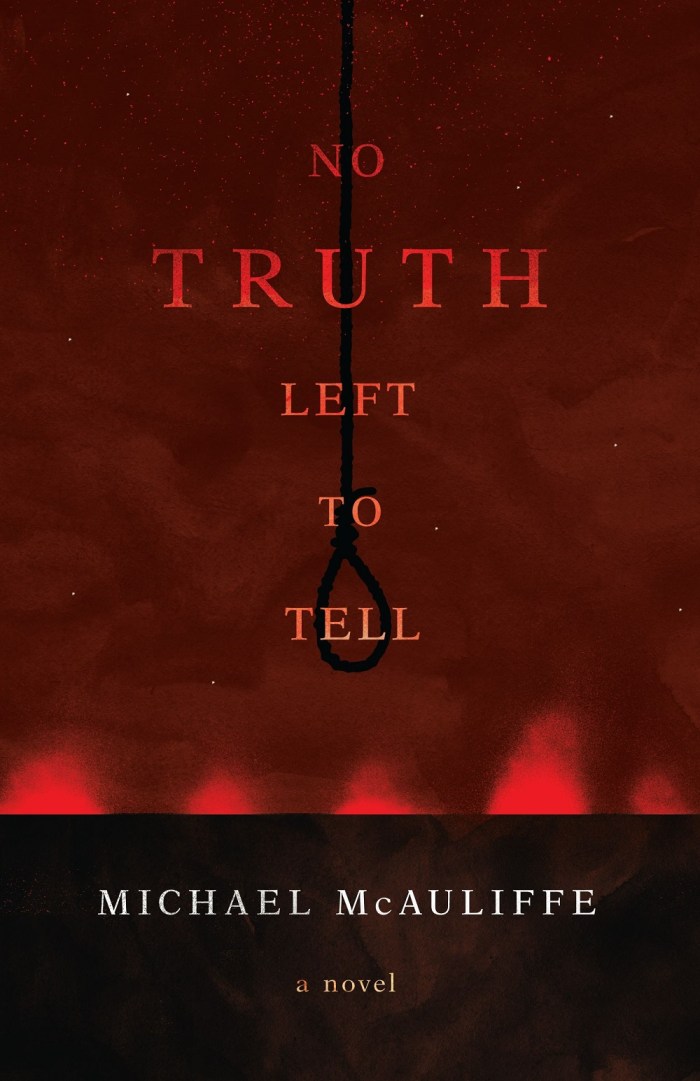
notruthlefttotellcover
‘No Truth Left to Tell’ by Michael McAuliffe, now available everywhere books are sold. Courtesy photo, used with permission.

The following excerpt is reprinted from ‘No Truth Left to Tell’ by Michael McAuliffe, released on March 3, 2020. Reprinted with permission of Greenleaf Book Group. Copyright © 2020 Michael McAuliffe.

Prologue

July 1920
Lynwood, Louisiana

Nettie glided along the sidewalk in her best dress, her mother’s creation that would soon be too small. That Saturday, however, the colorful outfit still fit and perfectly complemented her wide smile and earnest stride. The dress was spring blue with flower patterns bursting open into full blossoms, quite like Nettie herself.

She stayed out of the way of the white pedestrians inspecting her with what appeared to be a mixture of curiosity and irritation. “What’s that one doin’ here?” one woman asked as she passed by. So Nettie hugged the buildings as she moved, trying to disappear against the facades. There was something big going on in the square, but Nettie couldn’t see over or through the gathering, since she was just seven years old.

She had pleaded with her parents to go with her father from their home in Mooretown, Lynwood’s section for blacks, to a nearby town while he delivered a meal to a close friend who was gravely ill. At the last minute, Nettie’s mother had wanted one more item added to the delivery from a store on Lynwood’s downtown square—an establishment that served them only from the back door off an alley. Nettie was supposed to wait in the car, but despite her father’s admonishments, the strange and festive noises drew her out into the nearby crowd where she was protected only by her look of youthful wonder.

Lynwood’s civic core was comprised of an expanse of lawn with a massive oak reigning over the surroundings. Four perpendicular streets framed the lawn, and they had been closed for several hours so people could mingle without regard to sputtering cars. The attendees had obliged the gesture by swarming the entire area by midmorning. The day’s activities appeared to originate across the street nearer the tree, allowing the spectators along the periphery to wander about with more freedom. From where Nettie was she could see the crown of the tree, and she moved in that direction as if pulled by some invisible force.

The day was hot and humid. High clouds had gathered through the morning and darkened the midday sky, but the music played on and people chatted in small groups as if they were at an annual parish fair.

After several minutes of distant rumbling a sprinkle started, and it soon developed into cascading water pouring from invisible pots in the sky. The drenching dispersed the crowd into stores and under awnings. Deserted chairs and soda bottles lay across the lawn.

The scattering of the masses created large openings around the square. What was an impenetrable wall of people became a flat, open field of vision. The oak, of course, remained right where it had begun decades before as a sapling.

Nettie couldn’t run into any of the stores like the others caught out in the street during the rainstorm. So, like the oak, she remained standing, although now she had a clear view of the square. Her dress—dripping and heavy with water—would have distracted her in any other setting, but unanswered curiosity kept her searching the square for clues about the day’s festivities.

The oak tree had long, thick branches, like the heavy arms of a giant. A braided rope was slung over one of these arms, out about ten feet from the trunk. The rope was wrapped once about the branch and secured to a large stake in the ground. The other end of the rope was fashioned into a noose, and suspended from it was the still body of a black man. The man’s neck was grotesquely angled, and the feet were bare. His hands were bound behind his back.

Nettie leaned forward like she was about to rush toward the oak. But she neither ran away nor went to it. She stared up at what had been until moments before a living, breathing person. She was frozen in place and time—alone in the moment when her world changed forever.

Her father came running from behind and snatched her up with such force that the dress ripped along a side seam. He covered her with his protective embrace and spirited her away to the car that waited in the alley. They headed straight home using back streets and little-known shortcuts, the car not speeding despite the urgency of the situation. The trip to deliver the meal basket was abandoned as her father kept swearing that he’d never go to the square again.

Nettie didn’t look outside the car. She kept her head down and stared at one of the dress’s printed blossoms, the flower part of the pattern ending at the hemline to reveal her trembling knees.

****************************************************************************
Michael McAuliffe is the author of ‘No Truth Left to Tell’ and has been a practicing lawyer for thirty years. He was a federal prosecutor serving both as a supervisory assistant US attorney in the Southern District of Florida and a trial attorney in the Criminal Section of the Civil Rights Division at the Department of Justice in Washington, DC. In 2008, Michael was elected and served as the state attorney for Palm Beach County, leading an office of approximately 125 prosecutors. He was known for leading the ethics reform movement in county that resulted in the creation of a permanent inspector general, an ethics commission and new ethics code. Michael and his wife Robin Rosenberg, a US district judge, have three children and live in Florida and Massachusetts.

New release: ‘Chasing a Flawed Sun’ by Daniel McGhee

flawedsun
‘Chasing a Flawed Sun’ is Daniel McGhee’s new autobiography about surviving heroin addiction. Photo: google

This month, autobiographer Daniel McGhee is pleased to announce the release of his brand new book detailing his raw journey from addiction to a life of humility and serving others. “Chasing a Flawed Sun” is the harrowing story of McGhee’s narrow escape from personal destruction, from a life in prison and a life of death, all due to the constant pursuit of the warmth and comfort of a heroin spoon. (Newswire, 2019)

In “Chasing a Flawed Sun,” McGhee details his personal account as a young suburban kid and how he began his self-destructive life of drinking, violence and selling drugs. Though it discusses a highly serious and vivid account of McGhee’s painful addiction, the book also details the author’s rise out of the depths of horror and into the new and exceptional life McGhee lives today.

McGhee’s nonprofit company, Agape Projects, enables him to travel to third world countries to serve the less fortunate and provide disaster relief across the United States. The company also supports animal rescue, Haiti missions, toy distribution for those less fortunate and local community services. Readers can purchase “Chasing a Flawed Sun” through Amazon and Barnes & Noble.

“Heroin was my flawed sun. It burned me every time I got too close. It consumed me in its fire, and, by the grace of God, I narrowly escaped with my life. Surviving the old life that I lived has given me a gratitude and humility that makes me want to spend the rest of my life returning the favor and serving this world. I feel as though this book is crucial for the time we are in, particularly with the opiate epidemic.”- Daniel McGhee

New release: ‘Heartbreak Hotel’ by Jonathan Kellerman

heartbreakhotel
‘Heartbreak Hotel’ is the new Alex Delaware novel by Jonathan Kellerman. Photo: amazon

Jonathan Kellerman is a psychologist and The New York Times bestselling author of suspense novels and nonfiction writings on psychology including “Savage Spawn: Reflections on Violent Children.” He is best known for his novels featuring child psychologist Alex Delaware who consults for the police with LAPD detective Milo Sturgis. “Heartbreak Hotel” is his most recent Alex Delaware novel that has Alex dealing with a patient who is almost one hundred years old.

According to Amazon, in “Heartbreak Hotel” Thalia Mars comes to see Alex with some unusual questions. He normally just treats children but the witty and charming woman convinces him to meet her in a suite at the Aventura, a luxury hotel that has a questionable history. During their session, she asks him disturbing questions about guilt, patterns of criminal behavior and victim selection. When asked why the fascination with the topic she promises answers during their next session but she is found dead the next morning. The investigation into her death turns out to be one of the most baffling cases Alex and Milo have come across in years. Her complicated life holds nearly a century of secrets that have violent connotations for everyone around her.

Born in New York City and raised in Los Angeles, Jonathan Kellerman worked his way through college as a cartoonist, illustrator, journalist and editor and received a BA in psychology at UCLA. He worked extensively with anxiety disorders and he used that experience to publish a book for parents titled “Helping the Fearful Child” in 1981. In 1985 he wrote his first novel “When the Bough Breaks” and it became a bestseller and was adapted into a TV movie. Since then he has written forty one crime novels, two children’s books and numerous nonfiction books.