Book review: ‘Aspire Higher’ by Ken Lindner

‘Aspire Higher’ by Ken Lindner Photo: Amazon

Ken Lindner is the founder of Positive Life Choice Psychology™ and the Positive Life Choice Psychology Lifestyle™. His calling is to envision what can be in people and to craft the steps that turn their great potential into a highly positive and productive reality. Ken Lindner graduated from Harvard University (magna cum laude) and from Cornell Law School. In “Aspire Higher: How to Find the Love, Positivity, and Purpose to Elevate Your Life and the World!,” he encourages you to truly love yourself, lead your very best and highest life, and spread that love to the world around you. (Ken Lindner, 2023)

“Aspire Higher” – The COVID-19 pandemic has wrought global devastation along with rampant violence, vitriol, racism, distrust, and anger. The world is in serious need of love, repair, and healing and so are all of us as individuals. There has never been a better time than right now to seize the life you truly crave, be your greatest self, and share that positivity with others in order to make the world a more loving and positive place. Most of us want love and peace in our hearts and in the world, but in this book, Ken Lindner, author, renowned celebrity career coach, and founder of Positive Life Choice Psychology, shows you how to actually achieve that goal through clear, actionable steps and strategies. He teaches you how to develop true, empowering inner love and organically share it with others, raise your feelings of self-esteem and self-worth, embrace positive emotions, and help create a far more respectful, civil, and empathetic country and world. It is divided into four parts: Part 1: Your Heart-of-Hearts, Part 2: How to Make Cognitively Clear Choices That Reflect Your Highest Values and Highest Self, Part 3: Know What Your Highest Values and Goals Are, and Part 4: The PLCP Philosophies, Aspirations, Ideals, and Words That Will Fill Your Heart-of-Hearts with Love. In the Author’s Note, he explains that the foundation of the book is Positive Life Choice Psychology,™ or “PLCP.” It is “a set of clear, logical, and accomplishable steps and strategies that will equip, enable, and – in the true sense of the word – empower you to make positive choices throughout your life.” The Appendix includes exercises to get the reader to further explore their own personal goals and accomplishments.

In these modern challenging times, we all need some positive and encouraging words to help us put our best foot forward. “Aspire Higher” is a positive, inspiring, and motivational book that gives step by step advice on achieving a more positive outlook and sharing it with others. The language is simple and easy to understand and the layout makes the information easier to take in visually. The exercises at the end are helpful and insightful. His tone is compassionate without coming across as condescending. Since the chapters are short, it is easy to read a chapter and contemplate on the topic afterwards. Highlights include Part 1, Chapter 1: The Negativity Bias where he explains that we tend to focus more on negative experiences, that they have more lasting effects and cause trauma, and that they are more contagious than positive experiences; and Part 2, Chapter 13: Correction Day where he reiterates that when you make a mistake, it is best to identify it, figure out how you can make better choices going forward, and the importance of not repeating the same mistake. Most importantly, he states that we should practice ‘selective amnesia:’ learning from our mistakes and carrying them with us into the future. His philosophies and advice come from a positive place and are intended to help readers improve their lives. “Aspire Higher” is an empowering book for the times and is recommended for readers interested in self help and motivational books.

“There are things in life that you can’t control, but you can control your choices, values, attitudes, perceptions, actions, and who and what you choose to include in your life.”

*The author received a copy of this book for an honest review. The views and opinions expressed here belong solely to her.

Rating: 4 out of 5.

Book review: ‘The Paper Tiger Syndrome’ by Rebecca A. Ward

‘The Paper Tiger Syndrome’ is a guidebook on the journey of healing and self-repair. Photo: Amazon

Rebecca A. Ward is an American therapist, activist, healer, author, speaker, and coach. As a trauma survivor herself, she has triumphed over extraordinary suffering and come out on other side to her joy again. As a licensed therapist in California and ICF-Certified Professional Coach, Rebecca holds a multitude of trauma-informed certifications, including Somatic Experiencing®. She is a member of the International Coaching Federation and CA Marriage and Family Therapists Association. In her new book, “The Paper Tiger Syndrome: How to Liberate Yourself from the Illusion of Fear,” Rebecca shares her personal trauma-to-resilience story and the wisdom from her own clients to help readers transform their own trauma wounds into personal growth, presence, resilience, and joy and reconnect back to the truest version of themselves—what she calls the Original Blueprint®. (Amazon, 2022)

“The Paper Tiger Syndrome” – Paper tigers are thoughts and experiences that conjure up dread but do not present any real danger, they just create the same physiological responses in the human body that our ancestors experienced when they were stalked by predators on the plains. In the modern world, however, those responses are unwarranted. They are neurological “misfires” that harm our mental, emotional, and physical wellbeing, all in an effort to keep us “safe.” In the Preface section of the Introduction, the author explains that the book is “a roadmap to guide you on that journey back home.” This is followed by the Adverse Childhood Experiences (ACEs) survey to help readers find out where to begin since ACEs are known to be linked to chronic health problems, mental illness, and substance abuse in adulthood. The book consists of examples from her clients’ lives, and her own, as well as journaling ideas and exercises/rituals to enhance the healing process. All together, she shares ways to overcome fear, stress, and trauma in your life to help regulate your physical body. Based largely on the principles of somatic therapy, it contains specific exercises and tools to help you walk the bridge from fear to safety to unconditional love. It is divided into ten chapters including The Anatomy of Fear, How We Survive Childhood, and It Takes a Village.

Now more than ever, people are struggling with anxiety and depression. Life’s hardships can create a sense of apprehension that is hard to shake but the truth is that most fears and anxieties are really just paper tigers. A paper tiger is defined as ‘something, or someone, that appears to be a threat, but in reality is powerless.’ The difficulties the author experienced and surpassed give this book an aura of authenticity; she knows what she is talking about and her tone is caring without being condescending. She even pauses every now and then to encourage readers to take a break if necessary. The language is easy to understand and the layout of the information includes diagrams, lists, and reflection opportunities. To get the full benefits, the author recommends having a personal journal to complete the written exercise and write down your thoughts or download the Companion Workbook. Highlights include Chapter Four: It Takes a Village where she stresses that a lack of connection ‘heightens fear reactions and diminishes virtually ever aspect of life, including longevity’ and Chapter Seven: Healing Childhood Wounds where she shares guidelines to help overcome harmful childhood conditionings like body shaming. “The Paper Tiger Syndrome” is a highly informative resource guide that is encouraging and therapeutic and includes the necessary tools to guide readers through their healing journey. It is recommended for readers interested in self help, personal transformation, and spirituality books.

“Fear is a cheap marketing tool to keep you in line. Fear is not the way any infinite Source wants us to feel. We’re here to discover love for all that is in us and around us.”

*The author received a copy of this book for an honest review. The views and opinions expressed here belong solely to her.

Rating: 4 out of 5.

Book review: ‘Living a Committed Life’ by Lynne Twist

‘Living a Committed Life’ is the new book by Lynne Twist. Photo: Amazon

For more than 40 years, Lynne Twist has been a recognized global visionary committed to alleviating poverty,  ending world hunger and supporting social justice and environmental sustainability. From working with Mother Teresa in Calcutta to the refugee camps in Ethiopia and the threatened rainforests of the Amazon, as well as guiding the philanthropy of some of the worlds wealthiest families, Lynne’s on-the-ground work has brought her a deep understanding of  people’s relationship with money.  Her knowledge and experience has given her profound insights about the social tapestry of the world and the historical landscape of the times we are living in. What would your life be like if you committed to something larger than yourself? Find out in “Living a Committed Life: Finding Freedom and Fulfillment in a Purpose Larger Than Yourself,” the newest book from global transformation thought leader Lynne Twist. (Lynne Twist, 2022)

“Living a Committed Life” –By sharing stories and perspectives from her life, Lynne Twist reveals her unique experience as a thought leader and activist in multiple causes, from ending world hunger and protecting the Amazon rainforest to empowering women’s leadership. In the Introduction, Twist writes that although she hopes her stories inspire you, her goal in writing this book is “to inspire and motivate you to look inside yourself for your own commitments….” She starts off by sharing how, during an event called an Integrity Day, the speaker planted in her the vision that would guide her in her life’s work. She defines commitment as “an act of courage, integrity, and boldness” and that “committing oneself to an inspiring cause is what forges you into a great human being.” The book is divided into four parts: Part I The Power of Commitment, Part II The Soul of Commitment, Part III Challenges, Change, and Completion, and Part IV Creating Your Committed Life with a Discussion and Reflection Guide at the end to encourage deeper insight into the book’s topics. The Resources section lists organizations, like The Hunger Project and The Nobel Women’s Initiative, to consider if you are looking to get involved or make a difference.

Now more than ever, people are looking to make a difference in a world they see in constant conflict. Where do you start? How do you find your calling? Even though the author tries to help others in any and every way she can, she learned a powerful lesson: that somethings are not hers to do. This is a lesson we can all learn. We should know our limits and accept that we cannot do it all. We can only do so much. She has the mentality that every disappointment and every breakdown is an opportunity for growth but she admits that not everyone has the same struggles. She shows you how to make and keep commitments, engage in individual and collective action, and discover ways to connect and collaborate to make a difference. The language is easy and down to earth and her stories are engaging and inspiring. Highlights include Chapter 9 From Scarcity to Sufficiency where she lists the three toxic myths of scarcity: that ‘there is not enough,’ that ‘more is better,’ and that ‘it’s just the way it is’; and Chapter 10 Being Tested where she shares how she came to the realization that it takes a village to raise a child because even though her commitments kept her busy to the extent that she was missing out on some of her children’s lives, she was modeling a life of service to them and by her being gone sometimes, they became more independent and relied on each other and their father more, which strengthened their bond. “Living a Committed Life” is an excellent resource that teaches readers how to live a committed life to enrich their authentic self. It is a must read and recommended for fans of motivational self help books who appreciate advice on personal transformation.

“Living a committed life will bring you an experience of great freedom and profound fulfillment, as well as unimaginable joy.”

*The author received a copy of this book for an honest review. The views and opinions expressed here belong solely to her.

Rating: 4 out of 5.

Book review: ‘This Is Going To Hurt: The Truth Always Does’ by Michael Ernest

‘This Is Going To Hurt: The Truth Always Does’ is an informative and insightful book by Michael Ernest. Photo: Michael Ernest, used with permission.

Brother Michael Ernest is a graduate of Lincoln University, formerly known as Ashmun Institute, the first degree-granting Historically Black College and University (HBCU) in the United States, where he earned a B.S. Degree in Criminal Justice. Brother Michael continued his educational pursuits and acquired a Master’s Degree from Wilmington University, College of Social and Behavioral Sciences. His contributions to join several organizations to promote human welfare include being a proud brother of Iota Phi Theta Fraternity Incorporated and Member of the National Association for the Advancement of Colored People (NAACP) to continue the fight irrespective of race, religion, or political affiliation. Brother Michael has focused his study for many weeks, months, and years to compile an arsenal of knowledge and resources (writings, websites, book referrals, educators) to dispense among all people, various races, and religious groups to help promote the great humanitarian cause. His book “This Is Going To Hurt: The Truth Always Does” brings heated debate topics to the forefront of the “so-called” Black Communities throughout the United States. (Michael Ernest, 2022)

“This Is Going To Hurt: The Truth Always Does” – Written for all levels of literacy to indulge in the conversations, many of the subjects discussed in this book’s purpose are designed to rattle the heads of the afraid, complacent, and oppressed people of these “so-called” Black communities. Black Americans’ time for being apologetic for their misfortunes needs to come to an immediate cease-fire. “This Is Going To Hurt: The Truth Always Does” will do that. In the Preface, the author writes that the purpose of the book is to bring together history, research, and hard truths to Black Americans. The book begins with a conversation between two Black men that ends with the conclusion that their neighborhoods cannot be considered “Black communities” because they do not influence anything that goes on in their communities: from the banking institutions to public offices. From there, he discusses topics that should be addressed more frequently and divides them into four chapters: Chapter 1 Economic Sovereignty, Chapter 2 Child Support Hurts The So-Called “Black Community” More Than It Helps It!, Chapter 3 Black Mothers vs. Breastfeeding, and Chapter 4 The Wrap-Up Breaking The Chains of Servitude Get Conscious. Your People Depend On It!

To make effective change in our lives, first we have to face up to the uncomfortable truths. Or, as James Baldwin wrote in a 1962 essay for The New York Times, “Not everything that is faced can be changed; but nothing can be changed until it is faced.” With that said, Michael Ernest does an excellent job of touching on subjects that should be addressed head on. His tone is serious but not confrontational and the language, though sometimes slightly advanced, is easy to understand. One highlight is in the Introduction, where he states that it should be up to Black Americans themselves to strengthen the “Black race character, culture, and heritage.” That before, the slave owners were the bad element, but nowadays, it is drug dealers and gangbangers and that “the moral culpability has shifted to ourselves.” Also notable is Chapter 1 Business Sovereignty where he stresses the importance of business diversity in black neighborhoods because it “invites innovation, which ultimately benefits consumers with new and better products and services, helps drive economic growth, and increases living standards.” His advice is meant to enrich peoples lives, like the importance of surrounding ourselves with likeminded individuals and civic engagement. “This Is Going To Hurt: The Truth Always Does” is a small but informative book that should be on everyone’s to read list. It is eye opening and contains well researched topics dealing with urban life as seen through the eyes of a Black man. Even though the target readership is Black Americans, the information presented can apply to everyone, especially when he admonishes readers to “Hold yourself accountable. Don’t pass the buck!” It is recommended for readers who like motivational and self help books and can appreciate being presented with uncomfortable truths.

“Read literature from the scholars who came before you to liberate your mind of centuries of captivity. Only this will kill the roots of those weeds embedded in the dark part of your history, reversing the negative misfortunes that have been done to you and your ancestors.”

* The author received a copy of this book for an honest review. The views and opinions expressed here belong solely to her.
Rating: 4 out of 5.

Sponsored Post

Book review: ‘At Heaven’s Door’ by William J. Peters

‘At Heaven’s Door’ is William J. Peters’ new book about shared death experiences and what they can teach us about dying well and living better. Photo: Amazon

William Peters is the founder of the Shared Crossing Project and director of its Research Initiative. Recognized as a global leader in the field of shared death studies, he has spent decades studying end-of-life experiences. Previously, Peters worked as a hospice volunteer with the Zen Hospice Project in San Francisco and as a teacher and social worker in Central and South America. A practicing grief and bereavement therapist, he holds degrees from Harvard’s Graduate School of Education and UC Berkeley. His work on end-of-life is informed by his therapeutic work with individuals and families, personal experiences with death and dying across cultures, and his family’s own end-of-life journeys. His new book “At Heaven’s Door: What Shared Journeys to the Afterlife Teach About Dying Well and Living Better” is a groundbreaking, authoritative exploration—rich with powerful personal stories and convincing research—of the many ways the living can and do accompany the dying on their journey into the afterlife. (Amazon, 2022)

“At Heaven’s Door” – In 2000, end-of-life therapist William Peters was volunteering at the Zen Hospice Project in San Francisco when he had an extraordinary experience as he was reading aloud to a patient: he suddenly felt himself floating in midair, completely out of his body. The patient, who was also aloft, looked at him and smiled. The next moment, Peters felt himself return to his body but the patient never regained consciousness and died. Shocked by what had just happened to him, Peters began searching for other people who had similar experiences. The author defines shared death experiences (SDEs) as events when “a person dies and a loved one, family member, friend, caregiver, or bystander reports that they have shared in the transition from life to death or have experienced the initial stages of entering an afterlife with the dying.” He would spend the next twenty years collecting stories and studying the key patterns and features that they all had in common. These similarities included awe-inspiring visual and sensory effects and powerful emotional after-effects. In “At Heaven’s Door,” he shares what he has learned about SDEs. Long whispered about in the hospice and medical communities, he openly explains and discusses these extraordinary moments of final passage. The book is filled with powerful tales of spouses on departing this earth after decades together and bereaved parents who share their children’s entry into the afterlife. It is divided into thirteen chapters including Comfort, Unexpected Gifts, and Ending the Silence Around the Shared Death Experience.

Death is a universal human experience but few people are willing to discuss it. Through rigorous research, Peters examines shared death experiences and their effects on people who have experienced them. Most of the time, they find relief witnessing a loved one finding joy or even feel a sense of reconciliation if the relationship was strained. Highlights include Chapter 12: Ending the Silence Around the Shared Death Experience where he emphasizes that as a culture, we should strive to minimize the stigma surrounding SDEs and that death is the ultimate taboo conversation topic; and Appendix I: The Shared Crossing Research Initiative where he breaks down his finding about SDEs, including Assisting the Dying in Transitioning and Remotely Sensing a Death. The language is easy to understand but some of the stories can be emotional and too much for readers uncomfortable with the subject of death, sickness, and dying. What can shared death experiences teach us? What do these experiences tell us about what lies beyond? And, how can they help take away the sting of death and better prepare us for our own final moments? These questions and more are presented in a compassionate and understanding perspective from someone who has experienced an SDE and knows people who have as well. Whether or not you believe in heaven or even an afterlife, the stories, some of which can be extremely emotional, make the transitioning process between life and death seem less traumatic. “At Heaven’s Door” is a well researched and documented account of shared life experiences and what they can teach us about the dying process. It is recommended for readers interested in grief, bereavement, and shared death experiences or at least open to a different perspective surrounding death and dying.

“Death produces in many of us a great reservoir of emotion, and, for many, a profound sadness. So it has been both profoundly humbling and deeply revelatory to discover that shared life experiences can lead to significant and often lasting comfort.”

*The author received a copy of this book for an honest review. The views and opinions expressed here belong solely to her.
Rating: 4 out of 5.

Book review: ‘Promotions Are SO Yesterday’ by Julie Winkle Giulioni

‘Promotions Are SO Yesterday’ is Julie Winkle Giulioni’s new book on redefining career development. Photo: Amazon

Julie Winkle Giulioni is a champion for workplace growth and development and helps leaders optimize talent and potential within their organizations with consulting, keynote speeches, and training. She is the co-author of the international bestseller “Help Them Grow or Watch Them Go: Career Conversations Organizations Need and Employees Want.” She is a regular columnist for Training Industry magazine and SmartBrief and contributes articles on leadership, career development, and workplace trends to publications including The Economist. Julie’s in-person and virtual keynotes and presentations offer fresh, inspiring, yet actionable strategies for leaders who are interested in their own growth as well as supporting the growth of others. In her new book, “Promotions are SO Yesterday: Redefine Career Development. Help Employees Thrive,” Julie Winkle Giulioni offers readers a new approach for developing their employees’ careers and helping them thrive in a company when promotions are not readily available. (Amazon, 2022)

“Promotions Are SO Yesterday” – The time-honored tradition of defining career development exclusively in terms of promotions, moves, and title changes may be dead, but there are many other ways that employees can, and want to, grow. Many organizations still operate under the idea that promotions are the only option for career development, leaving employees disengaged, managers frustrated, and the business disadvantaged in its efforts to retain talent. The good news is that career development is so much more than promotions alone, and managers are in a powerful position to redefine career development and create positive results for their employees and their organizations in this area. In the Introduction, the author states that the goal of the book is to offer answers that will enable managers to deliver greater employee engagement, satisfaction, and results. It is divided into nine chapters: Chapter 1: Promotions Are Overrated, Chapter 2: Contribution, Chapter 3: Competence, Chapter 4: Connection, Chapter 5: Confidence, Chapter 6: Challenge, Chapter 7: Contentment, Chapter 8: Choice, and Chapter 9: Possibilities Are the New Promotion. Chapters 2 through 8 examine the different frameworks that make up career development and how to use each to help employees grow. Each chapter contains tools, exercises and pro tips and ends with ‘The Final Word’ to summarize topic discussed. There are additional resources for employers to learn more, dig deeper, and get employees engaged in career development.

Career development is and always will be a major component of businesses and organizations. How employers tackle this issue is always changing, especially in a post-COVID environment, where priorities have shifted. “Promotions Are SO Yesterday” contains practical advice, questions to spark reflection and productive dialogue, and tools that managers can use to help employees thrive at work while supporting their organization. Highlights include Chapter 2: Contributions, Make Extracurriculars Go the Extra Mile – which suggests that managers should encourage employees to get involved outside of work as a volunteer in a charity, a non profit, or at a child’s school. This will not only help them give back to the community, but they will bring back to the workplace some valuable lessons and skills. Transferrable skills benefit the organization as a whole. As well as Chapter 4: Connection – it emphasizes the importance of connecting with others at work because this represents “a significant source of professional growth and career development.” Much of what we learn we pick up from others whether it is through coaching apprenticeships, mentoring, or role models. Despite the business subject matter, it is far from dull and long winded. The language is easy to understand and this makes it accessible to anyone. Even though this book is geared towards managers, employees can also benefit from the tools, guidelines, and exercises. “Promotions Are SO Yesterday” is an excellent business guide for management and employees and is recommended for readers who appreciate books on business mentoring, human resources, and business management.

“Helping others enhance their competence may simultaneously be your most selfish and selfless act as a manager. It’s selfless because you’re enabling the development of portable skills that make your employees more marketable. And it’s selfish because of the profound benefits that you and your organization can reap in terms of job satisfaction, engagement, performance, and results.”

*The author received a copy of this book for an honest review. The views and opinions expressed here belong solely to her.
Rating: 4 out of 5.

Book review: ‘Life Is Beautiful’ by James A. Cusumano

‘Life Is Beautiful’ by James A. Cusumano. Photo: amazon

James A. Cusumano is an accomplished leader with successful careers as an entertainer, scientist, corporate executive, and entrepreneur. An inspiring speaker and entertainer, he is the author of “Cosmic Consciousness: A Journey to Well-being, Happiness and Success,” “Balance: The Business-Life Connection,” and co-author of “Freedom from Mid-East Oil.” His book “Life is Beautiful: 12 Universal Rules” is a multi-faceted guide to life-long success and personal fulfillment.

In the Preface, James A. Cusumano explains that “Life is Beautiful” centers around the big question of ‘What is the meaning of life’ and the eventual ‘How can I live a happy life?’ His purpose in life is to share what he has learned in the hopes of making a “positive difference in the lives of others and show that Life is Beautiful.” He discovered the parallels between Eastern thought and modern physics but does now want to present his findings as dogma. Instead, he just wants readers to think of what ‘true’ reality means. The book is divided into two parts: The Reason for Your Existence: 12 Universal Rules of Life and Using The 12 Universal Rules to Create the Life You Dream. The first part contains chapters like Consciousness Is Everything, Consciousness And Reality, and The True Nature of Our Universe – they cover the surface of physics and the definition of the soul. He provides references in the bibliography in case the reader wants to pursue the details of the physics presented. The second part covers The Art and Science of Meditation, Creating Your Dreams, and Finding Lifelong Fulfillment – explanations on the arts of relaxation and meditation to be able to uncover a person’s Life Purpose to create personal and professional fulfillments. Appendix B contains The 12 Universal Rules of Life in one section to make it easier to read.

Admittedly, from the title itself, “Life Is Beautiful” at first seems like a self-help book to help readers improve their everyday lives but it is much more than that. James A Cusumano looks at the bigger picture of who and what we are in regards to the universe and he starts off with the definition of the soul, what he calls Cosmic Consciousness, “an energy field that functions by laws of a science that are well beyond our knowledge of quantum physics.” The first six chapters have heavy science content, specifically physics, but at an intermediate level so it is easy to follow. Chapter Seven: Balancing Masculine-Feminine Energies stands out because it addresses Rule #12 “Addressing complex social and cultural challenges requires an appropriate dynamic balance between masculine and feminine energies.” This basically states that for society to work, the masculine and feminine energies should be balanced and that organized religion has “played a key role in elevating masculine energies most often at the demise of feminine energies” in its never-ending quest for power and wealth, which is why the earth is currently hurting. The topics in Part Two are easier to understand because they include tips on how to relax and meditate to create our own reality. Since it is mostly about Eastern philosophy and physics, “Life is Beautiful” may not be for everyone but it opens the readers eyes to the concept of consciousness and the thought that we are all made of energy. It is recommended for readers who appreciate science and Eastern philosophy and are searching for ways to create a more fulfilling life with purpose.

“Time does not exist in the realm of consciousness. It is a man-made fabrication to manage our lives without chaos.”

*The author received a copy of this book for an honest review. The views and opinions expressed here belong solely to her.

Book review: ‘The Entrepreneur’s Faces’ by Jonathan Littman and Susanna Camp

‘The Entrepreneur’s Faces’ by Jonathan Littman and Susanna Camp. Photo: google

Jonathan Littman is the author of ten books, including “The Art of Innovation” and “The Ten Faces of Innovation.” His bestselling books have sold 750,000 copies worldwide and have been published in 20 languages. He is an adjunct professor at the University of San Francisco where he teaches ‘Innovation, Creativity, and Applied Design.’ Susanna Camp is an editor and journalist specializing in emerging technology and business trends. She is the Editor-in-Chief of SmartUp.life and a consultant for CEOs and others wanting to build their social media footprint. Susanna was an early team leader at Wired magazine, where she led the creation of one of the first online communities. In their new book “The Entrepreneur’s Faces: How Makers, Visionaries and Outsiders Succeed,” the authors take readers through the world of ten authentic entrepreneurs from around the world and show how each gets their edge and how they make their way in the business world in the hopes of inspiring the entrepreneurial spirit in them.

In the Introduction to “The Entrepreneur’s Faces,” Jonathan Littman and Susanna Camp explain their goal in writing this book is to “help you to identify the ten essential entrepreneurial types to propel your professional growth, and better gauge potential partners on the journey.” The ten entrepreneurs showcased throughout this book range from a concert pianist, to a physicist, a Stanford Law student and more. They are divided into ten types of workers: The Maker, The Outsider, The Conductor, The Accidental, The Collaborator, The Guardian, The Leader, The Visionary, The Evangelist, and The Athlete. Even though they all have their own individual journey to travel, they all pass through the same seven essential stages, which the authors call The Arc. These stages include: The Awakening, The Shift, The Place, The Launch, The Money, The Test, and The Scale. Each stage makes up a chapter where they describe how each entrepreneur handles the different stages. In the Epilogue, they stress that getting to identify the different entrepreneurial types is an excellent way to maximize a person’s potential but the types are in no way set in stone. People often exhibit more than one of these characteristics and it is usually necessary to adapt and change to maximize growth.

The world of entrepreneurship, like people, is constantly changing and challenging. Even though Littman and Camp focus on ten types of entrepreneurs, they emphasize that these states of mind are not always static. This book was written during COVID, when the business world is being challenged in ways no one thought possible – “The global pandemic is a huge Test for us all…Taking bold, new steps is never easy.” The stories presented, though inspiring, are merely a guide for entrepreneurs and innovators to help them through the 7 major phases of business growth. One chapter that stands out is ‘3: The Place’ because it brings up how the pandemic has made remote working necessary and “Those who quickly adopted these new skills at creating and collaborating online had an edge.” It brings modern reality into the mix. The chapters are short and the language is not too complicated in terms of business lingo and the authors speak directly to the reader: “At heart, you’ve got to make your own luck.” Business owners can also benefit in the sense that this valuable information can help them better understand themselves and their workers. By focusing on personality traits, this unique approach to business growth and management speaks to the heart of what makes individuals strive to succeed. “The Entrepreneur’s Faces” is an immensely useful business guide for both entrepreneurs and established organizations and is recommended for readers who appreciate business advice focusing on individual personalities and strengths.

“History proves that recessions, downturns, and yes, pandemics, demand that we respond to the threat with tremendous creativity and innovation.”

*The author received a copy of this book for an honest review. The views and opinions expressed here belong solely to her.

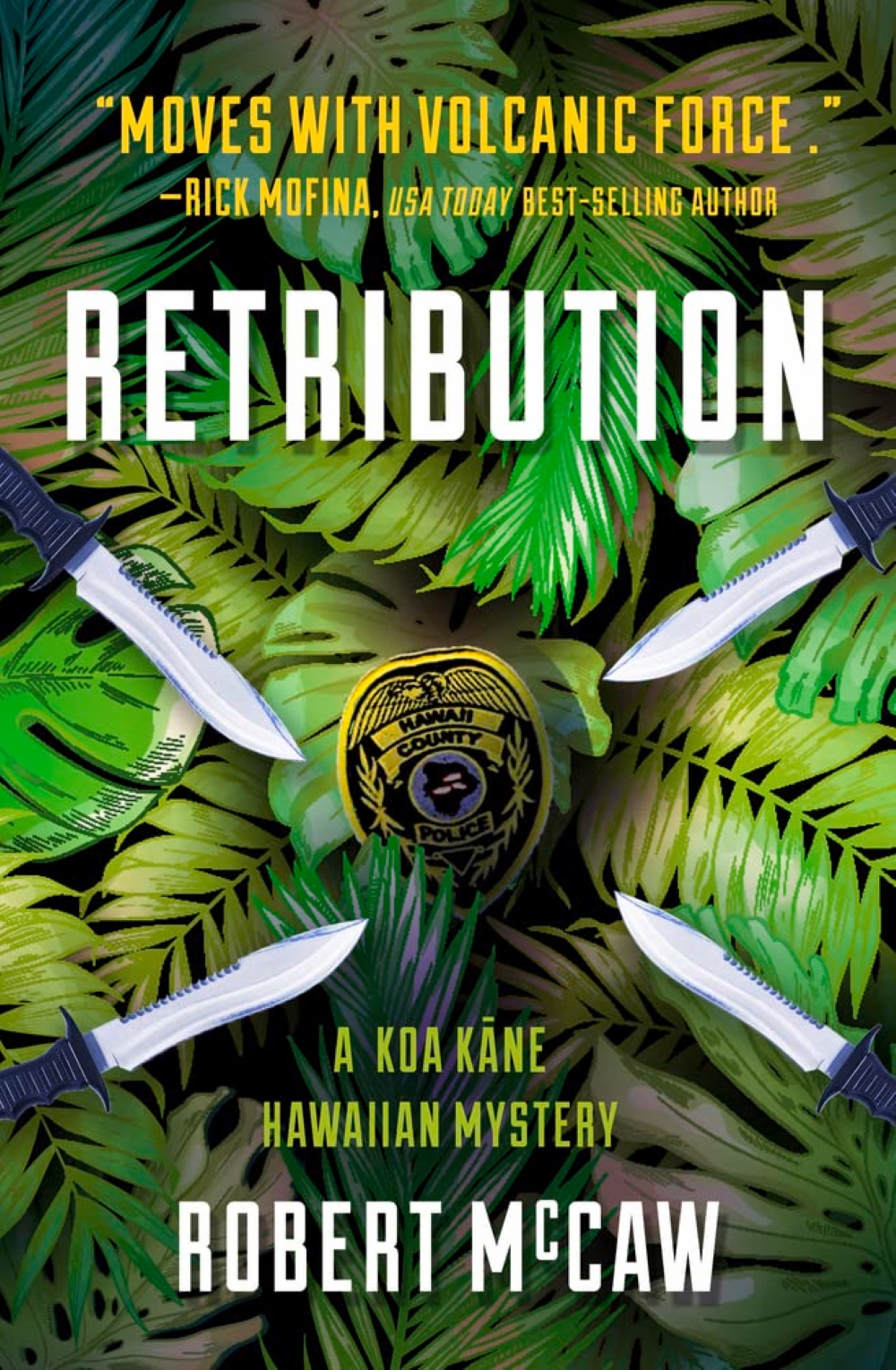
Book review: ‘Death of a Messenger’ by Robert McCaw

‘Death of a Messenger’ is Robert McCaw’s new Koa Kane Hawaiian Mystery novel. Photo: amazon

Robert McCaw is an author who grew up in a military family traveling the world. He is a graduate of Georgetown University, served as a U.S. Army lieutenant, and earned a law degree from the University of Virginia. He was a partner in a major international law firm in Washington, D.C. and New York City, representing major Wall Street clients in complex civil and criminal cases. Having lived on the Big Island of Hawaii, McCaw fills his writing of the Islands with his more than 20-year love affair with this Pacific paradise. His new book “Death of a Messenger,” is a prequel and follows “Fire and Vengeance” and “Off the Grid” in McCaw’s Koa Kane Hawaiian Mystery Series. In this new mystery, after an anonymous 911 caller reports a body at Pōhakuloa, the Army’s live-fire training area, Hilo Chief Detective Koa Kāne, a cop with his own secret criminal past, finds a mutilated corpse bearing all the hallmarks of ancient ritual sacrifice.

“Death of a Messenger” begins as Detective Koa Kāne is aboard an Army helicopter heading towards a crime scene that will haunt him throughout his investigation. Not only does he have another murder to solve, but he is also constantly troubled by a pinched nerve in his neck and no matter where he goes, he has sporadic jolts of pain that only add to his misery. Regardless, he is excited at the prospect of another mystery to solve and this one occurs in an Army live training area between two of the five volcanoes that form the Big Island of Hawaii. There, he finds a mutilated corpse just inside a lava tube and it has all the signs of a ritualistic killing. It might also be an archeological site because the site contains a stone tool, an old fire ring, and some stone chips so Kāne consults with a local archeology expert, Jimmy Hikorea. He is off-putting and rude, but he knows his material and keeps Kāne on his toes and proves to be useful in the investigation. Solving this murder will not be easy due to constant obstacles in Kāne’s way including an incompetent medical examiner, hostility from both Westerners and Hawaiian sovereignty advocates, and one lie after another. The victim turns out to be Keneke Nakano, an astronomer who worked at the local observatory and his death is linked to grave robbing and antiquities theft.

Detective Koa Kāne is back in full force in this prequel to the Koa Kāne Hawaiian Mystery series. Even though it is Robert McCaw’s newest novel, it is considered a prequel but still a stand-alone novel, like the rest of the series. This highly riveting police procedural mystery has everything: relatable characters, Hawaiian terms and language, all explained, as well as interesting history that involves the murder case. It is easy to read and though the action starts out slow, it picks up, especially at the end when Kāne is pursing the suspects. The author’s love of Hawaii is evident in his writing and through beautiful poetic language, shares that love with his readers: “The giant eyes peered deep into space and backward in time to a younger and more violent universe.” Koa Kāne is a deeply flawed character. He has physical pains and is fighting his own personal demons because he is still being haunted by the fact that he got away with killing a man. Others see him as a brilliant Detective who solves crimes, but in his mind, this case is only a small redemption. According to him, “he had much left to do before, if ever, he deserved to be hanohano [honorable].” The plot twists keep the reader guessing until the shocking end. Hopefully, there will be more Koa Kāne mysteries to come. “Death of a Messenger,” a noteworthy murder mystery that showcases both the beauty and dark side of Hawaii, is recommended for fans of the genre who also appreciate learning about Hawaii’s history and archaeology.

“Later, the two of them walked out of the observatory into perhaps the most stunning sunset in Koa’s memory. Far off to the west, trails of vaporous mist played eerily over the deeply shadowed valley where night had already fallen between the Hawaiian mountains….Hues of red, orange, yellow, and pink glorified the darkening sky. No edges separated the colors. A continuum of subtle shades simply slid softly together in the ever-shifting light of the dying day.”

*The author received a copy of this book for an honest review. The views and opinions expressed here belong solely to her.


Book review: ‘Primal Calling’ by Barry Eisenberg

‘Primal Calling’ is Barry Eisenberg’s debut novel about a young man searching for his father. Photo: google

Barry Eisenberg is an associate professor of health care management in the School for Graduate Studies at the State University of New York Empire State College, a health care management consultant, and a former hospital administrator. During the years he has spent in health care, he has met a wide variety of people who have inspired him and helped him to understand how caring and courageous some can be.  Most of his writing has been fiction, with a focus on the future of health care and higher education. “Primal Calling” is his first novel and centers around Jack, a twenty-year old whose search for his father becomes an all-consuming mission.

“Primal Calling” begins as Jack is finishing another day of college. As he drives out of the parking lot, a mysterious car follows him out and the man and woman force him into their car. When Jack questions their motive they tell him that they are taking him to meet his father. From there, the action goes back in time to Jack’s life with his mother Linda. He discovers the truth about his father one day when he is home sick from school and, because he is feeling better but bored, he is rummaging through the attic and finds his birth certificate. Curiosity gets the better of him and he uncovers his father’s name. This goes against what his mother always told him, that his father was an anonymous donor because she claims she was artificially inseminated. Rather than tell his mother and risk her stopping him from digging deeper, he continues on his own. All his probing triggers an FBI alert and it turns out his father, whose real name is Stewart Jacobson, works for the government and has different identities to protect his work and life. Jack persists in his search even though he runs into one obstacle after another. In the end, he gets to know his father and Linda reconnects with Stewart since he never knew he has a son. To protect Stewart, his employer fakes his death and he is given a new identity, but Jack and Linda remain a part of his life.

It is hard to pin down what genre of book “Primal Calling” is because it has touches of everything: a coming-of-age story because in the process of finding his father, Jack finds himself; a love story because of the budding romance between Jack and Cathy, the young lady who is helping him in his search; and an international spy thriller when Stewart’s job is the focus, including a suicide bomber plot twist. In all cases, it is an intriguing debut novel by Barry Eisenberg that has potential for becoming a series. The character development is extensive, so they become familiar and relatable without an obvious villain standing out. In an interesting plot development, before Abdel, Rafiq’s son, who is Stewart’s ally, blows himself up along with others, the reader gets to know the victims. Their description begins with “He never looked at the faces of the people near him.” This is important because it reinforces the fact that actions have consequences, affecting other people who have their own lives and that they are not just objects: “The cafeteria became a cathedral to blood, smoke, death, and chaos. Body parts were strewn about in a catastrophic human mauling.” The language level begins as intermediate: “There was no shortage of pursuits to which his interest could be applied, and, in the meantime, he vowed to savor this indoctrination into the next stage of his life” but becomes easier halfway through, which helps the pacing of the story. It also has its poetic moments: “Trees were frosted with ice, its weight tugging at the branches, creating a vastness of luminescent archways.” A one-of-a-kind novel, “Primal Calling” is recommended for fans of mysteries that are wrapped up in family drama with a touch of international spy intrigue.

*The author received a copy of this book for an honest review. The views and opinions expressed here belong solely to her.