Why Character Still Matters: A Review of Robert L. Dilenschneider’s ‘Character’

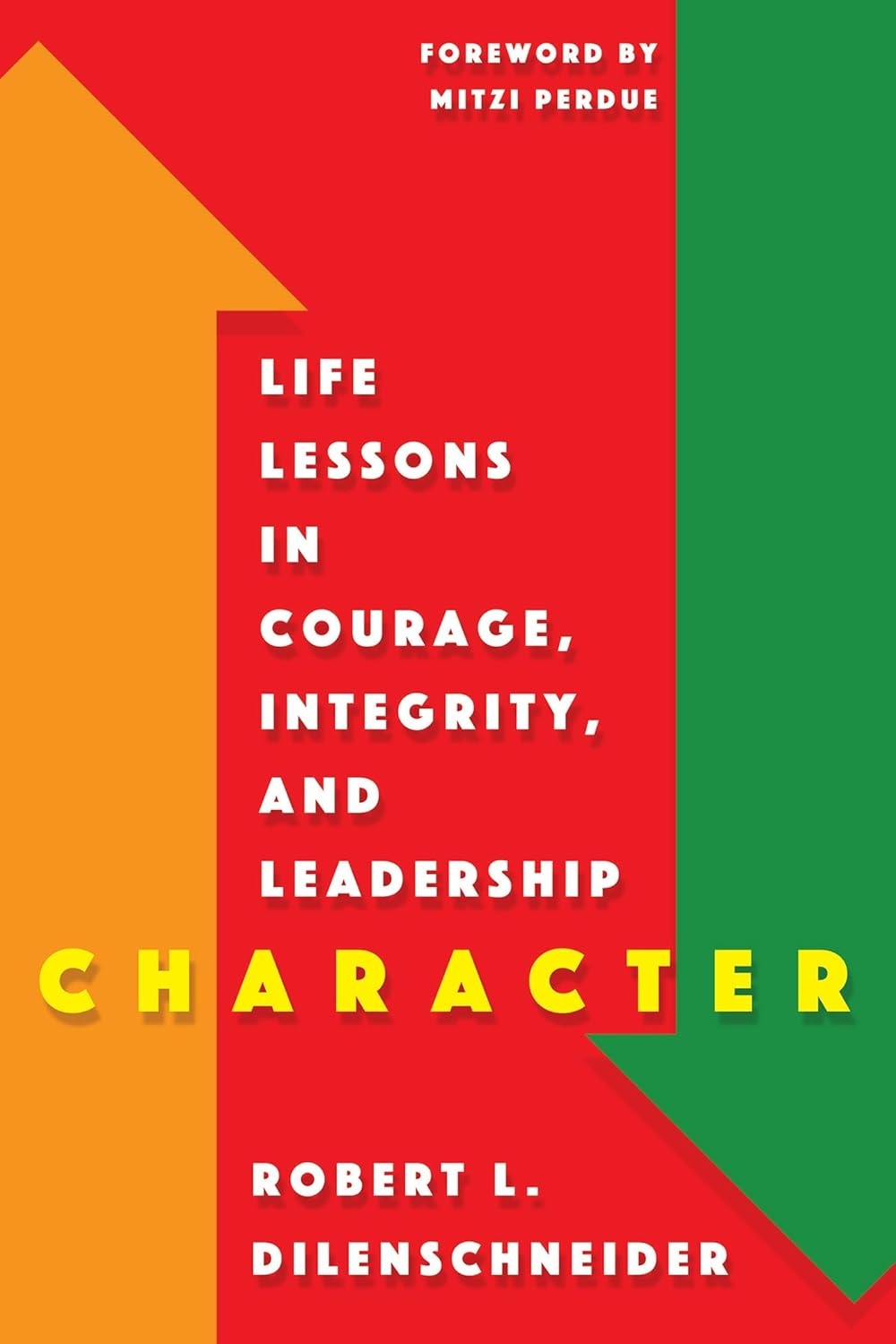
‘Character’ is Robert L. Dilenschneider’s latest motivational book. Photo: Barnes & Noble

Robert L. Dilenschneider is founder of The Dilenschneider Group, a firm that provides strategic advice and counsel to Fortune 500 companies and leading families and individuals around the world, with experience in fields ranging from mergers and acquisitions and crisis communications to marketing, government affairs and international media.

Dilenschneider has been called the “Dean of American Public Relations Executives” and is widely published, having authored 14 books, including “A Briefing for Leaders,” “On Power,” “The Critical 14 Years of Your Professional Life,” and “Power and Influence: The Rules Have Changed.” His new book “Character: Life Lessons in Courage, Integrity, and Leadership” addresses the need for character as a vital dimension in public and private life, based on iconic historical figures who embodied such qualities of character. (Barnes & Noble, 2025)

In “Character,” Robert L. Dilenschneider explores what it means to possess and foster strong moral character. Through the lens of noted historical figures—ranging from Stephen Hawking to Mother Teresa—he illustrates how integrity, resilience, and ethical leadership have shaped both personal legacies and societal progress.

Dilenschneider contends that character is not merely a trait but a fundamental necessity in our daily lives, especially in today’s complex and often morally ambiguous world. By combining historical narratives with modern-day reflections, he makes a strong case for why individuals, particularly those in leadership positions, must prioritize character over personal gain.

He begins by defining character as exhibiting traits such as honesty, integrity, and loyalty while inspiring others around you. The goal of this book is provide examples of character and how it can drive people to achieve their dreams and how to recognize it and nurture it in others, especially those with leadership positions.

Each chapter profiles a different group of people who were known for a specific trait, such as Innovation (Steve Jobs, Walt Disney), Courage (Winston Churchill, Arthur Ashe), and Loyalty (Eleanor Roosevelt, John McCain). At the end of each, he includes a list of lessons learned.

Chapters include:
Chapter 1 – What is Character?
Chapter 2 – Leadership
Chapter 3 – Innovation
Chapter 4 – Resilience
Chapter 5 – Breaking Barriers
Chapter 6 – Courage
Chapter 7 – Loyalty
Chapter 8 – Integrity
Chapter 9 – Transparency
Chapter 10 – Transcendence
Chapter 11 – Lessons

Highlights:
Chapter 4: Resilience
– when we are tested, resilience is what allows us to keep fighting. Nelson Mandela was a vocal opponent of apartheid: “Never give up when your cause is just.”

Chapter 5: Breaking Barriers – profiles of people who broke barriers when they refused to be held down because of their sex, color, or political beliefs. Margaret Chase Smith stood up against McCarthyism in the 40s and 50s: “Speaking your mind may not always be popular but it will win you respect.”

Informative and inspiring, it offers valuable lessons on courage, humility, and perseverance. Dilenschneider’s writing is engaging, and his selection of historical figures ensures a broad perspective on how character manifests in different circumstances.

Overall, “Character” serves as an insightful guide for those seeking to understand the enduring power of virtue in shaping history and how we, too, can attempt to embody these qualities in our own lives. It is recommended for readers who enjoy biographies and leadership/motivational books.

“Learning is a classic way to overcome barriers, by equipping yourself with knowledge that nobody can take away.”

*The author of this blog received a copy in exchange for an honest review. The views and opinions expressed here belong solely to her.

Rating: 4 out of 5.

The Power of Reflection: My Review of ‘Lost in Thought’ by Deborah Serra

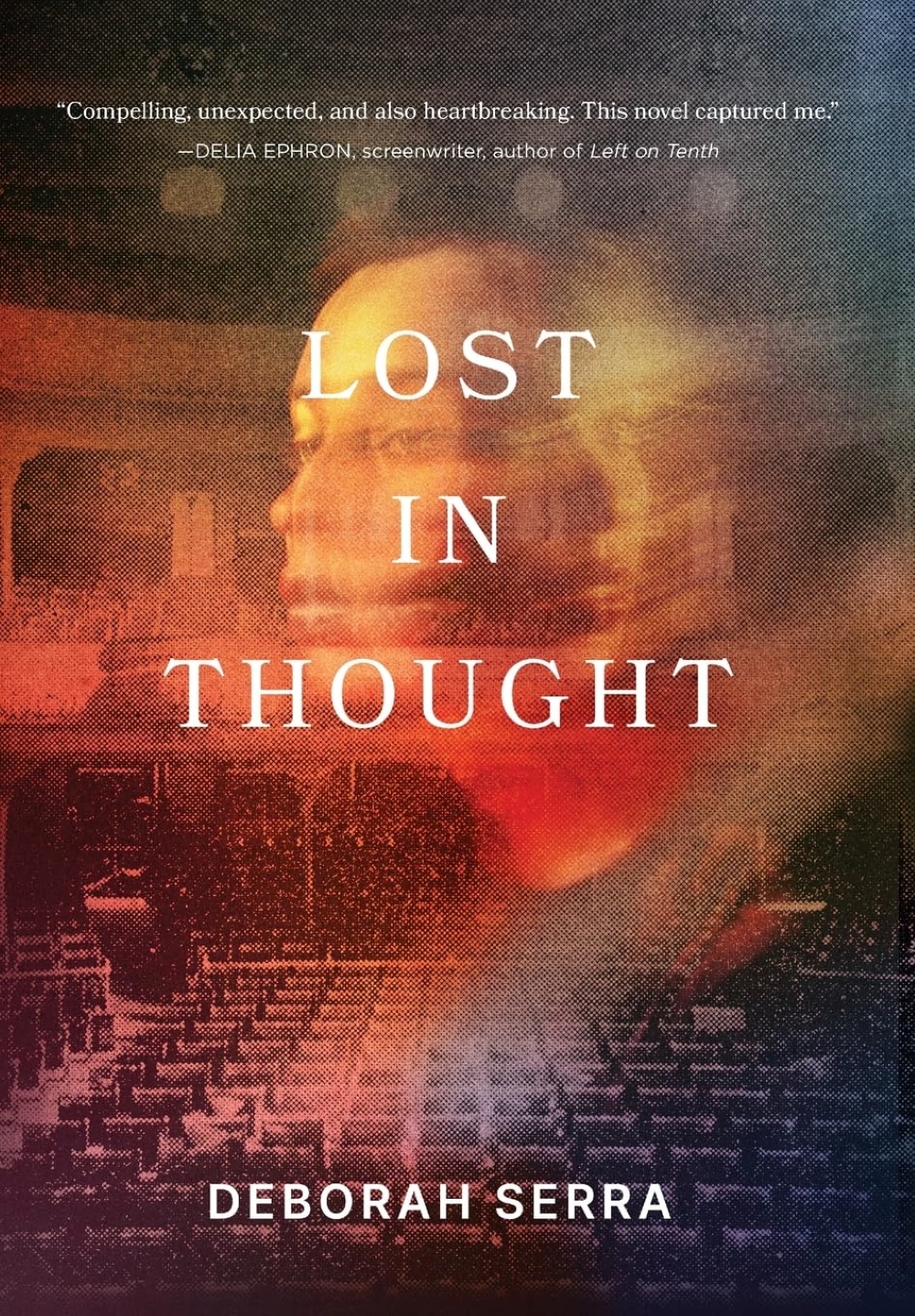
‘Lost in Thought’ is the inspiring new novel by Deborah Serra. Courtesy photo, used with permission.

Deborah Serra is a recipient of the Hawthornden Literary Fellowship, a semifinalist for the Faulkner-Wisdom Creative Writing Award, and nominated for the O. Henry Prize. She has been published in literary magazines and is an editor with the ethics and short story magazine, After Dinner Conversation. Serra is the author of the thriller, “Primal,” and the humorous travel memoir, “2 Broads Abroad.” Her latest book is “Lost in Thought,” a novel about unconscious decision making and the illusion of free will.

“Lost in Thought” – Ilana works at Lyric Opera House and is in a committed relationship with Adam, a neuroscientist, for the last 3 years. They live in a cozy Greenwich Village apartment where they often share meals with friends as they engage in stimulating conversations. She’s adopted, and the questions inside of her are growing insistent including who would she be if she’d grown up in her birth home? Is she truly who she thinks she is? Has she ever freely chosen anything at all? Are these questions in part due to Adam’s research on how people make their decisions. It could also be suppressed grief from the death of her adoptive mother. Her inner dialogue is affecting her daily life: “Her thoughts were loud and they drowned out her words.”

When Ilana learns that her birth mother Fiona Shannon owns a pub in Albany, she figures what harm could there be in casually dropping by for a drink? To see, just to see. What begins as curiosity about her choices evolves into a traumatic shift in her world. She loses control of her life and then chaos breaks out.

Review:
The story begins as Ilana is taking the elevator to her office in the 12th floor. A germaphobe by nature, it intensified by Covid and it shows in every part of her life. She’s the production manager at the opera house and the job requires a sense of authority. To everyone around her, she seems calm and confident, but it’s only a front. She was raised to act confident regardless of her situation, and in her line of work, emotions are a sign of defeat and she refuses to show any weaknesses.

Her adoptive mother died of Covid months ago after being on a ventilator for months. She wasn’t allowed to visit her in person and she helplessly watched her die through her iPad. This experience still haunts her and is slowly chipping away at her confidence and total belief system. She desperately wants to know more about her birth family, if she has any of their traits, physical or otherwise. Her best friend and ex-boyfriend William tries to convince her that her personality is the sum of her experiences, which sets forth the nature vs nurture debate. That impulsive trip to see Fiona and her husband Shea O’Holleran will change her life in ways she never saw coming.

This combination of women’s literature and literary fiction is a compelling exploration of the subconscious mind and how unconscious processes shape our decisions, often without our awareness. The novel invites readers into the life of Ilana, who embarks on a journey of self-discovery after realizing that much of what she believed to be her free will was, in fact, influenced by external forces and internal biases. Serra cleverly examines the illusion of choice, presenting a narrative that challenges the notion that we are fully in control of our actions.

The writing is introspective and open, combining scientific concepts with philosophical musings in a way that’s thought-provoking yet not overly dense. The novel’s pacing keeps readers engaged, blending character-driven drama with intellectual inquiry. As Ilana confronts the complexities of the human mind, the book raises important questions about responsibility, autonomy, and the nature of free will. With highly descriptive language, the action flows easily through the pages: “The industrial breezes from cars and buses and subway vents blew hot into her face, grabbed her silk skirt, and whipped the loose strands of her hair.”

Overall, “Lost in Thought” is a stimulating read that challenges perceptions and invites reflection on the unseen forces that guide our choices. It explores the themes of family, identity, love, and friendship. By making abstract ideas concrete, it offers a relatable and human story while tackling deep philosophical themes. Readers are left questioning their own thought processes and the extent to which they truly have control over their lives. It is recommended for readers who enjoy intellectual literary fiction that features smart and relatable characters.

“Now, her mind was relentlessly chewing. It was thrilling but like a horror film. She asked herself why she was going down the dark basement stairs.”

*The author received an ARC in exchange for an honest review. The views and opinions expressed here belong solely to her.

Rating: 4 out of 5.

Ruthless Pursuits and Twists: What Makes ‘Neon Prey’ a Captivating Thriller

‘Neon Prey’ by John Sandford. Photo: Barnes & Noble.

John Sandford is the pseudonym of John Roswell Camp, an American author and journalist. Camp is the author of more than fifty-four published novels, all of which have appeared, in one format or another, on the New York Times best-seller lists, many debuting at #1. In addition to the Prey, Virgil Flowers, and Letty Davenport novels, all part of the Prey universe, he is also the co-author of three young-adult books in the Singular Menace series, written with Michele Cook, and co-author of the science-fiction thriller “Saturn Run” with Ctein.

“Neon Prey” is the 29th novel in the Prey series. Clayton Deese is a small-time criminal, muscle for hire when his loan shark boss needs to teach someone a lesson. Now, seven months after a job that went south landed him in jail, Deese has skipped out on bail, and the U.S. Marshals come looking for him. They don’t care about a low-level guy–it’s his boss they want–but Deese might be their best chance to bring down the whole operation.

When they track him to his rural Louisiana cabin, they find a jungle full of graves behind a dirt trail. Now Lucas Davenport is on the trail of a serial killer who has been operating for years without notice. The killer is ruthless, and–as Davenport will come to find–full of surprises. (Barnes & Noble, 2025)

Review:
“Neon Prey” is a gripping thriller that has Lucas Davenport, now a US Marshal, pursuing a cunning serial killer with a long history of eluding capture. The story begins with the discovery of a gruesome crime scene and quickly spirals into a tense, high-stakes hunt for a killer whose motives and methods remain elusive. Davenport, always a sharp and resourceful investigator, follows a trail that stretches across states, using his expertise and determination to connect dots that others have missed. Together with two of his most trusted agents, Rae Givens and Bob Matees, as well as the FBI Agent in charge Tremanty, they are hot on Deese’s trail, who is now part of a home invasion burglary ring.

Sandford’s writing is fast-paced and immersive, drawing readers into the intense atmosphere of the investigation. With highly descriptive language, the fights scenes come to life: “Paine rolled up on his side, not screaming but choking and in pain, and with Deese’s pant leg now up, Paine, with no other weapon, bit him on the calf, like a feral tomcat, wrenching his head from side to side as his teeth sank in.”

The detailed character development is impressive—especially of Davenport, who continues to evolve throughout the series. He’s a man of deep intellect, but also someone who struggles with personal demons and moral ambiguities, making him a complex and compelling protagonist. Deese, the antagonist, is equally well-written, with a chilling presence that makes every encounter feel high-stakes.

This suspenseful crime thriller is filled with twists and turns as the hunt for a sadistic killer takes Davenport to the neon lights of Las Vegas. It explores the themes of good vs evil, revenge, death, and friendship and while it does have its dark moments, the satisfactory conclusion is worth the ride.

Overall, with its intricate plot and twists and turns, as well as Sandford’s sharp, engaging prose, “Neon Prey” is a standout in the crime genre. Though it’s a stand alone novel, it continues Lucas Davenport’s journey as a US Marshal. It’s a thrilling, intelligent read that will satisfy both long-time fans of the series and newcomers alike.

“He slipped the tan ski mask out of his pocket, pulled it over his head, turned towards the door and knocked, raising the cane, ready to kick it open. Like many perfect plans, his didn’t go quite right.”

Rating: 4 out of 5.

Heartfelt and Suspenseful: My Thoughts on ‘The Whole Time: Part 1’

‘The Whole Time: Part 1’ is the first book in the series by Maizy Ren.

“The Whole Time: Part 1′ by Maizy Ren

The story is set in Plainview, New Jersey, where Hunter Key is a member of the Pests, an underground criminal organization. They are just one of the gangs that control the city and their corruption runs deep. Hunter is an Informant and recently, he has sat in at the Inner Circle’s meeting and is hoping to someday be the leader. He sees them as family, and family means everything. Before that can happen, he is given a big job: kidnap Locklyn Elwell, the only child of the wealthy Elwell Enterprises, for ransom.

Locklyn Elwell doesn’t want to inherit the family business, but for now has to go along with what her distant parents dictate, even if it means taking a slap or two to the face. She has mad computer skills, which she uses to bypass the security cameras on the estate and has tried to run away several times. Her constant entourage of security guards include Dayton, who is more of a father figure than her own father. She has been homeschooled her whole life, but now her parents are sending her to Plainview Academy. At first she doesn’t have any friends, but eventually she gains the friendship and acceptance of a small group of outcasts.

Hunter tries to get close to Locklyn at school and waits for the perfect time to get her away but the more time they spend together, the less he wants to complete the job. Not to mention that his reality is shattered when he finds out what the Pests do when no one is looking and that there’s more to Locklyn than meets the eye.

This is Part 1 of The Whole Times series of books, four in total and a captivating and promising start to the series. The story revolves around a group of diverse characters navigating complex emotions and situations, with a particular focus on love, loss, and self-discovery. The writing is emotive, drawing readers into the world of the characters and making them feel every moment of the journey. “The blackness in his wandering eyes match the blackness of the night surrounding us.”

The characters of Hunter and Locklyn are relatable and multi-dimensional, struggling with inner conflicts that feel authentic and modern. The relationships in the book—whether romantic, familial, or friendships—are examined at length, highlighting the tenderness and the intensity of human connection.

The pacing is well-balanced, with moments of reflection and tension that keep the action moving. It is written in the 1st person point of view, including Hunter, Locklyn, Zachni, Dayton, and others, so we see the world through their eyes and hints at unreliable narrators. While the first part in the series leaves readers wanting more, it sets the stage for an exciting continuation of the story.

Overall, “The Whole Time: Part 1″ explores the themes of family, love, identity, and coming of age. Fans of contemporary romance, mystery, suspense, and character-driven narratives will find it a compelling read.

“I feel small under the weight of his stare. Weak. Like a tiny animal being hunted. His eyes study me as if calculating my every move.”

Rating: 5 out of 5.

*The author was contacted for an honest review of this book. The views and opinions expressed here belong solely to her.

Exploring the Tapestry of Human Connection: A Review of ‘Connecting the Web of Humanity’

‘Connecting the Web of Humanity’ by John E. Zett III. Photo: Barnes & Noble

“Connecting the Web of Humanity” by John E. Zett III is an exploration of the human condition as it relates to love, sex, and interpersonal relationships.

Set up as a journal/memoir, it begins on Sunday November 3, 2002 where Zett establishes that authors don’t write books, that instead, they write manuscripts that publishers turn into books that hopefully sell copies. This sets the tone upfront as he combines his personal story of becoming a published author with reflections on topics such as human sexuality, the intricacies of the human soul, the challenges facing the book industry, and the ongoing debate about marijuana legalization.

His philosophical musings center around the three sides of our humanity: the body, mind, and soul, and how if we go through life with an open mind, we can establish a deeper connection with others. By sharing his personal struggles, such as the challenges of owning a small business with his wife, dealing with his father’s health problems, and balancing work and family, he connects with readers on a deeper level.

I appreciate his candidness and his ability to approach complex and often controversial subjects with a sense of depth and understanding. He doesn’t shy away from his own vulnerabilities, offering an authentic and sometimes raw portrayal of his experiences. This book challenges readers to reconsider societal norms and rethink their own perspectives on issues like sex and the soul. Especially insightful is his ‘live and let live’ view of life, but he also emphasizes personal accountability: “If you don’t hold onto your personal reins, who does?”

One of the most fascinating aspects is his commentary on the book industry, giving readers a behind-the-scenes look at what it takes to become a published author in today’s rapidly changing world. His unique insights make the book a valuable resource for aspiring writers and anyone interested in the evolving landscape of the literary world.

By using a stream-of-consciousness narrative style that he calls Extreme Creative Nonfiction, and presented in a memoir/journaling format, he relates to readers in an informal and personal way. It’s almost as if he’s speaking to them directly, albeit with a few curse words here and there. Be advised that his discussions on sex can get honest but descriptive.

The language is vivid and humorous: “Sometimes, I go off like the popcorn kernels in a microwavable bag of Explode-O-Pop Popping Corn…” Since the narrative switches back and forth between his personal story and his professional struggles to make it as an author, it can be hard to follow at times, but it fits with the journal-like presentation.

Overall, “Connecting the Web of Humanity” is an engaging, thought-provoking work that will resonate with readers interested in exploring life’s biggest questions. It is recommended for fans of philosophy and social sciences who also appreciate learning about the reality of getting published.

“Everybody is their own individual. Everything is what it is. And we are what we are. People are people.”

Rating: 4 out of 5.

*The author was contacted for an honest review of this book. The views and opinions expressed here belong solely to her.

Mystery, Suspense, and Organ Trafficking: Exploring the Depths of Cristina LePort’s ‘Change of Heart’

‘Change of Heart’ is the exciting new medical thriller by Cristina LePort. Photo: Amazon

After Amy Winter, a promising young medical student is found dead, Detective Kirk Miner is called to the scene and quickly uncovers a chilling conspiracy involving organ donations and high-stakes crime. As the investigation unfolds, Miner realizes the case is far more complex and dangerous than it initially seemed.

FBI Agent Jack Mulville and Special Agent Charlotte Bloom join forces with Miner to find Amy’s killer. Together, they unravel a web of corruption, revealing that her death is connected to a ruthless organ trafficking ring. Her death triggers an investigation that pulls Miner, Mulville, and Bloom into a labyrinth of deceit and desperation. As they dig deeper, they discover that Amy’s heart is not just a donor’s gift but a coveted prize in a deadly game controlled by criminals willing to kill to keep their secrets hidden, revealing the lengths to which people will go to secure life-saving transplants. Amidst the danger, they face moral dilemmas and personal risks, pushing them to their limits as they strive to protect innocent lives and dismantle a powerful criminal network.

Review:

“Change of Heart” by Cristina LePort is a gripping, fast-paced thriller that unearths the dark world of organ trafficking, exploring the moral and ethical dilemmas surrounding life-saving transplants. The story follows Det. Kirk Miner, FBI Agent Jack Mulville, and Special Agent Charlotte Bloom, as they investigate this unusual case and bring their own unique skills and motivations to the pursuit of justice. As they uncover a network of illegal organ trade, they are forced to navigate dangerous alliances and face tough choices about what is right and what is necessary for survival.

The narrative is full of suspense, where the stakes grow higher with every twist. With relatable characters that are well-developed, their personal stakes—whether it’s a search for redemption, vengeance, or justice—add emotional depth to the story. Special Agent Charlotte Bloom is naive but determined to make it as an FBI agent, even if it puts her life in danger. By exploring the lengths to which people will go for a lifesaving transplant, it is thought-provoking and disturbing. The plot twist at the end took me by surprise but it explains so much.

Right from the beginning, I was hooked by the descriptive language used to describe the damage done to Amy’s head by the bullet: “The bullet carrying Amy Winter’s name whooshed through her hair at a speed of fifteen hundred feet per second, burned a jagged hole into her smooth 24-year-old flesh, burst through the thin layer of her temporal muscle, and shattered the temporal bone.” The author’s medical knowledge gives it an authentic voice.

Overall, “Change of Heart” is a compelling and intense medical thriller that will resonate with anyone interested in the intersection of crime, morality, and the human condition. It explores the themes of power and corruption, family, and identity while tackling complex issues like the value of human life and the gray ethical areas in medical practices, making readers question the price of survival. I recommend it for fans of medical dramas and suspenseful thrillers by authors such as Robin Cook, Patricia Cornwell, and Michael Palmer.

“A jagged, irregular line, like a drawing by a shaking hand. Her heart wouldn’t beat or squeeze any longer. Her heart muscle would just wiggle – flaccid, without power. She was going to die.”

Rating: 4 out of 5.

*The author received a copy of this book for an honest review. The views and opinions expressed here belong solely to her.

Exploring Love and Choices in ‘Something Better’ by Diane Parrish: A Reflective Review

‘Something Better’ is the debut novel by Diane Parrish. Photo: Amazon

“Something Better” by Diane Parrish centers around Ruth, David, and Annabeth. Ruth and David are a seemingly happy couple living in the suburbs. After Annabeth’s parents die in a tragic car accident, their lives intersect in ways that will test all three of them.

Annabeth’s father, Jack Brady, was a close friend of David’s, so when Annabeth arrives in town, David and Ruth help her out during her time of grief. Ruth is a lawyer who dreams of starting a family, but then she gets the opportunity of a lifetime at work with a new client, Brian Bishop, in San Francisco. She decides to take the new client despite it being on the West Coast and having to spend time apart from David.

David is a successful landscape designer but he’s having trouble tackling all the work, so he hires Annabeth to work in the office. David grows closer to Annabeth while Ruth develops an attraction to Brian and before it’s all over, relationships will be tested. Each must decide if they will remain faithful or risk it all for the promise of ‘something better.’

Review:

This debut novel by Diane Parrish is best described as literary fiction combined with contemporary women’s fiction. Set in a small Connecticut town, it follows the journey of Ruth and David, as they navigate a turbulent time in their life while they struggle with loss, betrayal, and the search for inner peace.

Parrish’s writing is poetic and descriptive, offering readers a glimpse into the emotional landscape of someone struggling with difficult truths about love, redemption, and the choices we make. It explores the main theme of forgiveness without offering easy answers but allowing the characters to struggle with their decisions, creating a narrative that feels authentic and relatable.

The subtle interplay of faith—both religious and personal—adds another layer to the story, prompting readers to reflect on their own beliefs and the role of grace in healing. The narrative is from multiple points of view and the language is simple and easy to understand. While the plot of strained marriages is far from original, the character exploration is intriguing.

Overall, “Something Better” is a thought-provoking work of literary fiction that aside from forgiveness, also deals with the complex themes of faith, family, love, identity, and human resilience. Parrish gives us a story about the human capacity to change, to forgive, and to hope—no matter how impossible those actions may seem. This novel is a quiet, powerful meditation on life’s challenges and the possibility of redemption. It is recommended for readers who enjoy character driven literary fiction with religious undertones.

“…he would have to learn to live with the silence of his shame, his own frailty, his unspeakable desire, all the things that made him unworthy to call himself Ruth’s husband, not good enough for anyone who loved him, let alone himself.”

*The author received a copy of this book for an honest review. The views and opinions expressed here belong solely to her.

Rating: 4 out of 5.

From Western Woman to Saudi Wife: A Review of ‘Jeddah Bride’ and Its Powerful Insights

‘Jeddah Bride’ is the new memoir by Patricia Bonis. Photo: Barnes & Noble

Memoirs offer a unique and personal perspective on life, drawing readers into the intimate experiences of an individual’s journey. Unlike autobiographies, which often focus on public achievements, memoirs highlight specific moments, emotions, and reflections, making them more relatable and human. Their appeal lies in their authenticity and vulnerability, allowing readers to connect with the author’s struggles, triumphs, and growth. They offer a sense of shared experience and a reminder of our common humanity, sparking empathy and introspection in readers.

“Jeddah Bride” is a new memoir out this month by Patricia Bonis that recounts her experiences with Rahman Abbar, a man from Saudi Arabia.

Patricia Bonis runs her own interior design firm and has designed the homes, offices, and embassies of CEOs, ambassadors, and international financiers for over 30 years. She has an equally long standing and passionate career as an equestrian, actively competing in the World Equestrian Festival, the Hampton Classic, and numerous other horse shows across America. Her first book is “Jeddah Bride,” a memoir about a smart, free-spirited girl who fell in love with Rahman Abbar, son of a wealthy Saudi Arabian family

Synopsis:

“Jeddah Bride” – When Rahman suggested they marry, it was the happiest day of her life. But Patricia was not prepared for life as a Saudi woman-a life spent looking through curtains and veils at the world outside, a life that of necessity was curtailed and protected from the toxic masculinity of the culture, a life that, for an American girl used to sneaking out and hitchhiking, was dangerous and frightening and foreign. She was not prepared to give up all her freedom: freedom to drive herself, to go where she wanted when she wanted, to read books and listen to music she wanted, even to give up making a career for herself. (Meryl Moss Media, 2024)

After years in Jeddah, Patricia and Rahman moved to America, where Patricia gave birth to two children and started her own successful career. She thought their family was complete and that they would stay in America to raise their children in freedom and security.

Until Rahman starts talking about leaving America and moving back into the jet-set lifestyle-regardless of Patricia’s needs and wishes. After previous disappointments, Patricia is ready to divorce him and strike out on her own. But she is not ready for her children to be kidnapped.

Review:

The story begins in 2002 as Patricia is reuniting with Karim, her oldest son, after fourteen harrowing years of looking for him. He was just a boy when their father took him and his sister Sultana out of the United States during a court appointed visitation. She tracks down Karim and introduces herself to a grown man and proceeds to attempt to get back into his and Sultana’s life.

From there, it goes back to the 70s when a young Patricia meets Rahman while out partying one night. She is instantly drawn to his magnetic personality and exotic good looks and finds it impossible to resist the fast life filled with parties, money, and connections. But not everything that shines is gold, and when she makes a trip to Jeddah to meet his family, she is introduced to a world that she had only heard about. Despite the culture shock, she continues the relationship but the years ahead will alter her life in ways she could have never seen coming.

In “Jeddah Bride,” Patricia Bonis offers a deeply personal and poignant memoir that chronicles her life as an American woman married to a Saudi man. The book captures her journey of navigating cultural divides, familial expectations, and her evolving identity while living in Saudi Arabia.

The narrative is introspective and engaging, providing readers with a window into the complexities of cross-cultural marriage and the challenges of living in a society with strict cultural norms. She contrasts the freedom of her American upbringing with the constraints of Saudi society, particularly as she experiences the difficulties of life in Jeddah. Her honesty about the emotional and personal sacrifices required to integrate into her husband’s world is compelling, yet she never shies away from addressing the difficulties and moments of isolation she faced.

The language is down to earth and even though there are some tense moments, the tone doesn’t get too dark and depressing. Since the focus is on her early experiences, the chapters on her divorce and custody battles are brief and towards the end.

Overall, “Jeddah Bride” is an honest portrayal of marriage and culture clash as well as an exploration of identity and belonging. It’s an insightful and heartfelt memoir that will resonate with readers intrested in the complexities of cross-cultural relationships, making it a thought-provoking read for those curious about the nuances of love, tradition, and change. A fast and easy read, it is recommended for fans of women’s memoirs.

“Never wavering in my efforts to reach my children in Saudi, I did attempt to rebuild my life. I had no choice. Fourteen years is a very long time and I needed to soothe the ever present pain in my heart.”

*The author received a copy of this book for an honest review. The views and opinions expressed here belong solely to her.

Rating: 4 out of 5.

‘The Serviceberry Way’: Lessons in Self-Discovery and Connection

Learn how the serviceberry can guide you towards growth and gratitude in the new book by Kim Lewitt. Photo: Amazon.

Serviceberry (Amelanchier spp.) is a small deciduous tree or shrub known for its sweet, edible berries. Rich in antioxidants, vitamins A, C, and K, it supports immune health and skin repair. The berries have anti-inflammatory properties, which may help reduce the risk of chronic diseases such as heart disease and diabetes. Additionally, serviceberries are a good source of dietary fiber, aiding digestion and promoting gut health. Native to North America, serviceberry also provides various ecological benefits, attracting pollinators like bees and birds. Its leaves, bark, and roots have been traditionally used for medicinal purposes by indigenous peoples.

“The Serviceberry Way: Gratitude, Growth, and DIY Practices for Everyday Living” is the new book by Kim Lewitt where she writes all about its uses for health and better living.

It is a comprehensive and enlightening guide to the often-overlooked serviceberry plant. Through this book, Lewitt introduces readers to the rich history, versatility, and numerous benefits of the serviceberry, making a compelling case for its place in gardens and landscapes.

It is divided into sections that explore the plant’s history, from its use by Indigenous peoples for food and medicine, to its growing popularity in modern gardening. Lewitt provides an in-depth look at how to cultivate serviceberries, offering practical advice on planting, caring for, and harvesting this hardy shrub. The author emphasizes the plant’s adaptability to various climates and its ability to thrive in a wide range of conditions, making it a sustainable choice for gardeners.

There are two major parts:

Part One: Lessons from Nature
Includes sections such as The Hidden Life of Plants, The Wisdom of Animals, and The Indigenous Perspective: Connection and Community.

Part Two: DIY Practices
Includes sections such as Preparing Your Garden for Serviceberries, Pest and Disease Management, and Cooking with Serviceberries: Recipes and Ideas.

Highlights include:

Part One: Lessons from Nature
Lessons from the Serviceberry: Adaptability and Resilience – it explains the characteristics of the serviceberry and the lessons it teaches us, like Thriving in Diverse Environments and Rapid Recovery and Renewal.

Part Two: DIY Practices
Crafting with Serviceberries and Other Uses – it shares uses for serviceberries beyond the usual jams and pies, such as making natural dyes and other craft ideas.

A big plus for me is the celebration of the many uses of the plant. Lewitt covers everything from incorporating the berries into delicious jams and pies to using the tree’s wood for crafting. The book serves as both a practical gardening resource and a celebration of the serviceberry’s cultural significance.

Overall, for plant enthusiasts, gardeners, and anyone interested in sustainable living, “The Serviceberry Way” is an invaluable resource that highlights the enduring charm and utility of this underrated plant.

“Adaptability is about finding ways to thrive in less-than-ideal circumstances. Just as the serviceberry makes the most of the resources it has, we can learn to be flexible, assess our surroundings, and use what’s available to us creatively and efficiently.”

*The author was contacted for an honest review of this book. The views and opinions expressed here belong solely to her.

Rating: 5 out of 5.

‘The Collaborators’: A Tale of Ambition and Survival by Michael Idov

‘The Collaborators’ is the exciting new political and espionage thriller by Michael Idov. Photo: Amazon

Michael Idov is a novelist, director, and screenwriter. A Latvian-born American raised in Riga under Soviet occupation, he moved to New York after graduating from the University of Michigan. His new book “The Collaborators” is an electrifying, cutting-edge spy thriller featuring a brilliant young intelligence officer and a troubled heiress who stumble into a global conspiracy that pits Russia against the CIA. (Simon & Schuster, 2024)

“The Collaborators” –  Anton Basmanny is the Kremlin’s least favorite blogger with a bullseye on his back. He is aboard an airplane on the way to meet Ari Falk, a cynical CIA agent whose cover is to help Russian opposition journalists run stories that could be damaging to the Kremlin. Anton knows any day could be his last, so he isn’t too surprised when his flight is forced to land. He is detained in a cell along with a couple, an American and his wife, and when they are taken away and he hears two gunshots, he fears the worst. The man happened to be Russian American billionaire Paul Obrandt whose suicide later makes international headlines. Falk eventually crosses paths with LA heiress Maya Chou, a.k.a. Paul Obrandt’s daughter. Their globe-trotting adventures will not only put them in danger, but will reveal secrets neither one of them saw coming and will forever change Maya’s view of her father.

This novel is a gripping exploration of identity, loyalty, and the complexities of life in contemporary Russia. Idov skillfully combines personal and political narratives, creating a vivid backdrop that captures the tensions of life as an intelligence officer in an ever changing political landscape. The narrative is non-linear and the prose is both sharp and haunting, immersing readers in a chaotic atmosphere, where friendships can be as fragile as the truth. The deep character development adds depth to the narrative and the author’s ability to blend humor with darker themes provides a balanced and engaging read. Laced with wit, the dialogue provides a refreshing contrast to the underlying seriousness of Falk and Maya’s situation. One of the highlights is the intense car chase towards the end of Chapter 5 when they are being chased and every second counts as they race towards the US embassy.

Overall, “The Collaborators” is more than a thrilling espionage thriller, it’s a tale of survival and profound meditation on the human spirit’s resilience in the face of adversity. It’s a compelling must-read for anyone interested in the intersections of philosophy and politics. Idov’s work resonates powerfully, offering a poignant reminder of the complexities inherent in the human condition. Readers who enjoy similar works from Robert Ludlum, John le Carré, and Brad Thor will find it just as gripping.  

*The author received an ARC for an honest review. The views and opinions expressed here belong solely to her.

Rating: 4 out of 5.