Book Review: ‘The Dark Art of Life Mastery’ and Why It’s a Wake-Up Call for Personal Growth

The Dark Art of Life Mastery is a a powerful guide to living fearlessly. Photo: Barnes & Noble

The Dark Art of Life Mastery: Your Life, Your Way, Right Here, Right Now

by Hussein Hallak

Overview

Life doesn’t slow down just because you want it to. It’s complicated and messy. It tests you and shapes your experiences, especially if you don’t shape your own. Sometimes it demands more than we feel able to give.

But you can’t wait for an opportunity to spark change. You have to create it.

In The Dark Art of Life Mastery, Hussein Hallak helps unleash your potential by offering a guide for living fearlessly, second-guessing less, and embracing your true purpose.

The first chapter makes one thing clear: this book won’t tell you anything entirely new. Instead, it compares his writing to putting on sunglasses:

“Sunglasses aren’t right or wrong; they just allow you to see things differently based upon the environment surrounding you.”

What’s Inside

  • Rewind
  • (Untitled)
  • Time Is the Key
  • Then You Die
  • Let Go
  • Captain On Deck
  • Master
  • At the Helm
  • Take It In

Highlights

Captain On Deck
Sometimes, in the middle of nowhere, you find yourself. We pretend to be kings of our lives when in reality, we can’t control everything. All you can do is step on deck, take the wheel, and hope for the best.

Scanning
We’ve evolved to prioritize survival. That’s why criticism feels like a threat, triggering defensiveness and pushing us into fight-or-flight mode.


Review

The Dark Art of Life Mastery is a reflective and motivating guide for anyone who feels like life is happening to them rather than being shaped by them. Hallak begins with a question that quietly lingers throughout the book: If it’s your life, who’s really in control? From there, he explores the uncomfortable truth that life doesn’t pause when we feel overwhelmed, it keeps moving, demanding intention, courage, and self-awareness.

Hallak blends personal stories with poetic insight, creating a tone that feels grounding and quietly empowering. He doesn’t offer rigid formulas for success. Instead, he focuses on mindset: learning to sit with discomfort, questioning self-doubt, and taking responsibility for the choices that define our path. The “dark art” isn’t about manipulation or secrecy, but about mastering unseen inner battles, fear, hesitation, and the stories we tell ourselves.

The illustrations at the beginning of each chapter are beautiful and thoughtfully reflect each chapter’s theme. It’s a short read and serves as a reminder that transformation doesn’t come from waiting for the right moment, it comes from creating it.

“You may have to pause, think hard, and go deep inside to bring out the one thing that matters most. It’s likely buried under all those meaningless someday goals.”

This book is recommended for readers who enjoy inspirational and introspective personal development reads.

Rating: 4 out of 5.

About the Author

Hussein Hallak is a founder, entrepreneur, and strategist dedicated to helping people and organizations find clarity in complexity and build lasting impact. As CEO of Next Decentrum, he guides leaders and teams worldwide through digital transformation, innovation, and values-driven growth.

He is the author of The Dark Art of Life Mastery, a blunt and honest invitation to confront illusions, reclaim personal agency, and stop waiting for permission to live. His work challenges easy answers and rewards those willing to choose meaning over comfort.

*Thank you to Next Decentrum for the gifted copy for review consideration. I haven’t been compensated for this review and all views and opinions expressed are my own.


From Page to Screen: People We Meet On Vacation Is Now Streaming on Netflix

People We Meet On Vacation by Emily Henry. Photo: Barnes & Noble

People We Meet On Vacation: From Beloved Novel to Netflix Movie

The New York Times bestselling romance novel People We Meet On Vacation by Emily Henry has officially made its leap from page to screen. The long-awaited Netflix adaptation stars Emily Bader, Tom Blyth, and Sarah Catherine Hook, and is now available to stream.

For fans of the book, and for anyone who loves a slow-burn friends-to-lovers romance, this adaptation brings one of Emily Henry’s most cherished stories to life.


About the Book: People We Meet On Vacation

Two best friends.
Ten summer trips.
One last chance to fall in love.

Poppy and Alex couldn’t be more different.

She’s a wild child with insatiable wanderlust.
He wears khakis and prefers staying home with a good book.

After a chance car share home from college, the two form an unlikely friendship that becomes the most important relationship in their lives. For a decade, despite living far apart, Poppy in New York City and Alex in their small Ohio hometown, they spend one glorious week each summer traveling together.

Until two years ago, when everything fell apart.

They haven’t spoken since.


The Story at Its Heart

On the surface, Poppy has everything she’s supposed to want. But she’s stuck in a rut. When she’s asked when she was last truly happy, the answer comes easily: that final, ill-fated vacation with Alex. (Barnes & Noble, 2026)

Determined to fix what they broke, Poppy convinces Alex to take one last trip together—to lay everything on the table and make things right. Miraculously, he agrees.

Now she has one week to fix everything… if she can finally face the truth that has always hovered between them.

What could possibly go wrong?


The Netflix Adaptation

Directed by Brett Haley, People We Meet On Vacation was released this month and has received generally positive reviews. The film captures the charm of Emily Henry’s original story, following Poppy and Alex’s decade-long tradition of shared summer vacations and the deeper connection that slowly unfolds between them.

At its core, the movie remains a story about timing, vulnerability, and the quiet, life-changing power of friendship turning into love.


Have you watched the Netflix adaptation yet, or are you still loyal to the book? 📚🎬


Photo: IMDb

Jan-Philipp Sendker Returns with ‘Akiko’s Quiet Happiness’

‘Akikos’ Quiet Happiness’ is a moving new Japan trilogy novel. Photo: Other Press

Akiko’s Quiet Happiness

The Japan Trilogy, Vol. 1
by Jan-Philipp Sendker
Translated by Daniel Bowles

The first book in a new series by the beloved author of The Art of Hearing Heartbeats trilogy is now out. Jan-Philipp Sendker returns with Akiko’s Quiet Happiness, the opening novel in The Japan Trilogy, a tender, introspective story about grief, identity, and the courage it takes to love. (Other Press, 2025)

About the Novel

Still grieving the death of her mother, 29-year-old Akiko lives alone in Tokyo, withdrawn and emotionally isolated. Her quiet, carefully contained life is interrupted one evening when she unexpectedly runs into Kento, her first love from school.

Kento now lives as a hikikomori, leading a reclusive life and only venturing outside at night. As the two former classmates reconnect, their fragile bond begins to open doors neither of them expected.

At the same time, Akiko uncovers unsettling evidence that her mother had been lying to her about their family. The discovery shakes her sense of self and forces her to confront a painful truth: she doesn’t really know who she is.

With Kento’s support, Akiko embarks on a journey into her own past, one that leads her in surprising directions and toward questions she has never dared to ask before:

  • How do I want to live?
  • And do I have the courage to love?

Perfect for fans of Satoshi Yagisawa’s Days at the Morisaki Bookshop, Akiko’s Quiet Happiness is a poignant story of family, identity, and belonging.


About the Author

Jan-Philipp Sendker, born in Hamburg in 1960, was the American correspondent for Stern from 1990 to 1995 and its Asian correspondent from 1995 to 1999. In 2000, he published Cracks in the Wall, a nonfiction book about China.

His first novel, The Art of Hearing Heartbeats, became an international bestseller. Sendker now lives in Potsdam with his family.


About the Translator

Daniel Bowles is Associate Professor of German Studies at Boston College. His translation of Imperium won the Goethe-Institut’s Helen & Kurt Wolff Translator’s Prize in 2016.

‘Whispers of Mayhem’ Is a Must-Read Dark Romantasy for Fans of Fierce Female Leads

Whispers of Mayhem is Aurora Ramsden’s latest romantasy novel. Photo: Amazon

Whispers of Mayhem (Guardians of Death)

by Aurora Ramsden

Overview

Whispers of Mayhem is a dark romantasy packed with savage creatures, deadly magic, unhinged humor, and a heroine who absolutely will take your head.

Nyx Blackwood has always suspected she isn’t human. She’s immune to fire and plagued by visions ripped straight from a horror movie. Loud, unapologetic, and fiercely independent, Nyx is done pretending to be normal and she has no intention of softening herself for anyone.

Alongside her sisters, triplets Opal and Rue, Nyx owns The Triad, a tattoo and piercing studio. Opal serves as the rational backbone of the business, balancing Nyx’s explosive temper and Rue’s take-it-or-leave-it attitude. Together, the Blackwood sisters take life by the horns, and heaven help anyone who gets in their way.

Everything changes when a mysterious stranger named Ryker walks into the shop, tosses Nyx a gold coin, and promises he’ll see them soon.

Not long after, the sisters are transported to another realm and enrolled in Death University. Surrounded by chaos and danger, they learn they are powerful creatures who need intense training, because the world’s evil isn’t waiting for them to catch up.


Review

Whispers of Mayhem is a fast-paced plunge into dark romantasy that revels in chaos, blood, and biting humor. Aurora Ramsden introduces Nyx as a vision-seeing tattoo artist whose sharp wit is matched only by her sharper instincts. Alongside her sisters, she is violently ripped from everything familiar and thrown into a brutal new world crawling with savage creatures, deadly magic, and truths that refuse to stay buried.

The tone is unapologetic and the humor delightfully unhinged. Fight scenes are vivid and immersive, pulling the reader straight into the action:

“I pull the vine tighter around his throat, standing to the side of him, reveling in his rising panic…”

Told in first person through both Nyx and Ryker’s perspectives, the danger feels constant and deeply personal.

Nyx is not a passive heroine waiting to be saved, she is rage, survival, and teeth. Ramsden writes her with an itchy trigger finger and zero hesitation to turn violent when pushed, making it impossible not to root for her. The bond between the sisters adds emotional weight, grounding the carnage in loyalty and love. Together, they are an unstoppable trio.

As they uncover who and what they truly are, the tension escalates toward a chilling truth: self-discovery isn’t optional, and time is not on their side.

Dark, violent, and wickedly entertaining, Whispers of Mayhem is a must-read for fans of gritty fantasy with heart and humor buried beneath the bloodshed. This being the first book in the Guardians of Death series, prepare yourself for the Blackwood sisters, they’re just getting warmed up. If you love strong female leads, this book is for you.

“The shadow figure-faceless and void-moves with predatory grace, slicing at her with a malevolent glee, leaving trails of darkness swirling in the aftermath of each cruel blow.”


Content Warning

Intended for mature audiences. Contains:

  • Violence and gore
  • Dark humor
  • Strong language
  • Explicit sex scenes

About the Author

Aurora Ramsden’s love for fantasy romance is rooted in memories of her mother and strengthened by the bond she shares with her closest girlfriends, trading smutty recommendations, laughing over morally gray men, and celebrating heroines who bite back.

Her stories are messy, blunt, sexy, a little unhinged, and unapologetically raw, packed with chaos, sarcasm, and enough spice to keep your Kindle sweating.


Rating

⭐️⭐️⭐️⭐️½ (4.5 out of 5)

Whispers of Mayhem delivers a ferocious blend of dark fantasy, sisterhood, violence, and unhinged humor. The worldbuilding is immersive, the pacing relentless, and Nyx Blackwood is the kind of heroine who refuses to be forgotten. The sister dynamic adds emotional depth, while the action and spice keep the pages turning.

A few moments feel intentionally chaotic, which largely works in the book’s favor, but readers who prefer slower worldbuilding or softer fantasy tones may find the intensity overwhelming. For fans of gritty romantasy with spice, morally gray characters, and heroines who choose violence every time, this book hits hard.

Perfect for readers who want their fantasy dark, bloody, funny, and unapologetically wild.


*Thank you to Aurora Ramsden for the gifted copy for review consideration. I haven’t been compensated for this review and all views and opinions expressed are my own.

The Art and Science of Facial Reconstruction: A Review of Gloria Nusse’s Forensic Atlas

Craniofacial Anatomy and Forensic Identification by Gloria Nusse. Photo: PICT, used with permission.

Part of the Partners in Crime Tours Virtual Book Tour

Book Review: Craniofacial Anatomy and Forensic Identification by Gloria Nusse

Overview

Our bodies record what happens to us physically throughout our lives, including scars from injuries sustained years or even decades ago. Scars tell us how we used our joints or how we may have injured them as children and adults. Our bodies also conform to the environments in which we live, both externally and internally. By examining and observing these key clues, a forensic investigator can reveal the unique characteristics that tell the story of a person’s life and death. (Barnes & Noble, 2026)

Craniofacial Anatomy and Forensic Identification is an atlas that covers all aspects of facial reconstruction and the anatomy of the head and neck. It explores facial expression, the anatomical basis of facial development, and the effects of muscle movement in detail.

Written by a world-renowned forensic artist with decades of experience as a scientific illustrator, portraitist, anthropologist, and lecturer in anatomy and biology, Gloria Nusse brings a rare balance of scientific rigor and artistic mastery to this work.

What’s Inside

  • Chapter 1: Introduction and identity from the skull’s perspective
  • Chapter 2: History and research of facial identification
  • Chapter 3: Bones, muscles, and tissues
  • Chapter 4: Facial features
  • Chapter 5: Analysis and interpretation
  • Chapter 6: Age, archetype, and expression
  • Chapter 7: Grave goods and artifacts
  • Chapter 8: Mold making and reproduction
  • Chapter 9: Clay work and finishing
  • Chapter 10: Lefty, an exemplar

Highlights

Chapter 2
This chapter includes a fascinating history of facial identification, beginning with mortuary practices of preserving the head that date back approximately 80,000 years to Jericho and the Middle East. It also highlights influential figures in the field, such as Wilton Marion Krogman, a professor of physical anthropology who along with sculptor Mary Jane McCue created a 3D facial reconstruction on a male skull in 1946. Modern identification methods are largely based on this groundbreaking work.

Chapter 8
This section goes into detailed methods of mold making, skull preparation, and techniques for working with damaged skulls, making it especially valuable for practitioners.

Review

Craniofacial Anatomy and Forensic Identification is a visually rich atlas that bridges science and art with remarkable accuracy. Designed for forensic artists, anthropologists, and anatomy students, the book offers a comprehensive examination of the head and neck, grounding facial reconstruction in anatomical knowledge rather than artistic intuition alone.

Nusse guides readers through craniofacial anatomy, facial musculature, and the structural basis of expression, clearly demonstrating how bone, muscle, and soft tissue interact to create recognizable human faces. I especially appreciated her focus on facial development and muscle movement, which shows how subtle anatomical variations can dramatically alter a person’s appearance, which is an essential insight for forensic identification. The atlas format, supported by detailed illustrations, allows complex concepts to be easily understood and reinforces the text’s scientific clarity.

As a world-renowned forensic artist and scientific illustrator, Nusse writes with the authority of a scientist and the sensitivity of an artist. Her explanations are precise yet accessible, reflecting deep respect for both disciplines.

Overall, Craniofacial Anatomy and Forensic Identification is a valuable reference that elevates facial reconstruction from technique to discipline. It gives readers a deeper understanding of the human face as both a biological structure and an expressive form. An extra plus is the history of facial reconstruction; fans of history will appreciate the detailed background information.

“It is impossible to know all of anatomy. She is a mysterious mistress and refuses to be put into a box. Each time you think you have figured it out, you see something else that changes all you knew before.”

Rating: 4 out of 5.

Pick up your copy today!

Amazon Barnes & Noble Walmart Thriftbooks ScienceDirect Elsevier


About the Author

Gloria Nusse is a forensic artist, anatomist, and anthropologist who has taught numerous professional workshops, including for the FBI.

She has aided in the identification and return of the unidentified remains of more than 14 individuals to their families. Her work includes recreations of ancient peoples of the Middle East and the reconstruction of the crystal skull for National Geographic, among others. Her work has been featured on 48 Hours, Forensic Files, Dateline, National Geographic specials, Unsolved History, and more.

Nusse worked as a scientific artist for over 35 years and taught human dissection and anatomy at San Francisco State University for 12 years, where she is currently Emeritus. She has authored and co-authored multiple journal articles and book chapters and was the invited speaker for the Chalmers Historical Address at the Association of Oral and Maxillofacial Surgeons meeting in 2013.

*Thank you to Partners in Crime Tours and the author for my gifted copy for review as part of the tour. I haven’t been compensated for this review and all views and opinions expressed are my own.


Partners in Crime Tours is hosting a gift card giveaway! Enter now for a chance to win 1 of 2 Amazon gift cards. Terms and conditions apply. Void where prohibited.

Photo: PICT, used with permission.

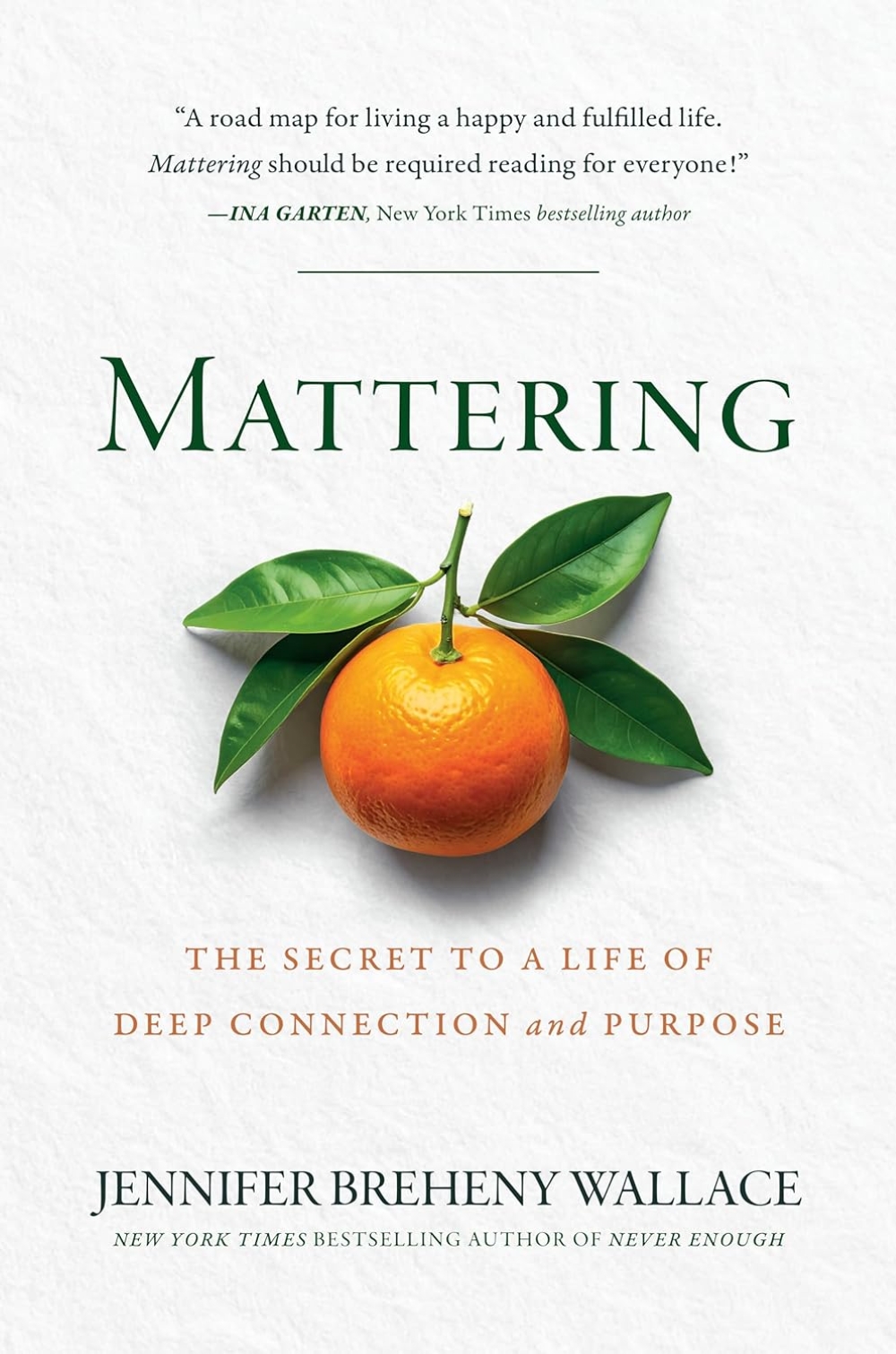
What It Means to Matter and Why It’s Essential for a Meaningful Life

Mattering is the new book by Jennifer Wallace. Photo: Penguin Random House

We live in a world more connected than ever, yet more people feel invisible, replaceable, and disconnected from purpose than at any other time in recent history.

📚 New Book Spotlight

Mattering: The Secret to a Life of Deep Connection and Purpose

by Jennifer Breheny Wallace

From award-winning journalist and bestselling author Jennifer Wallace comes Mattering, a timely and transformative book that confronts the loneliness, burnout, and loss of purpose so many people are experiencing today. (Penguin Random House, 2025)

📅 Release date: Tuesday, January 27
📘 Status: Available now for pre-order


Why Mattering Matters

In this groundbreaking work, Wallace makes a powerful and urgent case: mattering—the feeling that we are valued and that we have an opportunity to add value—is a core human need, as essential to our well-being as food and water.

Yet in today’s world, this fundamental need is increasingly unmet, with serious consequences. As mental and social health crises continue to surge, we often point to social media, the pace of modern life, or polarizing politics as the cause. Wallace argues that beneath these forces lies a deeper issue, what she calls “an erosion of mattering.”


Stories, Science, and the Cost of Feeling Invisible

With her signature warmth and insight, Wallace weaves together compelling research and deeply moving stories of mattering lost and regained. She introduces readers to:

  • Burned-out employees
  • Overwhelmed caregivers
  • People navigating grief
  • Individuals facing destabilizing life transitions

Through these stories, Mattering shows how lives are transformed when people are reminded, often in small but intentional ways, that they are valued and that their presence and contributions truly count.


The “Mattering Core”

At the heart of the book is what Wallace calls the mattering core, made up of four essential elements:

  • Recognizing your impact
  • Being relied on (but not too much)
  • Feeling prioritized
  • Being truly known and invested in

Strengthening this core helps us reconnect with purpose, deepen our relationships, and face uncertainty with greater resilience and clarity.


Who This Book Is For

Perfect for readers of Brené Brown, David Brooks, and Adam Grant, Mattering is a rare, culture-shifting book that offers a diagnosis and a remedy. With a clear roadmap and actionable takeaways, Wallace shows how to:

  • Unlock mattering within ourselves
  • Build cultures of mattering in our homes
  • Create healthier, more connected workplaces
  • Strengthen communities that support belonging

Mattering is a call to action and a blueprint for living a meaningful life and for creating the world we so urgently need.


About the Author

Jennifer Wallace is an award-winning journalist and author of the New York Times bestselling book Never Enough: When Achievement Culture Becomes Toxic—and What We Can Do About It, named an Amazon Best Book of the Year.

Her work has appeared in The Wall Street Journal and The Washington Post. A graduate of Harvard College, Wallace began her journalism career in television at 60 Minutes.


1769512214

  days

  hours  minutes  seconds

until

Mattering release date

When Names Shape Destiny: A Book Review of ‘My Mother Cursed My Name’

My Mother Cursed My Name is the debut novel by Anamely Salgado Reyes. Photo: Barnes & Noble

My Mother Cursed My Name Book Review: A Magical Realism Novel About Generational Trauma

My Mother Cursed My Name by Anamely Salgado Reyes is a debut novel that explores three generations of strong Mexican American women: Olvido, Angustias, and Felicitas. Blending magical realism, women’s fiction, and family drama, the novel examines generational trauma, grief, identity, and the power of names. Set near the U.S.–Mexico border, the story follows a grandmother’s ghost who meddles in her living family’s life from beyond the grave.


Book Overview: What My Mother Cursed My Name Is About

The novel opens with the history of the Olivares women, dating back to 1917, when Justa Olivares named her daughter Calamidades. Justa believed hardship built character and if she suffered, her daughter should too.

“For generations, the women in the Olivares family attempted to change the course of destiny through the power of names.”

Fast forward to Oakville, Arkansas, where Angustias abruptly pulls her ten-year-old daughter Felicitas out of school to leave town once again. On the road, Felicitas speaks with a mysterious intruder as they head to Grace, Texas, Angustias’ hometown, where her mother Olvido has just died.

The intruder is Olvido herself. Felicitas has the ability to see ghosts, allowing Olvido to linger. Convinced she cannot cross over without resolving unfinished business, Olvido insists on “fixing” Angustias’ life, including her family, career, faith, and future, by working through Felicitas.

Felicitas, who never knew her grandmother, agrees to help in hopes of understanding her. Meanwhile, Angustias, grieving and eager to leave Texas behind, is baffled when the town suddenly rallies around her offering jobs, matchmaking, and church invitations.

Each woman possesses a unique gift: Felicitas sees ghosts, Angustias sees people’s auras, and Olvido draws confessions from others through her cooking. Ultimately, they must learn how to truly listen to one another.


Review: Themes of Generational Trauma, Identity, and Motherhood

My Mother Cursed My Name is a haunting and intimate novel about inherited trauma, unresolved love, and the weight of family expectations. It asks a central question: how much of our destiny is decided before we are born?

The story alternates between Olvido, her daughter Angustias, and her granddaughter Felicitas, revealing how control, often disguised as protection, damages relationships. Olvido’s belief that names determine fate casts a long shadow across generations.

When Angustias becomes pregnant as a teenager, her choice to leave home feels both reckless and necessary, a desperate act of self-preservation. Years later, Felicitas’ attempt to connect with her grandmother delivers a darkly ironic truth: although Olvido is dead, her influence remains powerful.

Reyes’s prose is restrained, vivid, and poetic:

“Between the humidity and the running, her hair has tangled in multiple places as if various birds fought to make a nest on her head.”

Blending emotional realism with a subtle gothic tone, the novel uses death as a metaphor for estrangement and healing. My Mother Cursed My Name is ultimately a poignant exploration of motherhood, resentment, cultural inheritance, and the difficult work of breaking cycles we inherit without consent.

Readers who enjoy Latina literature, magical realism novels, and women’s fiction about family and identity will find this story heartwarming and thought-provoking.

“If only mistakes could anchor Angustias without drowning her, she wouldn’t be so determined on sailing the unknown sea.”


Rating: 4 out of 5.

About the Author: Anamely Salgado Reyes

Anamely Salgado Reyes grew up on both sides of the Mexico–Texas border. Now based in the Rio Grande Valley, she writes stories rooted in family, friendship, culture, and the quiet magic found in everyday life.


Zülfü Livaneli Returns with ‘Leyla’s House’

Leyla’s House is Zülfü Livaneli’s, one of Turkey’s great modern writers, musicians and activists, new novel. Photo: Other Press

Leyla’s House: A Novel by Zülfü Livaneli

Release Date: Tuesday, January 20, 2026
Publisher: Other Press

Tradition, modernity, displacement, and human connection collide in internationally bestselling author Zülfü Livaneli’s latest novel, Leyla’s House. Richly layered and emotionally resonant, the book explores old and new money, the legacy of the Ottoman Empire, and the complexities of modern Turkey. It’s available for pre-order now. (Other Press, 2026)

A Story of Loss, Survival, and Unexpected Friendship

Evicted from her Istanbul mansion, an elderly aristocrat forms surprising new connections across class and culture in this colorful, nuanced novel.

The last living member of a great Ottoman family, the refined yet sheltered Leyla finds herself homeless and vulnerable when her house is sold by the bank to a business tycoon and his ambitious wife. Forced out of her historic mansion on the banks of the Bosphorus, Leyla is rescued by Yusuf, the son of her family’s former gardener, now a journalist, and taken into his care.

Leyla follows Yusuf to a modern, cosmopolitan district of Istanbul, where she encounters a vibrant world of artists and outcasts, including Yusuf’s partner Roxy (real name Rukiye), a hip-hop singer. Despite initial hostility, a genuine friendship slowly develops between these two women from radically different worlds.

A Hidden History Comes to Light

When Leyla’s former home is emptied of its furniture, a startling family secret emerges. A discovered photograph reveals the old woman’s uncanny resemblance to a British officer, raising an unsettling question: could Leyla be the product of an illegitimate union between an Ottoman woman and an Englishman?

With a strong sense of romance and social insight, Leyla’s House captures a society in flux, where former Ottoman aristocrats, the nouveau riche, and Turks returning from Europe all coexist, collide, and redefine what belonging means.


About the Author

Zülfü Livaneli is Turkey’s best-selling author and a prominent political activist. Widely regarded as one of the most important Turkish cultural figures of our time, he is known for novels that interweave diverse social and historical perspectives. His acclaimed works include Bliss, Serenade for Nadia, Disquiet, The Last Island, The Fisherman and His Son, On the Back of the Tiger, and My Brother’s Story.

His books have been translated into thirty-seven languages, won numerous international literary prizes, and adapted into films, stage plays, and operas.


About the Translators

Brendan Freely

Born in Princeton in 1959, Brendan Freely studied psychology at Yale University. His translations include Two Girls by Perihan Mağden, The Gaze by Elif Şafak, and—co-translated with Yelda Türedi—Like a Sword Wound by Ahmet Altan.

Yelda Türedi

Born in Mersin, Turkey, in 1970, Yelda Türedi studied chemical engineering at Boğaziçi University. She has co-translated Ahmet Altan’s Like a Sword Wound and Love in the Days of Rebellion.


1768908570

  days

  hours  minutes  seconds

until

Leyla’s House release date

Begin at the End: A Smarter Way to Make Decisions in an Overwhelming World

Decision fatigue is real and this book offers a way out. Photo: Amazon

Related Post: The Leadership Skill That Shapes Every Business Decision (And a Book That Explains It)

Book Review: Begin at the End by Jeremy Sable

Begin at the End: The Modern Day Guide to Decision-Making by Jeremy Sable is a timely response to a problem many of us feel but struggle to identify: decision fatigue in a world that never pauses.

He doesn’t offer abstract frameworks or motivational clichés, but rather a practical system rooted in real-world experience. He has spent a decade in mission-critical consulting where decisions aren’t theoretical, they’re consequential.

His goal in writing this book is clear:

“This book is for anyone who is facing tough decisions, feeling stuck, or just looking for a better way to think things through.”

The Core Idea: Outcome-First Thinking

The premise is simple yet powerful. We need to stop reacting to the options in front of us and start anchoring every decision to the outcome we actually want.

This Outcome-First approach flips traditional decision-making advice on its head. Instead of weighing endless pros and cons, Sable encourages clarity first—defining success before choosing a path. The result is faster, more confident decisions with far less mental noise.

What’s Inside the Book

The book is divided into four clear sections:

  • Part I: Framing the End
  • Part II: Navigating the Messy Middle
  • Part III: Making the Call
  • Part IV: Becoming a Decision Maker by Design

Key Highlights

Part I, Chapter 1: Outcome-First Thinking
Sable immediately addresses artificial intelligence, noting that AI will increasingly influence both personal and professional decisions. While AI can provide predictive analytics and real-time simulations, it can also begin to make decisions for us if we aren’t clear on our goals.

“AI is not your enemy, but it’s not your decision maker either. You are.”

Part I, Chapter 5: Generate Better Options — Decision-Making Under Pressure
When faced with two bad options, Sable challenges readers to create better ones. He uses Tyler Perry as a case study: when told his work wasn’t mainstream enough for Hollywood, Perry didn’t conform or quit, he built his own studio.

“So the next time you’re told it’s either A or B, remember—you are writing the test, not just taking it.”

Why This Book Works

Sable acknowledges the speed, complexity, and constant pressure of modern life and designs his approach accordingly. The writing is clear, direct, and refreshingly free of jargon. He reinforces concepts through illustrations, case studies, and interactive exercises, with each chapter ending in summaries and key takeaways.

Several chapters also explore how artificial intelligence fits into modern decision principles, making the book especially relevant right now.

Final Thoughts

For readers who feel overwhelmed or paralyzed by choice, Begin at the End is an effective antidote. It restores agency and focus by reminding us that better decisions start with knowing where we want to go.

Looking for fresh decision-making ideas? This book is worth making your next guide.

“Whether in markets or in life, if you wait for perfect signals, you’ll miss the opportunities that come from moving forward with intention, even when the picture is messy.”

Rating: 4 out of 5.

*Thank you to Jeremy Sable for the gifted copy for review consideration. I haven’t been compensated for this review and all views and opinions expressed are my own.

Of Shadows and Lost Souls: Love and Loneliness in The Jinja of Blood

The Jinja of Blood: Of Shadows and Lost Souls is the exciting new fantasy novel by Vivian Bell. Photo: Amazon

The Jinja of Blood: Of Shadows and Lost Souls (Book 1)

By Vivian Bell

An ancient jinja is home to the Wind and Ice clans, vampires who spend eternity fighting loneliness and boredom. In modern-day Japan, the New Bloodline must navigate everyday life, love, and increasingly ferocious yokai.

Shun Holynorth, a vampire, lives in the frost of eternity, while Haruki Akayama, a mortal, exists within the fragility of human time. Their meeting becomes the crack through which both light and darkness seep.


Story Overview

The novel opens with Shun admiring the sun’s final rays at sunset. Even after centuries, sunsets still mesmerize him, though they stir an ancient unrest within his soul. Shun belongs to the New Bloodline, children born of vampires and immortals. As the youngest, he’s seen as delicate, earning him the nickname the Cub. Adam and Ryuu are assigned to protect him as he begins university at Aizawa Academy, where vampires and humans study side by side.

Haruki Akayama and Yoshi Yamamoto are among the human students attending Aizawa Academy. Haruki is a 20-year-old billionaire with no immediate direction in life, aside from his determination to find his mother, who disappeared during his childhood. He’s dating Sam, unaware that Sam is a vampire.

As the group begins school, friendships form and secrets surface. Shared struggles and personal drama draw them closer together, revealing unexpected similarities. Beneath their everyday lives, however, a lurking danger emerges, only briefly introduced here, as this is the first book in the series.


Review

The Jinja of Blood: Of Shadows and Lost Souls blends ancient myth with modern unease. Set within an ancient shrine, it explores what happens when immortality collides with change. The New Bloodline must balance mundane university life with the growing threat of increasingly dangerous yokai, creating a compelling tension between the ordinary and the supernatural.

Shun and Haruki’s connection acts as a bridge, allowing light, darkness, longing, and fear to seep into each other’s worlds. Bell writes their relationship with emotional sensitivity, making it feel earned rather than merely symbolic.

As the opening volume of The Jinja of Blood, the novel sets the tone for a saga focused less on spectacle and more on belonging, friendship, and love in all its complexities. While the central romance between two young men places the book firmly within queer fantasy, the broader cast adds depth and diversity.

The vampires and immortals are portrayed as beings seeking normalcy rather than reveling in blood and gore. Their longing for ordinary lives makes them relatable, despite their centuries-long existence.

The narrative flows smoothly, supported by vivid, poetic language:

“The leaves, no longer resisting, surrendered to the wind’s invitation and danced over gardens and rooftops, skimming aerials and skyscrapers.”

Because the story is set in Japan, Japanese terms appear throughout. While this occasionally slows the pacing, the included glossary is helpful. The incorporation of Japanese folklore, such as the story of Hachiko, the faithful dog who waited for his long dead owner at Shibuya Station for ten years, adds cultural richness.


Final Thoughts

Overall, The Jinja of Blood: Of Shadows and Lost Souls is a strong and atmospheric beginning to a dark urban fantasy saga. It explores themes of friendship, identity, coming of age, and love. Though categorized as LGBTQ+ fiction due to its central romance, the story’s emotional core and diverse cast give it broad appeal.

Fans of fantasy, vampire lore, and Japanese culture will find this an engaging and promising start to what is sure to be an exciting series.

“Yoshi was the only anchor that allowed him to maintain a connection to reality. Without him, he would have capsized in the tidal waves of his own soul.”

Rating: 4.5 out of 5.

About the Author

Vivian Bell is a shadow behind shrine doors, writing queer gothic tales of vampires, jinja, and cursed bloodlines. The Jinja of Blood is her debut dark fantasy, set between university corridors and yokai-haunted districts in modern-day Tokyo.


*Thank you to Vivian Bell for the gifted copy for review consideration. I haven’t been compensated for this review and all views and opinions expressed are my own.