‘Valet’ by J.P. Lacrampe: The Whimsical Robot Novel You Didn’t Know You Needed

‘Valet’ is the new novel by J.P. Lacrampe. Photo: Simon & Schuster

Book Spotlight: Valet: A Novel

By J.P. Lacrampe

Synopsis

Cy wants nothing more than to be useful, raise his utility score, and receive the next update for his operating system. But that’s easier said than done when he’s tasked with helping his owner’s thirty-five-year-old son “get out of his funk.” (Simon & Schuster, 2026)

Grayson is nothing like his go-getter, CEO sister Charlotte. He didn’t inherit the family robotics company when their dad passed last year, he doesn’t have a master’s degree, and he just can’t seem to figure out the San Francisco dating scene. He’d rather eat synthesized mozzarella sticks and make pottery at his studio, Kilning Time.

When Grayson learns of Charlotte’s plan to sell the company to a tech conglomerate, he panics. It’s not just the family business at stake, it’s all the technology—like Cy—their dad invented over the years. So he does what anyone would do: he steals the flash drive with his father’s most important work stored on it and plans a corporate takeover. If only he knew what that meant.

To make matters worse:

  • A fellow VALET deserts his owner and asks Cy to help him hightail it out of town.
  • Grayson’s first real date—and her dog—keep showing up at inopportune times.
  • The behemoth tech company wants this deal closed yesterday.

Grayson, Cy, and their trusty golden retriever, Sasha III, must go on the lam until they figure out exactly what to do, and whom to trust.

A hilarious, madcap adventure that is as tender as it is insightful, Valet asks not just what it means to be human, but what it means to be family.

Read This If You Love:

  • Vibe: A whimsically speculative ode to Wodehouse’s Jeeves and Wooster.
  • For Fans Of: Kevin Wilson (Nothing to See Here) and Andrew Sean Greer (Less).
  • Core Tropes: A helper robot, his thirty-five-year-old ward, and a madcap adventure to save the fate of a family empire.

“Valet is a hilarious and bracing examination of the near future, where Cy, a techbot servant, must navigate the complexities of humans to maintain his utility score. What makes this such a winning and openhearted novel is that J.P. Lacrampe goes beyond the initial premise by looking at the universal anxiety of family, of being tied to people with whom you will rise and fall, either toward a new update or into obsolescence.” — Kevin Wilson, New York Times bestselling author of Nothing to See Here and Run for the Hills

About the Author

J.P. Lacrampe received his MFA in creative writing from Saint Mary’s College. His short fiction has been published by Glimmer Train, McSweeney’s, Instant City, and in Howl: A Collection of the Best Contemporary Dog Wit. He is a teaching professor at Santa Clara University, where he teaches courses in composition, fiction, and screenwriting.


Inside the Origin of Jimmy Buffett’s Legend: Occupational Hazard Documentary Spotlight

Occupational Hazard is releasing in major cities in early September timed to Jimmy Buffett Day (September 4). Photo: Michael Ochs Archive, used with permission.

Documentary Film Spotlight: Occupational Hazard: The First Coral Reefers

Greene Street Entertainment, in association with Confluence Productions, presents Occupational Hazard: The First Coral Reefers—a feature documentary that journeys back to the 1970s and early 1980s to tell the origin story of Jimmy Buffett’s original Coral Reefer Band. (EG-PR, 2026)

Set against the creative backdrop of Key West, the film explores the musicians, friendships, touring years, and studio sessions that helped shape Buffett’s legendary sound. It is the story upon which the “Parrot Head” empire was built, told directly by the people who laid the foundation.

The Release Schedule

  • Key West Special Screenings: Opens September 5, 2026
  • Theatrical Rollout: Select cities (including NYC and LA) to follow
  • TVOD Release: Nationwide across the US and Canada in November 2026

Behind the Magic

Narrated by Academy Award winner Jeff Bridges, Occupational Hazard captures the camaraderie, chaos, and magic of an era that thrived on freedom and lived without a rulebook. Through rare, never-before-seen archival footage and deeply personal interviews with founding members, tour managers, producers, and music legends, the film offers fans an intimate look at the volatile beauty of a musical moment that couldn’t last, but changed everything.

Fresh off its premiere at the Santa Barbara International Film Festival 2026, this festival favorite has picked up accolades across the country and stands as a candid, heartfelt tribute to Buffett and his original crew.

Film Fast Facts

  • Title: Occupational Hazard: The First Coral Reefers
  • Runtime: 92 minutes
  • Country: USA | Year: 2026
  • Director: John H. Cunningham
  • Producers: John H. Cunningham, Ted E. Haynes
  • Narrator: Jeff Bridges
  • Featured Appearances: Kenny Chesney, Mac McAnally, Keith Sykes, and members of The Coral Reefer Band

About the Subjects & Filmmakers

Jimmy Buffett (1946–2023)

Singer/songwriter Jimmy Buffett regaled audiences for over five decades with songs about the faces and places he encountered along the road less traveled. Combining Hemingway’s eye for detail with Mark Twain’s mischievous humor, Buffett’s music celebrated the hustlers, beach bums, and pirates of the world through timeless themes of escapism, wanderlust, and unbridled curiosity.

John H. Cunningham (Director & Producer)

John H. Cunningham is a filmmaker and USA TODAY bestselling author of the 12-book Buck Reilly adventure series and The Last Raft. Before transitioning to fiction and film, Cunningham spent 35 years in commercial real estate, serving as Executive Vice President at Alexandria Real Estate Equities in NYC. Splitting his time between Virginia and Key West, he combines deep business acumen with a passion for compelling storytelling.


Courtesy photo

Magik Theatre Unveils 2026–2027 Season & Free Educator Happy Hour

Magik returns to Hemisfair for expanded 2026-2027 season full of smash hits and fantastical fun. Photo: Magik Theatre, used with permission.

San Antonio’s Magik Theatre Unveils Star-Studded 2026–2027 Season & Educator Appreciation Event

As San Antonio students head back to the classroom, Magik Theatre is gearing up for an unforgettable new season of storytelling, education, and community connection. (Magik Theatre, 2026)

Serving roughly 30,000 students every year through its widely popular field trip program, Magik acts as a vital bridge between arts and literacy in South Texas. From timeless bestsellers to pioneering operatic collaborations, the upcoming 2026–2027 lineup brings beloved children’s literature straight to the stage.

“We built this season around characters that are adored by children and treasured by grown-ups. Generations of families, educators and their students, and friends of all ages will bond over these timeless tales — creating the unique community connection that live theatre makes possible.”

— Collin Pittmann, Artistic Director


Back-to-School Educator Happy Hour

Magik is hosting its annual Free Educator Happy Hour to give hard-working local teachers, faculty, and school staff a chance to unwind, connect with peers, and see how the upcoming lineup can complement their curriculum.

  • When: Thursday, September 3, 2026 | 5:00 PM – 7:00 PM
  • What to Expect: First look at recent theatre renovations, a sneak peek at the new season, free food and drinks, door prizes, classroom resources, and a look behind the curtain.
  • Admission: Free and open to all area educators and school staff (registration required).

2026–2027 Mainstage Lineup

All mainstage productions feature Sensory-Friendly, Pay-What-You-Wish, and American Sign Language (ASL) interpreted performances.

If You Give A Mouse A Cookie

  • Dates: October 3 – 25, 2026 | Ages 3+
  • Adapted by: Jodi Davidson (based on the book by Laura Numeroff)
  • The Story: Boy’s peaceful afternoon gets delightfully derailed when Mouse shows up. A mishap-fueled joyride filled with endless giggles.

Dr. Seuss’ How The Grinch Stole Christmas The Musical

  • Dates: November 21 – December 24, 2026 | Ages 3+
  • Book & Lyrics: Timothy Mason | Music: Mel Marvin
  • The Story: Narrated by Max the Dog, watch the mean Grinch discover the true meaning of Christmas. Features iconic hits like “You’re A Mean One, Mr. Grinch.”

A Year With Frog and Toad the Musical

  • Dates: January 30 – March 7, 2027 | Ages 4+
  • Book & Lyrics: Willie Reale | Music: Robert Reale
  • The Story: This three-time Tony-nominated Broadway hit follows cheerful Frog and grumpy Toad across four fun-filled seasons with a jazzy, upbeat score.

John Davies’ Pinocchio (Co-Production with OPERA San Antonio)

  • Dates: March 20 – April 4, 2027 | Ages 4+
  • By: John Davies (featuring classical music by Mozart, Donizetti, Offenbach, and Pergolesi)
  • The Story: Two San Antonio performing arts powerhouses join forces for a family-friendly one-act opera exploring honesty and trust.

Charlotte’s Web

  • Dates: April 24 – May 23, 2027 | Ages 5+
  • By: Joseph Robinette (based on the book by E.B. White)
  • The Story: Widely considered one of the greatest children’s books of all time, follow Wilbur the pig and his extraordinary spider friend Charlotte in this heartwarming tale of compassion.

Seussical the Musical (Theatre for Young Audiences Version)

  • Dates: June 19 – August 8, 2027 | Ages 3+
  • Music: Stephen Flaherty | Lyrics: Lynn Ahrens
  • The Story: A high-energy summer celebration bringing together Horton, Gertrude McFuzz, and The Cat in the Hat with a toe-tapping score blending pop, gospel, and R&B.

Ticket Options & Special Programs

Package TypeDetailsPrice
Full Season SubscriptionPriority seating for all 6 shows$120 ($20/ticket)
Flex Pass10 prepaid tickets (use anytime during 2026–2027)$220 (Save 25%+)
Corporate Flex Pass20 prepaid tickets$420
Single TicketsDiscounts for children, seniors, military, educators, and studentsVaries

Note: All ticket prices are subject to nominal facility and processing fees.

Take a Seat! Sponsorship

To celebrate Magik’s multi-million dollar renovation featuring brand-new seating, patrons are invited to sponsor a chair. Each sponsorship includes a custom-engraved plaque honoring your donation—a perfect way to commemorate your family’s love of the arts.

Share the Magik Initiative

This new community program provides local partners and their families with complimentary tickets to ensure every child can experience live theatre regardless of financial barriers. (Businesses interested in sponsoring can contact Kristin Beno, Director of Development).

Visit Magik Theatre

Located in the heart of Hemisfair Park, families can enjoy a show, explore Yanaguana Garden, and dine at nearby restaurants.

  • Address: 420 S Alamo, San Antonio, TX 78205
  • Box Office Hours: Monday – Friday | 9:00 AM – 5:00 PM
  • Phone: (210) 227-2751
  • Tickets: Available online, by phone, or at the box office.

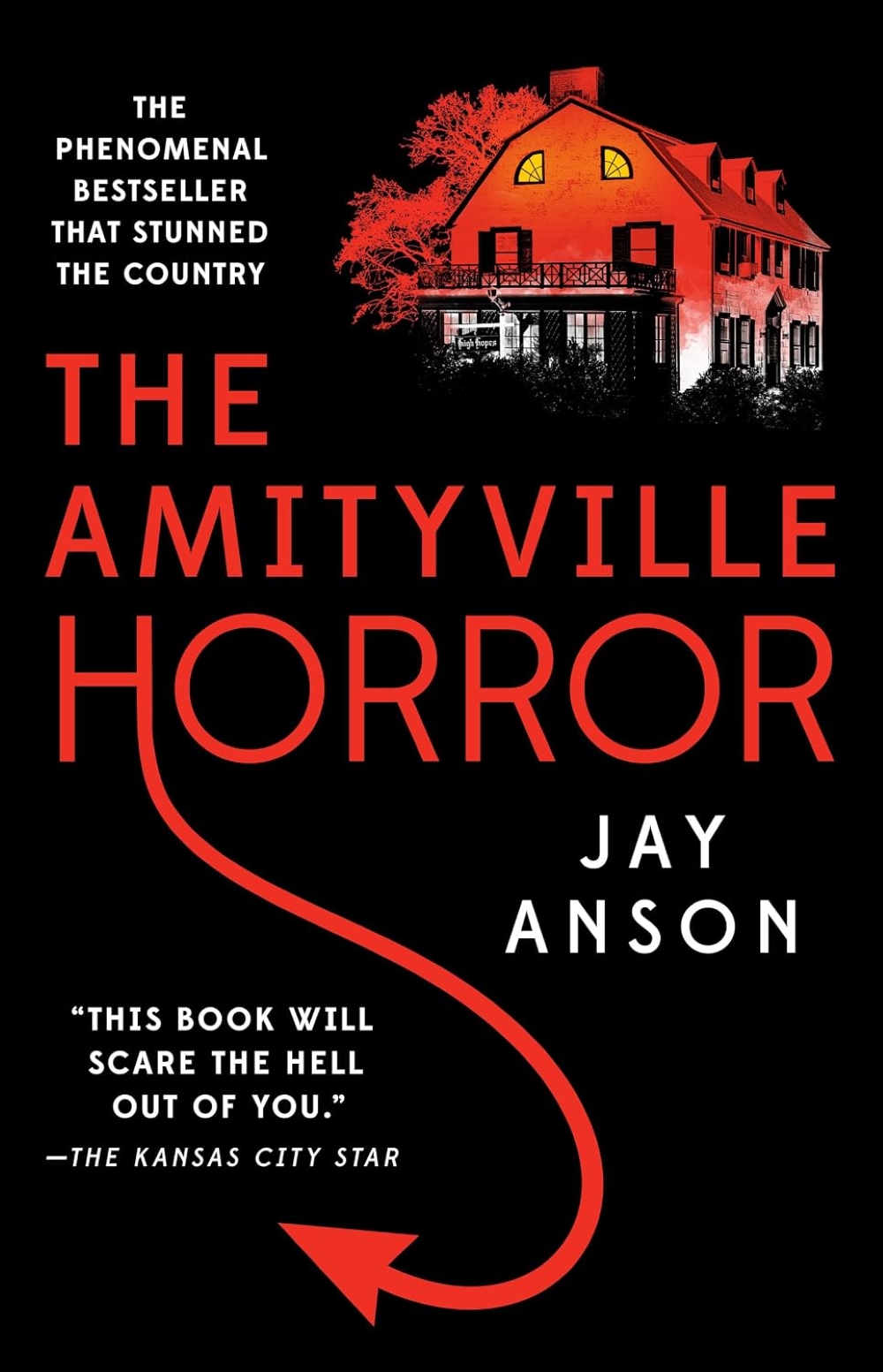
‘The Amityville Horror’ Book Review: Classic True Crime Horror

‘The Amityville Horror’ by Jay Anson. Photo: Barnes & Noble

📚 Book Review: The Amityville Horror by Jay Anson

Synopsis

In December 1975, the Lutz family moved into their new home in suburban Long Island. George and Kathleen Lutz knew that one year earlier, Ronald DeFeo had murdered his family in the house, but the property, complete with a boathouse and swimming pool, and the price were too good to pass up.

Twenty-eight days later, the entire Lutz family fled in terror.

Review

The Amityville Horror remains one of the most chilling entries in paranormal literature, chronicling the 28 days George and Kathleen Lutz spent in their dream home. The narrative blurs the line between documentary reporting and visceral horror and the idea that an ordinary suburban house could conceal something horrifying gives the story much of its power.

Character Dynamics

  • George Lutz: Positioned as the pragmatic patriarch, George’s descent from a stable family man to an uncharacteristic, brooding recluse forms the novel’s emotional core. His gradual personality shift highlights the insidious influence of the house.
  • Kathleen Lutz: Serving as the perceptive counterweight, Kathy’s emotional anguish and instinct to protect her three children anchor the story’s human stakes amid chaotic spectral events.
  • Father Mancuso: The troubled priest introduces a theological dimension, acting as a spiritual guide whose physical illness reinforces the dark forces at play.

Anson’s background in documentary writing shapes the book’s character dynamics. Rather than making them over-the-top heroes, George and Kathleen are portrayed as grounded, everyday parents unraveling under inexplicable stress. Their vulnerability makes the escalation, from strange odors and cold spots to severe levitation and demonic infestation, profoundly unsettling. Whether readers accept the events as supernatural or approach them skeptically, the characters create a strong emotional center for the story.

Core Themes

  • The Violation of Domestic Sanctuary: The narrative weaponizes the American Dream, transforming a dream suburban home into a site of claustrophobic dread.
  • Economic Vulnerability: The financial pressure of buying a bargain home amplifies the family’s stress, blending real-world anxieties with the supernatural.
  • Good vs. Evil: A traditional moral conflict underpins the story, questioning whether human faith can withstand an ancient, malicious presence.

Enduring Appeal

Decades after publication, the book retains its hold on readers by capitalizing on journalistic realism and the simple, terrifying prompt: “Based on a true story.” Anson’s clinical, day-by-day structure creates an immersive documentarian tone that keeps true-crime and horror enthusiasts fascinated by its eerie legacy.

Book vs. 1979 Movie Adaptation

While Jay Anson’s 1977 book and Stuart Rosenberg’s 1979 film adaptation share the same core narrative, the Lutz family fleeing their home after 28 days of supernatural terror, the two versions diverge significantly in their storytelling approach, character execution, and thematic emphasis.

FeatureJay Anson’s Book (1977)1979 Film Adaptation
Narrative ToneClinical, investigative, and documentary-style; presents events as a straightforward log of facts.Dramatic, cinematic, and melodramatic; relies on visceral jump scares and atmosphere.
George Lutz’ ArcPortrayed as a fatigued, cold-sensitive man suffering mood swings and physical decline.Features a full transformation into a threatening, axe-wielding figure resembling Ronald DeFeo Jr.
Religious SubplotFather Mancuso suffers from afar after being instructed by the house to “get out.”Expanded into a theatrical battle between Father Delaney (Rod Steiger) and systemic church bureaucracy.
Supernatural ElementsRelies heavily on lingering dread, foul odors, subtle physical coldness, and eerie sounds.Features overt physical manifestations, such as black ooze from toilets and red-eyed demonic pig projections.

Key Plot Differences

The book operates like an eerie non-fiction diary, emphasizing small, increasing stresses, financial burdens, broken locks, and bad weather that wears down the family piece by piece. The film dramatizes these events, escalating George’s hostility much faster and turning his obsession with chopping firewood into an explicit signal of imminent physical danger toward his family. Additionally, the movie gives Father Delaney (renamed from Mancuso) a much larger on screen presence, including scenes where he loses his sight and sanity while attempting to warn the family.

Thematic Shifts

  • Journalistic Realism vs. Cinematic Spectacle: The novel’s power comes from its plain, “true story” journalistic layout. The film abandons this understated documentarian tone in favor of traditional Hollywood tropes, utilizing Lalo Schifrin’s Oscar-nominated score and visual horror cues to drive the narrative.
  • Domestic Ruin vs. Economic Anxiety: While the book focuses heavily on spiritual violation, it’s mostly seen as an exercise in financial anxiety. The movie leans heavily into the terror of the American Dream turning into a financial trap, highlighting unpaid bills, lost money down the drain, and a house that destroys the family’s equity along with their sanity.

Final Book Verdict

I hadn’t read the book previously and opted for the audiobook instead. To my surprise, it’s not as scary as I thought going in, though it does have its occasional jump scares. The final chapters, where the family prepares to leave while the house refuses to let them go, deliver some intense action. The overall day-by-day tone that breaks down the Lutz’ experience in the house is intriguing, and fans of real-crime stories will definitely find it an interesting read.

Rating: 4 out of 5.

“When he flicked the first holy water and uttered the words that accompany the gesture, Father Mancuso heard a masculine voice say with terrible clarity: ‘Get out!’”


Audiobook cover. Photo: Barnes & Noble

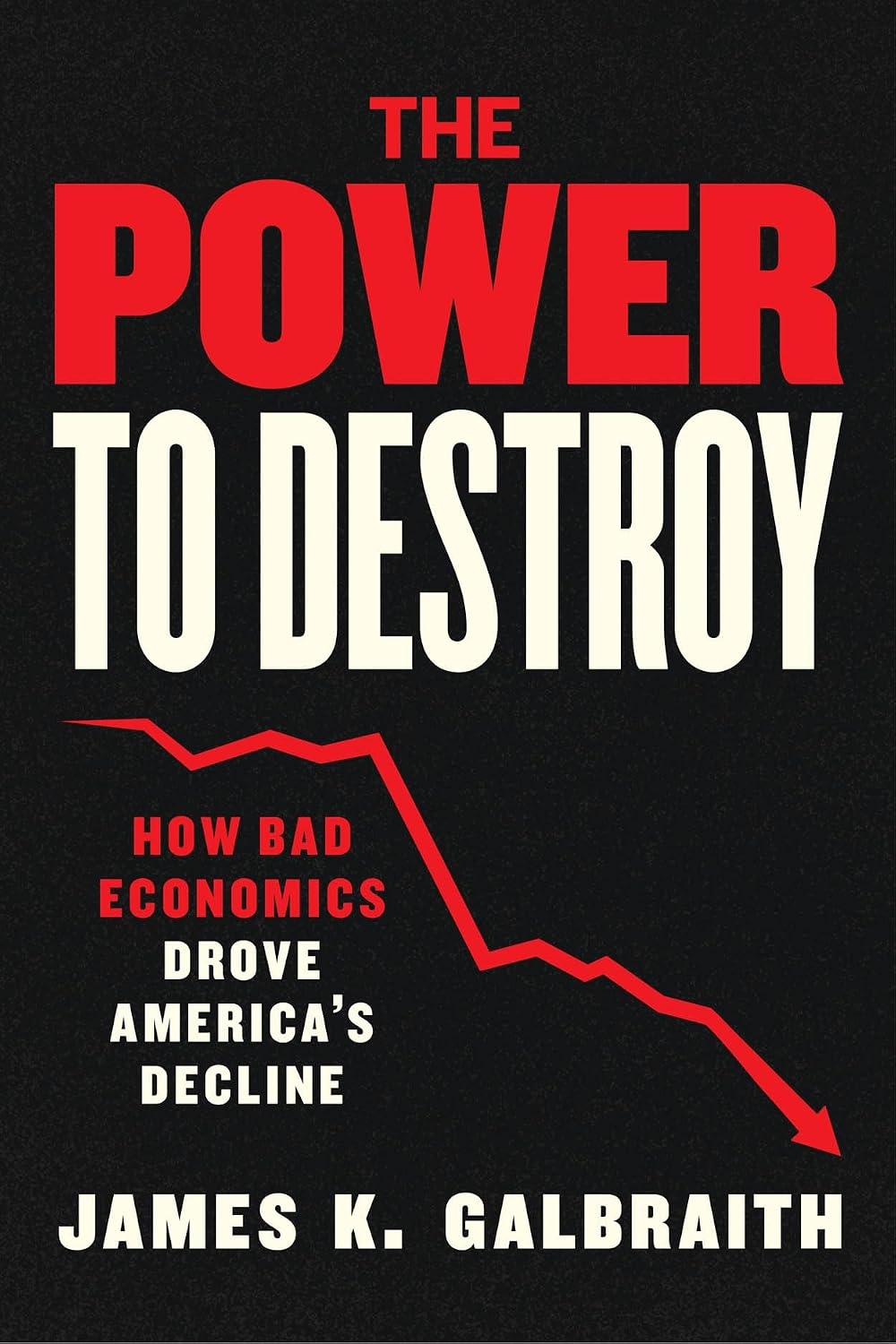
Why Modern Economic Policy Failed: James K. Galbraith’s ‘The Power to Destroy’

‘In The Power to Destroy,’ James K. Galbraith explains how yesterday’s economic tools don’t work today. Photo: University of Chicago Press

📚 Book Spotlight: The Power to Destroy: How Bad Economics Drove America’s Decline

Author: James K. Galbraith

Release Date: September 23, 2026 (Available for pre-order)

The Dissonance of Modern Economics

Acclaimed economist James K. Galbraith sounds an urgent alarm on how conventional economic ideas and policies have failed to adapt to the most daunting challenges of our geopolitical moment. (University of Chicago Press, 2026)

Amid a mounting sense of American decline, everyday citizens live with a strange contradiction: traditional economists keep announcing that everything is fundamentally fine. They point to steady growth, low unemployment, relatively stable prices, and high stock markets, asking: what’s there to worry about?

Synopsis

The Power to Destroy shows that this dissonance reflects a failure of the discipline to evolve. Galbraith’s incisive history of 21st-century economic policy centers on a fundamental flaw: today’s experts are still deploying tools from yesterday’s wars.

Relying on obsolete ideas, outdated measures, and crude indicators like standard output and price indexes—many honed a century ago for a vastly different social landscape—offers little hope in the face of today’s existential threats.

Galbraith argues that these conventional policies are accelerating the decline of the US economy. Key policy shortcomings include:

  • Mismanaged Inflation: Weak responses to the post-pandemic inflation of 2021–2022.
  • Geopolitical Miscalculations: Flawed strategies regarding the sanctions war against Russia and the economic rise of China.
  • Stagnant Revival: Half-hearted and ineffective attempts at domestic industrial policy.
  • Unaddressed Crises: Inadequate preparation for climate change and the impending demographic crisis.

All of these failures root back to a flawed body of economic thought sustained for ideological rather than practical reasons. As Galbraith makes plain, while market systems have their virtues, government policies are what make functioning markets possible in the first place. Sticking with outdated theories brings the power to destroy, making new, realistic ideas an urgent necessity for survival in an emerging multipolar world.


About the Author

James K. Galbraith holds the Lloyd M. Bentsen, Jr. Chair in Government/Business Relations at the LBJ School of Public Affairs, The University of Texas at Austin.

His previous books include:

  • Entropy Economics: The Living Basis of Value and Production (with Jing Chen)
  • Inequality: What Everyone Needs to Know
  • Welcome to the Poisoned Chalice: The Destruction of Greece and the Future of Europe

1790173434

  days

  hours  minutes  seconds

until

‘The Power to Destroy’ release date

Leaving Washington: Why Jen Thompson Walked Away from Political Power in ‘Wild Pivot’

‘Wild Pivot’ by Jen Thompson is an impactful memoir about choosing truth over approval. Photo: Barnes & Noble.

Book Review: Wild Pivot: Notes from a Political Life Rewritten by Jen Thompson

Release Date: September 22, 2026 | Status: Available for Pre-Order

As a successful and prominent young Republican strategist, Jen Thompson possessed the power and prestige she had always strived for, yet it was built on an underlying current of personal disconnect. Her inner voice warned that she was living someone else’s definition of a meaningful life. It took a near-fatal car accident on a high-profile Senate campaign trail to shatter her trajectory, forcing her to question the identity she had built and the loyalty that kept her tied to it.

Told through short, engaging vignettes, this memoir traces Thompson’s journey from political ambition to profound personal transformation.


The Plot: From Capitol Hill to Down Under

The narrative opens on February 14, 2023. Jen is attending an outdoor screening of Breakfast at Tiffany’s at the Royal Botanical Gardens in Sydney, Australia, reflecting on a tumultuous year. She has been sued and slandered on the front pages of newspapers, cheated on, lied to, and nearly killed in a car crash.

After running a successful political campaign to elect Congressman Jim Talent to the U.S. Senate representing Missouri, she put as much distance as possible between herself and Washington by escaping to Australia. There, she finally felt free. Turning down numerous high-level job offers, her Republican peers thought she was crazy. What she couldn’t tell them was that her core political views had fundamentally shifted. The people she once worked alongside were now dominating the headlines, and new acquaintances in Australia were stunned to learn about her past.

From there, Thompson shares her life story:

  • Childhood Foundations: Growing up in a Christian Scientist family and facing her father’s demand at age 11 to lay out a twenty-year career plan.
  • The DC Pressure Cooker: Recounting the brutal stress of her years as a political strategist and how those struggles opened her eyes to a world she had never envisioned.
  • A New Path: Committing to living a life of truth and personal freedom, regardless of the cost.

Table of Contents

Part I: Wired

  • Chapter 1: Time Bomb: Five. Four. Three. Two. One. Boom
  • Chapter 2: Becoming Wired
  • Chapter 3: The Monster Unleashed
  • Chapter 4: Truths
  • Chapter 5: Gravity
  • Chapter 6: Becoming Unwired
  • Chapter 7: After the Caribbean
  • Chapter 8: Chasing the Boar Part I
  • Chapter 9: Chasing the Boar Part II
  • Chapter 10: Healing
  • Chapter 11: Last Two Months of the Campaign
  • Chapter 12: The Election

Part II: Rewired

  • Chapter 13: Alternative Endings
  • Chapter 14: White Privilege
  • Chapter 15: Consequences
  • Chapter 16: Love

Book Review

Jen Thompson delivers a candid look at the high-stakes world of American politics and the terrifying cost of living an inauthentic life. In walking away from her career, Thompson illustrates that genuine evolution—aside from being uncomfortable—can often be isolating. Yet, her journey toward healing proves that dismantling an old life is a necessary step toward true freedom. Especially memorable is her willingness to examine her past without protecting her ego.

Chapter Highlights

  • Chapter 2: Thompson recounts the happiest day of her life: her first day working for Congressman Jim Talent on Capitol Hill. She describes growing increasingly driven, working over 80 hours a week through holidays. Yet, when left alone, she became consumed by a fear of failure:

“My fears grew into a raging monster that roared with an unstoppable push to succeed.”

  • Chapter 6: The turning point arrives with a horrific car accident on her way to Springfield. Though the vehicle was left unrecognizable, she survived—and in the quiet shock of the aftermath, clarity struck:

“That very moment is suspended in time as the one when my life began to change.”

Core Themes & Final Verdict

The vignettes move with unflinching honesty and sharp wit through a non-linear format. Central to the narrative is an exploration of blind loyalty and the seductive, destructive desire to belong. Her story also examines the themes of identity, transform tion, and liberation and the uncomfortable process of confronting the beliefs that once defined us. Thompson examines how institutional validation can quiet our intuition, compelling us to trade internal truth for external applause.

Overall, Wild Pivot is a compelling memoir about what happens when success no longer feels like success. It’s a story about choosing truth over approval and discovering that sometimes the most courageous pivot is the one that leads back to yourself. It stands as a powerful testament to the courage required to rewrite your story—no matter the price. Readers who enjoy insightful, deeply human memoirs will find this one hard to put down.

“In the stillness, it occurs to me that meaning can only come by way of wholeness, and wholeness, it must be said, does not come easily.”

Rating: 4 out of 5.

About the Author

Jen Thompson is a former high-powered Republican strategist and congressional lawyer who famously walked away from Washington at the peak of her career. She managed the nationally watched 2002 campaign that tipped the divided U.S. Senate back to Republican control, overcoming a massive deficit by orchestrating high-profile events with the President of the United States. Alongside her political work, she served as a lawyer-lobbyist at top international law firms and spent eight years as a chief political commentator for NBC and ABC news affiliates in Richmond, Virginia.


** Thank you to Fauzia Burke and FSB Associates for the gifted ARC for review consideration. I haven’t been compensated for this review and all views and opinions expressed are my own.

Book Review: ‘Mexican Gothic’ by Silvia Moreno-Garcia – 1950s Gothic Horror

‘Mexican Gothic’ by Silvia Moreno-Garcia. Photo: Barnes & Noble

Book Review: Mexican Gothic by Silvia Moreno-Garcia

Synopsis

Set in 1950s Mexico, the novel follows Noemí Taboada, a glamorous socialite whose life mostly consists of high-society parties and leisure. That changes overnight when her father summons her to his office after receiving a frantic, disturbing letter from Noemí’s newly-wed cousin, Catalina. Begging for someone to save her from a “mysterious doom,” Catalina writes about hearing voices in the walls and seems consumed by paranoia. (Barnes & Noble, 2026)

Striking a deal with her father, investigate Catalina’s situation in exchange for his blessing to attend college for anthropology, Noemí strikes out for High Place, a isolated mansion tucked away in the Mexican countryside.

Noemí is an unlikely rescuer. Her chic gowns and perfect red lipstick are better suited for cocktail lounges than amateur sleuthing. However, beneath her polished exterior lies a sharp mind and an indomitable will. She isn’t easily intimidated:

  • Not of Virgil: Catalina’s new husband, a handsome Englishman who is as menacing as he is alluring.
  • Not of Howard: The family’s ancient patriarch, who harbors a bizarre, unsettling fascination with Noemí.
  • Not of High Place itself: Even as the decaying mansion invades her dreams with visions of blood and doom.

Her sole ally in this inhospitable home is Francis, the family’s youngest son. Shy and gentle, Francis wants to help Noemí, but he may also be guarding dark secrets about his family’s past. Behind High Place’s walls lie stories of violence, madness, and a faded silver mining empire built on exploitation. What begins as a family rescue mission quickly devolves into a desperate fight to escape a terrifying, addictive nightmare.


Review

Mexican Gothic brilliantly reinvents classic Gothic horror by fusing familiar tropes, such as dilapidated mansions, tyrannical patriarchs, and psychological dread, with a rich, atmospheric 1950s Mexican backdrop. As Noemí steps into High Place, she enters a living nightmare built on physical isolation and lingering colonial rot.

High Place itself functions as its own character. Its decaying walls and disturbing dreamscapes create an oppressive, suffocating sense of dread. Moreno-Garcia seamlessly weaves traditional horror elements with Mexican history and sharp social commentary.

The narrative unfolds at a steady, deliberate pace, escalating the tension with every chapter and every deeply unsettling secret Noemí unearths. The author balances this high tension with beautifully poetic prose:

“Everything in High Place was gnarled and begrimed, but he’d been able to grow bright and mindful, like an odd plant that is carried onto the wrong flower bed.”

Character Dynamics

  • Noemí Taboada: Far from a helpless damsel in distress, Noemí’s party-girl facade conceals a fierce intellect and resilience. Her absolute refusal to break or submit to High Place makes her an incredible protagonist.
  • Francis Doyle: Soft-spoken and gentle, Francis offers a stark contrast to his sinister family. His inner conflict between familial loyalty and moral action makes him Noemí’s only true ally.
  • Howard Doyle: The ancient patriarch embodies predatory control, obsessively driven by ideas of genetic purity and bodily exploitation.

Core Themes

  • Colonialism & Exploitation: The Doyle family’s faded mining empire reveals how foreign powers drain local resources and labor, framing historical exploitation as a literal, invasive threat to the body.
  • Autonomy vs. Control: Patriarchal domination and eugenics clash directly with Noemí’s fiercely guarded independence.

A Note on the Audiobook:

While the story itself was deeply entertaining, I found the audiobook narration disappointing. The delivery felt robotic and AI-like, complete with awkward pauses and mispronunciations of Spanish names. I only kept listening because I was so hooked on finding out how the plot ended.

Final Verdict

Mexican Gothic by Silvia Moreno-Garcia is a haunting, visually atmospheric tale where the greatest horrors stem not just from supernatural forces, but from human greed and tyranny. It proves that gothic horror can be both frightening and deeply thought-provoking. Readers who enjoy atmospheric mysteries, strong female leads, and dark family secrets should immediately add this to their reading list.

“She had experience dealing with irritating men. They did not fluster her. She had learned, by navigating cocktail parties and meals at restaurants, that showing any kind of reaction to their crude remarks emboldened them.”

Rating: 4 out of 5.

About the Author

Silvia Moreno-Garcia is a Mexican-Canadian novelist, short story writer, editor, and publisher. She is the author of The Bewitching, Mexican Gothic, Gods of Jade and Shadow, and many other acclaimed books. Her work has earned her the Locus, British Fantasy, and World Fantasy awards. She holds an MA in Science and Technology Studies from the University of British Columbia.

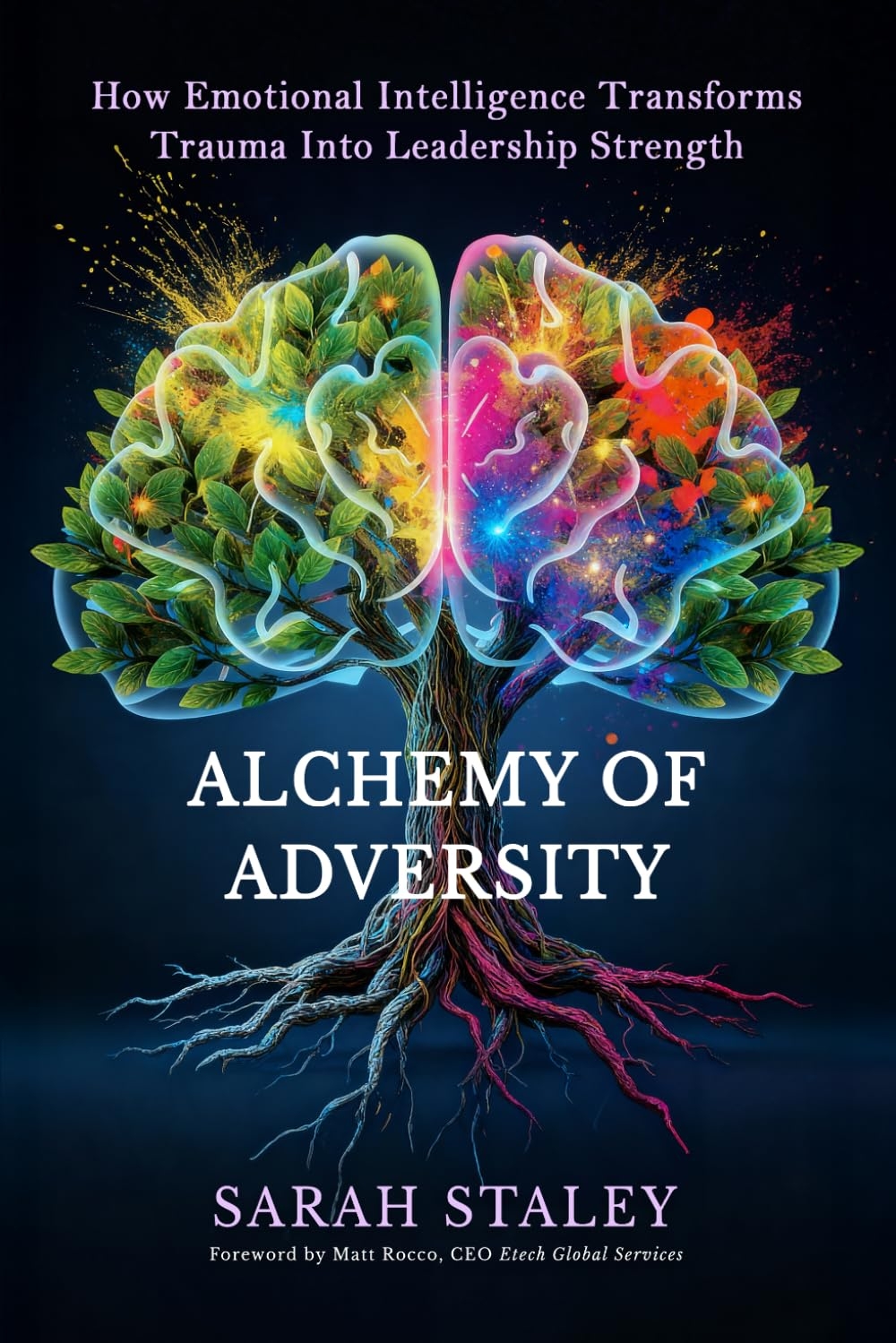
The Neuroscience of Leadership: How Emotional Intelligence Transforms Adversity

‘Alchemy of Adversity’ is the new leadership book by Sarah Staley. Photo: Amazon

Book Spotlight: Alchemy of Adversity: How Emotional Intelligence Transforms Trauma into Leadership Strength

By Sarah Staley

At some point, every leader will face adversity. It may arrive as personal loss, professional disruption, organizational crisis, burnout, or collective uncertainty. However it appears, adversity reshapes identity, alters decision-making, and tests the stability of those responsible for guiding others. (Amazon, 2026)

The question is not whether hardship will intersect with your leadership—it is whether you will be prepared for what it exposes.

Synopsis

In Alchemy of Adversity, Sarah Staley explores how trauma and high stress affect the brain, fragment internal stability, and quietly influence how leaders show up under pressure. Drawing from neuroscience, emotional intelligence research, and lived leadership experience, she reveals why resilience is often misunderstood.

True strength is not about pushing through. It is about integration, the disciplined process of turning toward disruption, regulating under stress, and rebuilding from clarity rather than reactivity.

This book offers practical frameworks to help leaders:

  • Recognize hidden fragmentation before it impacts performance
  • Strengthen emotional regulation under extreme pressure
  • Rebuild trust across teams following a crisis
  • Guide organizations through adversity without burning out in the process

In a world marked by volatility, burnout, and collective strain, leadership can no longer rely on endurance alone. It requires self-awareness, steadiness, and the capacity to transform hardship into strategic strength.

If you lead people, this is not optional work. It is foundational.

Adversity is inevitable. Whether it weakens your leadership or refines it is not.


About the Author

Sarah Staley is a human resources and organizational development leader, executive coach, and leadership development practitioner whose work sits at the intersection of individual behavior and organizational systems. Her perspective on leadership is shaped by years of working closely with leaders at all levels, supporting personal growth while navigating the realities of performance, culture, and change inside complex organizations.

Sarah’s experience spans both the human and structural sides of leadership. She has partnered with leaders and teams through organizational change, cultural shifts, leadership development initiatives, and moments of uncertainty where trust, clarity, and emotional steadiness matter most. Her work reflects a deep understanding of how leadership decisions ripple through people, teams, and systems over time.

Through her work in HR, organizational development, and executive coaching, Sarah continues to support leaders who want to lead the whole person while building cultures where accountability, performance, and wellbeing coexist.


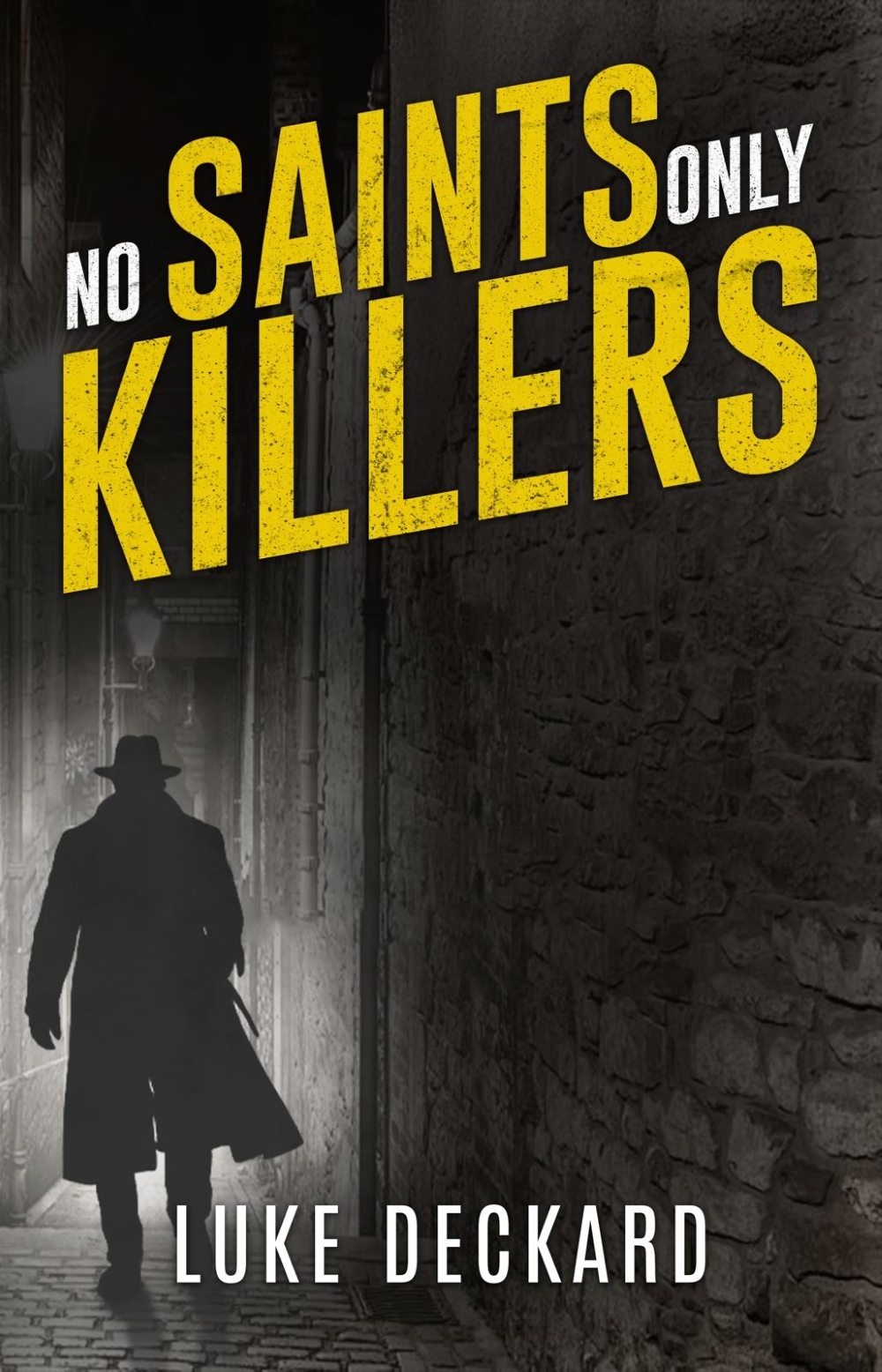
Post-WWI Trauma Meets Classic Detective Noir: ‘No Saints Only Killers’ Review

‘No Saints Only Killers’ by Luke Deckard is 1920s post-war nor at its finest. Photo: Paste Creative Book Tours, used with permission.

Book Review: No Saints Only Killers by Luke Deckard

Part of Paste Creative Book Tours

The Story

Logan Bishop is an American war-damaged private investigator living in London in 1922. On a cold Monday morning, he returns to his modest home to find a postcard in the mail from his estranged father, Reverend Daniel Bishop of Chicago. He’s in town and needs to meet up with Logan to talk about important matters.

Logan hasn’t heard from him in over a decade, and for good reason. Daniel was abusive to Logan throughout his childhood and Logan equates contacting him with being back at war. Reluctantly, he calls the hotel room. Daniel sounds desperate and paranoid, pleading for Logan’s help with an urgent matter. But before he can explain, the line goes dead after what sounds like a violent confrontation.

Before slipping into a coma, Daniel leaves Logan with a desperate plea: find Greta Matas, a woman tied to his past, before she’s killed.

Logan heads to Edinburgh in search of answers, but from the moment he arrives, nothing adds up:

  • Greta is missing.
  • Her son is wanted for murder and on the run.
  • Logan is being watched—by the police, by gangsters, and by men who will do anything to keep the truth buried.

As Logan encounters police officers, gangsters, and dangerous secrets, his investigation becomes both a hunt for the truth and a search for personal redemption… provided he doesn’t end up dead first.

Photo: Paste Creative Book Tours

Get your copy of ‘No Saints Only Killers’ today!


Review

Set against the backdrop of 1922 London and Edinburgh, No Saints Only Killers delivers a sharp and atmospheric slice of post-World War I noir. The novel follows Logan Bishop as he is forced out of his isolated routines by the brutal attack on his estranged father, launching him into a deadly, fog-shrouded investigation to find a missing woman from his father’s past.

Character Analysis

Logan Bishop is a complex and deeply flawed protagonist who embodies classic hardboiled detective tropes while remaining grounded and human. As a former military sniper struggling with severe shell shock and a crippling morphine addiction, Logan’s willingness to pursue the mysterious Greta Matas reveals a stubborn sense of loyalty beneath his damaged exterior. His troubled relationship with his father gives the story personal stakes, driving Logan into dangerous territory despite his instincts to stay hidden.

Core Themes

  • Trauma and Disillusionment: The shadow of the Great War hangs over every chapter, illustrating the psychological scars left on a generation trying to numb their pain in the early years of the Jazz Age.
  • Systemic Corruption: The narrative explores the dark underbelly of 1920s Britain, exposing a world where institutions offer no salvation and power rests in the hands of ruthlessly corrupt forces.
  • Moral Ambiguity: True to its title, the novel demonstrates that in a broken society, absolute virtue is an illusion and everyone is navigating varying shades of grey.

“‘You want compassion?’ I wanted to laugh. ‘There are no saints in this world, only killers.’”

Style & Tone

In true noir fashion, the story is told entirely through Logan’s first-person perspective. It’s fast-paced, easy to read, and packed with plot twists around every corner. The prose balances gritty edge with vivid, poetic language:

“Two teardrops landed on the table and exploded. I crushed my eyes shut and inhaled as I pushed Tim and the hate I had for myself to the back of my mind.”

Final Verdict

Overall, No Saints Only Killers by Luke Deckard expertly combines historical mystery and postwar trauma, successfully transplanting gritty American noir into 1920s Britain. With its complex protagonist, high stakes, and dark atmosphere, readers who enjoy historical crime fiction and hard-boiled detectives will find this one hard to put down.

“Maybe I was a sucker for her pretty face. Maybe my motivation was shallow. I don’t know. I wanted to believe her. I also wanted to believe that maybe there was something between us, which possibly made me ignorant, or foolish.”

Rating: 5 out of 5.

About the Author

Luke Deckard is the author of No Saints Only Killers, which was shortlisted for the Amazon New Voices Awards and a finalist at Bloody Scotland’s Pitch Perfect. He is the co-host of the CINEMA SLEUTHS podcast, a reviewer for Get Your Comic On, and a creative writing mentor at the University of Westminster.

Photo: Paste Creative Book Tours

**Thank you to Stephanie Caruso, Paste Creative Book Tours, and Luke Deckard for the gifted copy for review consideration. I haven’t been compensated for this review and all views and opinions expressed are my own.

The Judy Blume Adaptation Comes Home: Are You There God? It’s Me, Margaret. Digital Release Guide

Are You There God? It’s Me, Margaret will be available on 4K and digital release on August 25. Photo: Barnes & Noble

Are You There God? It’s Me, Margaret. Heads to 4K & Digital This August

Great news for movie lovers and Judy Blume fans alike: Lionsgate has announced the 4K + Digital release of Are You There God? It’s Me, Margaret. on August 25. (EG PR, 2026)

Whether you’re revisiting a favorite story or discovering it for the first time, this acclaimed coming-of-age comedy-drama is ready to join your digital home library.

🎬 The Movie

Synopsis

In this adaptation of Judy Blume’s classic novel, 11-year-old Margaret (Abby Ryder Fortson) is uprooted from her life in New York City to the suburbs of New Jersey, navigating the tumultuous throes of puberty alongside new friends in a new school.

She relies on her mom (Rachel McAdams), who is also adjusting to life outside the big city, and her loving, vibrant grandmother (Kathy Bates). A timeless coming-of-age story, Are You There God? It’s Me, Margaret. sparkles with humor while tackling life’s biggest questions.

“Margaret sparkles with humor while exploring life’s biggest questions.”

Movie Details

AttributeDetails
GenreComedy, Drama
RatingPG-13
Release DateAugust 25 (Lionsgate 4K + Digital)
Running Time105 minutes
CastRachel McAdams, Abby Ryder Fortson, Elle Graham, Benny Safdie, Kathy Bates
Directed byKelly Fremon Craig
Written byKelly Fremon Craig (based on the book by Judy Blume)
Produced byJames L. Brooks, Julie Ansell, Richard Sakai, Kelly Fremon Craig, Judy Blume

Where to Stream & Watch

Available on major digital platforms, including:

  • Amazon Prime Video
  • Apple TV
  • Fandango
  • Google Play
  • YouTube

📀 4K + Digital Technical Specs & Special Features

  • Format: 16×9 (1.85:1) Presentation
  • Audio: English Dolby Atmos; Spanish 5.1 Dolby Digital; French 5.1 Dolby Digital; English Descriptive Audio
  • Subtitles: English SDH, Spanish, French

Exclusive Special Features:

  • Finally That Time: Making Margaret
  • Are You There Margaret? It’s Me, Judy
  • The Secret Crew Club: Margaret and Friends
  • Bringing the Period to Life: Designing Margaret
  • Deleted Scenes
  • Key West Roundtable
  • From Book to Screen: Margaret Comes To Life
  • Bras, Bellbottoms, and Bikinis: Creating Costumes
  • Judy Reads Margaret
  • Theatrical Trailer
Photo: Lionsgate


📚 The Classic Novel

Book Synopsis

Margaret Simon, almost twelve, likes long hair, tuna fish, the smell of rain, and things that are pink. She’s just moved from New York City to Farbook, New Jersey, and is anxious to fit in with her new friends—Nancy, Gretchen, and Janie. When they form a secret club to talk about private subjects like boys, bras, and getting their first periods, Margaret is happy to belong. (Barnes & Noble, 2026)

But none of them can believe Margaret doesn’t have religion, and that she isn’t going to the Y or the Jewish Community Center. What they don’t know is Margaret has her own very special relationship with God. She can talk to God about everything—family, friends, even Moose Freed, her secret crush.

Margaret is funny, real, and relatable. As you read her story, you’ll know why this book has been a beloved favorite for generations of readers.

About the Author: Judy Blume

Judy Blume spent her childhood in Elizabeth, NJ, making up stories inside her head. She has spent her adult years in many places, doing the exact same thing, but writing them down on paper.

With over 75 million copies of her books sold across 26 languages, Blume is the celebrated author behind classics like Superfudge, Blubber, Forever, Wifey, and Summer Sisters. She holds a B.S. in Education from New York University and was honored with the Margaret A. Edwards Award for Lifetime Achievement by the American Library Association.