Begin at the End: A Smarter Way to Make Decisions in an Overwhelming World

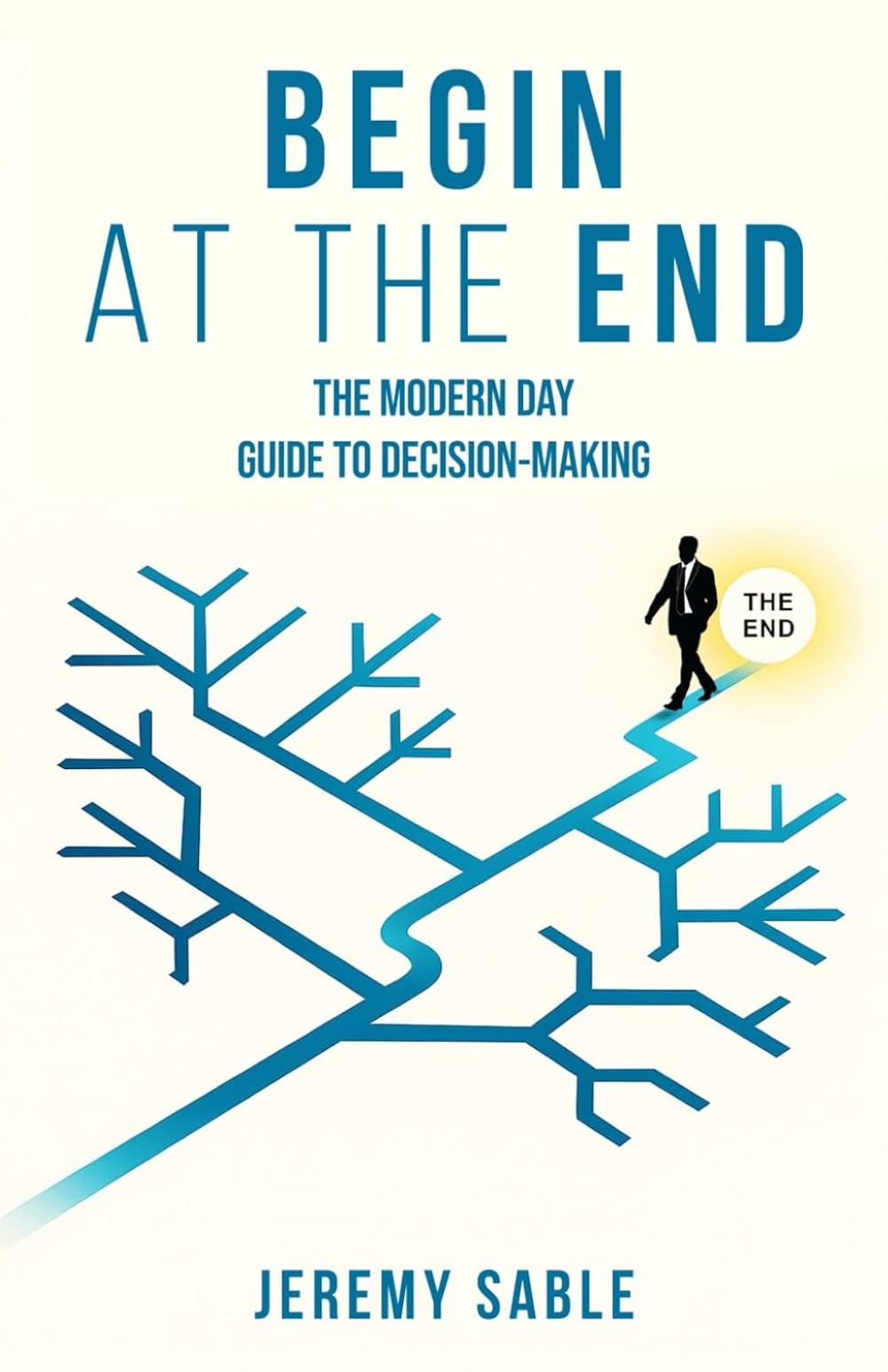
Decision fatigue is real and this book offers a way out. Photo: Amazon

Related Post: The Leadership Skill That Shapes Every Business Decision (And a Book That Explains It)

Book Review: Begin at the End by Jeremy Sable

Begin at the End: The Modern Day Guide to Decision-Making by Jeremy Sable is a timely response to a problem many of us feel but struggle to identify: decision fatigue in a world that never pauses.

He doesn’t offer abstract frameworks or motivational clichés, but rather a practical system rooted in real-world experience. He has spent a decade in mission-critical consulting where decisions aren’t theoretical, they’re consequential.

His goal in writing this book is clear:

“This book is for anyone who is facing tough decisions, feeling stuck, or just looking for a better way to think things through.”

The Core Idea: Outcome-First Thinking

The premise is simple yet powerful. We need to stop reacting to the options in front of us and start anchoring every decision to the outcome we actually want.

This Outcome-First approach flips traditional decision-making advice on its head. Instead of weighing endless pros and cons, Sable encourages clarity first—defining success before choosing a path. The result is faster, more confident decisions with far less mental noise.

What’s Inside the Book

The book is divided into four clear sections:

  • Part I: Framing the End
  • Part II: Navigating the Messy Middle
  • Part III: Making the Call
  • Part IV: Becoming a Decision Maker by Design

Key Highlights

Part I, Chapter 1: Outcome-First Thinking
Sable immediately addresses artificial intelligence, noting that AI will increasingly influence both personal and professional decisions. While AI can provide predictive analytics and real-time simulations, it can also begin to make decisions for us if we aren’t clear on our goals.

“AI is not your enemy, but it’s not your decision maker either. You are.”

Part I, Chapter 5: Generate Better Options — Decision-Making Under Pressure
When faced with two bad options, Sable challenges readers to create better ones. He uses Tyler Perry as a case study: when told his work wasn’t mainstream enough for Hollywood, Perry didn’t conform or quit, he built his own studio.

“So the next time you’re told it’s either A or B, remember—you are writing the test, not just taking it.”

Why This Book Works

Sable acknowledges the speed, complexity, and constant pressure of modern life and designs his approach accordingly. The writing is clear, direct, and refreshingly free of jargon. He reinforces concepts through illustrations, case studies, and interactive exercises, with each chapter ending in summaries and key takeaways.

Several chapters also explore how artificial intelligence fits into modern decision principles, making the book especially relevant right now.

Final Thoughts

For readers who feel overwhelmed or paralyzed by choice, Begin at the End is an effective antidote. It restores agency and focus by reminding us that better decisions start with knowing where we want to go.

Looking for fresh decision-making ideas? This book is worth making your next guide.

“Whether in markets or in life, if you wait for perfect signals, you’ll miss the opportunities that come from moving forward with intention, even when the picture is messy.”

Rating: 4 out of 5.

*Thank you to Jeremy Sable for the gifted copy for review consideration. I haven’t been compensated for this review and all views and opinions expressed are my own.

The Leadership Skill That Shapes Every Business Decision (And a Book That Explains It)

Begin at the End is the new book on decision making and problem solving by Jeremy Sable. Photo: Amazon

Best Leadership and Business Books for Smarter Decision-Making

Books on leadership and business offer timeless lessons for anyone seeking to grow professionally and personally. The best leadership books explore how effective leaders communicate vision, make thoughtful decisions, and build workplace cultures rooted in trust and accountability.

Strong business books go beyond theory. They bridge strategy and execution, showing how values-driven leadership can drive sustainable business success. Readers gain practical insight into navigating change, managing teams, and balancing strategy with empathy. More than manuals for profit, leadership and decision-making books encourage self-reflection, resilience, and ethical thinking, reminding us that strong businesses are built by leaders who understand people as deeply as they understand performance.


📘 Book Recommendation: A Must-Read Leadership and Decision-Making Book

Begin at the End: The Modern Day Guide to Decision-Making

By Jeremy Sable

Begin at the End is a modern leadership and decision-making book for people who feel stuck, overthink important choices, or want a clearer way to navigate careers, relationships, finances, and life’s inevitable tradeoffs. Rather than promising perfect answers, the book focuses on choosing a direction with confidence and moving forward without regret.

This book is especially valuable for business leaders, professionals, and entrepreneurs seeking better decision-making frameworks in an increasingly complex world.


Decision Overload in the Modern Workplace

We are living in the middle of the greatest decision overload in human history and most people underestimate how much it impacts their performance, focus, and well-being.

Every day brings an avalanche of choices: endless information, constant notifications, shifting priorities, and pressure to move faster than the human brain was designed to operate. In today’s business environment, this overload leaves many professionals feeling scattered, burned out, or unsure whether their decisions are leading anywhere meaningful.

Begin at the End offers a practical solution for decision-making in high-pressure environments.


A Practical Framework for Better Business Decisions

Drawing from more than a decade of mission-critical consulting, Jeremy Sable explains why much of today’s decision-making advice is outdated. He introduces a modern system that helps leaders, professionals, and teams make smarter, faster, and more confident decisions.

Instead of reacting to available options, readers learn how to anchor every decision to a clearly defined outcome. This outcome-first approach improves clarity, focus, execution, and creativity, skills essential for leadership, business growth, and long-term success.


Key Takeaways from Begin at the End

In this leadership and decision-making book, readers will learn how to:

  • Apply Outcome-First Thinking to bring clarity to every decision
  • Use AI as a strategic decision-making tool, not a distraction
  • Generate better options under pressure and tight deadlines
  • Avoid false either/or thinking that limits leadership potential
  • Build feedback loops that turn decisions into long-term momentum
  • Reduce decision fatigue and make clarity a daily habit

This is not theoretical advice. It’s a real-world playbook for business leaders, professionals, and anyone responsible for making high-stakes decisions.


Why This Book Matters for Leaders and Professionals

If you’ve ever thought, “There has to be a better way to make decisions at work and in life,” this book delivers that solution. Begin at the End provides a practical clarity system that helps leaders align decisions with purpose, values, and long-term outcomes.

For anyone interested in leadership development, business strategy, or personal growth, this book is a valuable addition to your reading list.


About the Author: Jeremy Sable

Jeremy Sable helps people make better decisions when the stakes are real and the answers aren’t obvious. Raised in the suburbs of Atlanta, he studied engineering at Virginia Tech before beginning his career in government consulting in Washington, DC, an environment where leaders regularly make decisions with incomplete information and real consequences.

His work blends consulting and engineering frameworks with personal experience and real-world constraints. Jeremy believes most people aren’t bad at decision-making, they’re overwhelmed, overinformed, and rarely taught how to decide effectively.

‘Think Bigger, Lead Better’ is Rick Tollakson’s Blueprint for Transformational Leadership

In his new book, Rick Tollakson presents his eight principles for success. Photo: Barnes & Noble

Think Bigger, Lead Better: Eight to Great Principles for Organizational Success

A fresh take on leadership from Rick Tollakson

In today’s fast-changing business world, leadership can’t be about playing it safe. The most effective leaders are those who think bigger, challenge assumptions, and inspire others to reach new heights. That’s the central message behind Rick Tollakson’s new book, Think Bigger, Lead Better: Eight to Great Principles for Organizational Success. It’s a practical and inspiring guide to building stronger teams, smarter organizations, and more impactful leaders.


Beyond the Bottom Line

Efficient leadership isn’t about maintaining the status quo, it’s about creating meaningful, lasting change.

Drawing from his decades of experience transforming a modest real estate company into a thriving, diversified enterprise, Tollakson shares the “Eight to Great” principles that powered that journey. Through engaging stories and actionable insights, he encourages leaders to move beyond short-term wins and embrace a long-term vision that drives growth and purpose.

Readers will learn how to:

  • Cultivate passionate, high-performing teams
  • Encourage innovation and calculated risk-taking
  • Streamline operations with process-driven thinking
  • Lead with purpose while balancing profitability and impact
  • Build a legacy of leadership that outlasts any single role

Think Bigger, Lead Better is a call to action for CEOs, entrepreneurs, and professionals who refuse to settle for mediocrity. Whether you’re leading a Fortune 500 company or growing a small startup, Tollakson’s proven framework will help you push past limitations and build something truly great.

Are you ready to think bigger?


About the Author

Rick Tollakson is a nationally recognized real estate executive, community leader, and author of Think Bigger, Lead Better: Eight to Great Principles for Organizational Success.

As CEO of Hubbell Realty Company, he has led the organization through transformational growth, expanding its development, construction, property management, and homebuilding operations across Iowa and beyond.

A respected voice in both business and civic circles, Tollakson’s leadership philosophy blends innovation, integrity, and community stewardship. He continues to serve on numerous boards and committees, offering insights that extend far beyond traditional business metrics to include ethical leadership, sustainable development, and meaningful community partnerships.


Why This Book Matters Now

In an era defined by disruption and uncertainty, the need for bold, ethical, and visionary leadership has never been greater. Think Bigger, Lead Better provides the clarity and tools leaders need to navigate change, inspire trust, and create organizations that make a difference.

If you’re ready to elevate your leadership and build a culture of excellence, this book is your next essential read.

📘 Learn more or order your copy of Think Bigger, Lead Better wherever books are sold.


Discipline, Resilience, Leadership: A Review of ‘The Black Belt in Leadership’

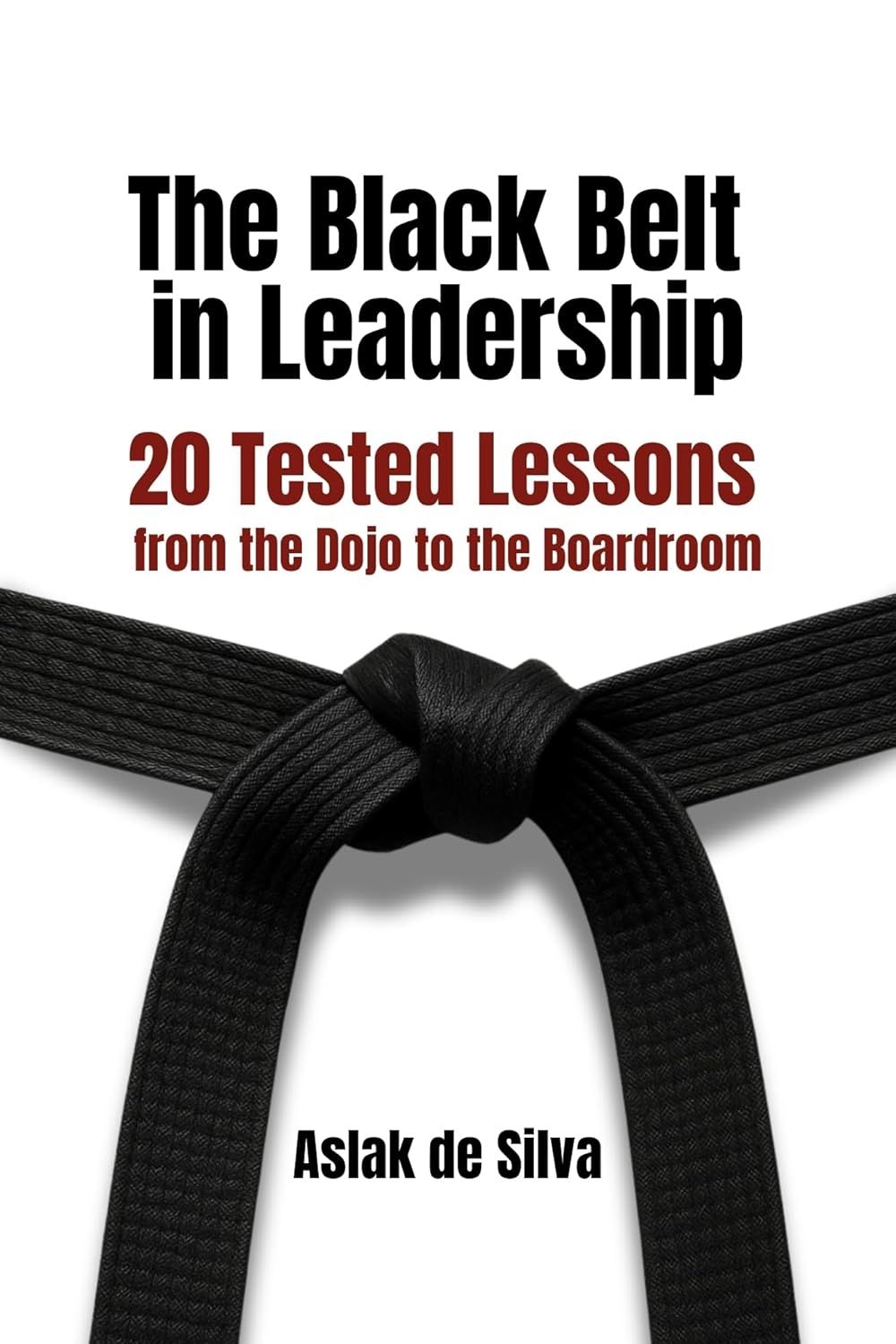
Leading like a black belt – how martial arts principles can shape modern leaders. Photo: Barnes & Noble

📚Book Review: The Black Belt in Leadership: 20 Tested Lessons from the Dojo to the Boardroom

In The Black Belt in Leadership, Aslak de Silva bridges the worlds of martial arts and corporate leadership with clarity, humility, and practical wisdom. Drawing on his experience as both a world champion martial artist and a two-time multinational CEO, de Silva distills twenty lessons that are just as relevant on the dojo floor as they are in the boardroom.

This book isn’t another collection of recycled business strategies. Instead, de Silva uses martial arts philosophy—discipline, resilience, respect, and continuous learning—to highlight the mindset shifts leaders need to thrive. His stories are engaging and vivid, showing how timeless principles of training, focus, and humility can shape how we manage teams, make decisions under pressure, and build trust.


🥋What’s Inside

  • Part I: The Dojo of Discipline
  • Part II: The Mindset of a Master
  • Part III: The Inner Fight
  • Part IV: The Path Forward

Each section builds on the idea that leadership is not about control but about character, self-awareness, and the ability to stay centered when everything around you feels unstable.


💡Key Highlights

Lesson 4: Progress Over Perfection – The Coachable Leader’s Advantage

True leadership isn’t about being perfect—it’s about embracing progress. De Silva admits that when he first started in sales, he lacked experience. But as a martial artist, he was coachable, open to feedback, and resilient in the face of correction.

“Martial arts taught me that the moment you think you’re untouchable, someone finds your opening.”

Lesson 5: Leading Through Contradiction in a World That Does Not Make Sense

Leadership means constant change. Success is temporary, and you won’t win every time. What matters most is staying true to your values without hiding behind them as excuses.

“I’ve always done it this way” should never be a reason to stop learning and growing.


Why You Should Read It

The lessons in this book are grounded in lived experience and paired with actionable takeaways. Most chapters end with reflection questions, making it easy to apply insights directly to your life and leadership journey. The conversational tone and straightforward language make it an accessible, inspiring read for anyone—executives, managers, or individuals simply striving to grow.

De Silva reminds us that leadership is less about appearing strong and more about staying centered when the world shakes. Most importantly, the finest leaders are not always the smartest—they’re the ones trained to lead under pressure.

So step into the dojo and pick up your copy of The Black Belt in Leadership. It’s an ultimate guide to leading with power, presence, and principle.

“You do not need a martial arts background to lead like a black belt. But if you want to move with clarity, resilience, and presence—especially under pressure—you need to train like one.”

Rating: 4 out of 5.

*Thank you to Aslak de Silva for the gifted copy for review consideration. I have not been compensated for this review and all views and opinions expressed are my own.

‘Project Management Made Practical’: The Beginner’s Blueprint for Leading with Confidence

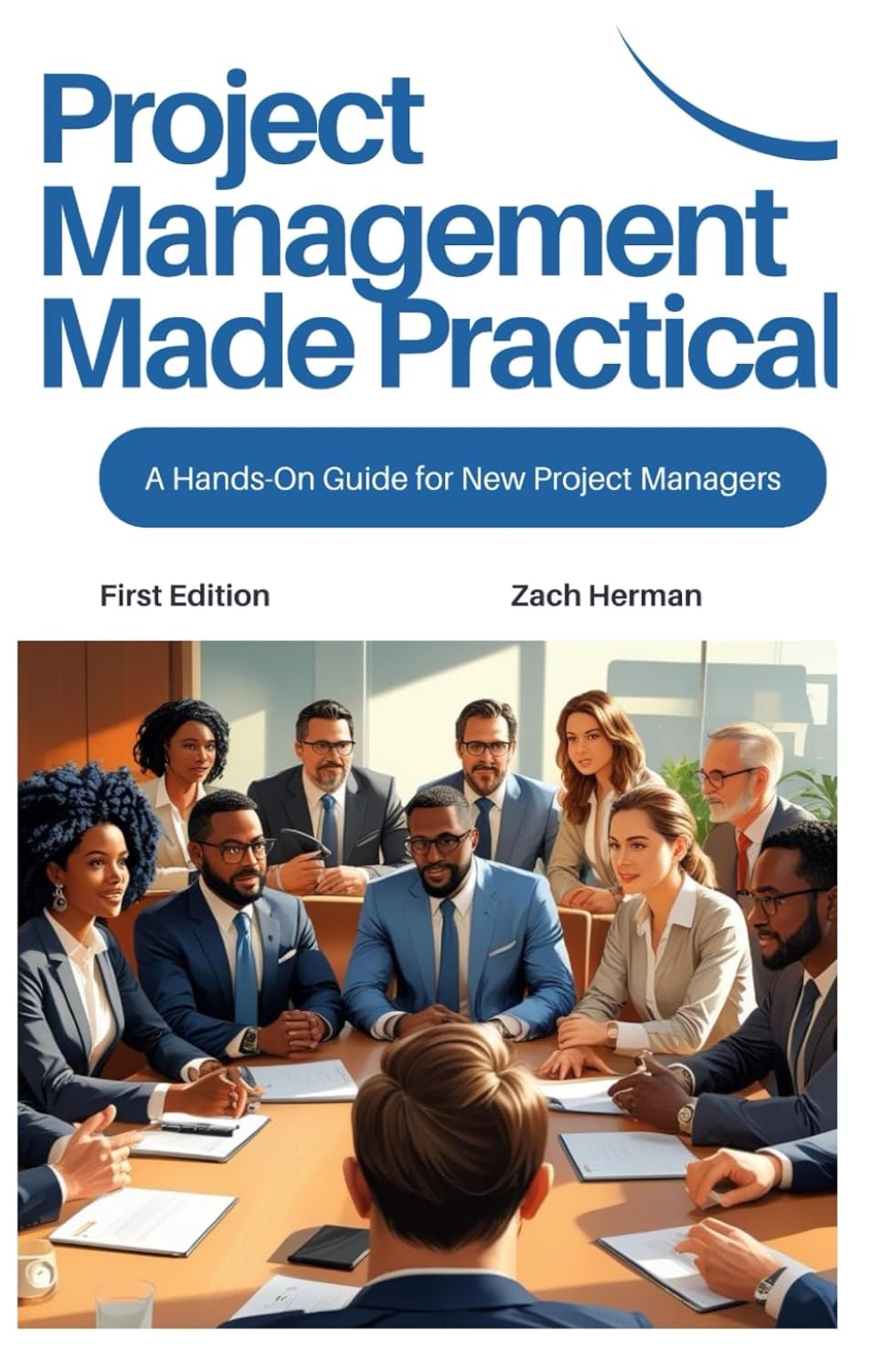
‘Project Management Made Practical: A Hands-On Guide for New Project Managers’ by Zach Herman. Photo: Amazon

Book ReviewProject Management Made Practical: A Hands-On Guide for New Project Managers

By Zach Herman

Project Management Made Practical is the essential guide for first-time project managers, career changers, and anyone seeking to bring structure and clarity to complex work. Written in a clear, conversational tone by seasoned project leader Zach Herman, this concise yet rich resource breaks down the core principles, tools, and strategies for successful project delivery. (Amazon, 2025)

Whether you’re in business, healthcare, education, or tech, this book offers practical frameworks and ready-to-use templates to help you get organized, stay on track, and deliver real results.


What’s Inside

  • I. Introduction to Project Management
  • II. Project Phases
  • III. Final Thoughts About Agile and Hybrid
  • IV. Final Thoughts

Highlights

Project Management 101: The Pulse of the Project

Herman introduces the Five Process Groups—Initiation, Planning, Execution, Monitoring & Controlling, and Closing—emphasizing that Monitoring & Controlling is where the action happens, and Planning is where success begins.

Project Planning – Blueprint for Success

The book identifies planning as the most critical phase: defining scope, building schedules and budgets, managing stakeholders, and preparing for risks, procurement, and change.


Why It Works for New Project Managers

Herman’s definition of project management—“a structured application of knowledge, skills, tools, and techniques to meet project requirements”—sets the tone for a practical approach. He focuses on real-world challenges, avoiding theory-heavy explanations.

From stakeholder management to risk assessment and communication strategies, the guidance is direct, actionable, and paired with templates, checklists, and relatable scenarios. Readers also get step-by-step instructions for writing a project charter, building a work breakdown structure, and running effective meetings. The illustrations make the material easy to understand and accessible to anyone.

The book also explains predictive, agile, and hybrid methodologies, showing when and how to apply each. Most importantly, Herman highlights leadership, ethics, and communication as equally vital to technical skills, reminding us:

“Projects are temporary, but reputation and lives are not.”


About the Author

Zach Herman brings over 20 years of experience in portfolio, program, and project management, along with a decade of leadership expertise. Holding a Master’s in Business Administration and certifications including PMP, DASM, and Lean Six Sigma Black Belt, he is dedicated to mentoring emerging leaders and helping them navigate their new responsibilities with confidence.


If you’re a career changer or aspiring project manager looking for a solid foundation and fast, practical insights, Project Management Made Practical is a must-read.

“Effective project management is not about checking boxes or completing templates; it’s about delivering outcomes through planning, strategic foresight, and adaptive execution.”

*Thank you to Zach Herman for my gifted copy for review consideration. I have not been compensated for this review and all views and opinions expressed are my own.

Rating: 4 out of 5.

‘Crash Course’ by Ricardo Jiménez: A Raw and Honest Look at Startup Failure

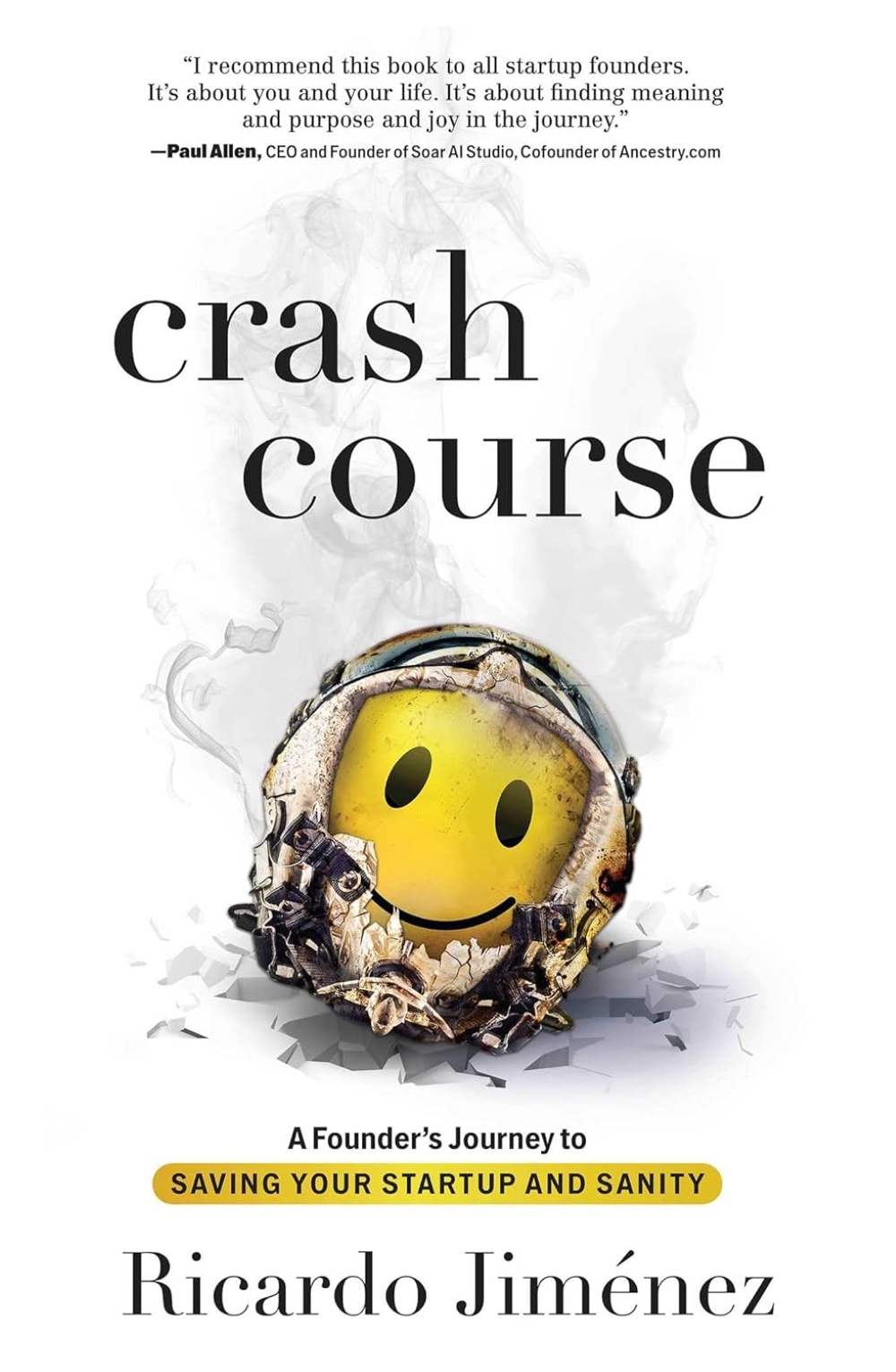
‘Crash Course’ is an insightful look into the volatile world of startups. Photo: Amazon

In “Crash Course: A Founder’s Journey to Saving Your Startup and Sanity,” Ricardo Jiménez offers an unfiltered and deeply personal account of his startup journey—one marked by ambition, struggle, and eventual failure. Unlike typical business books that focus solely on success strategies, Jiménez takes readers through the hard lessons learned when things don’t go as planned. His honest storytelling makes this book a refreshing and invaluable resource for entrepreneurs who want to avoid common pitfalls.

In the Introduction, he bluntly states “I was a startup founder, and I failed.” He is sharing his experiences because he believes we can all learn from someone else’s struggles. Failure is a way of life in business, it’s not you personally.

Jiménez doesn’t just recount his failures—he analyzes them, offering insights on leadership missteps, financial mismanagement, and the emotional toll of entrepreneurship. He highlights the dangers of burnout, poor decision-making, and ignoring red flags, making this book as much about mental resilience as it is about business strategy. The writing is engaging and candid, making complex business concepts accessible to new and experienced founders.

It is divided as follows:

Section 1: Beginning with an Ending
Section 2: Starting Up
Section 3: Market (Mis) Fit
Section 4: Fighting for Survival
Section 5: The End
Section 6: What I Learned, What I Felt, and What I Still Don’t Know
Section 7: Finding the Rewards Among the Risks

Highlights:

Section 4, Chapter 14, Breaking Down – the author shares the importance of self care and work/life balance when all you do revolves around starting your company. People only wanted to talk to him about Plushkies or their ideas for a business and that’s all he was to them. It began to wear him down. “Entrepreneurs are often judged more by their company and product, which is what the public gets to see, than they are by their character and personality.”

Section 4, Chapter 17, Bro Savior Turns Bro Bully – He was so desperate to succeed, he almost lost sight of his principles. He stresses the importance of taking the red flags seriously. “My desperation had caused me to ignore all the red flags flying around that guy and our interactions, almost from the beginning.”

Overall, “Crash Course” is a must-read for anyone navigating the unpredictable world of startups. Above all, Jiménez’ candidness makes him relatable. Rather than glorifying the “hustle culture,” he advocates for balance, self-awareness, and learning from failure. Aspiring entrepreneurs will find comfort in his experiences, realizing that setbacks are not the end—but rather opportunities to grow. It is recommended for readers interested in memoirs and business motivation and self improvement books.

“The hard truth about being an entrepreneur is that, whether it’s building or selling, if it’s your startup, you can’t just rely on other people to build your company.”

Rating: 4 out of 5.

*The author received a copy of this book for an honest review. The views and opinions expressed here belong solely to her.

Related post: What Makes ‘Crash Course’ by Ricardo Jiménez a Must-Read for 2024

Transform Your Business: How Mike Dunlop’s ‘The Art of the Turnaround’ Can Revolutionize Your Strategy

‘The Art of the Turnaround’ is the new business strategy guide by Mike Dunlop. Courtesy photo, used with permission.

Business books offer invaluable insights into the strategies, principles, and practices that drive successful enterprises. They cover a wide range of topics, from leadership and management to marketing and finance. By studying these books, entrepreneurs and professionals can learn from the experiences of industry leaders, gain practical advice, and understand emerging trends. Titles like “The Lean Startup” by Eric Ries and “Good to Great” by Jim Collins provide actionable frameworks for achieving business excellence. Whether you’re starting a new venture or seeking to enhance an established organization, business books serve as a vital resource for growth and innovation. Today’s new book is “The Art of the Turnaround” by Mike Dunlop.

Mike Dunlop has helped restore 34 companies in various stages of financial demise back to profitability. He has worked in the aerospace sector for over four decades and has built a number of aerospace component manufacturing companies, both in Europe and the United States. The largest company he founded, QPM Aerospace, grew to $30 million in sales in the first ten years. Dunlop designed and founded Net-Inspect, the most widely used aerospace quality-management system in the world. He holds four US Patents and has been passionate about airplanes since his first flight on a Vickers Viscount in 1955 at the age of seven. Dunlop is an experienced public speaker and offers his wisdom and stories on his weekly podcast, also entitled The Art of the Turnaround. In his new book “The Art of the Turnaround: A Comprehensive 10-Step Guide,” he shares his experiences helping businesses go from financial straits to profitability. (Shark Party Media, 2024)

“The Art of the Turnaround” – Mike Dunlop shares his proven 10-step method for turning around companies in deep financial distress, which he has used to restore some 34 companies to financial health and profitability. Infused with Dunlop’s down-to-earth humor and deep understanding of how people in companies actually work, especially at a time of crisis. It offers CEOs of troubled companies and leaders who are buying distressed companies a practical way to avoid financial ruin. Dunlop also offers hope that, after the challenging task of turning a money-losing company into a profitable one, life for the CEO as well as those who stay in the company will be enjoyable again.

All proceeds from the sale of “The Art of the Turnaround” and associated speaking engagements will be donated to Eastside Academy and Jubilee Reach.

Author Mike Dunlop. Courtesy photo, used with permission.

How Daniel Patrick Forrester’s ‘Consider’ Challenges Conventional Thinking

‘Consider: Harnessing the Power of Reflective Thinking in Your Organization’ by Daniel Patrick Forrester

Daniel Patrick Forrester founded THRUUE, Inc., an expert consultancy that supports leaders and boards bridge the gap between strategy and culture. With the explosion of data and hyperconnectivity, Daniel’s curiosity led him to research how leaders responded to the onslaught of available data and to publish his first book, “Consider: Harnessing the Power of Reflective Thinking in Your Organization.” It centers around the role reflection can play in dramatically improving corporate outcomes. As a top nonfiction leadership book, it has impacted the lives and work habits of small and large organizations from around the world. (Amazon, 2024)

“Consider: Harnessing the Power of Reflective Thinking in Your Organization”

“STOP, THINK, AND DON’T DO SOMETHING STUPID!” This is the warning Dr. Robert Bea drills into his Civil and Environmental Engineering students at the University of California in Berkeley. Bea wants to dramatize what he terms the inevitable “oh shit” moments that present themselves—before an actual engineering calamity like the Deepwater Horizon/BP disaster happens.

There’s an intangible and invisible marketplace within our lives today where the products traded are four fold: attention, distraction, data and meaning.

The stories and examples within “Consider” demonstrate that the best decisions, insights, ideas and outcomes result when we take sufficient time to think and reflect. While technology allows us to act and react more quickly than ever before, we are taking increasingly less time to consider our decisions before we make them. Reflection supplies an arsenal of ideas and solutions to the right problems. Including interviews with leaders such as General David Petraeus, attorney Brooksley Born and global investor Kyle Bass, Forrester shows us that taking time and giving ourselves the mental space for reflection can mean the difference between total success and total failure.

Review:
This book is an insightful exploration into how reflective thinking can revolutionize organizational dynamics and decision-making. Forrester suggests that the ability to pause, reflect, and engage in deep thinking is essential for encouraging innovation and strategic clarity in today’s fast-paced business environments.

It is organized around practical strategies and real-world examples, demonstrating how reflective practices can be systematically integrated into organizational cultures. He explains that reflection is not necessarily a passive activity but an active, intentional process that can lead to more informed and creative decision-making. By introducing concepts such as “reflective leadership” and “strategic pauses,” Forrester provides actionable tools for leaders seeking to cultivate a reflective culture within their teams. One term that stands out is “plastic time,” what people are now experiencing when they are in “a constant state of interruption and movement between many different tasks.”

It is divided as follows:

Introduction: The Space between Data and Meaning
1. The Human Need for Think Time
2. Forcing Think Time
3. Thinking Out Loud
4. Promoting Think Time
5. Taking a Step Back
6. Too Big to Think?
7. Rapid Contemplation
8 .Outside the Day-to-Day
9 .Reflection and Extreme Situations
10. The Future of Think Time and Reflection

By combining theoretical insights and practical advice, the information is accessible to both senior executives and mid-level managers. Forrester’s writing is clear and engaging, with a focus on real-world applications rather than abstract theories.

Overall, “Consider” is a valuable resource for leaders looking to harness the power of reflection to drive organizational growth and resilience. It is recommended for readers interested in books on workplace culture and leadership/motivation.

“I do not wish to suggest that being alone and thinking always leads the mind to positive and beneficial outcomes… Alone time and reflection when one’s mental model of the world is perverse can give rise to the unimaginable.”

*The author received a copy of this book in exchange for an honest review. The views and opinions expressed here belong solely to her.

Rating: 4 out of 5.

What Makes ‘Crash Course’ by Ricardo Jiménez a Must-Read for 2024

‘Crash Course: A Founder’s Journey to Saving Your Startup and Sanity’ by Ricardo Jiménez. Photo: Amazon

Ricardo Jiménez is a Puerto Rico- and Barcelona-based writer, entrepreneur and active angel investor. Since 2014, he has performed direct investments in over 30 tech projects, including the Ethereum token launch. Jiménez, who was born in Spain, holds an MBA from Duke and is fluent in Spanish, English and conversational Indonesian. In his new book “Crash Course: A Founder’s Journey to Saving Your Startup and Sanity” he recounts his personal startup failure so that other entrepreneurs and business founders may learn from his mistakes as they chase their own business dreams. (Meryl Moss Media, 2024)

“Crash Course” – For every Miracle Mop, Bombas sock or Squatty Potty, there’s a Plushky. What’s a Plushky? It’s a stuffed, colorful plushie shaped like a country. For six years, from 2010 to 2016, then Austin-based entrepreneur Ricardo Jiménez engaged in a relentless pursuit to find the market, customers, distributors, investors, partners and sellers that would make his line of Plushkies the next big thing.

Given these cuddly plush stuffed toys can’t be found on shelves of any major retailers or on any online marketplace, we already know the ending of this story. Jiménez failed in his efforts to get others to see his vision that these toys would bring the children of the world together. But not every entrepreneur can be a Joy Mangano, Dave Heath or Bobby and Judy Edwards. In fact, nine times out of ten, entrepreneurs fail.

But is it truly the ending of his story or his Plushkies? Jiménez shares what it’s like to pour your heart, your passion and your financial resources into a dream and vision that few others see and, most excruciatingly, fail at it.

“There are enough stories about entrepreneurs who lived their American dreams, but what about those of us who put ourselves on the line, worked endless hours, did everything we could to give our companies life, and still faltered and lost our money without ever creating a true profitable enterprise? That’s not a story people usually want to hear, but I am convinced it’s important—maybe even more important than endlessly studying Cinderella-like success stories” – Ricardo Jiménez.

Have we been given a how-to on what it’s like to fail at a startup? In “Crash Course,” Jiménez asks: Can failure inform a different narrative of accomplishment, as opposed to success by mainstream measures? 

In his book, he offers advice on how to:

  • Learn the most valuable information first. What do your customers want? What are they willing to pay? How are they going to use the product?
  • Know your motives before you leap. Are you doing this for yourself or others? What is the number one driver of your decision to start a business?
  • Trust yourself. Follow your heart and do not fear the outcome, he says. You are bigger than your company or your enterprise. Life comes first, business second.
  • Learn when to let go. He shares the spiritual journey he took that led him to understand that sometimes the best thing to do is to let go.

Jiménez takes a clinical and honest approach of why his international toy company did not succeed, and he does not shy away from how his missteps, misguided decisions and mismanaged. He did not experience the classic happy ending of success; he lives in the real world. Accordingly, his book is for would-be entrepreneurs who want a clear-eyed vision of where they are headed and what they need to survive the journey. For those already on the entrepreneurial path, Jiménez shares the clarity, inspiration and self-understanding needed to decide whether to step off or continue the journey.

“Crash Course seamlessly merges spiritual wisdom and
business savvy, providing a lesson-packed road map
to prosperity with purpose.”

— Daven Michaels
New York Times Bestselling Author & CEO

“A game-changer for entrepreneurs, it redefines success
as a holistic journey in which the heart leads
and financial achievement is trusted to follow.”

Grace Ramírez
Chef, Author, Entrepreneur and Global TV Personality


Mastering Conversations: A Review of ‘The Art of How to Talk to Anyone’

Discover how to unlock the power of effective communication with the new book by Harmony Hart. Photo: Amazon

“The Art of How to Talk to Anyone” by Harmony Hart is a concise and insightful guide to mastering the art of conversation. Hart blends practical advice with psychological insights, making this book a valuable resource for anyone looking to improve their communication skills.

It begins by emphasizing the importance of listening and understanding others, setting a foundation for effective communication. From there, it moves on to techniques for initiating conversations, keeping them flowing smoothly, and gracefully exiting when necessary. Hart’s approach is straightforward, offering valuable tips that can be applied in various social and professional settings.

Chapters include:
Understand the Basics of Conversation
Essential Social Skills for Everyone
Strategies for Building Rapport
Overcome Common Social Challenges
The Introvert’s Path to Social Confidence
Cultivate Personal Relationships
Cultural Sensitivity and Global Communication
Enhance Communication for Career Advancement
Navigate Digital Communication
Become a Lifelong Communicator

Highlights:
4. Overcome Common Social Challenges
Conquer Imposter Syndrome in Social Situations – stresses the importance of overcoming doubts about your abilities and accomplishments. “This self doubt can create a barrier to forming genuine connections, as you might hold back from engaging fully or authentically with others.”

5.The Introvert’s Path to Social Confidence
Set Healthy Social Boundaries – the importance of setting boundaries to give yourself time to recharge and refocus. “…remember that your boundaries are not barriers but bridges to more authentic and enjoyable connections.”

What I like most is its main focus is on developing empathy and the importance of authenticity. Hart encourages readers to genuinely connect with others by showing interest and empathy, rather than focusing solely on themselves. This approach not only enhances one’s ability to converse but also fosters meaningful relationships.

Overall, “The Art of How to Talk to Anyone” stands out for its practicality and accessibility. Whether you’re an introvert seeking to feel more comfortable in social situations or an extrovert looking to refine your conversational skills, this book offers valuable insights that can help you navigate conversations with confidence and finesse.

*The author was contacted for an honest review of this book. The views and opinions expressed here belong solely to her.

Rating: 5 out of 5.