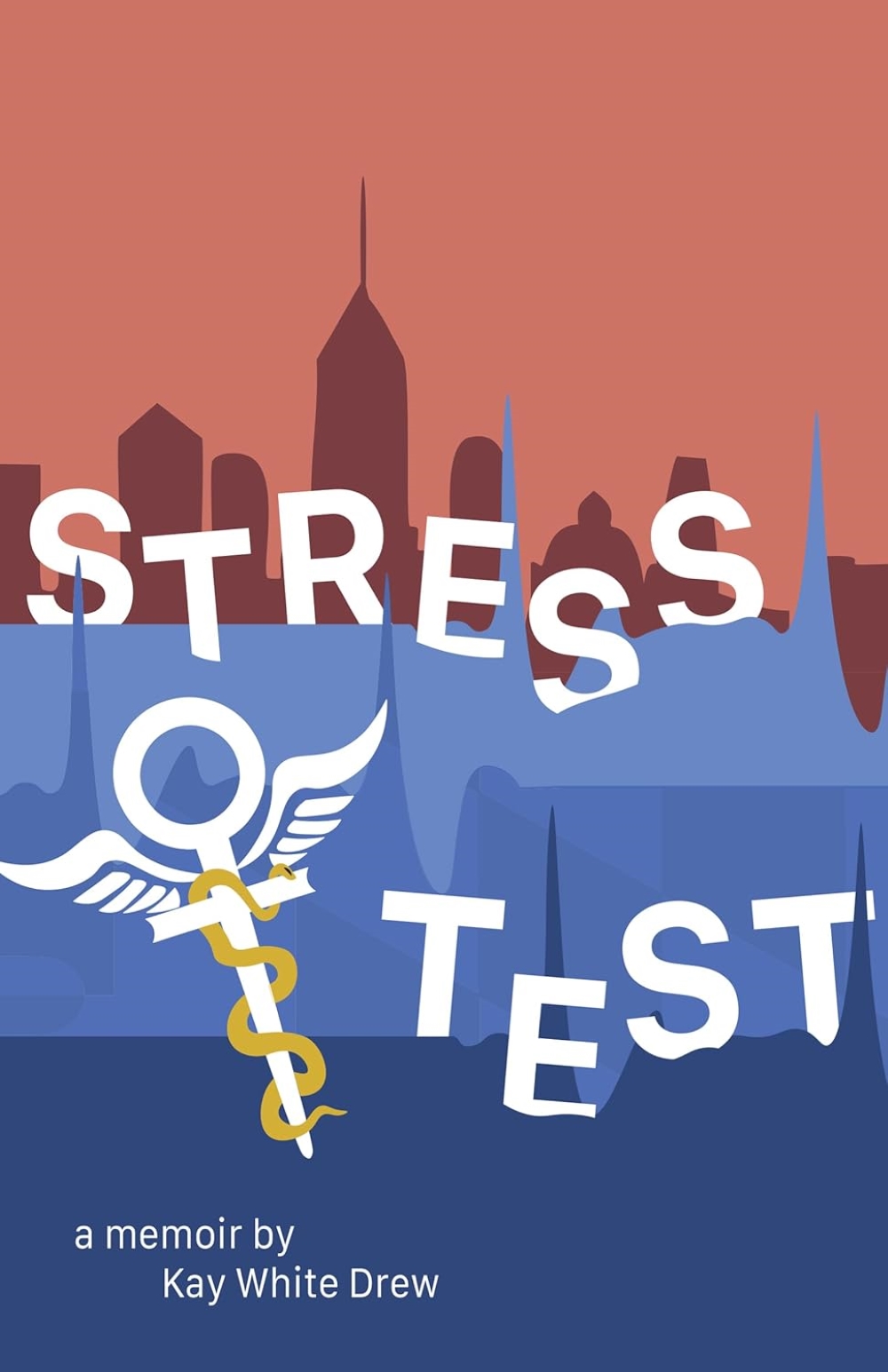
‘Stress Test’ is the new memoir from Kay White Drew. Photo: Amazon
Kay White Drew is a retired physician and lifelong writer. Her essays, poems, and short stories are found in several journals including Hektoen International, The Intima, Bay to Ocean Journal, and Loch Raven Review, where one of her essays was nominated for a Pushcart Prize in 2022. Her new book “Stress Test” is a love letter to women in medicine and the feminist causes of the 1970s and the present day. (Amazon/Mindbuck Media Book Publicity, 2024)
“Stress Test” – The story covers a five-year ordeal, from the first day of medical school through the last day of pediatric internship. Unveiling the cadaver in the anatomy lab while her mother lay dying on an oncology ward; the excitement of making difficult diagnoses and the terror and tragedy of disastrous mistakes; the joy of connecting with patients and the heartbreak of losing them—it’s all here. Women made up less than a fifth of the author’s medical school class and as a white woman in the largely Black urban environment of West Baltimore, barely a decade after the Civil Rights movement and long before Black Lives Matter, she bore witness throughout her training to the human cost of racism.
The author navigated personal struggles as well: her mother’s death; several ill-starred romantic relationships, including an interracial love affair with a professor; a roommate’s suicide; and her own suicidality, depression, and experiences in therapy.
“Stress Test” joins a growing body of work by women physicians. This memoir takes place at a time when women were still years away from comprising half—or more—of medical school students, and when the second wave of feminism was surging; but many of the fears, griefs, and struggles that women in medicine face today are the same ones the author grappled with decades earlier.
‘Finding the Words’ is the powerful account of one father’s journey through unimaginable grief.
Colin Campbell is a writer and director for theater and film. He and his wife wrote and directed the short film Seraglio, which won Deauville’s Grand Prix and was nominated for an Academy Award. His play Golden Prospects was nominated for five LA Weekly Theater Awards and was a Critics’ Pick in Time Out New York and The Los Angeles Times. Campbell teaches screenwriting at Chapman University and theater at California State Polytechnic University, Pomona. He has a BA from the University of Pennsylvania and an MFA from Columbia University. His book “Finding the Words: Working Through Profound Loss with Hope and Purpose” is a powerful account of one father’s journey through unimaginable grief and offers readers a new vision for how to more actively and fully mourn profound loss. (Amazon, 2023)
“Finding the Words: Working Through Profound Loss with Hope and Purpose” – When Colin Campbell’s two teenage children were killed by a drunk driver, Campbell was thrown headlong into a grief so deep he felt he might lose his mind. He found much of the common wisdom about coping with loss—including the ideas that grieving is a private and mysterious process and that the pain is so intense that “there are no words”—to be unhelpful. Drawing on what he learned from his own journey, Campbell offers an alternative path for processing pain that is active and vocal and truly honors loved ones lost. It is divided into ten chapters including Community and Meaning and Purpose and includes resource information, like Grief Resources that has a list of organizations that can help. He shares what worked for him and his wife and teaches readers how to actively reach out to their community, perform mourning rituals, and find ways to express their grief, so they can live more fully while also holding their loved ones close.
No one can deny that there are many levels of grief and that grief itself can be subjective. In the author’s experience, because his identity was so entangled with his children, he calls it ‘profound grief.’ He does not pretend to have all the answers: “this book will not take away your pain,” but his ultimate hope is that we can at least have open and honest conversations about the universal experience we call grief. His compassion and empathy are evident through the pages and his writing style is easy to follow and understand without coming off as preachy or condescending. In a perfect world, everyone would have the same resources to cope but knowing what works for others is an excellent start. At the very least readers can feel that they are not alone in their journey. This book is just as helpful for those grieving as well as for those who know someone who is grieving, so they can learn how to help instead of just saying “there are no words.” One of the highlights is the message of the power of community support; in his case, the overwhelming support of the Jewish community and the importance of mourning rituals. With practical advice on how to survive in the aftermath of loss, Campbell shines a light on a path forward through the darkness of grief. “Finding the Words” is a poignant and valuable guide for coping with grief and is recommended for readers who appreciate self help books on grief and loss.
“The act of verbalizing our grief, and having it be witnessed by our community, was key to us moving toward acceptance of reality.”
*The author received a copy of this book for an honest review. The views and opinions expressed here belong solely to her.


 SA Examiner