Sean Murphy on Masculinity, Legacy, and the Cost of Manhood

‘This Kind of Man’ by Sean Murphy. Photo: Barnes & Noble

Book Review: This Kind of Man by Sean Murphy

A Stark Portrait of Modern Masculinity

This Kind of Man offers an unvarnished look at life in 21st-century America, unearthing the complicated, tender, and wild truth of what it is to be a man across generations and relationships. These stories dig into the pressures and tensions of contemporary life—and the ways men grapple with them, often unsuccessfully.

Themes include marriage, fatherhood, aggression, alcoholism, gender expectations, generational backlash, and the looming dread of mortality. Far from excusing toxic behavior, Murphy places it in the context of a culture that thrives on false narratives and pits overworked, underpaid people against each other in a zero-sum capitalist game.

A System Built on False Notions of Manhood

Murphy shows how traditional ideas of masculinity are deliberately instilled from the very beginning—ensuring compliance in a system where most are excluded from the start. These dysfunctions are passed down like an inheritance, with every cliché—from fighting and drinking to distrust and intolerance—acting as a carefully built trap that hinders solidarity, empathy, and self-love. (Barnes & Noble, 2025)

Standout Essays

  • The Letter My Father Never Wrote Me
  • No Tengo A Nadie – Chronicles the life of an undocumented man: “The choices he’s forced himself to make have given him the chance for a real life, but in return have robbed him of his youth. And, above all, he understands this: No tengo a nadie—I have no one.”
  • Now’s the Time –  The narrator is reminiscing about life while on his way to a life changing event. An eye-opening and unexpected point of view (inner dialogue) of a contentious person.
  • This Kind of Man
  • Our Vietnam

Review

Sean Murphy delivers an intense, intimate exploration of masculinity—burdened by history, shaped by family, softened by love, and often stumbling through misunderstood expectations. His writing is sharp yet lyrical, capable of both gut-punch realism and tender introspection: “No son truly grows up until he grows out of his old man’s shadow.”

The essays move fluidly across generations, tackling legacies, silences, and the quiet revolutions redefining strength. There are no easy answers—only an honest reckoning with vulnerability and the search for meaning in a disconnected world.

With emotional precision, Murphy captures fleeting moments of clarity, aching regret, and rare connection. This Kind of Man is raw, thoughtful, and beautifully written—a necessary addition to the ongoing conversation about masculinity and identity.

“All these people holding on for the one thing no one was guaranteed, no matter how often they went to church or how many people they managed, no matter how big their houses or small their waistline: time.”

Rating: 4.5 out of 5.

*Thank you to Morgan Ryan/Mark Seferian for the gifted Advanced Reader Copy for review consideration. I have not received any compensation for this review and all views and opinions expressed are my own.
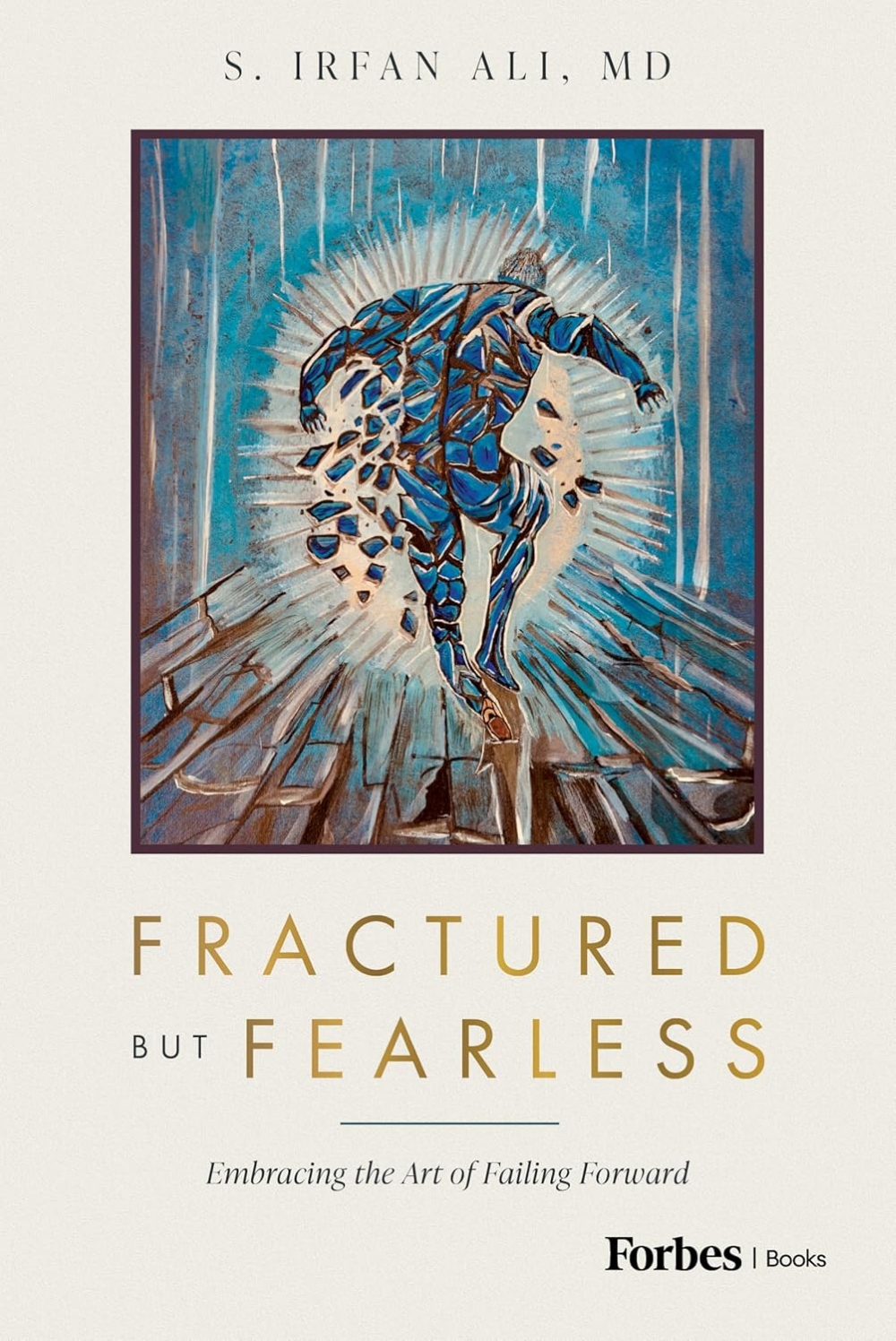

The Art of Failing Forward: Lessons from Dr. S. Irfan Ali’s Unconventional Journey

The power of failure and how it fuels success. ‘Fractured but Fearless’ is the inspiring new book by S. Irfan Ali, MD. Photo: Barnes & Noble

Fractured but Fearless: The Art of Failing Forward with Dr. S. Irfan Ali

We live in a culture that celebrates success stories—highlight reels of achievement, brilliance, and arrival. But too often, we overlook the how behind the journey. According to Dr. S. Irfan Ali, that’s just human nature. In our rush to applaud the victors, we forget the losses, the missteps, and the quiet resilience that fueled the climb. (The Authority Company, 2025)

Dr. Ali knows this journey intimately. A physician, CEO of multiple healthcare companies, nonprofit founder, artist, and photographer, his path has been anything but linear. In his new book, Fractured but Fearless: Embracing the Art of Failing Forward, Dr. Ali reflects on the failures that shaped him—and how they ultimately propelled him forward.

Drawing from a rich personal and professional background, including his immigrant experience bridging East and West, Dr. Ali shares candid stories—many of them humorous—from his early days as a medical hopeful in a new country, working the most humbling jobs while chasing big dreams.

Witty, honest, and deeply inspiring, Fractured but Fearless is more than a memoir. It’s a compelling blend of life stories, leadership lessons, and visual artistry. Each chapter reads like a standalone essay, yet together they form a cohesive roadmap for aspiring leaders, entrepreneurs, and healthcare professionals alike. The book is also visually stunning, featuring Dr. Ali’s original photography and artwork, elevating the reading experience into one of both intellectual and artistic inspiration.

At its heart, this book is a tribute to the growth found in adversity—and to the quiet, often overlooked art of failing forward.


Key Takeaways from Fractured but Fearless:

  • Setbacks can become stepping stones to personal growth, emotional intelligence, and lasting impact.
  • Resilience isn’t born—it’s built through reflection, support, and repeated encounters with adversity.
  • Mental health care is broken. Systemic change and personal awareness are both essential.
  • Innovation thrives through unconventional thinking and trusting your instincts.
  • Career success means little without personal fulfillment and meaningful relationships.

About the Author

S. Irfan Ali, M.D. is a board-certified physician and co-founder, president, and CEO of Pioneer Medical Group, a leading hospitalist organization in Florida. He also founded Pioneer Medical Foundation, a nonprofit dedicated to serving the homeless.

Dr. Ali earned his medical degree from the University of Karachi in Pakistan and completed his internal medicine residency at the University of Massachusetts. He later received a fellowship from Beth Israel Deaconess Medical Center at Harvard Medical School and completed a leadership fellowship in hospital medicine at AdventHealth/CTI.

Whether through his medical work, nonprofit leadership, or art, Dr. Ali continues to embody the ethos at the heart of Fractured but Fearless: that within every failure lies the blueprint for greatness.

The Price of Belonging: Exploring Selfhood in the Digital Age

‘Searches: Selfhood in the Digital Age’ is the new book by Vauhini Vara. Photo: Barnes & Noble

Books that explore the human condition in the digital age offer profound insight into how technology reshapes identity, connection, and meaning. Some examine AI’s emotional entanglement with humans, blurring the lines between empathy and programming, while others critique our obsession with surveillance and digital transparency. These narratives question what it means to be human when algorithms influence choices, relationships, and self-worth. As artificial intelligence grows more integrated into daily life, literature becomes a crucial mirror, reflecting both our fears and hopes for the future.

New this month, from the author of “The Immortal King Rao,”finalist for the Pulitzer Prize, is “Searches: Selfhood in the Digital Age,” a personal exploration of how technology companies have both fulfilled and exploited the human desire for understanding and connection. (Penguin Random House, 2025)

“Searches: Selfhood in the Digital Age” by Vauhini Vara

When it was released to the public in November 2022, ChatGPT awakened the world to a secretive project: teaching AI-powered machines to write. Its creators had a sweeping ambition—to build machines that could not only communicate, but could do all kinds of other activities, better than humans ever could. But was this goal actually achievable? And if reached, would it lead to our liberation or our subjugation?

Vauhini Vara, an award-winning tech journalist and editor, had long been grappling with these questions. In 2021, she asked a predecessor of ChatGPT to write about her sister’s death, resulting in an essay that was both more moving and more disturbing than she could have imagined. It quickly went viral.

The experience, revealing both the power and the danger of corporate-owned technologies, forced Vara to interrogate how these technologies have influenced her understanding of her self and the world around her, from discovering online chat rooms as a preteen, to using social media as the Wall Street Journal’s first Facebook reporter, to asking ChatGPT for writing advice—while compelling her to add to the trove of human-created material exploited for corporations’ financial gain.

Interspersed throughout this investigation are her own Google searches, Amazon reviews, and the other raw material of internet life—including the viral AI experiment that started it all. “Searches” illuminates how technological capitalism is both shaping and exploiting human existence, while proposing that by harnessing the collective creativity that makes humans unique, we might imagine a freer, more empowered relationship with our machines and, ultimately, with one another.

Vauhini Vara has been a reporter and editor for The AtlanticThe New Yorker, and the New York Times Magazine, and is the prize-winning author of “The Immortal King Rao” and“This is Salvaged.

“Vara humanizes the influence of technology in highly personal terms [and] projects what the future holds as tech oligarchs gain political influence. . . . Provocative, challenging, and concerning, Vara’s clever, eye-opening approach brings home the often uneasy confluence of individual desire, social benefits, and corporate ambition.”Booklist, starred review

“Tragic, funny, and relatable[, SEARCHES] is by turns absurd and insightful, engaging with the ethics of algorithms, surveillance, and privacy in a meaningful way. . . . A must read.” Library Journal, starred review

“Readers will be profoundly moved by this remarkable meditation.”Publishers Weekly, starred review

‘Living Beyond Borders’ Review: A Powerful Mosaic of the Mexican American Experience

‘Living Beyond Borders: Growing Up Mexican in America.’ Photo: Barnes & Noble

Stories and essays about the Mexican American experience in the United States provide a vital perspective on culture, identity, and resilience. They illuminate the struggles and triumphs of a community that has shaped American history, offering insights into immigration, family, tradition, and social justice. These narratives resonate with readers of all backgrounds by exploring universal themes of belonging, perseverance, and the pursuit of the American Dream. They also challenge stereotypes and foster understanding, making them essential in a diverse society. By engaging with these stories, readers gain a richer, more inclusive view of the American experience as a whole.

“Living Beyond Borders: Growing Up Mexican in America,” edited by Margarita Longoria, is a compelling anthology that features short stories, poetry, essays, and comics to paint a vivid portrait of the Mexican-American experience. Featuring a diverse group of voices, this collection provides an intimate and multifaceted exploration of identity, culture, family, and resilience.

Each piece in this anthology offers a unique perspective on what it means to straddle two worlds—balancing the rich traditions of Mexican heritage while navigating the complexities of American society. From heartwarming tales of family bonds to sobering reflections on discrimination and the challenges of immigration, it doesn’t shy away from the struggles faced by the Mexican-American community. It celebrates its beauty, strength, and enduring spirit.

Contents:
Ghetto Is Not an Adjective – Dominic Carrillo
Yoli Calderon and Principal Hayes – Angela Cervantes
Warning Bells – Anna Meriano
I Want to Go Home – Justine Marie Narro
How to Exist in a City of Ghosts – Carolyn Dee Flores
Filiberto’s Final Visit – Francisco X. Stork
CoCo Chamoy y Chango – e.E. Charlton-Trujillo
Tell Me a Story/Dime un cuento – Xavier Garza
My Name is Dolores – Guadalupe Ruiz-Flores
“There Are Mexicans in Texas?”: How Family Stories Shaped Me -Trinidad Gonzales
Morning People – Diana López
Ode to My Papi – Guadalupe García McCall
The Body by the Canal – David Bowles
Is Half Mexican-American Mexican Enough? – Alex Temblador
Sunflower – Aida Salazar
La Migra – René Saldaña Jr.
La Princesa Mileidy Dominguez – Rubén Degollado
Ojo – Sylvia Sánchez Garza
La Llorona Isn’t Real – Xavier Garza
This Rio Grande Valley – Daniel García Ordaz

Highlights:

La Llorona – a comic about a young boy, with fear in his eyes, trying to convince himself that La Llorona is not real and therefore cannot hurt him. As children, if we misbehaved, our parents would tell us that the Llorona would come and take us. It’s short and to the point and it’s highly relatable to those of us who grew up hearing about the Llorona.

The Body by the Canal – Oscar, a young teenage boy, is swept away by Ariel, the new neighbor whose looks made him an instant target. As time goes by, they become close but fearing for Ariel’s safety, Oscar distances himself from him. He feels guilty about it, but eventually Ariel and his family move away. “Boy or girl, the kid was beautiful. And from my own experience, this town would do all it could to destroy that beauty.” This insightful story of one boy’s early experience with romance and homophobia is refreshing to read; it is seldom written about in the Mexican American community.

The range of storytelling styles and language makes it accessible and engaging for readers of all backgrounds. Whether through powerful poetry, heartfelt personal essays, or striking visual storytelling, every contributor adds depth to the broader narrative of cultural identity. The list of discussion questions at the end helps readers reflect on the themes and topics presented.

Overall, “Living Beyond Borders” is an essential read for anyone seeking to understand the richness of the Mexican-American experience, making it a powerful and necessary addition to contemporary literature. It is recommended for readers who appreciate diverse personal narratives.

“Though I was always curious and grateful for those Latinos who openly welcomed my exploration of identity, secretly, hot shame filled me inside, reminding me that I had taken so long to learn all these things.” – Is Half Mexican-American Mexican Enough? by Alex Temblador

Rating: 5 out of 5.

*The author of this blog received a copy for an honest review. The views and opinions expressed here belong solely to her.