Book Review: ‘Mattering’ by Jennifer Wallace and Why Feeling Valued Is Essential to Well-Being

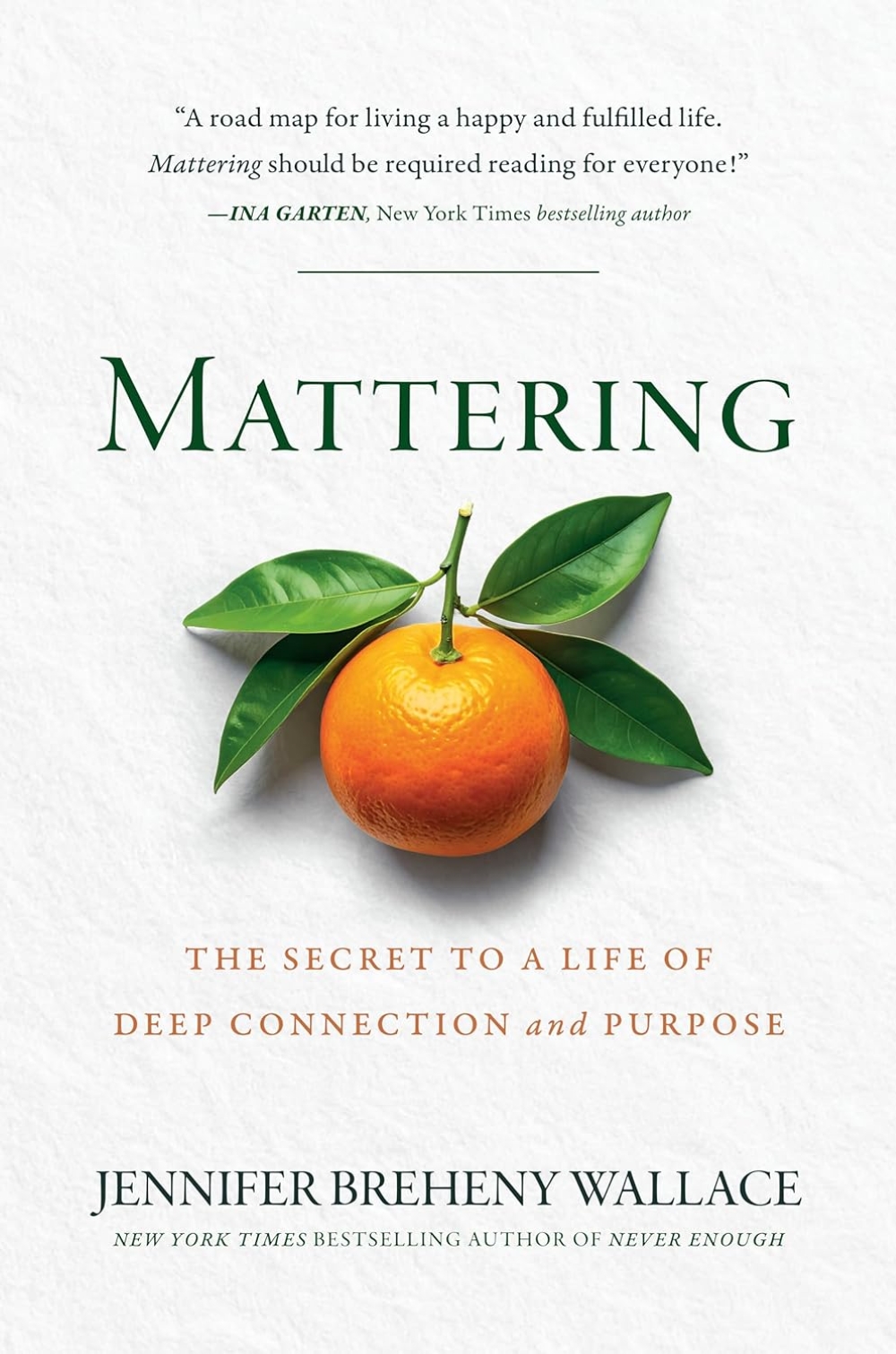
‘Mattering’ by Jennifer Wallace explains the mental health crisis we’re living in. Photo: Penguin Random House

Related Post: What It Means to Matter and Why It’s Essential for a Meaningful Life

Book Review: Mattering by Jennifer Wallace

In Mattering: The Secret to a Life of Deep Connection and Purpose, Jennifer Wallace delivers a profound and timely wake-up call. She argues that today’s mental health crisis isn’t simply the result of digital burnout or political strife, but a symptom of something deeper: what she calls an “erosion of mattering.”

Drawing on psychology, sociology, and real-world stories, Wallace makes a compelling case that mattering—knowing we are valued and that our contributions have meaning—is not a luxury. It is a basic human need, as essential as food or water. When that need goes unmet, the consequences ripple outward, fueling anxiety, depression, loneliness, and social fragmentation.


What’s Inside the Book

Wallace explores mattering through a series of thoughtful, accessible chapters, including:

  • Connect to Your Impact
  • The Good Kind of Weight
  • Mattering Too Much
  • Everyone Needs (to Be) a Cornerman
  • Tuning In
  • When the Rug Gets Pulled: Coping with Life’s Transitions
  • How We Spend Our Days: Mattering at Work
  • Be an Architect: Mattering Spaces

Key Highlights

Chapter 2: The Good Kind of Weight

This chapter focuses on using our strengths to meet the needs around us. Wallace emphasizes the importance of asking, rather than assuming, what others need. As she writes, “To add value, find a need in the world and apply your strengths.” Sometimes, mattering starts with the simple but courageous question: “What can I do to help?”

Chapter 3: Mattering Too Much

While feeling needed is essential, Wallace warns against imbalance. When we prioritize others at the expense of ourselves, the weight of responsibility can become crushing. “By treating yourself as a priority,” she notes, “you also create space for the relationships in your life to become more authentic.”


The Mattering Core

The focus is Wallace’s “mattering core,” a framework built on four essential pillars:

  • Recognition: Seeing and acknowledging your own impact
  • Reliance: Being needed by others—in healthy balance
  • Prioritization: Feeling like a priority to those who matter most
  • Investment: Being truly known and supported

Through stories of grieving individuals, exhausted caregivers, and everyday people quietly struggling, Wallace shows how the absence of mattering can dismantle one’s sense of self.


Final Thoughts

Warm, humane, and deeply practical, Mattering doesn’t just diagnose a societal ill, it offers a roadmap forward. Wallace shows how small, intentional acts of recognition and care can rebuild connection in families, schools, workplaces, and communities.

Clear-eyed yet hopeful, Mattering challenges readers to rethink success, connection, and what it truly means to live well, together. It’s a must-read for anyone feeling lost in the shuffle of modern life.

“We live in a time marked by division across politics, race, gender, and class. But gaps don’t close through argument. They narrow from feeling heard or being seen.”

Rating: 4 out of 5.

*Thank you to Angela Baggetta Communications for the gifted copy for review consideration. I haven’t been compensated for this review and all views and opinions expressed are my own.

The Art and Science of Facial Reconstruction: A Review of Gloria Nusse’s Forensic Atlas

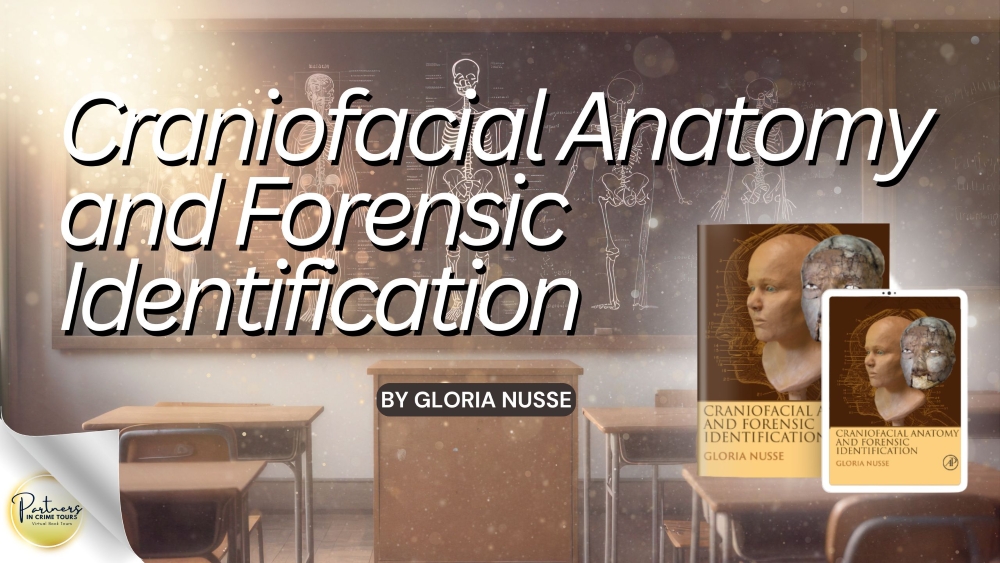
Craniofacial Anatomy and Forensic Identification by Gloria Nusse. Photo: PICT, used with permission.

Part of the Partners in Crime Tours Virtual Book Tour

Book Review: Craniofacial Anatomy and Forensic Identification by Gloria Nusse

Overview

Our bodies record what happens to us physically throughout our lives, including scars from injuries sustained years or even decades ago. Scars tell us how we used our joints or how we may have injured them as children and adults. Our bodies also conform to the environments in which we live, both externally and internally. By examining and observing these key clues, a forensic investigator can reveal the unique characteristics that tell the story of a person’s life and death. (Barnes & Noble, 2026)

Craniofacial Anatomy and Forensic Identification is an atlas that covers all aspects of facial reconstruction and the anatomy of the head and neck. It explores facial expression, the anatomical basis of facial development, and the effects of muscle movement in detail.

Written by a world-renowned forensic artist with decades of experience as a scientific illustrator, portraitist, anthropologist, and lecturer in anatomy and biology, Gloria Nusse brings a rare balance of scientific rigor and artistic mastery to this work.

What’s Inside

  • Chapter 1: Introduction and identity from the skull’s perspective
  • Chapter 2: History and research of facial identification
  • Chapter 3: Bones, muscles, and tissues
  • Chapter 4: Facial features
  • Chapter 5: Analysis and interpretation
  • Chapter 6: Age, archetype, and expression
  • Chapter 7: Grave goods and artifacts
  • Chapter 8: Mold making and reproduction
  • Chapter 9: Clay work and finishing
  • Chapter 10: Lefty, an exemplar

Highlights

Chapter 2
This chapter includes a fascinating history of facial identification, beginning with mortuary practices of preserving the head that date back approximately 80,000 years to Jericho and the Middle East. It also highlights influential figures in the field, such as Wilton Marion Krogman, a professor of physical anthropology who along with sculptor Mary Jane McCue created a 3D facial reconstruction on a male skull in 1946. Modern identification methods are largely based on this groundbreaking work.

Chapter 8
This section goes into detailed methods of mold making, skull preparation, and techniques for working with damaged skulls, making it especially valuable for practitioners.

Review

Craniofacial Anatomy and Forensic Identification is a visually rich atlas that bridges science and art with remarkable accuracy. Designed for forensic artists, anthropologists, and anatomy students, the book offers a comprehensive examination of the head and neck, grounding facial reconstruction in anatomical knowledge rather than artistic intuition alone.

Nusse guides readers through craniofacial anatomy, facial musculature, and the structural basis of expression, clearly demonstrating how bone, muscle, and soft tissue interact to create recognizable human faces. I especially appreciated her focus on facial development and muscle movement, which shows how subtle anatomical variations can dramatically alter a person’s appearance, which is an essential insight for forensic identification. The atlas format, supported by detailed illustrations, allows complex concepts to be easily understood and reinforces the text’s scientific clarity.

As a world-renowned forensic artist and scientific illustrator, Nusse writes with the authority of a scientist and the sensitivity of an artist. Her explanations are precise yet accessible, reflecting deep respect for both disciplines.

Overall, Craniofacial Anatomy and Forensic Identification is a valuable reference that elevates facial reconstruction from technique to discipline. It gives readers a deeper understanding of the human face as both a biological structure and an expressive form. An extra plus is the history of facial reconstruction; fans of history will appreciate the detailed background information.

“It is impossible to know all of anatomy. She is a mysterious mistress and refuses to be put into a box. Each time you think you have figured it out, you see something else that changes all you knew before.”

Rating: 4 out of 5.

Pick up your copy today!

Amazon Barnes & Noble Walmart Thriftbooks ScienceDirect Elsevier


About the Author

Gloria Nusse is a forensic artist, anatomist, and anthropologist who has taught numerous professional workshops, including for the FBI.

She has aided in the identification and return of the unidentified remains of more than 14 individuals to their families. Her work includes recreations of ancient peoples of the Middle East and the reconstruction of the crystal skull for National Geographic, among others. Her work has been featured on 48 Hours, Forensic Files, Dateline, National Geographic specials, Unsolved History, and more.

Nusse worked as a scientific artist for over 35 years and taught human dissection and anatomy at San Francisco State University for 12 years, where she is currently Emeritus. She has authored and co-authored multiple journal articles and book chapters and was the invited speaker for the Chalmers Historical Address at the Association of Oral and Maxillofacial Surgeons meeting in 2013.

*Thank you to Partners in Crime Tours and the author for my gifted copy for review as part of the tour. I haven’t been compensated for this review and all views and opinions expressed are my own.


Partners in Crime Tours is hosting a gift card giveaway! Enter now for a chance to win 1 of 2 Amazon gift cards. Terms and conditions apply. Void where prohibited.

Photo: PICT, used with permission.

Get Rich Quick? Steven Bernstein’s Sharp Satire on Financial Illusions

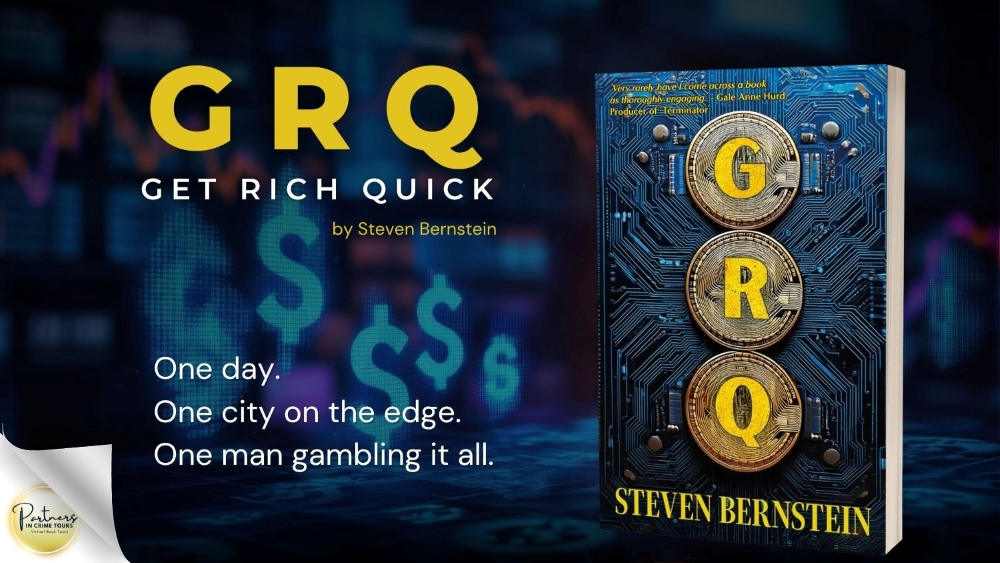
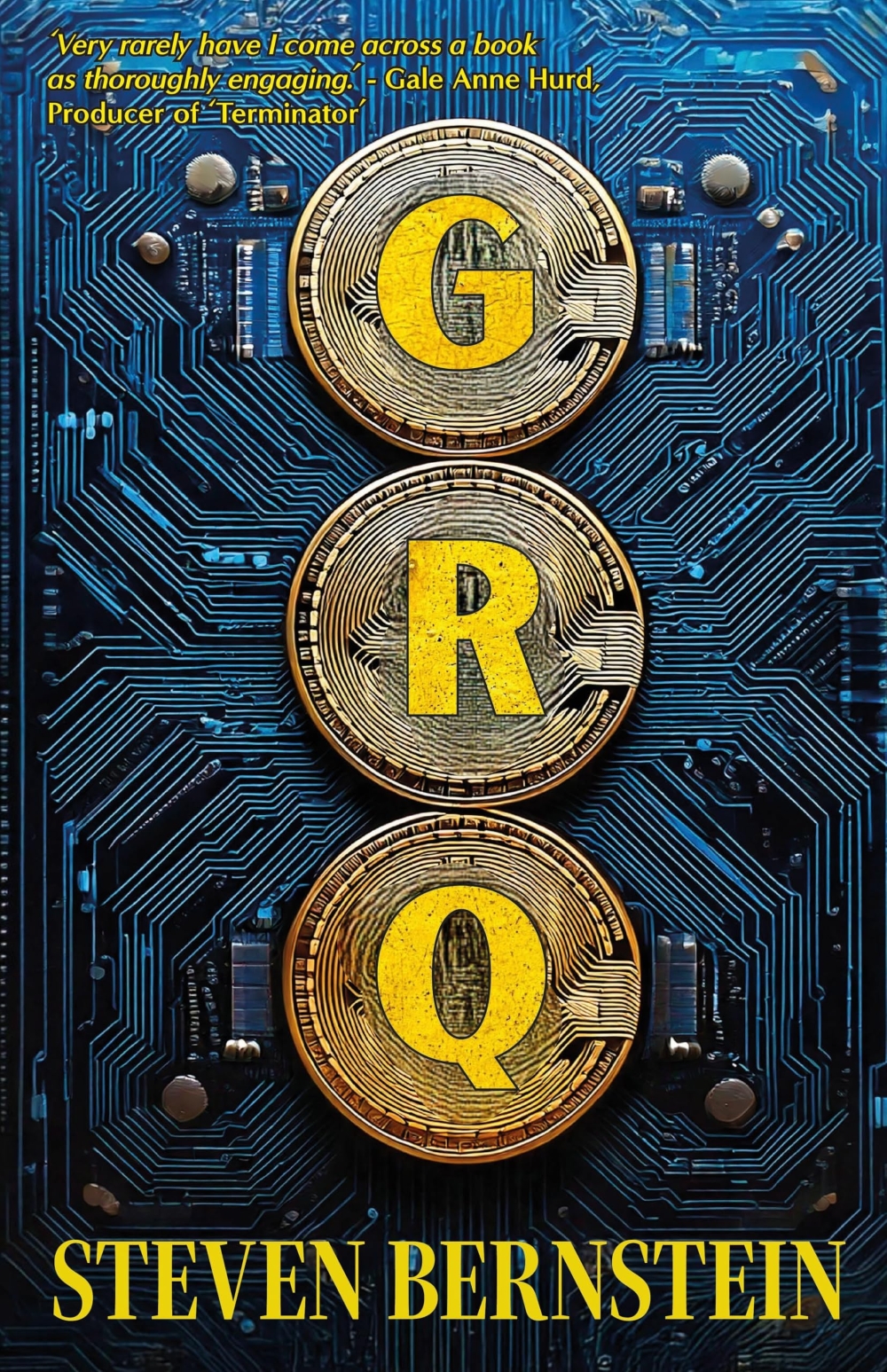
‘GRQ’ is the exciting new novel by Steven Bernstein. Photo: Partners in Crime Book Tours, used with permission.

Part of the Partners in Crime Tours Virtual Book Tours

Book Review: GRQ (Get Rich Quick) by Steven Bernstein

Motto:

Never trust someone who tells you he’s not a thief or a con artist.


Overview

GRQ (Get Rich Quick) follows Marlon, a man scrambling to save his family from financial collapse. Reeling from personal tragedy and facing eviction, he’s enticed by a mysterious financial advisor who promises a guaranteed path to wealth. As Marlon’s high-stakes gambles intensify, the line between salvation and destruction begins to blur. The story unfolds over a single, tension-filled day as Marlon confronts not only his financial ruin but also the dark secrets haunting his family.

Photo: PICT, used with permission

Review

Bernstein opens the novel with an unnamed narrator, a swaggering crypto investor who claims, “You should give me a call if you want to get rich.” Though he insists he merely tells Marlon’s story, he also claims he changed Marlon’s life. His unreliability seeps through immediately.

When Marlon nears eviction, this slick “advisor” offers him a surefire financial escape. With nowhere to turn, Marlon takes the bait, though every shortcut in Bernstein’s world carries a hidden cost.

The brief chapters alternate between Marlon’s unraveling day and the narrator’s self-aggrandizing commentary. Through this structure, Bernstein builds claustrophobia, tension, and a constant sense of impending doom. Marlon’s excuses to the mortgage company and his lies to his wife, Viola, grow increasingly frantic. A fractured Los Angeles mirrors the fractures within his family, amplifying the emotional stakes.

This short but tense novel centers around Marlon, a man pushed to the edge by financial desperation and personal grief. As his high-risk gambles escalate, the reader is pulled into his frantic attempts to outrun debt collectors and the ghosts of his past. He is deeply flawed yet painfully sympathetic and the novel’s emotional stakes feel as real as its financial ones.

Gritty, morally ambiguous, and uncomfortably plausible, GRQ by Steven Bernstein is a sharp cautionary tale about the seductive danger of easy money and the personal reckonings it can never truly erase. Fans of satire, dark humor, and psychological tension will find much to savor.

“Me, the maker of dreams. But some things I am not. I am not a charity. I am not a mental health professional. I am not a marriage counselor. I am not a lender of money.”

Rating: 4 out of 5.

Get your copy today!

Amazon
Barnes & Noble
Bookshop.org
BookBub


About the Author

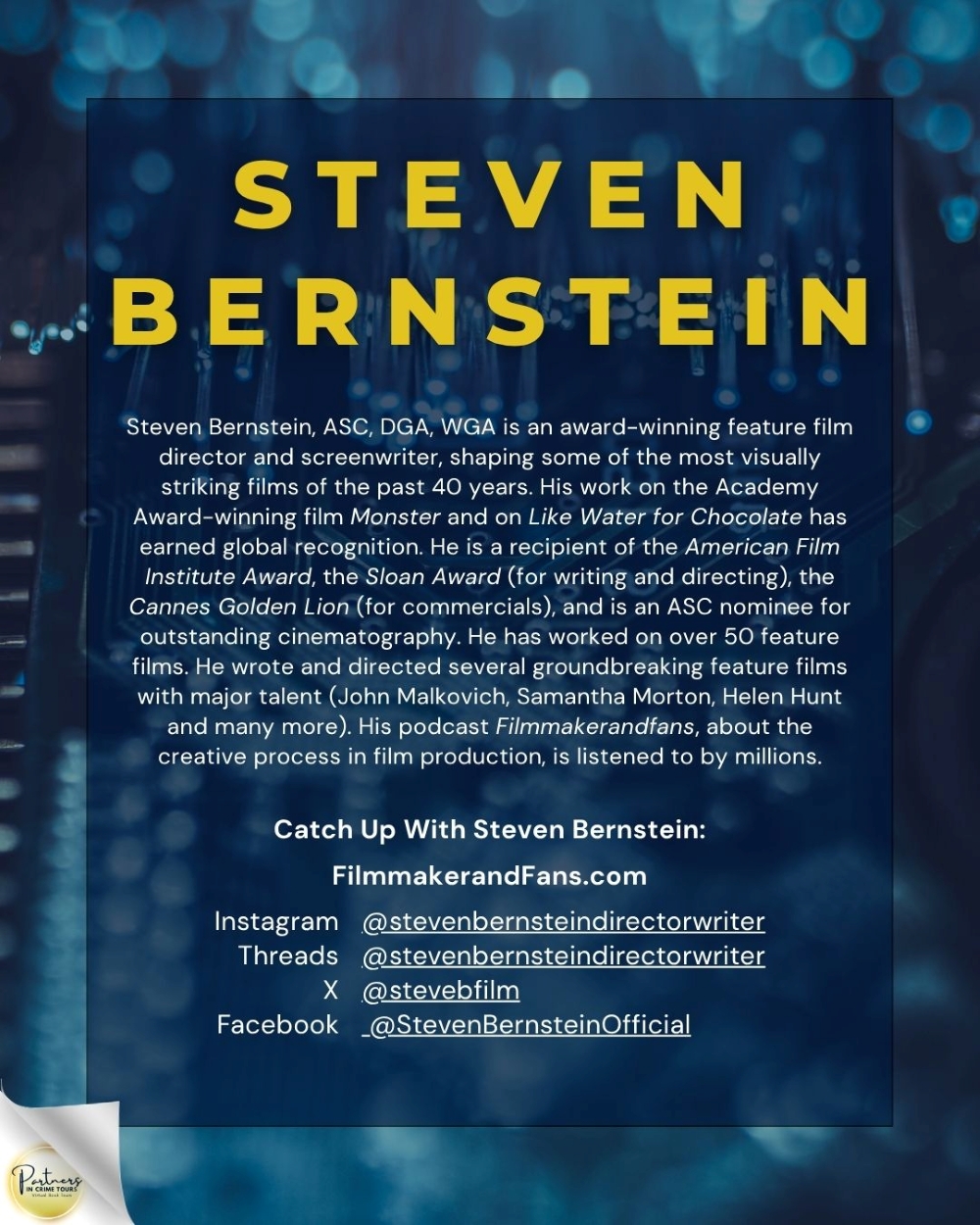
Steven Bernstein, ASC, DGA, WGA, is an award-winning feature film director and screenwriter known for visually striking films spanning four decades. His work on the Academy Award–winning Monster and Like Water for Chocolate has earned him global acclaim, along with honors such as the American Film Institute Award, the Sloan Award, and the Cannes Golden Lion. He has contributed to over 50 feature films and worked with major talents including John Malkovich, Samantha Morton, and Helen Hunt. His podcast, Filmmakerandfans, explores the creative process in filmmaking and reaches millions of listeners.

Photo: PICT, used with permission

Partners in Crime Virtual Book Tours is hosting a giveaway for a $25 Amazon card. Enter for a chance to win. Void where prohibited.

Photo: PICT, used with permission

*Thank you to Partners in Crime Tours and the author for my gifted copy for review as part of the tour. I haven’t been compensated for this review and all views and opinions expressed are my own.

Rediscovering Respect: How One Small Virtue Can Change Everything

‘Respect’ is Robert L. Dilenschneider’s forthcoming new book. Photo: Barnes & Noble

Book Review: Respect – How to Change the World One Interaction at a Time

By Robert L. Dilenschneider
Release Date: October 28 — Available now for pre-order

🕊️ Why Respect Still Matters

In a world where online outrage spreads faster than kindness and conversations often turn into confrontations, the idea of respect can feel almost old-fashioned. Yet, what if rediscovering this simple value could be the key to improving how we live, work, and connect?

That’s the premise behind Robert L. Dilenschneider’s new book, Respect: How to Change the World One Interaction at a Time. A veteran public relations expert and thoughtful observer of human behavior, Dilenschneider explores how showing respect in our tone, actions, and choices can reshape not just our relationships, but the culture around us.


📘 What’s Inside

Chapter 1: A Call for Respectfulness
Chapter 2: Is Respectfulness Truly Possible in the Age of Retribution?
Chapter 3: What’s In It For Me?
Chapter 4: Start with Self-Respect
Chapter 5: The Top Five Qualities of Respectfulness
Chapter 6: Respectfulness at Work
Chapter 7: Respectfulness in Family and Personal Relationships
Chapter 8: Respectfulness in Civic Institutions
Chapter 9: Transforming Society


🌟 Highlights

  • Chapter 3: Offers tips on what to do when disrespect turns into bullying, and explores how respectfulness can lead to improved relationships, stronger professional connections, and a less stressful daily life.
  • Chapter 5: Explains that respect is more than politeness or manners, it’s about recognizing people as individuals with their own unique identities.

💬 Why It Matters

The tone throughout the book is conversational and grounded, yet deeply reflective. Dilenschneider urges readers to see respect not as a surface-level courtesy but as a transformative social force. Each chapter ends with a “Think About It” section inviting readers to pause, reflect, and apply the ideas to their own lives.

By combining practical wisdom and moral clarity, the book moves beyond abstract principles to offer real-world ways to practice respect daily. Whether in the office, at home, or within our communities, Dilenschneider shows how small gestures of empathy can ripple outward to build trust, cooperation, and understanding.

Ultimately, Respect is an essential guide for anyone seeking to improve communication, leadership, and human connection. In an age of division and incivility, this book serves as both a call to action and a blueprint for a more compassionate world.

Perfect for managers, executives, entrepreneurs, and community leaders, this book reminds us:

“Far from outdated, respectfulness is a vital part of the foundation of a well-functioning society and a fulfilling life. We would do well to cultivate it, and this book will show you how—and why.”

Rating: 4 out of 5.

👤 About the Author

Robert L. Dilenschneider founded The Dilenschneider Group in 1991 after serving as President and CEO of Hill and Knowlton, Inc. He has counseled major corporations, trade associations, and educational institutions, helping clients navigate complex communications challenges.

He is the author of numerous books, including Power and Influence, A Briefing for Leaders, On Power, The Critical 14 Years of Your Professional Life, and 50 Plus! Critical Career Decisions for the Rest of Your Life. His most recent work before Respect was Character and Respect.


💭 Let’s Talk

Do you think respect is becoming a lost art — or are we just redefining what it means?
How do you practice respect in your everyday interactions, especially in challenging situations?

Share your thoughts in the comments. I’d love to hear how you’re keeping respect alive in your corner of the world.


*Thank you to Fauzia Burke/FSB Associates for my gifted Advanced Reader Copy for review consideration. I haven’t been compensated for this review and all views and opinions expressed are my own.