
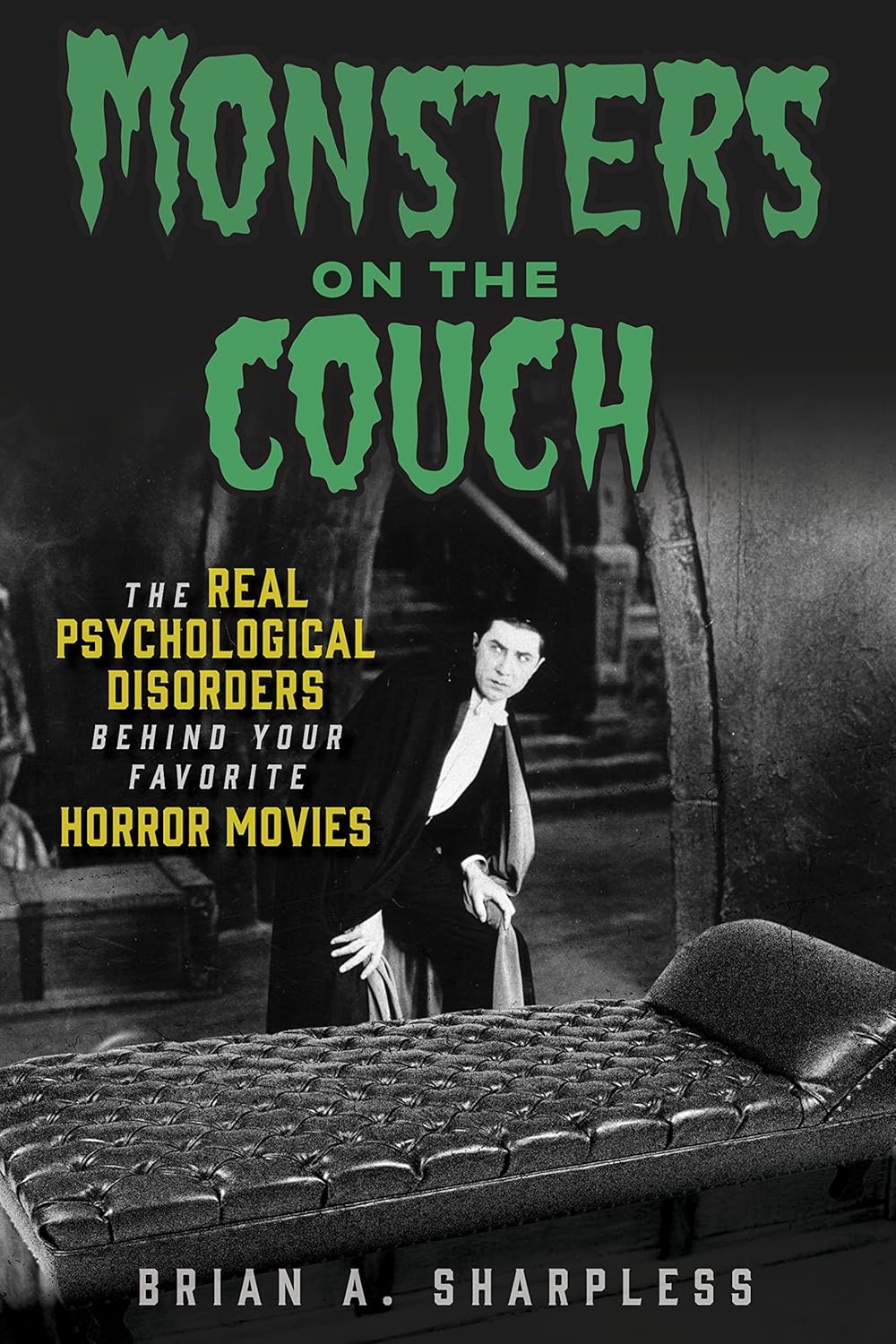
Book Spotlight: Monsters on the Couch by Brian A. Sharpless
Exploring the Real Psychological Disorders Behind Famous Horror Movies
From psychologist, researcher, and horror film enthusiast Brian A. Sharpless comes Monsters on the Couch: The Real Psychological Disorders Behind Your Favorite Horror Movies, an exploration of the real-life psychological disorders that inspired some of cinema’s most iconic horror movies. (Barnes & Noble, 2025)
Sharpless compares dramatic clinical syndromes, every bit as fascinating as those on the silver screen, with the science and folklore behind our favorite monsters.
Horror movies, he argues, can reveal far more about human psychology than we realize. When explored honestly, our fears become mirrors reflecting our culture, our anxieties, and our shared humanity.
Famous Monsters and Their Real-Life Counterparts
Horror fans may be obsessed with vampires, werewolves, zombies, and the eerie “replacements” from Invasion of the Body Snatchers, but few know the real conditions behind these creatures, such as Renfield’s syndrome, clinical lycanthropy, Cotard’s syndrome, and misidentification delusions.
What’s Inside the Book
Part I: Movie Monsters from the Early Days of Cinema
- Clinical Lycanthropy
- You Suck?
- I Am The Walking Dead
Part II: Modern-Day Movie Monsters
- One, Two, The Dab Tsog’s Coming For You
- This Is Not My Beautiful House, This Is Not My Beautiful Wife
- Demons, Aliens, and Shadow People
Part III: Monstrous Behaviors
- Are You Gonna Eat That?
- Shuddersome Sex in the Movies
Highlights
Part I: Chapter 3
Sharpless explains that immortality might not be all it’s cracked up to be. Vampires and zombies both feed after death, yet zombies’ mindless existence makes their fate far gloomier. As he writes,
“Some psychologists and philosophers have argued that this fundamental fear of death prompted people to defensively create gods and an immortal afterlife.”
Part II: Chapter 4
Sharpless shares his personal experience with sleep paralysis and connects it to the mysterious Hmong Deaths that likely inspired Nightmare on Elm Street. These incidents involved young men in California who died in their sleep, hauntingly blurring the line between science and superstition.
Review
In Monsters on the Couch, clinical psychologist Brian Sharpless bridges the gap between horror cinema and psychological science with wit and expertise. His goal is to raise awareness of serious but often overlooked psychological conditions that cause real suffering.
Each chapter dissects iconic horror films such as Nightmare on Elm Street and Invasion of the Body Snatchers through the lens of genuine mental disorders, uncovering the truths, exaggerations, and myths that shape how we perceive mental illness. He also explains symptoms and common treatments with both compassion and precision.
Sharpless writes with the enthusiasm of a horror fan and the insight of a clinician, grounding classic horror tropes like sleep paralysis and vampirism in psychological reality. The tone remains conversational and often humorous, making even the darkest topics approachable.
Ultimately, Monsters on the Couch reminds us that the true horror isn’t the monster on the screen, it’s society’s ongoing misunderstanding of mental health. This is essential reading for horror lovers, psychology students, and anyone curious about how fear and empathy intertwine.
“The most consistent theme across films would likely be a fear of death…I suspect that a lot of people get uncomfortable even dipping their toe in the dark, icy cold waters of death, let alone diving in headfirst.”
About the Author
Brian A. Sharpless is a licensed psychologist, researcher, and author whose work focuses on unusual psychological disorders, psychodynamic psychotherapy, and the history and philosophy of clinical psychology. He holds a Ph.D. in Clinical Psychology and an M.A. in Philosophy from Pennsylvania State University, and completed post-doctoral fellowships at the University of Pennsylvania.
*Thank you to Fauzia Burke/FSB Associates for the gift copy for review consideration. I haven’t been compensated for this review and all views and opinions expressed are my own.

 SA Examiner