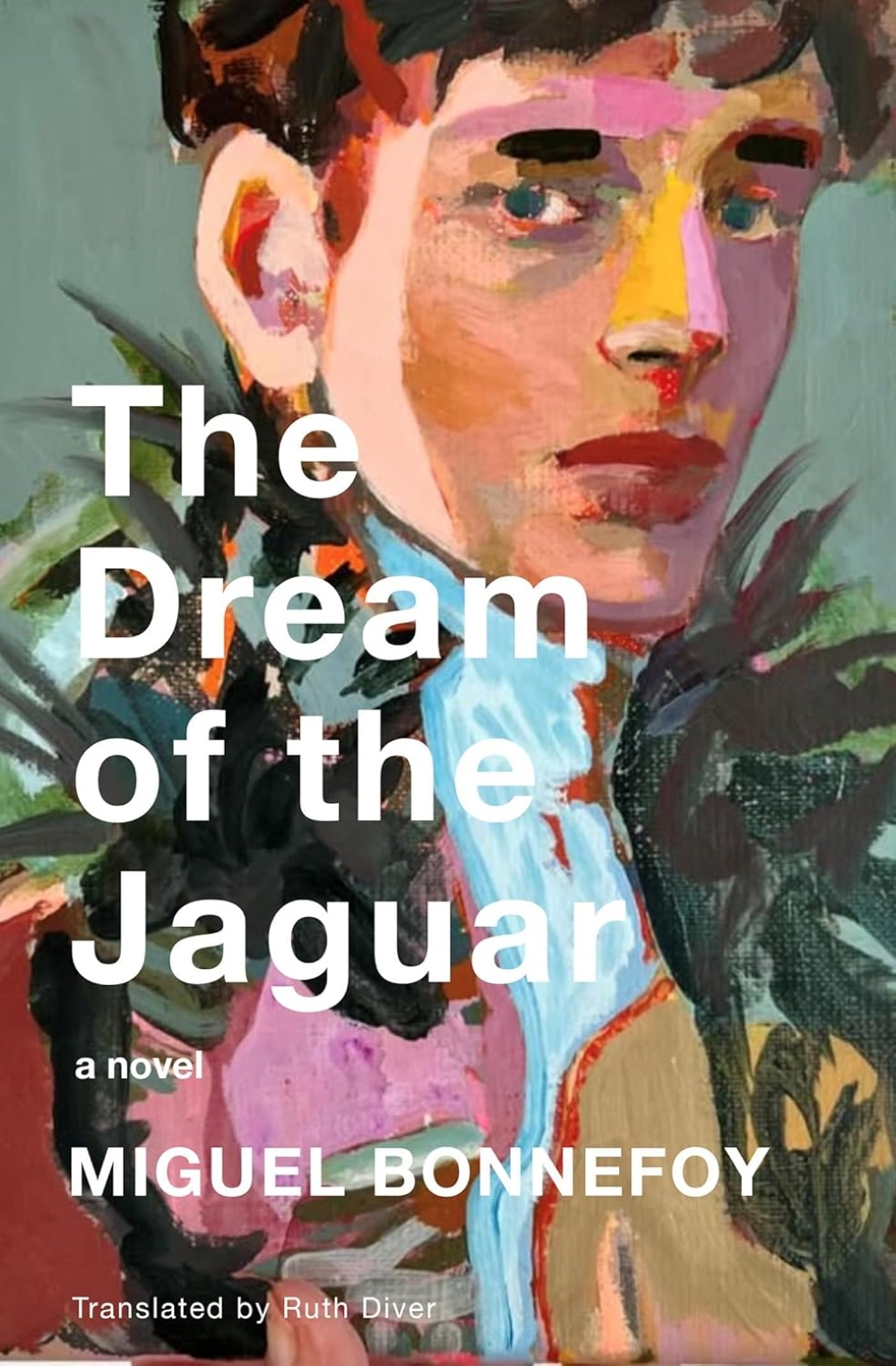
The Dream of the Jaguar: A Lush Saga of Family and Destiny

‘The Dream of the Jaguar’ by Miguel Bonnefoy. Photo: Other Press

New Book Spotlight: The Dream of the Jaguar by Miguel Bonnefoy

Miguel Bonnefoy’s prize-winning novel The Dream of the Jaguar is a sweeping and enchanting family saga. Echoing the lush storytelling of One Hundred Years of Solitude and the emotional depth of Isabel Allende’s work, this novel explores colonialism, cultural identity, and the enduring ties of heritage. Through unforgettable characters, Bonnefoy illuminates the vibrant, complicated history of Venezuela. (Other Press, 2025)

A Story Born on the Steps of a Church

The novel opens when a beggar in Maracaibo, Venezuela, discovers a newborn on the steps of a church. She cannot foresee the extraordinary destiny awaiting the child she takes in.

Raised in poverty, Antonio’s life begins as a cigarette seller and porter, later a servant in a brothel, yet his relentless energy and charisma ultimately lead him to become one of the most celebrated surgeons in his country.

A Lineage Shaped by Love, Ambition, and Country

Antonio’s life intertwines with that of Ana Maria, who becomes the first female doctor in the region. Their daughter, named Venezuela, dreams not of her homeland but of Paris, yet the novel reminds us that no matter how far we travel, our roots remain.

It is through the notebook of Cristobal, the final link in this extraordinary lineage, that the family’s full, astonishing story unfolds.

A Lush, Multi-Generational Epic

Inspired by Bonnefoy’s own ancestry, The Dream of the Jaguar paints a vivid portrait of a family whose fate is inseparable from that of Venezuela itself, a vibrant, emotional saga of identity, ambition, and history.


About the Author

Miguel Bonnefoy, born in France in 1986 to a Venezuelan mother and Chilean father, is an acclaimed novelist whose previous works, Octavio’s Journey and Black Sugar, each sold more than thirty thousand copies in France and have been translated worldwide.

He received the Prix du Jeune Écrivain in 2013, and his novel Heritage earned widespread praise, becoming a finalist for the Prix Femina, the Grand Prix de l’Académie française, and the Goncourt Prize.


About the Translator

Ruth Diver holds a PhD in French and comparative literature from the University of Paris 8 and the University of Auckland. Her translation work has earned multiple honors, including two 2018 French Voices Awards and Asymptote’s Close Approximations fiction prize. She brings exceptional sensitivity and clarity to Bonnefoy’s text.

‘Living Beyond Borders’ Review: A Powerful Mosaic of the Mexican American Experience

‘Living Beyond Borders: Growing Up Mexican in America.’ Photo: Barnes & Noble

Stories and essays about the Mexican American experience in the United States provide a vital perspective on culture, identity, and resilience. They illuminate the struggles and triumphs of a community that has shaped American history, offering insights into immigration, family, tradition, and social justice. These narratives resonate with readers of all backgrounds by exploring universal themes of belonging, perseverance, and the pursuit of the American Dream. They also challenge stereotypes and foster understanding, making them essential in a diverse society. By engaging with these stories, readers gain a richer, more inclusive view of the American experience as a whole.

“Living Beyond Borders: Growing Up Mexican in America,” edited by Margarita Longoria, is a compelling anthology that features short stories, poetry, essays, and comics to paint a vivid portrait of the Mexican-American experience. Featuring a diverse group of voices, this collection provides an intimate and multifaceted exploration of identity, culture, family, and resilience.

Each piece in this anthology offers a unique perspective on what it means to straddle two worlds—balancing the rich traditions of Mexican heritage while navigating the complexities of American society. From heartwarming tales of family bonds to sobering reflections on discrimination and the challenges of immigration, it doesn’t shy away from the struggles faced by the Mexican-American community. It celebrates its beauty, strength, and enduring spirit.

Contents:
Ghetto Is Not an Adjective – Dominic Carrillo
Yoli Calderon and Principal Hayes – Angela Cervantes
Warning Bells – Anna Meriano
I Want to Go Home – Justine Marie Narro
How to Exist in a City of Ghosts – Carolyn Dee Flores
Filiberto’s Final Visit – Francisco X. Stork
CoCo Chamoy y Chango – e.E. Charlton-Trujillo
Tell Me a Story/Dime un cuento – Xavier Garza
My Name is Dolores – Guadalupe Ruiz-Flores
“There Are Mexicans in Texas?”: How Family Stories Shaped Me -Trinidad Gonzales
Morning People – Diana López
Ode to My Papi – Guadalupe García McCall
The Body by the Canal – David Bowles
Is Half Mexican-American Mexican Enough? – Alex Temblador
Sunflower – Aida Salazar
La Migra – René Saldaña Jr.
La Princesa Mileidy Dominguez – Rubén Degollado
Ojo – Sylvia Sánchez Garza
La Llorona Isn’t Real – Xavier Garza
This Rio Grande Valley – Daniel García Ordaz

Highlights:

La Llorona – a comic about a young boy, with fear in his eyes, trying to convince himself that La Llorona is not real and therefore cannot hurt him. As children, if we misbehaved, our parents would tell us that the Llorona would come and take us. It’s short and to the point and it’s highly relatable to those of us who grew up hearing about the Llorona.

The Body by the Canal – Oscar, a young teenage boy, is swept away by Ariel, the new neighbor whose looks made him an instant target. As time goes by, they become close but fearing for Ariel’s safety, Oscar distances himself from him. He feels guilty about it, but eventually Ariel and his family move away. “Boy or girl, the kid was beautiful. And from my own experience, this town would do all it could to destroy that beauty.” This insightful story of one boy’s early experience with romance and homophobia is refreshing to read; it is seldom written about in the Mexican American community.

The range of storytelling styles and language makes it accessible and engaging for readers of all backgrounds. Whether through powerful poetry, heartfelt personal essays, or striking visual storytelling, every contributor adds depth to the broader narrative of cultural identity. The list of discussion questions at the end helps readers reflect on the themes and topics presented.

Overall, “Living Beyond Borders” is an essential read for anyone seeking to understand the richness of the Mexican-American experience, making it a powerful and necessary addition to contemporary literature. It is recommended for readers who appreciate diverse personal narratives.

“Though I was always curious and grateful for those Latinos who openly welcomed my exploration of identity, secretly, hot shame filled me inside, reminding me that I had taken so long to learn all these things.” – Is Half Mexican-American Mexican Enough? by Alex Temblador

Rating: 5 out of 5.

*The author of this blog received a copy for an honest review. The views and opinions expressed here belong solely to her.