What Psychoanalysis Really Feels Like: A Review of Joan Peters’ ‘Untangling’

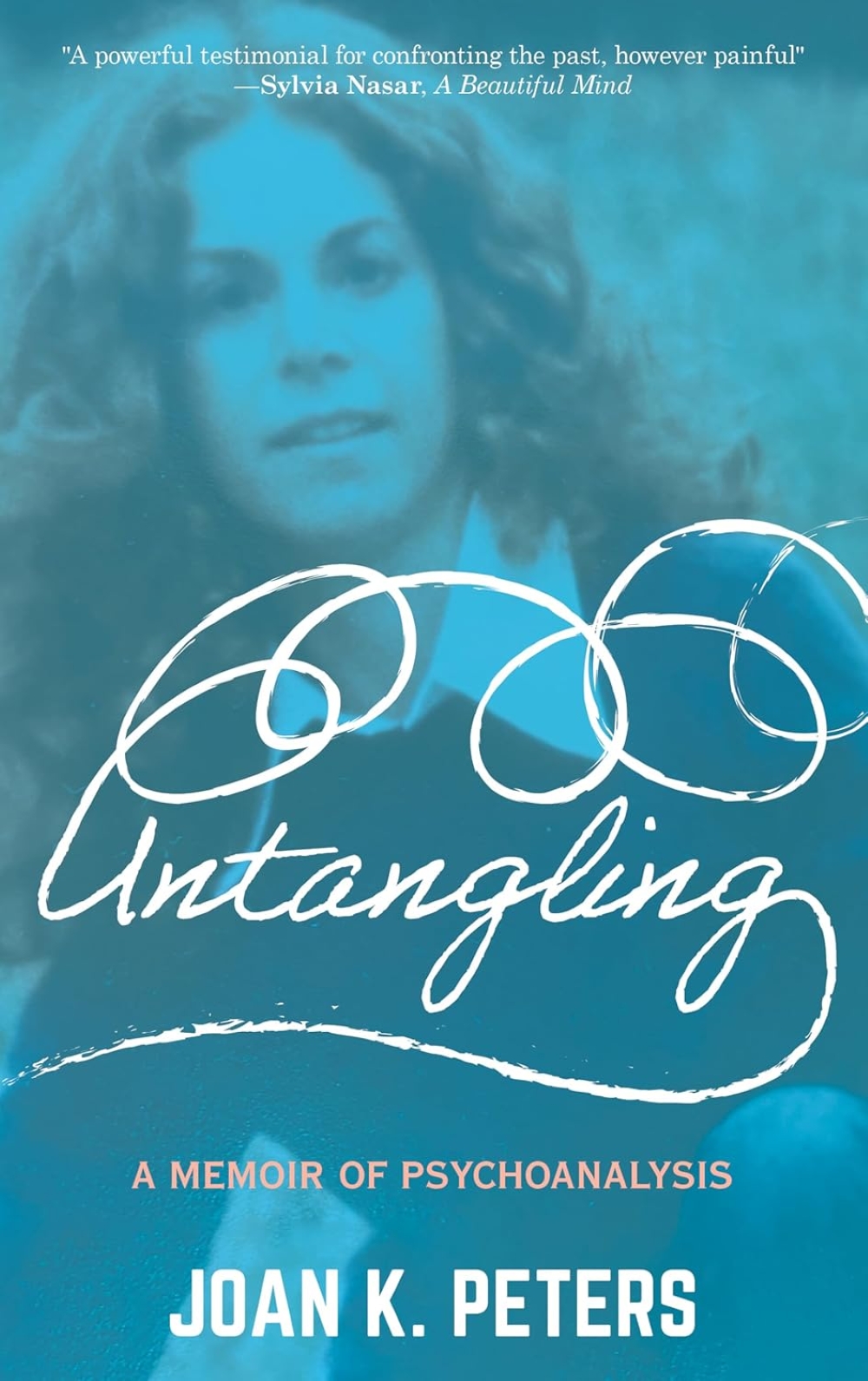
‘Untangling: A Memoir of Psychoanalysis’ by Joan K. Peters. Courtesy photo, used with permission.

Book Review: ‘Untangling: A Memoir of Psychoanalysis’ by Joan Peters
What It’s Really Like to Be in Psychoanalysis—From the Patient’s Chair

If you’ve ever wondered what actually happens during psychoanalysis—or what it feels like to unravel years of emotional knots on a therapist’s couch—Joan Peters‘ “Untangling: A Memoir of Psychoanalysis” offers a rare, intimate glimpse into that world.

Unlike most writing on psychoanalysis, which often comes from the perspective of clinicians, “Untangling” is told from the inside out. Peters chronicles her decades-long analytic journey with striking vulnerability, courage, and clarity. This journey consisted of two different analysts: Lane when she was 28 and Kristi when she was 67. While Lane was helpful, she remained impersonal and impartial. Kristi actually got to know her because she used relational psychoanalysis, a psychoanalytic approach that emphasizes the importance of the relationship between the therapist and patient in the therapeutic process. Peters brings readers into the room with her, detailing the subtle shifts, long silences, and emotionally charged breakthroughs that define the therapeutic process.

Highlights:
Chapter 7 – Schizoid
– Peters admits to Lane that from ages 14 to 19, she had lived an alternate existence because when she was 14, she started hearing voices. These voices guided her every action.
Chapter 4 – Lane Explains Me to Me – Focuses on her family background, memories of her as a two year old seeing her mother preparing the morphine syringes for her dad who was dying of cancer. This explained her nightmares about syringes and being given injections with poisons. Two months after talking about this, her needle nightmares ended. That’s when Joan discovered the complicated issue of subconsciousness and how it affects our lives.

At its core, honesty is what makes this memoir so powerful. Peters doesn’t offer easy answers or dramatic resolutions—instead, she shows how transformation unfolds slowly, often painfully, through the act of being deeply seen and heard. It reveals how analysts’ methodology differ and how patients respond differently with age and life experience. Her writing is vivid and lyrical, making even the most abstract aspects of psychoanalysis feel grounded and human. “Sitting back in her chair, patient as a fisherman in a placid lake, she listened, questioned, interjected while I mostly avoided the story, as if its invisible tentacles might entangle (or strangle) me.”

Overall, “Untangling” is a courageous and necessary contribution to the literature on mental health. It demystifies a process often veiled in secrecy and offers an authentic voice to the patient experience. For readers curious about psychoanalysis—or the complexities of healing—this memoir is both enlightening and deeply moving.

“My question back in Vermont had loosened a scab; now the wound bled, unstoppable. She had offered me silence, and I had refused her gift. Now, at times, I felt I might drown in her words.”

*The author was contacted for an honest review of this book and received a copy. The views and opinions expressed here belong solely to her.

Rating: 4 out of 5.

Related post: Inside the Analyst’s Chair: Joan Peters’ Raw and Riveting Journey in ‘Untangling’

Inside the Analyst’s Chair: Joan Peters’ Raw and Riveting Journey in ‘Untangling’

‘Untangling: A Memoir of Psychoanalysis’ is the new book by Joan K. Peters. Courtesy photo, used with permission.

Psychoanalysis, a deep exploration of the unconscious mind, offers a powerful path toward mental health and self-awareness. Rooted in the belief that unspoken thoughts and early experiences shape our behaviors, it invites individuals to uncover, confront, and integrate hidden parts of themselves. In a time when mental health is gaining long-overdue attention, talking openly about therapy and inner struggles is vital. It reduces stigma, encourages others to seek help, and reminds us that healing often begins with honest conversation. Embracing psychoanalysis and mental wellness isn’t just personal—it’s a collective step toward a more compassionate, self-aware society.

The new memoir “Untangling: A Memoir of Psychoanalysis” dares to tell the patient’s side of psychoanalysis. It’s available now wherever books are sold.

Joan K. Peters was born in New York City and got her Ph. D in comparative literature from The University of Chicago. She’s published a novel and two books about women and work and is a professor emeritus of literature and writing at California State University at Channel Islands. She lives in Ojai with her husband, her dogs, and her chickens. In her much-anticipated new book “Untangling: A Memoir of Psychoanalysis,” she focuses on her experience in psychoanalysis at two different points in her life, comparing two different theoretical and technical analytic views, from the vantage point of her experience as a patient. (CS Lewis Publicity, 2025)

“Untangling: A Memoir of Psychoanalysis” – With the drama of a novel it tells the story of a turbulent and transformative psychoanalysis in this first ever in-depth patient’s account. Joan K. Peters’ story lays bare the inner workings of this complex treatment, which takes place behind closed doors, is rarely spoken about, and is largely unknown outside of professional circles.

A polished, poetic, and often funny writer, her willingness to expose her own demons brings psychoanalysis to life, from the intense strife to the fierce love that can develop between patient and analyst. Joan’s first analyst, Lane, helped Joan alleviate tormenting and recurring nightmares and to find herself by discovering her family’s secret past. Her second analyst, Kristi, guided her through the frightening depths of that past to a yearned-for freedom.

In another first, Kristi writes an afterword about the challenge of analyzing Peters. Unique in its reach, “Untangling”reveals the mysteries that lurk beneath the surface of our psyches.

Psychoanalysis is full of mysteries — it taps into the subconscious more than any other form of therapy and sets up a unique relationship between analyst and patient. No one really knows exactly how or why it works, just that it does. But one patient, in candidly revealing her own journey, invites readers into that very private patient experience as she grapples with hidden and haunting demons.

Whether due to taboo, fear, shame, or reluctance, very few patients have shared their journey of psychoanalysis with others, let alone written about the experience. Too many people are unaware of the transformative powers that this penetrating, multi-layered therapy has.

In her unique memoir, written in the narrative style of Mary Karr, the author recounts her two analyses — one when she is in her twenties and another in her sixties — that form one continuous story of immense discovery and healing. She dramatizes firsthand accounts of how she and her two very different analysts unlocked the traumas, losses and terrors of her past – enabling her to confront and understand them, and finally feel free to fully enjoy her life. 

Author Joan K. Peters. Courtesy photo, used with permission.