
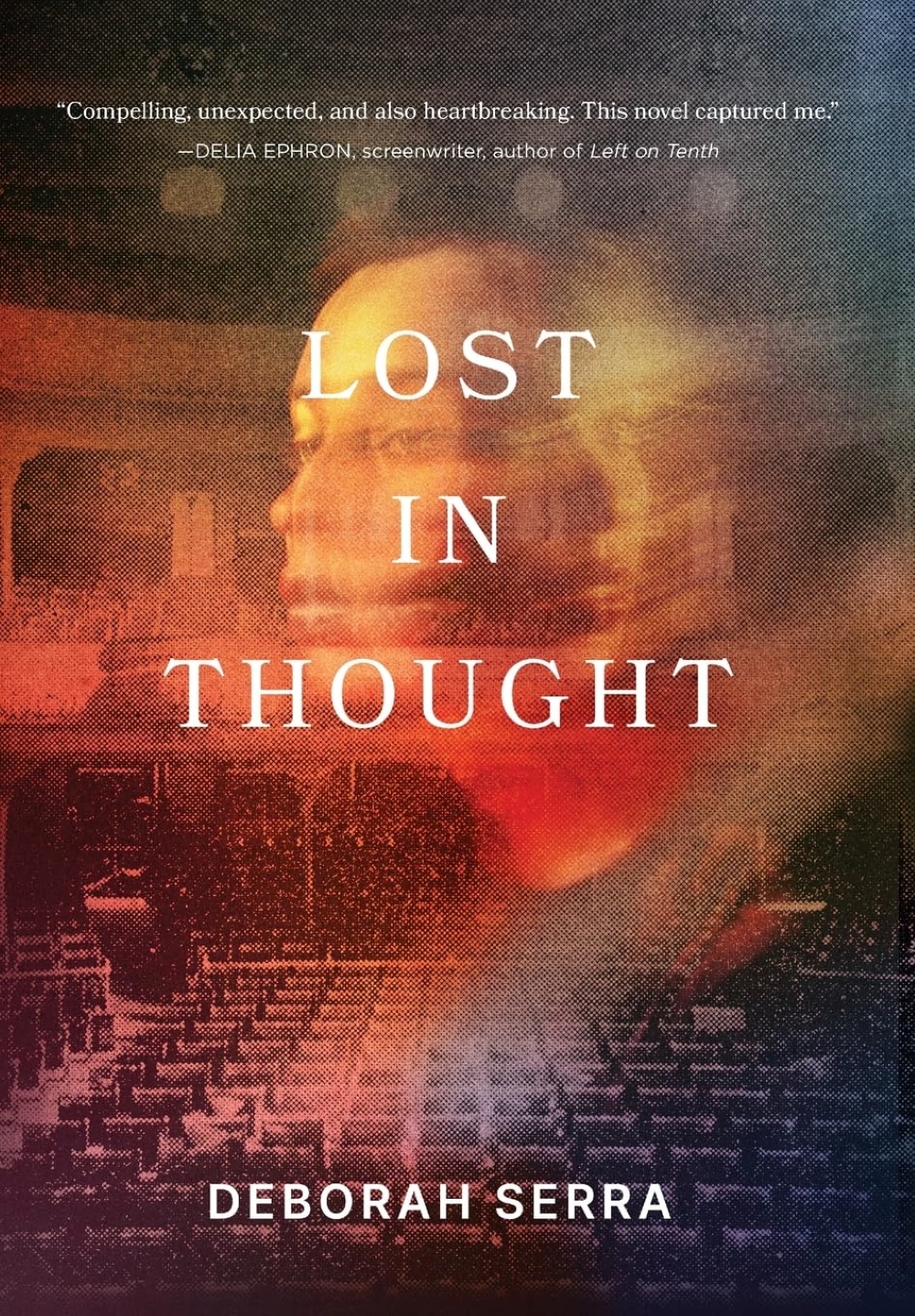
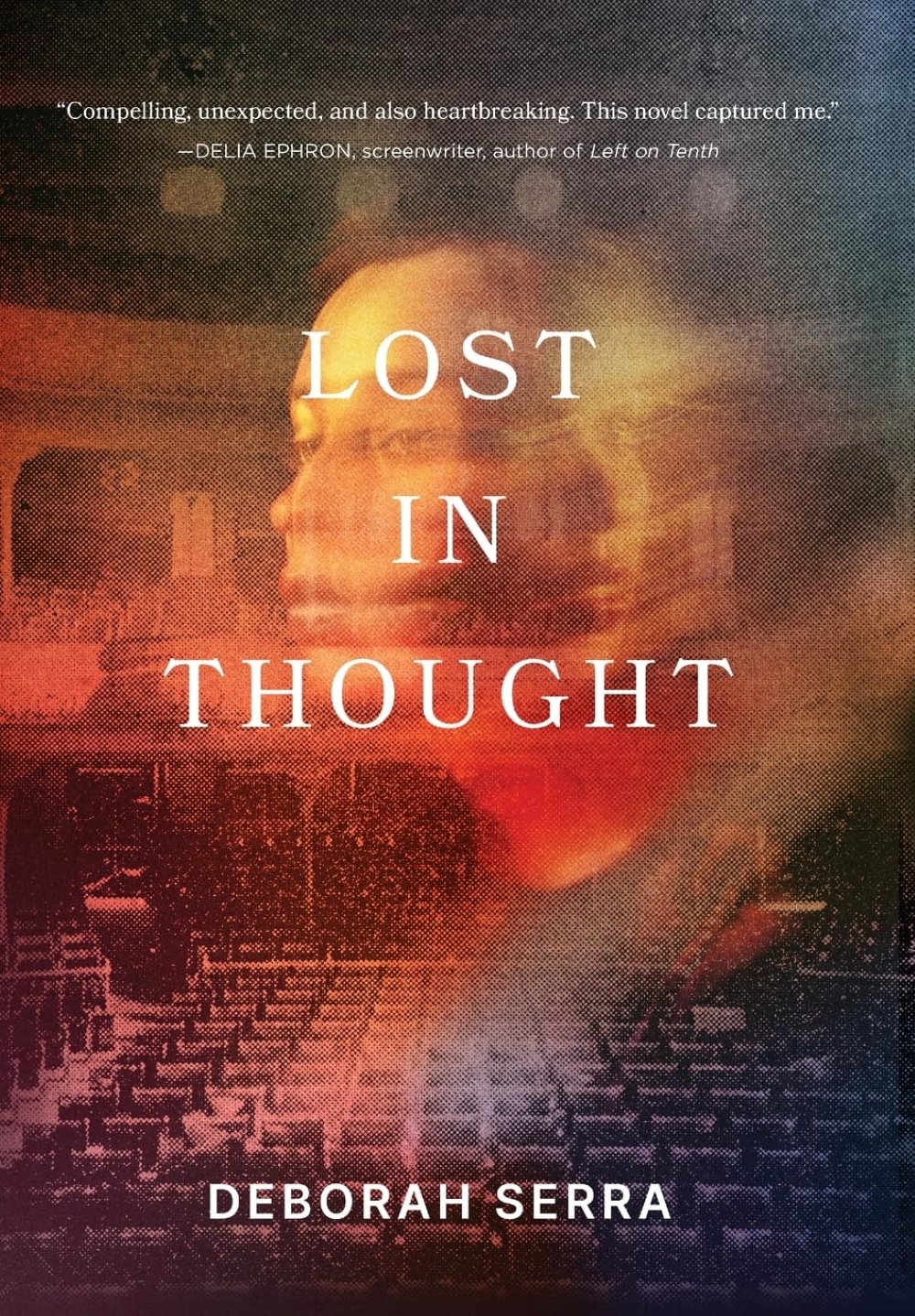
Deborah Serra is a recipient of the Hawthornden Literary Fellowship, a semifinalist for the Faulkner-Wisdom Creative Writing Award, and nominated for the O. Henry Prize. She has been published in literary magazines and is an editor with the ethics and short story magazine, After Dinner Conversation. Serra is the author of the thriller, “Primal,” and the humorous travel memoir, “2 Broads Abroad.” Her latest book is “Lost in Thought,” a novel about unconscious decision making and the illusion of free will.
“Lost in Thought” – Ilana works at Lyric Opera House and is in a committed relationship with Adam, a neuroscientist, for the last 3 years. They live in a cozy Greenwich Village apartment where they often share meals with friends as they engage in stimulating conversations. She’s adopted, and the questions inside of her are growing insistent including who would she be if she’d grown up in her birth home? Is she truly who she thinks she is? Has she ever freely chosen anything at all? Are these questions in part due to Adam’s research on how people make their decisions. It could also be suppressed grief from the death of her adoptive mother. Her inner dialogue is affecting her daily life: “Her thoughts were loud and they drowned out her words.”
When Ilana learns that her birth mother Fiona Shannon owns a pub in Albany, she figures what harm could there be in casually dropping by for a drink? To see, just to see. What begins as curiosity about her choices evolves into a traumatic shift in her world. She loses control of her life and then chaos breaks out.
Review:
The story begins as Ilana is taking the elevator to her office in the 12th floor. A germaphobe by nature, it intensified by Covid and it shows in every part of her life. She’s the production manager at the opera house and the job requires a sense of authority. To everyone around her, she seems calm and confident, but it’s only a front. She was raised to act confident regardless of her situation, and in her line of work, emotions are a sign of defeat and she refuses to show any weaknesses.
Her adoptive mother died of Covid months ago after being on a ventilator for months. She wasn’t allowed to visit her in person and she helplessly watched her die through her iPad. This experience still haunts her and is slowly chipping away at her confidence and total belief system. She desperately wants to know more about her birth family, if she has any of their traits, physical or otherwise. Her best friend and ex-boyfriend William tries to convince her that her personality is the sum of her experiences, which sets forth the nature vs nurture debate. That impulsive trip to see Fiona and her husband Shea O’Holleran will change her life in ways she never saw coming.
This combination of women’s literature and literary fiction is a compelling exploration of the subconscious mind and how unconscious processes shape our decisions, often without our awareness. The novel invites readers into the life of Ilana, who embarks on a journey of self-discovery after realizing that much of what she believed to be her free will was, in fact, influenced by external forces and internal biases. Serra cleverly examines the illusion of choice, presenting a narrative that challenges the notion that we are fully in control of our actions.
The writing is introspective and open, combining scientific concepts with philosophical musings in a way that’s thought-provoking yet not overly dense. The novel’s pacing keeps readers engaged, blending character-driven drama with intellectual inquiry. As Ilana confronts the complexities of the human mind, the book raises important questions about responsibility, autonomy, and the nature of free will. With highly descriptive language, the action flows easily through the pages: “The industrial breezes from cars and buses and subway vents blew hot into her face, grabbed her silk skirt, and whipped the loose strands of her hair.”
Overall, “Lost in Thought” is a stimulating read that challenges perceptions and invites reflection on the unseen forces that guide our choices. It explores the themes of family, identity, love, and friendship. By making abstract ideas concrete, it offers a relatable and human story while tackling deep philosophical themes. Readers are left questioning their own thought processes and the extent to which they truly have control over their lives. It is recommended for readers who enjoy intellectual literary fiction that features smart and relatable characters.
“Now, her mind was relentlessly chewing. It was thrilling but like a horror film. She asked herself why she was going down the dark basement stairs.”
*The author received an ARC in exchange for an honest review. The views and opinions expressed here belong solely to her.
 SA Examiner