Book review: ‘Family in Six Tones’ by Lan Cao and Harlan Margaret Van Cao

Photo: google

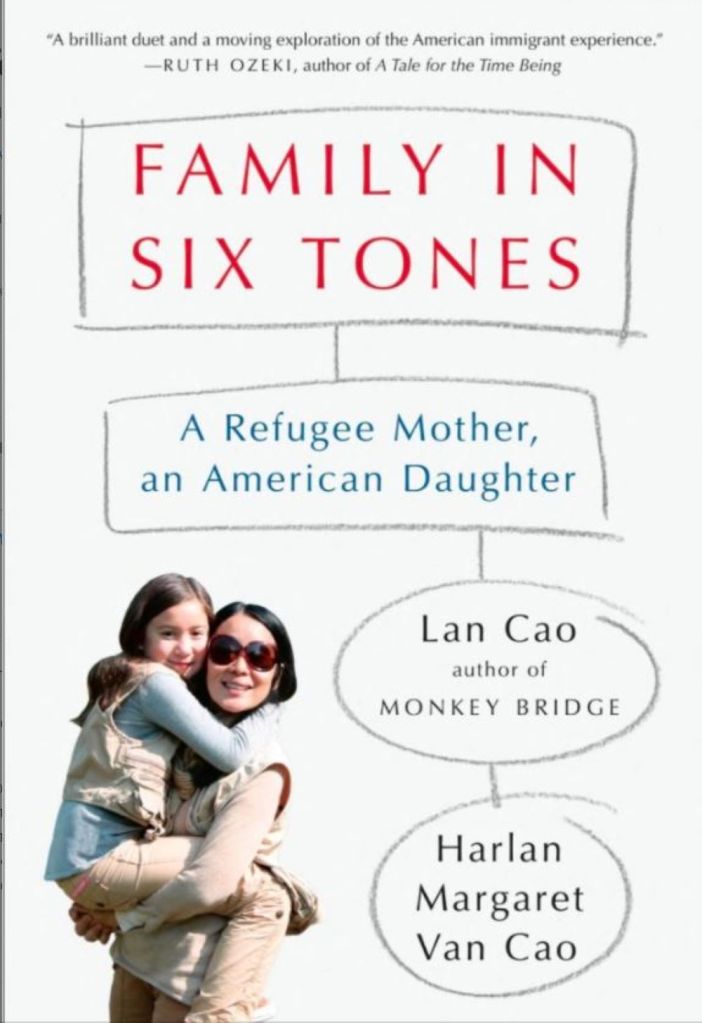
Lan Cao is the author of the novels “Monkey Bridge” and “The Lotus and the Storm” and a professor of law at the Chapman University School of Law, specializing in international business and trade, international law and development. She has taught at Brooklyn Law School, Duke Law School, Michigan Law School and William & Mary Law School. Her latest book “Family in Six Tones: A Refugee Mother, an American Daughter” is the dual first-person memoir by the acclaimed Vietnamese-American novelist and her thoroughly American teenage daughter, Harlan Margaret Van Cao, who just graduated from high school in June 2020 and will be attending UCLA.

In the Introduction, Lan Cao views motherhood and being a refugee with equal trepidation because of how uncertain she still feels about both. Even after forty years of being in the United States and seventeen years of being a parent, she still feels inadequate in both. This is the central theme throughout this memoir as she explores being a refugee and being a mother with the help of Harlan, her teenage daughter, who is half Vietnamese. In short alternating chapters, they show how different and yet how similar they really are.  Lan relates her immigrant experience including war, past traumas and tragedies and the struggles and discriminations she faced while getting an education, especially in law school, while Harlan deals with culture clashes, bullying and going through life coping with synesthesia – a condition in which people often see sounds, taste word or feel a sensation on their skin when they smell certain scents – she often relates about having a purple cat following her.

Being an immigrant is never easy and too often the Vietnamese viewpoint is left out of the conversation.  This is what makes this memoir unique; not only is it told through the perspective of a mother/daughter relationship, but it is told through the Vietnamese point of view, not a solider or a politician, even though it touches on the sensitive topic of the war. Readers get to witness Lan’s transition from naïve immigrant to law student, especially the moment she decides to study law – when she was working in a video store and the police questioned her regarding missing money. The insight into Vietnamese culture is interesting, especially the system of ranking people, i.e. calling relatives Father Two, Sister Three. Her shared immigrant experiences of discrimination makes her relatable: “We may have Americanness officially documented in birth certificates, passports, or naturalization papers. But despite the seductive panache of the American Dream, the message that we can never really be American has curiously been passed down from generation to generation.”  Harlan also has this conflict about being too American versus not being Vietnamese enough and her writing is more poetic: “This life isn’t meant to be a race. It is meant to be a long, slow dream of perfect confusion, loneliness, deep friendships, and ambition. I’m ready.” When she writes “You can be American outside, but not in the house” it speaks to what children of immigrants sometimes deal with at home. They are expected to be Americanized outside the house, but at home they are expected to speak the native language and adhere to that culture’s expectations, leading to an emotional tug of war.  Overall, “Family in Six Tones” is an impressive and poignant exploration of the mother/daughter relationship which often has the same struggles and insecurities passed on from generation to generation. It is recommended for readers who appreciate a distinctive perspective on the struggles of refugees and familial bonds.

“ I wanted to bloom wherever I was planted, in this present tense where I had found myself, like a lotus flower that grows in mud and turns to face the sunlight.”  – Lan Cao

*The author received a copy of this book for an honest review. The views and opinions expressed here belong solely to her.
Book review: ‘An Outlaw Makes It Home’ by Eli Jaxon-Bear

elijaxonbear
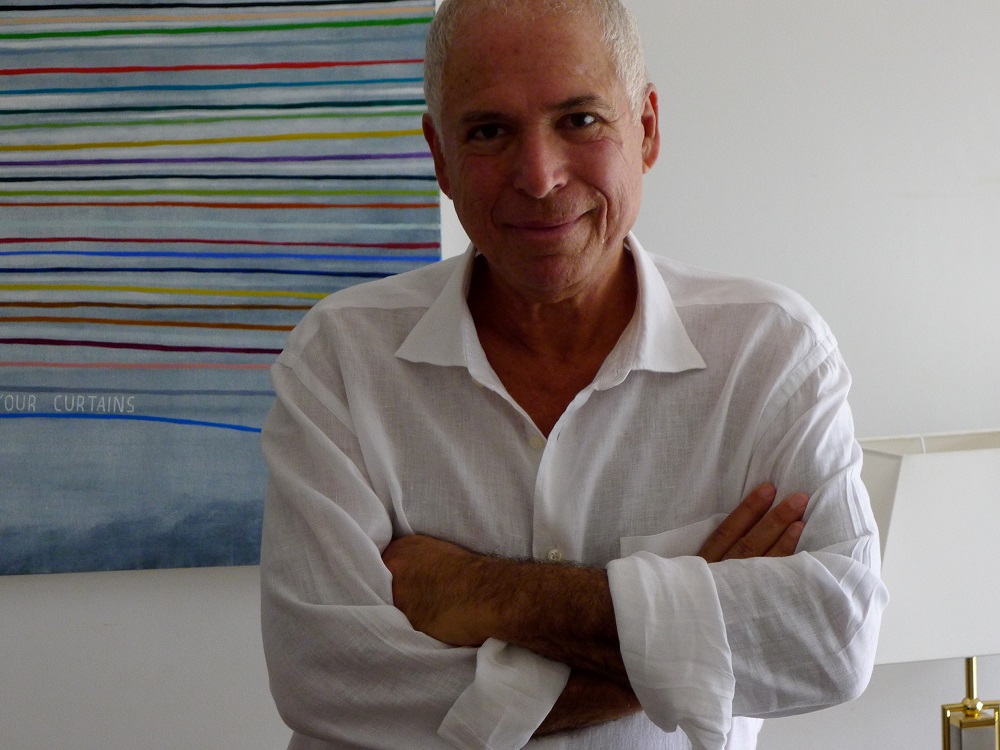
Eli Jaxon-Bear’s new memoir “An Outlaw Makes It Home” is the author’s most recent book.  Courtesy photo, used with permission.

Eli Jaxon-Bear is an American spiritual teacher and author who worked as a mail boy, dishwasher, steel-worker, teacher and organic farmer. He was a community organizer with VISTA in Chicago and Detroit and was in a doctoral program at the Graduate School of International Studies in Denver, Colorado. He founded and teaches through The Leela Foundation, a non-profit organization supporting world peace and freedom through universal Self-realization. He has written “Wake Up and Roar,” “Sudden Awakening” and “From Fixation to Freedom.” “An Outlaw Makes It Home: The Awakening of a Spiritual Revolutionary,” his new book, is a memoir that recounts his life from a young man involved in a civil rights march in Alabama to his search for fulfillment in Japan and Morocco.


anoutlawbook
Courtesy photo, used with permission.


“An Outlaw Makes It Home” begins as the author shares his earliest childhood memory that influenced his life and character for years to come. The neighborhood kids were beating up his friend Mark and he decided to intervene, but it made the matter worse when one of them got hurt and his friends retaliated. “Now I was terrified of violence, of hurting someone else again, and of being hurt again myself…I credit this handicap with keeping me from a successful superficial life. It drove me to despair and beyond.”

The entire book is divided into six parts: Call to Adventure, Crossing the Threshold, The Abyss, The Odyssey, The Kingdom Appears and Freedom. The first two parts chronicle his activities during the civil rights era the Vietnam War. From there, his adventurous and nomadic life takes him across the world in search of happiness and fulfillment and eventually he discovers spiritual awakening alongside his wife and constant companion. The attached pictures chronicle his life from childhood to the file the FBI opened on him and the times spent with spiritual leaders in Japan and China.

This deeply personal and insightful memoir is an excellent example of a life spent in pursuit of a meaningful life. At an early age, he decided that he was solely responsible for his life and did not let family or friends influence him and instead took control of his own destiny, for better or worse. He faced life head-on despite the dangers he faced, including violence and drug experimentation. The language is easy to understand as he welcomes the reader along on a rollercoaster ride of emotions and adventures.

One standout part is in Part I Chapter 4: Which Side Are You On when he was in Montgomery when Dr Martin Luther King gave his “I Have a Dream” speech and the chilly experience afterwards when the Klan moved in on the gathered crowds. “We were shocked into stillness by the horror of what we were now seeing. Riding towards us…. came the Klan. The only sound we heard was the clip-clopping of the [horses’] hooves.” The other is on Part III: Chapter 12 Dying for Life when he describes in vivid detail his experience when he took LSD on his 25th birthday. “An Outlaw Makes It Home” by Eli Jaxon-Bear is a fascinating read that combines the turbulent era of the 60s and 70s with spiritual awakening and enlightenment. It has something for everyone and is recommended for readers interested in a first-person account of a life’s journey from troubled teen to spiritual adult.

*A copy of this book was given for an honest review. The opinions expressed in this article are solely the author’s.

Book review: ‘Take Off Your Shoes’ by Ben Feder

takeoffyourshoespic
Ben Feder’s new memoir ‘Take Off Your Shoes’ is now available everywhere.  Courtesy photo, used with permission.

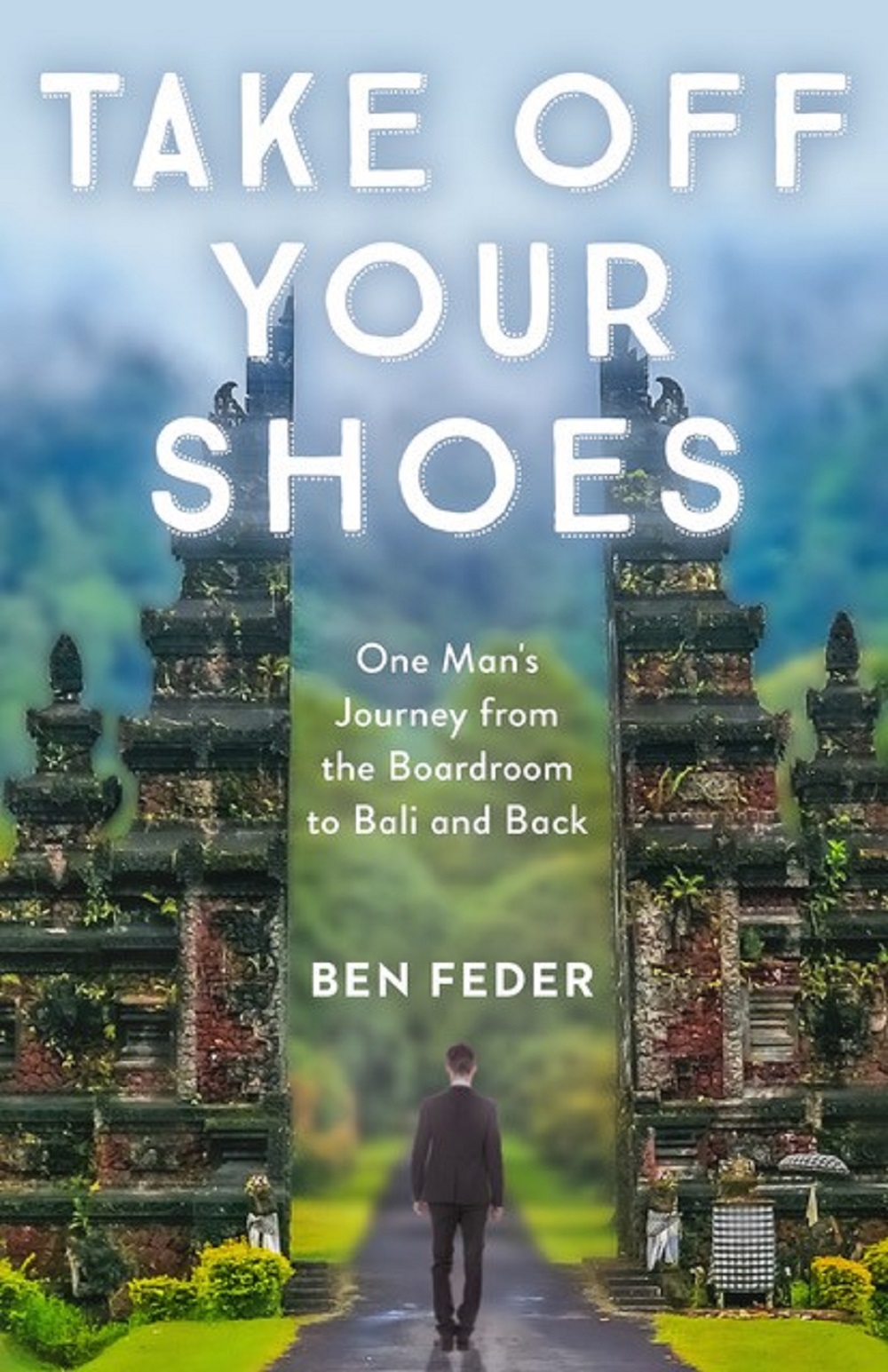
Ben Feder is President of International Partnerships for the U.S. at Tencent, the Chinese Internet titan and formerly CEO of Take Two interactive. He is also the publisher of the smash video game hits, Red Dead Redemption, Grand Theft Auto and NBA 2K.  With all his success, he also experienced the inevitable cost it took on his family and personal life. This led to a self-imposed sabbatical in Bali with his family and in his new memoir ‘Take Off Your Shoes: One Man’s Journey from the Boardroom to Bali and Back,’ he shares his experiences and what he learned from his journey of self-discovery.

‘Take Off Your Shoes’ begins with an introduction in which Ben Feder explains that he wrote this memoir mainly for his children. Not only did he want them to understand why he embarked on this journey, but he also wanted it to serve as a memento of the special time they shared as a family. One thing that led him to take a sabbatical was his curiosity about brain plasticity and how people can change their lives by changing their minds. It all started one evening when Ben came home late from work and his wife Victoria approached him with the idea. After weighting the pros and cons, which included sacrificing careers that they both worked hard to attain, they decided that any increased time together as a family was worth any downside.

Ben Feder did what most people caught up in the everyday rat race only wish they could do and took the time to share his experiences. His memoir reads like a journal because not only does he write about the journey, he writes about his personal development and struggles as well as his personal growth through it all. Like adults, children can also become overwhelmed with their busy lives, so it is admirable that the author and his wife chose to involve them in this life-changing experience. Seeing the poverty in other countries made them thankful for what they have and made them more conscientious citizens of the world. Along the way, Ben learns to appreciate how activities like meditation and art can help him handle stress and the family gets a different perspective on life. Not everyone can afford to pick up and travel the world with the family, but they can find ways to lead a more mindful life. All they must do is think outside the box and dare to step outside their comfort zone. Overall, ‘Take Off Your Shoes’ is easy to read with language that is easy to understand and will appeal to readers who are looking for ideas to enrichen their lives. It is insightful, personal and humorous with something for everyone.

*A copy of this book was given for an honest review. The opinions expressed here are solely the author’s.

Book review: ‘It’s Not Yet Dark’ by Simon Fitzmaurice

itsnotyetdark
‘It’s Not Yet Dark’ is the life-affirming memoir by writer and film director Simon Fitzmaurice.

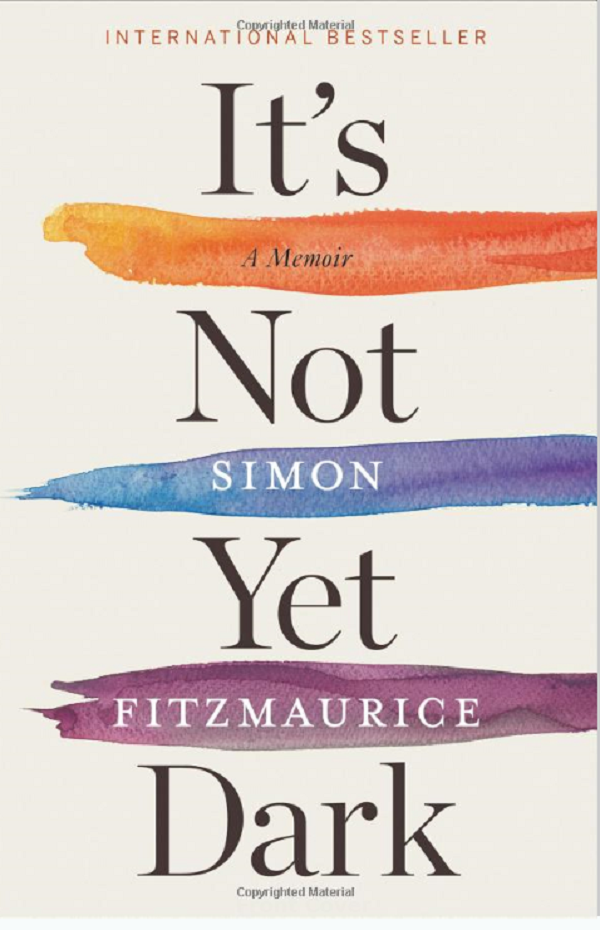
Simon Fitzmaurice is an award-winning writer and film director. His films have been screened in film festivals all over the world and have won numerous prizes including Best Short Film at the Cork Film Festival and the Belfast Film Festival. His short fiction has been short-listed for the Hennessy Literary Award and his poetry has appeared in the quarterly publication West 47. “It’s Not Yet Dark” is his first memoir and upon its release in Ireland it was a best seller. In it, the author expresses him thoughts about relationships and family and what it means to be alive.

“It’s Not Yet Dark” is Simon Fitzmaurice’s personal journey that includes living with ALS. In 2008, he was diagnosed with ALS, or Lou Gehrig’s disease and was given four years to live. Faced with lung function collapse in 2010, he determined that it was not his time to die and made the difficult decision to ventilate to stay alive. He had a full life with his wife and five children and a satisfying career in film that he was not ready to give up. Written using an eye-gaze computer, the author pulls the reader into a world filled with ups and downs. It begins with the exciting news that his film was picked to be screened at the Sundance Film Festival. And with the turn of a page he begins the shocking revelation of how he was diagnosed with ALS.

This is not a depressing book about someone suffering and dying from a debilitating disease. It is a beautiful and heartwarming story of a man whose life is touched by a disease but somehow manages to see the positive in life. Told in lyrical prose that includes imagery and metaphors, it is a well-balanced narrative about a life lived to its fullest. The language is simple and easy to understand and it being a small book, can easily be read in a day or two. Fans of autobiographies, memoirs and poetry will find it hard to put down. Even though it goes into detail about his struggles with ALS, it is inspiring and uplifting and highly recommended.

*A copy of this book was given for an honest review. The opinions expressed here are solely the author’s.

Movie adaptation: ‘The Glass Castle’ by Jeannette Walls

glasscastle
The movie adaptation of “The Glass Castle” by Jeanette Walls opens in theaters on Friday August 11, 2017.

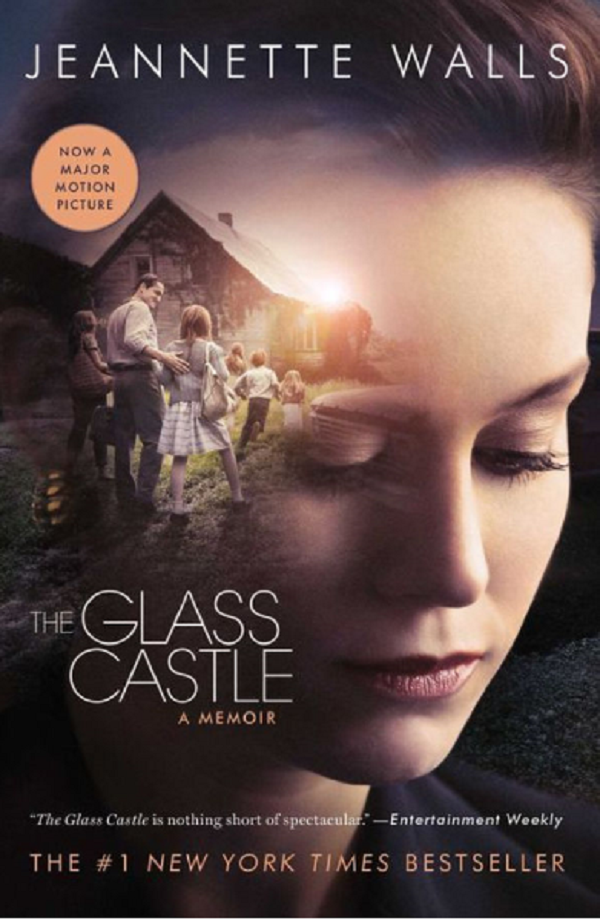
Jeannette Walls is an American author and journalist best known as former gossip columnist for msnbc.com. Her memoir, “The Glass Castle,” tells the story of her childhood nomadic family and spent years on The New York Times best seller list. It sold over 2.7 million copies and has been translated into multiple languages. The movie adaptation starring Brie Larson, Naomi Watts and Woody Harrelson opens in theaters on Friday August 11, 2017.

According to Amazon, in “The Glass Castle” Walls recounts the unconventional, poverty-stricken upbringing she and her siblings had at the hands of their dysfunctional parents. When sober, her brilliant and charismatic father captured his children’s imagination while teaching them physics, geology and how to embrace life fearlessly. As a drunk, he was dishonest and destructive. Their mother was a free spirit who disliked the idea of domesticity. Because she did not like the responsibility of raising a family, the Walls children learned to take care of themselves and eventually moved to New York. Their parents followed them but even as their children prospered, they were often homeless. It is a story of resilience, redemption and a family whose life was both dysfunctional and vibrant.