
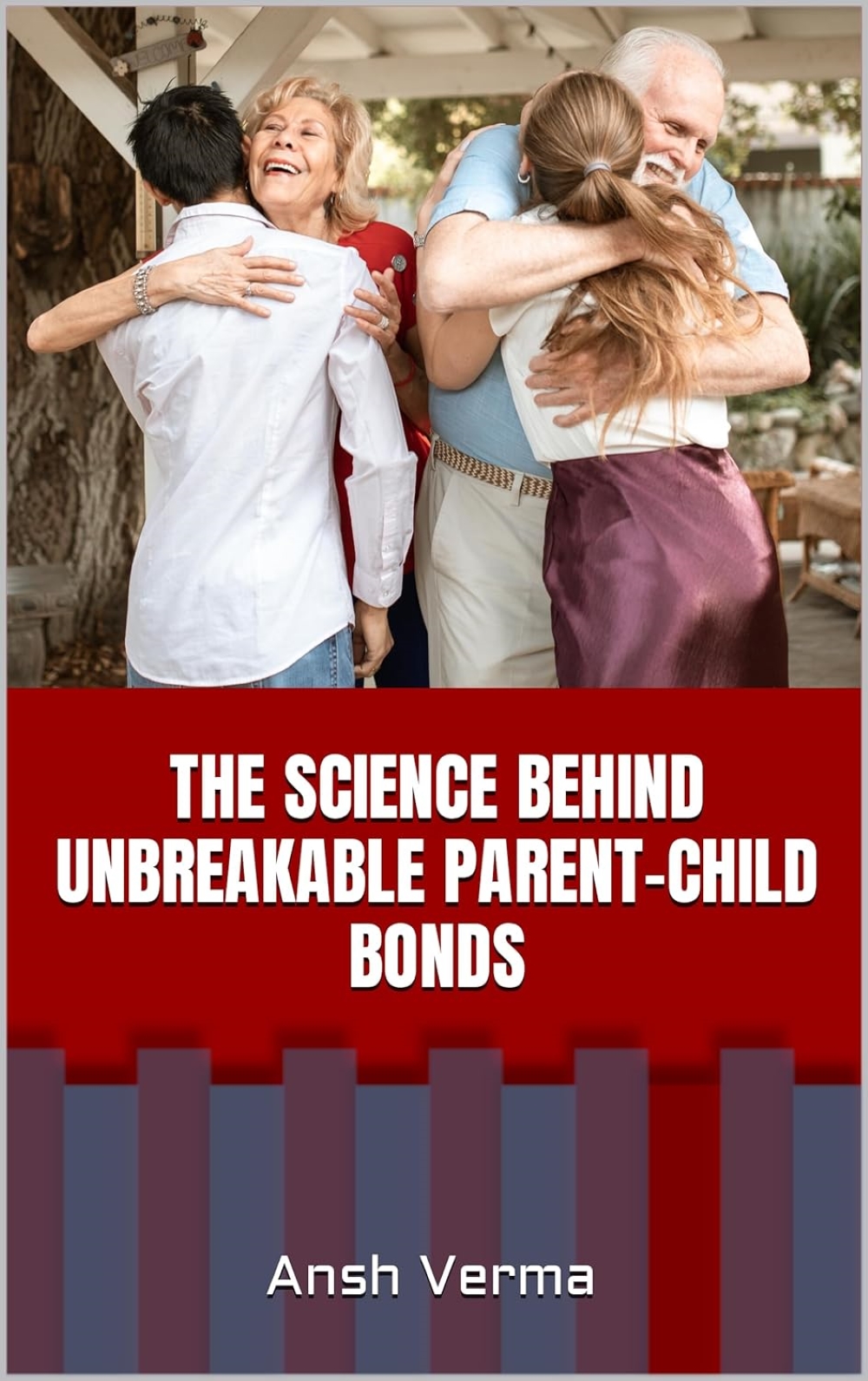
Ansh Verma is a researcher, author, and philosopher based in Dhanbad, Jharkhand (India). He researches on almost everything that can be observed, felt and/or read, including but not limited to technology, politics, divine, war, behavioral, engineering, investing, military, finance and mathematics. Post graduation, Verma has almost 20 years of experience in thinking/making sense of the world. His new book, “The Science Behind Unbreakable Parent-Child Bonds,” unravels the mysteries of why individuals, even those who appear stoic and detached, maintain an enduring connection with their parents.
“The Science Behind Unbreakable Parent-Child Bonds” – in this book, readers embark on a fascinating journey through the complex world of human relationships from a unique perspective – behavioral science and logic. Delving deep into the evolutionary, cognitive, and emotional aspects of parent-child bonds, it uncovers the hidden drivers behind this unbreakable link. From the psychological mechanisms that underlie parental recognition to the influence of socialization and culture on these connections, it presents a rich mosaic of insights backed by extensive research and real-world examples. It also challenges conventional notions of parent-child relationships, offering a fresh and scientifically grounded perspective that explains why these bonds persist and how they shape our lives. With clear, engaging prose, this book invites readers to discover the profound behavioral science behind what truly keeps us forever linked to our parents, shedding light on the enduring power of this fundamental connection. (Amazon, 2023)
There is no doubt that the bond between parent and child is one of the strongest relationships out there and the author explores these types of human relationships through the perspective of behavioral science and logic. Not only does psychology play a part of this bond, but so does society and culture. It is well researched and even though the subject may be scientifically presented, he explains it in a way that is easy to understand.
Some of the chapters include The Evolutionary Roots of Filial Attachment, Cognitive Mechanisms of Parental Recognition, and Psychological Resilience and Attachment. A couple of my favorites are 5. The Influence of Socialization and Culture where he explains the impact of societal norms on the parent-child bond and 6. Stoicism and Parent-Child Bonds – even if the parents do not display feelings or complaints, it still has an effect on a growing child. If you have ever wanted to know more about the parent-child bond, I highly recommend this book. Even if you don’t have children, it will help you understand how your parents’ upbringing influenced who you are.
“When we assist our relatives, we are, in essence, promoting the survival and propagation of a significant portion of our own genetic code. This act of altruism…..indirectly contributes to the preservation of our genetic lineage.”
*The author was contacted for an honest review of this book. The views and opinions expressed here belong solely to her.
 SA Examiner