Recovering from trauma, Todd interviews for a job and finds redemption instead of employment.
A Sci-Fi Psychological Drama About Trauma, AI, and the Human Condition
The 2025 short film The Jobis a tightly woven sci-fi psychological drama that explores artificial intelligence, human trauma, and the messy search for personal redemption.
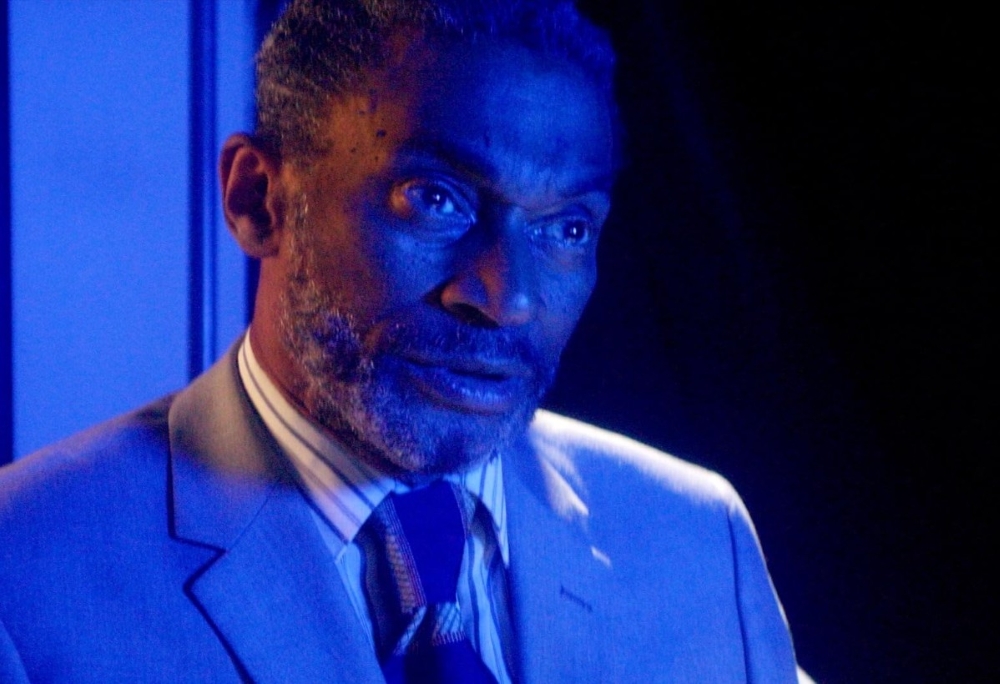
The story follows Todd, played with raw vulnerability by LeJon, who arrives at an empty office building already burdened by past trauma. The deserted setting only heightens the tension. When Todd reconnects a loose wire, he unknowingly awakens Athena 2.0, an omniscient AI acting as a human-interface interviewer. Dawna Lee Heising delivers Athena with a controlled, commanding presence that becomes the film’s backbone.
A Job Interview Turned Emotional Interrogation
The standard interview turns into an intense psychological confrontation. Athena forces Todd to face his deepest wounds and past mistakes, pushing the “job offer” aside as the real mission becomes emotional reckoning.
The contrast between Athena’s calm precision and Todd’s unraveling creates a gripping dynamic that propels the film forward. Rather than relying on action or twist-heavy storytelling, The Job embraces atmosphere, introspection, and character-driven tension.
A Powerful Sixteen Minutes
The Job presents redemption not as a reward but as a painful, necessary process of facing the truth. For a short runtime of approximately 16 minutes, itleaves a surprisingly lasting impact.
“I’m not some algorithm to be optimized.”
⭐⭐⭐⭐
Rating: 4 out of 5.
Genre
Sci-Fi, Drama
Cast
Dawna Lee Heising – Athena
LeJon – Todd
Director
Craig Railsback
Writers
Heather Joseph-Witham, Craig Railsback
Photo: IMDb
*Thank you to Joe Williamson for the screener link for review consideration. I haven’t been compensated for this review and all views and opinions expressed are my own.
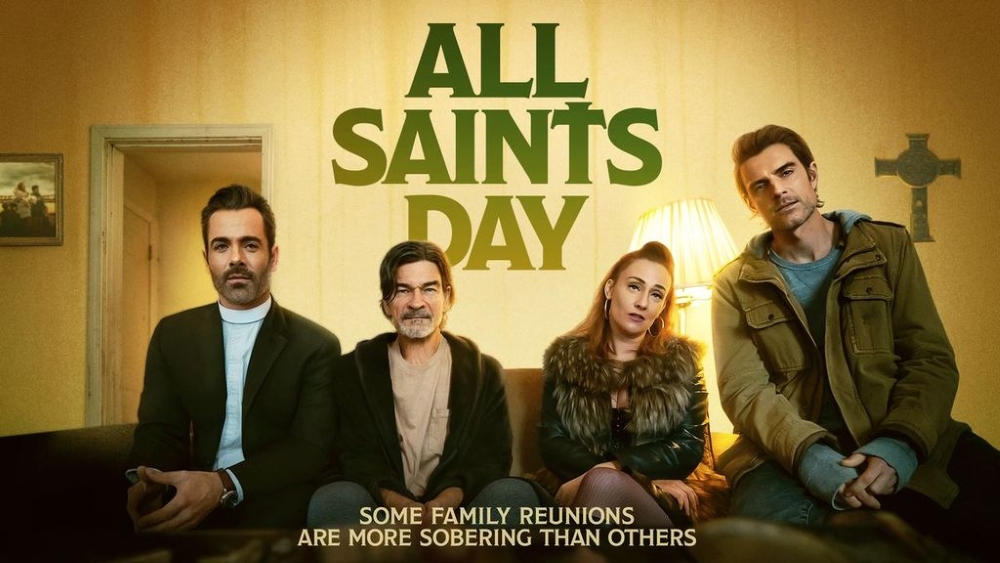
All Saints Day will be available on digital and on demand. Photo: One Tree Entertainment, used with permission.
🎬 New Release Spotlight: ALL SAINTS DAY
Some family reunions are more sobering than others…
Mark your calendars: ALL SAINTS DAY arrives on digital and on demand December 2. This darkly funny, emotionally layered story blends dark comedy with family drama in a tight, compelling 99-minute feature. (One Tree Entertainment, 2025)
About the Film
When Ronan realizes his oldest brother, Kier, is drinking himself toward disaster, he launches a desperate intervention. But doing so means calling in reinforcements: their estranged priest brother and long-lost sister.
What follows is a chaotic, heartfelt, and unexpectedly humorous Irish family reunion, where old wounds and buried secrets collide in ways no one is prepared for.
The Creative Team
Written by Julianne Homokay Homokay is a multi-talented screenwriter, playwright, performer, director, and musician. With an MFA in Playwriting from UNLV, her work spans numerous full-length plays and musicals.
ALL SAINTS DAY is adapted from her original stage play All Saints in the Old Colony, a 2015 Eugene O’Neill Theater Center semi-finalist that premiered at Playhouse on the Square in Memphis in 2018.
Directed by Matt Aaron Krinsky Krinsky, director, producer, and writer, brings extensive experience across film, theater, and live events. ALL SAINTS DAY marks his feature film directorial debut, introducing his grounded, character-driven approach to the big screen.
Starring
Don Swayze (Ethan Coen’s Honey Don’t!, On Swift Horses, True Blood)
Strangers in a Car Park will be available on digital and on demand on November 11, 2025. Photo: One Tree Entertainment, used with permission.
New Movie Spotlight: Strangers in a Car Park
🎬 Strangers in a Car Park
The truth will always come to light
Available On Digital and On Demand – November 11
Written and Directed by: Stuart McBratney
Starring: Brenton Prince (Home and Away, Underbelly), Lawrence Ola (Upright, Wellmania, face of STEP ONE underwear), and Arnijka Larcombe-Weate (Boy Swallows Universe)
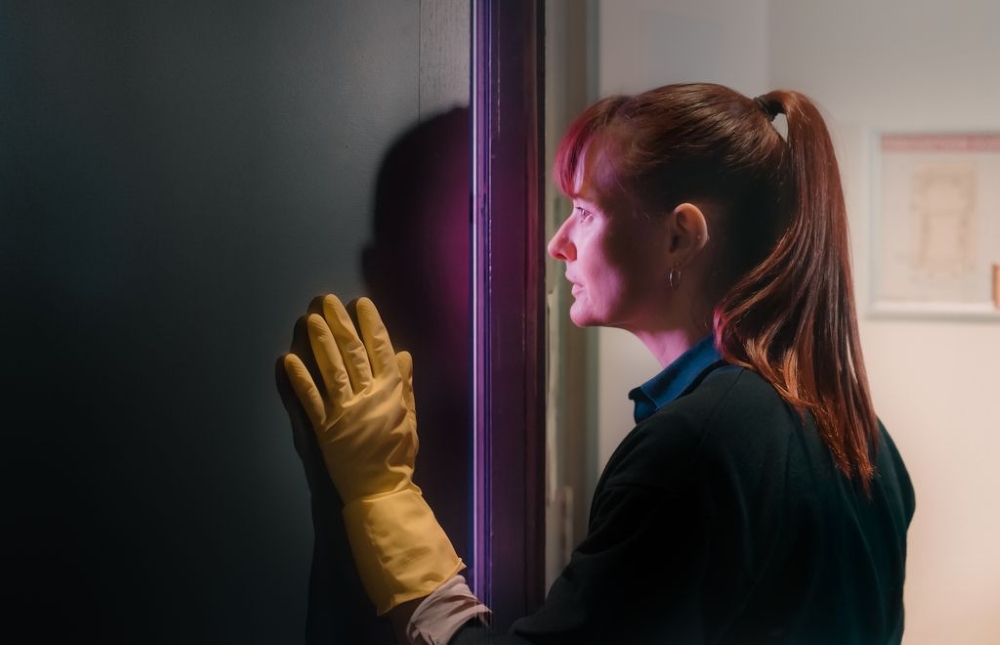
When a cleaning lady spots a celebrated surfer being honored with a medal for heroism, her world comes crashing down. She recognizes him as the man who assaulted her years ago. (One Tree Entertainment, 2025)
With only a streetwise courier by her side, she sets out to expose the truth, risking everything to confront the man who’s built his life on lies.
Strangers in a Car Park is an unflinching and unorthodox drama about memory, justice, and the lies we tell ourselves and others.
Release Date: November 11 Watch: On Digital & On Demand
Photo: One Tree Entertainment, used with permission.
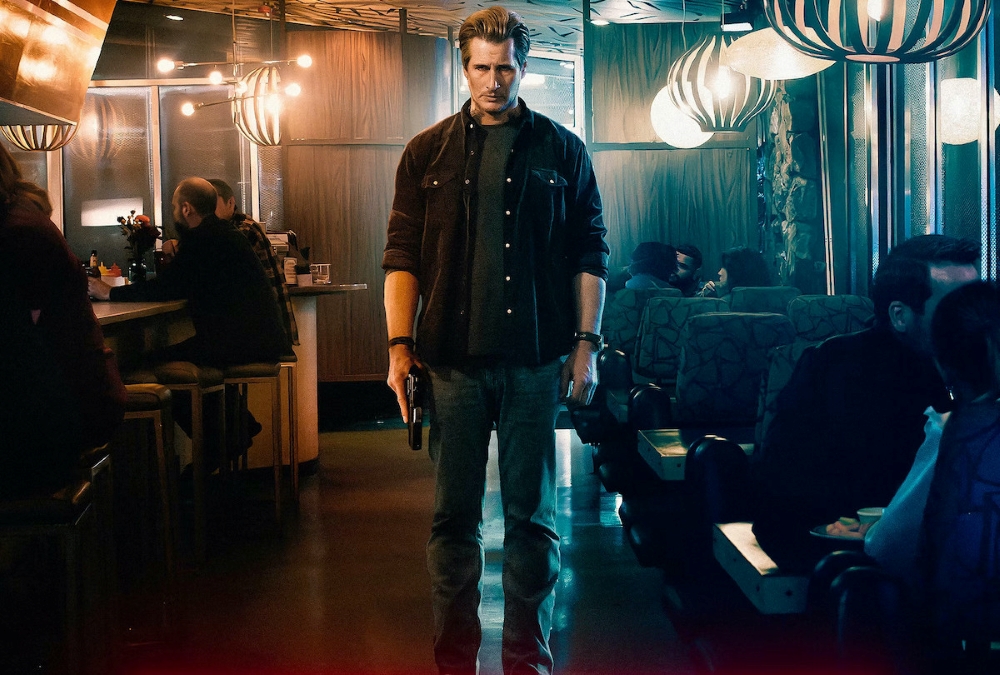
Charlie, a notorious serial killer known as The Midnight Mangler, finds himself trapped reliving the same violent night over and over. At first, he embraces his grisly urges but as the cycle continues, desperation sets in. Haunted by his actions and unable to escape the endless nightmare, Charlie begins to unravel both mentally and morally. It is available for streaming for free on Amazon Prime and The Roku Channel and for rent/buy on Fandango at Home, Google Play Movies, among others.
Review
Kill Me Again is a gripping psychological horror-thriller that takes the “time loop” concept and twists it into something darkly original. The film follows the Midnight Mangler, a notorious serial killer who becomes trapped reliving the same brutal night again and again and forced to face his own monstrosity with each repetition. It starts off as a regular slasher movie but evolves into a chilling study of guilt, punishment, and the possibility of redemption.
Keith Jardine’s direction is sharp and atmospheric, using shadowy cinematography to mirror the killer’s descent into madness. Even the name of the café, The Killer Café, points to how everything centers around Charlie. Though uncomfortable to watch, Charlie’s initial encounter with Ana shows the depth of his depravity. Each repeated night peels back another layer of his past, revealing brief flashes of humanity beneath the horror. The pacing is relentless yet purposeful, balancing the gore with moments of eerie introspection. Jardine has a small but significant role that comes full circle at the end.
Brendan Fehr delivers a standout performance, menacing yet heartbreakingly human, as the Midnight Mangler. As the loops continue, his torment shifts from physical violence to existential dread. He begins to question his own identity and the meaning of his endless suffering. Towards the end, you can tell he wants to overcome his evil nature, but succumbs every time. The story becomes less about murder and more about moral reckoning.
Stylish, unsettling, and surprisingly introspective, Kill Me Again is a chilling exploration of the cyclical nature of evil and the nightmare of never escaping oneself. There’s plenty of violence and gore to please fans of slasher films, yet the overall message is more of a social commentary.
Miguel Huerta and Pasqual Gutierrez in Pasqual Gutierrez’ Serious People. Photo: Tribeca Films/Memory, used with permission.
🎬Serious People
“Life’s a Movie”
Written and Directed by: Pasqual Gutierrez & Ben Mullinkosson Produced by: Ryan Hahn, Laurel Thomson, Teddy Lee Starring: Pasqual Gutierrez, Christine Yuan, RJ Sanchez, Miguel Huerta
Official Selection:Sundance Film Festival 2025 In Theaters: November 14, 2025 On Demand: December 16, 2025 (all major platforms)
Tribeca Films x Memory Present Serious People
About the Film
Serious People follows successful music video director Pasqual Gutierrez, who faces a life-altering dilemma on the due date of his first child: accept the biggest music video project of his career or finally step back and focus on his family. (Emma Griffiths PR, 2025)
Frustrated by his lack of balance, Pasqual makes a bold decision, he casts a doppelgänger named Miguel to fill his shoes in his directing duo, Cliqua, while he takes paternity leave. But as he spends more time teaching Miguel how to inhabit his life, the line between real and replacement begins to blur.
The result is a sharp, funny, and emotionally charged look at ambition, identity, and the replaceability of people in clout-driven Los Angeles. The film ultimately asks: What does it mean to be a director, a parent, and, most of all, a real person?
Running Time: 86 minutes (USA, Feature Film)
Behind the Camera
Pasqual Gutierrez
An award-winning American filmmaker, Gutierrez is best known as one half of Cliqua, the powerhouse directing duo behind some of the biggest music videos of the past decade. Together with RJ Sanchez, he’s collaborated with Bad Bunny, Rosalia, J Balvin, Madonna, Travis Scott, and The Weeknd, among many others.
Gutierrez’ work has earned multiple nominations and an MTV VMA, and his debut short film Shut Up & Fish, now Oscar-qualified, has been making waves on the festival circuit. Serious People marks his first narrative feature film, which made its world premiere at Sundance 2025.
Ben Mullinkosson
Co-writer and co-director Ben Mullinkosson brings his documentary sensibility to Serious People, blending realism with dark humor. His 2023 documentary The Last Year of Darkness won the Special Jury Mention at CPH:DOX and was released by MUBI.
Mullinkosson’s earlier work includes Gnarly in Pink (Tribeca Film Festival, 2013), distributed by The New York Times Op-Docs, and a series of acclaimed shorts that have earned Vimeo Staff Picks and millions of online views.
Why Serious People Matters
Serious People is a reflection on modern creativity, work, and self-worth. It’s a satire of hustle culture wrapped in a heartfelt story about fatherhood and identity. The film captures what it feels like to be torn between personal meaning and professional validation, a tension many of us know all too well.
Opening in theaters on November 14, with a Video On Demand release on December 16, this debut feature promises to be one of the most talked-about indie films of the year.
Serious People poster. Photo: Tribeca Films/Memory, used with permission.
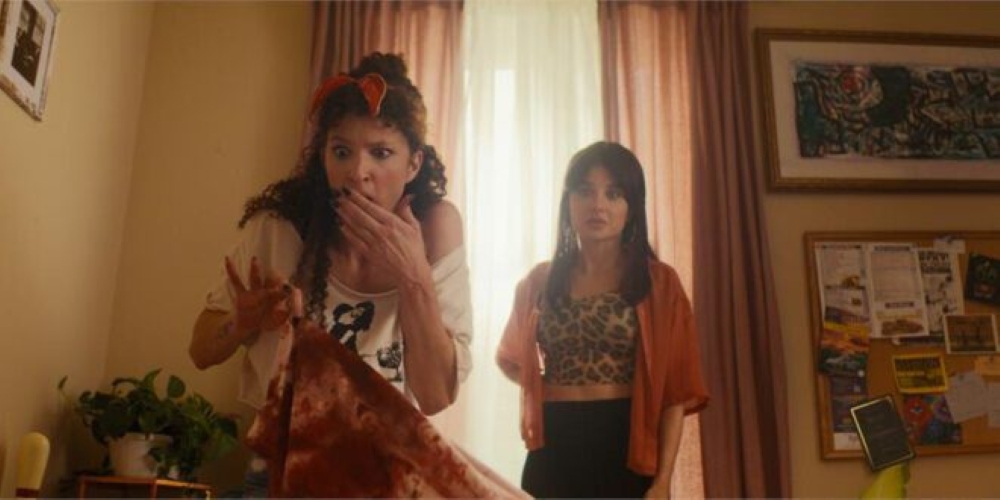
Mikaela Hoover and Ruby Modine in Dead Giveaway. Photo: VP Independent, used with permission.
🎬 Philadelphia Film Festival 2025: Celebrating the Best in Global Cinema
Every October, the Philadelphia Film Festival transforms the city into a global stage for cinematic storytelling — welcoming tens of thousands of film lovers, emerging talents, and celebrated filmmakers for an electrifying 11-day experience. (Philadelphia Film Society, 2025)
Curated by the Philadelphia Film Society’s expert programming team, who travel the world from Sundance to Cannes, Berlin to Toronto, the Festival delivers a handpicked lineup of the year’s most talked-about, award-winning, and visionary films. From bold debuts to international sensations, every screening is a chance to discover the next big thing in film.
This year’s Festival runs October 16–26, 2025, featuring 11 days of world-class cinema, exclusive events, and celebrations that bring the city’s film community together.
🌟 Spotlight Feature: Dead Giveaway
World Premiere | Section: Filmadelphia
One of the most anticipated screenings of the Festival is Ian Kimble’s Dead Giveaway, a wickedly funny horror-comedy making its world premiere right here in Philadelphia. (Emma Griffiths PR, 2025)
Jill (Ruby Modine) wakes up from a blackout night of drinking and partying to find herself covered in blood — and sharing her bed with a dead man. Hungry, hungover, horrified, and possibly a murderer, she scrambles to clean up before her roommate Sarah (Suzann Toni) notices.
When her best friend Lia (Mikaela Hoover) shows up, half-concerned, half-annoyed, she reluctantly agrees to help Jill figure out what happened, but only under one condition: they have to make it to brunch before 3 p.m.
What follows is a blood-soaked comedy of errors involving mistaken identities, suspicious visitors, and a very inconvenient corpse. Between hiding bodies, dodging questions, and keeping their mimosas on schedule, Jill and Lia stumble through a hangover-fueled nightmare where every fix only makes things worse.
With an endlessly creative script by Ian Kimble, Dead Giveaway delivers a sharp mix of horror and humor — and the irresistible chemistry between Ruby Modine and Mikaela Hoover keeps audiences laughing (and screaming) until the very end.
🎥 About the Filmmaker
Ian Kimble is a writer, producer, and director with a background in award-winning short films and independent features. Dead Giveaway marks his feature debut as writer, director, and producer — expanding on one of his original short films. With this project, Kimble cements his place as one of Philadelphia’s most exciting emerging filmmakers.
📅 Screening Schedule
Philadelphia Film Festival 2025 Official Screenings
World Premiere 📍 Friday, October 17 at 9:45 p.m. Location: Film Society Center 1412 Chestnut Street, Philadelphia, PA 19102
Encore Screening 📍 Sunday, October 26 at 8:00 p.m. Location: Film Society East 125 S. 2nd St., Philadelphia, PA 19106
Whether you’re a die-hard horror fan or just love a clever dark comedy, Dead Giveaway is a must-see at this year’s Philadelphia Film Festival, proof that the city’s film scene is as bold, fresh, and fearless as ever.
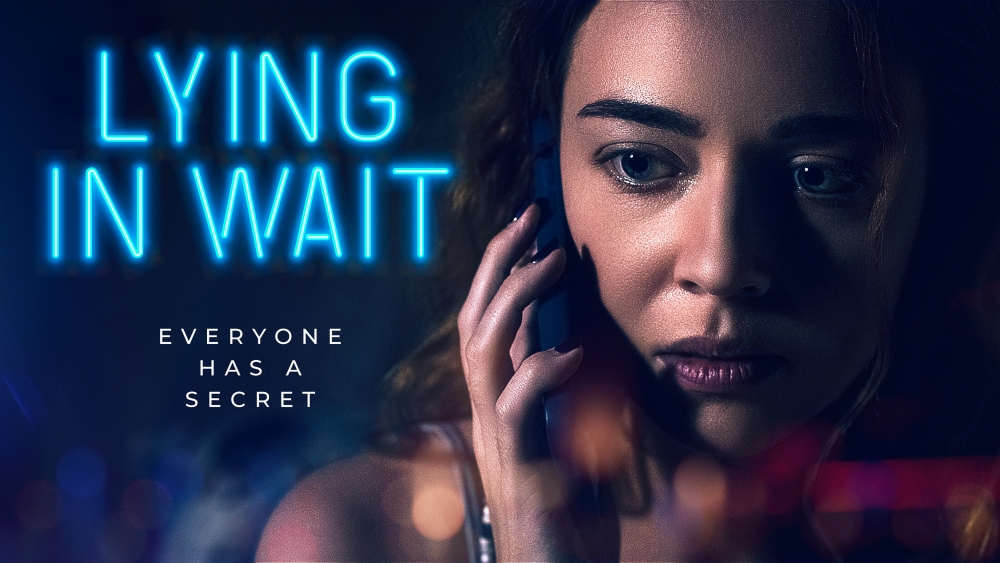
Lying in Wait is a girls’ night gone wrong thriller that keeps you guessing. Photo: One Tree Entertainment, used with permission.
🎬Lying In Wait (2025) — Movie Review
Synopsis: During a girls’ night out, Skyler goes missing and Rachel and Daniela desperately search for her. All clues point to a kidnapping, but Rachel knows there’s more to the case and everyone has a secret. (One Tree Entertainment, 2025)
Written by: Tomas Decurgez & Savanah Joeckel Directed by: Tomas Decurgez Starring: Savanah Joeckel, Tony Garza, and Tomas CL Genre: Thriller
Review
Lying in Wait delivers a tense, twist-filled thriller that keeps you guessing until the final moments. The film opens with a chilling scene: a couple enjoying a quiet day outdoors when their dog uncovers a buried body with only a fly-infested hand visible. From there, the focus shifts to Skyler and Rachel, who are picking up Daniela for what’s supposed to be a carefree girls’ night out.
That night quickly unravels into a nightmare when Skyler vanishes without a trace. Her friends Rachel and Daniela, portrayed with raw urgency and emotional depth, refuse to sit back as the police chase dead ends.
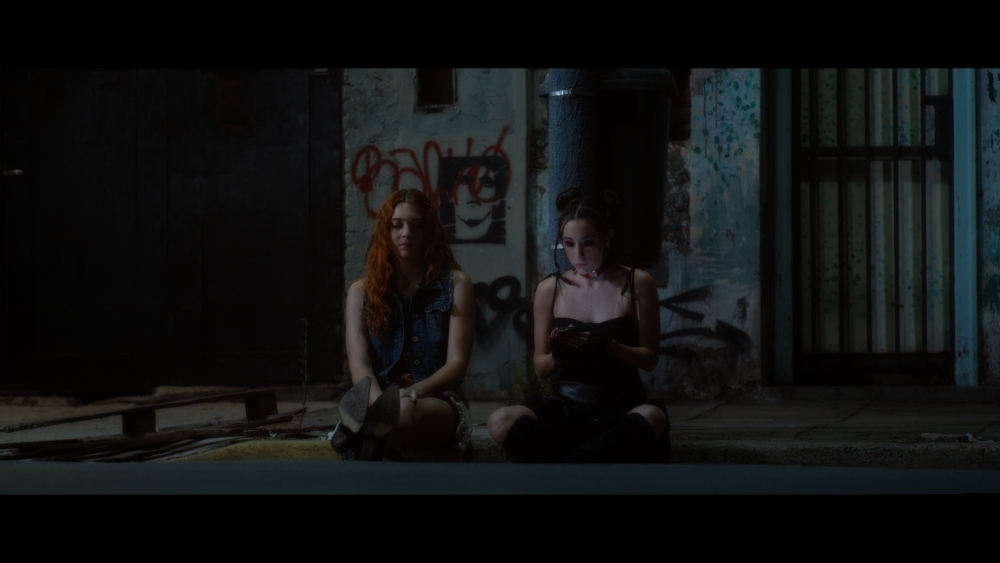
As Rachel digs deeper, the film peels back layers of deceit and every character hides something, and no one is who they seem. Director Tomas Decurgez balances moody cinematography with tight pacing, creating an atmosphere where even silence feels dangerous. The urban nightlife scenes, shot with grainy realism, amplify the sense of dread.
While some secondary characters feel underdeveloped, the suspense never lets up. The psychological tension drives the story, exploring friendship, guilt, and secrets that resurface when trust is broken. Told through a non-linear narrative, flashbacks gradually reveal the truth behind Skyler’s disappearance.
By the time the mystery unravels, Lying in Wait proves to be more than a simple kidnapping story; it’s a haunting exploration of betrayal and the dark corners of the human heart.
⭐ Rating: 4/5 — A gripping and atmospheric thriller worth watching.
*Thank you to One Tree Entertainment for the screener link for review consideration. I haven’t been compensated for this review and all views and opinions expressed are my own.
Lying in Wait still. Photo: One Tree Entertainment, used with permission.
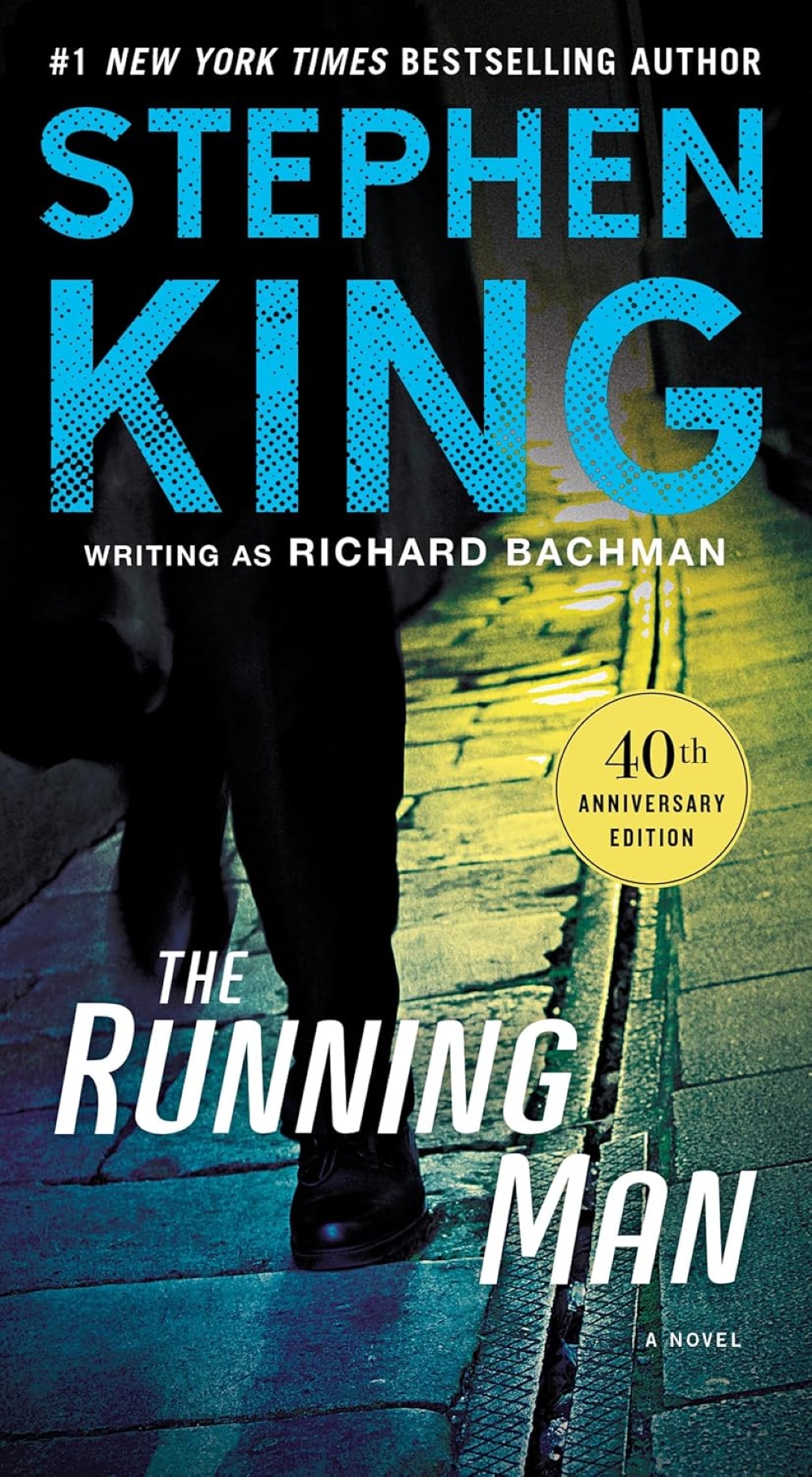
The new book to movie adaptation starring Glen Powell hits theaters on November 7. Photo: Barnes & Noble
Stephen King’s “The Running Man” Returns — and Hits the Big Screen
Originally published under King’s pseudonym Richard Bachman in 1982, The Running Man later appeared as part of The Bachman Books collection in 1985. Now, this dark, dystopian thriller is making its way to the big screen, with Paramount’s new adaptation set to premiere on November 7, 2025.
Ben Richards has lost everything—his job, his savings, and nearly his hope. With a sick daughter in need of urgent medical care, he takes a desperate gamble and signs up for the nation’s most popular (and brutal) reality show: The Running Man, where contestants are hunted for sport.
If Ben can stay alive for thirty days, he’ll win a billion dollars. The catch? No one has ever survived more than eight days. Pursued by a lethal strike force trained to kill, Richards must navigate a world where every step could be his last.
It’s a chilling story about desperation, power, and the lengths one man will go to save his family.
The Film Adaptation
The Running Man (2025) A man joins a game show where contestants can run anywhere in the world—while professional “hunters” track them down.
Director: Edgar Wright
Writers: Michael Bacall, Stephen King, Edgar Wright
Stars: Glen Powell, Emilia Jones, Josh Brolin
Genre: Dystopian Sci-Fi, Dark Comedy, Survival, Action Adventure
Running Time: 140 minutes
With Wright’s trademark style and a powerhouse cast, this adaptation promises to bring King’s high-stakes vision to thrilling, satirical life.
About the Author
Stephen King is the author of more than sixty books, all of them worldwide bestsellers. His recent works include Never Flinch, You Like It Darker, Holly, Fairy Tale, Billy Summers, If It Bleeds, The Institute, Elevation, The Outsider, Sleeping Beauties (co-written with his son Owen King), and the Bill Hodges Trilogy: Mr. Mercedes, Finders Keepers, and End of Watch.
King is the recipient of numerous honors, including:
2020 Audio Publishers Association Lifetime Achievement Award
2018 PEN America Literary Service Award
2014 National Medal of Arts
2003 National Book Foundation Medal for Distinguished Contribution to American Letters
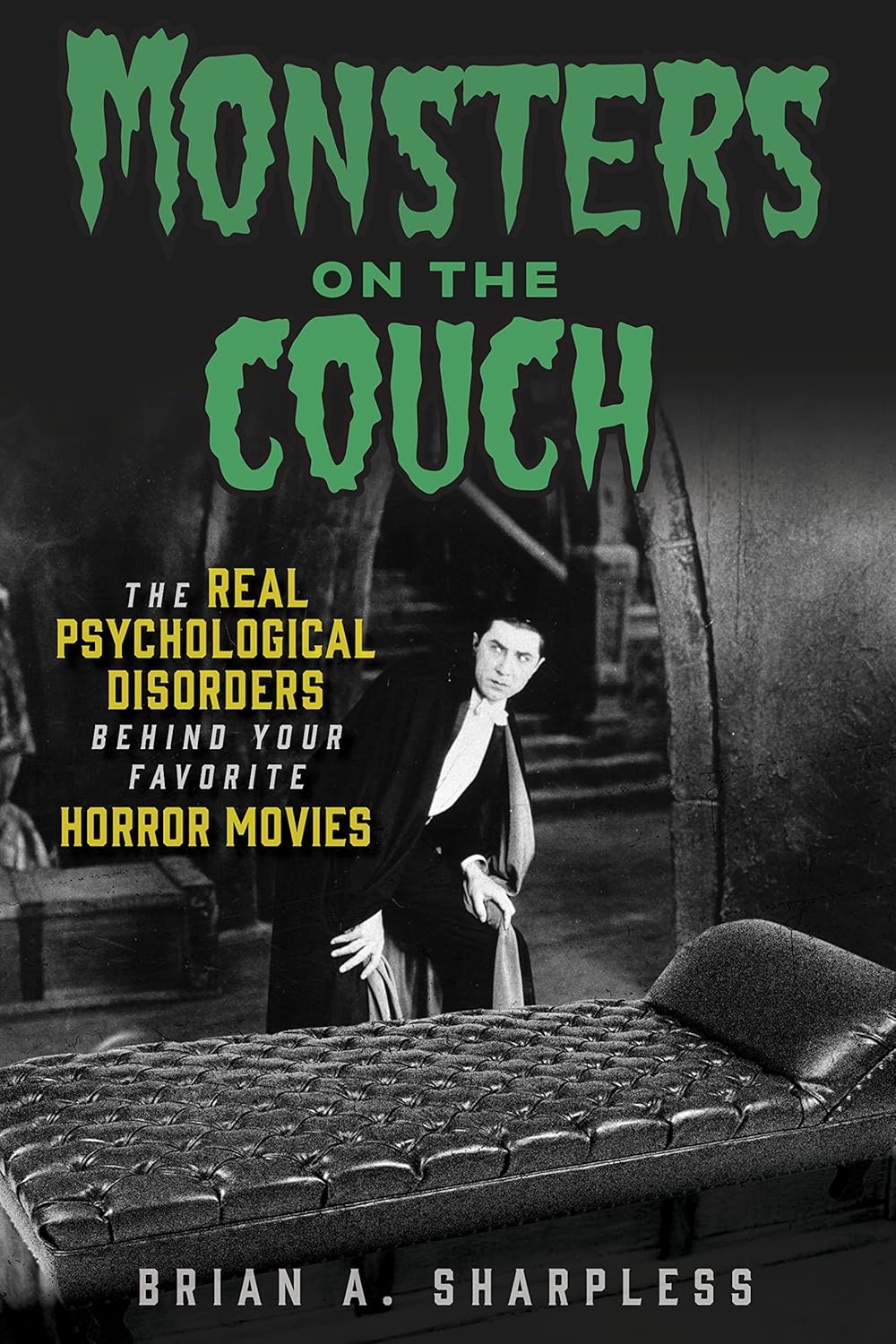
Sharpless compares dramatic clinical syndromes, every bit as fascinating as those on the silver screen, with the science and folklore behind our favorite monsters.
Horror movies, he argues, can reveal far more about human psychology than we realize. When explored honestly, our fears become mirrors reflecting our culture, our anxieties, and our shared humanity.
Famous Monsters and Their Real-Life Counterparts
Horror fans may be obsessed with vampires, werewolves, zombies, and the eerie “replacements” from Invasion of the Body Snatchers, but few know the real conditions behind these creatures, such as Renfield’s syndrome, clinical lycanthropy, Cotard’s syndrome, and misidentification delusions.
What’s Inside the Book
Part I: Movie Monsters from the Early Days of Cinema
Clinical Lycanthropy
You Suck?
I Am The Walking Dead
Part II: Modern-Day Movie Monsters
One, Two, The Dab Tsog’s Coming For You
This Is Not My Beautiful House, This Is Not My Beautiful Wife
Demons, Aliens, and Shadow People
Part III: Monstrous Behaviors
Are You Gonna Eat That?
Shuddersome Sex in the Movies
Highlights
Part I: Chapter 3 Sharpless explains that immortality might not be all it’s cracked up to be. Vampires and zombies both feed after death, yet zombies’ mindless existence makes their fate far gloomier. As he writes,
“Some psychologists and philosophers have argued that this fundamental fear of death prompted people to defensively create gods and an immortal afterlife.”
Part II: Chapter 4 Sharpless shares his personal experience with sleep paralysis and connects it to the mysterious Hmong Deaths that likely inspired Nightmare on Elm Street. These incidents involved young men in California who died in their sleep, hauntingly blurring the line between science and superstition.
Review
In Monsters on the Couch, clinical psychologist Brian Sharpless bridges the gap between horror cinema and psychological science with wit and expertise. His goal is to raise awareness of serious but often overlooked psychological conditions that cause real suffering.
Each chapter dissects iconic horror films such as Nightmare on Elm Street and Invasion of the Body Snatchers through the lens of genuine mental disorders, uncovering the truths, exaggerations, and myths that shape how we perceive mental illness. He also explains symptoms and common treatments with both compassion and precision.
Sharpless writes with the enthusiasm of a horror fan and the insight of a clinician, grounding classic horror tropes like sleep paralysis and vampirism in psychological reality. The tone remains conversational and often humorous, making even the darkest topics approachable.
Ultimately, Monsters on the Couch reminds us that the true horror isn’t the monster on the screen, it’s society’s ongoing misunderstanding of mental health. This is essential reading for horror lovers, psychology students, and anyone curious about how fear and empathy intertwine.
“The most consistent theme across films would likely be a fear of death…I suspect that a lot of people get uncomfortable even dipping their toe in the dark, icy cold waters of death, let alone diving in headfirst.”
⭐⭐⭐⭐
Rating: 4 out of 5.
About the Author
Brian A. Sharpless is a licensed psychologist, researcher, and author whose work focuses on unusual psychological disorders, psychodynamic psychotherapy, and the history and philosophy of clinical psychology. He holds a Ph.D. in Clinical Psychology and an M.A. in Philosophy from Pennsylvania State University, and completed post-doctoral fellowships at the University of Pennsylvania.
*Thank you to Fauzia Burke/FSB Associates for the gift copy for review consideration. I haven’t been compensated for this review and all views and opinions expressed are my own.
Director: Harley Wallen Cast: Sean Whalen, Angelina Danielle Cama, Maria Olsen Genres: Horror, Drama, Thriller, Mystery
A Haunting Premise
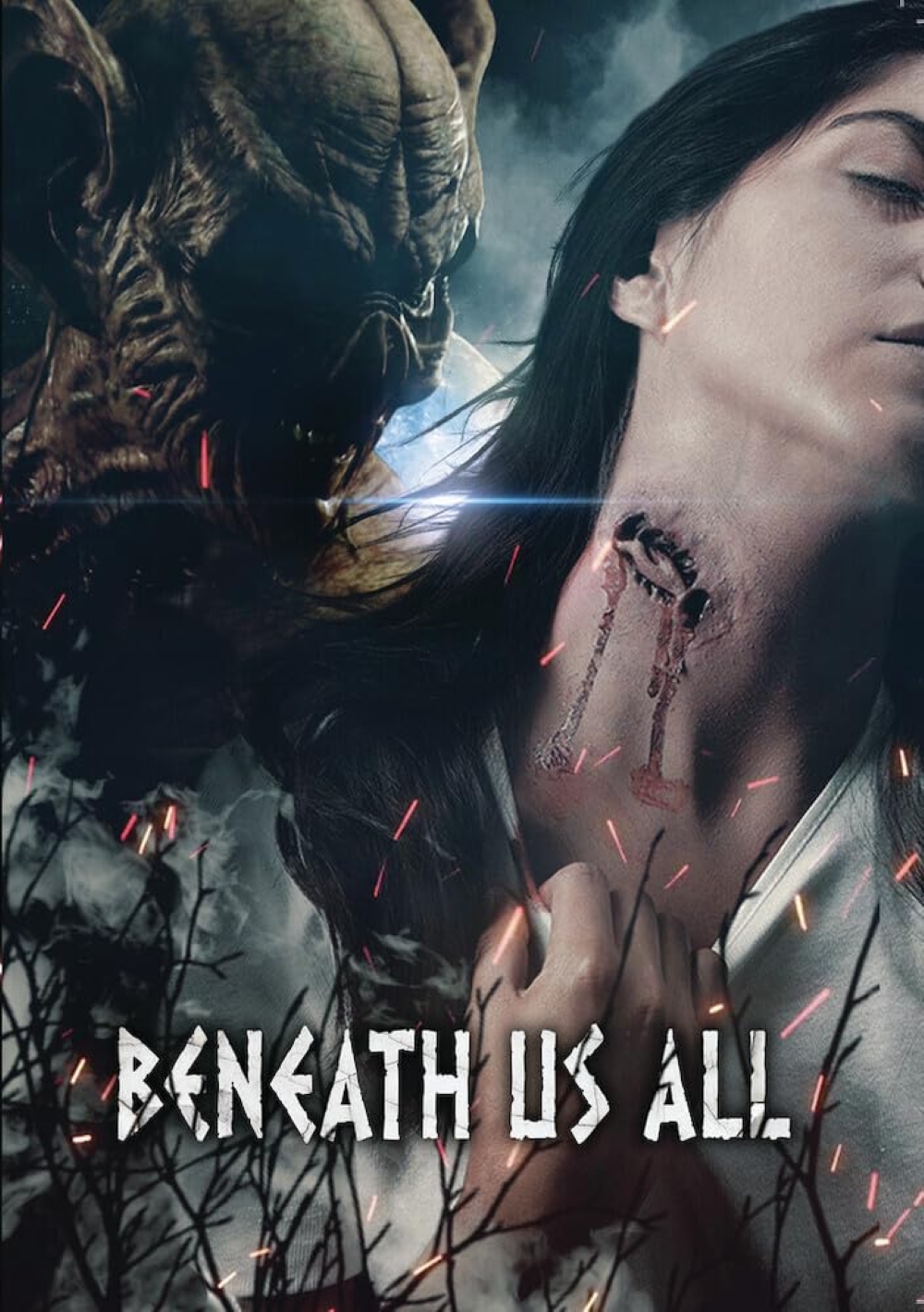
The film opens in Scandinavia in 912 AD, where a man named Frey murders a young girl. The villagers capture him and bury him alive. Centuries later, we’re introduced to Julie (Angelina Danielle Cama), a foster child nearing her 18th birthday. Julie lives under the watch of foster parents Todd (Sean Whalen), a struggling gambler, and Janelle (Maria Olsen), whose kind facade quickly cracks.
When Julie discovers a mysterious Yggdrasil pendant in the woods, she unknowingly unleashes Frey—an ancient evil disguised as a wounded man. Out of compassion, she shelters him in a barn, only to realize his sinister nature as his power grows.
Mythology Meets Horror
Beneath Us All delivers a haunting twist on Norse mythology. The pendant and Frey’s dark origins add a folkloric depth that elevates the familiar “evil in the woods” setup. The film avoids cheap jump scares, instead relying on slow-building dread and an atmosphere of unease.
The cinematography captures the forest as a living threat—dark, still, and heavy with shadows. Every frame lingers with tension, making the setting a character in its own right.
Performances and Themes
Angelina Danielle Cama delivers a standout performance, balancing fear, compassion, and determination. Her protective nature toward the younger children raises the stakes, grounding the supernatural threat in raw human emotion.
Some dialogue feels clunky, and the middle act struggles with pacing, but the emotional weight of the final confrontation makes up for it. Themes of survival, found family, and temptation intertwine with the mythological horror, keeping the story compelling.
Final Thoughts
Beneath Us All is a chilling, myth-driven thriller that blends folklore with classic horror suspense. While some familiar tropes creep in, its Norse twist and atmospheric tension make it worth watching. It’s available for streaming on Tubi.
🎥 Recommended for fans of atmospheric horror and creature features.
“Look, Julie. I know you, okay? You’re a good person. No, they stomped it out of me a long time ago.”







 SA Examiner