‘Sentinels in the Oakwood’: Post-Apocalyptic Fiction with Heart and Roots

‘Sentinels in the Oakwood’ is the new novel by J.P.S. Stalder

📚 Review: Sentinels in the Oakwood by J.P.S. Stalder

J.P.S. Stalder’s Sentinels in the Oakwood is a richly imagined post-apocalyptic novel set in the Missouri Ozarks, more than 100 years after a devastating nuclear war. Nature has reclaimed much of what was destroyed, and the region has become a vast wilderness of woodlands, lakes, and caves.

Two Ways of Life, One Fragile Balance

The novel presents a vivid contrast between two types of survivors:

  • The Oakwood people, who have returned to a life of simplicity and harmony with the land
  • The underground dwellers of Fort Leonard Wood, descendants of those who took refuge in high-tech subterranean shelters

Their coexistence is uneasy, and a new threat from the north—intent on domination—forces both groups to confront their differences and unite for survival.

More Than a Survival Story

This is not just a story of endurance. Sentinels in the Oakwood is a deep examination of human resilience, community, and the tension between tradition and technology. Stadler’s lyrical, atmospheric prose paints a vivid picture of a world rewilded:

“The fallen slabs of weathered grey concrete jutted out from the edges of the shoreline like giant teeth waiting to swallow those foolish enough to pass through its mouth in a small canoe.”

Multiple Perspectives, Complex Themes

The story unfolds through three compelling narratives:

  • Jimson, a young Oakwood native connected to the natural world
  • Sarah, from the underground facility, apprehensive but curious about life above
  • BOB-e, a sentinel robot beginning to evolve beyond his programming

BOB-e’s storyline is particularly moving. When his fellow sentinel KYLE-e is critically damaged in battle, BOB-e scours the area for parts, driven by an emerging sense of loyalty and grief. His actions—and Sarah’s eventual recognition of sentient rights—raise profound questions about identity, free will, and the definition of life.

A Thoughtful, Gripping Read

Themes of survival, moral complexity, artificial intelligence, and ecological balance run deep. Stadler crafts a story that is not only thrilling but also introspective. The growing threat from the outside world pushes these disparate communities to confront hard truths and seek common ground.

“The future, it occurred to her, would always be the product of those who were courageous enough to stand for what they had grown to believe in, and that courage mattered most when everything was at stake.”

Final Thoughts

Sentinels in the Oakwood is a gripping and thought-provoking blend of speculative fiction and ecological storytelling. For readers who enjoy post-apocalyptic narratives with emotional depth and philosophical weight, this novel is a must-read.

Recommended for fans of: Station Eleven, The Overstory, The Broken Earth trilogy

*The author of this post received an ARC for an honest review. The views and opinions expressed here belong solely to her.

Rating: 5 out of 5.

‘A Remarkable Man’: Marc Petitjean’s Portrait of a Hiroshima Survivor

‘A Remarkable Man’ is an eye-opening portrait of a man who dedicated his life to treating and advocating for radiation survivors. Photo: Other Press

📚 A Remarkable Man: Honoring Dr. Shuntaro Hida, From Hiroshima to Fukushima

Book Release: June 24, 2025

In “A Remarkable Man: Dr. Shuntaro Hida from Hiroshima to Fukushima,” author Marc Petitjean—known for “Back to Japan” and “The Heart: Frida Kahlo in Paris”—delivers a powerful and intimate portrait of a man whose life was defined by resilience, compassion, and truth-telling in the wake of unspeakable devastation. (Other Press, 2025)

Dr. Shuntaro Hida (1917–2017) was a young military physician stationed just six kilometers from ground zero when the atomic bomb fell on Hiroshima. In the aftermath, he played a vital role tending to the overwhelming number of victims, eventually dedicating more than six decades to treating survivors and warning the world about the long-term dangers of nuclear radiation.

Through thoughtful interviews and detailed reportage, Petitjean paints a vivid picture of Dr. Hida’s unyielding commitment to justice and care. “A Remarkable Man” is both a tribute and a timely reminder of the human cost of nuclear warfare and energy misuse—particularly relevant today amid rising global authoritarianism and escalating geopolitical tensions.

The book also highlights the ongoing work of Nihon Hidankyo, a survivors’ organization co-founded by Dr. Hida, which was awarded the 2024 Nobel Peace Prize for its tireless advocacy.


👩‍💻 About the Author

Marc Petitjean is a writer, filmmaker, and photographer. His documentaries include From Hiroshima to Fukushima, which profiles Dr. Hida; Living Treasure, about kimono artist Kunihiko Moriguchi; and Zones Grises, a personal exploration of his father’s past. His books include “Back to Japan” (2021) and “The Heart: Frida Kahlo” in Paris (2020), both published by Other Press.

✍️About the Translator

Adriana Hunter has translated over 90 books from French to English, including Petitjean’s “The Heart: Frida Kahlo in Paris” and Hervé Le Tellier’s “The Anomaly.” She is the recipient of the French-American Foundation’s 2013 Translation Prize in Fiction and resides in Kent, England.


“A Remarkable Man” is more than a biography—it is a call to remember, to resist, and to act. Don’t miss this essential read when it hits shelves on June 24, 2025.


Praise for Marc Petitjean  “A Remarkable Man”

“Remembering a heroic doctor. Shuntaro Hida (1917-2017) was a longtime antinuclear campaigner whose work as a young doctor began when tending to victims of the destruction of Hiroshima in 1945…Petitjean’s short book offers a warm tribute to this “frail figure” whose eyes “gleamed with intelligence and humanity” as he recounted his experiences in Hiroshima. In excerpts from interviews and speeches, Hida offers a rare account of the horrors that he witnessed…True to his word, he kept traveling throughout Japan—speaking out against the dangers he had seen with his own eyes—until he was nearly 100. Invaluable testimony from a witness to war.”
—KIRKUS REVIEWS

“Shuntaro Hida saw the destructive and long-lasting consequences of nuclear weapons firsthand, and dedicated his life to understanding and revealing them for decades after the United States dropped atomic bombs on Japan. Now, eighty years after the radioactive end of World War II, A Remarkable Man looks back on Hida’s life of research and advocacy. With an intimate narrative style, including Hida’s own words and Marc Petitjean’s vivid reporting and observations, A Remarkable Man illuminates not just the damage of our nuclear past but what it means for our future.”
—Sarah Scoles, author of Countdown: The Blinding Future of Nuclear Weapons

“Dr. Shuntaro Hida, who witnessed the atomic attack on Hiroshima eight decades ago, spent the rest of his life helping survivors and warning of the dangers of nuclear weapons. Now, writer and filmmaker Marc Petitjean has spotlighted Dr. Hida’s powerful crusade in his excellent narrative A Remarkable Man. From the ashes of Hiroshima to the tragedy of Fukushima, Dr. Hida’s powerful and haunting story is as relevant today as it was on that fateful August morning in 1945. This is a book not to be missed.”
—James M. Scott, Pulitzer Prize finalist and author of Black Snow, Rampage, and Target Tokyo

1750779576

  days

  hours  minutes  seconds

until

‘A Remarkable Man’ release date

A Quiet Summer in Japan: Masashi Matsuie’s ‘The Summer House’

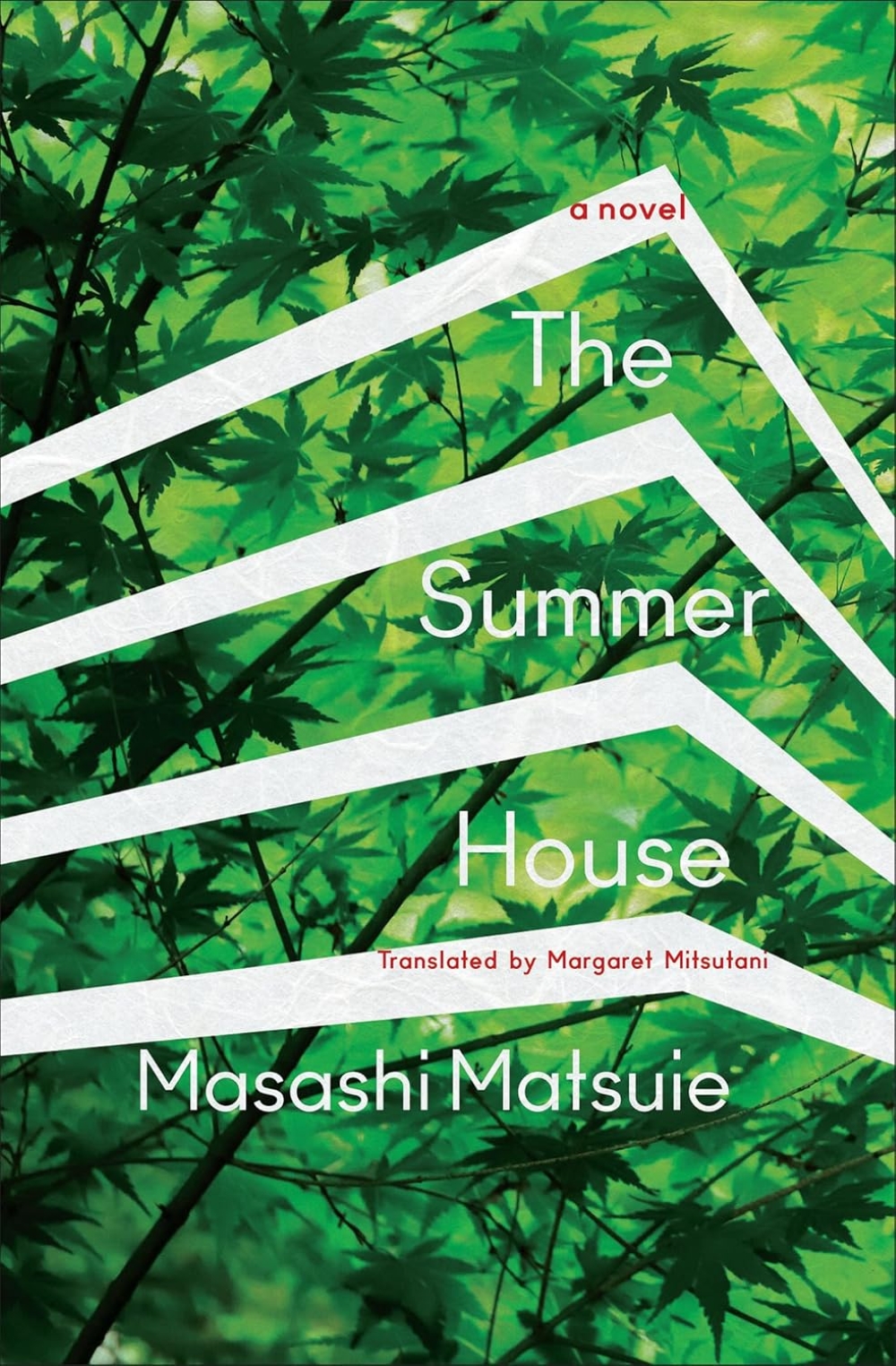
‘The Summer House: A Novel’ by Masashi Matsuie. Photo: Barnes & Noble.

📚Book Spotlight: “The Summer House” by Masashi Matsuie
Release Date: June 17, 2025

Japanese author Masashi Matsuie makes a powerful debut with “The Summer House: A Novel,” a richly atmospheric and deeply observant story set in the world of architecture. This award-winning novel offers a unique window into modern Japan, told through the eyes of a young architect navigating personal and professional transformation. (Other Press, 2025)

At the heart of the novel is Tōru Sakanishi, a recent university graduate who joins the prestigious Murai Office—a boutique Tokyo architecture firm founded by a former student of Frank Lloyd Wright. Sakanishi’s keen, introspective voice captures the artistry and care that defines the firm’s ethos.

As the oppressive Tokyo summer approaches, the Murai Office decamps to Kita-Asama, a faded artists’ colony in the mountains. There, the team—Sakanishi, his enigmatic boss Murai, and two intriguing women who stir Sakanishi’s affections—embark on a high-stakes design competition: creating the new National Library of Modern Literature, while contending with a rival firm dominating government commissions.

Elegantly translated by Margaret Mitsutani, National Book Award winner, “The Summer House” is a quiet yet compelling exploration of creativity, tradition, and longing. Matsuie’s prose evokes the serene beauty of Japan’s natural world while probing the tension between modern ambition and enduring heritage.

This character-driven novel is ideal for fans of Mitsutani’s acclaimed translations and for readers interested in Japanese literature, architecture, and coming-of-age stories with artistic depth.


👩‍💻About the Author
Masashi Matsuie began his career as a fiction editor at Shinchosha Publishing Company, where he worked with literary icons including Yoko Ogawa, Banana Yoshimoto, and Haruki Murakami. He also helped launch Shincho Crest Books, a translation-focused imprint. “The Summer House” is his debut novel and winner of the prestigious Yomiuri Prize for Literature, an honor rarely given to first-time authors.

👩‍💻About the Translator
Margaret Mitsutani is a renowned translator of Japanese literature, known for her work with Yoko Tawada and Nobel laureate Kenzaburō Ōe. She was a finalist for the National Book Award for “Scattered All Over the Earth” and won the award for her translation of The Emissary.


Advance Praise for Masashi Matsuie (“The Summer House”):

“Elegantly understated novel of a tenuous love affair in modern Japan…Matsuie, renowned as an editor (of Haruki Murakami, among other writers) before becoming an author, delivers a simple but graceful tale that’s full of intriguing asides on architecture, which Sensei insists is “function, pure and simple.” A novel packed with ideas about art, life, and love.”
KIRKUS REVIEWS

“The more I read, the more I fell in love with this beautiful novel…Its foremost charm is the fluent, clean-cut use of words. Nothing in Matsuie’s descriptions is superfluous, nor is anything missing, and the refreshing vitality of his prose is impressive…The birth of such a writer is cause for celebration.”
—Hiromi Kawakami, author of Strange Weather in Tokyo and The Nakano Thrift Shop


1750153882

  days

  hours  minutes  seconds

until

‘The Summer House: A Novel’ release date

Writing Through Grief: Matteo B. Bianchi’s Unforgettable Novel of Love and Loss

‘The Life of Those Left Behind’ is the new novel by Matteo B. Bianchi. Photo: Other Press.

The Life of Those Left Behind”: Matteo B. Bianchi’s Devastating and Luminous Novel of Grief

In “The Life of Those Left Behind: A Novel,” acclaimed Italian author Matteo B. Bianchi delivers a profoundly intimate meditation on grief, love, and the transformative power of storytelling. Set to be released in English on May 27, 2025 by Other Press, this luminous novel is a raw and moving testimony born from personal tragedy. (Other Press, 2025)

A Story Born from Loss

When Bianchi published his debut novel in 1999—a fierce, coming-of-age portrait of a gay boy in 1980s Milan—his life was shadowed by unbearable loss. Just months earlier, S., the man he had loved and lived with for seven years, had taken his own life in the apartment they once shared. Matteo was the one who found him.

From that harrowing moment, Bianchi describes being trapped in a “dark labyrinth”—a psychological and emotional whirlpool of grief, confusion, guilt, and sorrow that haunts those left behind after a loved one’s suicide. He becomes the unwilling protagonist in a tragedy that feels both intimately unique and universally unfathomable.

Writing Through the Pain

In the midst of this devastation, the writer within Bianchi begins to take notes—not as a project, but as a reflex, a lifeline. At first, they are broken fragments: raw nerves on the page, splinters of memory and emotion. Over time, those fragments evolve into a heartfelt and unfiltered conversation with S.—a record of pain, love, memory, and the slow, uncertain path back toward life.

“The Life of Those Left Behind” is the result of two decades of healing and reflection. It’s a novel both radical and vulnerable, both deeply personal and resonant with universal truths. In his journey through trauma, Bianchi joins a literary lineage of authors who have wrestled with loss on the page—writers like Joan Didion (“The Year of Magical Thinking”), Ocean Vuong (“On Earth We’re Briefly Gorgeous”), and Lidia Yuknavich (“The Chronology of Water”).

A Novel That Redeems Grief

This book is not only an account of what it means to survive, but also a testament to how writing can redeem and reframe even the most unspeakable pain. It is a powerful reminder that while grief may never fully release its grip, art can help us find light inside its darkest corners.

About the Author

Matteo B. Bianchi, born in Milan in 1966, is a novelist, editor, and screenwriter. His previous works include “Generations of Love” and “Maria Accanto,” both celebrated for their emotional depth and cultural insight.

About the Translator

Michael F. Moore is an award-winning translator known for his masterful renditions of Italian literature. His recent work includes “The Betrothed” by Alessandro Manzoni, and he has translated works by Alberto Moravia, Primo Levi, and Mario Desiati. In 2024, Moore was honored with the Thornton Wilder Prize for Translation. He holds a PhD in Italian from NYU and has served as an interpreter and staff member at the United Nations.


📖 Don’t Miss This Unforgettable Story

“The Life of Those Left Behind” is a novel that will stay with you long after the final page. Pre-order your copy today and be among the first to experience this powerful journey through love, loss, and healing.

👉 Pre-order now from Other Press


Advance Praise for Matteo BBianchi (The Life of Those Left Behind):

***One of FRESH FICTION’s Not To Miss June 2025 Titles***

“With The Life of Those Left Behind, Matteo B. Bianchi, one of Italy’s finest writers, attains new heights of intimacy, acuity, and eloquence. A chronicle of a loved one’s suicide—what led up to it and what followed it—the novel is also a testament to human endurance and compassion, fallibility and wisdom. A necessary book.”
—David Leavitt, author of Shelter in Place

“Haunting and haunted. As beautiful as it is devastating. The Life of Those Left Behind is one of those rare books to capture the brutal nature of grief and loss while soaring as a stunning work of literature. Matteo B. Bianchi serves as both traveler and guide into a terrifying underworld we never expect to enter. It’s an indelible meditation on suicide, precision-tuned to break your heart.”
—Christopher Bollen, author of Havoc


1748344996

  days

  hours  minutes  seconds

until

‘The Life of Those Left Behind’ release date

Gothic Noir in Wartime France: Franck Bouysse’s ‘Clay’

‘Clay’ is Franck Bouysse’s new novel. Photo: Other Press

New Release: Clay by Franck Bouysse

A Dark, Lyrical Tale of War, Vengeance, and Buried Passions

Critically acclaimed French author Franck Bouysse, a master of gothic noir, returns this month with his latest novel, “Clay: A Novel”—a powerful, Faulknerian story of love, masculinity, and vengeance set against the backdrop of World War I. It is available for pre-order. (Other Press, 2025)
Release Date: May 20, 2025

A Story Set in Shadows and Heat

In the summer of 1914, in the rugged heart of Cantal, France, the able-bodied men of a rural mountain community march off to war. Left behind are the women, the elderly, and the young—those who must now bear the weight of survival.

Fifteen-year-old Joseph is one of them. With his father gone, he’s left to run the family farm alongside his mother, grandmother, and their aging neighbor Leonard. Across the property line lives Valette, a bitter man excused from the war due to a malformed hand. When his brother’s wife and daughter seek refuge with him, their arrival ignites long-simmering resentments and awakens passions that had long been buried.

Gothic Noir Meets Historical Fiction

Clay is a haunting, propulsive novel that blurs the line between historical fiction and literary noir. With richly textured prose and emotionally raw characters, Bouysse crafts a deeply affecting narrative of isolation, violence, and human resilience. The novel explores themes of abuse, family bonds, suppressed desire, and the way trauma seeps through generations.

This is essential reading for fans of Bouysse’s previous work and readers who love dark, atmospheric fiction in the tradition of Tana French or William Faulkner.


About the Author

Franck Bouysse was born in France in 1965. Before becoming a full-time writer in 2007, he worked as a biology teacher. His breakout novel, “Born of No Woman,” won multiple prestigious French literary awards, including the Elle Readers’ Grand Prize, the Booksellers’ Prize, and the Prix Babelio. His follow-up, “Wind Drinkers,” received the Prix Jean Giono and further cemented his reputation as a leading voice in contemporary French literature.

About the Translator

Lara Vergnaud is a celebrated translator of French literature, known for her work across fiction, nonfiction, and scholarly texts. She has received two PEN/Heim Translation Fund Grants and a French Voices Grand Prize, and has been nominated for the National Translation Award. Her recent translations include “The Most Secret Memory of Men” by Mohamed Mbougar Sarr and “Demoiselles of Numidia” by Mohamed Leftah. She currently lives in France.


Advance Praise for Franck Bouysse (Clay):

“Franck Bouysse builds novels like an architect, writes prose like a painter, and with Clay captures both the beauty and bleakness of nature, the horrors of conflict and matters of the human heart with a poet’s precision. This is a masterwork of historical fiction—born of the Cantal region’s people as much as its mountains, rivers, and soil—that renders with staggering authenticity the volatile dramas created in the voids of the Great War. A translation to be cherished, Clay is an unforgettable story…superb, sublime, and heartbreaking.”
—Peter Farris, award-winning author of The Devil Himself

Debut Spotlight: Franziska Gänsler’s ‘Eternal Summer’ Explores Climate and Connection

‘Eternal Summer’ by Franziska Gänsler. Photo: Barnes & Noble

New Release: “Eternal Summer” by Franziska Gänsler

Available Tuesday, May 6, 2025 (Other Press)

This week brings an unsettling and mesmerizing work of climate fiction from debut author Franziska Gänsler. “Eternal Summer: A Novel” is set in a once-idyllic German spa town now devastated by climate change. Perfect for fans of Jenny Hval, Julia Armfield, and Olga Tokarczuk, this haunting novel explores themes of trust, abuse, and solidarity through the evolving relationship between two women.

When Iris inherits her grandfather’s hotel in Bad Heim, the town is still a bustling wellness retreat. But as climate change tightens its grip, summers stretch endlessly, scorching heat and forest fires fill the skies with ash and smoke, and guests become scarce. One day, a young mother and her small daughter arrive, seemingly out of nowhere. Iris senses something is off. Is the woman in need of help—or could she pose a threat?

Gänsler vividly conjures the suffocating atmosphere: the sting of ash on skin, the oppressive heat, and the ever-present scent of smoke. “Eternal Summer” is a powerful, immersive novel that captures the intersection of personal trauma and global catastrophe. It’s an intense and timely debut that lingers long after the last page.


About the Author

Franziska Gänsler was born in Augsburg, Germany in 1987. She studied art and English in Berlin, Vienna, and Augsburg. In 2020, she was shortlisted for the Blogbuster Prize and was a finalist at Berlin’s 28th Open Mike competition. Gänsler currently lives in Augsburg and Berlin. “Eternal Summer” is her first novel.

About the Translator

Imogen Taylor studied French and German at New College, Oxford, and the Humboldt University in Berlin. She has translated works by Sascha Arango, Dirk Kurbjuweit, and Melanie Raabe. In March 2016, she received the Goethe-Institut Award for New Translations.


Advance Praise for Franziska Gänsler (Eternal Summer):

“I loved this book. Exploring the unsettling tension between individual lives and the collective upheaval of the climate crisis, it questions what we owe one another. Its haunting is subtle, slow and flickering from page to page until it catches. The two women stayed with me for days afterward.”
—Sarah S. Grossman, author of “A Fire So Wild”

“Gänsler’s language is calm and unerring. Parallel to the fatal consequences of the climate crisis, she also narrates the story of women.”
—DER SPIEGEL

“A feminist climate-fiction novel that gets under the skin in many different ways.”
—BERLINER ZEITUNG

Phosphorus and the Pulse of the Planet: A Look at Jack Lohmann’s ‘White Light’

‘White Light’ by Jack Lohmann. Photo: Amazon

Phosphorus is a vital mineral that plays a crucial role in everyday life. It is essential for the formation of bones and teeth, working alongside calcium to keep them strong and healthy. Phosphorus also helps the body produce energy by aiding in the conversion of nutrients into ATP, the main energy source for cells. Additionally, it supports kidney function, muscle contractions, and nerve signaling. Found in foods like meat, dairy, nuts, and legumes, phosphorus is a key part of a balanced diet. Without it, many of the body’s essential systems would not function properly, highlighting its importance to overall health.

For readers interested in the subject, the new book “White Light” by Jack Lohmann might be of interest.

Jack Lohmann is a science writer and author of “White Light.” Lohmann has been awarded the John McPhee Award for Interdisciplinary Reporting. He received his undergraduate degree from Princeton University where he majored in English and Environmental Studies. He currently lives in Scotland. (Pantheon Books/Penguin Random House, 2025)

“White Light” A profound and lyrical reflection on the cyclical nature of life, what happens when we break that cycle, and how to repair it—told through the fate of phosphorus: in our bedrock, in our fertilizers, in our food, and in our cells.

“There would be no life without constant death.” So begins Jack Lohmann’s remarkable debut, “White Light,” a mesmerizing swirl of ecology, geology, chemistry, history, agricultural science, investigative reporting, and the poetry of the natural world. Wherever life has roamed, its record is left in the sediment; over centuries, that dead matter is compacted into rock; and in that rock is phosphate—one phosphorus atom bonded to four oxygen atoms—life preserved in death, with all its surging force.

In 1842, when the naturalist John Stevens Henslow, Darwin’s beloved botany professor, discovered the potential of that rock as a fertilizer, little did he know his countrymen would soon be grinding up the bones of dead soldiers and mummified Egyptian cats to exploit their phosphate content. Little did he know he’d spawn a global mining industry that would change our diets, our lifestyle, and the face of the planet.

Lohmann guides us from Henslow’s Suffolk, where the phosphate fertilizer industry took root, to Bone Valley in Central Florida, where it has boomed alongside big ag—leaving wreckage like the Piney Point disaster in its wake—to far-flung Nauru, an island stripped of its life force by the ravenous young industry. We sift through the Earth’s geological layers and eras, speak in depth with experts and locals, and explore our past relationship with cyclical farming—including in seventeenth century Japan, when one could pay their rent with their excrement—before we started wasting just as much phosphate as we mine. Sui generis, filled with passion and rigorous reporting, “White Light” invites us to renew our broken relationship not just with the Earth but with our own death—and the life it brings after us.

PRAISE FOR ‘WHITE LIGHT’
“A surprisingly riveting look at the role of death, in life, as illustrated via a single element.”
—Kirkus Reviews

“In this winding debut history, science writer Lohmann traces how phosphorus has shaped the natural world and human history. […] A stimulating study.”
—Publishers Weekly

“Via lyric, literary prose and journalistic storytelling, Lohmann lays bare a hidden ecological tragedy for scientifically curious readers.”
—Library Journal

“Lohmann robustly reports on the serious health hazards and environmental consequences of phosphate mining and processing.”
—Booklist

Sequins, Spotlight, and Stories: A Look at Diane Christiansen’s Dazzling Memoir

‘The Last Real Showgirl: My Sequined ’70s Onstage’ by Diane Christiansen. Photo: Amazon

Showgirls are known for their dazzling blend of beauty, confidence, and theatrical glamour. Their elaborate costumes, precision choreography, and magnetic stage presence create a spectacle that celebrates femininity, fantasy, and performance art. Often associated with Las Vegas or classic cabarets, showgirls evoke nostalgia for a bygone era of entertainment while continuing to evolve with modern flair. Visually appealing, they also possess a charisma and skill which they bring to the stage. Audiences are drawn to the magic, energy, and escape showgirls offer—a vibrant celebration of artistry, elegance, and the enduring power of performance.

If you’ve ever been curious about what it’s like to be a showgirl, consider the new memoir by Diane Christiansen. “The Last Real Showgirl: My Sequined ‘70s Onstage” gives readers an insight into the reality of being a showgirl in the ’70s — in the heyday of star-studded productions from Paris to Las Vegas. It’s a true story, by a real showgirl, that’s filled with surprises. (CS Lewis Publicity, 2025)

Diane Christiansen‘s career has spanned five decades as an actress, dancer, author, director, producer, writer, costume designer, and studio owner. She is an acting coach to many acclaimed actors on television shows like Euphoria, This is Us, Dickinson, Stranger Things, Sandman, Quantum Leap and countless other well-known and popular TV shows and movies.

“The Last Real Showgirl: My Sequined ‘70s Onstage” by Diane Christiansen – During the 1970s, showgirls represented the pinnacle of club and resort entertainment. In the modern age, very few shows left in Las Vegas, the resorts, or Paris feature showgirls at all. This memoir presents in her own words the life of Diane Christiansen, the last real showgirl.

As a teenager, desperate to get out of Illinois and into the glittering world of professional dance, Diane visits Montreal and discovers the electrifying world of French Cabaret. This kicks off a chain of events which finds her, before long, in Paris, dancing with a giant seahorse on her head at the world-renowned Lido de Paris. From opium dens in Paris to comedy clubs in the Bahamas, the arc of Diane’s dazzling career spans the globe, all before she is 28. This insider perspective on the industry presents the singular life of the last real showgirl, while also capturing the swansong of a thrilling era in stage entertainment.

Showgirls were powerful women in charge of their own careers — and well-paid, valued players in the flashy world of sequins, feathers, step-kicks, and lavish productions. Most were classically trained dancers who traveled the globe and planned their post-showgirl futures well in advance. They were nothing like the forlorn characters in recent movies.

In her candid, rollicking memoir, Diane Christiansen recounts her years as a showgirl — an iconic symbol of sexy, top-shelf entertainment rarely seen today. She offers an insider’s view to the alluring world of elaborate costumes, dance routines, the meaning of “Semi-Nude” and “Nude,” and life backstage, onstage and offstage. She delves into loves, losses, and her high-flying life. 

The Cost of Conscience: Exploring Justice and Corruption in ‘The Middleman’

‘The Middleman’ is Mike Papantonio’s new thought-provoking legal thriller. Photo: Barnes & Noble

“The Middleman” by Mike Papantonio is a gripping legal thriller that explores the high-stakes world of whistleblowers, corruption, and corporate greed. Drawing heavily from real-world headlines, the novel weaves a fast-paced narrative that’s as timely as it is thrilling. Papantonio, a renowned trial lawyer, uses his insider knowledge of the justice system to craft a story that feels disturbingly authentic.

The plot centers around Amy Redmond, the president of EirePharma, the Redmond family business and a powerful Pharmacy Benefit Manager (PBM). EirePharma was recently taken over by the charismatic CEO Connor Devlin who she suspects of using racketeering practices—and perhaps murder—to raise the prices of insulin for his own profit that ultimately harms consumers.

Amy is engaged to Connor but she tentatively decides to become a whistleblower as she tries to gather evidence to make sure Connor pays for his crimes. Nicholas “Deke” Deketomis and his law firm have a reputation for taking on America’s Big Pharma, so when Deke’s college friend and Amy’s cousin Matt Redmond presents him with a case of possible fraud, he agrees to investigate the matter. Amy is caught in the middle of a deadly game of wills between a formidable gangster, who in the eyes of the public is a respected businessman, and a law firm that is determined to investigate and uncover Connor’s crimes.

As the stakes rise, the characters are drawn into a deadly game of cat-and-mouse, where truth comes at a steep price. Murder, manipulation, and lies blur the lines between right and wrong, keeping readers on edge until the final page. The narration is non-linear, providing the necessary character development to make them relatable. There is not much court drama and the language doesn’t include too much legal terminology; instead, it focuses on the intense relationship between Amy and Connor, as Amy tries to gather the necessary evidence to convict him and Connor’s use of mobster-like tactics to preserve his way of life. Papantonio doesn’t just tell a story—he delivers a wake-up call about the consequences of unchecked power and the courage it takes to stand against it.

Overall, “The Middleman” is a suspenseful blend of mystery and moral urgency. By exploring the themes of family, friendship, justice, and good vs. evil, it creates a compelling and thought-provoking story. With sharp dialogue and a plot full of twists, this book is recommended for fans of John Grisham or anyone intrigued by the dark intersections of law, politics, and corporate influence.

*The author of this blog received a copy for an honest review. The views and opinions expressed here belong solely to her.

Rating: 5 out of 5.

Related post: Mike Papantonio’s ‘The Middleman’: A Legal Thriller That Hits Close to Home

The Price of Belonging: Exploring Selfhood in the Digital Age

‘Searches: Selfhood in the Digital Age’ is the new book by Vauhini Vara. Photo: Barnes & Noble

Books that explore the human condition in the digital age offer profound insight into how technology reshapes identity, connection, and meaning. Some examine AI’s emotional entanglement with humans, blurring the lines between empathy and programming, while others critique our obsession with surveillance and digital transparency. These narratives question what it means to be human when algorithms influence choices, relationships, and self-worth. As artificial intelligence grows more integrated into daily life, literature becomes a crucial mirror, reflecting both our fears and hopes for the future.

New this month, from the author of “The Immortal King Rao,”finalist for the Pulitzer Prize, is “Searches: Selfhood in the Digital Age,” a personal exploration of how technology companies have both fulfilled and exploited the human desire for understanding and connection. (Penguin Random House, 2025)

“Searches: Selfhood in the Digital Age” by Vauhini Vara

When it was released to the public in November 2022, ChatGPT awakened the world to a secretive project: teaching AI-powered machines to write. Its creators had a sweeping ambition—to build machines that could not only communicate, but could do all kinds of other activities, better than humans ever could. But was this goal actually achievable? And if reached, would it lead to our liberation or our subjugation?

Vauhini Vara, an award-winning tech journalist and editor, had long been grappling with these questions. In 2021, she asked a predecessor of ChatGPT to write about her sister’s death, resulting in an essay that was both more moving and more disturbing than she could have imagined. It quickly went viral.

The experience, revealing both the power and the danger of corporate-owned technologies, forced Vara to interrogate how these technologies have influenced her understanding of her self and the world around her, from discovering online chat rooms as a preteen, to using social media as the Wall Street Journal’s first Facebook reporter, to asking ChatGPT for writing advice—while compelling her to add to the trove of human-created material exploited for corporations’ financial gain.

Interspersed throughout this investigation are her own Google searches, Amazon reviews, and the other raw material of internet life—including the viral AI experiment that started it all. “Searches” illuminates how technological capitalism is both shaping and exploiting human existence, while proposing that by harnessing the collective creativity that makes humans unique, we might imagine a freer, more empowered relationship with our machines and, ultimately, with one another.

Vauhini Vara has been a reporter and editor for The AtlanticThe New Yorker, and the New York Times Magazine, and is the prize-winning author of “The Immortal King Rao” and“This is Salvaged.

“Vara humanizes the influence of technology in highly personal terms [and] projects what the future holds as tech oligarchs gain political influence. . . . Provocative, challenging, and concerning, Vara’s clever, eye-opening approach brings home the often uneasy confluence of individual desire, social benefits, and corporate ambition.”Booklist, starred review

“Tragic, funny, and relatable[, SEARCHES] is by turns absurd and insightful, engaging with the ethics of algorithms, surveillance, and privacy in a meaningful way. . . . A must read.” Library Journal, starred review

“Readers will be profoundly moved by this remarkable meditation.”Publishers Weekly, starred review