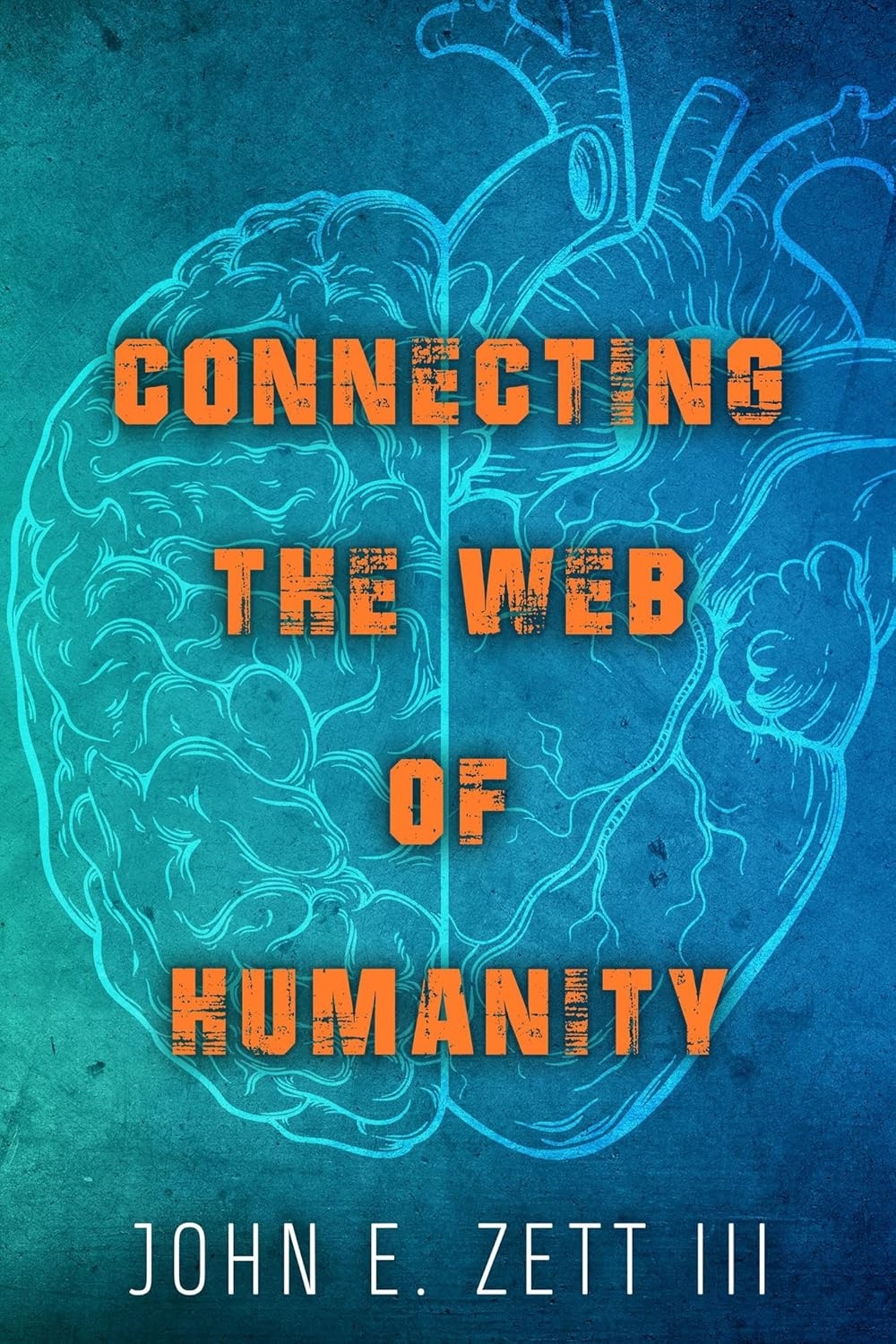
Exploring the Tapestry of Human Connection: A Review of ‘Connecting the Web of Humanity’

‘Connecting the Web of Humanity’ by John E. Zett III. Photo: Barnes & Noble

“Connecting the Web of Humanity” by John E. Zett III is an exploration of the human condition as it relates to love, sex, and interpersonal relationships.

Set up as a journal/memoir, it begins on Sunday November 3, 2002 where Zett establishes that authors don’t write books, that instead, they write manuscripts that publishers turn into books that hopefully sell copies. This sets the tone upfront as he combines his personal story of becoming a published author with reflections on topics such as human sexuality, the intricacies of the human soul, the challenges facing the book industry, and the ongoing debate about marijuana legalization.

His philosophical musings center around the three sides of our humanity: the body, mind, and soul, and how if we go through life with an open mind, we can establish a deeper connection with others. By sharing his personal struggles, such as the challenges of owning a small business with his wife, dealing with his father’s health problems, and balancing work and family, he connects with readers on a deeper level.

I appreciate his candidness and his ability to approach complex and often controversial subjects with a sense of depth and understanding. He doesn’t shy away from his own vulnerabilities, offering an authentic and sometimes raw portrayal of his experiences. This book challenges readers to reconsider societal norms and rethink their own perspectives on issues like sex and the soul. Especially insightful is his ‘live and let live’ view of life, but he also emphasizes personal accountability: “If you don’t hold onto your personal reins, who does?”

One of the most fascinating aspects is his commentary on the book industry, giving readers a behind-the-scenes look at what it takes to become a published author in today’s rapidly changing world. His unique insights make the book a valuable resource for aspiring writers and anyone interested in the evolving landscape of the literary world.

By using a stream-of-consciousness narrative style that he calls Extreme Creative Nonfiction, and presented in a memoir/journaling format, he relates to readers in an informal and personal way. It’s almost as if he’s speaking to them directly, albeit with a few curse words here and there. Be advised that his discussions on sex can get honest but descriptive.

The language is vivid and humorous: “Sometimes, I go off like the popcorn kernels in a microwavable bag of Explode-O-Pop Popping Corn…” Since the narrative switches back and forth between his personal story and his professional struggles to make it as an author, it can be hard to follow at times, but it fits with the journal-like presentation.

Overall, “Connecting the Web of Humanity” is an engaging, thought-provoking work that will resonate with readers interested in exploring life’s biggest questions. It is recommended for fans of philosophy and social sciences who also appreciate learning about the reality of getting published.

“Everybody is their own individual. Everything is what it is. And we are what we are. People are people.”

Rating: 4 out of 5.

*The author was contacted for an honest review of this book. The views and opinions expressed here belong solely to her.
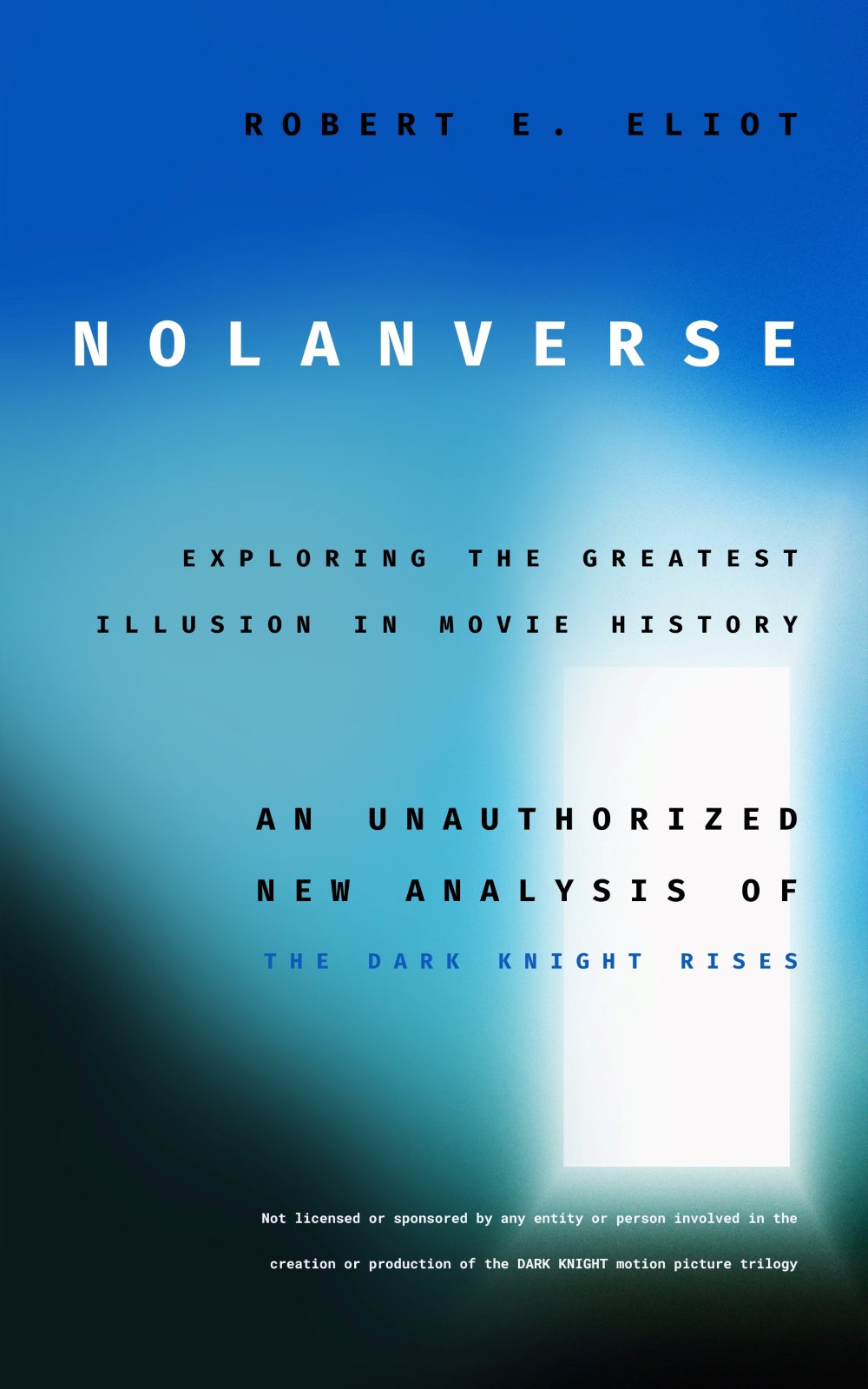
New book release: ‘Nolanverse: Exploring the Greatest Illusion in Movie History’ by Robert E. Eliot

‘Nolanverse: Exploring the Greatest Illusion in Movie History: An Unauthorized New Analysis of The Dark Knight Rises’ by Robert E. Eliot. Photo: Robert E. Eliot, used with permission.

In the world of superheroes, Batman is arguably one of the most famous one in the DC Universe. There have been numerous movies made to bring him to the big screen, including The Dark Knight trilogy. This set of Christopher Nolan Batman movies consists of Batman Begins, The Dark Knight, and The Dark Knight Rises. While The Dark Knight Rises was an exciting movie, the ending left us with more questions than answers. If you are a fan of the trilogy, today’s new book release might interest you: “Nolanverse: Exploring the Greatest Illusion in Movie History: An Unauthorized New Analysis of The Dark Knight Rises.” Robert E. Eliot delves deep into the movie and examines it from every angle in an effort to fully understand the meaning of that enigmatic ending. It is available on Amazon, Barnes & Noble, and other book retailers.

Robert E. Eliot is also the author of “Mi Negro Amigo: An Unauthorized New Analysis of Tarantino’s The Hateful Eight.” His new book “Nolanverse: Exploring the Greatest Illusion in Movie History: An Unauthorized New Analysis of The Dark Knight Rises” analyses the ending of that final Batman movie. He lives and works in the great state of Washington and looks forward to writing additional nonfiction books in the future. (Robert E. Eliot, 2023)

“Nolanverse: Exploring the Greatest Illusion in Movie History: An Unauthorized New Analysis of The Dark Knight Rises.” – The Dark Knight Rises holds a distinguished place in twenty-first-century cinema as the monumental conclusion to Christopher Nolan’s Dark Knight trilogy. And as millions of moviegoers around the world know, one of the most glaring aspects of the film is the way that it concludes—with the type of sensational ending that seems engineered for generating plenty of discussion beyond the movie theater.

For too long, fans have had to live with a highly unsatisfactory explanation of that ending—an explanation that is content to simply twist facts to suit theories. But what if we were to let good old-fashioned common sense have a say about the fate of Gotham’s legendary hero the Batman at the height of the film’s chilling climax?

What if the grand finale to one of the most important motion picture trilogies of all time is seriously different from what audiences have long supposed? What if there is still so much more to discover?

“A breath of fresh air for fans of the Dark Knight trilogy who have long pondered the mysteries surrounding the fate of Batman in the film’s climax. … A truly fascinating read. … If you’re a fan of Christopher Nolan’s Dark Knight trilogy or simply enjoy thought-provoking film analysis, then definitely get yourself a copy of Nolanverse today.” – K.C. Finn, Readers’ Favorite

“Eliot’s work forays beyond a standard analysis and really places the grand finale of the Dark Knight trilogy under a microscope, expertly examining every angle while bringing in numerous Christopher Nolan ventures, like Memento and Inception, to probe the mind of the iconic filmmaker. … With almost surgical precision, Eliot guides readers through … a thought-provoking debate on whether … Nolan has pulled off perhaps the greatest illusion in cinematic history. While Eliot starts with the ending, his critique is incredibly comprehensive.” – US Review of Books

Sponsored Post

Book review: ‘Bedlam’s Door’ by Mark Rubinstein, MD

bedlamsdoor
‘Bedlam’s Door’ by Mark Rubinstein, MD is a collection of true stories.

It is interesting when authors take the experiences in their professional lives and use them to guide their writing. Whether they are medical doctors, lawyers or psychiatrists, these experience give their writing credibility and depth. One such author is Mark Rubinstein. He is a physician, psychiatrist and assistant professor of psychiatry who writes mysteries and thrillers about people driven by forces they cannot control. Some of these include “Mad Dog House,” “The Lovers’ Tango” and “Mad Dog Justice” which was a finalist for the ForeWord Book of the Year Award. He has also written five nonfiction medical advice books. His latest book is “Bedlam’s Door: True Tales of Madness and Hope.” It is a collection of true stories of patients that the author and his colleagues saw in psychiatric consultation or for treatment.

In the preface to “Bedlam’s Door” Mr Rubinstein states that as is often the case where true cases are presented and to protect those involved, the patients and facilities are composites of real patients and locations. That does not make the stories any less poignant or shocking as they take the reader deep into the world of mental illness. Each of the fourteen cases is presented separately and most come with an afterword that gives additional information such as treatment or analysis of the patient’s condition and what happened to the patient in the long run. Some of the ones that stand out include “A Man of Means” because no one ever found out what was wrong with this patient and “When a Patient Knows More Than the Doctor” because the patient came in asking for help because she feared she might harm herself but was sent away with no treatment and ended up killing herself. The patient in “Off the Wall” comes in suicidal and even though he is put in a straitjacket and every precaution is taken to prevent him from killing himself he rams himself again a wall and dies of a head trauma.

“Bedlam’s Door” by Mark Rubinstein MD reads like a collection of short stories but these are true stories of patients who required mental help. They are each interesting on their own but as a whole it is an impressive look at mental illness. Hopefully this will lessen the stigma attributed to mental illness in modern society. It is recommended for readers who appreciate an in-depth look into a psychiatrist’s point of view as well as the treatments given. For those wishing to learn more about psychiatry, psychology and mental illness there is a section of suggested readings at the end as well as a glossary of terms used.

*A copy of this book was given for an honest review. The opinions expressed here are solely the author’s.

Movie adaptation: ‘Hidden Figures’ by Margot Lee Shetterly

hiddenfigurespic
The movie adaptation of Margot Lee Shetterly’s ‘Hidden Figures’ is now in theaters. Photo: google.com

Margot Lee Shetterly is an American nonfiction writer best known for her debut novel “Hidden Figures: The American Dream and the Untold Story of the Black Women Mathematicians Who Helped Win the Space Race.” It chronicles the true story of the black female mathematicians at NASA whose calculations helped give rise to America’s greatest achievements in space. The movie adaptation is now in theaters and it stars Taraji P Henson, Octavia Spencer, Janelle Monae, Kirsten Dunst and Kevin Costner.

According to Amazon, “Hidden Figures” is the story of female mathematicians known was “human computers” who used pencils, slide rulers and adding machines to calculate the numbers necessary to launch rockets and astronauts into space. Among these were a group of exceptionally talented African American women who originally taught math in the South’s segregated public schools. That was before they were called into service to work in America’s aeronautics industry during the labor shortages of World War II. They moved to Hampton, Virginia during the Jim Crow law years when the law required them to be segregated from their white counterparts. They became known as the women of Langley’s all black ‘West Computing” group and helped America defeat the Soviet Union in the space race. Specifically it follows the lives of Dorothy Vaughn, Mary Jackson, Katherine Johnson and Christine Darden starting from World War II, through the Cold War and the Civil Rights Movement and shows how their superior intellect changed their personal lives and their country’s future.