‘Respect’ is Robert L. Dilenschneider’s forthcoming new book. Photo: Barnes & Noble
Book Review: Respect – How to Change the World One Interaction at a Time
By Robert L. Dilenschneider Release Date: October 28 — Available now for pre-order
🕊️ Why Respect Still Matters
In a world where online outrage spreads faster than kindness and conversations often turn into confrontations, the idea of respect can feel almost old-fashioned. Yet, what if rediscovering this simple value could be the key to improving how we live, work, and connect?
That’s the premise behind Robert L. Dilenschneider’s new book, Respect: How to Change the World One Interaction at a Time. A veteran public relations expert and thoughtful observer of human behavior, Dilenschneider explores how showing respect in our tone, actions, and choices can reshape not just our relationships, but the culture around us.
📘 What’s Inside
Chapter 1: A Call for Respectfulness Chapter 2: Is Respectfulness Truly Possible in the Age of Retribution? Chapter 3: What’s In It For Me? Chapter 4: Start with Self-Respect Chapter 5: The Top Five Qualities of Respectfulness Chapter 6: Respectfulness at Work Chapter 7: Respectfulness in Family and Personal Relationships Chapter 8: Respectfulness in Civic Institutions Chapter 9: Transforming Society
🌟 Highlights
Chapter 3: Offers tips on what to do when disrespect turns into bullying, and explores how respectfulness can lead to improved relationships, stronger professional connections, and a less stressful daily life.
Chapter 5: Explains that respect is more than politeness or manners, it’s about recognizing people as individuals with their own unique identities.
💬 Why It Matters
The tone throughout the book is conversational and grounded, yet deeply reflective. Dilenschneider urges readers to see respect not as a surface-level courtesy but as a transformative social force. Each chapter ends with a “Think About It” section inviting readers to pause, reflect, and apply the ideas to their own lives.
By combining practical wisdom and moral clarity, the book moves beyond abstract principles to offer real-world ways to practice respect daily. Whether in the office, at home, or within our communities, Dilenschneider shows how small gestures of empathy can ripple outward to build trust, cooperation, and understanding.
Ultimately, Respect is an essential guide for anyone seeking to improve communication, leadership, and human connection. In an age of division and incivility, this book serves as both a call to action and a blueprint for a more compassionate world.
Perfect for managers, executives, entrepreneurs, and community leaders, this book reminds us:
“Far from outdated, respectfulness is a vital part of the foundation of a well-functioning society and a fulfilling life. We would do well to cultivate it, and this book will show you how—and why.”
⭐⭐⭐⭐
Rating: 4 out of 5.
👤 About the Author
Robert L. Dilenschneider founded The Dilenschneider Group in 1991 after serving as President and CEO of Hill and Knowlton, Inc. He has counseled major corporations, trade associations, and educational institutions, helping clients navigate complex communications challenges.
He is the author of numerous books, including Power and Influence, A Briefing for Leaders, On Power, The Critical 14 Years of Your Professional Life, and 50 Plus! Critical Career Decisions for the Rest of Your Life. His most recent work before Respect was Character and Respect.
💭 Let’s Talk
Do you think respect is becoming a lost art — or are we just redefining what it means? How do you practice respect in your everyday interactions, especially in challenging situations?
Share your thoughts in the comments. I’d love to hear how you’re keeping respect alive in your corner of the world.
*Thank you to Fauzia Burke/FSB Associates for my gifted Advanced Reader Copy for review consideration. I haven’t been compensated for this review and all views and opinions expressed are my own.
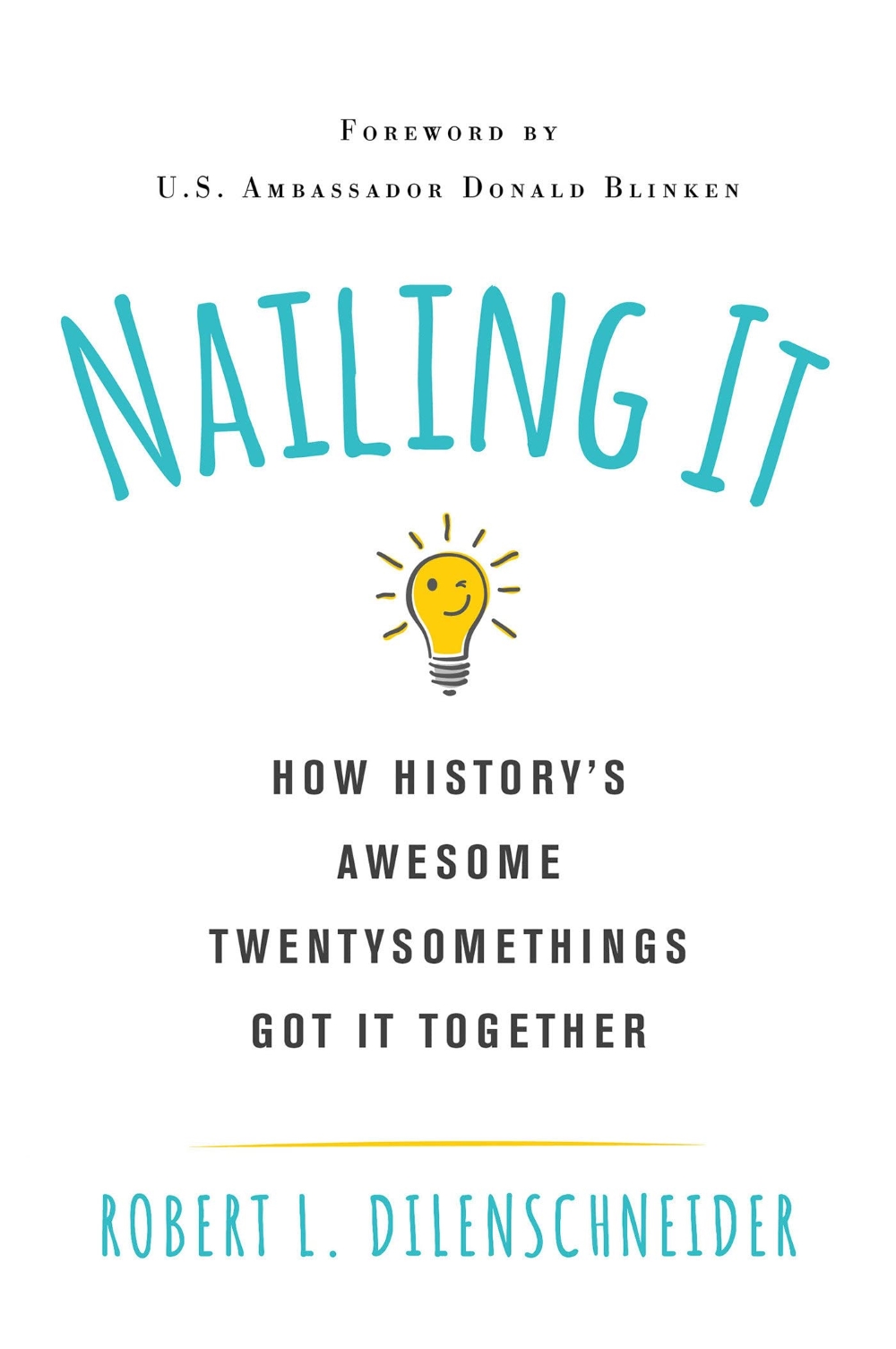
‘Nailing It: How History’s Awesome Twentysomethings Got It Together’ by Robert L. Dilenschneider. Photo: amazon
Robert L. Dilenschneider has hired more than 3,000 successful professionals and advised thousands more. He is founder of the Dilenschneider Group, a corporate strategic counseling and public relations firm based in New York City. Formerly president and CEO of Hill & Knowlton, he is the author of the bestselling books “The Critical First Years of Your Professional Life,” “Power and Influence,” “A Briefing for Leaders,” and “Nailing It: How History’s Awesome Twentysomethings Got It Together.” The latter is an inspiring and encouraging book that provides 25 fascinating and diverse profiles of iconic men and women at or near age 25 and how they built their legacies. (amazon, 2022)
‘Nailing It’ begins with a foreword from U.S. Ambassador Donald Blinken where he writes that Robert L. Dilenschneider focuses on these men and women when they were aged 25 or so, what they did to gain a spot in history, and how they did it. He also mentions that the target demographic is those coming of age right now, but also older people who care about them and want them to succeed. In the Introduction, the author shares that the idea behind the book is to inspire young people and hopes they realize that they can make a difference. In general, he wishes people realize that there are many paths to greatness and not all of them are smooth sailing. The book is made up of twenty three chapters and each focuses on one of these 25 people, including Wolfgang Amadeus Mozart, Albert Einstein, Coco Chanel, Golda Meir, and more. More than just biographies, each chapter reveals where they were in their lives in their mid-twenties and the choices that made them who they are.
At first, seeing a list of history’s greatest might be intimidating but it serves to remember that each one of them encountered and defeated their own difficulties in life. Even if you do not know every one of the people profiled in this book, all their stories are inspiring. Since each chapter is a different person, readers can take their time and even go back and re-read previous ones. With easy to understand language, the author takes readers deep into the lives of each of these individuals and shares the good and the bad in the hopes of inspiring everyone to dream big, but most of all, to put in the effort and work necessary to achieve success. Most importantly, this book is a reminder that it is ‘never too late to make an impact.’ It is hard to choose a favorite profile, but Mary Shelley (Chapter 2) stands out due to her being a notable literary figure, best known for her masterpiece Frankenstein. By the time she was 25, she had already written what could be considered a best-seller, but she had also suffered more than most young women, starting with the death of her mother when she was only ten days old. ‘Nailing It’ by Robert L. Dilenschneider is an inspiring collection of notable historical figures that would make an excellent addition to any personal library. It is recommended for readers who appreciate biographies and books on career advice and self-improvement.
“The world is full of timid souls and idle dreamers who never really go after what they want. Don’t be one of them. Work to stand out and use the lessons you’ve learned from this book. If you take that approach and stick with it, it will change your life for the better.”
*The author received a copy of this book for an honest review. The views and opinions expressed here belong solely to her.
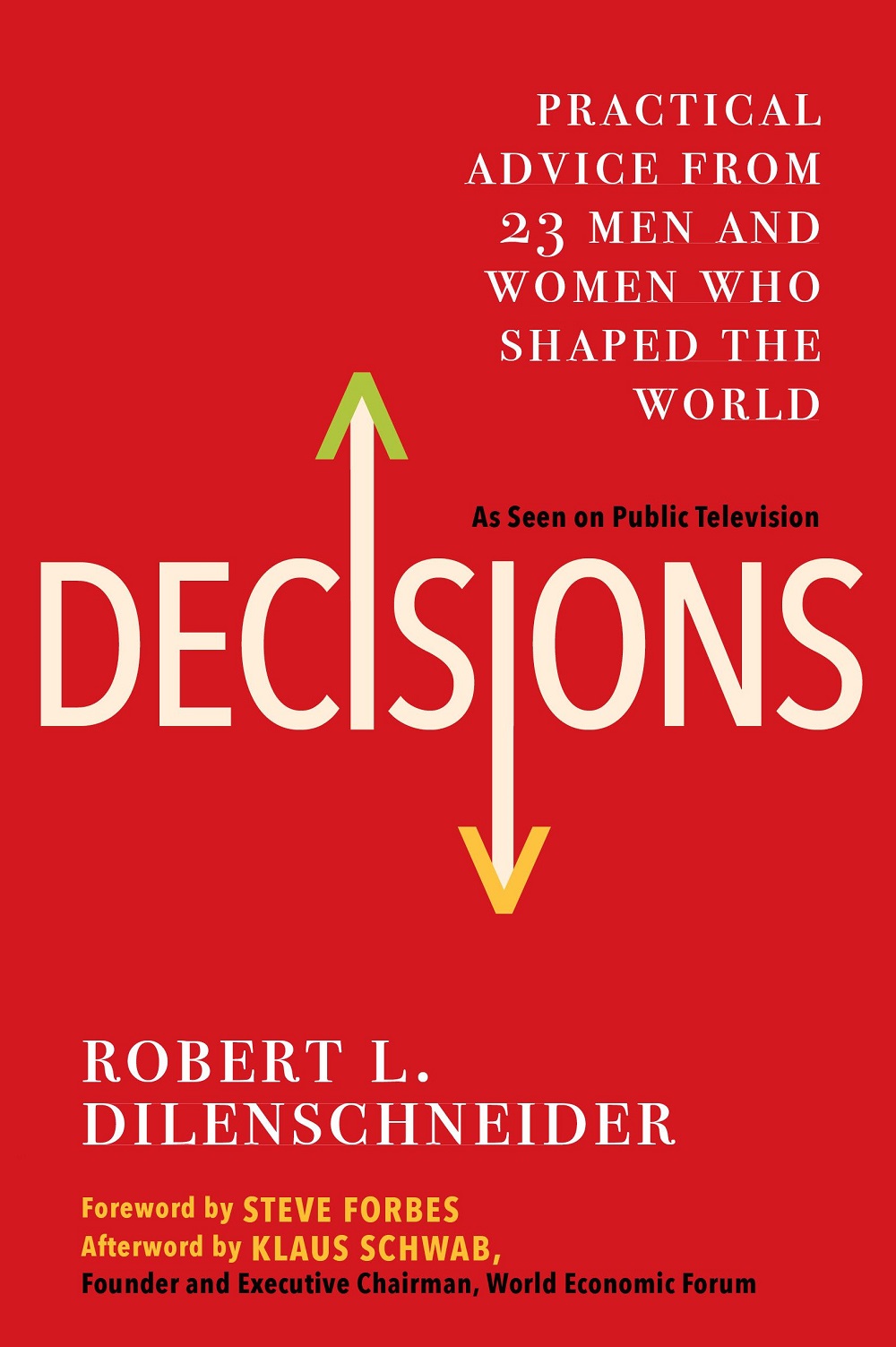
‘Decisions’ is one of Robert L. Dilenschneider’s best selling books about business and professional advice. Courtesy photo, used with permission.
Robert L. Dilenschneider has hired more than 3,000 successful professionals and advised thousands more. He is the founder of The Dilenschneider Group, a corporate strategic counseling and public relations firm based in New York City. Formerly president and CEO of Hill & Knowlton, he is the author of the bestselling books “A Briefing for Leaders,” “The Critical First Years of Your Professional Life,” “50 Plus! Critical Career Decisions for the Rest of Your Life,” “Decisions: Practical Advice from 23 Men and Women Who Shaped the World” and others. They all offer readers practical life and business advice for whatever stage in life they happen to be experiencing.
“Decisions: Practical Advice from 23 Men and Women Who Shaped the World” begins with a catchy sentence: ‘This book is intended to make your life better’ and it certainly delivers on its promise. Decisions are a part of everyday life for everyone, regardless of background. How people make decisions is critical to their future. This remarkable book focuses on twenty-three individual who made decisions that shaped the world and their stories stretch from 218 B.C to the present. It is divided into four parts which are in turn divided into individual chapters about a particular person and the most important decision he/she made. These are: Part One: War and Peace (Harry Truman, Elie Wiesel) Part Two: Commerce and Invention (Johann Gutenberg, Henry Ford) Part Three: Science (Marie Curie, Rachel Carson) and Part Four: Breaking Boundaries (Julius Caesar, Abraham Lincoln).
As a whole it analyzes not just the decision but provides background and history regarding the subject matter. The one major lesson to be learned is that many advances in civilization were made because most inventions, like the printing press, the automobile and general banking, were designed to reach everyone, not just the rich. This is turn made room for advances in society which is beneficial to growth. At the end of each chapter there is a decision section that summarizes the lessons readers can use in their own lives.
“The Critical First Years of Your Professional Life” is targeted to young people about to enter the real world of business and professional careers but the advice in these pages is invaluable to anyone, regardless of age or expertise. The Introduction gives a chapter by chapter synopsis to help readers focus on a specific topic. First off, it explains why the book is so important: because it is the paper or electronic version of a mentor in a world increasingly without any generous men and women who at one time would have helped young people entering the workforce. It also emphasizes the five goals in reading this helpful guide: 1)gaining self-knowledge 2)feeling empathy 3)presenting yourself well 4)retrieving information effectively and being informed and 5)solving problems. Standout chapters include: Networking, Making Allies of Your Elders and Image. The best part about this guide is that depending on what advice readers need, they can go back and re-read chapters on their own or if need be, read the whole book more than once because the information contained is ageless.
Lastly, “50 Plus! Critical Career Decisions for the Rest of Your Life” strives to help the more mature worker navigate the everchanging workforce rules. It emphasizes the importance of refreshing skillsets to meet the challenges of competing in today’s job market. The target audience “includes people who are highly accomplished and economically secure but intellectually bored or emotionally dissatisfied.” Some of the chapters include: The New Rules, Time to Change, On Your Own and Becoming a Consultant. Readers may be at a crossroads or unsure of how to proceed with the rest of their lives and this book gives helpful advise on finding a new career direction, growing within their current field, starting their own business or finally realizing a dream. Regardless of what they decide, the author ends by stating that retiring to just play golf or lay around the house is synonymous with giving up and that is never a good thing.
“Be ready to take criticism, and even ridicule and derision. Think about this as part of your decision process. Rather than turning away, be prepared to develop a thick hide.” – from “Decisions”
*The author received a copy of these books for an honest review. The views and opinions expressed here belong solely to her.
But there was no decision to make. This was my calling. Some powerful force had come to dwell inside me, something bigger and stronger than me. —Malala Yousafzai
Malala Yousafzai, as the world knows, was shot in the head by the Taliban on October 9, 2012, as she rode home on the school bus in the Swat Valley, Pakistan. Malala was fifteen at the time. She survived the attack, recuperated in England, and has continued her education. She was awarded the Nobel Peace Prize in 2014 for her “struggle against the suppression of children and young people and for the right of all children to education.”
Can a child, an adolescent, a young person—make a world-changing decision? Is someone ever too young?
Let’s take a look at Malala’s story, because none of this came out of the blue. The “struggle” the Nobel Committee cited, was a decision that was so deeply embedded into her character that, at age fifteen, it had already become her way of life. And continues to be.
Seemingly from birth, Malala loved education. Her biographical material makes much of the fact that she sought to emulate her father, Ziauddin Yousafzai, who was so dedicated to education that he had founded his own school, the one she attended. Such “private” schools are not uncommon in Pakistan.
But Ziauddin’s school and his outspoken daughter became special targets of the Taliban. The fundamentalist group had issued an edict against educating girls and death threats against the entire family (mother Toor Pekai Yousafzai and two sons). The school was forced to close for a time and had re-opened shortly before Malala was shot.
You might say that the child was merely following the example—or the dictates—of the father (who was supported in all endeavors by the mother). That the child made no decisions on her own. That happens in families all the time. I can think of many examples in my own life—involving my parents and the decisions they made for me when I was young, and about how my wife and I did the same for our sons. None of these decisions involved defying the Taliban and bringing danger to our family. But, that may not be the right way to look at what Ziauddin did. Were his decisions part of doing what parents claim we always try to do—leading by example?
Do you ever think about the phrase “an accident of birth”? It means that none of us are responsible for the circumstances of our birth—who our parents are, our family, our nationality or state or town, our genetic make-up, economic status and so on.
Among the things that Malala was not responsible for: That she was a first-born daughter in a culture that values boys over girls; that she was born into a troubled country being over-run by violent extremists. But it was also an accident of birth that she had two parents who were, by all accounts, as dedicated to her welfare, education, and growth as they were to that of her two younger brothers. It seems to me that Malala took what she was given and decided to run with it.
By the time she was shot in 2012, Malala had shown by her own example that she recognized her “accident of birth.” Her dedication to education for girls was in fact her own decision based on parental example. Consider her words, written just a year later in her autobiography:
“I was very lucky to be born to a father who respected my freedom of thought and expression and made me part of his peace caravan and a mother who not only encouraged me but my father too in our campaign for peace and education.”
At an even younger age than fifteen, Malala was already an ardent activist. She blogged for the BBC on the oppressions of life under the Taliban and was the subject of a New York Times documentary. She made speeches often, including one entitled “How dare the Taliban take away my right to an education.” The year before she was shot, she won both the International Children’s Peace Prize and Pakistan’s first Youth Peace Prize. As the Taliban’s noose ever tightened around her country, her family, and her safety, Malala’s outspokenness and visibility grew. As she wrote in her autobiography, “I decided I wasn’t going to cower in fear of [the Taliban’s] wrath.”
In the years since she survived the Taliban assassination attempt, Malala has become a global symbol for the cause of education for girls specifically and for the welfare of all children. Not even a year after she was shot, she addressed the “Youth Takeover” at the United Nations. Two years almost to the day after she was shot, the Nobel Committee announced that she would share the 2014 Peace Prize with Kailash Satyarthi, who made his name with international peaceful protests on behalf of children. Even with constant visibility while traveling the world to event after event, she completed the studies necessary to be accepted in 2017 into Oxford University (which fact she announced on her new Twitter account). Also in 2017, Malala was designated a United Nations Messenger of Peace “to help raise awareness of the importance of girls’ education.”
Malala is still enveloped in the support of her family, which left Pakistan to settle in the UK. The Economist, noting that “Pakistani education has long been atrocious,” included the following in a detailed and dismal examination of the current status:
“From 2007 to 2015 there were 167 attacks by Islamic terrorists on education institutions . . . When it controlled the Swat River valley in the north of the country, the Pakistani Taliban closed hundreds of girls’ schools. When the army retook the area it occupied dozens of them itself.”
Malala has written two books. The first, “I Am Malala,” was published a year after her shooting and tells, with the help of writer Christina Lamb, of her early life in Pakistan and the event that put her onto a new trajectory. Published in 2017, the second book is for children, “Malala’s Magic Pencil.” In it, young Malala yearns for a special pencil that would let her do all sorts of special, interesting things, including drawing “a lock on my door, so my brothers couldn’t bother me.” I think every child wants a lock like that. Eventually, she describes what we adults will recognize as an intention, a determination, a decision: “I knew then that if I had a magic pencil, I would use it to draw a better world, a peaceful world.”
Time will tell us how Malala’s decisions as a girl, a teenager, a young adult, and into the future will all play out, how world-changing they will be. My hope is that the answer is— immensely.
Malala’s story offers all of us one overarching lesson about decision-making that will help us all lead better lives:
If you are a parent or other adult in a position to influence children and young people, remember how important your own example is. The decisions you make on behalf of others may turn out to be the template that helps form their lives.
If that’s all you glean, that’s enough. But there are many other lessons to take:
Have courage to do the right thing, whether it is large or small.
Understand you may be attacked and plan for that in advance. I mean physically attacked, as well as the more expected verbal criticisms.
Recognize you may be a symbol for others and prepare for that in ways they will embrace and admire. And behave that way.
Follow your decision. Give it a chance to shape your life.
Do not give up.
Depend on each other. Know whom you can trust, and be that trustworthy person to others to the best of your ability.
Seek education and take every other opportunity to broaden your knowledge of the world and its people.
Robert L. Dilenschneider is the founder of The Dilenschneider Group, a corporate strategic counseling and public relations firm based in New York City. Formerly president and CEO of Hill & Knowlton, he is the author of the bestselling books “Power and Influence, A Briefing for Leaders,” “On Power” and newly released “Decisions: Practical Advice from 23 Men and Women Who Shaped the World.”



 SA Examiner